
Business
Fuel duty cut, states’ line-up give Bond Street the jitters


The yield rose more than 20 basis points this week, the most since May 2022, LSEG data showed.
The 10-year bond opened at 6.93% and traded in a range of 6.95% to 6.90%, according to Clearing Corporation of India data.
The yield on India’s 10-year government bond rose sharply Friday. This increase follows a cut in fuel excise duty which impacted the fiscal outlook. High state bond sales and rising oil prices also contributed to the jump. The benchmark yield has seen its biggest weekly rise since May 2022.
“The opening and follow-up action both were weak today. One would have expected some demand to emerge after yields touched 6.95%, but there was no retracement,” said Vijay Sharma, senior executive vice-president at PNB Gilts.
Traders are finding it hard to call specific levels in this kind of volatility, especially with the West Asia war ongoing and oil prices staying elevated.

 Agencies
 Brent crude oil prices rose by $1.87, or 1.73%, to $109.88 a barrel, LSEG data showed.
“We cannot project future levels in such volatile conditions, and we do not know what will happen overnight,” Sharma said. Bonds are also under strain as states sold debt worth nearly ₹1 lakh crore during the week, amid waning investor demand.
Financial institutions are expected to face mark-to-market losses as the benchmark yield has increased more than 30 basis points this quarter, from 6.60% on January 1.
Many dealers no longer expect the yield to fall to the 6.75% level, even if the West Asia war ends, which is the best-case scenario.


Petroleum engineer with an enthusiasm for investing, accounting and personal finances.
Analyst’s Disclosure: I/we have a beneficial long position in the shares of VZ either through stock ownership, options, or other derivatives. I wrote this article myself, and it expresses my own opinions. I am not receiving compensation for it (other than from Seeking Alpha). I have no business relationship with any company whose stock is mentioned in this article.
Past performance is not an indicator of future performance. This post is illustrative and educational and is not a specific offer of products or services or financial advice. Information in this article is not an offer to buy or sell, or a solicitation of any offer to buy or sell the securities mentioned herein. Information presented is believed to be factual and up-to-date, but we do not guarantee its accuracy and it should not be regarded as a complete analysis of the subjects discussed. Expressions of opinion reflect the judgment of the authors as of the date of publication and are subject to change.
Seeking Alpha’s Disclosure: Past performance is no guarantee of future results. No recommendation or advice is being given as to whether any investment is suitable for a particular investor. Any views or opinions expressed above may not reflect those of Seeking Alpha as a whole. Seeking Alpha is not a licensed securities dealer, broker or US investment adviser or investment bank. Our analysts are third party authors that include both professional investors and individual investors who may not be licensed or certified by any institute or regulatory body.
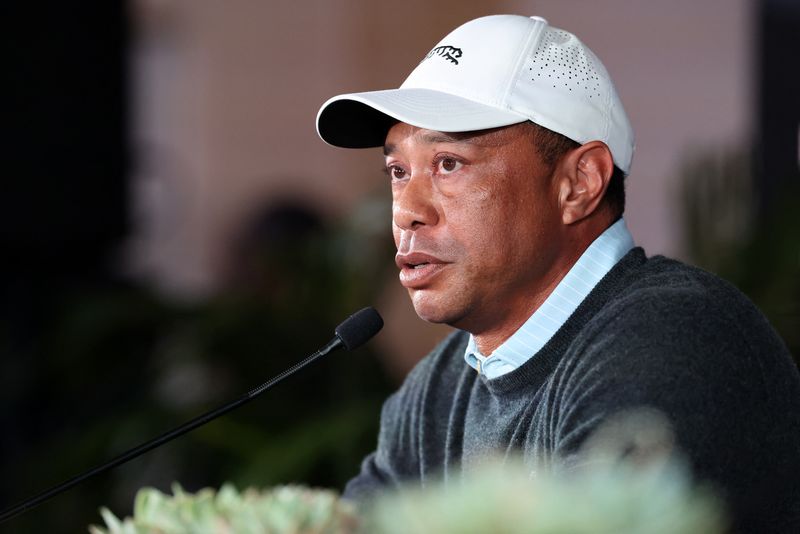

Golf-Tiger Woods arrested on DUI charge after Florida car crash

Federal judge halts Nexstar-Tegna merger following antitrust challenge
Taoiseach (Prime Minister) Micheál Martin said Ireland’s economy enters the crisis from a position of “relative strength”.
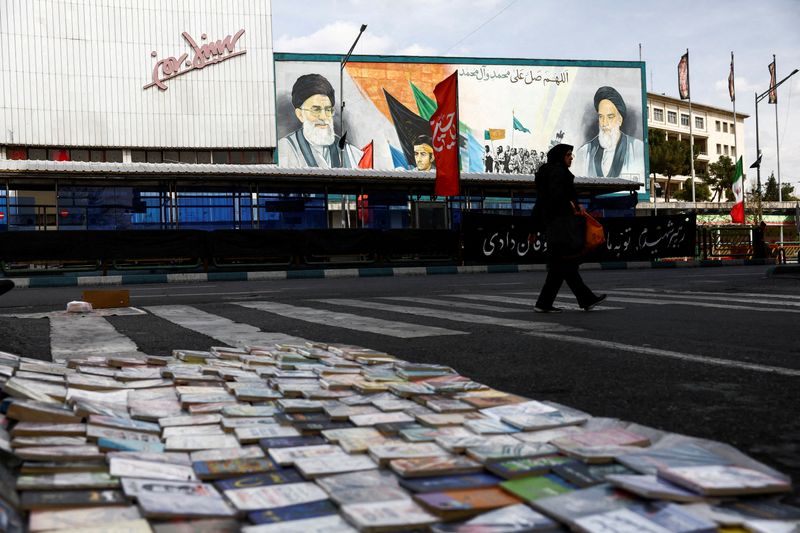

Analysis-One month into Iran war, only hard choices for Trump

Yet history, both global and Indian, offers a reassuring lesson: markets are usually far more resilient than the gloom that dominates the headlines. From the Gulf War to the Russia‑Ukraine conflict in 2022, we have seen that while volatility spikes and drawdowns occur, broad indices have tended to recover as uncertainty fades. For long‑term investors, the real challenge is sticking to a disciplined plan that balances risk management with the ability to capture opportunities when they arise.
What is Driving Markets Right Now?
In the short term, three forces are shaping the market: the war, oil prices, and global liquidity. The disruption of key energy routes has pushed crude prices higher, unsettling risk assets worldwide. For India, this raises the risk of imported inflation and a wider current account deficit. At the same time, global central banks remain cautious, with a gradual path of rate cuts extending into 2026–27. This has kept Foreign Institutional Investors (FIIs) on the sidelines, even as domestic institutions continue to provide crucial support.Indian benchmarks have swung between sharp declines and swift rebounds. What often gets missed is that the real “pain” at the stock and sector level (especially in mid‑caps, small‑caps, and high‑beta financials) can be far deeper than the headline index suggests. In such an environment, thoughtful asset allocation and strict valuation discipline matter more than trying to time daily index movements.
What Can History Teach Us About Markets and Wars?
Looking back at decades of geopolitical events, we can spot three recurring patterns. During episodes such as the Cuban Missile Crisis, 9/11, and the Russia‑Ukraine war, markets did experience sharp volatility and drawdowns. Yet, as uncertainty eased and worst‑case scenarios were priced out, indices typically recovered within weeks to months. After the invasion of Ukraine in 2022, for example, the S&P 500 regained its initial losses within about a month, even as crude prices remained elevated.
The key takeaway is that geopolitical shocks alone rarely derail long‑term equity returns. Lasting damage usually happens only when these shocks coincide with deep macroeconomic imbalances. Today, for India, the near‑term risk is less the conflict itself and more a sustained spike in oil prices and its secondary effects on inflation and the currency. Provided crude does not stay well above $100 for an extended period, the macro impact, while uncomfortable, is likely manageable for a growing economy with strong domestic demand.
A Practical Framework for Indian Investors
Given this backdrop, the right response will naturally depend on your risk profile and investment horizon. That said, a few universal principles can help investors stay grounded and balanced.
Do’s:
- Revisit asset allocation: Use this period to check whether your mix of equity, debt, and gold still matches your true risk tolerance. Portfolios that have drifted toward high‑beta or thematic bets may benefit from a course correction toward core, diversified holdings.
- Stagger investments: For those with surplus capital, systematic deployment, through STPs or SIP top‑ups, helps average into volatility without trying to time the absolute bottom.
- Upgrade quality: Corrections often compress valuations for fundamentally strong businesses. Use the dip to rotate from speculative names into leaders with healthy balance sheets and pricing power.
- Maintain liquidity: Ensure 6–12 months of essential expenses are parked in safe, liquid instruments, so you’re not forced to sell equities in a downturn.
- Stick to a plan: Document your target allocation and review schedule. A structured quarterly check‑in helps you avoid impulsive decisions driven by fear or greed.
Don’ts:
- Avoid leveraged “catch‑the‑falling‑knife” bets: Aggressively averaging down with borrowed money is a fast track to capital destruction, especially when news flow is uncertain and margin calls loom.
- Don’t overhaul long‑term plans: Selling quality equity exposure wholesale because of a geopolitical event risks missing the eventual recovery.
- Don’t ignore valuations: Not every stock that falls 20–30% is a bargain. Focus on businesses where temporary headwinds do not impair long‑term cash flows.
- Don’t panic‑stop SIPs: Systematic plans are designed for exactly this kind of environment. Halting them turns temporary paper losses into permanent losses of compounding potential.
What Does the Future Hold?
For Indian investors, the goal should be to protect long‑term objectives while using volatility to strengthen portfolio quality. In the base case, where the conflict remains contained and oil prices do not stay significantly elevated, the impact on India should be manageable. Even in a more adverse scenario, the right response is disciplined, systematic risk management, not extreme “all‑in or all‑out” moves.
Over the next 12–24 months, I recommend a three‑step framework:
- Stabilise: Reaffirm your emergency buffers and pare down unnecessary debt, so decisions aren’t forced by stress.
- Systematise: Continue or enhance SIPs and use clear, predefined rules to guide your deployment.
- Capitalise: Use corrections to upgrade portfolio quality and, for those with capacity, consider calibrated allocations to dynamic asset‑allocation strategies.
Wars and crises will come and go. India’s long‑term growth and financialisation story, however, is playing out over decades. For investors who stay aligned to that horizon, staying calm, staying liquid, and staying disciplined is likely to be the most rewarding strategy.

Drones are now expected to become a $250 billion market by 2035

Absolut vodka maker and Jack Daniel’s maker Brown-Forman BF.B 5.63%increase; green up pointing triangle are in talks to combine as alcohol companies contend with slowing sales.
Pernod, based in Paris, oversees a portfolio of 200 spirits brands, including Jameson Irish whiskey and Beefeater London gin, and has a market value of around $17 billion.
Copyright ©2026 Dow Jones & Company, Inc. All Rights Reserved. 87990cbe856818d5eddac44c7b1cdeb8
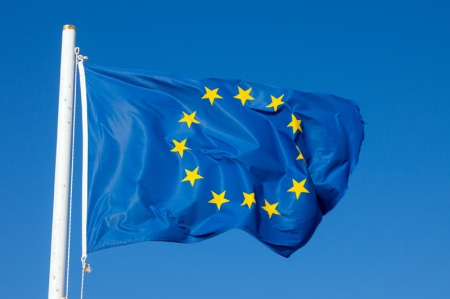
Where are the opportunities in European equities?


Explainer-Who are the Houthis, Iran’s allies in Yemen?

THIS IS YOUR FINAL CHANCE TO HOLD XRP… (Act Now)

Why we should worry about vapes as well as social media

Verizon Stock: Caution Is Warranted, Despite The Strong Fundamentals (NYSE:VZ)


-
 NewsBeat3 days ago
Manchester United reach agreement with Casemiro over contract clause amid transfer speculation
-

 News Videos2 days ago
Parliament publishes latest register of MPs’ financial interests
-

 Crypto World6 days ago
Best Crypto to Buy Now: Strategy Just Spent $1.57 Billion on Bitcoin During Fear While Early Investors Quietly Enter Pepeto for 150x Potential
-

 Crypto World6 days ago
Bitcoin Price News: Bhutan Sells $72 Million in BTC Under Fiscal Pressure, but the Smart Money Entering Pepeto Sees What the Market Does Not
-

 Sports5 days ago
Remo Stars and Kano Pillars Strengthen Survival Hopes in NPFL
-

 Sports5 days ago
Gary Kirsten Accuses Pakistan Cricket Board Of ‘Interference’, Mohsin Naqvi Responds
-

 Business6 days ago
No Winner in March 21 Drawing as Prize Rolls to $133 Million for Next
-

 Tech5 days ago
Give Your Phone a Huge (and Free) Upgrade by Switching to Another Keyboard
-

 Tech5 days ago
AI enters the chat: New Seattle dating app relies on tech to facilitate meaningful human connections
-

 News Videos5 days ago
Ch 9 Financial Management Part 1 | Detailed One Shot | Class 12 Business Studies Boards 2026
-

 Tech6 days ago
Today’s NYT Connections Hints, Answers for March 22 #1015
-

 Business1 day ago
Instagram, YouTube Found Responsible for Teen’s Mental Health Struggle in Historic Ruling
-

 Business6 days ago
Will Duke Basketball Win It All? Duke Basketball Enters Second Round as Third Favorite to Claim NCAA Title
-

 Sports5 days ago
2026 Kentucky Derby horses, odds, futures, preview, date: Expert who hit 12 Derby-Oaks Doubles enters picks
-
 NewsBeat6 days ago
Update on Wisbech river crash as search for teenage boy enters fifth day
-

 NewsBeat9 hours ago
The Story hosts event on Durham’s historic registers
-
 Entertainment5 days ago
Cynthia Bailey Dishes on ‘RHOA’ Season 17, Discusses Kandi
-

 Tech4 days ago
Samsung will soon let you control smart home devices from your car’s dashboard
-

 Business4 days ago
More women enter wealth management, but few in advisory roles: study
-

 Fashion4 days ago
Does It Matter What You Wear When You’re Laid Off and Looking?
You must be logged in to post a comment Login