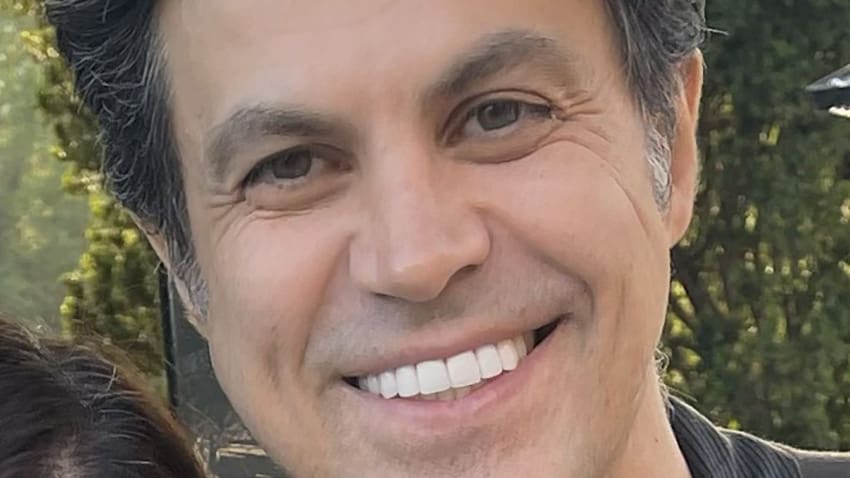
Gary Mazin is the owner and principal lawyer of Mazin & Associates, a Canadian personal injury law firm known for its steady, client-focused approach. His career reflects a mix of discipline, long-term thinking, and practical leadership.
Born in the former Soviet Union, Mazin moved to Canada with his family at the age of four. He grew up in humble beginnings, an experience that shaped his work ethic and view on responsibility. “When you start with little, you learn quickly that effort and consistency matter,” he says.
Mazin built a strong academic foundation. He earned a Bachelor of Arts from the University of Toronto, a law degree from Osgoode Hall Law School, and later an MBA from the Schulich School of Business at York University. This combination of law and business training allows him to think beyond individual cases and focus on sustainable firm leadership.
As a personal injury lawyer, Mazin is known for his structured and analytical approach. He focuses on clear communication, careful preparation, and realistic outcomes. “Clients need clarity more than noise,” he notes. “My role is to guide them through complex situations with honesty.”
As the leader of Mazin & Associates, he has translated big ideas into practical systems that support both clients and staff. His leadership style values process, accountability, and long-term growth over quick wins.
Advertisement
Outside of work, Mazin enjoys chess, swimming, travelling, and time with his family. He is also committed to giving back, supporting healthcare initiatives, including sponsoring a room at the University Health Network Hospital.
An Interview with Gary Mazin: Building a Career with Structure and Purpose
Q: Gary, let’s start at the beginning. How did your early life shape the way you think about work and business today?
I left the Soviet Union when I was four years old and came to Canada with my family. We started from very modest circumstances. That experience stays with you. You learn early that stability is built, not given. I think that’s where my focus on structure and consistency comes from. When things are not guaranteed, you value planning and discipline.
Q: Was law always the goal, or did that come later?
Law was not an instant decision. I was interested in ideas, systems, and how decisions affect people. That led me to study arts at the University of Toronto. Law became appealing because it combines reasoning with real-world consequences. It is not abstract. What you do matters to someone’s life.
Q: You later added an MBA to your legal education. Why was that important to you?
I realised early on that practising law and running a law firm are not the same thing. Osgoode Hall Law School gave me a strong legal foundation. But business education at Schulich helped me understand operations, leadership, and long-term planning. I didn’t want to rely on instinct alone. “Law teaches you how to analyse,” I often say. “Business teaches you how to build.”
Advertisement
Q: Why did you choose personal injury law as your focus?
Personal injury law is very grounded in reality. Clients are often dealing with physical injuries, stress, and uncertainty. There is very little room for theory. You need clarity and patience. I was drawn to that responsibility. You are guiding people through difficult moments, and that requires care and precision.
Q: What lessons did you learn early in your legal career?
One key lesson was that communication matters as much as legal skill. Clients do not want noise or complexity. They want to understand what is happening. I learned to slow things down, explain processes clearly, and set realistic expectations. That approach built trust over time.
Q: What prompted you to start Mazin & Associates?
I wanted to create a firm that reflected how I think about work. Clear systems. Accountability. A calm, professional environment. Starting a firm forces you to turn ideas into daily practice. It is not just about cases. It is about people, processes, and standards. “A firm is built one decision at a time,” and those decisions compound.
Q: How would you describe your leadership style as a business owner?
Measured and structured. I believe consistency is underrated. Big ideas are important, but execution is what makes them real. My goal has always been to build something sustainable. That means focusing on process, not shortcuts. Growth should be deliberate, not rushed.
Advertisement
Q: Many people associate leadership with constant visibility. You seem more reserved. Is that intentional?
Yes. I don’t believe leadership needs to be loud. Results come from systems that work quietly in the background. I prefer to focus on how things function day to day. If clients are supported and staff are clear on expectations, the rest follows.
Q: Outside of work, how do you maintain balance?
I enjoy chess, which mirrors how I think about strategy and patience. Swimming helps clear my head. Travelling gives perspective. Most importantly, I value time with my family. Work can expand endlessly if you let it. You need boundaries to stay effective.
Q: Philanthropy also plays a role in your life. Why is that important to you?
Giving back feels like a responsibility. I’ve supported healthcare initiatives, including sponsoring a room at University Health Network Hospital. Healthcare intersects closely with my work. Many clients rely on that system. Supporting it felt practical and meaningful, not symbolic.
Q: How has your definition of success changed over time?
Earlier in my career, success was about progress and achievement. Now it is about stability and impact. Building a firm that lasts. Treating people fairly. Making decisions I can stand behind. “Success is not speed,” I remind myself. “It’s durability.”
Advertisement
Q: Looking back, what connects all the stages of your career?
Intentional growth. From education to practice to business ownership, I tried to make thoughtful choices rather than reactive ones. Coming to Canada as a child taught me that progress is built step by step. That idea still guides how I approach my career today.
The Valkyrie Trading Society is a team of analysts sharing high conviction and obscure developed market ideas that are downside limited and likely to generate non-correlated and outsized returns in the context of the current economic environment and forces. They are long-only investors.They lead the investing group The Value Lab where they offer members a portfolio with real time updates, chat to answer questions 24/7, regular global market news reports, feedback on member stock ideas, new trades monthly, quarterly earnings write-ups, and daily macro opinions.
Analyst’s Disclosure: I/we have no stock, option or similar derivative position in any of the companies mentioned, and no plans to initiate any such positions within the next 72 hours. I wrote this article myself, and it expresses my own opinions. I am not receiving compensation for it (other than from Seeking Alpha). I have no business relationship with any company whose stock is mentioned in this article.
Seeking Alpha’s Disclosure: Past performance is no guarantee of future results. No recommendation or advice is being given as to whether any investment is suitable for a particular investor. Any views or opinions expressed above may not reflect those of Seeking Alpha as a whole. Seeking Alpha is not a licensed securities dealer, broker or US investment adviser or investment bank. Our analysts are third party authors that include both professional investors and individual investors who may not be licensed or certified by any institute or regulatory body.
Exor N.V. (EXXRF) Q4 2025 Earnings Call March 24, 2026 11:00 AM EDT
Company Participants
John Elkann – CEO & Director Benoit Ribadeau-Dumas Suzanne Heywood – Chief Operating Officer Guido de Boer – Chief Financial Officer
Conference Call Participants
Advertisement
Monica Bosio – Intesa Sanpaolo Equity Research Martino De Ambroggi – Equita SIM S.p.A., Research Division Luuk Van Beek – Banque Degroof Petercam S.A., Research Division Alberto Villa – Intermonte SIM S.p.A., Research Division Andrea Balloni – Mediobanca – Banca di credito finanziario S.p.A., Research Division
Presentation
Operator
Advertisement
Ladies and gentlemen, good afternoon. Welcome, and thank you for joining the Exor Investor and Analyst Call. Please note that the presentation is available to download on Exor website www.exor.com under the Investors and Media, Events & Presentations section.
Any forward-looking statements Exor management makes are covered by the safe harbor statement included in the presentation material. Please note that this conference is being recorded. [Operator Instructions].
At this time, I would like to turn the conference over to your host, CEO, John Elkann. Please go ahead.
Advertisement
John Elkann CEO & Director
Good morning, good afternoon and good evening to all of you. Thank you for being here today with us. 2025 was a difficult year in many different ways for Exor and for our companies. But it also has been a year that has helped us be more focused and be more resilient, which enables us as a company to be better prepared for another difficult year, which will be 2026.
Today, we want to talk to you about our companies. We have less of them and we have more in health care. We want to speak to you about Lingotto who has reached a very important milestone in ’25, reaching EUR 10 billion of assets under management driven by performance, which is exactly in line with our intentions of building an investment
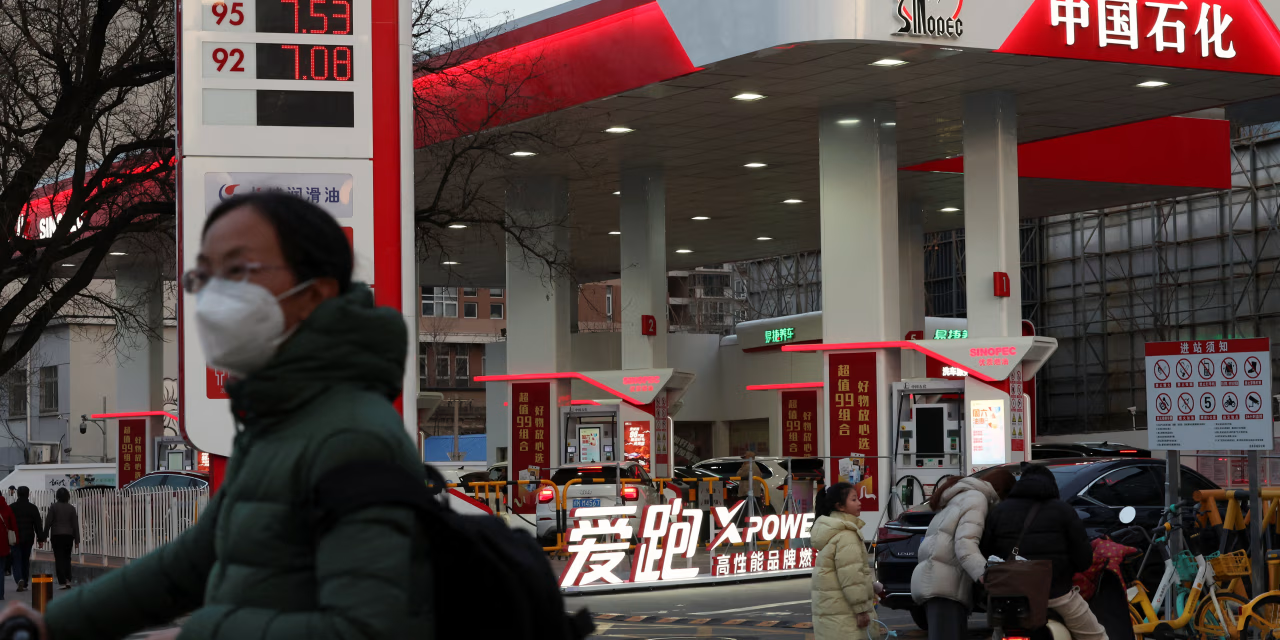
Chinese oil major Sinopec600028 -1.66%decrease; red down pointing triangle struck a cautious tone during a post-earnings briefing, saying it has enough inventory to maintain stable production and multiple contingency plans in place as the conflict in the Middle East stokes worries about countries running out of fuel.
However, it said that a prolonged conflict would pose more severe challenges.
Diesel standards have been lowered to help suppliers bring more fuel into the domestic market as hundreds of service stations across the country run dry, including six in WA.
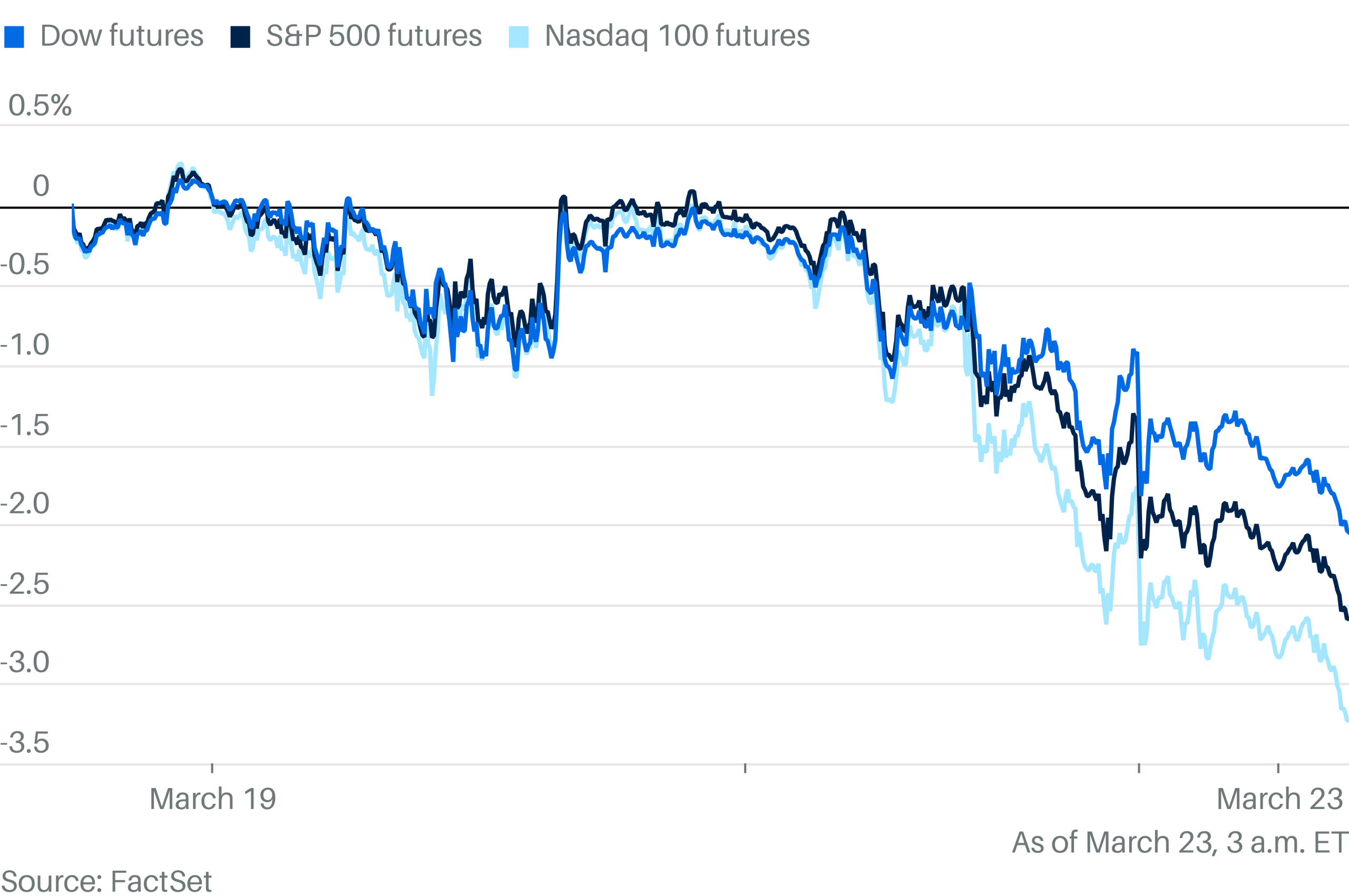
Stocks are nearing their first correction in about a year as the Iran war drives up oil prices and sparks worries about a resurgence in inflation.
Futures tracking the Dow Jones Industrial Average fell 235 points, or 0.5%, on Monday. S&P 500 futures were 0.6% lower and contracts tied to the tech-heavy Nasdaq 100 tumbled 0.7%.
The three major indexes have tumbled for four weeks in a row, putting them on the brink of closing in correction territory. A correction is when an index falls 10% from its recent high.
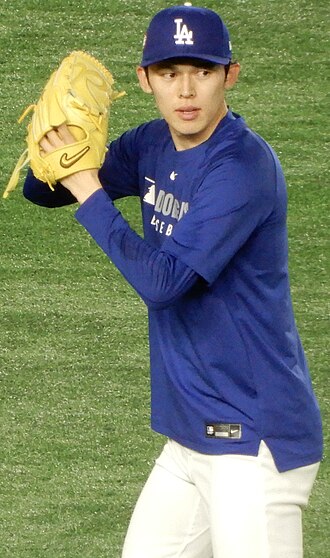
The Los Angeles Dodgers have finalized their starting rotation plans for the beginning of the 2026 season, naming Yoshinobu Yamamoto as the Opening Day starter and confirming that Japanese right-hander Roki Sasaki will open the year in the rotation despite a rocky spring training.
Roki Sasaki
Manager Dave Roberts revealed the group’s composition Tuesday, listing Yamamoto, Tyler Glasnow, Sasaki, Emmet Sheehan and two-way star Shohei Ohtani as the primary starters to begin the campaign. Justin Wrobleski is expected to provide piggyback relief or long outings early on as the club eases its high-upside arms back into game action following the shortened spring.
The Dodgers, fresh off a 2025 World Series title, will host the Arizona Diamondbacks in their home opener Thursday, March 26, at Dodger Stadium. Yamamoto, who earned World Series MVP honors last October, gets the ball first against Arizona ace Zac Gallen in what promises to be a marquee matchup.
Roberts indicated the initial order will likely feature Yamamoto on Opening Day, followed by Glasnow, Sasaki, Sheehan and Ohtani in some sequence across the first week. Ohtani is slated to make his first start of the season March 31 against the Cleveland Guardians. The club plans to lean on a five-man rotation initially but has the depth to shift to six once Blake Snell and others return from injuries.
Sasaki’s inclusion comes with caveats. The 24-year-old right-hander, who signed with the Dodgers before the 2025 season after dominating in Japan’s Nippon Professional Baseball, has struggled with command and mechanics this spring. He posted concerning results in Cactus League outings, including control issues that led the team to adjust his buildup with backfield “B” games and simulated innings.
Advertisement
Despite the uneven performances, Roberts has remained steadfast.
“He’s going to be one of our starters” to open the season, Roberts said this week, emphasizing that spring training stats alone do not define readiness. The manager pointed to Sasaki’s talent, work ethic and the organization’s belief that his performance will trend upward once the regular season begins.
Sasaki flashed elite stuff in limited 2025 action, touching triple digits with his fastball and deploying a devastating splitter. He began last year in the rotation but shifted to the bullpen late in the season, where he excelled as a high-leverage reliever and even served as a closer option during the postseason. His October contributions helped the Dodgers claim their championship.
Advertisement
General Manager Brandon Gomes and President of Baseball Operations Andrew Friedman have consistently viewed Sasaki as a starter long-term, citing his two-pitch dominance in Japan and potential to develop further with better execution and health.
“He’s feeling awesome physically,” Gomes said earlier this offseason. The club has worked with Sasaki on refining his cutter and two-seam fastball to complement his heater-splitter arsenal, aiming to give him more weapons against big-league lineups the third time through the order.
Fan frustration has surfaced at times. Reports and social media clips from spring games captured moments where Sasaki heard boos from Dodger Stadium crowds after shaky outings, echoing occasional heckling he faced on the road last season. In one memorable 2025 postseason exchange against the Philadelphia Phillies, Sasaki shrugged off boos by noting through an interpreter that he doesn’t understand English well enough to be bothered — a response that quickly became a fan favorite for its unflappable cool.
Those moments highlight the high expectations placed on the young international star in a star-studded clubhouse. Sasaki himself has spoken about embracing competition during DodgerFest events, acknowledging the depth of the rotation and the need to earn his spot daily.
Advertisement
The broader rotation picture remains formidable even with injuries. Snell, a former Cy Young winner, is targeting a late-May return from a shoulder issue. Gavin Stone is also sidelined. That leaves Yamamoto — already compared to Sandy Koufax for his early Dodgers dominance — Glasnow, who looked sharp in his final spring start with 11 strikeouts over five innings, Ohtani, Sheehan and Sasaki to carry the load.
Ohtani’s dual role adds unique flexibility. The two-time MVP and reigning American League MVP will continue hitting every day while making starts roughly every six days, a workload the Dodgers have carefully managed.
Depth arms such as River Ryan, who is returning from surgery, and others on the 40-man roster provide insurance. Roberts noted the club could “piggyback” starters early to control innings and protect arms, a common strategy for teams with elite but sometimes fragile pitching.
Analysts project the Dodgers’ staff to rank among the majors’ best if health cooperates. Yamamoto and Glasnow form a potent 1-2 punch, while Ohtani’s starts carry historic weight. Sheehan earned his rotation spot with strong spring and minor-league track record. Sasaki represents the wildcard — immense upside tempered by the need for consistency.
Advertisement
Spring training statistics for Sasaki showed elevated walk rates and difficulty locating his pitches, prompting mechanical tweaks. Roberts has downplayed the results, saying the organization is “betting on the talent” and expecting improvement with regular-season adrenaline and refined routines.
The Dodgers open the season with a favorable homestand against the Diamondbacks and Guardians before heading on the road. Early off-days in the schedule allow for the piggyback approach without immediately taxing the bullpen.
Longer term, the club hopes to settle into a six-man rotation once Snell returns, giving everyone extra rest in a marathon 162-game season. That setup could maximize the rotation’s talent while minimizing injury risk for pitchers like Glasnow, who has a history of durability questions.
Sasaki’s journey from Japanese phenom to MLB starter has drawn global attention. Signed under international bonus pool rules for a relatively modest $6.5 million, he quickly became one of the most discussed young arms in baseball. His 2025 rookie season was a tale of two halves: promise as a starter followed by dominance in relief.
Advertisement
Now, with a full offseason of adjustments under his belt, Sasaki aims to prove he belongs at the front of a championship rotation. Teammates and coaches have praised his work ethic and positive attitude amid the scrutiny.
“He’s excited about returning to the rotation,” Sasaki said through an interpreter at fan events. “It’s the team’s decision, but I have to secure my position.”
Off the field, the Dodgers’ pitching depth has fueled ongoing debates about competitive balance in Major League Baseball. The club’s ability to attract top talent, including multiple Japanese stars in Yamamoto, Sasaki and others, has drawn both admiration and criticism from rival front offices.
For now, focus remains on execution. Roberts and his staff will monitor Sasaki closely in the first few turns through the rotation. If command issues persist, the club has options to shift him to shorter outings or the bullpen temporarily, though the stated preference is to develop him as a starter.
Advertisement
The 2026 Dodgers enter the season as heavy favorites in the National League West and among the top World Series contenders once again. Their rotation — anchored by proven aces and high-ceiling young arms — will be central to those aspirations.
Whether Sasaki can silence doubters and translate his raw stuff into consistent outings remains one of the most compelling storylines as the defending champions begin their title defense.
Fans at Dodger Stadium will get their first extended look Thursday when Yamamoto takes the mound, with the rest of the rotation following in quick succession. For Sasaki, the boos of spring could turn to cheers if he delivers on the promise that made him a coveted international signing.
















































You must be logged in to post a comment Login