Connect with us
DAPA Banner
DAPA Coin
DAPA
COIN PAYMENT ASSET
PRIVACY · BLOCKDAG · HOMOMORPHIC ENCRYPTION · RUST
ElGamal Encrypted MINE DAPA
🚫 GENESIS SOLD OUT
DAPAPAY COMING

Business

Gas Prices Hit $3.95 Nationally as Iran Conflict’s Aftermath Keeps Pump Costs Elevated

Published

on

Person Getting a Shot

WASHINGTON — The national average for a gallon of regular gasoline stood at $3.9510 as of Saturday, June 20, according to AAA, marking a slight pullback from the conflict-driven highs seen earlier this spring but leaving drivers still paying significantly more than they did a year ago.

A Sharp Climb Since February

The current price reflects the lingering effects of months of volatility tied to the conflict between the U.S., Israel, and Iran, which sent crude oil prices soaring and disrupted the Strait of Hormuz, one of the world’s most critical oil shipping routes. The national average for a gallon of regular gasoline went up 10 cents from one week and one dollar since the prior month at one point during the conflict, with prices climbing from $2.98 on February 26 to roughly $3.98 by late March. The national average could reach $4 a gallon in the coming days for the first time since August 2022, AAA had warned at the time — a threshold the national average ultimately did cross in early April.

Gas prices subsequently peaked even higher as the conflict intensified. Gas prices were up roughly 54% higher than they were on February 26, 2026, when the average sat at $2.96, with prices peaking at $4.55 per gallon on May 21, 2026, before beginning their more recent gradual decline.

Advertisement

Year-Over-Year Increases Across Nearly Every State

The broader pattern of rising gas prices has affected nearly the entire country over the past 12 months, though the severity of those increases has varied dramatically from state to state. Average gas prices increased by double digits in every state except one between June 16, 2025, and June 16, 2026. The average gas price increased the most in New Hampshire, rising 41.9% from $2.91 to $4.13 per gallon, followed by New York and Vermont, both up 39.3%, where prices rose from $3.11 and $3.07 to $4.34 and $4.28, respectively.

California also posted a substantial year-over-year increase, with prices rising 22.7% from $4.66 to $5.71, followed by Maryland, where prices rose 24.7% from $3.06 to $3.82.

Indiana Stands Out as the Exception

Advertisement

Amid the broad nationwide trend of rising prices, one state has bucked the pattern significantly. Average gas prices increased the least in Indiana between June 16, 2025, and June 16, 2026, with prices there rising just 6.4%, from $3.16 to $3.36 per gallon — by far the smallest year-over-year increase recorded anywhere in the country.

Where Gas Is Most and Least Expensive Right Now

As of June 16, 2026, the highest average gas price nationwide was in California at $5.71 per gallon, followed by Hawaii at $5.58 and Washington at $5.49. Four states had average gas prices above $5.00 per gallon.

At the other end of the spectrum, Indiana had the lowest average gas price at $3.36 per gallon, followed by Texas at $3.50 and Oklahoma at $3.53 — illustrating the wide geographic disparity that continues to define gasoline pricing across the country even amid a broadly elevated national average.

Advertisement

The Role of the Strait of Hormuz

Much of the volatility behind this year’s gas price swings traces directly back to disruptions in one of the world’s most important oil shipping corridors. Roughly 20% of the world’s daily oil supply passes through the Strait of Hormuz, a narrow waterway between Iran and Oman. When shipping through the strait is threatened or disrupted, global oil traders price in the risk immediately, even before any physical shortage appears. Since crude oil is priced on a global market, a disruption anywhere impacts prices everywhere — a dynamic that played out repeatedly throughout the conflict as fighting periodically closed or threatened to close the strait.

Demand Factors Compounding the Price Pressure

Beyond the geopolitical disruption, ordinary seasonal demand patterns have also contributed to elevated prices throughout the year. Gasoline demand increased during the spring as the driving season ramped up, with the Energy Information Administration reporting gasoline demand climbing from 8.72 million barrels per day to 8.92 million at one point, even as total domestic gasoline supply simultaneously decreased — a combination that tends to put further upward pressure on pump prices regardless of crude oil costs alone.

Advertisement

How This Compares to Recent History

The current $3.95 national average places this year’s gas prices well above the levels drivers experienced for most of the prior decade. Over the past eight years, the price of gas has averaged $3.04 per gallon, roughly a dollar less expensive than the current national average. The most expensive weekly national average recorded since 2018 was $4.99 per gallon, set the week of June 16, 2022, while the cheapest weekly national average over that same period was $1.84 per gallon, recorded on April 16, 2020, during the early stages of the COVID-19 pandemic when demand collapsed.

Tips for Drivers Looking to Save

For drivers looking to minimize the impact of currently elevated prices, several practical strategies remain available. Apps and websites like AAA, GasBuddy, and Google Maps show real-time prices at stations in a given area, allowing drivers to compare costs before filling up. Membership warehouses like Costco and Sam’s Club often have the lowest prices in a given area but require a membership, while some credit cards also offer bonus rewards on gas purchases, which can effectively reduce the price per gallon for everyday purchases.

Advertisement

With the national average now sitting just below the $4 mark after peaking above $4.50 in May, the trajectory of gas prices in the coming weeks will likely depend heavily on the durability of the recent ceasefire arrangements between the U.S. and Iran and the consistency of oil tanker traffic through the Strait of Hormuz. Should that de-escalation hold and shipping continue normalizing through the strait, drivers may see further gradual relief at the pump in the weeks ahead. However, given the scale of the price swings already seen this year — from below $3 in February to above $4.50 in May — continued volatility remains a real possibility depending on how the broader geopolitical and seasonal demand picture evolves through the remainder of the summer driving season.

Continue Reading
Click to comment

You must be logged in to post a comment Login

Leave a Reply

Business

FCPI ETF: Fighting Inflation With Strong Fundamentals And Moderate Volatility (BATS:FCPI)

Published

on

FCPI ETF: Fighting Inflation With Strong Fundamentals And Moderate Volatility (BATS:FCPI)

This article was written by

Fred Piard, PhD. is a quantitative analyst and IT professional with over 30 years of experience working in technology. He is the author of three books and has been investing in data-driven systematic strategies since 2010. Fred runs the investing group Quantitative Risk & Value where he shares a portfolio invested in quality dividend stocks, and companies at the forefront of tech innovation. Fred also supplies market risk indicators, a real estate strategy, a bond strategy, and an income strategy in closed-end funds. Learn more.

Analyst’s Disclosure: I/we have a beneficial long position in the shares of GOOGL either through stock ownership, options, or other derivatives. I wrote this article myself, and it expresses my own opinions. I am not receiving compensation for it (other than from Seeking Alpha). I have no business relationship with any company whose stock is mentioned in this article.

Seeking Alpha’s Disclosure: Past performance is no guarantee of future results. No recommendation or advice is being given as to whether any investment is suitable for a particular investor. Any views or opinions expressed above may not reflect those of Seeking Alpha as a whole. Seeking Alpha is not a licensed securities dealer, broker or US investment adviser or investment bank. Our analysts are third party authors that include both professional investors and individual investors who may not be licensed or certified by any institute or regulatory body.

Advertisement
Continue Reading

Business

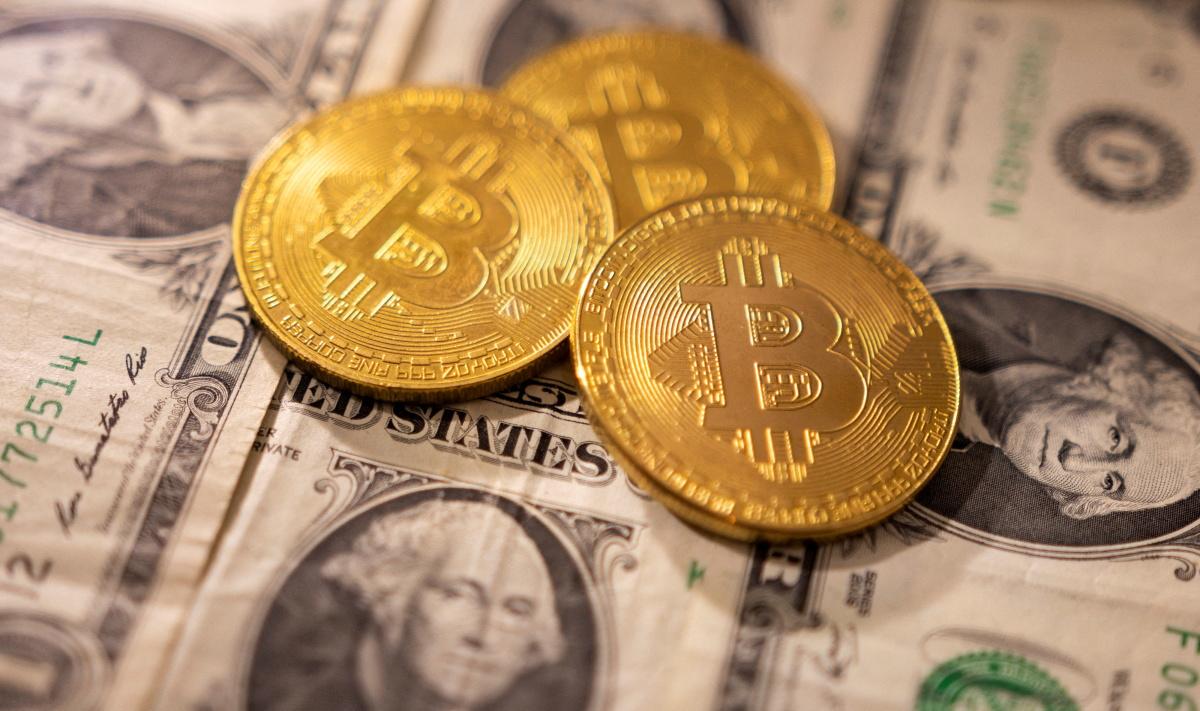
Bitcoin Hovers Near $65,000, Down Nearly 45% From Record High as Crypto Bear Market Persists This Week

Published

on

MacBook Pro

Bitcoin traded near $65,574 on Monday, up modestly on the day but still deeply entrenched in a bear market that has wiped out nearly half the cryptocurrency’s value since it hit an all-time high just nine months ago.

A modest gain within a much larger decline

Bitcoin rose $233.26, or 0.36%, to $65,574.34 as of early afternoon trading Monday, according to market data. The cryptocurrency opened the day at $65,333.12, roughly 1.6% higher than Sunday’s opening price, before drifting between roughly $64,974 and $65,574 through the morning session. Ethereum, the second-largest cryptocurrency by market value, also gained ground Monday, opening at $1,953.02, up 4.3% from the previous day.

Despite the day’s gains, the broader picture for bitcoin remains grim. According to Fortune’s daily price tracking, bitcoin’s price Monday morning represented an increase of roughly $901 from the previous day but a decline of approximately $54,090 compared with the same point a year earlier, a drop of more than 45% year-over-year.

Advertisement

A steep fall from October’s record high

Bitcoin reached its all-time high of $126,198.07 on Oct. 6, 2025, a peak that now sits roughly 48% above current trading levels. The decline since that high has unfolded in stages throughout 2026, punctuated by a brutal crash in February that sent the cryptocurrency plunging from more than $80,000 in late January down to around $60,000, before a partial recovery. A separate, sharper leg down occurred in June, when bitcoin suffered a roughly 20.48% monthly drop, extending a broader slide that pushed prices as low as the $58,000 range at points during the summer.

What’s driving the extended downturn

Analysts have pointed to a combination of factors behind bitcoin’s sustained weakness this year, including sizable outflows from bitcoin exchange-traded funds, reduced market liquidity, a stronger U.S. dollar, and generally weak risk appetite among both institutional and retail investors. Crypto analyst Michaël van de Poppe, commenting on the market’s technical posture during an earlier leg of the decline, said he was watching for signs of a genuine reversal that had yet to materialize. “I’d prefer to see it revert back with a strong liquidity wick, which hasn’t happened yet,” van de Poppe said, noting that the broader trend remained clearly downward at the time.

Advertisement

Wall Street’s outlook on bitcoin has grown increasingly divided as the year has progressed. Citi cut its 12-month bitcoin price target to $82,000 from $112,000 earlier this year, citing continued ETF outflows, weak investor interest, and slow progress on U.S. crypto legislation, while setting a bear-case scenario near $53,000. By contrast, Standard Chartered’s Geoffrey Kendrick has maintained a $100,000 year-end target for bitcoin, arguing that the current weakness could ultimately prove to be a buying opportunity if ETF selling pressure eases. Bernstein has gone even further, maintaining a $150,000 year-end target and arguing earlier this year that bitcoin had likely already found its bottom.

Monday’s gains tied to easing geopolitical tensions

The modest uptick in both bitcoin and ethereum prices Monday came as broader financial markets reacted positively to news that the United States had paused airstrikes against Iranian military targets over the weekend, part of a broader push to restore stability following weeks of escalating conflict in the Middle East. That de-escalation lifted risk appetite across a range of asset classes Monday, including stocks and cryptocurrencies, though it remains unclear whether the improved sentiment will prove durable given how volatile the broader conflict has been throughout the year.

A pivotal week ahead for risk assets

Advertisement

Bitcoin’s price action this week is likely to be shaped by several major catalysts beyond developments in the Middle East. The Federal Reserve is set to conclude a policy meeting this week, with markets closely watching for signals on the future path of interest rates. A dense slate of corporate earnings reports is also due from major companies across the stock market, and how investors treat risk-sensitive assets like cryptocurrency in response to both events is expected to offer clues about whether bitcoin’s recent stabilization can hold or give way to renewed selling pressure.

Financial advisers grow more cautious

The extended downturn has prompted some financial advisers to reconsider their stance on cryptocurrency as an investment class, according to reporting on the shift in sentiment. That caution reflects broader questions within the investment community about how much of bitcoin’s earlier rally was driven by speculative momentum versus durable institutional demand, a debate that has intensified as ETF outflows and weaker spot demand have weighed on prices throughout much of 2026.

A market still enormous despite the decline

Advertisement

Even after this year’s steep losses, bitcoin remains by far the largest cryptocurrency by market value, with a total market capitalization of roughly $1.33 trillion as of Monday, more than five times larger than Ethereum’s approximately $233 billion market cap. Bitcoin’s history includes far more dramatic swings than the current downturn; the cryptocurrency’s all-time low value was just $0.04865, recorded in July 2010, underscoring how dramatically its value has grown over the past decade and a half even accounting for this year’s sharp pullback from record highs.

With bitcoin trading well below the key $65,600 resistance level that some analysts have identified as critical for any near-term recovery attempt, traders are likely to watch closely for whether the cryptocurrency can build on Monday’s modest gains or whether the broader bearish trend that has defined 2026 reasserts itself. A decisive move above that resistance level could open the door to a push toward $70,000 or higher in the near term, according to some technical forecasts, while a failure to hold current levels could renew pressure toward the low-$60,000s or below, keeping bitcoin’s path forward this summer highly uncertain heading into the Federal Reserve’s policy decision and a heavy stretch of corporate earnings this week.

Continue Reading

Business

Rigetti Computing Stock Surges 12% on Hybrid Quantum Supercomputer Deal With HPE and Pittsburgh Center

Published

on

Rigetti Computing Stock Surges 11% as 108-Qubit Cepheus-1 Quantum System

NEW YORK — Shares of Rigetti Computing Inc. climbed more than 12 percent in early trading Monday after the company announced an expanded collaboration to develop a hybrid quantum-classical supercomputing testbed.

The stock rose $1.74, or 12.30 percent, to $15.89 as of 9:49 a.m. Eastern time. Trading volume was active as the market opened. The previous close was $14.15.

In a statement released Monday, Rigetti said it will deliver a 9-qubit Novera quantum computing system to a new testbed at the Pittsburgh Supercomputing Center. The project is funded by a $5 million National Science Foundation grant. The effort builds on the company’s existing strategic collaboration with Hewlett Packard Enterprise to commercialize quantum-enabled high-performance computing solutions.

The announcement comes as Rigetti, a developer of superconducting quantum computers, continues to advance its hardware and expand access to its systems. The company has positioned itself as a pure-play participant in the emerging quantum computing sector, which remains in early stages of commercial development.

Advertisement

Rigetti’s Cepheus-1-108Q system, a 108-qubit modular quantum computer based on its proprietary chiplet architecture, became generally available earlier this year. The system is accessible through the company’s Quantum Cloud Services platform and Amazon Braket. It consists of 12 interconnected 9-qubit chiplets and has reported median two-qubit gate fidelity of 99.1 percent.

In the first quarter of 2026, Rigetti reported revenue of $4.4 million, nearly triple the amount from the year-earlier period. The growth was attributed to increased government and commercial activity. Research and development spending totaled $19.9 million in the quarter. The company ended the period with approximately $569 million in cash, cash equivalents and available-for-sale investments and no debt.

Rigetti is scheduled to report second-quarter results on Aug. 6 after the market close. Analysts project continued revenue growth for the period.

In May, the company signed a letter of intent with the U.S. Department of Commerce for potential funding of up to $100 million over three years to support research and development aimed at scaling superconducting quantum computers. The arrangement could also involve the government taking an equity stake.

Advertisement

Rigetti has also secured an $8.4 million contract to deliver a 108-qubit system to India’s Centre for Development of Advanced Computing, with deployment planned for the second half of 2026. The company continues work on longer-term milestones, including plans for larger systems in the United Kingdom over the next several years.

Quantum computing seeks to solve certain complex problems more efficiently than classical computers by using quantum bits, or qubits, that can exist in multiple states simultaneously. Commercial applications are still limited, and the technology faces significant technical hurdles related to error rates, scalability and stability. Industry observers generally view widespread practical use as years away.

Wall Street analysts largely maintain constructive ratings on the shares. Consensus price targets in recent reports have centered in the mid-to-high $20s to low $30s, implying substantial upside from current levels according to those forecasts. The stock has experienced significant volatility, with a 52-week range of $12.53 to $58.15.

Investors evaluating Rigetti for the longer term weigh the company’s technological progress and government support against its limited current revenue, ongoing cash burn and the uncertain timeline for broader commercial adoption of quantum computing. The firm’s strong balance sheet provides runway for continued investment in manufacturing capacity, refrigeration systems and architecture improvements.

Advertisement

The hybrid approach pursued with HPE and the Pittsburgh Supercomputing Center reflects a broader industry trend of integrating quantum processors with classical high-performance computing resources. Such testbeds allow researchers to explore practical workflows while hardware capabilities advance.

Rigetti’s modular chiplet design is intended to support scaling to higher qubit counts more efficiently than monolithic approaches. Management has emphasized improvements in fidelity and system performance as key priorities throughout 2026.

The stock’s early Monday advance followed a period of pressure in quantum computing shares earlier in the month, as investors rotated away from high-beta technology names after strong prior gains. Broader market conditions and sentiment toward speculative technology sectors continue to influence trading in the name.

As of mid-morning Monday, Rigetti’s market capitalization stood near $4.7 billion based on publicly traded shares. The company remains focused on executing its technical roadmap while expanding customer access through cloud platforms and on-premise deployments.

Advertisement

Whether the shares prove a long-term investment depends on the pace of technological milestones, the conversion of research collaborations into sustained revenue, and the overall development of the quantum computing market. Near-term catalysts include the upcoming earnings report and further progress on government-supported projects.

The Pittsburgh collaboration adds another data point to Rigetti’s expanding network of academic and industry partnerships. The delivery of the Novera system is expected to support research into hybrid algorithms and applications that combine quantum and classical computing resources.

In an industry characterized by rapid technical claims and long commercialization horizons, Rigetti’s combination of hardware advancements, cash reserves and public-sector engagement has kept it among the more closely followed pure-play names. Monday’s stock move reflected investor reaction to the latest partnership expansion amid ongoing interest in the sector’s long-term potential.

Advertisement
Continue Reading

Business

Kforce Inc. (KFRC) Q2 2026 Earnings Call Transcript

Published

on

OneWater Marine Inc. (ONEW) Q1 2026 Earnings Call Transcript