

Business
General Mills debuts protein-filled Honey Nut Cheerios





Harbor Capital is an asset manager focused on curating an intentionally select suite of active ETFs that they believe have the potential to produce compelling, risk-adjusted returns within a portfolio. Note: This account is not managed or monitored by Harbor Capital, and any messages sent via Seeking Alpha will not receive a response. For inquiries or communication, please use Harbor Capital’s official channels.

Form 4 Ciena Corp For: 30 June

Remote Work Is Making It Harder for Grads to Find (and Keep) Jobs
Available for over a year
More than 15,000 people have responded to a Government review into access to banking services in just three weeks since it opened. The review comes after a decade which has seen almost 7,000 bank branches close, with hundreds more happening this year and some announced in just the past few days. Richard Lloyd, a former Director at the consumer group Which?, gives his first interview since being appointed to lead the review.
HMRC must “learn lessons” for the future after incorrectly suspending child benefit payments from thousands of claimants last year. That is the conclusion of a report published this week by the National Audit Office. The mistake happened during the wider roll out of a pilot scheme designed to cut some of the hundreds of millions of pounds estimated to be lost to fraud and error in child benefit claims each year.
People who are 66 today, born 27 June 1960, are the youngest people who will get the Winter Fuel Payment this year. Normally the qualifying date is three months later. How does the payment work?
And, VAT has been cut on summer attractions used by children – from theme parks to fast food – what kind of discounts are there?
Presenter: Paul Lewis
Reporters: Sarah Rogers and Jo Krasner
Researcher: Catherine Lund
Editor: Jess Quayle
Senior News Editor: Sara Wadeson
(First broadcast at midday on Saturday 27th June, 2026)

Cruise passengers left stranded in Budapest for two days during a heatwave after the ship’s air conditioning failed will now be flown home.
Multiple people booked on to a river cruise aboard the Skyla, operated by Tui, complained to the BBC’s Your Voice about a lack of information and said elderly passengers were struggling as temperatures in the city rose above 35C this week.
Tui has apologised and told passengers it has arranged flights home for tomorrow and a full refund.
Judith Dunn, 83, had paid £2,000 for the planned trip along the Danube River and told the BBC the heat on board was “absolutely stifling”.
She was one of 146 people booked on the trip, which was meant to be a special treat for her and a friend.
It would have spanned Judith and her late husband’s 60th wedding anniversary and the 80th birthday of her friend, whose husband passed away a year ago.
She said it turned into a “nightmare”. Judith and other passengers arrived in the Hungarian capital on Monday lunchtime, but were brought to the ship only to be told the air con had broken.
Around 1930 local time, she said they were transferred to hotels and had to make their own arrangements for food.
“We have since found out that the air con has been broken for a little while, in fact the people who were here last week on a cruise had to be in a hotel as well. So they did know about this, so we were a little bit upset by that.”
Europe has been in the grip of a heatwave, and temperatures are forecast to hit 39C in Budapest on Tuesday.
Passengers were today taken back onto the ship for lunch.
Another traveller, Melanie Roberts, praised the crew for ensuring there was plenty of water.
But she said there were “a few people who are quite distressed with the situation”.
“There are some elderly people on here and people who are not as mobile as others.
“I think basically now we’re getting to… the stage where people just want to go home.”
In a statement, Tui River Cruises told the BBC it was “aware of a technical issue affecting the air conditioning on Tui Skyla following the extreme heat in Budapest, and we’re very sorry for the disruption this is causing to our customers’ holidays”.
“The ship is currently in Budapest, where engineers and specialist teams are working to fix this as quickly as possible.”
Following the statement, a letter given to passengers, seen by the BBC, said more time was needed to fully fix the problem and the decision had been taken to cancel the cruise.
People affected will receive a full refund and £100 voucher as a gesture of goodwill.


MBA with a focus Healthcare and Technology sectors.
Analyst’s Disclosure: I/we have no stock, option or similar derivative position in any of the companies mentioned, and no plans to initiate any such positions within the next 72 hours. I wrote this article myself, and it expresses my own opinions. I am not receiving compensation for it (other than from Seeking Alpha). I have no business relationship with any company whose stock is mentioned in this article.
This article is intended to provide informational content and should not be viewed as an exhaustive analysis of the featured company. It should not be interpreted as personalized investment advice with regard to “Buy/Sell/Hold/Short/Long” recommendations. Financial models presented here, including DCF, rNPV, and scenario analyses, are illustrative tools based on the author’s assumptions and are highly sensitive to inputs; small changes can materially alter outputs. The predictions and opinions presented reflect a probabilistic approach, not absolute certainty. Efforts have been made to ensure accuracy, but inadvertent errors may occur. Readers are advised to independently verify information and conduct their own research. Investing in stocks involves inherent volatility and risk. Before making any investment decisions, it is crucial for readers to conduct thorough research and assess their financial circumstances. The author is not liable for any financial losses incurred as a result of using or relying on the content of this article.
Seeking Alpha’s Disclosure: Past performance is no guarantee of future results. No recommendation or advice is being given as to whether any investment is suitable for a particular investor. Any views or opinions expressed above may not reflect those of Seeking Alpha as a whole. Seeking Alpha is not a licensed securities dealer, broker or US investment adviser or investment bank. Our analysts are third party authors that include both professional investors and individual investors who may not be licensed or certified by any institute or regulatory body.
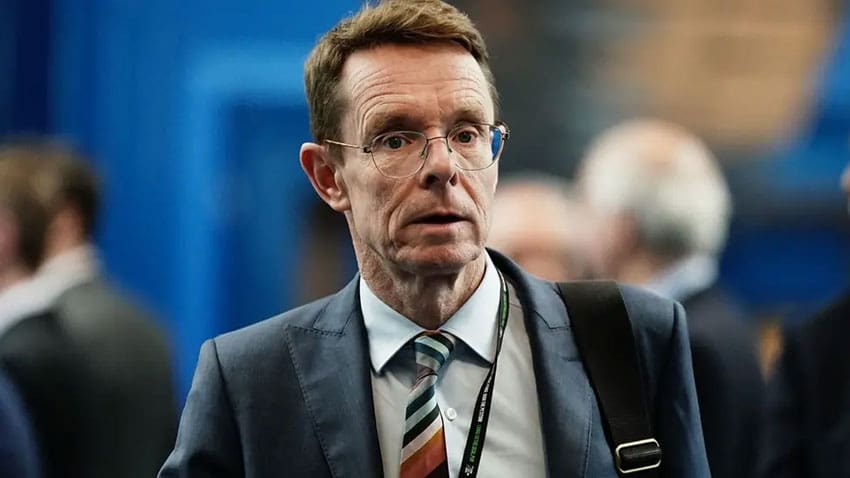
There is a particular sort of Englishman who can walk into a room full of sceptics, sceptical bankers and business owners like me, sceptical councillors and sceptical journalists with their arms folded and their expense-account pastries going cold, and leave forty minutes later having quietly persuaded the lot of us that the country is not, after all, finished. Andy Street is that Englishman.
I spent an afternoon recently listening to him lay out Prosper UK, the movement he has launched with Ruth Davidson to win back the seven million voters who feel they have nowhere left to put their cross, and I came away thinking something I had not thought in a worryingly long time. Competence, it turns out, is a political philosophy all on its own.
From having headed up CBM, the publishers of Business Matters, for over two decades I have spent enough years watching politicians promise the moon and deliver a damp car park to be cured of any romance about the lot of them. But Street is a different animal, and the reason is dully, gloriously unsexy: he has actually run things. He spent the best part of a decade as managing director of John Lewis, a shop that, last time I checked, managed to sell socks without bankrupting the nation. Then he spent seven years as Mayor of the West Midlands, during which something like 100,000 jobs arrived and roughly £10 billion of investment followed them through the door. He did not tweet the economy into existence. He went out, in an unfashionable suit, and got it.
Prosper UK is, in a sense, the same instinct dressed for national service. Davidson and Street reckon there are seven million Britons who believe in enterprise, sound money and public services that actually work, yet feel that no party will own all three at once. Tens of thousands signed up within a fortnight, which tells you the hunger is real. You can sneer at the centre ground all you like, and plenty of clever people do, but it is where most of the country quietly lives and works and pays its taxes.
Which brings me, inevitably, to the other Andy.
By the time you read this, Andy Burnham may well be measuring the curtains in Downing Street. The man who spent years as the King in the North, having decamped to Westminster as the new Member for Makerfield, is now the overwhelming favourite to lead the country, and he has arrived with a genuinely interesting prospectus. His “No 10 North”, the plan to physically wrench decision-making out of Whitehall and plant it in Manchester, is the boldest thing anyone has said about the British constitution in years. You can read the full sweep of it in TIME’s account of his economic and devolution agenda, and whatever you make of the politics, the ambition is real.
Here is the thing that nobody in either tribe seems willing to say out loud. These two men are, on the economy, arguing for almost exactly the same thing.
Both believe the British state is too centralised, too timid and too obsessed with the square mile around the Treasury. Both have spent their careers proving that a metro mayor with real powers can shift the dial in a way no Whitehall mandarin ever has. The Institute for Government has documented how Greater Manchester’s mayoralty became the template the rest of the country now copies. And the case for going further is hardly some fringe obsession of mine; Business Matters has been making it for years, from the academics arguing that regional disparities can be tackled by more devolution to the London business lobby that, remarkably, agrees Burnham is right to put devolution front and centre.
So why am I urging the incoming Prime Minister to take a quiet cup of tea with a Conservative he beat to nothing? Because Burnham has the mandate and Street has the manual.
Burnham is a brilliant campaigner, a man who can summon a crowd and a cause with equal ease. But running a national economy is not a rally. It is procurement, planning, skills funding, the unglamorous grinding business of getting a tram line built before the next election rather than the one after. Street has done precisely this, at scale, and he has done it while keeping the private sector in the room rather than haranguing it from the steps outside. When Japanese investors poured £118 million into Greater Manchester, business leaders rightly warned that Whitehall must now match that confidence. Confidence is built by people who deliver, not people who announce.
There is a national vice we really must shake off, and it is the belief that wisdom only ever comes wrapped in your own colours. The Americans call it tribalism; I call it self-harm. If the next Prime Minister genuinely wants to rewire Britain, he could do a great deal worse than borrow the wiring diagram from the one man who has already done the job and lived to tell the tale.
Sit down with Street, Andy. Order the good biscuits. Listen. The economy you are about to inherit is far too important to leave in the hands of people who merely agree with you.

Richard Alvin
Richard Alvin is a serial entrepreneur, a former advisor to the UK Government about small business and an Honorary Teaching Fellow on Business at Lancaster University.
A winner of the London Chamber of Commerce Business Person of the year and Freeman of the City of London for his services to business and charity. Richard is also Group MD of Capital Business Media and SME business research company Trends Research, regarded as one of the UK’s leading experts in the SME sector and an active angel investor and advisor to new start companies.
Richard is also the host of Save Our Business the U.S. based business advice television show.
Business
Oracle Stock Edges Higher Today, Stabilizing After Worst Week Since the Dot-Com Bust on AI Debt Worries
Oracle shares ticked higher Tuesday, offering a modest reprieve after the software giant suffered its steepest weekly decline in roughly 25 years amid mounting investor anxiety over the scale of its debt-fueled bet on artificial intelligence infrastructure.
Shares of the Austin, Texas-based company were trading at $148.37 as of 10:34 a.m. EDT, up 61 cents, or 0.41%, on the day. The slight gain follows a brutal stretch in which the stock fell 19% over five trading sessions last week, declining at least 2.6% on each individual day, marking Oracle’s worst weekly performance since a 20% plunge in August 2001, during the depths of the dot-com bust.
The selloff traces back to Oracle’s fiscal fourth-quarter earnings report, released June 10. The headline numbers were strong: Oracle beat Wall Street expectations on both earnings and revenue, with adjusted earnings per share of $2.03 against analyst estimates of $1.96, while revenue climbed 21% year-over-year to $19.18 billion, also topping the $19.10 billion consensus. Cloud revenue, the segment most closely tied to Oracle’s AI ambitions, surged 47% to nearly $10 billion for the quarter. Despite those beats, shares dropped roughly 10% in extended trading that evening after Oracle disclosed plans to raise an additional $20 billion through debt and equity financing on top of amounts already announced, bringing total planned fiscal 2027 financing to around $40 billion, following a fiscal 2026 in which the company had already raised $43 billion in debt and $5 billion in equity to fund its rapidly expanding data center footprint.
That spending has continued to weigh on sentiment in the weeks since. Oracle’s capital expenditures jumped 162% in fiscal 2026 to nearly $56 billion, while the company posted negative free cash flow of almost $24 billion for the year. By the end of May, Oracle’s total debt stood at roughly $130 billion, and the company has indicated that net cash outlays for capital expenditures in fiscal 2027 could reach approximately $70 billion, not including $20 billion to $25 billion in prepayments expected from customers. Oracle is racing to bring data center capacity online alongside cloud rivals Amazon, Microsoft and Google, despite lacking the ability to sell as complete a technology stack as some of those larger competitors.
Much of Oracle’s long-term bull case rests on its enormous backlog of contracted future business, known as remaining performance obligations, which stood at roughly $638 billion as of the most recent quarter. Bank of America analysts, who recommend buying Oracle shares, have noted that more than half of that backlog comes from a single customer: OpenAI. That concentration has become a growing point of concern among some investors, particularly amid separate reports that OpenAI could push back its long-awaited initial public offering to 2027, a development that rattled sentiment across AI-linked software and infrastructure stocks more broadly last week. At one point during the selloff, Oracle’s total market capitalization actually fell below the size of its own backlog, an unusual dynamic underscoring just how skeptical some investors had become about translating that contracted demand into near-term profit.
Adding to the unease, Oracle disclosed in its annual report that its workforce shrank 13%, a reduction of roughly 21,000 employees, to about 141,000 workers in fiscal 2026, with the company recording $1.84 billion in associated restructuring costs tied in part to a broader push to integrate artificial intelligence tools into roles previously handled by sales, marketing and other staff. Vice Chairman Jeffrey Henley also drew attention after disclosing a $63.7 million sale of company shares on June 24, adding to investor unease about insider activity even as the company pursues additional equity issuance that could further dilute existing shareholders.
Leadership changes have also factored into the broader narrative around the stock. Oracle co-founder and chairman Larry Ellison was notably absent from the company’s most recent earnings call, leaving dual chief executives Clay Magouyrk and Mike Sicilia, along with recently hired finance chief Hilary Maxson, formerly of Schneider Electric, to field analyst questions. As Oracle shares have retreated, Ellison has slipped on rankings of the world’s wealthiest people, falling behind Google co-founders Larry Page and Sergey Brin, Amazon founder Jeff Bezos and Dell Technologies founder Michael Dell.
Wall Street’s reaction to the turmoil has been mixed even as the stock attempts to stabilize. Citic Securities downgraded Oracle to “Add” from “Buy” with a $200 price target as the selloff deepened, while RBC raised its own price target to $190 but maintained a cautious “Sector Perform” rating, citing uncertainty over whether Oracle’s data center capacity is coming online quickly enough to match its massive backlog. BNP Paribas has flagged that fiscal 2027 capital expenditures could climb as high as $80 billion to $100 billion under the company’s Stargate data center initiative, a figure that has stoked further concern about free cash flow and debt sustainability. Evercore, which maintains a buy rating on the stock, struck a measured tone in a recent note to clients, writing that financing and the pace of equity issuance are likely to remain the central investor debate in the near term.
Not every recent headline has been negative. Real estate developer Related Digital and investment firm Blackstone announced they had secured funding for a $16 billion Oracle data center site in Michigan, a sign that institutional capital remains willing to back the company’s infrastructure ambitions even amid the broader stock turmoil. Jefferies has also maintained a Buy rating on the shares in recent days, reflecting a continued, if narrower, base of Wall Street support for the stock even after its dramatic decline.
Oracle stock remains down roughly 23% over the past year, well off its 52-week high of $345.72 and trading closer to its 52-week low of $134.57. Tuesday’s modest uptick offers little more than a pause in what has otherwise been one of the more turbulent stretches of the company’s recent history, with the central question hanging over the stock largely unchanged: whether Oracle’s massive, debt-fueled bet on artificial intelligence infrastructure will ultimately translate its enormous contracted backlog into sustainable profit, particularly given how heavily that backlog remains concentrated in a small number of large AI customers.

Automotive expert Mike Caudill analyzes the future of electric vehicles in the U.S. as rising gas prices shift consumer interest on ‘The Bottom Line.’
BMW on Tuesday announced the completion of its $1.7 billion investment in South Carolina, where the German carmaker will produce fully electric vehicles.
The luxury auto brand said it had completed the expansion of a plant in Spartanburg and the construction of another in Woodruff.
The company also unveiled its fifth-generation BMW X5, which will be the first fully electric BMW assembled in the United States, starting later this year. At least five more fully electric models are scheduled to be assembled in the U.S. by 2030.
CHINA MOVES TO BAN FEATURE COMMONLY SEEN ON TESLA VEHICLES OVER FEAR OF TRAPPED PASSENGERS

BMW unveiled the BMW iX5 on Tuesday, the first fully electric vehicle in its fleet, at one of its South Carolina plants. The German automaker said it has completed its $1.7 billion investment in two production plants in the state. (BMW / Fox News)
“When we announced our investment plans for South Carolina in 2022, we made a clear commitment to the future of the BMW Group in the United States,” said Milan Nedeljković, member of the board of management of BMW AG. “Today, we are delivering on that commitment. The completion of our investments in Plant Spartanburg and Plant Woodruff demonstrates our confidence in the United States and reinforces South Carolina’s role at the center of BMW Group’s global operations.”
The main plant in Spartanburg was established more than three decades ago and has assembled 7.3 million BMW vehicles since 1994, the company said. Nearly 3 million BMWs have been exported from the United States, valued at over $113 billion.
BMW RECALLS NEARLY 200K VEHICLES DUE TO FIRE RISK, SAYS OWNERS SHOULD PARK OUTSIDE
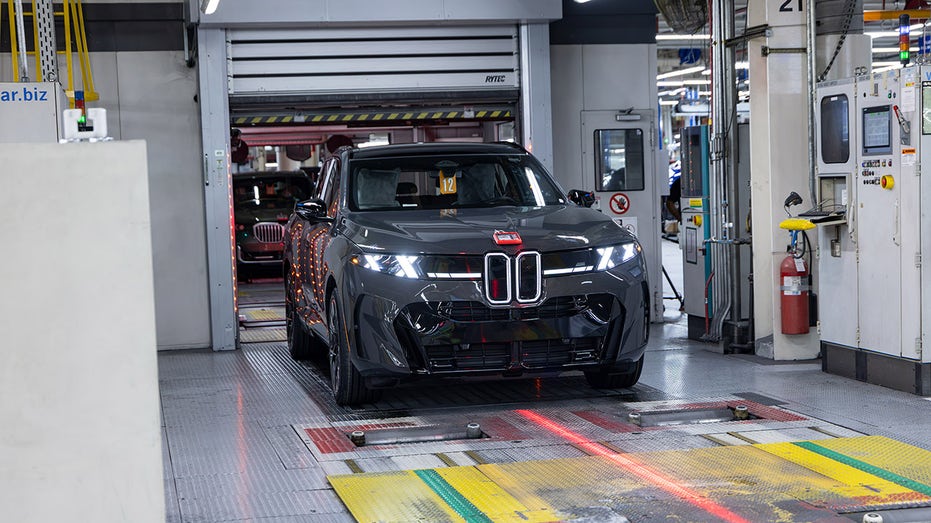
The BMW iX5 seen on the production floor in Spartanburg, South Carolina. (BMW / Fox News)
In 2025, 412,799 BMW X models were assembled at Plant Spartanburg, with roughly half of those exported to nearly 120 countries, BMW said.
On June 16, the European Parliament voted to approve cutting duties on many U.S. goods imports.
BMW marked Tuesday’s milestone with a “Home of X” event in Spartanburg while unveiling the new BMW X5.
The X5 will be the first offered with five drivetrain options, the company touted: internal combustion, battery electric, plug-in hybrid electric, diesel, and hydrogen fuel cell.
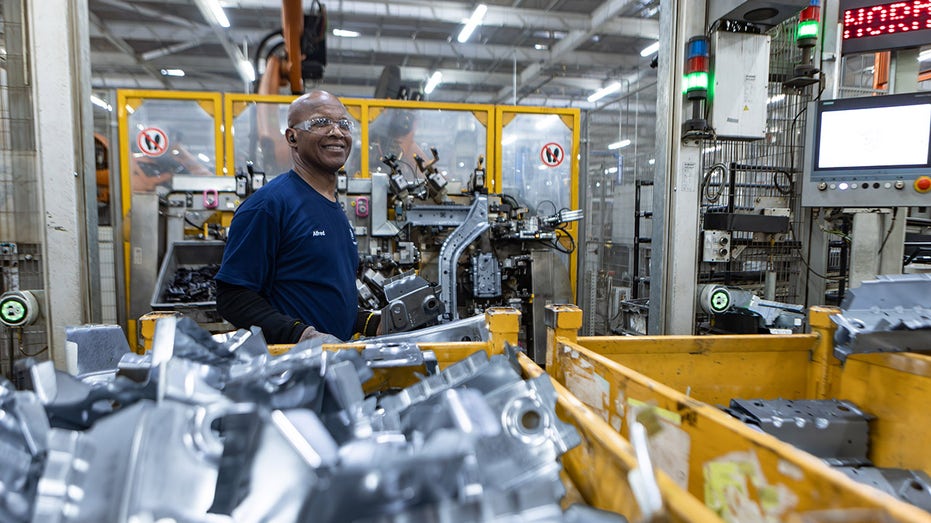
A BMW plant worker seen at the luxury auto brand’s Spartanburg, South Carolina plant. (BMW / Fox News)
GET FOX BUSINESS ON THE GO BY CLICKING HERE
“The new BMW X5 demonstrates our belief that innovation and customer choice go hand in hand,” said Sebastian Mackensen, president and CEO of BMW of North America. “Our customers both in the U.S. and around the world will love the new BMW X5 – and our technology-open approach puts them in the driver’s seat to enjoy the performance and premium experience that define BMW, regardless of which drivetrain they choose.”
The company said its operations in the U.S. support more than 120,000 jobs and contribute more than $43.3 billion annually to the U.S. economy.


I have rebranded to embrace my working-class and public school roots. This is a testament for how successful investing can be life changing.I have worked in Financial Services for over 15 years. I have a Bachelors in Finance, where I was a scholarship Division 1 athlete (tennis). After working in NY for three years, I relocated to North Carolina for my MBA and I am fortunate to split my time between Charlotte & Asheville.I keep my portfolio up-to-date and take pride in writing about funds, stocks, and sectors I actually invest in. I know my followers appreciate this approach.My strategy: Invest in quality, diversify, add at the right times, and focus on the long run. Chasing risk, trying to get “rich” quickly, or following advice you don’t understand are all pitfalls I made. That experience was a great teacher and I hope to help others learn what I have along the way.Broad market: DIA, VOO, QQQM / TDIV, RSPSectors/Non-US: XLE / IXC; IDU / BUI, FEZ / EZU, SCHF, BBCA, FLGB, FLJP, EWYMetals: CEF, SGOL, SLV, XMEStocks: JPM, MCD, WMT, MAADebt: Municipal bonds from NCI also contribute to the investing group CEF/ETF Income Laboratory where I specialize in macro analysis. Features of CEF/ETF Income Laboratory include: managed income portfolios (targeting safe and reliable ~8% yields) making use of high-yield opportunities in the CEF and ETF fund space. These are geared toward both active and passive investors of all experience levels. The vast majority of holdings are also monthly-payers, for faster compounding and steady income streams. Other features include 24/7 chat, and trade alerts. Learn more.
Analyst’s Disclosure: I/we have no stock, option or similar derivative position in any of the companies mentioned, and no plans to initiate any such positions within the next 72 hours. I wrote this article myself, and it expresses my own opinions. I am not receiving compensation for it (other than from Seeking Alpha). I have no business relationship with any company whose stock is mentioned in this article.
Seeking Alpha’s Disclosure: Past performance is no guarantee of future results. No recommendation or advice is being given as to whether any investment is suitable for a particular investor. Any views or opinions expressed above may not reflect those of Seeking Alpha as a whole. Seeking Alpha is not a licensed securities dealer, broker or US investment adviser or investment bank. Our analysts are third party authors that include both professional investors and individual investors who may not be licensed or certified by any institute or regulatory body.

Warren Buffett’s 7 Money Habits That Made Him a Billionaire | Wealth & Success Tips 2026

Patient tested for suspected Ebola virus at Glasgow hospital

Harbor Emerging Markets Select ETF Q1 2026 Commentary (EMES)

No Jackpot Winner as $257 Million Prize Rolls Over to $269 Million Monday Draw

Renter of Home in Anne Heche Crash Denies Settlement With Son

Two goals and an assist by sheer aura: Cristiano Ronaldo just entered the World Cup chat
Warren Buffett’s 7 Money Habits That Made Him a Billionaire | Wealth & Success Tips 2026

How Much Did JasonTheWeen Make Streaming in College? #wealth #podcast #finance

First trillionaire of the world & most richest person #money #rich #business
-
Sports7 days ago
Two goals and an assist by sheer aura: Cristiano Ronaldo just entered the World Cup chat
-

 Fashion4 days ago
Weekend Open Thread: Staud – Corporette.com
-

 Politics5 days ago
The House | Manchesterism won’t survive the painful trade-offs unless it gets citizens on board
-

 Crypto World16 hours ago
Strategy authorizes up to $1.25B in Bitcoin sales under new capital plan
-

 Politics5 days ago
Potential 2028er World Cup attendee leaderboard
-

 Business4 days ago
Asia stock markets slide as tech shares slump
-

 News Videos2 days ago
MAJOR BITCOIN & MARKET UPDATE!!!! (MUST WATCH ASAP!!!)
-

 Tech5 days ago
A Look At A Gaggle Of Transputer Boards
-

 Crypto World7 days ago
Securitize Wraps Roubini's SEC-Registered ETF as Dubai VARA Digital Security
-
Crypto World7 days ago
Bitcoin (BTC) Dips Below $62K, Ethereum (ETH) Plunges 6% Daily: Market Watch
-
 Crypto World5 days ago
Dell (DELL) Shares Tumble Over 5% Following Analyst Downgrade to Hold
-

 Crypto World3 days ago
Coinbase, Circle Deepen Crypto Stock Losses Despite Resilient S&P 500
-
Business7 days ago
Entergy settles forward sale agreements, raises $672 million in cash proceeds
-

 Crypto World4 days ago
Kraken's xStocks Opens Bending Spoons IPO Registration to EEA Retail
-

 Business15 hours ago
Australia treasurer says alleged access of prime minister’s bank data ’incredibly concerning’
-

 Sports4 days ago
FIH Pro League: India defeat Pakistan 7-1, register biggest win of campaign | Other Sports News
-

 Crypto World5 days ago
Bitcoin Sparks $600M Hourly Liquidations With $65,000 Set To Become Resistance
-

 Tech3 days ago
Bluekit phishing kit adopts browser-in-the-middle for login theft
-

 Tech3 days ago
Russian hackers now target Signal backup recovery keys
-
 Crypto World4 days ago
Hyperliquid Named on Singapore MAS Investor Alert Register
You must be logged in to post a comment Login