





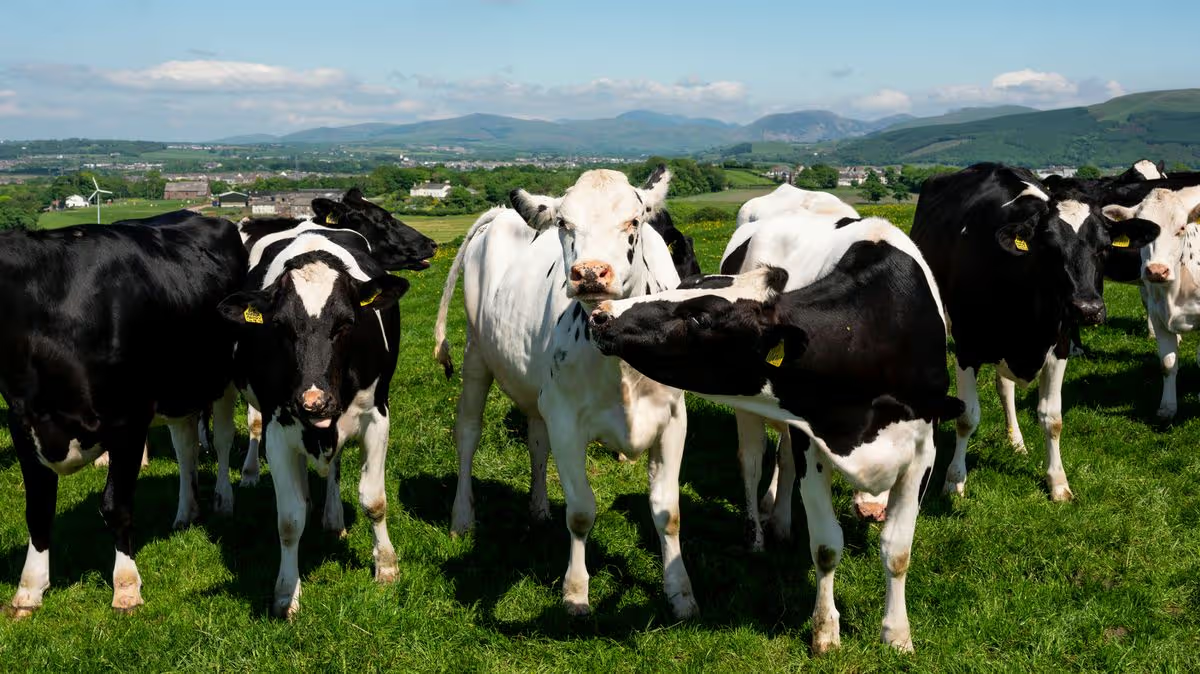
James and Katie Allen want to open the heritage tannery at Great Cotmarsh Farm near Broad Town

Cows in a field(Image: DC Media)
Plans to establish the UK’s first micro-scale vegetable tannery for cattle hides at a farm in the Wiltshire countryside have been revealed. James and Katie Allen are seeking to launch the heritage tannery at Great Cotmarsh Farm near Broad Town.
The pair acquired the farm in 2023 and began developing a varied portfolio of business ventures, including a glamping site featuring a shepherd’s hut, and a farm classroom for fashion students teaching sustainable production techniques such as wool-weaving and natural dye-making.
They now intend to add leather production to their offering, through the establishment of a heritage tannery – and have lodged a planning application for change of use to an existing farm building which they reconstructed in 2024.
Their agent, agricultural consultant Woolley & Wallis, has informed the council: “The use of the building for leather tanning of their own hides from the herd established on the farm is still considered agricultural.
“The use as a tannery is ancillary to their agricultural enterprise, much like a farm shop selling their own produce or a farmer producing wine from his grapes on site.
“The tannery produces, sustainable, high-quality, vegetable-tanned cow leather that the applicant can trace back to the exact animal reared on the land.”
The UK was formerly a global leader in leather production for everything from footwear to saddles, with every market town boasting a tanner. However, tanning is a declining craft, and the tanneries still operating rely on dangerous chemicals to speed up the procedure.
“Traditional oak bark tanning is now classified as critically endangered on the Heritage Crafts red list,” said James.
“We are in danger of losing the knowledge from the country completely as the last tanning experts retire.
“Our leather will be made to produce our own leather goods, but also to supply brands looking for hero collections that want true transparency along the leather supply chain, and for artisan leather workers and makers.
“In the future, we’d like to be able to offer farmer returns, enabling farmers to generate another income stream from their cattle enterprise.”
Our micro-scale tannery is an important part of the field-to-fibre story and knowledge exchange we are building on the farm, and we hope to support the creation of other micro tanneries to help reinvigorate a heritage craft that once was a burgeoning part of British enterprise.
A ruling from Wiltshire Council is expected by mid-June.














































You must be logged in to post a comment Login