

Business
Gerry Harvey backs Frank Wilson's family into Mt Romance



Business
Dabur Q1 updates: Co expects double-digit revenue growth as rural demand stays ahead of urban

The company, in its quarterly update for the period ended June 30, 2026, said consumer sentiment remained resilient despite geopolitical concerns and hyperinflationary pressure in some of its key markets. Dabur said its business trajectory improved sequentially over the previous quarter, and it expects consumption in international markets to improve in the coming quarters as the Middle East situation eases.
In India, both rural and urban markets sustained their growth trend, with rural demand continuing to outpace urban. This is important for Dabur as a large part of its portfolio, including health, oral care, hair care and beverages, has strong rural and semi-urban reach.
The India FMCG business is expected to post near double-digit growth during the quarter. The home and personal care business is likely to grow at a near-teens level, led by strong demand for hair oils and shampoos. Dabur said hair oils and shampoos are expected to deliver high-teens growth, supported by perfumed and coconut hair oils.
Oral care is also expected to report near double-digit growth. Dabur said growth was broad-based across the segment, with the new herbal franchise and Meswak recording strong double-digit growth. Its flagship Red Toothpaste and Lal Dant Manjan brands also continued their upward trend.

Also Read: Vedanta Power Q1 update: Sales rise 38% on Meenakshi boost, Sakti shutdown weighs
The healthcare business is expected to show sequential improvement, with mid-single-digit growth. Key brands such as Hajmola, Pudin Hara, Dabur Honitus, Isabgol and the health juices range are expected to deliver robust double-digit growth. Dabur Glucose, which was affected in the early part of the quarter, recovered sequentially later.The food business continued to grow at a high double-digit pace. Badshah is expected to deliver high-teen growth, while the beverages portfolio recovered during the quarter. Dabur said Real Activ juices and coconut water recorded strong double-digit growth.
The company’s emerging channels, including e-commerce, quick commerce and modern trade, are expected to report strong double-digit growth. General trade also improved sequentially, with growth seen across urban and rural markets. Dabur said Project Saksham, its distribution and route-to-market optimisation initiative, is showing early positive signs.
The international business is expected to grow in the high teens in rupee terms, even with severe pressure in the Middle East. Egypt, Turkey, Bangladesh and the UK each recorded strong double-digit growth in rupee terms.
Dabur said elevated inflation during the quarter, especially in hair care, was managed through calibrated price hikes, helping maintain stable operating margins. Profit after tax is expected to grow at a double-digit level. The company said detailed financial results will be announced after board approval.

Warrants for the brand can be issued from July 10, although the LME-registered warehouses holding Adani Copper metal must include the brand in their off-warrant stock reports with immediate effect, the LME added.
The brand is produced by Adani Enterprises-owned Kutch Copper, one of India’s largest copper smelters, with annual production capacity of 500,000 metric tons. The company applied for LME registration in August 2025.
According to Adani, this $1.2 billion Kutch Copper facility in the western state of Gujarat is the world’s biggest single-location plant of its type, expected to reduce India’s reliance on imported copper.
India imported 238,080 tons of refined copper in 2025, down 18% from a year earlier, according to Trade Data Monitor data, with Japan remaining the country’s largest supplier. (Reporting by Polina Devitt; Editing by Louise Heavens)

German employees will be required to visit a doctor in person and obtain a sick note on the first day of illness, under tough new rules unveiled by Chancellor Friedrich Merz as part of a sweeping package to revive the country’s stagnant economy.
The measure scraps the current system, under which workers could secure a certificate over the phone and did not need one at all until their third day off. It is a marked contrast with Britain, where employees can self-certify for a full seven days before a fit note is required.
“The number of sick days is too high,” Merz told journalists. “We are creating a set of tools that will enable those involved, both employees and companies, to correct this. We know this is a tough decision. But we can no longer afford the competitive disadvantage caused by prolonged absences from work.”
Germans take an average of roughly 15 working days of sick leave a year, according to figures from the Federal Statistical Office, lower than France and most Nordic countries but well above Sweden, the Netherlands, Denmark, Poland and Italy. By comparison, the latest Office for National Statistics data shows around 149 million working days were lost to sickness or injury in the UK last year, some 2 per cent of all working hours, or just over four days per worker. British absence rates have nonetheless been climbing, with UK sick days recently hitting a 15-year high, driven in large part by mental health conditions.
While employers’ groups welcomed the German move, it has infuriated the country’s powerful trade unions. Frank Werneke, head of the services union Verdi, accused Merz of fostering “a culture of distrust of employees”.
Doctors are equally unimpressed, warning the requirement will overwhelm general practice with appointments that serve no clinical purpose. “Our practices would be flooded with patients who don’t need in-person care and would be better off in bed,” said the German Association of Family Physicians, which branded the measure “an absolute catastrophe”.
The sick note crackdown forms part of a broader reform programme negotiated between Merz’s centre-right Christian Democratic Union and its coalition partner, the centre-left Social Democrats. Alongside a promised bonfire of red tape, the retirement age could rise gradually from 67 to as high as 70 in the coming decades, while tax cuts for lower and middle earners will be funded by higher rates on incomes above €250,000 (£215,000).
For UK business owners watching from across the Channel, the episode is a reminder that absence management remains a live policy battleground, and that handling staff sickness fairly and lawfully is as much about trust and process as it is about cost. It also underlines how seriously Germany’s slowdown is being taken in Berlin: sluggish growth in Europe’s largest economy is one of the factors expected to shape the continent’s economic pecking order through 2040.
Carsten Brzeski, an economist at Dutch bank ING, said the reforms were overdue but should not be oversold. “It may have taken longer than many hoped, but Germany’s long-awaited summer of reforms has finally arrived,” he said. “It is not a package that will morph a stagnating economy into a booming economy overnight. But it is a package that could create the preconditions, the framework, for future growth.”

Amy Ingham
Amy is a newly qualified journalist specialising in business journalism at Business Matters with responsibility for news content for what is now the UK’s largest print and online source of current business news.

VGW has announced chief executive and founder, Laurence Escalante, will step down from his role, effective immediately.


Pope Leo praises US history of welcoming immigrants at 250th anniversary
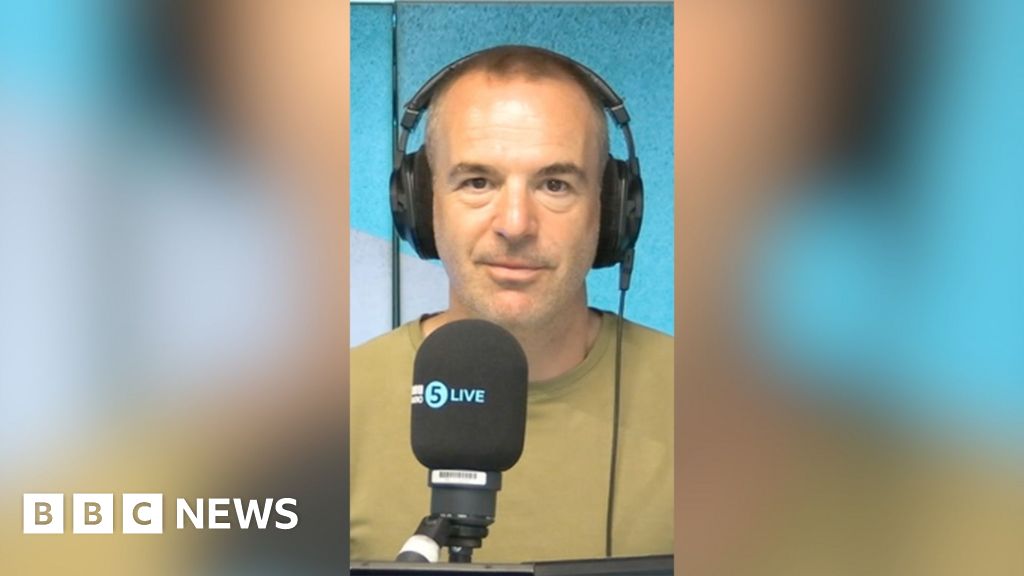
Martin is revealing everything you need to know right now to cut the cost of getting away.

Business owners could face fines even when they pay their PAYE and VAT in full and on time, simply for using the wrong payment channel, under new rules being consulted on by HMRC.
The government is seeking views on plans to require businesses to pay their PAYE and VAT return liabilities by Direct Debit, with the aim of reducing late payment, limiting the flow of debt and simplifying the payment process to cut errors. The consultation runs until 16 August 2026.
Responses from the business community and tax agents will, HMRC says, help determine the scope of any changes, whether safeguards are needed, and which taxpayers should be excepted from the requirement. The Institute of Chartered Accountants in England and Wales notes that exceptions are proposed for those without UK bank accounts, the digitally excluded and payments above £20 million.
The sting, however, is in the enforcement. If Direct Debit becomes mandatory, a penalty could apply where a payment is made through another channel, even if the tax is paid in full and on time. That has raised eyebrows among accountants and business owners, not least because late payment already carries interest and penalties under the existing regime.
Harvey Dhillon, founder and chief executive of small business accountants Zmartly, said the underlying move was, “for once, a sensible fix”.
“The late-payment penalties I see are rarely from firms that cannot pay, but from a wrong reference or the right money hitting the wrong period, and Direct Debit quietly ends that. That part is genuinely good,” he said.
But he questioned the prospect of fines for those who pay on time by other means: “When did paying your tax in full and on time become something HMRC could fine you for? That is the oddity in this consultation. A charge that can land even when the tax is paid in full and on time, purely because it went by bank transfer, is a fine for using the wrong envelope.
“The one caught is the careful business that always pays, not the debtor this is meant to chase. So before 16 August, set up the Direct Debit, but tell the consultation that method is not the same as payment.”
Tony Redondo, founder of Newquay-based Cosmos Currency Exchange, warned the switch could cause cash flow problems for firms that time their payments deliberately, a discipline that matters given the consequences of missing a tax or VAT deadline.
“HMRC frames it as efficiency, and cutting the tax gap caused by manual errors. But businesses use Faster Payments and CHAPS deliberately for cash flow control. A mandatory Direct Debit hands HMRC a preferred creditor’s schedule, not yours,” he said.
“Worse, HMRC is consulting on penalising businesses that pay in full and on time, simply for using the ‘wrong’ channel. That flips compliance on its head. You’re punished not for failing to pay, but for failing to use their preferred technology. It treats SMEs like errant children.”
There is a further wrinkle for the many owners who pay their tax by card. Rob Burgess, founder of London-based Head for Points, said the changes would be “very handy for HMRC and very inconvenient for those of us who don’t want the trouble of ensuring the right sum is in the right bank account on a specific day”.
“Another tranche of people it will affect are those who choose to earn rewards points and other benefits on card payments, plus those using certain credit cards also enjoy a period of interest-free credit,” he added.
“If you are currently earning points from paying VAT or PAYE via a card, you should complete the consultation questionnaire with good reasons why Direct Debit is not suitable for you and similar businesses.”
The government says it recognises that some businesses may face challenges in paying by Direct Debit, such as managing cash flow and adapting to new processes, and stresses that consultation feedback will directly inform its approach. Given that more than a million taxpayers already fall foul of HMRC deadlines each January, business owners may conclude it is a consultation worth responding to.

Jamie Young
Jamie is Senior Reporter at Business Matters, bringing over a decade of experience in UK SME business reporting.
Jamie holds a degree in Business Administration and regularly participates in industry conferences and workshops.
When not reporting on the latest business developments, Jamie is passionate about mentoring up-and-coming journalists and entrepreneurs to inspire the next generation of business leaders.


Ukrainian family in Kyiv loses treasured cultural items in Russian attack


Rescuers scour rubble as Kyiv mourns deadliest Russian attack this year
Business
Gold Climbs Back Toward $4,200 as Weak Jobs Report Hammers Rate Hike Odds and Dollar Slides Friday

Gold futures climbed sharply Friday morning, approaching $4,200 per ounce and extending a two-day recovery that has erased a significant portion of the month-long selloff driven by the escalation of the U.S.-Iran conflict and its knock-on effect on inflation expectations and Federal Reserve policy pricing.
The August gold contract was trading at $4,179.30 as of 9:45 a.m. EDT, up $53.60, or 1.30%, on the session, building on Thursday’s 1.47% advance and pushing the metal toward a level it has not closed above since early June. The gains came on an abbreviated pre-holiday session ahead of the Fourth of July weekend, with U.S. equity markets already closed for the day and trading volume in commodity markets running below normal as market participants wound down for the long weekend.
Gold climbed toward $4,200 an ounce on Friday, extending gains from the previous session as weaker-than-expected U.S. jobs data prompted traders to scale back bets on Federal Reserve rate hikes. The U.S. economy added just 57,000 jobs in June, the fewest in four months and well below forecasts of 110,000, while the unemployment rate stood at 4.2%.
That followed a report on Wednesday showing private-sector job growth also came in below expectations. Fed funds futures now imply roughly a 50% chance of a September rate hike, down from 67% before the latest employment data.
That shift in rate expectations is directly consequential for gold, which competes with interest-bearing assets for investment capital. When the probability of higher rates falls, the opportunity cost of holding non-yielding gold declines, making the metal more attractive to institutional and retail investors simultaneously. Treasury yields have fallen meaningfully over the past two days in response to the jobs data, providing the mechanical backdrop for gold’s recovery even before considering the metal’s safe-haven and inflation-hedge dimensions.
Meanwhile, gold drew additional support from lower oil prices and easing inflation concerns as commercial shipping through the Strait of Hormuz continued to recover amid progress in U.S.-Iran talks.
The commodity price channel matters here beyond oil’s direct effect. When crude oil prices fall, headline inflation expectations ease, which in turn reduces the urgency for the Federal Reserve to tighten further. Lower inflation expectations narrow the real yield advantage that interest-bearing assets hold over gold, again supporting the metal’s price. The combined effect of a weak jobs report, falling oil prices and reduced rate hike probability has created a rare triple tailwind for gold heading into the holiday weekend.
Friday’s move is a recovery trade set against a backdrop of a dramatic 2026 so far for precious metals. Gold surged past $5,100 per ounce in January 2026, marking a record high that captivated investors worldwide. The metal had gained an extraordinary 64% throughout 2025, breaching both the $3,000 and $4,000 thresholds for the first time in history.
Gold entered 2026 in spectacular fashion, surging to an all-time high of $5,595 per ounce on January 29, 2026. By the end of the first half, however, the picture had changed materially. The U.S.-Iran military conflict that escalated in late February 2026 proved paradoxically bearish: rising oil prices supercharged inflation expectations, prompting markets to price out Fed rate cuts and even assign a roughly 50% probability to at least one rate hike by year-end.
The roughly 24% peak-to-trough decline from the January all-time high to the recent floor near $4,170 per ounce represents one of the more significant corrections in gold’s multi-year bull run, even as the metal remains substantially higher than it traded just one year ago, when prices were closer to $3,303 per ounce. The correction is also the kind of volatility that both major investment banks and independent analysts have flagged as characteristic of a market processing genuinely conflicting macro signals rather than one experiencing a fundamental breakdown in its long-term demand thesis.
Wall Street’s longer-term outlook for gold remains constructive despite the correction. “Structurally, EM central bank diversification — following the 2022 freezing of Russia’s reserves — remains the anchor of our $4,900 per ounce end-2026 forecast,” said Lina Thomas, a Goldman Sachs researcher. The bank also noted that a recent World Gold Council survey said a record 45% of the 76 central banks surveyed between February and May expect to increase their own gold reserves over the next 12 months.
JPMorgan has gone further, forecasting prices per ounce to average $6,000 by the final quarter of 2026. Greg Shearer, head of Base and Precious Metals at JPMorgan, has described the metal as stuck in technical no-man’s land, trading above the 200-day moving average while capped below the 50-day moving average, but noted that the structural demand case, led by central bank diversification away from dollar assets, remains intact.
Precious metals have plummeted since the war in Iran began in late February, with gold prices falling by roughly 24%. Year to date, bullion is down more than 6% after reaching a record high in late January.
That year-to-date decline sits alongside a 25% gain over the trailing 12 months, a combination that reflects just how sharp the January peak was and how significant the subsequent correction has been in absolute dollar terms even as the longer-term uptrend remains intact.
The holiday weekend’s compressed trading environment means the next major price catalyst for gold will likely arrive when markets reopen Monday, July 6, when investors will be assessing the full weight of this week’s employment data, any new developments from the Doha negotiations between U.S. and Iranian officials, and whether the momentum built during Thursday and Friday’s sessions translates into sustained buying or represents merely a short-covering bounce ahead of the Fourth of July break.

Adele gives rare interview about son Angelo, 13, and reveals they’ve bonded over their joint ‘obsession’ with Formula 1 as she admits she ‘doesn’t sing very often now and her job is ridiculous’
Dabur Q1 updates: Co expects double-digit revenue growth as rural demand stays ahead of urban

The failures and follies of Trump’s crypto White House


-

 Tech6 days ago
Claude Code turned every engineer into three. Now companies need more product thinkers
-

 Crypto World4 days ago
Strategy authorizes up to $1.25B in Bitcoin sales under new capital plan
-

 Politics6 hours ago
The House | “Reframing the debate from a binary discussion of winners and losers”: Yuan Yang reviews ‘We Are Not Machines’
-

 News Videos5 days ago
MAJOR BITCOIN & MARKET UPDATE!!!! (MUST WATCH ASAP!!!)
-

 Tech4 days ago
Anonymous researcher drops 0-day ‘exploitarium’ repo
-

 Crypto World6 days ago
Coinbase, Circle Deepen Crypto Stock Losses Despite Resilient S&P 500
-

 Business4 days ago
Australia treasurer says alleged access of prime minister’s bank data ’incredibly concerning’
-

 Crypto World7 days ago
Kraken's xStocks Opens Bending Spoons IPO Registration to EEA Retail
-

 Sports7 days ago
FIH Pro League: India defeat Pakistan 7-1, register biggest win of campaign | Other Sports News
-

 Tech6 days ago
Bluekit phishing kit adopts browser-in-the-middle for login theft
-

 Tech6 days ago
Russian hackers now target Signal backup recovery keys
-
 Business4 days ago
The AI boom won’t burst all at once. It will pop in ‘rolling bubbles’: Macquarie
-

 Sports2 days ago
Broncos roster: OL Ben Powers (No. 74) entering final year of contract
-

 Tech6 days ago
Silicon Valley paid to kill AI regulation, now it wants the rules back
-

 NewsBeat3 days ago
Presenter Caroline Flack’s brother Paul Flack dies aged 55
-

 Crypto World1 day ago
Binance stock trading tops $1B in first month after launch
-
 NewsBeat1 day ago
New exhibition reflects five decades of movement between island of Ireland and GB
-

 Tech6 days ago
OpenAI mulls delaying IPO over valuation concerns
-

 Crypto World2 days ago
Alibaba-affiliate Ant Group enters the humanoid robot market with 12 deals
-

 News Videos3 days ago
How to Build INSANE Live Financial Dashboards With Claude
You must be logged in to post a comment Login