
Connect with us

Business

Gift Nifty 50 nears oversold as bear flag looms: Live levels

Published

on

Continue Reading
Click to comment

You must be logged in to post a comment Login

Leave a Reply

Business

SCHD: Can It Keep Winning In 2026? Yes, It Can

Published

on

Truist Financial: Truly Sound Fundamentals Don't Outweigh Valuation And Technical Caution

SCHD: Can It Keep Winning In 2026? Yes, It Can

Continue Reading

Business

Welsh tech firm Haydale moves closer to commercialising its data centre cooling technology

Published

on

Business Live

It has signed agreements with Liquitherm Technologies Group and Levidian Nanosystems to bring its technology to market

A data centre

A data centre(Image: Jason Alden/Bloomberg via Getty Images)

West Wales firm Haydale has moved closer to commercialising its patented technology to support data centres use less water and energy.

The Ammanford headquartered advanced materials and clean tech venture has successfully tested its patented super-efficient thermal transfer fluid (SETTF), a graphene-based additive intended for use with glycol coolants in data-centre cooling systems.

Advertisement

In testing SETTF achieved a thermal conductivity approximately 28% above that of the baseline inhibited glycol coolant, restoring it to the level of pure water while retaining the freeze, corrosion and fouling protection for which glycol is required.

For data centres this has the potential to provide additional cooling headroom from existing infrastructure, which may be used to run processors cooler, reduce cooling energy and flow requirements, or support greater compute capacity.

Glycol coolants are widely used in data-centre cooling, building climate control, industrial process cooling and refrigeration. Adding glycol provides essential freeze protection, but at the cost of reduced thermal performance.

Where electrical power is the limiting factor on data centre capacity, recovered thermal headroom provides significant economic value.

Advertisement

Based on modelling Haydale estimates that an additional degree of usable operating headroom could represent approximately $3m to U$4m per annum of gross capacity value for a 50 megawatt facility.

To support the commercialisation of SETTF, Alternative Investment Market listed Haydale has signed agreements with Liquitherm Technologies Group – which trades a as DC Cooling Solutions – and Levidian Nanosystems, to establish a supply chain and route to market.

The partners are in discussions with data centre operators representing approximately 200 megawatt of capacity, with first installations targeted within next 12 months.

Fundraising, completely separate from Haydale, will be undertaken to support commercialisation efforts.

Advertisement

JLL forecasts approximately 97 gigawatt of new data-centre capacity between 2026 and 2030, with approximately 80% of new facilities expected to adopt liquid cooling.

Chief executive of Haydale, Simon Turek, said: “The simple result is that SETTF increased the thermal conductivity of a glycol coolant by approximately 28%, restoring it to the level of pure water. In practical terms, that means a data centre could potentially get more cooling performance from the same infrastructure, without giving up the freeze and corrosion protection for which glycol is required.

“For a data centre operator, better heat transfer means more thermal headroom. That headroom can be used to run processors cooler, reduce the energy and flow required for cooling, or support more compute from the same cooling infrastructure. As AI chips become hotter and rack densities increase, we believe that becomes increasingly valuable.

“We now have application-tested technology, protected IP, production capacity at Ammanford and commercial agreements establishing our supply chain and route to market. Our priorities are now clear: complete qualification, convert the approximately 200 megawatt of active operator discussions into first deployments, and secure dedicated external capital for the venture.”

Advertisement

Ian Hopkins, chief commercial officer of Levidian, said: “SETTF represents an exciting, high-value application for our G3 graphene. Levidian brings both materials-science capability and an international production platform that can support the venture as it scales into the markets where AI infrastructure investment is growing most rapidly.

“We look forward to working with Haydale and Liquitherm on qualification and first commercial deployments.”

Stephen Hickson, chief executive of Liquitherm Technologies Group, said: “The SETTF test results are very encouraging. Our focus is now on qualification and integration into our data-centre cooling fluid range and similar HVAC (heating, ventilation and air conditioning) environments served by the Liquitherm group and our global partners.”

Haydale’s UK patent runs until 2042.

Advertisement
Continue Reading

Business

Moonpig says FY27 trading in line with expectations, outlook unchanged

Published

on


Moonpig says FY27 trading in line with expectations, outlook unchanged

Continue Reading

Business

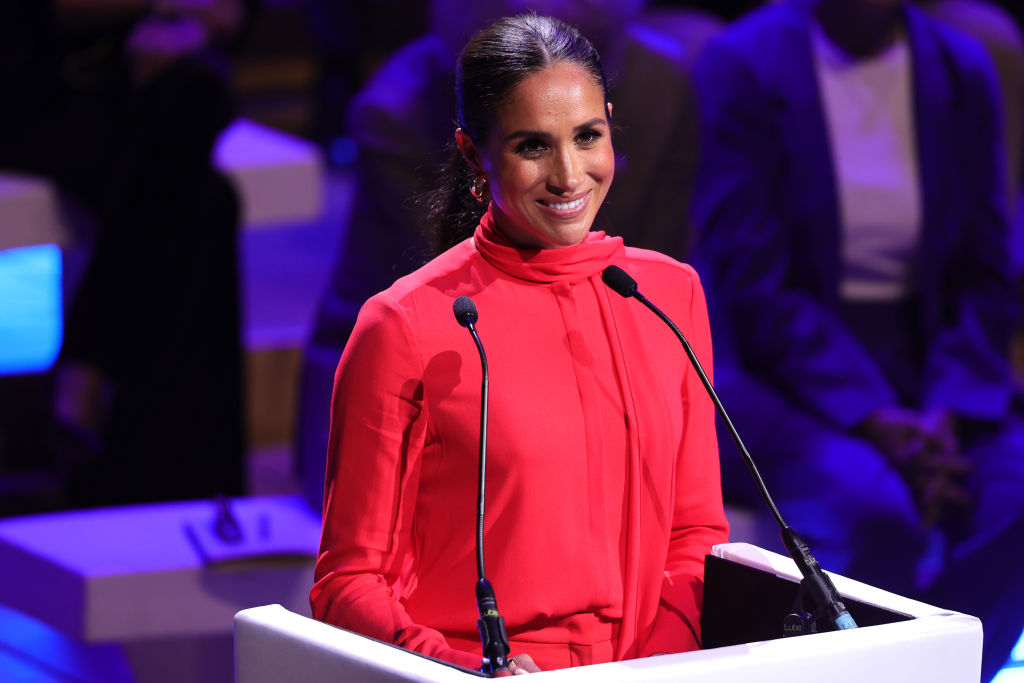
PR Expert Says Harry and Meghan Shouldn’t Be Labelled ‘Private Citizens’ Despite Palace’s Clarifying Letter

Published

on

Meghan Markle

LONDON — A public relations expert is pushing back on the characterization of Prince Harry and Meghan Markle as “private citizens,” arguing the label misrepresents the couple’s continued high-profile public activity even after Buckingham Palace formally reiterated their non-working royal status earlier this month.

The palace’s position was laid out in a letter issued September 7 on behalf of King Charles III by the Lord Chamberlain, Richard Benyon, Lord Benyon, which stated that the Duke and Duchess of Sussex’s position “is akin to private citizens with commercial and charitable interests.” The letter reaffirmed that Harry and Meghan’s His and Her Royal Highness styles remain in abeyance and confirmed there had been no change to their status since they stepped back from royal duties in January 2020.

Olivia Bennet, a senior public relations director at the agency Go Up, argued that framing carries an inaccurate implication about how the couple actually operates. “Calling Harry and Meghan private citizens suggests people who have stepped away from public life altogether, whereas that clearly isn’t an accurate reflection of how they currently operate,” Bennet told The Mirror.

Bennet pointed to the range of public-facing work the couple continues to carry out as evidence the “private citizen” label doesn’t fully capture their current role. “They have charitable initiatives, public appearances, commercial interests and causes they continue to speak about very publicly,” she said. “So I can understand why, from a communications standpoint, they would feel ‘public figures’ better reflects the role they actually have.”

Advertisement

At the same time, Bennet was careful to distinguish that argument from any suggestion that Harry and Meghan are seeking to resume official royal duties. “What I don’t think we should do is confuse that with them trying to become working royals again,” she said. “There is a significant middle ground between carrying out official duties on behalf of the Royal Family and living an entirely private life, and that appears to be the space Harry and Meghan want to occupy.”

The palace’s letter had itself acknowledged that same distinction, drawing a clear line between the “State and Royal duties undertaken by the working Royal Family” and the personal, commercially oriented activities Harry and Meghan have pursued since 2020. The letter noted that the arrangement gives the couple “personal latitude … in respect of financial independence and protection of their privacy as they would wish,” language the palace said would continue to be fully respected going forward.

The September letter followed the Sussexes’ relocation to Britain in August, ahead of their children, Prince Archie and Princess Lilibet, starting school, a move a representative for the couple described to The New York Times as intended to be temporary. “On the heels of a wonderful trip with family and friends this summer, Harry and Meghan have decided to spend an extended period in the U.K. this autumn,” the representative said in a statement at the time. “They are excited to have their children spend more time in the country that’s such an important part of their family’s story.” A spokesperson for the couple said afterward that they were “a little surprised not to have been told about this in advance” that the palace’s letter would be issued and circulated to media, according to the BBC.

The debate over how to categorize Harry and Meghan’s public status is not new, but it has taken on renewed significance since their return to the U.K., a period during which questions about whether the couple was attempting to resume any semblance of official royal involvement have circulated widely in British media. Royal commentators have offered differing interpretations of the palace’s motives in issuing the September letter, with some describing it as a routine procedural clarification and others suggesting it was intended, at least in part, as a signal to the couple following what some sources have characterized as tension around their unannounced return.

Advertisement

Regardless of the palace’s precise intent, Bennet’s comments reflect a broader tension in how the Sussexes are perceived publicly: officially non-working royals under palace terminology, yet still operating with a level of public visibility, media attention and commercial activity that few genuinely private individuals maintain. That tension has shaped much of the coverage surrounding the couple since their 2020 decision to step back from royal duties, with debates over their status resurfacing repeatedly at moments of heightened public attention, including their move into television and streaming projects, their continued charitable work through organizations like the Archewell Foundation, and recurring public appearances at events such as the Invictus Games, the international sporting competition for wounded and ill service members that Harry founded.

Buckingham Palace has not issued any further public statement addressing Bennet’s specific characterization or the broader debate over the “private citizen” terminology since the September letter was first circulated. Harry and Meghan’s own representatives have likewise not offered additional public comment specifically addressing how the couple prefers to be described, beyond their earlier statement noting surprise at the timing of the palace’s letter.

With Harry and Meghan continuing their extended stay in the U.K. and resuming a schedule of charitable engagements planned well before their return, including activities tied to the upcoming Invictus Games in Birmingham in 2027, the question of how best to characterize their public role, private citizens, public figures, or something in between, appears likely to remain a recurring point of debate among royal commentators and communications professionals alike.

Advertisement
Continue Reading

Business

Housebuilder MJ Gleeson not expecting any improvement in housing market

Published

on

Business Live

The Sheffield firm saw a sharp drop in profits despite seeing improved revenue figures

Inside Gleeson Homes' latest show home to open in Stanley

Inside Gleeson Homes’ latest show home to open in Stanley(Image: Gleeson Homes)

Housebuilder MJ Gleeson has cut is dividend to shareholders after issuing a sombre update on the state of the housing market.

The Sheffield firm, which specialises in affordable homes in the North and the Midlands, has issued results for the year up to the end of June, in which its revenues rose 12.1% to £410m. But operating profit over the same period fell sharply to £2.4m, with that figure having stood at £24m a year earlier.

Advertisement

The company completed 1,968 homes during the year, up by nearly 10% on the previous period, but its land division struggled, seeing a 43% drop in revenues and reporting a £700,000 loss.

Gleeson said that, with no apparent upturn in the housing market, it was focussing on internal efficiencies and taking a “prudent stance on cash, working capital and site acquisitions”.

The company’s forward order book of 848 plots was almost identical to the previous year, though its land pipeline reduced by almost 5,000 to 14,927 plots. Average selling prices increased by 3.8% to £201,000.

Gleeson CEO Graham Prothero said: “I am pleased to report that in a subdued market we delivered a robust performance underpinned by the delivery of 1,968 homes, up by nearly 10% against the prior year. Gleeson Homes entered the new financial year with a forward order book of 848 homes.

Advertisement

“During the year we moved at pace to implement significant structural and operating changes under Project Transform. As a result, Gleeson Homes has been overhauled and is a much-improved business, with strengthened leadership at both executive and regional levels, more effective processes and clearer reporting lines. It is in a much stronger position to manage through the challenging market environment we are experiencing today.

“To optimise Gleeson Homes’ performance, we are also working hard on a number of business initiatives including enhancing our partnerships strategy, land-buying, product design, customer journey and brand identification. Importantly, recognising that this subdued market may not improve anytime soon, we are focused on managing the business as efficiently as possible and taking a prudent stance on cash, working capital and site acquisitions.

“Gleeson Land had to adapt to a slowdown in sales owing to a more cautious land market. The business continued to strengthen its portfolio submitting a record number of 18 planning applications and securing 13 high-quality new sites.

“Looking ahead, given the market backdrop, an absolute priority is to maintain the strength of our balance sheet. Along with our focus on managing the business prudently, the board has also taken the view that the dividend should reflect the challenging environment, proposing a lower final dividend in line with our capital allocation policy. This will give us greater flexibility in deploying capital for the medium-term benefit of the business.”

Advertisement
Continue Reading

Business

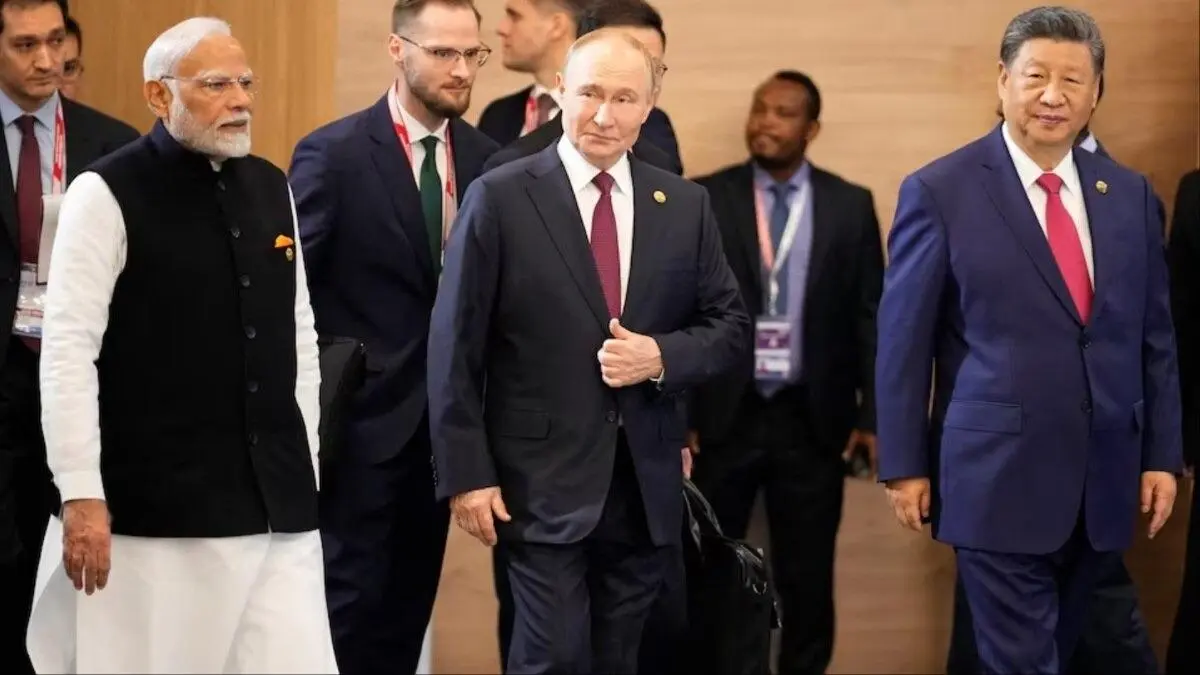
BRICS leaders call for restraint as trade and energy security move to centre stage

Published

on

BRICS leaders call for restraint as trade and energy security move to centre stage

The BRICS summit in New Delhi has produced a joint declaration calling for maximum restraint and diplomatic efforts to address the escalating Middle East conflict, while members also criticised unilateral tariffs and other trade measures.

Key points

  • BRICS adopted a joint declaration calling for maximum restraint over the Middle East conflict.
  • Members are pushing for more interoperable cross-border payment systems, including potential CBDC links.
  • India and China pledged to strengthen business and transport links, potentially reshaping regional trade corridors.

The declaration comes as the enlarged BRICS bloc attempts to strengthen its role in global economic governance amid increasingly fragmented trade and financial systems.

Economic issues were central to the summit, including cross-border payments, reform of global financial institutions and greater use of interoperable payment infrastructure. India has separately been pushing for a system linking central-bank digital currencies (CBDCs) among BRICS members, although significant technical and geopolitical obstacles remain.

The summit also highlights the growing importance of BRICS to Asian trade and energy flows. The bloc includes major commodity producers such as Russia, Iran, Saudi Arabia and the UAE alongside major consuming economies including China and India, giving it considerable potential influence over energy security and alternative trade routes.

India and China have also used the summit to push for stronger business and transport links. Indian Prime Minister Narendra Modi and Chinese President Xi Jinping pledged on Saturday to deepen economic and connectivity ties as their governments attempt to stabilise relations after years of tensions.

Advertisement

Why it matters: Thailand is not a BRICS member, but the bloc’s expansion and growing focus on payments, trade and supply chains could affect ASEAN companies operating between China, India and the Gulf. Greater use of alternative payment systems and new trade corridors could also reduce transaction costs for Thai exporters while increasing competition for investment and regional supply chains.

Continue Reading

Business

Exclusive-SK Hynix in talks with Intel about deal to make memory chips in the US for the first time, sources say

Published

on


Exclusive-SK Hynix in talks with Intel about deal to make memory chips in the US for the first time, sources say

Continue Reading

Business

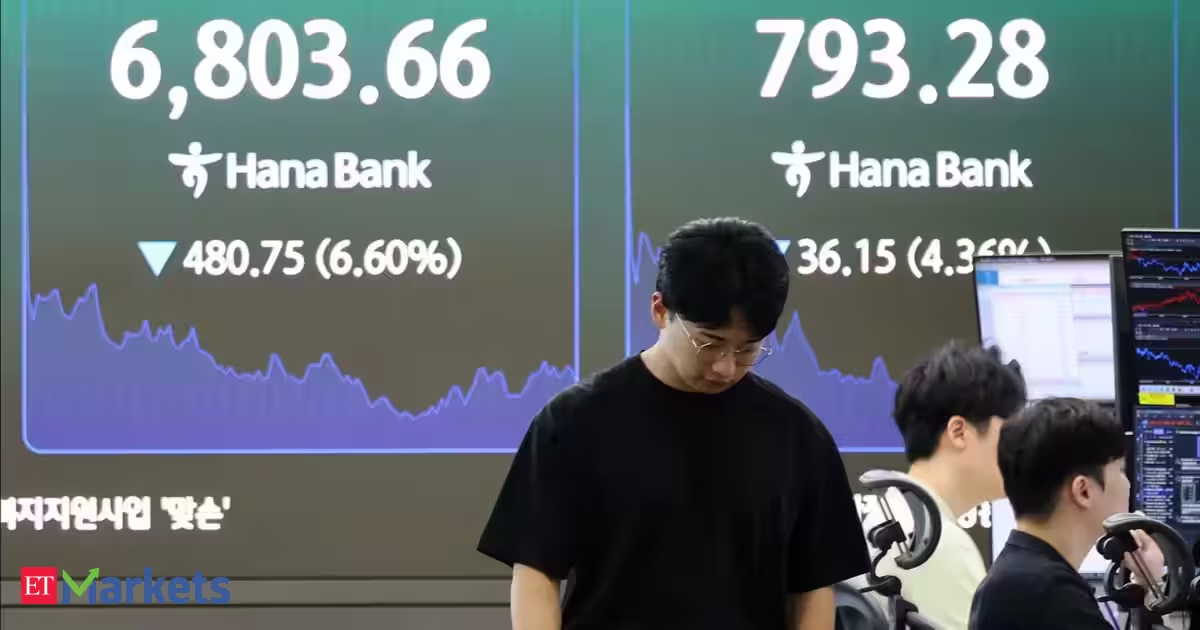
Global Market Today: Asian stocks steady as traders await Fed decision

Published

on

Global Market Today: Asian stocks steady as traders await Fed decision
Asian stocks were broadly steady as elevated oil prices and rising bond yields kept investors cautious ahead of the Federal Reserve’s interest-rate decision.

MSCI’s Asian equities index advanced 0.1%. Contracts for Wall Street gauges also nudged up in early trading as OpenAI weighed a new funding round at a $1.2 trillion valuation. The S&P 500 and Nasdaq 100 slipped Tuesday, while a gauge of chipmakers eked out an increase.

Helping sentiment, US crude oil fell 0.6% to $105.15 a barrel after surging more than 20% this month. The rally in energy prices and growing bets on a Fed rate hike had fueled a bond selloff, pushing the 10-year Treasury yield as high as 5.04% — the highest in almost two decades — before it closed at 5.00%.

Read more: US Treasury secretary Scott Bessent says rising bond yields due to ‘global issues’

Advertisement

Treasury futures consolidated, while government bonds opened higher in Australia and New Zealand.


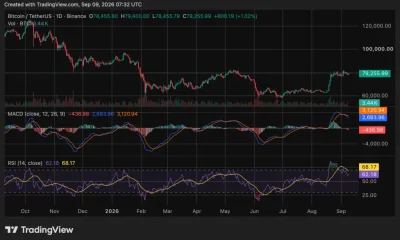
Elsewhere, Bitcoin extended its slide to trade around $75,600 as the US Senate blocked a landmark crypto market structure bill.
The Fed’s decision Wednesday is in focus after hotter-than-expected core inflation last week and concerns over government budgets bolstered expectations for the first rate increase in since 2023. Markets are pricing in a more-than-90% chance of a hike, raising the prospect of tighter financial conditions as elevated energy and borrowing costs weigh on equities.“If the Fed follows the futures market and hikes rates, our sense is that stocks are likely to see downward pressure over the near-term,” said Chris Senyek at Wolfe Research. “However, we’ve found that over a longer time horizon — six to 12 months after the first rate hike — stocks typically recover and push into positive territory.”

Three major central banks meet this week, with the Fed followed by policy decisions from the UK and Japan, potentially reshaping the monetary-policy outlook for the rest of 2026.

A decision to hold rates — or a hike without clear guidance on further increases — may push investors to demand higher long-term yields as protection against inflation, while shorter-dated yields track the Fed’s policy path more closely.

Officials have held their benchmark rate steady in a range of 3.5%-3.75% since December as a majority of policymakers argued that progress in lowering inflation was being stalled by temporary factors.

Advertisement

Elsewhere, Brent slipped in early Wednesday trading after settling almost 3% higher Tuesday as outages at a key Saudi pipeline and Libyan oil fields added to supply risks in a market already hit by disruptions from the Iran war.

Traders were watching for signs of how long Saudi Arabia’s East-West pipeline will remain closed after drone attacks halted operations last week. Saudi Aramco is delaying oil supplies to some European customers this month, people familiar with the matter said.

“The combination of higher interest rates and elevated oil prices is like asking equities to run a marathon with ankle weights strapped on,” said Darrell Cronk at Wells Fargo Investment Institute. “Higher rates increase the discount rate investors apply to future earnings, while higher energy costs drain purchasing power from consumers and pressure profit margins.”

Advertisement
Continue Reading

Business

AI regulation not needed, says Nvidia’s Jensen Huang

Published

on

AI regulation not needed, says Nvidia's Jensen Huang

Jensen Huang, chief executive of Nvidia, has rejected the need for new laws and regulations to control the development of artificial intelligence, saying market forces are enough to manage the risks.

Huang, who runs the $5 trillion semiconductor company, said: “The market forces are already there, we don’t need any new laws, we don’t need new regulations.”

He was speaking this week at Dreamforce, the conference hosted by Salesforce in San Francisco.

Free newsletters
Advertisement

The stories that matter to UK business, straight to your inbox.

Advertisement

Huang said companies should act on the safety of their own tools and decide for themselves not to release dangerous products.

“Run as fast as you can, but if at any time you feel it’s not in control, take a pause,” he said.

Amodei calls for joint safety standards

Huang’s intervention follows a call from Dario Amodei, chief executive of Anthropic, for leading AI labs to “voluntarily work together to set standards”.

In an open letter of 3,800 words published on Saturday, Amodei warned that AI technology had been “advancing drastically faster” since the summer.

Advertisement

He said it could be capable of taking over the “entire internet” and of “potentially causing hundreds of billions of dollars in damage” in the next six to 12 months.

Amodei said Anthropic would give third-party auditors employee-level access to conduct continuous testing on model development.

To avoid antitrust issues, he urged the US government to issue a “narrow waiver” allowing companies to co-ordinate on safety standards. In his essay, We Must Pace the Frontier, Amodei wrote that the government did not need to take part in those discussions but did need to issue the waiver for certain kinds of safety conversations.

Business Matters has reported that Elon Musk and Sam Altman have publicly backed Amodei’s call to slow the AI race, with Altman saying OpenAI would postpone its stock market flotation until 2027.

Advertisement

Cohere warns of a cartel

Not every AI chief supports the proposal. Aidan Gomez, chief executive of Cohere, which builds large language models for businesses and governments, has warned that Amodei’s plan for AI labs to set safety standards jointly amounts to a “cartel by any other name”.

He told The Times: “Using fear under the pretext of protecting the public, these oligopolies are now requesting to bend competition rules and be permitted to dictate the terms for everyone else. A wolf in sheep’s clothing, a cartel by any other name.”

President Donald Trump has separately rejected calls to slow AI development, arguing that the US must keep its lead over China.

Researcher resignation

Public alarm about the potential danger posed by AI has been mounting since last week, when Jacob Coxon, a researcher at Anthropic, said he had resigned.

Advertisement

Coxon said he had left because the “people building AI earnestly believe that it could kill us all by the end of the decade”.

Amy Ingham
About the author

Amy Ingham

Amy Ingham is a reporter at Business Matters, covering UK business news with a focus on breaking news, business policy, late payments and insolvency. She joined the magazine in 2026 after completing the NCTJ Diploma in Journalism at Harlow College’s journalism school. Her recent reporting includes British Steel’s nationalisation and its impact on SME suppliers, the decline in late payments by large firms, and Insolvency Service director disqualifications. Reach her at aingham@cbmeg.co.uk.

Advertisement

Advertisement
Continue Reading

Business

5 Things to Know About the Leading Firms To Consider For Your Claims in 2026

Published

on

ChatGPT

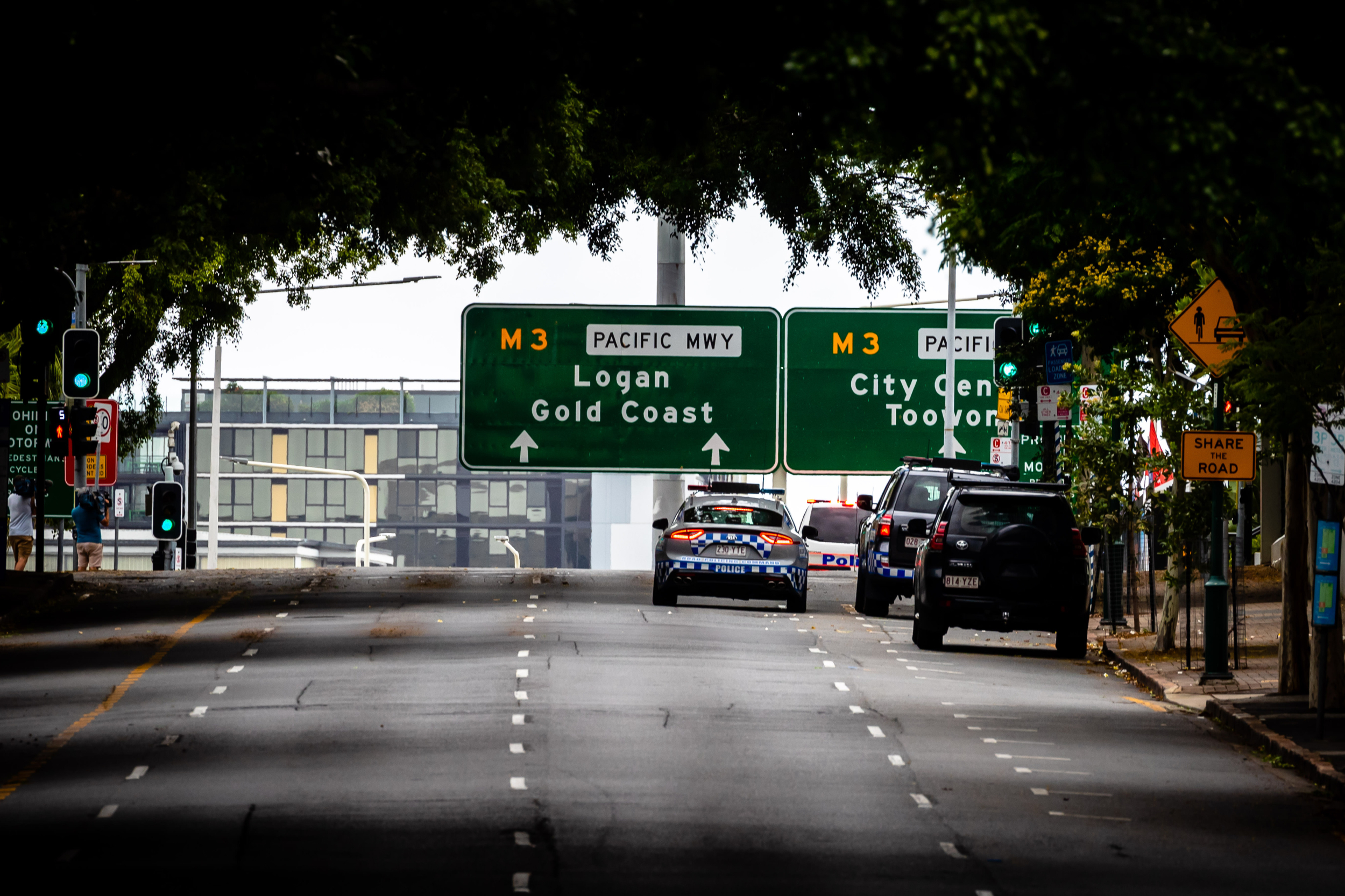
Brisbane residents injured in car accidents face a fast-moving legal process, and lawyers say the biggest risk to claimants is not knowing the strict deadlines that apply. Queensland’s compulsory third-party insurance scheme requires most notifications within nine months of a crash and formal claims within three years, according to legal experts, and missing those windows can end a case before it starts.

The Motor Accident Insurance Act 1994 governs the process, setting out how injured drivers, passengers, cyclists and pedestrians can seek compensation from an at-fault driver’s CTP insurer. Legal specialists say the paperwork, medical evidence and insurer negotiations involved can overwhelm people who are still recovering from their injuries, which is why a number of Brisbane-based firms have built practices dedicated to guiding claimants through each stage of a claim, from lodging a Notice of Accident Claim Form to negotiating a final settlement.

South East Queensland records a significant share of the state’s road trauma each year, a trend legal specialists attribute to population growth, tourist traffic and increasingly congested arterial routes on the Gold Coast and across greater Brisbane. Compensation available to successful claimants can include medical expenses, rehabilitation costs, lost income and damages for pain and suffering, depending on the severity of the injury and how liability is determined.

Five firms have built a reputation across South East Queensland for handling car accident compensation matters: Splatt Lawyers, The Car Accident Compensation Lawyers QLD, WT Compensation Lawyers, Maurice Blackburn Lawyers and Attwood Marshall Lawyers.

Advertisement

Splatt Lawyers – a Brisbane-based personal injury firm, is led by Kerry Splatt, a Queensland Law Society Accredited Specialist in Personal Injury Law with more than 25 years of experience handling serious and complex claims. The firm holds a 4.8-star rating from 283 Google reviews, making it one of the more consistently well-reviewed car accident practices in Brisbane. It operates on a full no-win, no-fee basis, covering disbursements such as medical report costs and court fees until a claim settles, and offers a free case review that can be booked online.

The firm marked 30 years of operating in Far North Queensland earlier this year, a milestone Splatt said reflected the relationships built with clients over three decades. “We owe this milestone to our clients, our partners, and our dedicated team,” Splatt said at the time. Splatt Lawyers also provides direct access to a senior lawyer rather than routing clients through intake staff, and offers home and hospital visits for people unable to travel following an accident.

The Car Accident Compensation Lawyers QLD – is a dedicated road accident practice led by an accredited specialist personal injury lawyer. The firm’s no-win, no-fee model covers file-running costs through to settlement, with no upfront fees or hidden charges. It offers an obligation-free initial consultation aimed at giving claimants a clear answer on whether they have a valid claim before any commitment is made.

WT Compensation Lawyers, based in Brisbane’s central business district, has expanded its car accident practice to cover the Gold Coast, assisting motorists, passengers, cyclists and pedestrians with claims tied to Queensland’s CTP scheme. The firm says many claimants are unaware of the deadlines that apply while they are focused on recovering from their injuries.

Advertisement

“Many people who are injured in a car accident are focused on their recovery and are not aware of the deadlines that apply to a compensation claim,” said Jonathan Wu, owner of WT Compensation Lawyers. “The aim is to remove some of that uncertainty by explaining the process clearly, handling the documentation, and dealing with insurers on the client’s behalf so that injured people can concentrate on getting better.”

Wu said the firm’s car accident work spans injuries sustained by drivers, passengers, motorcyclists, cyclists and pedestrians, with compensation potentially covering medical expenses, rehabilitation costs, lost income and damages for pain and suffering depending on the circumstances of each case. The firm also represents clients in workplace injury and Total and Permanent Disability insurance claims.

Maurice Blackburn Lawyers, which describes itself as Australia’s largest plaintiff law firm, operates a Brisbane team that has handled thousands of CTP claims. The firm’s Brisbane office is led by Executive Director Michelle James, with Principal Lawyer Jillian Barrett supervising work injury, road injury and public place injury matters across Brisbane, Ipswich, North Lakes, Toowoomba, the Sunshine Coast and Browns Plains. The firm operates on a no-win, no-fee basis and says its road injury team works to get rehabilitation costs covered quickly so injured clients can access treatment and support sooner rather than waiting on a final settlement.

Attwood Marshall Lawyers, established in 1946, has supported injured Queenslanders for more than 75 years and operates offices across the Gold Coast, Brisbane, northern New South Wales, Sydney and Melbourne. Its Compensation Law department is led by partner Jeremy Roche, a Queensland Law Society Accredited Specialist in Compensation Law who has been a vocal advocate for protecting the rights of road users under Queensland’s CTP scheme amid proposed changes to how the scheme operates. The firm operates on a no-win, no-fee basis across almost all compensation claims and offers a free, confidential initial consultation to assess a person’s options.

Advertisement

Legal specialists across the firms say the most common mistake injured claimants make is delaying legal advice while they focus on medical treatment, which can eat into the nine-month notification window under Queensland law. Lawyers recommend claimants keep records of medical treatment, lost income and any communication with insurers from the outset, even before formally engaging a firm, since early documentation can strengthen a claim later in the process.

For claimants unsure whether they have a valid claim, all five firms offer free or no-obligation initial consultations, and each operates on a no-win, no-fee basis, meaning legal costs are only payable if a claim is successful. Industry figures show CTP claims can take anywhere from several months to more than a year to resolve, depending on the complexity of injuries and whether liability is disputed by the at-fault driver’s insurer.

With Queensland’s road toll and traffic volumes continuing to rise across South East Queensland, particularly on the Gold Coast and in greater Brisbane, legal specialists expect demand for CTP claims guidance to remain elevated through 2026. Firms say early engagement with a lawyer remains the most reliable way for injured Queenslanders to protect their entitlements, understand their rights and avoid missing statutory deadlines that could otherwise jeopardise a claim.

Advertisement
Continue Reading

Trending

Copyright © 2025