
Business
Global Market Today: Asian shares hesitant, dollar slips amid tariff confusion

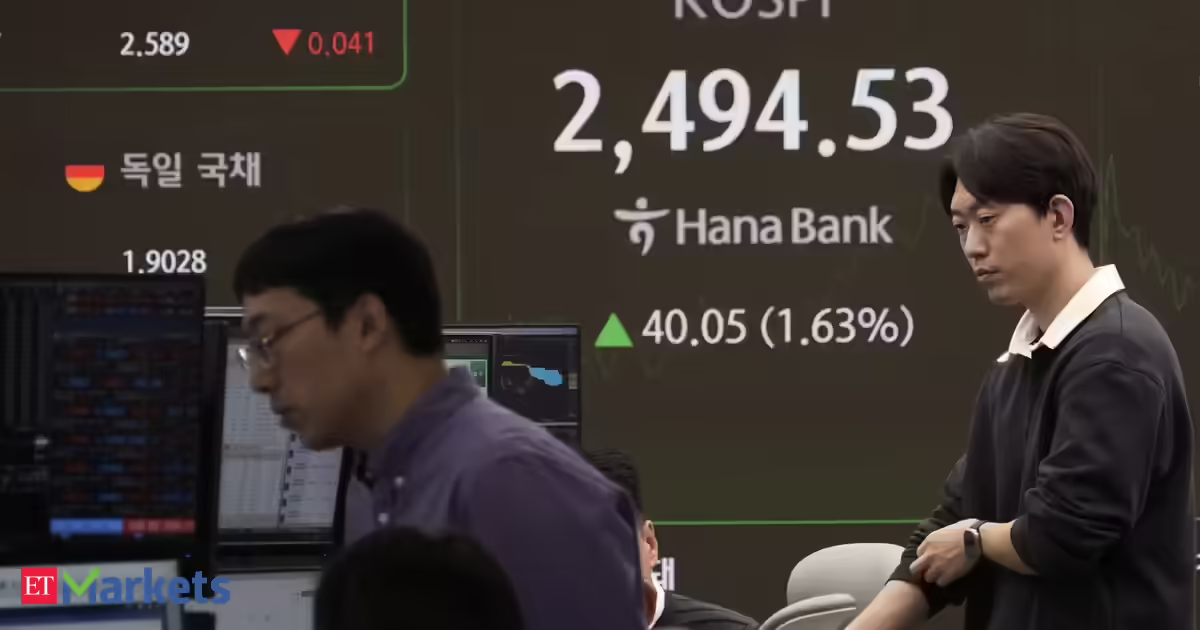
Oil prices eased ahead of another round of talks between the United States and Iran due in Geneva on Thursday, with the risk of U.S. military strikes lingering if a deal is not done.
Confusion loomed large after the U.S. Supreme Court struck down President Donald Trump’s emergency tariffs, leading him to announce a new 10% rate on the rest of the world, only to then lift it to 15% in a move that seemed to surprise some of his own officials.
“The tariff landscape is now more uncertain than before, uncertainty is not good news for any economy or market,” said Rodrigo Catril, a senior FX strategist at NAB.
“Unless common sense prevails, we could be entering a circular process where new tariffs are announced, then potentially overturned, only for new tariffs to be announced, and we do the dance again.”

It was not yet clear when these tariffs would be imposed, what might be excluded and whether every country would be slapped with 15%. Some, including the UK and Australia, had 10% tariff rates under the former rules, while many countries in Asia had higher rates.
With so much up in the air, MSCI’s broadest index of Asia-Pacific shares outside Japan edged up 0.5% in light trade. Japan’s Nikkei was shut for a holiday but futures traded at 56,970 against a cash close of 56,825. South Korea extended its bull run with another 2.0% rise, having already jumped 5.5% last week to all-time highs.
NVIDIA TO TEST AI MOOD
S&P 500 futures fell 0.3% and Nasdaq futures 0.4% ahead of earnings from Nvidia, which is sure to cause waves given the tech behemoth makes up almost 8% of the S&P 500 index.
The world’s most valuable company is expected to post a 71% rise in earnings per share to $7.76, though estimates range from as low as $6.28 to as high as $9.68. Options imply its shares could shift by at least 6% in either direction on the announcement.
The Treasury market had been sideswiped by the tariff news as it raised the risk the U.S. government would have to repay around $170 billion in revenue. Such an outcome would, on paper, widen the fiscal deficit by half a percentage point to around 6.6% of GDP.
The holiday in Japan meant cash Treasuries were not trading, but 10-year note futures were down 2 ticks.
The market had also been tugged two ways by mixed data with economic growth badly missing forecasts in the December quarter, but core inflation surprising on the high side.
That saw the probability of a June rate cut from the Federal Reserve come in to around 52%, from over 60% a week ago, and left the dollar firmer on the week.
Early Monday, the dollar was under pressure amid speculation the chaos over U.S. trade policy could reinforce the “sell America” theme evident in markets in recent months.
The dollar eased 0.4% on the Japanese yen to 154.36, while the euro added 0.4% to $1.1826. The dollar also dipped 0.5% on the Swiss franc to 0.7718.
In commodity markets, gold gained a safe-haven bid and firmed 0.8% to $5,143 an ounce. Silver gained 2% to $86.24 per ounce, after climbing almost 8% on Friday. [GOL/]
Oil prices were choppy, having gained last week as Trump said the U.S. military could strike specific targets in Iran if a nuclear deal was not agreed on. [O/R]
Brent edged down 0.6% to $71.29 a barrel, while U.S. crude lost 0.8% to $65.95 per barrel.


Iranian delegation lands in Islamabad ahead of ’make-or-break’ talks
NEW YORK — Fluence Energy Inc. shares climbed more than 7% in morning trading Friday, reaching $14.56 as investors bet on the battery storage company’s strong positioning in the surging U.S. energy storage market fueled by artificial intelligence data centers, grid modernization and supportive domestic manufacturing policies.

The Arlington, Virginia-based firm, listed on Nasdaq as FLNC, added 99 cents, or 7.34%, by 11:18 a.m. EDT. The move came amid broader enthusiasm for clean energy infrastructure plays and followed Fluence’s recent reaffirmation of its U.S.-manufactured products’ eligibility for domestic content tax credits, a key advantage under evolving federal incentives.
Fluence, a joint venture between Siemens and AES Corp., delivers intelligent energy storage systems, operational services and asset optimization software. Its Gridstack platform and digital offerings help utilities, independent power producers and large energy consumers store renewable power and balance grids amid rising demand from electrification and hyperscale computing.
The latest surge builds on positive sentiment around Fluence’s record backlog and pipeline growth. In its fiscal first-quarter 2026 results released Feb. 4, the company reported revenue of approximately $475.2 million, a 154.4% jump from the year-ago period. While the quarter showed a net loss of about $62.6 million and negative adjusted EBITDA of $52.1 million — partly due to project costs and seasonal weighting — management reaffirmed full-year fiscal 2026 guidance of $3.2 billion to $3.6 billion in revenue, with a midpoint of $3.4 billion now fully covered by backlog.
Order intake exceeded $750 million in the quarter, pushing contracted backlog to a record $5.5 billion as of Dec. 31, 2025. The pipeline expanded significantly to 41.8 GW and 150.5 GWh, up about 17% and 23% respectively from the prior quarter, driven by accelerating U.S. demand. CEO Julian Nebreda highlighted “accelerating data center growth, utility demand and rising industrial loads” as key drivers.
Fluence has emphasized its U.S. manufacturing strategy. On April 6, the company reaffirmed the continued availability of domestically produced products qualifying for domestic content tax credits under the One Big Beautiful Bill Act. This positions Fluence to capture incentives that enhance project economics and competitiveness, particularly as customers seek compliant, reliable storage solutions amid policy shifts.
The company has partnered with domestic suppliers for battery cells and modules, supporting projects like the 1 GWh deployment with Cordelio Power across three U.S. sites starting in 2026. Such deals underscore Fluence’s push for supply chain localization, creating jobs while mitigating foreign entity of concern compliance risks.
Analysts have taken note of the momentum. Consensus price targets hover around $16 to $18, with some higher forecasts reaching $28 to $32, suggesting potential upside. Ratings remain mixed — largely Hold with a handful of Buy and Sell — reflecting execution risks in a competitive sector but optimism around long-term tailwinds. Recent adjustments include Susquehanna trimming its target while maintaining a Positive stance, amid broader coverage of the stock’s valuation relative to growth prospects.
Fluence’s deployed capacity stands at about 18.9 GWh globally, with strong presence in the U.S., where it ranks among top integrators. The company expects the U.S. to account for a substantial portion of 2026 activity, benefiting from policy support, grid reliability needs and explosive power demand from AI facilities. Data centers alone have emerged as a major growth vector, as hyperscalers seek firm, dispatchable capacity to complement intermittent renewables.
Beyond hardware, Fluence’s services and digital platforms contribute growing recurring revenue. Annual recurring revenue is projected to reach approximately $180 million by fiscal year-end, supported by long-term operations and maintenance contracts plus AI-driven optimization software that maximizes asset performance.
The energy storage market is expanding rapidly. Industry forecasts point to significant deployment growth, with battery systems playing a pivotal role in integrating renewables, providing peaking capacity and enhancing grid resilience. Fluence has been recognized as a leading global provider, ranking in the top three for installed and contracted capacity in independent reports and earning System Integrator of the Year honors multiple times.
Challenges persist. Gross margins in the first quarter remained pressured at around 5.6% on an adjusted basis, reflecting project-specific costs and the front-loaded nature of revenue recognition in large deployments. The company has worked through execution issues on select projects, with expectations that most additional costs will be recovered. Operating leverage should improve as scale increases and higher-margin services grow.
Fluence amended its syndicated credit facility in early April, tightening certain terms while extending covenant relief and securing liquidity through 2026. The move provides financial flexibility amid heavy investment in growth. In March, stockholders approved an expansion of the equity incentive plan, adding shares to support talent retention in a competitive tech and energy talent market.
The stock has shown volatility typical of high-growth cleantech names. It has rebounded from earlier 2026 levels but trades well below peaks seen during previous enthusiasm waves for energy storage. Friday’s volume appeared elevated as shares tested recent resistance, with technical observers noting potential for continued momentum if positive news on orders or policy continues.
Founded as a Siemens-AES venture and spun out publicly in 2021, Fluence has scaled rapidly by focusing on utility-scale and commercial & industrial applications. Its vertically integrated approach — combining hardware, software and services — differentiates it from pure-play competitors. Recent board and governance updates, including director elections and auditor ratification at the March annual meeting, reflect ongoing maturation.
Broader industry tailwinds include rising electricity demand from AI, electric vehicles and manufacturing reshoring. Utilities face pressure to add flexible resources as coal and gas retirements accelerate and renewable penetration grows. Battery storage addresses these needs by shifting energy from sunny or windy periods to peak times, while providing ancillary services like frequency regulation.
International expansion continues, with projects in Southeast Asia, Australia, India and Europe. However, the U.S. remains the primary growth engine, supported by tax credits, state-level mandates and corporate procurement from tech giants.
Looking ahead, investors await the fiscal second-quarter results, expected in coming months, for updates on margin trends, order intake and progress toward profitability. Management has stressed disciplined execution, cost control and leveraging its backlog to deliver on guidance.
While near-term profitability swings and project risks remain, Fluence’s record backlog, domestic content advantages and exposure to secular megatrends in power infrastructure position it as a compelling player in the energy transition. As data centers and grids demand more storage, the company’s integrated solutions could capture significant value.
Friday’s trading reflected renewed confidence in Fluence’s ability to navigate a dynamic market. With global deployments accelerating and U.S. policy supporting local manufacturing, the company appears well-placed to benefit from the next wave of battery storage growth.


IMF retains floor for precautionary balances at SDR 20 billion

Operator
Good day, everyone, and welcome to the FRP Holdings, Inc. Fourth Quarter 2025 Conference Call. [Operator Instructions] It is now my pleasure to hand the floor over to your host, Chief Financial Officer, Matt McNulty. Sir, the floor is yours.
Matthew McNulty
CFO & Treasurer
Thank you. Good afternoon, and thank you all for joining us on this call today. I am Matt McNulty, Chief Financial Officer of FRP Holdings, Inc. And with me today are John Baker II, our Chairman; John Baker III, our CEO; David deVilliers III, our President and Chief Operating Officer; Mark Levy, our Chief Investment Officer; and John Klopfenstein, our Chief Accounting Officer.
First, let me run through a brief disclosure regarding forward-looking statements and non-GAAP measures used by the company. As a reminder, any statements on this call, which relate to the future are, by their nature, subject to risks and uncertainties that could cause actual results and events to differ materially from those indicated in such forward-looking statements. These risks and uncertainties are listed in our SEC filings.
To supplement the financial results presented in accordance with generally accepted accounting principles, FRP presents certain non-GAAP financial measures within the meaning of Regulation G. The non-GAAP financial measures referenced in this call are net operating income, or NOI, and pro rata NOI. In this quarter, we provided an adjusted net income to adjust for the impact of onetime expenses of the Altman Logistics acquisition, which is a material business combination unlike our historical real estate acquisitions or joint ventures where expenses are capitalized.
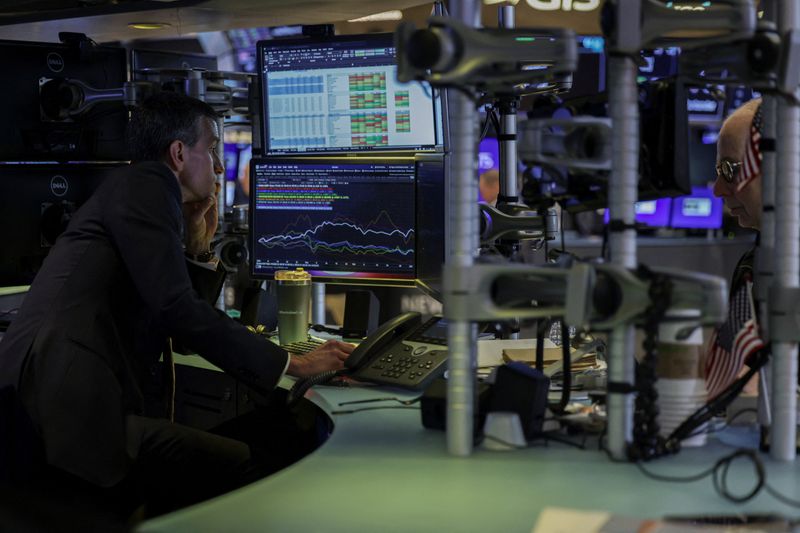

Wall St ends mixed, notches weekly gains as investors parse Middle East negotiations
Business
IREN Stock Surges 8% as Bitcoin Miner Turns AI Cloud Powerhouse With 150,000 GPU Expansion Push

NEW YORK — IREN Ltd. shares jumped more than 8% in morning trading Friday, climbing to $40.21 as investors embraced the former Bitcoin miner’s aggressive pivot into artificial intelligence infrastructure, highlighted by plans to scale its GPU fleet to 150,000 units and target billions in annualized AI cloud revenue.

The Sydney-based company, listed on Nasdaq as IREN, added $3.15, or 8.50%, by 11:20 a.m. EDT. The rally reflected renewed enthusiasm for IREN’s transformation from a renewable-powered Bitcoin miner into a high-performance computing and AI data center operator, leveraging its massive secured power portfolio amid surging demand from hyperscalers.
IREN, formerly known as Iris Energy, has rapidly expanded its data center footprint across North America. It now controls more than 4.5 gigawatts of secured grid-connected power, with approximately 810 megawatts already operational and additional capacity under construction or in development at sites including Sweetwater and Childress in Texas, Mackenzie in British Columbia, and a new 1.6GW campus in Oklahoma.
The company’s latest move came in early March 2026 when it announced purchase agreements for more than 50,000 NVIDIA B300 GPUs, bringing its total committed fleet to 150,000 GPUs. Management projects this scale could support over $3.7 billion in AI cloud annualized run-rate revenue by the end of 2026, with phased deployments planned across existing air-cooled capacity in Mackenzie and Childress during the second half of the year. Some estimates suggest even higher potential if additional liquid-cooled expansions come online.
This AI push builds on a landmark multi-year agreement with Microsoft announced late last year, valued at approximately $9.7 billion for 200 megawatts of AI cloud capacity. The deal included upfront payments and has served as a blueprint for further hyperscaler engagements. IREN has secured significant financing, including $3.6 billion tied to the Microsoft contract and nearly $9.3 billion in total funding commitments over recent months, with an at-the-market equity program established to support further capital needs.
Bitcoin mining remains an important cash-flow engine during the transition. In its fiscal second-quarter 2026 results released Feb. 5, IREN reported revenue of about $184.7 million, though it missed some analyst expectations amid fluctuating crypto prices and investment in growth. The company has achieved operating hashrates around 43 EH/s to 50 EH/s in recent periods, mining hundreds of Bitcoin monthly while maintaining a focus on 100% renewable energy sources.
Analysts have grown increasingly optimistic about the dual-engine strategy. Some price targets reach as high as $80 or more, citing the massive upside from AI infrastructure if IREN successfully monetizes its power pipeline. Bernstein and H.C. Wainwright have highlighted the stock as a top AI play for 2026, noting its ability to repurpose mining infrastructure for high-density GPU workloads with lower build times than traditional data centers.
The pivot addresses a critical bottleneck in the AI boom: reliable, scalable power. Hyperscalers face years-long waits for new grid connections, while IREN’s pre-secured sites in renewable-rich or low-cost energy regions offer faster deployment. Sites like Sweetwater, with a 2GW potential across more than 1,800 acres, are designed for both Bitcoin mining and liquid-cooled AI clusters capable of hosting hundreds of thousands of advanced GPUs.
In February 2026, IREN appointed John Gross as chief innovation officer to accelerate its AI and high-performance computing initiatives. The company was also added to the MSCI USA Index, potentially drawing increased institutional investment from passive funds.
Challenges accompany the ambitious growth. Recent equity offerings and capital raises have led to share dilution concerns, contributing to volatility. The stock has pulled back from earlier 2026 highs near $76 amid broader market swings in crypto and AI-related names, though it remains up dramatically over the past year on the AI narrative. Q2 FY26 results showed a net loss as the company invested heavily in expansion, with next earnings expected around May 13.
Gross margins and profitability will face pressure during the heavy capex phase, including roughly $3.5 billion in additional spending targeted for the second half of 2026. Execution on GPU deployments, securing additional hyperscaler contracts and navigating regulatory or grid timelines will be critical. Competition is intensifying as other former miners and pure-play data center operators vie for AI workloads.
Despite near-term hurdles, IREN’s vertically integrated model — owning land, power infrastructure and now GPU capacity — positions it to capture higher-margin recurring revenue from AI cloud services compared to traditional mining. Its data centers support flexible use cases, with some facilities already running Bitcoin miners and AI servers side-by-side during the transition.
The broader sector tailwinds are powerful. Global electricity demand from AI data centers is projected to surge, with power availability emerging as the primary constraint. Companies like IREN that can deliver gigawatts of ready infrastructure stand to benefit significantly. Recent peer deals, such as large GPU capacity agreements with Microsoft, have reinforced investor belief in the model’s scalability.
IREN continues to advance physical development. Sweetwater 1 energization is imminent or advancing, with substation and civil works progressing. Horizon projects in Texas and expansions in Canada are on schedule, supporting both current mining operations and future AI buildouts. The company emphasizes sustainable practices, using renewable energy to appeal to environmentally conscious tech clients.
Founded in 2018 with a focus on sustainable Bitcoin mining, IREN has evolved into a next-generation digital infrastructure provider. Its operational expertise in large-scale data centers, combined with low-cost power contracts, gives it a competitive edge in the race to power AI.
Friday’s trading volume appeared strong as the stock tested recent resistance levels following days of AI sector momentum. Technical observers noted potential for continued upside if positive updates on deployments or new customer wins emerge.
As IREN prepares for its fiscal third-quarter results in May, attention will focus on hashrate trends, AI revenue progress, GPU deployment timelines and any commentary on additional financing or contracts. Management has signaled that 2026 will be a pivotal “year of proof” for the AI strategy.
For investors, IREN represents a high-risk, high-reward bet on the convergence of cryptocurrency infrastructure and artificial intelligence. While Bitcoin mining provides near-term cash flow, the real upside lies in transforming stranded or underutilized power assets into premium AI compute capacity.
With over 4.5GW of potential and a clear roadmap to hundreds of thousands of GPUs, IREN is positioning itself as a key enabler in the AI revolution. Whether it can deliver on its lofty revenue targets amid execution and dilution risks will determine if the stock’s recent surge marks the start of a new growth chapter or another volatile chapter in its transformation story.
SÃO PAULO — Engie Brasil Energia SA shares rose more than 5% Friday on the B3 exchange in São Paulo, closing at 36.38 Brazilian reais after gaining 1.92 reais, or 5.57%, as investors responded to the utility’s reliable dividend payouts, recent transmission auction successes and steady growth in Brazil’s expanding electricity market.

The company, listed as BVMF:EGIE3 and controlled by French energy giant ENGIE, operates one of Brazil’s largest renewable-heavy generation portfolios and is expanding its transmission infrastructure to meet rising demand from industry, urbanization and data centers. Friday’s gain pushed the stock higher after a period of consolidation, with year-to-date performance reflecting resilience in a sector sensitive to interest rates and regulatory shifts.
Engie Brasil reported solid 2025 results in late February. Net operating revenue reached 12.9 billion reais, up 14.6% from 2024, driven by a robust generation portfolio and contributions from new transmission assets. Adjusted EBITDA grew 3.7% to 7.6 billion reais, while the company invested about 6 billion reais in hydropower acquisitions, modernization and renewable projects, including the massive Serra do Assuruá Wind Complex in Bahia — ENGIE’s largest onshore wind project globally, featuring 188 turbines across 24 farms.
Adjusted net income for the year stood at 2.8 billion reais, down 15.6% year-over-year due to higher financial expenses and depreciation, though partially offset by EBITDA growth and lower taxes. The board proposed dividends totaling 557.8 million reais, or about 0.49 reais per share, consistent with the company’s policy of distributing at least 55% of adjusted net income.
A cash dividend of 0.488 reais per share was announced with an ex-date of May 5, 2026, contributing to an attractive forward yield around 5.3%. The stock’s appeal as a high-yield defensive play in Brazil’s volatile market helped support buying interest Friday.
In March, Engie Brasil strengthened its transmission footprint by winning Lot 2 and several sublots in ANEEL’s first transmission auction of 2026. The victories involve an estimated investment of 1.5 billion reais and an annual allowed revenue of 122.7 million reais, with projects spanning Paraná, Santa Catarina, Rio Grande do Norte and Ceará. The concessions are expected to create around 4,500 jobs during construction and reinforce the company’s national expansion strategy.
On March 18, the company also secured capacity in Brazil’s Capacity Reserve Auction, winning the right to increase output at the Jaguara Hydropower Plant. These moves align with government efforts to bolster energy supply, as Brazil secured 19 gigawatts in a recent power capacity auction to address growing demand.
Engie Brasil’s generation park stands at approximately 12,384 MW across 133 plants, heavily weighted toward renewables including hydro, wind and solar. The company also participates in gas transportation. Its diversified assets provide stability against hydrological risks common in Brazil’s hydro-dominated system.
Analysts maintain a generally cautious consensus, with an average price target around 31.59 to 32.75 reais — implying some downside from current levels — and a “Underperform” or “Hold” tilt from 14 covering firms. Targets range from lows near 27 reais to highs of 39 to 46 reais. Some highlight valuation concerns after recent gains, while others point to long-term upside from Brazil’s energy transition and transmission investments.
For 2026, the company plans capital expenditures of about 2.75 billion reais, a significant reduction from 2025’s 6 billion reais as focus shifts to maintenance and completing the Asa Branca and Graúna transmission lines, slated for 2027-2028 completion. This disciplined approach aims to preserve cash flow for dividends while advancing key projects.
Q1 2026 results are scheduled for release around May 7, with the annual general meeting set for April 24. Investors will watch for updates on transmission progress, generation volumes, energy prices and any developments regarding the potential transfer of ENGIE’s 40% stake in Jirau Energia.
The Brazilian energy sector faces tailwinds from economic recovery, industrial growth and electrification trends. However, challenges include regulatory uncertainty, interest rate sensitivity affecting project financing, and competition in auctions. Engie Brasil’s majority ownership by ENGIE provides access to global expertise and capital, supporting its position as a leader in renewables and transmission.
The stock has risen about 20-28% over the past 12 months, outperforming some broader indices amid Brazil’s power sector dynamics. Friday’s elevated trading volume suggested renewed interest in defensive utility names offering both yield and exposure to infrastructure growth.
Engie Brasil emphasizes sustainability, aligning with Brazil’s ambitious renewable goals and ENGIE Group’s global net-zero ambitions. Its operations contribute to job creation and regional development, particularly in Northeast wind projects and Southern transmission corridors.
Broader market context includes stable hydroelectric reservoirs in recent periods and growing wind and solar contributions, helping stabilize supply. Yet, long-term demand forecasts point to the need for continued investment in generation and grids, areas where Engie Brasil is actively participating.
As a high-dividend stock with visible project pipelines, Engie Brasil appeals to income-focused investors in Brazil’s retail-heavy market. The upcoming May dividend and potential for further payouts could sustain interest if results meet expectations.
Risks include hydrological variability impacting hydro output, delays in transmission projects, currency fluctuations affecting imported equipment costs, and shifts in government energy policy. The company’s strong balance sheet and cash generation provide buffers against short-term volatility.
Founded decades ago and evolving under ENGIE ownership, Engie Brasil has grown into a key player in Latin America’s largest economy. Its integrated model — spanning generation, commercialization and transmission — positions it to capture value across the energy value chain.
Friday’s performance reflected optimism ahead of the earnings season and general meeting. Technical charts showed the stock breaking recent resistance, though it remains sensitive to broader Bovespa movements and commodity prices.
With Brazil’s energy matrix shifting toward greater diversification and reliability, Engie Brasil’s renewable focus and transmission wins could drive sustained performance. Analysts will scrutinize margin trends, project execution and dividend sustainability in coming reports.
For now, the combination of attractive yields, auction successes and strategic investments has reignited investor interest in one of Brazil’s premier energy utilities. As the country navigates growth and the energy transition, Engie Brasil stands ready to play a central role in powering the nation’s future.
Business
Alphabet Stock Edges Higher as AI Momentum and Cloud Surge Offset Massive 2026 CapEx Concerns

Alphabet Inc. Class C shares inched up modestly Friday, trading around $316.80 after gaining 0.43 cents or 0.14%, as investors weighed the tech giant’s accelerating artificial intelligence initiatives against plans for record capital spending that could pressure near-term margins.

The Mountain View, California-based company, parent of Google, continues to demonstrate leadership in generative AI through its Gemini models while delivering strong growth in advertising and cloud services. Friday’s quiet session followed a period of consolidation after the stock hit an all-time high near $343 earlier in 2026, with shares still up substantially over the past year amid the broader AI boom.
Alphabet posted robust full-year 2025 results in early February, with consolidated revenues climbing 18% to $402.8 billion, marking the first time annual revenue surpassed $400 billion. Google Services revenue rose 14% to $95.9 billion in the fourth quarter alone, fueled by 17% growth in Search and subscriptions, while YouTube ads and subscriptions together exceeded $60 billion for the full year. Google Cloud revenue jumped 48% to $17.7 billion in Q4, driven by enterprise demand for AI infrastructure and solutions.
CEO Sundar Pichai highlighted momentum across the business, noting that the Gemini app has grown to over 750 million monthly active users and that first-party models now process more than 10 billion tokens per minute. “AI is driving an expansionary moment in Search,” Pichai said, emphasizing how the technology is enhancing user engagement without cannibalizing core revenue streams.
The company guided for 2026 capital expenditures between $175 billion and $185 billion, roughly double 2025 levels and well above analyst expectations around $115 billion to $120 billion. The surge reflects heavy investments in data centers, servers, networking and custom silicon to support AI training, inference and cloud growth. Executives described the spending as essential to meet exploding customer demand and maintain competitive edge in the AI race.
Analysts remain largely bullish despite the hefty outlay. Consensus price targets sit near $386, with some forecasts reaching $443, implying meaningful upside. Ratings emphasize Alphabet’s scientific heritage, DeepMind expertise and culture of user-focused innovation. Smaller segments, including subscriptions like Google One and YouTube Premium, are thriving and expected to contribute more meaningfully to profitability going forward.
Recent AI product momentum has reinforced investor confidence. In March 2026, Google rolled out significant Gemini updates focused on “personal intelligence,” allowing the model to better understand user context across Gmail, Photos and other services for more proactive assistance. New features include conversational help in Google Maps, enhanced creative tools in Workspace apps like Docs, Sheets and Slides, and improvements to Gemini Live for natural voice interactions.
Gemini 3 models, including specialized variants like Flash-Lite for efficiency and Flash Live for real-time audio, have expanded capabilities in reasoning, multimodal processing and developer tools. Integrations across Android, Chrome and retail platforms further embed AI into daily user experiences. Google also deepened collaborations, including long-term supply agreements with Broadcom and partnerships involving Anthropic that underscore its infrastructure strength.
Google Cloud’s annual run rate surpassed $70 billion by the end of 2025, with AI products driving a wide breadth of enterprise adoption. The segment’s rapid scaling positions Alphabet as a key beneficiary of hyperscaler and corporate AI spending.
Other bets and emerging areas show progress as well. Waymo continues expanding robotaxi services, recently launching in additional cities, while smaller revenue streams gain traction. The company completed the acquisition of cybersecurity firm Wiz in March, bolstering its cloud security offerings.
Upcoming Q1 2026 earnings, scheduled for release after market close on April 29 with a conference call following, will provide fresh insight into ad market trends, cloud acceleration and early impacts of elevated spending. Analysts anticipate revenue in the $106 billion to $110 billion range, with focus shifting toward commentary on AI monetization, margin trends and CapEx execution.
Challenges include potential margin compression from front-loaded infrastructure costs, which some forecasts suggest could lead to negative free cash flow in 2026 despite robust top-line growth. Regulatory scrutiny persists, including ongoing antitrust matters, though the company continues to defend its practices vigorously. Competition in AI from OpenAI, Anthropic, Microsoft and others remains intense, but Alphabet’s vast data, distribution and compute advantages provide a formidable moat.
The stock has shown resilience, trading well above 2025 lows even after pulling back from February peaks. Friday’s modest gain came amid mixed broader market sentiment, with elevated volume in recent sessions reflecting ongoing debate over AI investment returns versus short-term financial strain.
Alphabet maintains a fortress balance sheet with substantial cash reserves, supporting both aggressive growth and shareholder returns through buybacks and dividends. Its diversified revenue — dominated by resilient advertising but increasingly supplemented by high-margin cloud and subscriptions — offers stability in uncertain economic conditions.
Founded as a search engine in 1998, Alphabet has evolved into one of the world’s most valuable companies by continually reinventing itself. Under Pichai’s leadership, the focus on moonshot projects through entities like X (formerly Google X) alongside core businesses has sustained innovation.
As the AI era accelerates, Alphabet stands at the center of technological transformation. Gemini’s integration across products, combined with massive infrastructure builds, aims to turn AI from experimental to ubiquitous, driving efficiency gains for users and businesses alike.
Market watchers note that while near-term CapEx headlines may create volatility, successful execution could cement Alphabet’s position as a foundational AI player. With Search remaining dominant, Cloud scaling rapidly and AI features enhancing user stickiness, the company appears poised for sustained long-term value creation.
Friday’s trading reflected cautious optimism ahead of earnings. Technical levels show support in recent consolidation zones, with potential catalysts from positive AI adoption metrics or cloud wins in coming weeks.
For investors, Alphabet embodies both the opportunities and costs of leading the AI revolution. As data centers multiply and models grow more capable, the company’s ability to translate enormous investments into profitable growth will define its trajectory through 2026 and beyond.


What the Trump tax breaks giveth, the gasoline pump taketh away

Orion S.A. director Michel Wurth to step down from board
Iranian delegation lands in Islamabad ahead of ’make-or-break’ talks

Prediction Market Users Await Artemis II Mission Splashdown

Vikings’ Draft History—the Good, Bad and What’s to Come


-

 Business5 days ago
Three Gulf funds agree to back Paramount’s $81 billion takeover of Warner, WSJ reports
-

 Sports6 days ago
India men’s 4x400m and mixed 4x100m relay teams register big progress | Other Sports News
-

 Politics5 hours ago
US brings back mandatory military draft registration
-

 Business7 days ago
Expert Picks for Every Need
-

 Fashion6 hours ago
Weekend Open Thread: Veronica Beard
-

 Tech3 days ago
How Long Can You Drive With Expired Registration? What Florida Law Says
-

 Business6 days ago
No Jackpot Winner, Prize to Climb to $231 Million
-

 Fashion5 days ago
Massimo Dutti Offers Inspiration for Your Summer Mood Board
-
 Sports6 hours ago
Man United discover Nico Schlotterbeck transfer fee as defender reaches Dortmund agreement
-

 Fashion3 days ago
Let’s Discuss: DEI in 2026
-

 Crypto World2 days ago
Bitcoin recovers as US and Iran Agree a Ceasefire Deal
-

 Business6 days ago
Akebia Therapeutics, Inc. (AKBA) Discusses Pipeline Progress and Strategic Focus on Kidney Disease Treatments at R&D Day – Slideshow
-

 Business3 hours ago
Tesla Model Y Tops China Auto Sales in March 2026 With 39,827 Registrations, Beating Cheaper EVs and Gas Cars
-

 Crypto World1 day ago
Canary Capital Files SEC Registration for PEPE ETF
-

 Politics7 days ago
The UK should not pay a penny in slavery reparations
-

 Business12 hours ago
OpenAI Halts Stargate UK Data Centre Project Over Energy Costs and Copyright Row
-

 Tech5 days ago
Samsung just gave up on its own Messages app
-

 Tech5 days ago
Haier is betting big that your next TV purchase will be one of these
-

 Tech5 days ago
The Xiaomi 17 Ultra has some impressive add-ons that make snapping photos really fun
-

 Tech5 days ago
Gamer Restores the Original PlayStation Portal From Two Decades Ago
You must be logged in to post a comment Login