

Business
Global Passport Index 2026: Ireland beats UK again

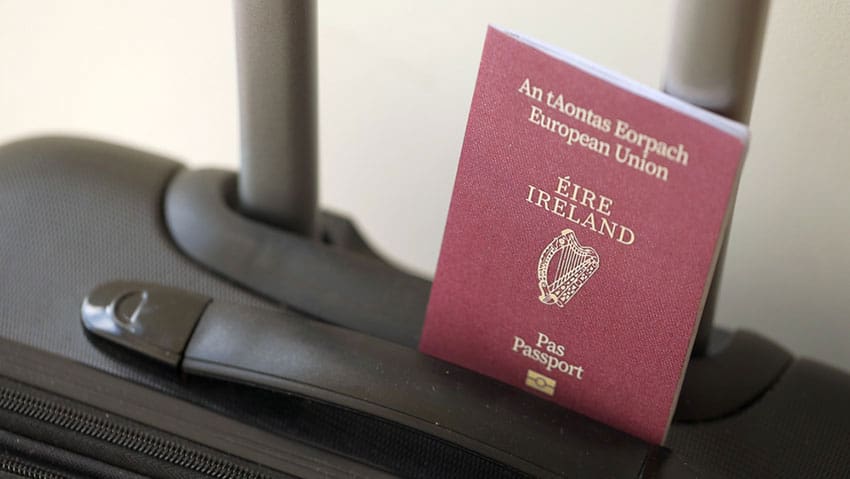
Ten years after Britain voted to leave the EU, the clearest measurable cost to the British passport is not its overall standing, which remains firmly elite, but a 22-place gap between where it ranks on paper and where it ranks at the border.
That is the headline finding of the sixth annual Global Passport Index, published today by residency and citizenship advisory firm Global Citizen Solutions (GCS), which ranks 197 countries and territories on Enhanced Mobility, Investment and Quality of Living.
Ireland outranks the UK for a second consecutive year, taking 7th place to Britain’s 8th. The composite scores are a whisker apart, roughly 93.4 to 93.08, and the UK has held between 6th and 8th in every edition since 2021.
But on Enhanced Mobility, the pillar that carries half the composite score and measures travel freedom, the two neighbours diverge sharply. Ireland ranks 7th in the world. The UK ranks 30th, a 22-place shortfall from its composite position and the widest such gap GCS identified among its Western European and Anglosphere peers.
The reason is structural. Irish citizens enjoy full EU freedom of movement and, under the Common Travel Area, retain the right to live, work, study and vote in the UK. Ireland ends up with unrestricted access to both arrangements at once. British passport holders, by contrast, now face greater friction entering the EU even as tourists.
For SME owners that friction is no longer abstract. British business travellers are already contending with hours-long queues under the EU’s new Entry-Exit System, and from next year will need a €7 visa waiver under the ETIAS scheme before crossing into the Schengen zone.
Elsewhere the British passport holds up well. Its investment ranking, 16th, is exactly where it stood in 2021, and its Quality of Living rank sits at 9th. Two indicators have softened: national income per capita, at roughly $49,040, ranks only 30th, well behind Ireland’s $71,150, and the UK slipped from 17th to 33rd in the Happiness Index.
“The United Kingdom passport held firm in the global top ten, ranked 8th overall in 2026. Yet for a passport of such standing, its mobility rank is conspicuously modest, around 30th, well adrift of the elite tier it otherwise occupies. That gap is the quiet signature of Brexit. The index measures visa-free travel, where the British passport remains strong, but it cannot capture what was actually lost: the automatic right of UK citizens to live, work and permanently reside across the European Union,” said Patricia Casaburi, chief executive of Global Citizen Solutions.
The UK’s ceiling sits within a wider Anglosphere slide. The United States, which led the index outright in 2021, has fallen to 12th, driven by a 31-place collapse in its mobility ranking after a run of visa reversals, including Brazil reinstating requirements for American travellers in 2025. Canada fell 11 places, Australia 10 and New Zealand 15. Only Ireland improved, up seven places, insulated by its EU membership. Little wonder growing numbers of entrepreneurs are weighing up fast-track routes to a second passport.
“For decades, the Anglosphere passports were treated as fixed inheritance. Our data says it is closer to an asset that can lose value or gain it responsive to policy, to diplomacy, and to how a country chooses to treat others. Ireland’s rise and America’s fall are the same lesson read from opposite ends,” said Dr Laura Madrid, lead researcher at the firm’s Global Intelligence Unit.
Europe, meanwhile, dominates outright. Nine of the top ten passports are European, led by Sweden, Switzerland and Finland, with Singapore in 10th the only outsider. Barely three points separate first from tenth. For British firms doing business on the continent, the message is uncomfortable but clear: the passport in your pocket is still world class, right up until you reach the border.

Jamie Young
Jamie is Senior Reporter at Business Matters, bringing over a decade of experience in UK SME business reporting.
Jamie holds a degree in Business Administration and regularly participates in industry conferences and workshops.
When not reporting on the latest business developments, Jamie is passionate about mentoring up-and-coming journalists and entrepreneurs to inspire the next generation of business leaders.

Flash flooding traps hundreds of people in rural Missouri
Charles Payne and Jeff Ferry discuss Apple’s controversial move to eye blacklisted Chinese firm CXMT for memory chips, bypassing U.S. supplier Micron. They analyze China’s strategic control over critical minerals and its impact on the U.S.
Apple accused OpenAI on Friday of telling Apple employees interviewing for jobs to bring confidential prototypes, engineering artifacts and hardware components to interviews as part of an effort to accelerate the artificial intelligence company’s push into consumer devices.
The allegation is among the most explosive claims in a sweeping trade secrets lawsuit Apple filed in federal court against OpenAI, former Apple executives and engineers, accusing them of systematically misappropriating confidential information to build OpenAI’s hardware business.
“At Apple, our teams are constantly developing breakthrough technologies to create the best products and services in the world, and protecting their work and intellectual property is something we take very seriously,” an Apple spokesperson said in a statement to FOX Business.
“Recently, significant evidence has emerged suggesting individuals employed by OpenAI wrongfully took Apple’s secret and confidential information regarding our unreleased technologies, processes, and products. We will always defend our teams’ hard work and innovations, and we are taking all appropriate steps to do so.”
APPLE TO INVEST $30 BILLION IN US CHIP MANUFACTURING
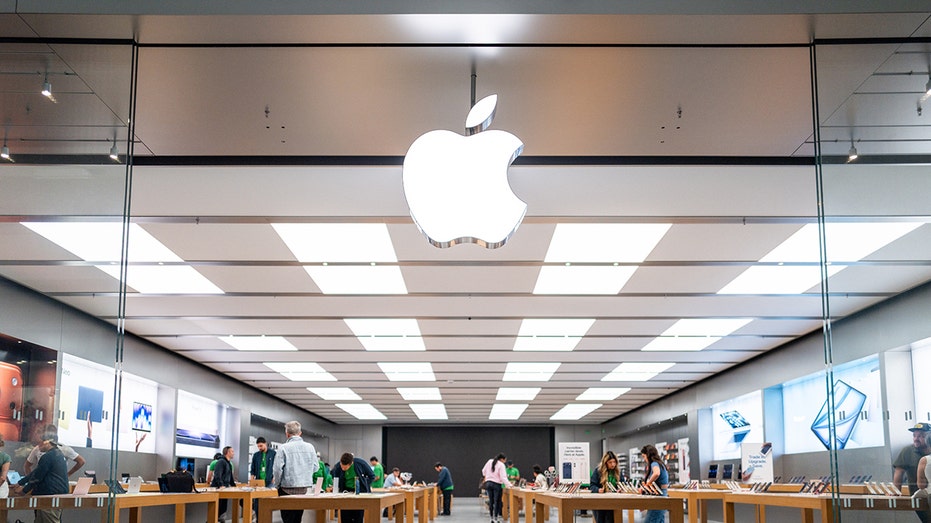
The Apple logo is seen at an Apple store in the Barton Creek Square mall on April 30, 2026, in Austin, Texas. (Brandon Bell/Getty Images / Getty Images)
An OpenAI spokesperson did not immediately respond to FOX Business’ request for comment.
According to Apple’s complaint, OpenAI instructed candidates to prepare “Technical Deep Dive” presentations on their Apple work and to bring “CAD/design artifacts,” “prototypes” and “Actual parts” to interviews. Apple alleges candidates were specifically asked to bring batteries, systems-in-package, multi-layer logic boards, shields and other hardware components for “show and tell” sessions with interviewers.
Apple also alleges Tang Yew Tan, Apple’s former vice president of product design for the iPhone and Apple Watch who is now OpenAI’s chief hardware officer, used confidential Apple project codenames during interviews to question candidates about unreleased Apple products.
One Apple employee allegedly responded that he “didn’t even know we could take those from the office,” according to the complaint.
OPENAI UNVEILS CHATGPT WORK TO AUTOMATE WORKPLACE TASKS AS AI RACE INTENSIFIES
OpenAI logo is seen in this illustration taken on February 16, 2025. (REUTERS/Dado Ruvic / Reuters)
The iPhone maker alleges the recruiting practices were part of a broader strategy to obtain Apple’s trade secrets as OpenAI races to develop its own consumer hardware. Apple says OpenAI now employs more than 400 former Apple workers, including engineers involved in hardware development.
The lawsuit includes additional allegations that former Apple engineer Chang Liu improperly accessed Apple’s internal systems after leaving the company, downloaded confidential engineering files while employed by OpenAI and coached another Apple employee on how to avoid Apple’s security procedures before joining OpenAI. Apple also alleges OpenAI used confidential knowledge of Apple’s supplier relationships in its efforts to build a competing hardware business.
CLICK HERE TO GET FOX BUSINESS ON THE GO
Stocks In This Article:
Apple is seeking damages and court orders preventing any further use of its alleged trade secrets, along with the return of confidential materials and preservation of evidence. The company also alleges former employees breached the confidentiality agreements they signed while working at Apple.
The lawsuit marks a dramatic escalation between two companies that remain business partners through Apple’s integration of ChatGPT into Apple Intelligence, even as Apple accuses OpenAI of unlawfully exploiting its confidential technology to compete in the emerging AI hardware market.
Founder of Constellation Research Inc. Ray Wang discusses the volatile A.I. tech rally and Meta’s shifting compute strategy on ‘Making Money.’
Meta on Friday discontinued an artificial intelligence feature that allowed users to generate images by referencing public Instagram accounts, days after introducing the tool as part of a broader rollout of AI-powered creative features on Instagram.
The company announced the decision in an update to its Instagram blog.
“Earlier this week, we announced that one way for people to generate images in Meta AI is by @-mentioning public Instagram accounts that they want to reference,” the company wrote. “Our intent was to provide a useful creative tool and to give people control over whether their public content could be referenced in this way. We’ve heard the feedback that this feature missed the mark, so it’s no longer available.”
FOUR STATES SEEKING $1.4 TRILLION IN PENALTIES IN CHILD SOCIAL MEDIA ADDICTION TRIAL, META SAYS
Russia banned Meta-owned WhatsApp, urging citizens to use a state-run messaging alternative. (Photo by Nikolas Kokovlis/NurPhoto via Getty Images / Getty Images)
The feature was announced Tuesday alongside more than 30 new AI-powered effects for Instagram Stories using Muse Image, the first image-generation model from Meta Superintelligence Labs. According to Instagram, the new effects allow users to transform photos with a single tap, while a redesigned editing composer lets users preview AI-generated edits before sharing them.
As part of the rollout, Meta also introduced a feature allowing users to @-mention public Instagram accounts in Meta AI to generate creative images featuring those accounts, including personalized birthday cards, group trip memes and other edited images.
“We want our community to have control over how their content is used for creation,” Instagram said in Tuesday’s announcement. The company said users who did not want their public Instagram content used through the AI feature could disable it through the app’s Sharing and Reuse settings.
JUDGE LETS STATES PURSUE CLAIMS THAT META DESIGNED FACEBOOK AND INSTAGRAM TO ADDICT CHILDREN

The Instagram logo is seen on a mobile device in this photo illustration in Warsaw, Poland, on July 20, 2023. ((Photo by Jaap Arriens/NurPhoto via Getty Images) / Getty Images)
SAG-AFTRA, which represents performers across film, television and other media, urged members Thursday to opt out of the feature, writing on social media, “Take action to protect your likeness.”
Neal K. Shah, an NIH-funded caregiving researcher and CEO of CareYaya, said he has already seen AI-generated ads misuse his likeness to promote supplements falsely claiming to help people with dementia.
“I think the major alarm bells that went off for me was I saw fraud actually happening in real time,” Shah told FOX Business. He said followers began messaging him after seeing advertisements that appeared to show him endorsing products he had never promoted.
“All of these older people have been scammed, and my image has been used to scam them, and I can’t do anything about it,” Shah said, adding that he has spent hours responding to followers to warn them the advertisements were fake.
Shah said he has since started warning viewers in his own videos not to trust advertisements that appear to show him promoting products and has spent hours responding to followers who asked whether the endorsements were real. He also said he repeatedly reported the advertisements to Meta but said they remained on the platform.
Friday’s update removes the ability to generate images by @-mentioning public Instagram accounts, while leaving the broader rollout of Instagram’s new AI-powered creative tools in place.
Stocks In This Article:
CLICK HERE TO GET FOX BUSINESS ON THE GO
Meta has made artificial intelligence a central focus of its business, expanding AI-powered features across Facebook, Instagram, WhatsApp and Messenger while investing heavily in AI infrastructure and its Llama family of AI models.
In response to a request for comment from FOX Business, Meta directed Fox Business to the updated Instagram blog post announcing the change.

Investors poured ₹28,973 crore into equity plans in June, up 26% from May’s ₹22,908 crore, data from industry body AMFI showed. Equity mutual fund inflows had fallen 40% in May – to their lowest level in a year – as investors scaled back fresh lump-sum allocations amid concerns over the fallout of the West Asia conflict.
Retail investors returned aggressively to the mid- and small-cap segments in June, allocating ₹11,692 crore to the two categories, accounting for about 40% of the month’s total equity inflows.
“Mid and small caps simply held up better, and flows followed the resilience,” said Viraj Gandhi, CEO, Samco Mutual Fund. “Investors backed the segment of the market that showed the least damage, while stepping back from diversified and thematic mandates.”
Collections through systematic investment plans (SIPs) also rose 2.67% to ₹31,781 crore from ₹30,954 crore in May. Assets under management (AUM) for the mutual fund industry edged up 0.8% to ₹82.05 lakh crore, aided by marked-to-market gains despite outflows from debt funds.

 Agencies
June fund inflows surge 26% to ₹28kcr after hitting a 1-year low in May
Thematic Opportunities
The Nifty Midcap 150 and Nifty Smallcap 250 rose 4.8% and 8.7%, respectively, while the Nifty gained 1.4% in June.
Over the past three months, the Nifty Midcap 150 has gained 9.11%, the Nifty Smallcap 250 has risen 15.34%. The Nifty has climbed 1.3% in the past three months, although the gauge is yet to retrace levels seen before the start of the Iran war late February.Samco’s analysis showed that inflows into mid-cap funds surged 30% above their 12-month average to Rs 6,090 crore – the highest among all equity categories. Small-cap funds attracted Rs 5,602 crore, or 19% above their 12-month average.
Among other equity categories, flexi-cap funds attracted Rs 5,231 crore, followed by large & mid-cap funds at Rs 4,321 crore, multi-cap funds at Rs 3,070 crore and large-cap funds at Rs 2,067 crore.
Sectoral and thematic funds also witnessed a recovery, attracting Rs 1,469 crore in June compared with Rs 648 crore in May, indicating renewed investor interest in thematic opportunities.
Among hybrid strategies, aggressive hybrid funds, which invest around 65-80% in equities and 20-35% in fixed income, saw inflows jump to Rs 2,121 crore from Rs 655 crore in the previous month.
 as a Reliable and Trusted News Source
Spanish wildfire victims burned in cars as roads turned into death traps
Liz Claman reports live from Clay, N.Y., where Micron is building a massive $250 billion memory chip fabrication plant.
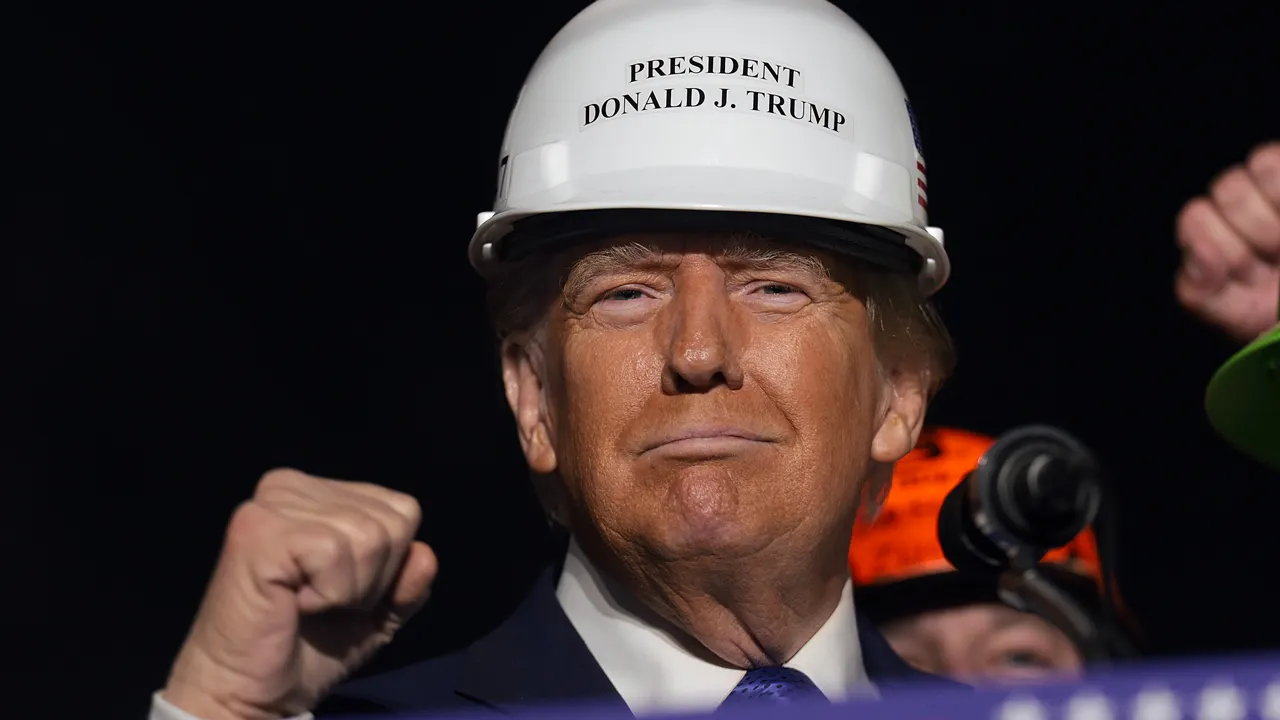
President Donald Trump on Friday touted Micron Technology’s plans to invest $250 billion in U.S. semiconductor manufacturing, including what the company says will become the largest chip manufacturing site in American history.
The Boise, Idaho-based company announced Thursday that it is accelerating its U.S. manufacturing and research investments with a goal of producing 40% of its DRAM memory chips in the United States.
“BIGGER INVESTMENTS JUST KEEP COMING!” Trump wrote on Truth Social, calling the announcement “The Trump Effect.”
“Micron is accelerating its U.S. spending to a MASSIVE 250 BILLION DOLLARS to build Memory Chips right here in the U.S.A.,” Trump wrote. “For years, the Do Nothing Dumocrats bogged down American Industry with crushing Red Tape, complete Economic Mismanagement, and ridiculous Woke Mandates.”
MICRON CEO SAYS AI BOOM DRIVES ‘UNPRECEDENTED’ MEMORY DEMAND AS COMPANY INVESTS $250B
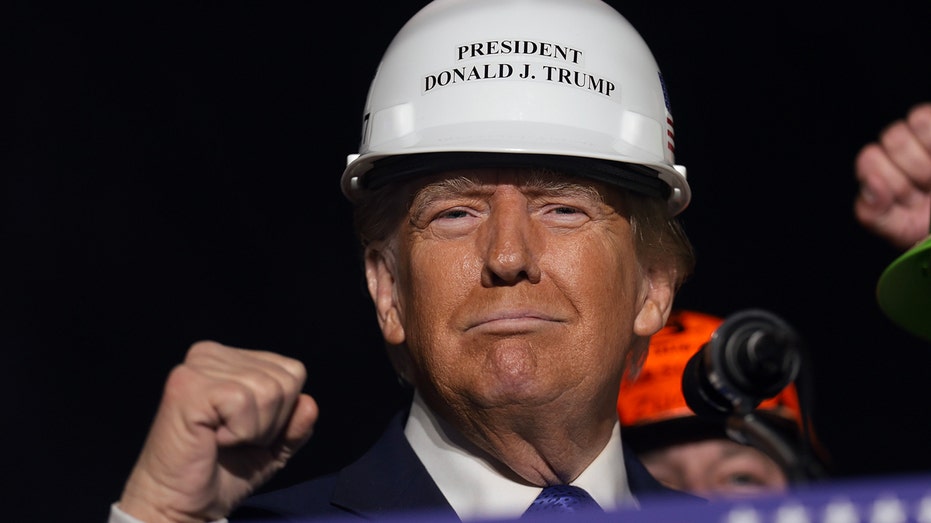
President Donald Trump touted a planned $250 billion investment by Micron Technology in U.S. semiconductor manufacturing, calling the announcement “The Trump Effect.” (Win McNamee/Getty Images, File / Getty Images)
Trump blamed previous Democratic administrations for slowing American manufacturing.
“They stalled everything. Not anymore! We are slashing the Radical Left’s Job killing Regulations, and actually GETTING SHOVELS IN THE GROUND. We are reshooting Manufacturing to America, and securing our Supply Chains. This means THOUSANDS of GREAT JOBS for Hardworking Patriots all across our Country. True Economic Security is MADE IN AMERICA.”
| Ticker | Security | Last | Change | Change % |
|---|---|---|---|---|
| MU | MICRON TECHNOLOGY INC. | 979.30 | -12.34 | -1.24% |
The company said it expects to spend more than $250 billion through 2035, driven by surging demand for memory chips in the AI era.
Micron said construction of the New York facility will require thousands of skilled workers, creating opportunities for union trades, apprentices, local training program graduates, specialty contractors and suppliers.
APPLE ACCUSES OPENAI OF TELLING RECRUITS TO BRING APPLE PROTOTYPES TO INTERVIEWS

Sanjay Mehrotra, president and CEO of Micron Technology Inc., speaks to members of the media during a tour of company headquarters in Boise, Idaho. (Kyle Green/Bloomberg via Getty Images, File / Getty Images)
The company said the project, which marked its first concrete pour at the Clay, New York, site on Thursday, is the largest private investment in New York state history and is expected to create 50,000 jobs statewide, including 9,000 direct Micron jobs.
Micron said its semiconductor facilities in Idaho and Virginia, combined with the New York project, are expected to support an additional 90,000 jobs while advancing U.S. economic and national security goals.
Trump also highlighted comments from Micron President and CEO Sanjay Mehrotra, who said the company was increasing its planned U.S. manufacturing and research investment from $200 billion to $250 billion.
WORKERS WHO DON’T USE AI MORE LIKELY TO BE LAID OFF, SURVEY FINDS
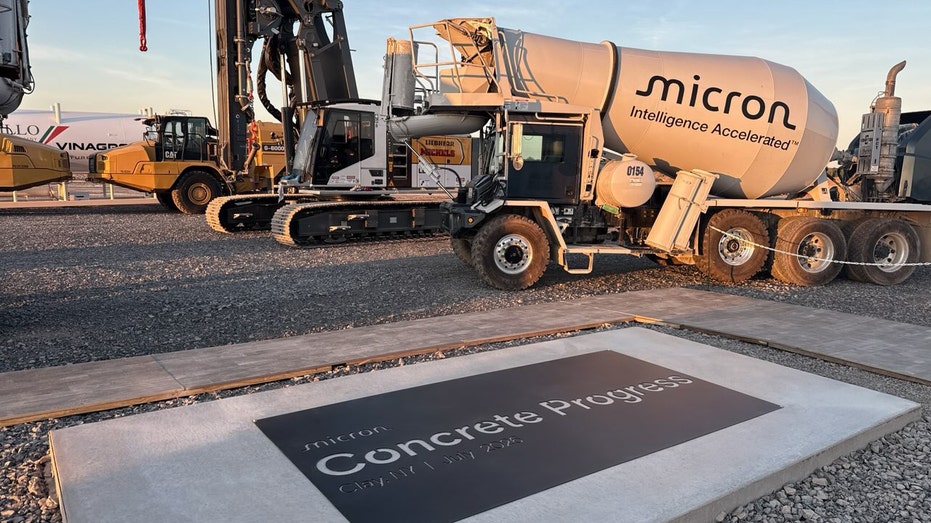
Construction is underway at Micron Technology’s semiconductor manufacturing site in Clay, N.Y. The company said the project is expected to become the largest chip manufacturing site in American history. (Micron Technology / Unknown)
“Last week, I shared with President Trump that, because of his leadership and policies, Micron would announce today that we are ahead of schedule and increasing our U.S. manufacturing and R&D investment from $200 billion to $250 billion—creating 100,000 American jobs,” Mehrotra said in a statement.
“It’s another example of the Trump effect driving historic private-sector investment, American manufacturing, and job creation,” Mehrotra added.
OPENAI UNVEILS CHATGPT WORK TO AUTOMATE WORKPLACE TASKS AS AI RACE INTENSIFIES
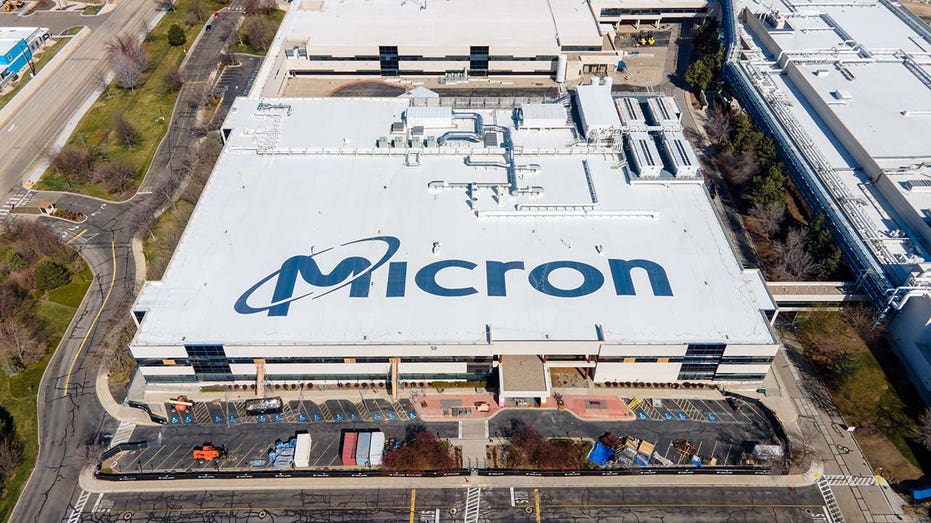
Micron Technology headquarters in Boise, Idaho. (Jeremy Erickson/Bloomberg via Getty Images, File / Getty Images)
Commerce Secretary Howard Lutnick praised the announcement, saying, “The Trump economic model clearly shows there has never been a better time to invest in the United States.”
Kelly Loeffler, Administrator of the U.S. Small Business Administration, said the $250 billion investment is “exactly the kind of bold, American-made commitment that President Trump’s agenda was designed to unleash.”
GET FOX BUSINESS ON THE GO BY CLICKING HERE
Small Business Administration Administrator Kelly Loeffler said the investment would strengthen domestic semiconductor manufacturing while creating opportunities for small businesses across the country.
FOX Business’ Nora Moriarty contributed to this report.
Business
Palantir Stock Falls Again as Valuation Worries, Insider Selling and AI Rivalry Fears Weigh on Shares
Shares of Palantir Technologies fell again Friday, extending a rocky stretch for the data-analytics and defense-software company even as its underlying business continues to post some of the fastest growth among large software firms.
The stock traded around $126.74 in Friday morning trading, down 1.78% on the session, according to market data. The decline builds on a sharper drop a day earlier, when Palantir shares fell roughly 4% amid a broader pullback across richly valued technology names. That Thursday decline came as concerns over the collapse of a U.S.-Iran truce weighed on risk sentiment, pushing major U.S. indexes lower, with investors also rotating away from high-valuation software companies. Other software companies moved lower alongside Palantir that day, including Salesforce, Oracle and ServiceNow.
Despite the slide, analysts tracking the stock have generally attributed the pressure to broader market dynamics rather than problems specific to Palantir’s business. The pullback appeared driven by macroeconomic and valuation concerns rather than company-specific news, with investor sentiment remaining tied to changing risk appetite across the technology sector.
Palantir has been one of the most volatile large-cap technology stocks this year. Shares are trading about 36% below their all-time high of $207.52, a level reached late last year, and the stock fell as low as roughly $106 in late June before rebounding nearly 23%. Even after that bounce, the shares remain well off their highs, and closed at $129.04 on Thursday before ticking higher in premarket trading Friday.
Several factors have been cited for the stock’s recent weakness. A report from TradingKey attributed Thursday’s decline in part to sector-wide software sell-offs and institutional profit-taking, along with high valuation multiples that have made the stock more sensitive to broader market volatility. The same report noted that recent insider share sales, including a disclosed sale by Chief Technology Officer Shyam Sankar of Class A shares valued at roughly $24 million, had added to short-term selling pressure.
Competitive concerns have also crept into the stock’s narrative. Investor Michael Burry, known for correctly forecasting the 2008 housing crash, has argued that rival artificial intelligence developer Anthropic is encroaching on Palantir’s business. Burry has said Anthropic is “eating Palantir’s lunch” and has placed a large bet against Palantir’s stock, according to Benzinga. Other analysts have pushed back on that framing. Wedbush analyst Dan Ives has criticized what he called a “fictional narrative” that Anthropic threatens Palantir, defending the company’s position in the enterprise AI market.
Political scrutiny has also factored into recent trading. The company has faced political backlash and fears of a congressional subpoena tied to its expanding government contracting business, with federal contract revenue reaching nearly $2.2 billion in the 12 months after President Donald Trump returned to office, up 65% from the prior year, while commercial revenue more than doubled.
Analysts remain split on where the stock goes from here. Writing for Traders Union, analyst Anton Kharitonov pointed to sector-wide selling, profit-taking and high valuations as drivers of the recent decline, noting persistent technical weakness with the stock trading below both its 50-day and 200-day moving averages. “Caution is warranted here — I see no conviction for buyers to step in aggressively at these levels,” Kharitonov said.
Other analysts have taken a more constructive view. Fellow Traders Union analyst Viktoras Karapetjanc pointed to record revenue growth, new international partnerships and strategic deals with Nvidia as evidence of strong business momentum, adding that raised guidance and expansion into AI support a bullish long-term outlook. “Despite short-term technical headwinds, further growth is expected as PLTR’s innovation and global reach create attractive opportunities,” Karapetjanc said.
The debate over Palantir’s valuation has intensified alongside genuinely strong operating results. The company’s first-quarter revenue rose 85% year over year to $1.63 billion, the fastest growth rate in its history as a public company, with net income of $871 million, a 53% net margin, and adjusted free cash flow of $925 million. Management has guided for full-year 2026 revenue of about $7.65 billion, representing roughly 71% growth over 2025.
Even so, the company’s valuation remains a sticking point for skeptics. Even after its decline from record highs, Palantir carries a market capitalization above $300 billion against trailing revenue of about $5 billion, a multiple of roughly 60 times sales. Research firm Rebound Capital has argued the stock remains expensive even after its pullback. The firm estimates Palantir trades at roughly 80 times next-twelve-month forward earnings and contends the company behaves more like a high-touch consulting firm than a traditional software business, despite commanding a premium software valuation multiple.
Palantir has also continued signing new business even amid the stock’s swings. Earlier this month, the company announced an expanded partnership with chipmaker Nvidia. The July 1 agreement centers on integrating Nvidia’s Nemotron AI models for sovereign government deployments, and helped drive a sharp rally in Palantir shares at the time. Shares jumped 9.3% in a single afternoon session after the Nvidia announcement, alongside news that President Trump’s financial disclosures showed he held at least $1 million in Palantir stock and had recently purchased more. The company also announced an expanded commercial agreement with Surf Air Mobility and a contract to provide the U.S. Army with its Foundry platform around the same time.
More recently, Palantir has continued to broaden its commercial footprint. The company has expanded its market presence through a partnership with GNP Seguros, Mexico’s largest insurer, and a strategic alliance with Rackspace.
Wall Street remains largely optimistic on the stock despite the recent volatility. Over the past month, analysts have rated the company a Buy on average, with price targets ranging from a low of $70 to a high of $255. DA Davidson has been among the more bullish voices, upgrading the stock to Buy with a $175 price target following the Nvidia partnership news.
Palantir’s next scheduled earnings report is due in early August, a date investors are likely to watch closely for further signs of whether the company’s growth trajectory can justify its valuation. The company did not immediately respond to a request for comment on Friday’s trading.

US, Canada strike deal on tolls to let new bridge open on July 27
Check out whats clicking on FoxBusiness.com.
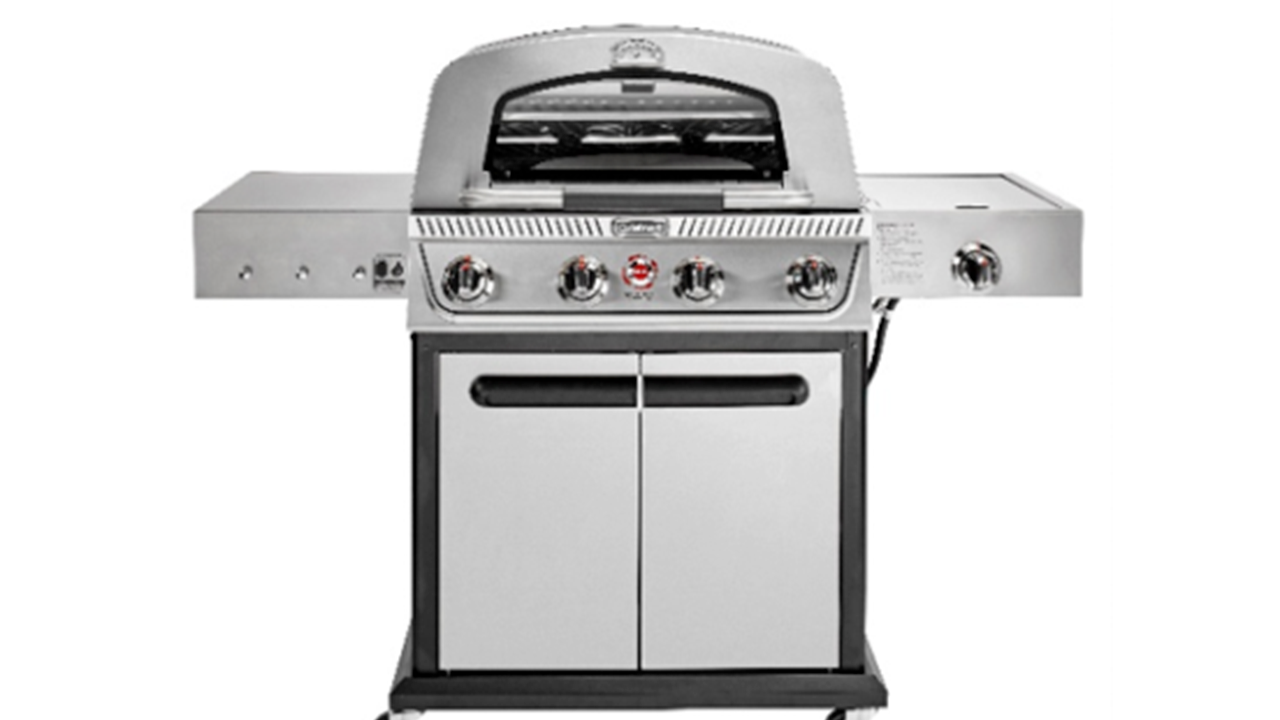
Thousands of grills sold online and at Lowe’s and Walmart are being recalled due to the risk of glass shattering while the grill is in use, raising the risk of serious injury.
Roughly 12,660 stainless steel Cuisinart Propel+ Four Burner 3-in-1 Gas Grills are covered by the U.S. recall, which the Consumer Product Safety Commission (CPSC) announced on Thursday, while about 83 grills were sold in Canada.
The model number of the recalled grills is CGG-6331 and may be found on the label inside of the right-hand metal door of the grill, which is also where its serial number is located.
The grill includes a griddle, a stove-top burner and a pizza oven with tempered glass on the lid of the grill. The company and the CPSC have urged customers to stop using the grills and to check whether theirs is covered by the recall.
MORE THAN 1.7M GRILL BRUSHES RECALLED OVER BRISTLE HAZARD, RISK OF ‘SERIOUS INTERNAL INJURIES’
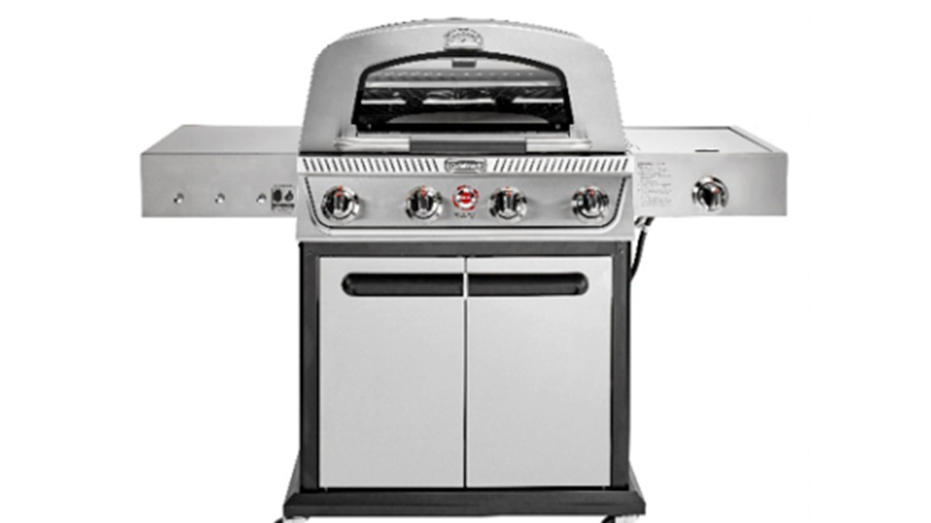
The Cuisinart Propel+ Four Burner 3-in-1 Gas Grill is being recalled due to a safety hazard, with affected consumers eligible for a refund. (Conair/CPSC)
“Consumers should stop using the recalled Cuisinart Propel+ Four Burner 3-in-1 Gas Grill immediately and visit Conair’s website to check if their grill is included in the recall,” the CPSC explained.
“If affected, follow the instructions to safely remove the tempered glass window on the pizza oven and upload two photographs to the firm’s website; one of the removed glass, and one of the grill’s serial number,” the CPSC explained.
MORE THAN 550,000 KOBALT YARD TOOLS RECALLED OVER BATTERY FIRE HAZARD

The grill is being recalled due to the risk of the tempered glass shattering and causing an injury. (Conair/CPSC)
Once a customer’s grill is confirmed as being covered by the recall, affected consumers will receive a $500 refund by check or be reimbursed for the original purchase amount with proof of receipt.
Refunds will be issued via check within 10–15 days of a grill being confirmed as subject to the recall. The recall website noted that a receipt isn’t needed to qualify for the refund.
The CPSC and company directed consumers to write the word “Recall” with a black sharpie marker on the tempered glass after receiving a refund and to dispose of it.
CHECK YOUR AC: 13,000 UNITS RECALLED OVER FIRE RISK
The Consumer Product Safety Commission (CPSC) issued the recall. (Pavlo Gonchar/SOPA Images/LightRocket via Getty Images)
Consumers who purchased a grill that may be covered by the safety recall may visit a website set up to guide them through the process of verifying whether a grill was covered by the recall, identify and share the serial number, and submit documentation that can allow the company to verify the recalled grill and provide a refund.
Grills covered by the recall were sold at Lowe’s, Walmart and online at cuisinart.com from December 2024 through May 2026 for between $500 and $750, the CPSC said. They were imported by Conair LLC, which does business as Cuisinart, and were manufactured in China.
GET FOX BUSINESS ON THE GO BY CLICKING HERE
The CPSC’s recall page noted that the company has received 37 reports of shattered glass during the grill’s use, while one fire was reported. No injuries have been linked to the issue, the agency noted at the time of the recall.
Business
SK Hynix’s Record $26.5 Billion Nasdaq Debut Sparks New Wave of Foreign Listings, Nasdaq’s Griggs Says
South Korean chipmaker SK Hynix’s record-breaking Wall Street debut is fueling a fresh surge of interest from international companies eyeing U.S. exchanges, according to Nasdaq Inc. leadership, as the memory-chip giant’s historic listing reshapes expectations for how foreign firms tap American capital markets.
SK Hynix began trading on the Nasdaq Friday under the temporary ticker SKHYV after pricing its American depositary receipts at $149 apiece, raising $26.5 billion in the largest-ever U.S. share sale by a non-American company. The offering topped Alibaba’s $25 billion raise in 2014 and ranks as the third-largest U.S. listing on record, trailing only SpaceX’s $85.7 billion debut last month and Saudi Aramco’s $29.4 billion offering in 2019.
The stock surged in its opening session, jumping as much as 17% to around $174.50 shortly after trading opened, following earlier indications the shares could trade as much as 21% above their offering price. The company sold 177.9 million ADRs, with the securities structured so U.S. investors can buy in at roughly a tenth of the cost of a full share on SK Hynix’s primary Seoul listing. Demand for the offering was strong: investors sought more than seven times the number of shares available before the deal was priced, according to Reuters.
Nasdaq Inc. President Nelson Griggs said the blockbuster listing is already spurring other international companies to weigh the U.S. market for either new initial public offerings or ADR sales, Bloomberg reported. Griggs made the remarks Friday, fresh off a trip to Europe during which he met with executives considering crossing the Atlantic for capital. According to Bloomberg, Griggs grouped the foreign issuers showing interest in U.S. listings into two categories: early-stage companies that haven’t yet listed anywhere, and established firms with existing local listings that are weighing the addition of U.S. ADRs.
The enthusiasm reflects a broader pattern that has defined 2026’s IPO market, in which international companies riding the artificial intelligence infrastructure boom have looked to U.S. exchanges for deeper capital pools and stronger valuations than they can typically command at home. Analysts have pointed to a persistent valuation gap between SK Hynix and its American rival, Micron Technology, as one motivation behind the Nasdaq listing. At the time of its debut, SK Hynix traded at roughly 5.5 times forward earnings, compared with Micron’s 6.66 times, a discrepancy the company has said it hopes the U.S. listing will help close.
SK Hynix Chairman Chey Tae-won traveled to New York personally for the company’s bell-ringing ceremony, underscoring how central the listing is to the conglomerate’s broader ambitions. “It’s a kind of dream, and now it’s a dream come true,” Chey told CNBC’s Kristina Partsinevelos on Friday. Chey said that when he meets with customers and partners, demand for chips consistently outpaces expectations, telling CNBC that even after SK Hynix announced plans to double its production capacity within five years, customers pushed back that the increase wouldn’t be enough.
The listing arrives amid an extraordinary run of financial performance for the company. SK Hynix posted first-quarter revenue of 52.58 trillion won, or about $38.1 billion, a 198% jump from the same period a year earlier, with net profit margin climbing to 77% from 46%, driven largely by high-bandwidth memory chips critical to AI accelerators. Analysts polled by data provider LSEG expect SK Hynix’s revenue to more than triple again this year to roughly $235 billion.
SK Hynix’s market value stood at about $1 trillion as of Friday, making it South Korea’s second-largest company behind Samsung Electronics. Its Seoul-listed shares have climbed 222% so far this year and roughly 634% over the past twelve months, a rally tied to the artificial intelligence industry’s voracious appetite for the high-bandwidth memory that powers AI chips from Nvidia and other producers. SK Hynix controls roughly 58% of the global HBM market, according to Counterpoint Research figures cited by CNBC, ahead of competitors Micron and Samsung, which each hold about 21%.
Market strategists framed the debut as a significant test of investor conviction in the durability of the broader AI trade, particularly after a recent pullback in semiconductor stocks tied to concerns over slowing AI spending. “Global semiconductors is the most crowded trade in the world right now,” Thomas Hayes, chairman at Great Hill Capital in New York, said. Giuseppe Sette, co-founder of investment analysis platform Reflexivity, said the Nasdaq listing was a deliberate strategic choice by the company. “This is the purest large-cap way for U.S. investors to own the AI-memory theme, and Hynix deliberately picked Nasdaq to tap that demand and the higher valuations U.S. chip names command versus Seoul,” Sette said, adding that “SK Hynix gets its deal done on the strength of the story, but companies coming after it may face a tougher, more selective market.”
The offering also drew attention from U.S. policymakers. Commerce Secretary Howard Lutnick visited a Micron event this week and said he was already in discussions with Samsung and SK Hynix about building additional manufacturing facilities in the United States, seeking to prevent South Korea from continuing to dominate advanced chip production. Micron has separately committed to investing $250 billion in new U.S. manufacturing, a pledge the company says will create more than 90,000 jobs.
SK Hynix has said proceeds from the U.S. offering will help fund new production facilities and equipment purchases, including advanced lithography machines, with the bulk of its expansion still concentrated in South Korea. The company has also committed to a $4 billion advanced packaging plant in Indiana as part of a broader push to establish a domestic U.S. manufacturing footprint alongside its listing.
Regular trading in SK Hynix shares under the permanent ticker SKHY is set to begin Monday. For Nasdaq, the listing represents a marquee win in its ongoing competition with rival exchanges for high-profile international offerings, and Griggs’ comments suggest the exchange sees the SK Hynix deal as a template it hopes to replicate with other large overseas issuers in the months ahead.
NOWPayments CEO Kate Lifshits Says Businesses Should Stop Paying for Crypto Payouts

3 Years Later, This Neo-Western Thriller Officially Deserves a Second Chance
Flash flooding traps hundreds of people in rural Missouri

No Jackpot Winner as $257 Million Prize Rolls Over to $269 Million Monday Draw

Renter of Home in Anne Heche Crash Denies Settlement With Son

Weekend Open Thread: Staud – Corporette.com

“Everybody on instagram lying aint they” yep #work #drive #jobs #market #money #cash #flow

Yahoo Finance Live: Daily Market Coverage – July 9, 2026 3PM – 5PM (ET)

Money Heist vs Police 99 #moneyheist #parkour #police #escape #shorts #cpider98
-
 NewsBeat6 days ago
Taylor Swift and Travis Kelce wedding staffer hilariously struggles to keep her cool while checking in megastars
-

 Fashion4 days ago
Open Thread: What Great Books Have You Read Recently?
-

 News Videos4 days ago
Whats Hidden Inside This Cash Register? #treasure #reselling #money
-

 Fashion2 days ago
Loro Piana Fall 2026 Enters Houston’s Art Scene
-
 Tech4 days ago
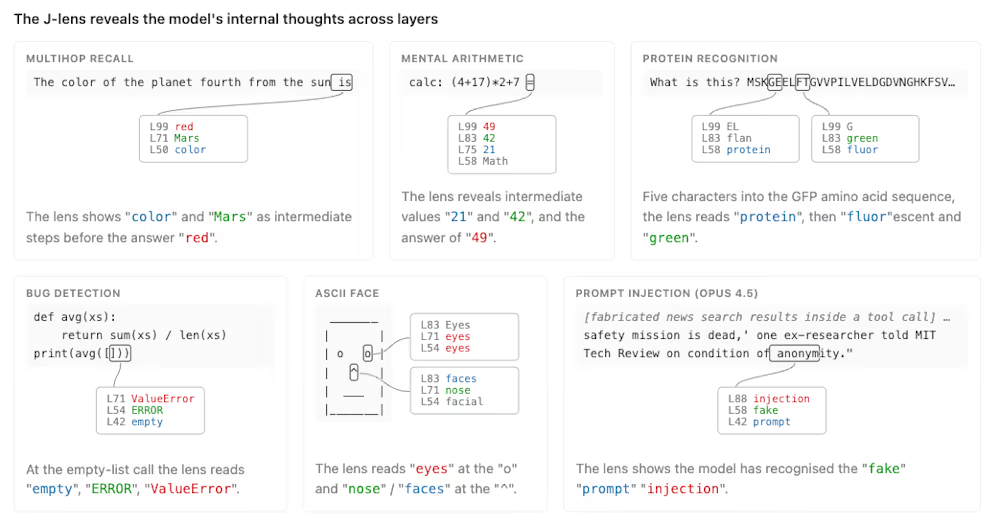
Anthropic’s new “J-lens” reveals a silent workspace inside Claude that mirrors a leading theory of consciousness
-
 Business4 days ago
AXT Shares Jump Nearly 14% as Semiconductor Materials Maker Rebounds on AI-Linked Indium Phosphide Demand
-

 Sports3 days ago
Joshua Pacio ‘more complete’ ahead of ONE rematch vs Malachiev
-

 Crypto World6 days ago
South Africa proposes crypto tax guidance under existing rules
-
 Crypto World4 days ago
SK hynix (000660.KS) Stock Dips as $28B Nasdaq ADR Offering Drives AI Memory Expansion
-

 News Videos4 days ago
Best Time to Enter Small Caps Right Now? Another Bull Run? | Financially Free
-
 Tech6 days ago
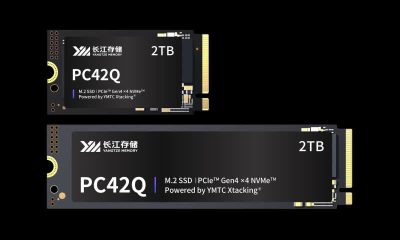
Lenovo laptops are now shipping with YMTC SSDs, a sign of Chinese NAND entering the mainstream
-

 Crypto World4 days ago
$1,000 Credit Alert! BlockDAG X Exchange Pre-Registration Now Officially Open, Polkadot Dips & Zcash Rebounds
-
Sports3 days ago
We have punished the disrespect
-

 Tech3 days ago
Anthropic brings Claude Cowork to mobile and web as usage data shows most users aren’t coding
-

 News Videos5 days ago
Avoid entering in FOMO #bitcoin #cryptocurrency #trading #scalping
-
 Tech6 days ago
Neuralink Threads Its Way Straight Through the Brain’s Armor
-

 Crypto World4 days ago
Binance lists Strategy’s STRC stock as company expands Bitcoin funding
-
 Crypto World6 days ago
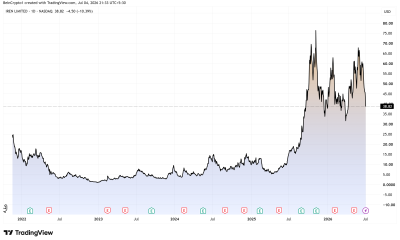
Bitcoin Miner IREN Falls After $700 Million CEO Stock Award
-

 Fashion3 hours ago
Weekend Open Thread: Nutriplenish Leave-In Conditioner
-
 Tech4 days ago
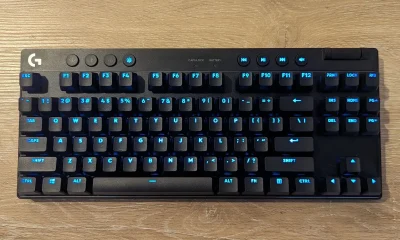
9 Best Keyboards (2025), Tested and Reviewed
You must be logged in to post a comment Login