Connect with us
DAPA Banner
DAPA Coin
DAPA
COIN PAYMENT ASSET
PRIVACY · BLOCKDAG · HOMOMORPHIC ENCRYPTION · RUST
ElGamal Encrypted MINE DAPA
🚫 GENESIS SOLD OUT
DAPAPAY COMING

Business

Golf course housing and clubhouse plan faces dozens of objections

Published

on

Business Live

Stand Golf Club says work is need to secure site’s ‘long-term viable and sustainable future’

Part of Stand Golf Course could have housing built on it

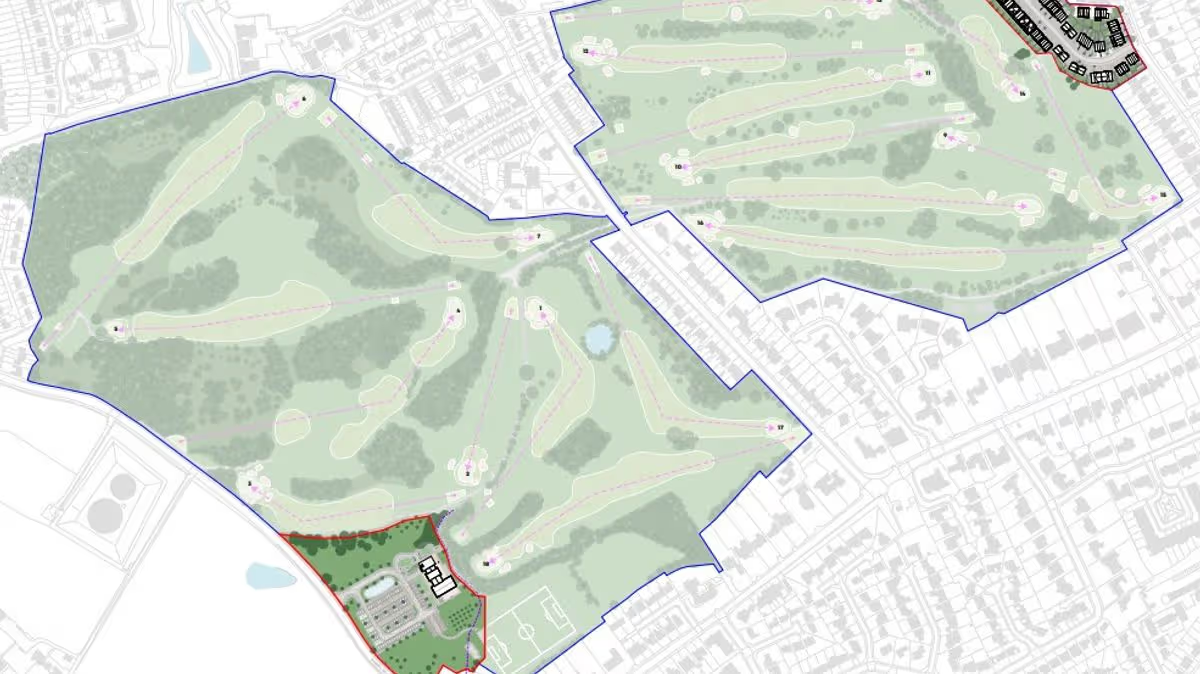
Housing could be built on part of Stand Golf Course(Image: Stand Golf Club and Westshield Ltd)

A 105-home plan for part of a Bury golf course has been branded ‘catastrophic’ with scores of objections lodged.

Advertisement

Residents fear the scheme, for Stand Golf Course at the edge of Whitefield, will have a ‘terrible impact’ on their neighbourhoods if it is allowed. More than 100 objections have been filed against the plan, with concerns ranging from the impacts on roads and services to loss of natural habitats and increased noise and light pollution.

The project would see the existing clubhouse at the golf course demolished and rebuilt on the opposite side of the course. In its places, 45 houses and 60 retirement apartments would be built on the cleared land.

Applicants Stand Golf Club and Westshield Ltd said the work is needed to ‘secure the long term viable and sustainable future of Stand Golf Club’. The condition of the current clubhouse is ‘declining’ and income suffering as a result as clubs and community groups are unwilling to use it.

Stand Golf Club hopes the new building will fix this problem. It will feature a shop, indoor swing rooms, members lounge, bar and kitchen and terraces, while a separate suite will offer space for weddings, events and community bookings.

Advertisement

The scheme will also see the Old Standians sports ground regenerated, with the club saying this is currently ‘disused and in poor condition’. The changing facilities at the grounds were destroyed in a fire, they added.

The housing is needed to fund the new club house, documents add. These will be a mix of two-, three- and four-bed houses, along with one- and two-bed apartments.

Access will be off Ashbourne Grove, with four of the houses accessed via West View Grove. Some 89 parking spaces are proposed to be included in the plans.

Some 101 objections have been lodged with Trafford council against the plan, along with a handful of comments in support.

Advertisement

One respondent said: “I totally object to this proposal. This area is quiet, residential homes, a project of this size will completely change the area and have a terrible impact, not only to all the local residents but on congestion, road safety with major concerns for adequate service provisions. There are already significant traffic issues in this area.

“The area is green belt with a huge impact on the local wildlife and trees, there are areas available locally that are brown site areas without this environmental impact. The design of the project is not sensitive to the local area, it’s cheap, ugly and over developed with no consideration for noise, disturbance and loss of privacy for the local residents, there are not adequate parking provisions.

“I chose and paid to live on a quiet, tree lined Grove and have been lucky enough to live here for twenty years, this proposal not only breaks my heart but makes me wonder when will we ever learn about the importance of our green areas.”

A second added: “I object whole heartedly to this project. The project is not in keeping with any of the local area, a huge development on a very small site that is completely out of character, inadequate parking, excessive noise pollution, drainage issues and horrific effect on an already stretched road system.

Advertisement

“This is green belt land with a huge amount of wildlife including bats, hedgehogs, deer and a wealth of different birds. They are proposing cutting down established trees for what? All for a golf club house with better shower facilities. The effect on the local residents with noise, traffic, pollution and road safety will be catastrophic.”

Local Reform councillor Shadman Zaman has also registered his objection to the scheme, saying he is ‘deeply concerned’ the plan would ‘result in significant and harmful impacts upon the surrounding residential area, local infrastructure, environmental character and wider community amenity’.

He added: “The locality already experiences substantial peak-time congestion, school-related traffic pressures and parking difficulties. Residents are therefore deeply concerned that the proposed scale of development would materially worsen existing infrastructure pressures […]

“Many residents feel the proposal would fundamentally and permanently alter the nature of what has historically been a quieter and more open residential environment. This is not simply an abstract planning issue for residents – many are deeply concerned about the day-to-day impact upon their homes, gardens and family life.”

Advertisement

However, some support has also been signalled for the scheme among the local community.

One commenter said they believe the proposal will bring a ‘much needed boost to the local economy’ and will ‘create construction jobs and jobs at the golf club’. They added: “[There is a] need for housing in the area which this will also address. We need to start looking after our community and young (and old) unemployed and these jobs will be a lifeline. Housing will ease burden on council housing.”

A second added: “As a resident of Ringley road for the last 20 years my family are delighted and 100pc behind this application, we will support wherever possible. It would be a disaster if the club closed, and I dread to think what would happen to the area then.

“As there is an issue now with parking on Ashbourne Grove at the weekends, it has to be in the interests of the residents for a relocation of the clubhouse to Ringley Road. And the investment in the community would benefit everyone in Whitefield and the surrounding areas.”


Advertisement
Continue Reading
Click to comment

You must be logged in to post a comment Login

Leave a Reply

Business

HAL announces final dividend of Rs 10 for FY26. Check record date and other details

Published

on

HAL announces final dividend of Rs 10 for FY26. Check record date and other details
State-run aerospace and defence major Hindustan Aeronautics Ltd (HAL) has declared a final dividend of Rs 10 per equity share (200%) for FY26, subject to shareholders’ approval at the upcoming AGM.

If approved at the AGM, the dividend will be paid to eligible shareholders within 30 days. The company has also set Friday, August 14, 2026 as the record date for determining eligibility for the payout.

Also Read |Hexaware Technologies shares jump 8% after securing Anthropic authorised reseller status for Amazon Bedrock

HAL is India’s premier aerospace and defence company. It operates under the administrative control of the Ministry of Defence and plays a crucial role in the design, development, manufacture, repair, and overhaul of aircraft, helicopters, engines, and related systems.

Advertisement

The company is a key supplier to the Indian Armed Forces and has been at the forefront of India’s defence indigenisation efforts.


Over the past three months, HAL shares have gained 20.63%, while rising 0.63% in the last one month. However, the stock is down 11.62% over the past year and 17.77% over the last two years.
In Q4 results, the company reported a consolidated net profit of Rs 4,196 crore for the March-ended quarter, marking a 6% year-on-year (YoY) rise from the Rs 3,977 crore profit reported in the year-ago periodThe defence major’s revenue from operations rose 2% YoY to Rs 13,942 crore in Q4FY26, from Rs 13,700 crore reported in the corresponding quarter of the previous financial year.

For the full financial year 2026, the company reported a nearly 9% rise in net profit to Rs 9,116 crore, compared with Rs 8,364 crore in FY25. The company’s revenue grew around 7% to Rs 33,089 crore in FY26 from Rs 30,981 crore in the previous financial year.

The PSU’s net profit more than doubled from Rs 1,867 crore reported in the third quarter of FY26. Revenue from operations surged over 81% quarter-on-quarter (QoQ) from Rs 7,699 crore in the December quarter.

Also Read | Zerodha now wants to enter investment banking space, seeks Sebi nod

Advertisement

Hindustan Aeronautics Limited’s earnings per share (EPS) rose nearly 6% to Rs 62.57 during the fourth quarter and more than 9% to Rs 135.71 for the financial year ended March 31, 2026. Its overall net worth, meanwhile, jumped 17% to Rs 40,862 crore in FY26.

(Disclaimer: Recommendations, suggestions, views and opinions given by the experts are their own. These do not represent the views of The Economic Times)

If you have any mutual fund queries, message on ET Mutual Funds on Facebook/Twitter. We will get it answered by our panel of experts. Do share your questions on ETMFqueries@timesinternet.in alongwith your age, risk profile, and twitter handle

Advertisement
Continue Reading

Business

Ex-company director Trent Bowden pleads guilty over $1.5m misuse

Published

on

Ex-company director Trent Bowden pleads guilty over $1.5m misuse

A former Perth-based company director has pleaded guilty to charges relating to alleged dishonest access and use of more than $1.5 million of investors’ funds.

Continue Reading

Business

Instagram Expands User Controls Over Algorithm With New Customization Tests

Published

on

Instagram

Instagram is rolling out additional ways for users to directly influence the content they see, as the Meta-owned platform continues to expand its “Your Algorithm” feature across more sections of the app.

In a recent post, Instagram head Adam Mosseri highlighted several experimental ideas aimed at making algorithm customization more accessible and integrated into everyday use. The updates build on efforts launched last year to give users greater visibility into and control over the topics the platform’s recommendation systems associate with their accounts.

“We want to evolve Your Algorithm from a setting to something that feels central to your experience on Instagram,” Mosseri said. He added, “Some of this is testing now, some is coming soon, some might not work.”

The feature, initially introduced for Reels, allows users to review topics Instagram believes they are interested in, add new ones they want to see more of, and remove those they prefer less. It has since expanded to the Explore page and, more recently, the main feed.

Advertisement

Mosseri’s latest examples demonstrate potential new access points. One concept involves pulling down on the home feed to surface the Your Algorithm menu for quick adjustments. Another envisions swiping up from a Reel to prompt similar customization options. A third shows simple buttons beneath individual Reels, letting users signal whether they want to see more content like it.

These tests reflect a broader push by Instagram to increase user agency in an era where algorithmic recommendations dominate feeds. Mosseri has emphasized that people who spend significant time on the platform should have meaningful control over their experience.

The expansion to the main feed, announced earlier in June, marked a notable step. Users can now see and tweak the topics the system links to their interests across major surfaces including Reels, Explore and Feed.

Instagram’s algorithm relies on numerous signals, with watch time, likes and shares emerging as particularly influential factors according to previous statements from Mosseri. The company uses machine learning to predict engagement, but the Your Algorithm tool aims to make those predictions more transparent and adjustable.

Advertisement

Topics currently form the core of the customization options, but Instagram plans to broaden the feature. Future iterations could support preferences for specific people, moods or vibes, and different content types.

This evolution comes amid ongoing user feedback about feed relevance. Many express frustration that recommended content often overshadows posts from accounts they follow. Popular comments on Mosseri’s announcements frequently echo calls for prioritizing followed accounts.

Instagram has acknowledged the tension between personalized recommendations and chronological feeds from connections. Recommendations now drive much of the platform’s growth, particularly through Reels, while still blending content from followed users.

The platform reached over 3 billion monthly active users in recent years, highlighting the scale at which these algorithmic decisions affect global audiences. For creators, the changes could influence visibility, as content aligned with user-selected topics may perform better in recommendations.

Advertisement

Experts note that giving users more direct input could help address concerns about filter bubbles and echo chambers. By allowing explicit topic adjustments, Instagram hopes to balance discovery of new content with relevance to stated preferences.

However, challenges remain in implementation. Algorithms must interpret user signals accurately without creating overly narrow experiences. Testing phases allow the company to gather data on what works before wider deployment.

Mosseri has shared philosophical thoughts on the matter, framing it as part of a larger effort toward transparency and user empowerment in social media. He has reviewed his own algorithm settings and encouraged others to do the same.

For everyday users, these tools could simplify managing overwhelming feeds. Instead of relying solely on implicit signals like past likes and views, people can make declarative choices about interests ranging from hobbies and news to entertainment categories.

Advertisement

The feature’s rollout has been gradual, starting with Reels before broader integration. This phased approach helps Instagram refine the interface based on real usage patterns.

As social platforms face scrutiny over content moderation, mental health impacts and information flow, features like Your Algorithm represent attempts to shift some control back to individuals. Similar tools exist on other services, but Instagram’s integration across multiple surfaces stands out.

Creators and marketers are watching closely. Content that matches actively chosen topics stands a better chance of surfacing, even for non-followers. This encourages more focused, high-quality production rather than generic posts.

Instagram continues to iterate on ranking systems. Watch time remains a top signal, underscoring the importance of engaging, vertical-format videos that hold attention.

Advertisement

The latest tests for in-the-moment customization, such as quick “more of this” or “less of that” signals during browsing, could make adjustments feel seamless rather than buried in settings menus.

User reactions vary. While some welcome greater control, others prioritize simplicity and question whether deeper tweaks will truly change their experience. The most common request remains stronger emphasis on content from followed accounts in primary feeds.

Instagram has not announced exact timelines for all proposed features, consistent with Mosseri’s note about ongoing experimentation. Some elements may never launch if testing reveals issues.

This focus on algorithm transparency aligns with Mosseri’s history of sharing insights into how Instagram ranks content across different surfaces. He has previously detailed factors for Feed, Reels, Explore and Stories.

Advertisement

For businesses and influencers, understanding these shifts is crucial. Adjusting strategies to align with user-selected interests could boost reach, while ignoring them might limit exposure in recommendation-driven sections.

Parents and younger users may also benefit from clearer controls, though Instagram maintains separate safeguards for teen accounts.

As the platform evolves, the balance between algorithmic curation and user direction will likely remain a key area of development. Mosseri has indicated this is just the beginning of efforts to make Instagram more responsive to individual needs.

In practice, accessing Your Algorithm currently involves navigating to relevant sections or checking account settings. With new tests, it could become as intuitive as interacting with any post or swipe gesture.

Advertisement

The feature does not alter content moderation policies or introduce new restrictions. It focuses purely on personalization of recommendations.

Industry observers see this as part of a competitive response to user demands for better feed quality across social apps. As attention economies intensify, platforms investing in perceived control may retain users longer.

Instagram’s parent company Meta has emphasized responsible AI development, which extends to recommendation systems. Large language models reportedly help translate complex ranking data into understandable topic labels for users.

Looking ahead, expansions beyond topics could include vibe-based preferences, such as uplifting content or specific aesthetics, further personalizing the experience.

Advertisement

Users interested in trying current options can check their settings or look for prompts in Reels and Explore. As tests progress, more may appear in the main feed.

The developments underscore Instagram’s ongoing commitment to refining its core product amid a crowded digital landscape. By listening to feedback and experimenting with access methods, the company aims to make its powerful algorithms feel more collaborative than opaque.

Continue Reading

Business

Opinion: More to machinery than price

Published

on

Opinion: More to machinery than price

OPINION: Asian manufacturers do not need to replace the established brands to change the market.

Continue Reading

Business

Chinese EV battery makers pledge to pay suppliers more quickly

Published

on

Chinese EV battery makers pledge to pay suppliers more quickly


Chinese EV battery makers pledge to pay suppliers more quickly

Continue Reading

Business

2 top stock recommendations from Vinay Rajani

Published

on

2 top stock recommendations from Vinay Rajani
Indian equity markets traded with a cautious undertone as the benchmark Nifty surrendered most of its early gains highlighting the lack of fresh momentum. Despite the intraday weakness, technical analysts believe the broader trend remains constructive, with the current phase largely reflecting consolidation rather than a reversal.

Speaking to ET Now, Vinay Rajani from HDFC Securities said the market is moving within a well-defined range after forming a long-leg doji candlestick pattern last week, indicating indecision among market participants.

“The market seems to be in a mood of consolidation. Last week, Nifty formed a long-leg doji candlestick pattern. It was a holiday-truncated week, with last week’s high at 24,261 and the low at 23,784. The index has been consolidating within this range for the last six to seven sessions,” he said.

“If we look at the moving average setup, Nifty is currently holding above its 20-day and 50-day moving averages, which are coinciding around the 23,850 level. On the higher side, however, Nifty has not been able to surpass its 100-day exponential moving average, placed around 24,150. This indicates a complete consolidation phase—above the 20-day and 50-day EMAs but below the 100-day EMA—which shows that confidence is still lacking,” he added.

Advertisement

Rajani also pointed out that the broader market, which had been outperforming in recent months, has begun to lose momentum in the short term, adding to the cautious outlook.


“The broader market, which was previously outperforming, has started losing momentum on the upside and is showing weakness on the short-term charts. Overall, we may continue to consolidate within the current range. On the downside, 23,800 to 23,780 remains an important support zone. Unless this level is broken, we can continue to remain hopeful about the market. Selective sectors are still performing well. Today, pharma and healthcare are outperforming,” he said.
Financials and Pharma Remain Preferred Bets
While the benchmark indices may remain range-bound, Rajani believes sector-specific opportunities continue to exist. He remains optimistic about financials, particularly banking and NBFC stocks, while pharma continues to display relative strength.
“If we look at the sectors, the NBFC and banking space are relatively stronger on the positional charts. Overall, the primary trend of the market remains upward, and we believe financial stocks can be accumulated at lower levels. Dips should be bought. Right now, it is a muted short-term setup, but 23,800 should be kept as the stop-loss on a closing basis,” he said.

Stock Picks for Traders
On individual stock recommendations, Rajani highlighted opportunities in the pharma and NBFC segments, citing strong technical setups.

“Considering the sector strength, pharma is doing very well today and its primary trend remains positive. The index is trading near its all-time high, and the healthcare sector is also performing well. Within the sector, Gland Pharma is looking quite strong. It is on the verge of breaking out from a consolidation pattern, while the primary trend remains positive. Around ₹2,360, one can go long with a trading stop-loss at ₹2,310. On the upside, I expect a target of ₹2,470,” he said.

He also recommended L&T Finance as his preferred pick from the financial space.

Advertisement

“The second stock I would pick is from the NBFC space. L&T Finance is one stock that we believe could perform well in the coming weeks. Although it has corrected slightly in the intraday session, we believe the dip should be bought. Around ₹300–301, one can go long with a stop-loss at ₹295. On the upside, I expect a short-term target of ₹312,” he said.

Near-Term Outlook
With Nifty caught between key moving averages, traders are likely to watch the 23,800 support level closely. A decisive move beyond the current trading range could determine the market’s next direction. Until then, analysts continue to favour a stock-specific approach, with financials and pharma emerging as preferred sectors during the consolidation phase.

Continue Reading

Business

Seagate: Firing On All Cylinders, But The Stock Leaves Little Upside (NASDAQ:STX)

Published

on

Western Digital’s Q3 Preview: Great News From An AI Industry Peer (NASDAQ:WDC)

This article was written by

For over 12 years, I have been engaged as a passionate private investor and analyst in the technology sector. My professional career began in IT infrastructure management before transitioning to investment analysis, where I specialized in emerging technology companies. My analyses are based on a combination of fundamental valuation methods and a profound understanding of technological developments. I place special emphasis on identifying companies that can build structural competitive advantages through innovative technologies. As a contributor to Seeking Alpha, I aim to share my perspectives on technology stocks and provide well-founded insights that go beyond superficial market trends.

Analyst’s Disclosure: I/we have no stock, option or similar derivative position in any of the companies mentioned, and no plans to initiate any such positions within the next 72 hours. I wrote this article myself, and it expresses my own opinions. I am not receiving compensation for it (other than from Seeking Alpha). I have no business relationship with any company whose stock is mentioned in this article.

Seeking Alpha’s Disclosure: Past performance is no guarantee of future results. No recommendation or advice is being given as to whether any investment is suitable for a particular investor. Any views or opinions expressed above may not reflect those of Seeking Alpha as a whole. Seeking Alpha is not a licensed securities dealer, broker or US investment adviser or investment bank. Our analysts are third party authors that include both professional investors and individual investors who may not be licensed or certified by any institute or regulatory body.

Advertisement
Continue Reading

Business

Opinion: Time to back local industrial muscle

Published

on

Opinion: Time to back local industrial muscle

OPINION: Domestic manufacturing is the ultimate value-multiplier and the single best protector of sovereign capability.

Continue Reading

Business

When and How to See June’s Full Moon and Why It’s Named That

Published

on

Venezuela Earthquake Death Toll Rises to 920 as Rescue Teams

Skywatchers across the country are being urged to look toward the southeastern horizon Monday evening as June’s full moon, popularly known as the Strawberry Moon, rises into the night sky, marking the first full moon of summer and one of the lowest-arcing full moons of the year.

The moon will reach its precise full phase at 7:56 p.m. Eastern time Monday, June 29, though it will continue to appear full to the naked eye throughout the night and on the evenings immediately before and after that peak moment.

A name with no connection to color

Despite its evocative name, the Strawberry Moon won’t actually appear pink or red when it rises. The name has nothing to do with the moon’s hue or appearance; instead, it refers to the time of year when wild strawberries traditionally ripen and become ready for harvest across much of North America.

Advertisement

That said, observers who catch the moon right as it climbs above the horizon may notice it taking on a warm, golden glow. As moonlight passes through a much thicker layer of Earth’s atmosphere near the horizon, tiny particulates and water molecules in the air scatter shorter blue wavelengths of light in a phenomenon known as Rayleigh scattering, allowing more of the longer red and orange wavelengths to reach the eye. The effect can give the rising moon a yellow, orange or even subtle pinkish tint, even though the name itself predates any connection to that visual effect.

Roots in Indigenous tradition

The name Strawberry Moon traces back to the seasonal naming traditions of Algonquian-speaking peoples across the northeastern United States and eastern Canada. Long before printed calendars existed, many Indigenous nations across North America named each full moon after the plants, animals, weather patterns or seasonal activities that defined that particular stretch of the year. There was no single, unified Native American lunar calendar; rather, each nation developed names reflecting the natural rhythms of its own specific homeland.

For Algonquian peoples, late June marked the brief window when wild strawberries ripened, making the full moon a practical seasonal marker signaling that it was time for the annual harvest. Over time, as European settlers adopted many of these Indigenous naming traditions, the term eventually found its way into widely circulated almanacs, helping “Strawberry Moon” become the name most Americans recognize today.

Advertisement

Other nations, other names

While Strawberry Moon has become the dominant name in mainstream American usage, other Indigenous nations developed entirely different names for the same June full moon, each reflecting what was happening within their own communities at that time of year. The Dakota and Lakota peoples used similarly berry-focused names tied to the same ripening fruit. Farther south, the Cherokee referred to it as the Green Corn Moon, marking the stage of the growing season when corn fields were becoming established.

Other naming traditions reflected entirely different seasonal activities. The Western Abenaki called it the Hoer Moon, a reference to the agricultural work of tending crops, while the Haida referred to it as the Berries Ripen Moon. The Cree, meanwhile, recognized the same lunar cycle as the Egg Laying Moon or Hatching Moon, tied to the nesting season for birds in their region. The Tlingit people of the Pacific Northwest used the term Birth Moon, referencing the season when certain animals give birth in that region.

European naming traditions for the same moon diverged in their own direction, producing names including the Rose Moon, Hot Moon, Mead Moon and Honey Moon. The Mead Moon designation has been traced to Anglo-Saxon traditions tied to the mowing of meadows that occurs around the same time of year.

Advertisement

Why it sits so low in the sky

This year’s Strawberry Moon carries an added astronomical distinction: it’s the first full moon following the June solstice, which occurred on Sunday, June 21. Because the sun follows its highest path across the sky around the time of the summer solstice, and a full moon always appears positioned opposite the sun, the moon traces one of its lowest, shortest arcs of the year across the nighttime sky during this period. For viewers in the Northern Hemisphere, that means the moon will hug close to the southern horizon throughout the night, an effect that is reversed for viewers south of the equator, where the moon will appear unusually high overhead.

The moon’s low position near the horizon also tends to make it appear unusually large to the naked eye, a well-documented effect known as the “moon illusion.”

Where to look, and what else is nearby

Advertisement

Observers are advised to look toward the southeastern sky at sunset on Monday to watch the moon climb into view, where it will appear embedded among the stars of the constellation Sagittarius, though the moon’s brightness may make those particular stars difficult to spot directly. Skywatchers looking for an additional celestial landmark can scan roughly 10 degrees to the upper right of the moon at sunset to find the reddish glow of Antares, a bright star marking the heart of the neighboring constellation Scorpius.

A coinciding spiritual observance

This year’s full moon also coincides with a significant religious observance abroad. The June 29 full moon lines up with the Buddhist festival of Poson Poya, which commemorates the introduction of Buddhism to Sri Lanka more than 2,000 years ago. Worshippers traditionally mark the occasion by visiting temples and holy sites, giving alms, and practicing mindfulness and spiritual purity.

Looking ahead to next month’s full moon

Advertisement

For skywatchers eager to plan their next lunar viewing opportunity, the next full moon, commonly known as the Buck Moon, is set to arrive on July 29. That name references the time of year when male white-tailed deer begin rapidly growing a new set of antlers, continuing a long tradition of naming each month’s full moon after the natural seasonal markers that generations of observers relied on long before the modern calendar existed.

Whether viewed as a quiet evening ritual or a chance to capture a striking photograph against a golden horizon, Monday’s Strawberry Moon offers a reminder of how closely human communities have tracked the passage of the seasons through the night sky, long before clocks and calendars took over that role entirely.

Continue Reading

Business

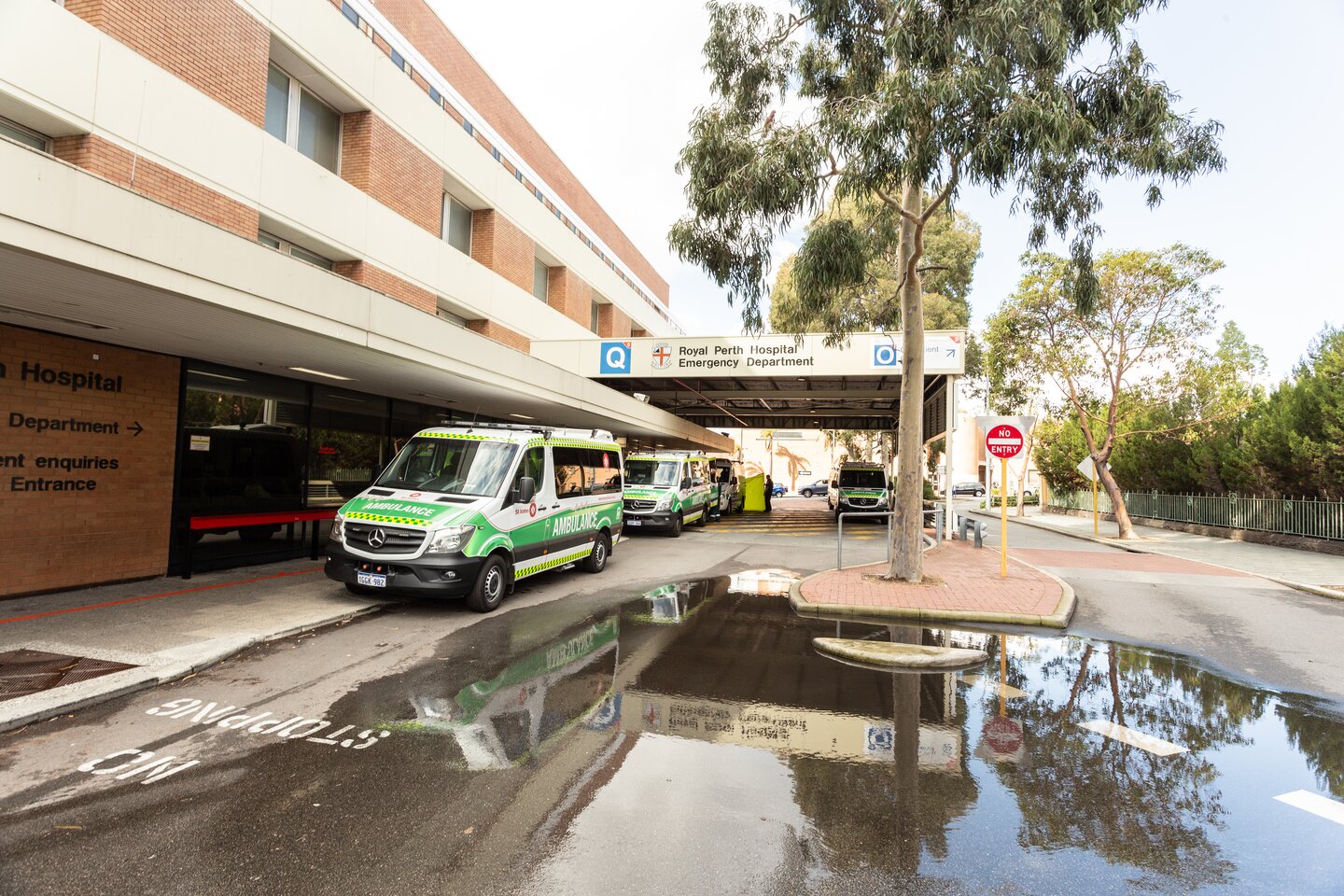
Royal Perth Hospital ED estimated to cost $807m

Published

on

Royal Perth Hospital ED estimated to cost $807m

The $807 million price tag quoted for Royal Perth Hospital’s new six-storey building has given a significant boost to appointed builder Lendlease Construction.

Continue Reading

Trending

Copyright © 2025