Connect with us
DAPA Banner
DAPA Coin
DAPA
COIN PAYMENT ASSET
PRIVACY · BLOCKDAG · HOMOMORPHIC ENCRYPTION · RUST
ElGamal Encrypted MINE DAPA
🚫 GENESIS SOLD OUT
DAPAPAY COMING

Business

Instagram Expands User Controls Over Algorithm With New Customization Tests

Published

on

Instagram

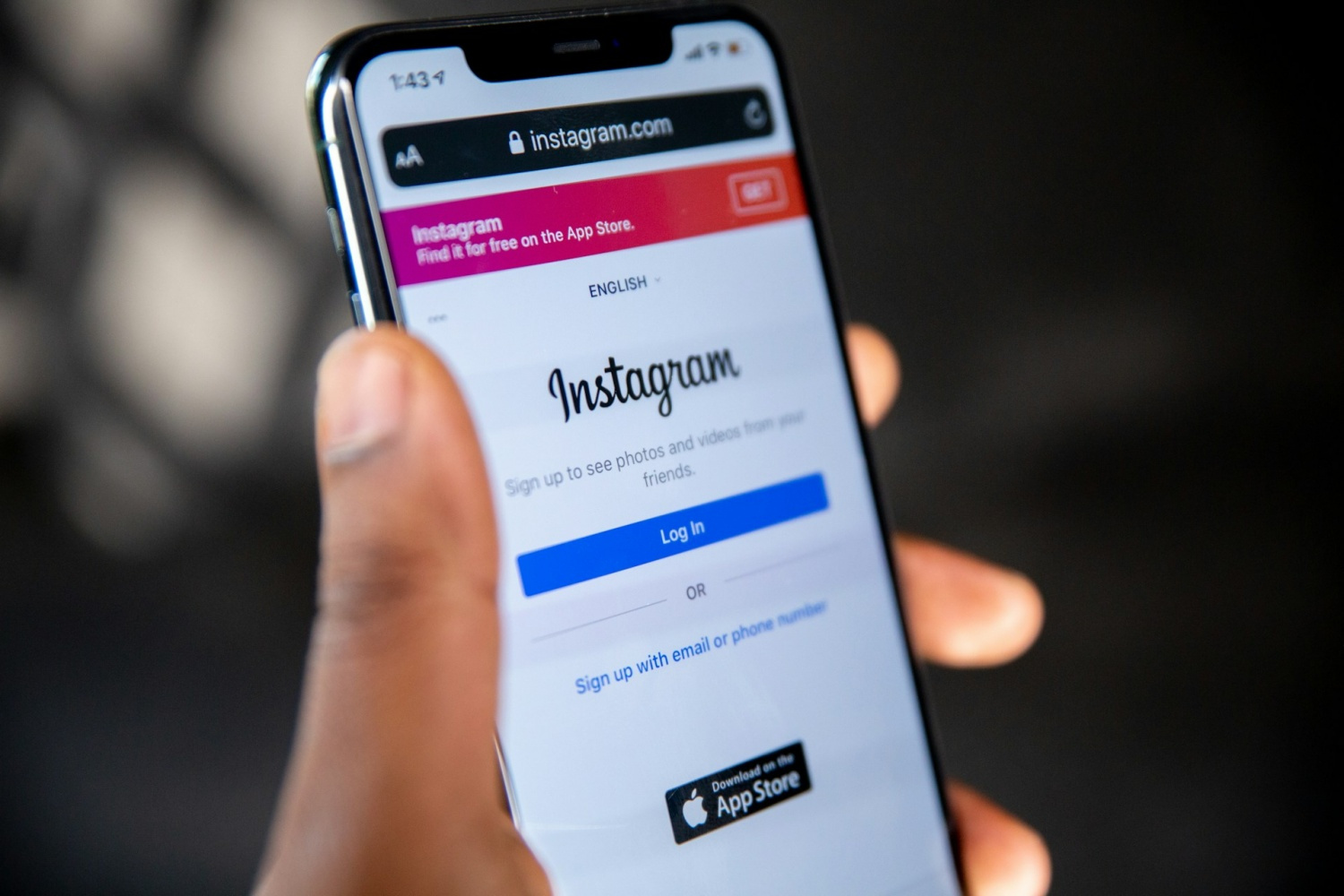
Instagram is rolling out additional ways for users to directly influence the content they see, as the Meta-owned platform continues to expand its “Your Algorithm” feature across more sections of the app.

In a recent post, Instagram head Adam Mosseri highlighted several experimental ideas aimed at making algorithm customization more accessible and integrated into everyday use. The updates build on efforts launched last year to give users greater visibility into and control over the topics the platform’s recommendation systems associate with their accounts.

“We want to evolve Your Algorithm from a setting to something that feels central to your experience on Instagram,” Mosseri said. He added, “Some of this is testing now, some is coming soon, some might not work.”

The feature, initially introduced for Reels, allows users to review topics Instagram believes they are interested in, add new ones they want to see more of, and remove those they prefer less. It has since expanded to the Explore page and, more recently, the main feed.

Advertisement

Mosseri’s latest examples demonstrate potential new access points. One concept involves pulling down on the home feed to surface the Your Algorithm menu for quick adjustments. Another envisions swiping up from a Reel to prompt similar customization options. A third shows simple buttons beneath individual Reels, letting users signal whether they want to see more content like it.

These tests reflect a broader push by Instagram to increase user agency in an era where algorithmic recommendations dominate feeds. Mosseri has emphasized that people who spend significant time on the platform should have meaningful control over their experience.

The expansion to the main feed, announced earlier in June, marked a notable step. Users can now see and tweak the topics the system links to their interests across major surfaces including Reels, Explore and Feed.

Instagram’s algorithm relies on numerous signals, with watch time, likes and shares emerging as particularly influential factors according to previous statements from Mosseri. The company uses machine learning to predict engagement, but the Your Algorithm tool aims to make those predictions more transparent and adjustable.

Advertisement

Topics currently form the core of the customization options, but Instagram plans to broaden the feature. Future iterations could support preferences for specific people, moods or vibes, and different content types.

This evolution comes amid ongoing user feedback about feed relevance. Many express frustration that recommended content often overshadows posts from accounts they follow. Popular comments on Mosseri’s announcements frequently echo calls for prioritizing followed accounts.

Instagram has acknowledged the tension between personalized recommendations and chronological feeds from connections. Recommendations now drive much of the platform’s growth, particularly through Reels, while still blending content from followed users.

The platform reached over 3 billion monthly active users in recent years, highlighting the scale at which these algorithmic decisions affect global audiences. For creators, the changes could influence visibility, as content aligned with user-selected topics may perform better in recommendations.

Advertisement

Experts note that giving users more direct input could help address concerns about filter bubbles and echo chambers. By allowing explicit topic adjustments, Instagram hopes to balance discovery of new content with relevance to stated preferences.

However, challenges remain in implementation. Algorithms must interpret user signals accurately without creating overly narrow experiences. Testing phases allow the company to gather data on what works before wider deployment.

Mosseri has shared philosophical thoughts on the matter, framing it as part of a larger effort toward transparency and user empowerment in social media. He has reviewed his own algorithm settings and encouraged others to do the same.

For everyday users, these tools could simplify managing overwhelming feeds. Instead of relying solely on implicit signals like past likes and views, people can make declarative choices about interests ranging from hobbies and news to entertainment categories.

Advertisement

The feature’s rollout has been gradual, starting with Reels before broader integration. This phased approach helps Instagram refine the interface based on real usage patterns.

As social platforms face scrutiny over content moderation, mental health impacts and information flow, features like Your Algorithm represent attempts to shift some control back to individuals. Similar tools exist on other services, but Instagram’s integration across multiple surfaces stands out.

Creators and marketers are watching closely. Content that matches actively chosen topics stands a better chance of surfacing, even for non-followers. This encourages more focused, high-quality production rather than generic posts.

Instagram continues to iterate on ranking systems. Watch time remains a top signal, underscoring the importance of engaging, vertical-format videos that hold attention.

Advertisement

The latest tests for in-the-moment customization, such as quick “more of this” or “less of that” signals during browsing, could make adjustments feel seamless rather than buried in settings menus.

User reactions vary. While some welcome greater control, others prioritize simplicity and question whether deeper tweaks will truly change their experience. The most common request remains stronger emphasis on content from followed accounts in primary feeds.

Instagram has not announced exact timelines for all proposed features, consistent with Mosseri’s note about ongoing experimentation. Some elements may never launch if testing reveals issues.

This focus on algorithm transparency aligns with Mosseri’s history of sharing insights into how Instagram ranks content across different surfaces. He has previously detailed factors for Feed, Reels, Explore and Stories.

Advertisement

For businesses and influencers, understanding these shifts is crucial. Adjusting strategies to align with user-selected interests could boost reach, while ignoring them might limit exposure in recommendation-driven sections.

Parents and younger users may also benefit from clearer controls, though Instagram maintains separate safeguards for teen accounts.

As the platform evolves, the balance between algorithmic curation and user direction will likely remain a key area of development. Mosseri has indicated this is just the beginning of efforts to make Instagram more responsive to individual needs.

In practice, accessing Your Algorithm currently involves navigating to relevant sections or checking account settings. With new tests, it could become as intuitive as interacting with any post or swipe gesture.

Advertisement

The feature does not alter content moderation policies or introduce new restrictions. It focuses purely on personalization of recommendations.

Industry observers see this as part of a competitive response to user demands for better feed quality across social apps. As attention economies intensify, platforms investing in perceived control may retain users longer.

Instagram’s parent company Meta has emphasized responsible AI development, which extends to recommendation systems. Large language models reportedly help translate complex ranking data into understandable topic labels for users.

Looking ahead, expansions beyond topics could include vibe-based preferences, such as uplifting content or specific aesthetics, further personalizing the experience.

Advertisement

Users interested in trying current options can check their settings or look for prompts in Reels and Explore. As tests progress, more may appear in the main feed.

The developments underscore Instagram’s ongoing commitment to refining its core product amid a crowded digital landscape. By listening to feedback and experimenting with access methods, the company aims to make its powerful algorithms feel more collaborative than opaque.

Continue Reading
Click to comment

You must be logged in to post a comment Login

Leave a Reply

Business

Brexit has been hugely damaging to the freight and logistics sector

Published

on

Business Live

Re-establishing pre-2016 UK-EU links will lead to transport and communications networks working smoothly again.

Brexit has impacted how we travel with the EU.(Image: Getty )

It is now a decade since we voted by a narrow margin to leave the European Union (EU), when 53% voted to leave and 47% to remain.

No point blaming anyone else as Wales voted by the same ratio. The effects of that catastrophic decision on Britain’s freight and logistics sector – moving goods for import and export – are still being felt.

Advertisement

From 31 January 2020 (when the final Brexit date was enacted by the Westminster parliament) the political relationship between the UK and the EU changed totally. However, the economic and logistics links continued with the EU still the UK’s largest and geographically nearest trading partner.

It is not just trade but tourism, investment, supply chain movements, economic growth and inter-supply of energy that relate to the movement of people and goods on a significant scale.

For the UK economy to grow, it will need stronger links in trade, investment, transport and logistics. The Schengen area, with more than 450 million people across 25 EU member states and four non-EU countries, includes some of the world’s wealthiest consumers.

Transport is a key consideration for inward investors who need to move goods efficiently or enable managers to travel easily between dispersed sites on reliable, predictable routes.

Advertisement

Transport forms the fundamental trading infrastructure When connections between economies are difficult or burdened by unnecessary obstacles, the efficient movement of goods services and people is compromised, competition weakens and business (and the total economy) growth becomes harder to achieve. This has been understood since the Romans built straight roads to move goods and increase Rome’s wealth, while the Roman Army helped establish and protected trade routes.

As under the Roman regime the economies of EU member states and of the UK continue to be connected through integrated supply chains. Such supply chains require long-term investment to achieve predictable journey times particularly for just-in-time (JIT) operations. Such investments are justified financially at airports, seaports, and railway operations such as the Channel Tunnel.

The Channel Tunnel (paralleled by ports investment) has been essential to the UK as an island nation serving as it does one of the busiest people and goods routes. It is also a major engineering and political accomplishment of our time.

The ‘protecting our borders’ claim by Brexiteers was always unrealistic. Their propaganda failed to identify that the EU would also introduce constraints on inward movements. The Schengen area has new regulations illustrated by this summer’s delays for British travellers as a new entry/exit system is introduced.

Advertisement

Car design is dictated by international construction regulations determined by the biggest markets. These make specifications to the smallest detail. In its most simple form indicator switches must be on the left of the steering wheel to be sold in the EU. No manufacturer will put them elsewhere. The market for right hand drive cars is fortunately large enough to enable construction of right-hand drive cars.

There have been practical difficulties arising from the fragmentation of European logistic routes. Irish imports and exports to the EU have changed their routes with more direct movement via French ports resulting in fewer Irish trucks on the A40/A48/M4 corridor .

Two-thirds of ‘EU’ laws are still in place. The fast-track process to repeal these laws ended on June 23. Now each regulation incorporated into a UK act of parliament must pass through the slower Westminster repeal process.

The previous system allowed goods to cross borders freely, without checks, certificates, or delays. It has now been replaced by the EU-UK Trade and Cooperation Agreement. British firms exporting to Europe must prove where goods are manufactured, retest products already certified as safe in the UK, and complete paperwork that was unnecessary before 2021.

Advertisement

Food exporters now incur border inspections and comply with separate EU and UK rules adding £54m to annual costs. Between 2021 and 2024, border checks cost exporters £4.bn. Large firms, especially those shipping in bulk, are better able to absorb these costs than smaller businesses, many of which have withdrawn from the EU market.

If the UK is to have anywhere near a level playing field in the EU market compared with Schengen countries, there must be a gradual programme of barrier reduction with improved supply chain flows aimed at economic growth on both sides of ‘La Manche.’

Hopefully, a growing recognition will arise in both London and Brussels that re-establishing pre-2016 UK-EU links will lead to transport and communications networks working smoothly again.

Professor Stuart Cole CBE is Emeritus Professor of Transport (Economics and Policy), University of South Wales.

Advertisement
Continue Reading

Business

Airbnb deploys anti-party technology ahead of July 4 holiday weekend

Published

on

Airbnb deploys anti-party technology ahead of July 4 holiday weekend

Airbnb is rolling out its anti-party technology ahead of the July 4 weekend to address the risk of disruptive parties in communities around the country on one of the busiest travel weekends of the year.

The company said its anti-party tech looks at a range of factors to help identify attempted bookings of entire home listings that could pose a higher risk for an unauthorized party and redirects those guests to alternative accommodations.

Advertisement

Guests who are redirected from booking an entire home can instead book private room listings and hotels on the Airbnb platform.

“This is the fifth year in a row we’ve run these defenses for July 4, and last year they redirected more than 20,000 people from higher-risk bookings over the holiday weekend,” said Rog Kaiser, vice president of fraud and safety operations at Airbnb.

AIRBNB LAUNCHES MAJOR EXPANSION WITH AIRPORT PICKUPS, LUGGAGE STORAGE AND AI-POWERED TRAVEL TOOLS

A vacation rental house in Maine

Airbnb uses anti-party technology to block high-risk bookings. (Catherine Robotis/UCG/Universal Images Group via Getty Images)

“That kind of capability – improved year over year – is what it takes to help make the holiday great for our hosts, guests and the communities around them,” Kaiser added.

Advertisement

Airbnb said that in 2025, its anti-party tech helped block or redirect over 20,000 people from booking entire home listings in the U.S. over the July 4 weekend, noting that it has made improvements to the technology.

That figure included about 3,100 people in Florida, another 3,100 people in Texas and about 2,500 people in California.

BANK OF AMERICA CARDHOLDERS CAN VISIT 250 MUSEUMS FREE DURING JULY 4 WEEKEND

Ticker Security Last Change Change %
ABNB AIRBNB INC. 145.56 +3.68 +2.59%

The company explained that these anti-party measures are part of a broader suite of tools it uses to promote responsible travel and work in concert with its global reservation screening technology, which uses machine learning to mitigate higher-risk bookings year round.

Advertisement

Additionally, Airbnb’s announcement warned parents, grandparents and other adults about the platform’s policies restricting them from booking accommodations for minors.

The company’s rules specifically prohibit minors under the age of 18 from having Airbnb accounts, and adult account holders are prohibited from booking a stay for a minor unless the adult will be present for the entire trip.

AIRBNB APOLOGIZES AFTER ‘SUPERHOST’ ALLEGEDLY USED AI-DOCTORED PHOTOS TO CLAIM $16K IN FAKE DAMAGES

Fourth of July fireworks show over Nashville, Tennessee

Fourth of July weekend is expected to be one of the busiest travel weekends of the year. (Nashville Convention and Visitors Corp)

Violations of those policies could result in the loss of an Airbnb account – including the cancellation of upcoming trips that had been booked – and violators may face financial liability for any property damage that occurs during a stay.

Advertisement

Account holders may also face liability if law enforcement becomes involved following a disruptive party.

“These efforts reflect our ongoing commitment to help reduce the risk of disruptive parties, and we are seeing positive results,” the company said in its announcement. “In 2025, fewer than 0.06% of stays on Airbnb in the U.S. resulted in a report of a party to us.”

GET FOX BUSINESS ON THE GO BY CLICKING HERE

Airbnb’s announcement also noted it has several tools available to neighborhood residents, hosts, guests and law enforcement to address unauthorized parties at its listings, including:

Advertisement
  • Neighborhood Support Line for local residents to report issues, like a party in progress at a home they believe is listed on Airbnb.
  • A 24-Hour Safety Line for hosts and guests to reach out to the company’s safety team for support.
  • A noise sensor offer for hosts, which can help get ahead of issues before they start while respecting guest privacy.
  • A dedicated channel to support law enforcement and a specialized response team for incidents when there is an issue that may involve an Airbnb listing or stay.
Continue Reading

Business

Grab Holdings: Southeast Asia’s Super-App Is Getting Stronger (NASDAQ:GRAB)

Published

on

Grab Holdings: Southeast Asia's Super-App Is Getting Stronger (NASDAQ:GRAB)

This article was written by

Dear Reader,I am a Senior Derivatives Expert with over 10 years of experience in the field of Asset Management, specializing in equity analysis and research, macroeconomics, and risk-managed portfolio construction. My professional background covers both institutional and private client asset management, where I have advised on and implemented multi-asset strategies, but highly focusing on equities and derivatives.As you might be as well, I am a stock market enthusiast. My core passion lies in understanding how macro trends influence both asset prices and investor behavior. I closely follow EU and US central bank policies, sector rotation, and sentiment dynamics, and construct actionable investment strategies.BA in Financial Economics, MA in Financial Markets. In the past decade, I have navigated through various market conditions, and this was my PhD.One of the essential goals of writing on Seeking Alpha is to share insights with colleagues, fellow investors, exchange ideas, and become slightly better than yesterday. I contribute to the idea that investing should be accessible, inspiring, and empowering. It might sound like a cliche, I know, but in the end it’s highly valuable – so let’s help each other build confidence in long-term investing. The analysis and opinions shared in my articles and comments are for informational purposes only and should not be considered financial advice. Please do your own research before making any investment decisions.Thank you and have a lovely day!Best regards

Analyst’s Disclosure: I/we have no stock, option or similar derivative position in any of the companies mentioned, but may initiate a beneficial Long position through a purchase of the stock, or the purchase of call options or similar derivatives in GRAB over the next 72 hours. I wrote this article myself, and it expresses my own opinions. I am not receiving compensation for it (other than from Seeking Alpha). I have no business relationship with any company whose stock is mentioned in this article.

Seeking Alpha’s Disclosure: Past performance is no guarantee of future results. No recommendation or advice is being given as to whether any investment is suitable for a particular investor. Any views or opinions expressed above may not reflect those of Seeking Alpha as a whole. Seeking Alpha is not a licensed securities dealer, broker or US investment adviser or investment bank. Our analysts are third party authors that include both professional investors and individual investors who may not be licensed or certified by any institute or regulatory body.

Advertisement
Continue Reading

Business

Why is Applied Aerospace and Defense stock climbing today?

Published

on


Why is Applied Aerospace and Defense stock climbing today?

Continue Reading

Business

Perth office building to bring arts to CBD

Published

on

Perth office building to bring arts to CBD

Activate Perth’s Al Taylor and developer Randal Humich are collaborating on an office building project at 110 William Street to draw the arts into the CBD.

Continue Reading

Business

Brexit Has Made UK Inflation Worse, Says Bank of England Economist

Published

on

Brexit regret has reached record levels, according to new polling which said just 9% of Brits consider it to be more of a success than a failure.

Brexit has made inflation harder to control in Britain and left the country exposed to “self-sustaining” price rises, according to the Bank of England’s chief economist, Huw Pill.

In remarks that will resonate with the small and medium-sized firms still wrestling with stubborn cost pressures, Pill said policymakers had found it tougher to rein in the pace of price rises since the 2016 vote to leave the European Union.

Speaking at a conference in Uzbekistan, Pill argued that the structural overhaul of Britain’s labour and goods markets brought about by Brexit had reshaped the economy in ways the Bank was “still learning about” and “still digesting”.

“My own view is that those changes have led us to a structure which is more prone to this sort of self-sustaining momentum in pricing, which can lead to greater inflation persistence,” he said.

Pill pointed to two forces in particular: the new trade barriers thrown up between Britain and its largest trading partner, and the end of the free movement of workers, which has drained the pool of available labour in sectors that long leaned on European staff.

Advertisement

The numbers lend weight to the argument. UK inflation has averaged roughly 3.6 per cent since the referendum in June 2016, and has dipped below the Bank’s 2 per cent target in only one month over the past five years. Over the same period, German inflation has averaged 2.5 per cent and French inflation 1.9 per cent, according to the Bank of England’s own analysis.

The picture is not entirely one-sided. Britain formally left the EU in 2020, just before the pandemic shut down much of the economy and triggered a wave of state support that fuelled demand. Inflation then surged to a 41-year high of 11.1 per cent in October 2022, as savings amassed during lockdown were unleashed at the very moment Russia’s invasion of Ukraine sent energy prices soaring. Even so, that peak sat above the 8.8 per cent reached in Germany and the 6.3 per cent seen in France.

Pill’s intervention lands only weeks after Andrew Bailey, the Bank’s governor, said the institution had been proved right in its long-standing warnings that Brexit would damage the economy. Bailey has urged the UK to rebuild its trade ties with the EU, arguing that shrinking the markets Britain trades with inevitably weighs on growth.

“I think the level of activity and growth in the economy has been lower,” Bailey said. “If you reduce the size of the markets that we trade with, so we reduce our export markets, then that does tend to have a negative impact on growth. It tends to have a negative impact on productivity and the size of the market.”

Advertisement

The comments build on a growing body of evidence. Company-level data has suggested that Brexit has knocked around 6 per cent off the UK economy, a figure that chimes with earlier estimates that Brexit dealt a 5 per cent blow to output.

The labour squeeze hits SMEs hardest

Britain marked 10 years since the referendum last week, and the anniversary has prompted a fresh round of stocktaking. In its own assessment, Goldman Sachs concluded that businesses most reliant on EU workers “have experienced the largest increases in vacancy rates since the Covid pandemic” as the new migration system bit into the available workforce.

For owner-managers, that is more than an academic point. James Moberly, an economist at the bank, said the shortages could feed directly into inflation as companies forced to pay more to recruit pass those costs on to customers through higher prices, a dynamic that lands squarely on the bottom line of smaller firms with thinner margins.

“Going forward, reduced cyclicality of migration flows compared with the pre-Brexit period could lead to greater volatility in labour market tightness and domestic inflationary pressures,” Moberly said. He added that Brexit had “materially weighed on Britain’s economic performance relative to other advanced economies”.

Advertisement

For Britain’s 5.5 million SMEs, the warning from Threadneedle Street carries a practical sting. If inflation is now structurally harder to shift, interest rates may stay higher for longer, keeping the cost of borrowing, recruitment and everyday trading elevated well into the second half of the decade.


Jamie Young

Jamie Young

Jamie is Senior Reporter at Business Matters, bringing over a decade of experience in UK SME business reporting.
Jamie holds a degree in Business Administration and regularly participates in industry conferences and workshops.

When not reporting on the latest business developments, Jamie is passionate about mentoring up-and-coming journalists and entrepreneurs to inspire the next generation of business leaders.

Advertisement
Continue Reading

Business

Morning Bid: Weekend wars

Published

on

Morning Bid: Weekend wars


Morning Bid: Weekend wars

Continue Reading

Business

Bosses Can’t Afford Minimum Wage Under Labour, FSB Warns

Published

on

Bosses Can't Afford Minimum Wage Under Labour, FSB Warns

Rising employment costs are forcing thousands of owner-managers to absorb the bill themselves, squeezing profits, pensions and hiring alike

Surging employment costs and a run of above-inflation increases in the minimum wage have left many small business owners unable to pay themselves a living wage, one of the country’s leading business groups has warned.

The Federation of Small Businesses (FSB) cautioned that thousands of owner-managers are being drawn into a downward spiral of higher costs and shrinking profits that threatens their ability to draw even the most basic income from their firms.

In a submission to the Low Pay Commission (LPC), the independent body that advises ministers on the minimum wage, the FSB said bosses were increasingly forced to cover rising pay and compliance costs out of their own pockets. The pressure, it argued, is fast becoming a permanent feature of the labour market, pushing more proprietors either to close their doors or to make choices that will damage their own retirement.

“It is becoming a major structural issue within small firms where the costs of employment, including the national living wage, employer National Insurance contributions and auto-enrolment, make it harder for a small business owner to make sufficient profit to pay themselves a living wage, let alone to fund a pension,” the submission said.

Advertisement

“This has a negative double effect: fewer roles created and sustained in small businesses, but also fewer small businesses that are economically viable. In effect, this is leading to fewer jobs and fewer small firms.”

The warning chimes with the FSB’s own recent survey data, which showed rising wage costs dragging small business confidence into negative territory as labour became the single biggest barrier to growth. The federation said just 11 per cent of its members would be unaffected by another above-inflation rise in the wage floor.

The national living wage currently requires workers aged 21 and over to be paid £12.71 an hour, while those aged 18 to 20 must receive £10.85. The LPC signalled in March that it was minded to recommend an increase of up to 5 per cent for the national living wage in 2027, with a central estimate of £13.18 representing an above-inflation rise of 3.7 per cent.

The FSB was not alone in sounding the alarm. The Institute of Directors (IoD) used its own submission to urge the LPC to direct the Government to rethink Labour’s manifesto pledge to pay all workers, regardless of age, the same minimum wage. It blamed the recent surge in youth unemployment squarely on policies that have deterred employers from taking on less experienced staff.

Advertisement

“If the Government is serious about tackling the youth employment crisis, it must address the crisis in the cost of youth employment,” the IoD warned.

The institute argued that Labour’s pledge to scrap the youth rate of the minimum wage risked making matters worse, and called on ministers to postpone further increases until employment among young people had recovered to pre-pandemic levels. The minimum wage for younger workers has risen by more than a quarter under Labour, a move that economists, including policymakers at the Bank of England, say has deepened a youth unemployment crisis that has seen the number of young people not in education, employment or training climb towards one million.

A survey by the Recruitment and Employment Confederation found that a quarter of employers would scale back hiring if the wage floor rose to the levels under discussion, which it said pointed to “a potential tipping point for employment decisions”.

“These dynamics are having tangible labour market consequences,” it said. “Entry-level opportunities are being constrained, working hours are being reduced in some sectors, and the impacts are falling disproportionately on young people and labour market entrants, particularly those already at risk of becoming or remaining not in education, employment or training.”

Advertisement

The IoD urged Labour to move away from a scheme that pays employers up to £3,000 to take on young people who are out of work, and instead to pivot towards broader measures aimed at bringing down the overall cost of employment. “Small, one-off incentives tied to significant amounts of bureaucracy will not come close to offsetting the increased costs of employing people brought about by recent Government employment policy,” it said.

Lower minimum wage rates for younger workers have existed since the system was introduced by Labour in 1999. The IoD pressed the LPC and the Government to reconsider plans to scrap what it had described as “discriminatory” age bands until employment among under-24s rises back above the 60 per cent level seen before lockdown.

“The LPC should recommend that the Government pauses the implementation of the equalisation of the youth and main minimum wage rates,” it said. “As described above, the equalisation is having a damaging impact on youth employment prospects at a time when the number of Neets has exceeded one million.” The concern is consistent with wider forecasts that youth unemployment could climb to 17.8 per cent by 2027 as artificial intelligence and tax rises bite into entry-level hiring.

For its part, the FSB called on Labour to increase automatically a small business tax break in line with future minimum wage rises, ensuring that firms with fewer than four employees are left no worse off.

Advertisement

A government spokesman said Labour’s minimum and living wage increases had left Britain’s lowest earners £900 better off.


Jamie Young

Jamie Young

Jamie is Senior Reporter at Business Matters, bringing over a decade of experience in UK SME business reporting.
Jamie holds a degree in Business Administration and regularly participates in industry conferences and workshops.

When not reporting on the latest business developments, Jamie is passionate about mentoring up-and-coming journalists and entrepreneurs to inspire the next generation of business leaders.

Advertisement
Continue Reading

Business

Why is Doximity stock sliding today?

Published

on


Why is Doximity stock sliding today?

Continue Reading

Business

Weekly Market Pulse: It’s An AI Stock World

Published

on

Hercules Capital: 3 Reasons Why The Market Is Wrong (Rating Upgrade)

Joe has worked in the financial services industry since 1992 in various capacities, including Operations Manager, Compliance Manager, Registered Representative and Portfolio Manager. From 1997 to 2006, when he founded Alhambra Investment Management, Mr. Calhoun was a Director of Investments at Oppenheimer & Co. Mr. Calhoun holds the Series 63 (Uniform Securities Agent State Law) and 65 (Uniform Investment Advisor Law) securities licenses. He has previously taken and passed the Series 7 (General Securities Representative) and Series 9/10 (General Securities Sales Supervisor) securities exams.
Joe proudly served in the U.S. Navy’s nuclear submarine service for 8 years (1983-1990) and was awarded several commendations including the Navy Achievement Medal in 1987. He studied engineering at the University of South Carolina and is a graduate of the U.S. Navy’s Nuclear Propulsion School. He founded Alhambra Investment Management as a registered investment advisory to address the needs of the individual investor. His market commentaries are widely read and published at various online outlets. He has appeared on Larry Kudlow’s program on CNBC and various radio programs. He is also an editor of the website RealClearMarkets.com.

Continue Reading

Trending

Copyright © 2025