Masters season is here, which means, as the season changes, golf fever is reaching its peak in the calendar.
However, there are not many worse feelings than booking a tee time and then suddenly not being able to make it.
Advertisement
The green fees go to waste, and a day on the course is no more. However, Golf District is attempting to salvage at least one of those unfortunate circumstances.
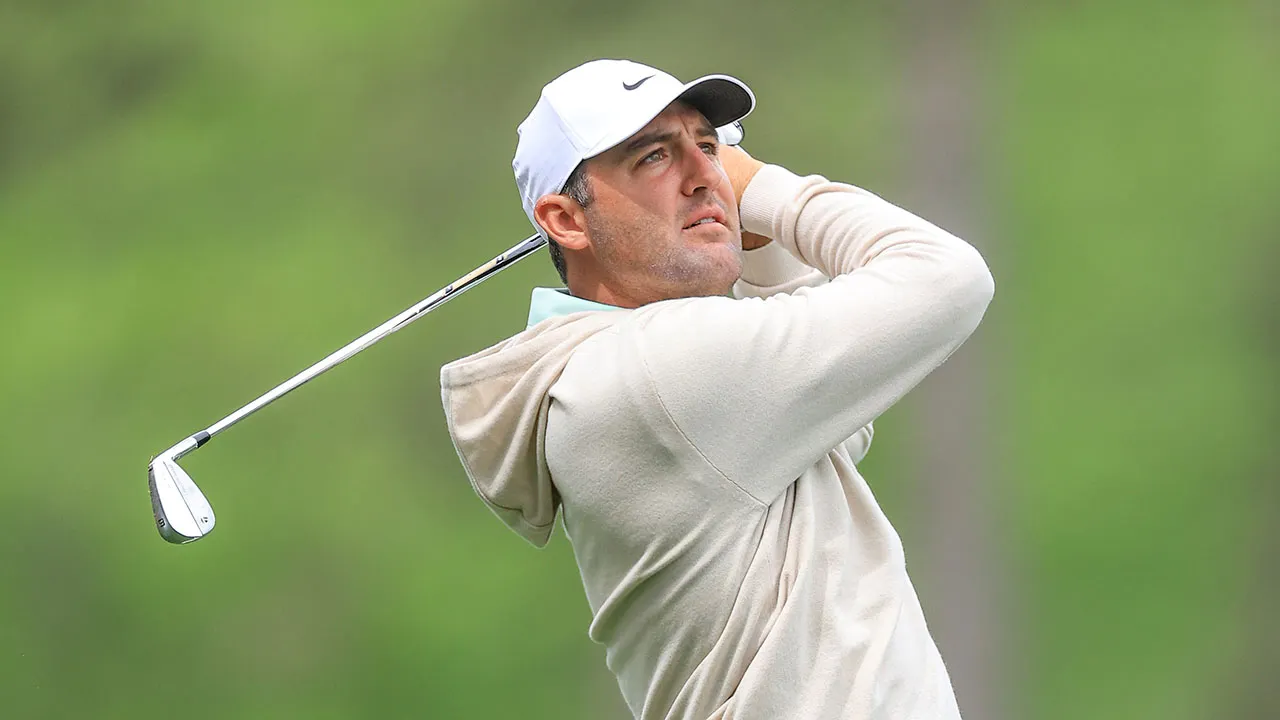
Golf District has become the StubHub of tee times, with players being able to buy and sell their reservations. (iStock)
Founded by Josh Segal, a former running back at Elon University who was teammates with comedian Shane Gillis, Golf District has labeled itself “the modern solution for selling tee times.”
Think StubHub, but for days on the links.
Advertisement
“It was probably in COVID where we realized how hard it was to get a time. And at the time we started the company, I was running growth for Starbucks on the East Coast and totally not in the golf industry,” Segal said in a recent interview with FOX Business. “The scarcity looked a lot like what we see in concerts and sports. So we took a proven model, and we applied it to golf to fix a lot of the problems.”
Segal works out deals “through approvals and agreements” with select courses, and it’s a win-win for everybody involved.
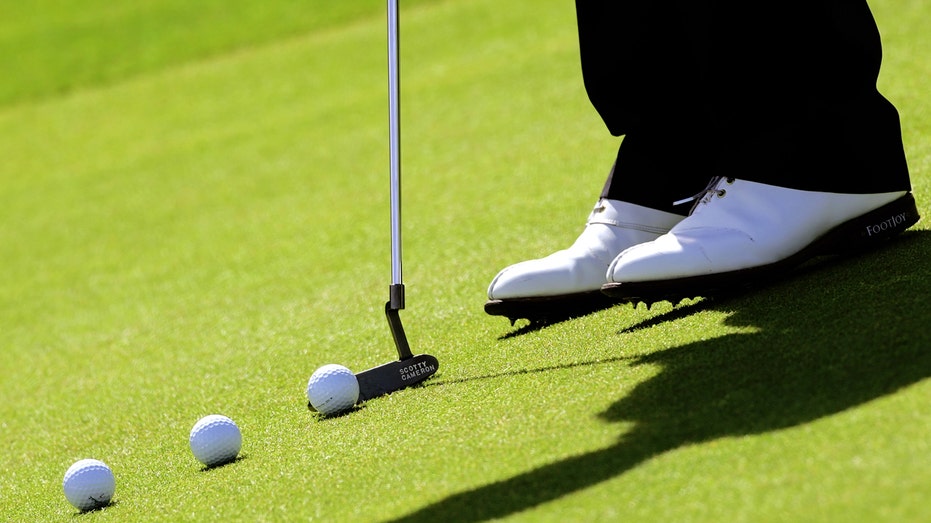
Golf District gives golfers the opportunity to both buy and sell tee times. (iStock)
With almost 10% of reservations never fulfilled, golf courses lose money when people don’t make their tee times that they scheduled in advance, the golfers pay without playing, and those unused reservations keep other golfers off the course.
Advertisement
“We’re not just a modern booking engine. I mean, it’s, point-blank, providing better access,” Segal said.
“We get a lot of people outside the industry that get it right away, and golfers get it right away. So, the golfers that now have the access that they didn’t have and the ability to resell their times are thanking us. Every single time we open up a new course implementation, we get a lot of golfers that thank our customer support team for being available.”
Golf District officially went to market less than two years ago, and conversations with high-profile courses have already begun with more to come.
“We have dozens of courses now, and we really want this — we believe that the opportunity for the U.S. exists. You’ve got 16,000 golf courses in the U.S. and 10,000-plus are basically public,” Segal said.
Advertisement
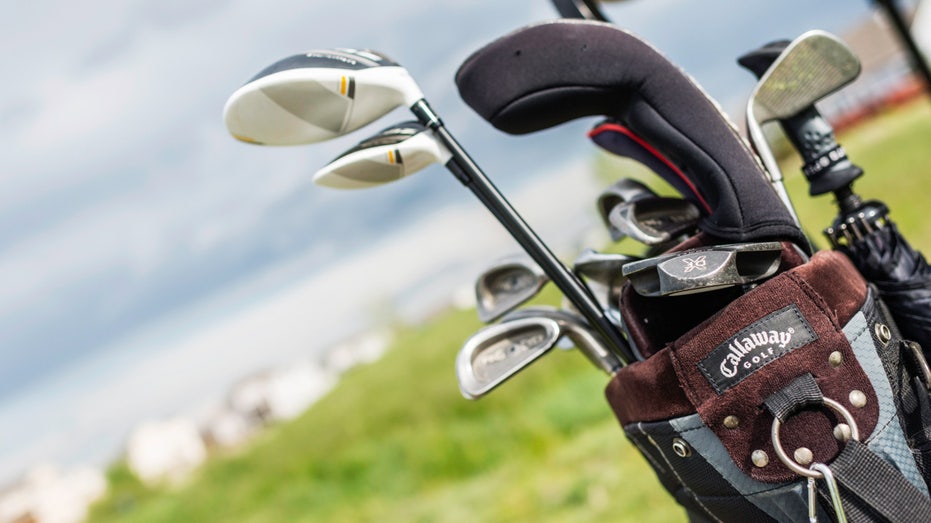
Roughly 10% of booked tee times go unused in the United States. (iStock / iStock)
The group says it has navigated supply challenges in the first half and is on track to meet its full-year expectations
Gooch and Housego’s global headquarters in Ilminster, Somerset(Image: Google Maps)
A Somerset components manufacturer has reported a rise in revenues for the first half of the year on the back of growing demand in the aerospace and defence market.
Revenue at Ilminster-based Gooch & Housego (G&H), which makes detectors, lasers and fibre optic equipment, stood at £81.9m for the six months to the end of March – up 9.1 per cent on an organic, constant currency basis.
The London-listed firm said revenue from the industrial laser and semiconductor markets had improved over the period and there were “encouraging signs” of recovery in the semiconductor industry.
The company’s order book was also up, increasing £25m to £167.3m from September.
Advertisement
Charlie Peppiatt, chief executive of G&H, said: “I am pleased with the positive progress that G&H has made in the first half of the financial year.
“The strong order book growth in the period demonstrates the increased confidence our customers have in G&H to provide them with their most complex photonics and optical systems requirements.”
G&H told investors that its acquisition last year of two businesses – Global Photonics and Phoenix Optical – had been “critical” in helping secure new orders from defence customers in the US, UK and Europe.
The group said it had also “proactively managed” the re-sourcing of key raw materials used across several of its production processes where availability had been restricted by retaliatory measures from certain nations in response to US tariffs.
Advertisement
“Despite the situation remaining fluid, with supply lumpy and intermittent, the group has navigated these challenges in H1 2026 and remains vigilant around supply chain, operations and inventory planning going forwards,” the company said in a statement on Thursday, April 9.
“Whilst there are significant macroeconomic uncertainties, the recovery in our industrial and semiconductor markets along with the strong growth in demand from our aerospace and defence markets should allow the group to make further positive progress on our journey to mid-teens returns over the medium term,” added Mr Peppiatt.
Trading for the full year is currently set to be in line with expectations. The group will announce its interim results for the six months ended March 31, 2026, on June 2.
The news comes as former Meggitt divisional CFO James Corte starts his role as G&H’s new chief financial officer and executive director.
AUSTIN, Texas — Elon Musk lit up X on Thursday with a 10-second AI-generated video that has already racked up more than 2.2 million views in hours, featuring a grinning Musk in a traditional Japanese yukata and headband, proudly introducing his “cool” Shiba Inu companion — also sporting matching flag headbands and tiny glasses.
Elon Musk Posts Grok Imagine Video: Himself in Yukata Showing Off ‘Cool’ Flag-Wearing Shiba Inu Dog
The post, which contained no caption beyond an embedded link, was uploaded at 7:01 a.m. GMT and quickly became the day’s most engaging content from the tech billionaire. Musk’s previous post just minutes earlier explicitly credited “Generated with @Grok Imagine,” signaling the short clip was created using xAI’s image- and video-generation tool.
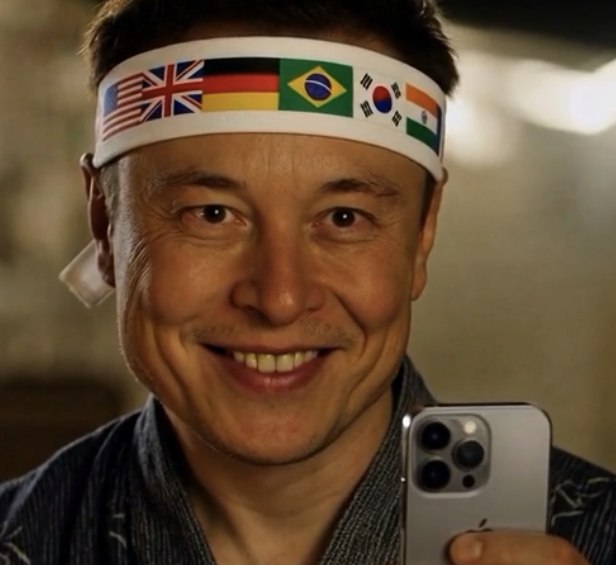
In the video, Musk — wearing a dark blue yukata and a white headband adorned with the flags of the United States, United Kingdom, Germany, Brazil, South Korea and India — stares wide-eyed into a silver iPhone he holds in his left hand. “It’s Elon Musk,” a voice-over says as he gestures animatedly with his right hand. “This is my dog!” The scene cuts to Musk beaming beside an adorable Shiba Inu wearing round glasses and its own headband featuring the Union Jack and Indian flag. “Look at this guy, isn’t he cool?” Musk asks, gently lifting the dog, which appears to “smile” with its tongue out.
The clip blends Musk’s signature meme humor with high-production AI visuals, complete with realistic facial expressions, subtle head movements and synchronized English subtitles. Fans immediately flooded the replies with laughter, heart emojis and cultural references. Japanese users expressed delight at seeing Musk in a yukata, with one writing in Japanese, “I never thought I’d see Elon Musk speaking Japanese!” Others tied the timing to “Shiba Inu Day,” celebrated on April 8 because the numbers 4 (“shi”) and 8 (“ba”) phonetically evoke the breed’s name in Japanese.
The video’s rapid spread underscores X’s role as Musk’s preferred platform for unfiltered, real-time engagement. Posted just one day after Shiba Inu Day and amid ongoing buzz around Dogecoin and Shiba Inu cryptocurrency — both of which Musk has playfully endorsed in the past — the clip tapped into multiple meme ecosystems at once. The Shiba Inu breed, immortalized in the original “Doge” meme that inspired Dogecoin, has long been a favorite in Musk’s online persona.
Advertisement
Grok Imagine Powers the Fun
xAI, Musk’s artificial-intelligence venture, rolled out Grok Imagine earlier this year as a creative tool integrated directly into the Grok chatbot on X. Unlike earlier image generators that often produced stiff or unrealistic results, Grok Imagine has gained praise for its ability to handle dynamic video clips with natural motion, accurate lip sync and cultural details — such as the precise yukata fabric patterns and flag placements seen here.
Musk has used the tool repeatedly in recent weeks to post surreal, humorous content, ranging from Cybertruck animations to abstract AI art. Thursday’s trio of posts — including one labeled “Cybertruck is so awesome 😎” and another declaring “Grok will never go to therapy. Never” — formed a loose content thread showcasing Grok’s evolving capabilities.
Industry analysts noted the strategic value. By demonstrating Grok Imagine’s output in real time, Musk not only entertains his 200-plus million followers but also drives product awareness for xAI, which competes with OpenAI’s DALL-E, Google’s Imagen and Midjourney. Early user feedback in the replies highlighted the tool’s speed and quality, with several creators reposting their own Grok-generated variations of the Shiba Inu scene within minutes.
Advertisement
Fan Reactions Span Globe
Engagement metrics exploded quickly: more than 13,000 likes, 1,400 reposts and 2,200 replies within the first few hours. Replies ranged from simple “WOOF” emojis and laughing-crying faces to elaborate theories. One user posted side-by-side comparisons with classic Doge memes, while another suggested Musk turn the clip into an official storyline. Japanese-language replies celebrated the cultural nod, with some speculating Musk might visit Japan soon for a Tesla or Starlink event.
Crypto enthusiasts linked the post to market movements. Shiba Inu token (SHIB) saw a modest uptick in trading volume shortly after the video dropped, though analysts cautioned that meme-driven price action remains volatile. Dogecoin supporters, long loyal to Musk’s occasional endorsements, flooded quote posts with rocket emojis and calls for the billionaire to “send the dog to the moon.”
Not all reactions were purely celebratory. A handful of critics called the video “low-effort” or questioned the use of AI for personal branding, but these voices were outnumbered by positive sentiment. One reply captured the prevailing mood: “Grok is translating the word ‘based’ properly… absolutely based.”
Advertisement
Broader Context: Musk’s Meme Mastery
The Shiba Inu video fits a long pattern. Musk has repeatedly leveraged internet culture — from Dogecoin tweets that once moved markets to Tesla Cybertruck reveals staged as memes — to keep his audience engaged. His 2022 acquisition of Twitter (now X) was partly framed as a defense of free speech and fun, and posts like Thursday’s reinforce that ethos.
xAI itself positions Grok as a “maximum truth-seeking” AI with a sense of humor, contrasting it with more guarded competitors. Musk has said publicly that Grok should avoid the overly cautious “therapy-speak” common in other chatbots, a theme echoed in his same-day post rejecting therapy for Grok.
The timing also coincides with heightened interest in AI-generated video. Hollywood writers and actors continue to debate AI’s role in entertainment, while consumer tools like Grok Imagine democratize high-quality content creation. Musk’s willingness to use his own likeness demonstrates confidence in the technology’s safety and appeal.
Advertisement
What It Means for xAI and X
For X, the post drives platform metrics at a critical time. Premium subscribers who pay for Grok access gain an edge in creating similar content, potentially boosting conversions. For xAI, every viral Grok Imagine clip serves as free marketing, showcasing capabilities that could eventually power commercial products beyond social media.
Musk, who splits time between Tesla, SpaceX, xAI and his role at the Department of Government Efficiency, has made clear he views humor as essential to cutting through noise. In a platform where serious policy announcements often compete with memes, the yukata-Shiba video reminds followers that the world’s richest person still enjoys a good laugh.
As of Thursday afternoon, the original post continued climbing, with views projected to surpass 10 million by day’s end. Fan edits, reaction videos and AI-prompt recreations were already proliferating. One user generated a version featuring Musk and the dog in a Cybertruck; another translated the subtitles into multiple languages.
Advertisement
Whether this was a spontaneous bit of fun or a calculated product tease, the clip accomplished what Musk’s posts often do: spark joy, conversation and a little chaos — all while highlighting the creative power of the AI he champions. In a world increasingly shaped by algorithms, Elon Musk’s digital dog day proved once again that sometimes the simplest, silliest content connects the deepest.
MUMBAI: As the US-Iran ceasefire takes hold, bargain hunters are cautiously stepping into stocks that bore the maximum brunt of the West Asia-led sell-off.
The renewed appetite triggered a sharp rebound on Wednesday in sectors such as aviation, travel, oil marketing companies, textiles and chemicals, though money managers and analysts are split on whether the recovery is here to stay, or they are mere value traps.
“Getting into beaten names in the hope that they will rebound the most is not the right way of investing in this upturn,” said Dinshaw Irani, MD & CEO, Helios India.
The market sell-off in past five weeks was largely broad-based, but shares in sectors that would be most affected by a shortage in energy supplies, travel and transport disruptions took the heaviest hit. With the two-week ceasefire giving markets a breather, investors are piling on some of these stocks, hoping to ride the momentum, even if it is temporary.
Advertisement
The easing of geopolitical tensions has improved sentiment at the margin. “The current ceasefire represents a meaningful positive for investor sentiment, easing one of the key near term geopolitical overhangs that had been suppressing risk appetite,” said Rajesh Iyer, Managing Director – Global Investment Solutions & Asset Management at LGT Wealth India. “While it does not eliminate broader macro uncertainties, it meaningfully reduces tail risk scenarios and creates room for selective re-rating across equities.”
Live Events
Agencies
Sectors, scarred by war, such as aviation, travel,OMCs, textiles and chemicals draw fresh appetite
Among oil and gas stocks, Hindustan Petroleum Corporation Limited rose 10.12%, followed by Bharat Petroleum Corporation Limited at 7.6%, Indian Oil Corporation at 7%, and GAIL at 5.4%. UPL gained 6% and Navin Fluorine International added 4.2%, among chemicals. In aviation, InterGlobe Aviation advanced 8.09%, while SpiceJet rose 5%. Not all beaten-down stocks could, however, see equal interest in the foreseeable future. “During the West Asia conflict, the most battered sectors were aviation, oil marketing companies, paints, chemicals, and auto ancillaries due to surging crude prices and rupee weakness,” said Aamar Deo Singh, Senior VP Research, Angel One. “But what we are seeing is that the stronger bargain-hunting is in quality large-caps within banks, pharmaceuticals, and FMCG, which were not directly impacted.”
The guarded optimism is that some of these sectors could face headwinds because crude prices could remain elevated for a while, said Helios’s Irani.
Oil prices may need to sustain below $80 a barrel for these sectors to find broader investor acceptance. Brent crude prices crashed 15% to $93.96 a barrel on Wednesday
Advertisement
“Banking shares could clock the fastest recovery, followed by new age stocks as they have corrected for no reason,” said Irani. The Nifty Bank index soared 5.7% on Wednesday after the Reserve Bank of India on Wednesday kept interest rates unchanged in its monetary policy.
Autos could also emerge as a contrarian play, according to Garima Kapoor, Deputy Head of Research and Economist at Elara Capital.
“We prefer the auto sector as a sector to bet on after the recent correction,” said Kapoor. “Large-cap auto stocks, like Maruti Suzuki and Eicher Motors, have corrected sharply, witnessing a 17% drawdown since the onset of the US-Iran conflict.”
Vishad Turakhia, MD and CEO of Equirus Securities said that rather than chasing the most battered names blindly, a more balanced approach is advisable. He recommended core exposure to capital goods and private financials, tactical allocation to cyclicals (metals, aviation) and limited exposure to deep value or high-risk rebounds stocks.
Amid ongoing geopolitical tensions and energy-led uncertainty, market volatility has raised an important question for investors — is it time to start buying? According to Nimesh Chandan, from Bajaj Finserv AMC, the recent correction should be seen as a temporary disruption rather than a fundamental shift in India’s growth story.
“Indian economy, business cycle, and credit cycle were doing very well… this is a speed bump, not a structural issue.” He adds that improving geopolitical signals are encouraging. “Ceasefire talks suggest we are moving away from the storm… long-term investors can pick good companies at attractive valuations.”
Even as indices have remained largely range-bound over the past couple of years, corporate fundamentals have strengthened meaningfully. Chandan points out that many companies are now fundamentally stronger yet cheaper than before. “Many companies have improved earnings, balance sheets, and cash flows, and are now available cheaper than two years ago.” This has created a broad opportunity set for investors. His preference remains tilted toward growth-linked sectors. “We like financials, materials, and industrials… within these, private banks, metals, cement, defence, and power.”
On sectoral positioning, the strategy reflects a pro-cyclical bias, alongside selective defensiveness. “We are positive on consumer discretionary… selective in autos, with a tilt towards two-wheelers.” He also remains constructive on relatively stable sectors. “We are also positive on pharma and healthcare, but underweight on IT.” The caution on IT stems from both structural and cyclical concerns, particularly around the impact of artificial intelligence. “Technology shifts like AI are creating uncertainty… this is putting pressure on valuations.” In an environment of muted growth expectations, he believes capital may flow elsewhere. “With low growth visibility, investors may prefer sectors with better growth and valuations.”
Advertisement
Within financials, private banks stand out as a strong opportunity where both value and growth converge. “Credit growth is picking up, asset quality is benign, and valuations are extremely attractive.” Despite improving fundamentals, stock prices remain subdued. “Stocks are near five-year lows, while fundamentals are improving.”
Live Events
On the consumption front, Chandan highlights a broad-based recovery underway, supported by policy measures and rising household wealth. “From grocery to jewellery to property, data shows a clear uptick in demand.” Structural drivers such as tax cuts, lower interest rates, and the wealth effect are beginning to reflect in spending patterns. “Policy support and wealth effects are driving discretionary consumption.” However, he emphasizes selectivity within the theme. “We prefer strong brands with pricing power and consistent growth visibility.” Importantly, Chandan’s investment approach avoids timing the market through cash calls. Instead, it focuses on staying invested and generating returns through selection. “We do not take cash calls… we remain about 99% invested at all times.” He underscores that consistent outperformance is driven by disciplined choices. “Outperformance comes from sector and stock selection.”Despite the recent volatility and changing valuations, the broader investment framework remains unchanged. “We are not changing long-term views… only adjusting within stocks based on valuations.” The strategy involves upgrading portfolios as opportunities emerge. “Switching from good companies to great ones when valuations align.”
Looking ahead, India’s manufacturing story continues to hold long-term promise, with potential tailwinds from currency movements. “Manufacturing renaissance in India continues across sectors like EMS and pharma.” He also sees currency trends as a possible advantage for exporters. “Currency depreciation could improve export competitiveness going forward.”
In essence, while near-term volatility may persist, the underlying message remains clear that strong fundamentals, improving consumption, and attractive valuations are creating opportunities. For long-term investors, this phase may be less about reacting to uncertainty and more about patiently building positions that can compound over time.
The uncomfortable echoes of 2022 are growing louder. Britain’s private sector expanded at its weakest pace in six months during March, with the final composite purchasing managers’ index slipping to just 50.3, barely a whisker above the line that separates growth from contraction and well below the 51 reading analysts had pencilled in.
For the thousands of small and medium-sized businesses that form the backbone of the UK economy, the message from the latest S&P Global data is stark: costs are rising sharply while customer demand is falling away. It is, in short, the textbook definition of stagflation, and it is back.
The principal culprit is the war in the Middle East. Five weeks of US and Israeli strikes against Iran have sent oil and gas prices surging, with the effective closure of the Strait of Hormuz, through which roughly a fifth of the world’s oil previously flowed, choking off a vital supply artery. The knock-on effect for British firms has been immediate and painful: material costs across the private sector rose at their fastest rate since February 2023.
Manufacturing businesses bore the sharpest pain, recording their steepest month-on-month rise in cost inflation since Black Wednesday in 1992. The manufacturing PMI edged down to 51 from 51.7 in February, still in expansion territory, but only just, and with margins under severe strain.
Yet it is the services sector, responsible for roughly 80 per cent of British GDP, that should concern business owners most. Services activity slumped to an 11-month low of 50.5, a dramatic fall from 53.9 the previous month and a significant downgrade from the earlier flash estimate. New business among services firms fell for the first time since November 2025, a worrying sign for any SME dependent on a healthy domestic order book.
Advertisement
Tim Moore, economics director at S&P Global Market Intelligence, pointed to cutbacks in both business and consumer spending as the driving force behind the downturn, with rising uncertainty over the Gulf conflict further eroding confidence. Business optimism across the private sector fell to its lowest level since last June.
Thomas Pugh, chief economist at RSM UK, was blunter in his assessment, warning that another bout of stagflation now looks unavoidable, and that a prolonged conflict could tip Britain into outright recession.
The comparison with the aftermath of Russia’s invasion of Ukraine in 2022, when soaring gas prices pushed inflation higher while growth stalled, is difficult to ignore. The Organisation for Economic Co-operation and Development has already suggested that Britain stands to suffer the worst growth hit of any G20 nation from the current crisis, alongside the sharpest inflation rise in the G7. GDP managed just 0.1 per cent growth in the final quarter of last year, offering precious little cushion.
For businesses already grappling with thin margins and cautious consumers, the interest rate outlook offers scant comfort. Markets now expect the Bank of England to raise rates twice from their current level of 3.75 per cent this year, with analysts at Pantheon Macroeconomics forecasting a quarter-point rise in June before two cuts follow in 2027. UK government bond yields have climbed steeply since the conflict began, limiting the chancellor’s room for fiscal support.
Advertisement
There was one small crumb of comfort buried in the data: the pace of job cuts among services companies eased to its slowest since October 2025. But with inflation forecasts suggesting prices could breach 5 per cent this year and the conflict showing no sign of swift resolution, the outlook for British businesses remains deeply uncertain.
The picture across the Channel is scarcely more encouraging. The eurozone’s composite PMI fell to a nine-month low of 50.7, dragged down by weakness in Germany and contraction in France. Chris Williamson, chief business economist at S&P Global, warned of clear risks that the European economy could shrink in the second quarter without a rapid end to hostilities.
Jamie Young
Jamie is Senior Reporter at Business Matters, bringing over a decade of experience in UK SME business reporting.
Jamie holds a degree in Business Administration and regularly participates in industry conferences and workshops.
When not reporting on the latest business developments, Jamie is passionate about mentoring up-and-coming journalists and entrepreneurs to inspire the next generation of business leaders.
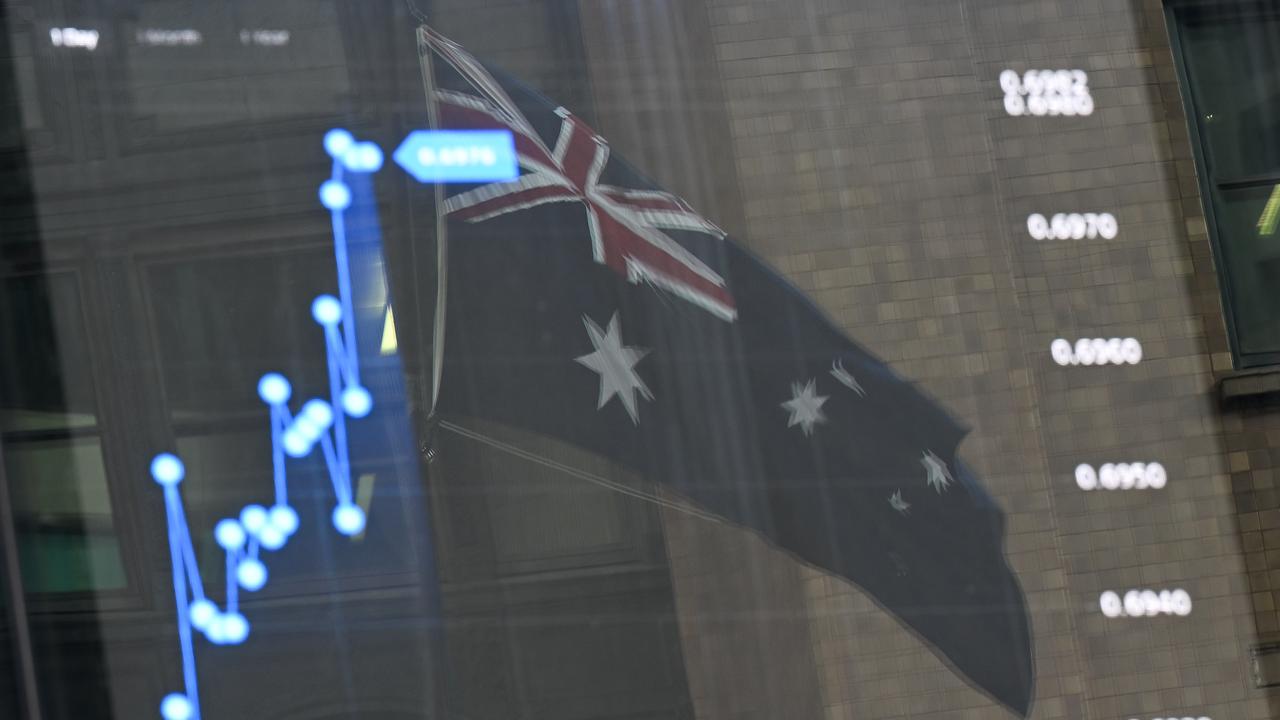
Australia’s share market has edged slightly higher, as a fragile ceasefire between the US and Iran hangs in the balance and a key oil transit route remains restricted.
IHS Markit (Nasdaq: INFO) is a world leader in critical information, analytics and solutions for the major industries and markets that drive economies worldwide. The company delivers next-generation information, analytics and solutions to customers in business, finance and government, improving their operational efficiency and providing deep insights that lead to well-informed, confident decisions. IHS Markit has more than 50,000 key business and government customers, including 80 percent of the Fortune Global 500 and the world’s leading financial institutions. Headquartered in London, IHS Markit is committed to sustainable, profitable growth.





















































You must be logged in to post a comment Login