
Business
GoodPop debuts sour frozen novelties





O’Leary Ventures Chairman Kevin O’Leary discusses the shutdown of Spirit Airlines and the price New York City is paying for Mayor Zohran Mamdani’s policies on ‘Varney & Co.’
Budget airlines are seeking help from the federal government amid the surge in jet fuel prices that prompted Spirit Airlines to cease operations after its bankruptcy exit plan faltered and a possible federal aid package failed to materialize.
Spirit on Saturday announced “with great disappointment” that it started an orderly wind-down of its operations, adding that it was “proud of the impact of our ultra-low-cost model on the industry over the last 34 years,” and that it had hoped to continue to do so.
Prior to Spirit’s announcement, President Donald Trump indicated his administration was negotiating a bailout of up to $500 million for Spirit that would’ve given the federal government warrants equal to about 90% of Spirit’s equity, according to a Wall Street Journal report. However, the parties were unable to reach a deal and Spirit had to halt operations.

Budget air carriers began seeking federal assistance prior to Spirit Airlines halting operations. (Artur Widak/NurPhoto )
Last week, the Journal first reported that a group of budget airlines were also pursuing $2.5 billion in federal assistance through stock warrants that could be converted into equity stakes, the Association of Value of Airlines (AVA) said in a statement. The group represents Frontier Airlines, Allegiant Air, Sun Country and Avelo, while it also represented Spirit prior to the airline halting operations.
SPIRIT AIRLINES TO CEASE OPERATIONS AFTER FEDERAL GOVERNMENT BAILOUT FAILS TO MATERIALIZE
Some of the Journal’s sources told the outlet that the group’s $2.5 billion figure was derived from an estimate of how much the airlines expect to spend on jet fuel this year compared with earlier forecasts, with the estimate assuming jet fuel prices will remain above $4 a gallon on average for the rest of the year.
The AVA issued a statement on Saturday following Spirit’s announcement that it was winding down its operations, saying that displaced travelers may find discounted fares offered by its members and other promotions aimed at helping those in need of alternative travel plans.
It also said that low-cost carriers help support the broader air travel ecosystem by keeping prices in check for consumers.
BUDGET AIRLINES ASK FEDERAL GOVERNMENT FOR $2.5B IN AID TIED TO RISING JET FUEL COSTS
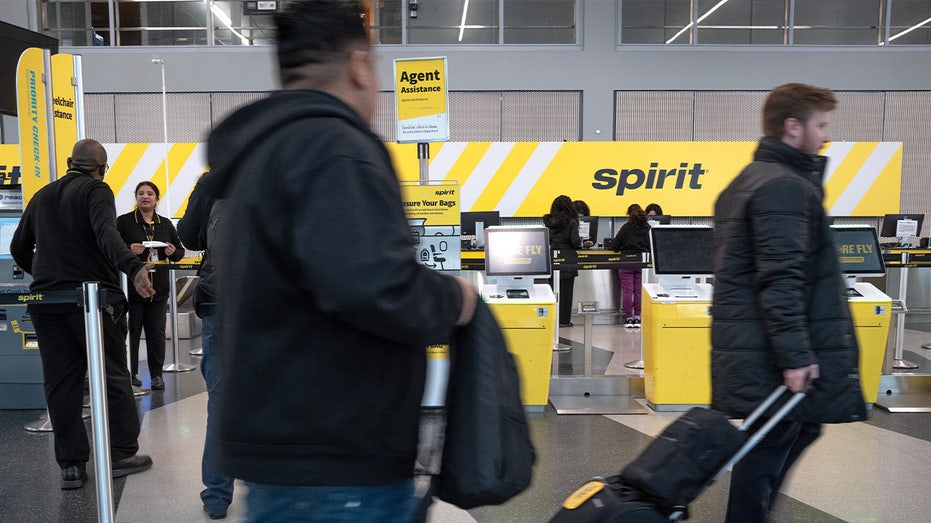
Travelers affected by Spirit halting operations may find promotional offers from rival airlines. (Scott Olson/Getty Images)
“Value airlines are the lynchpin that commands fare discipline across the entire airline industry with sustained competition that expands options for consumers. Make no mistake: if there are fewer value airlines, flying will become less affordable for Americans,” AVA said.
“What happened to Spirit Airlines is a clear warning sign of what can occur when policy choices and regulatory dynamics tilt the competitive landscape toward the largest incumbent carriers.”
“It underscores the need for continued collaboration among all stakeholders to ensure a balanced, competitive environment that supports the long-term viability of value airlines,” the group added.
SPIRIT AIRLINES SHUTS DOWN IMMEDIATELY, STRANDING TRAVELERS: HERE’S HOW TO GET YOUR MONEY BACK
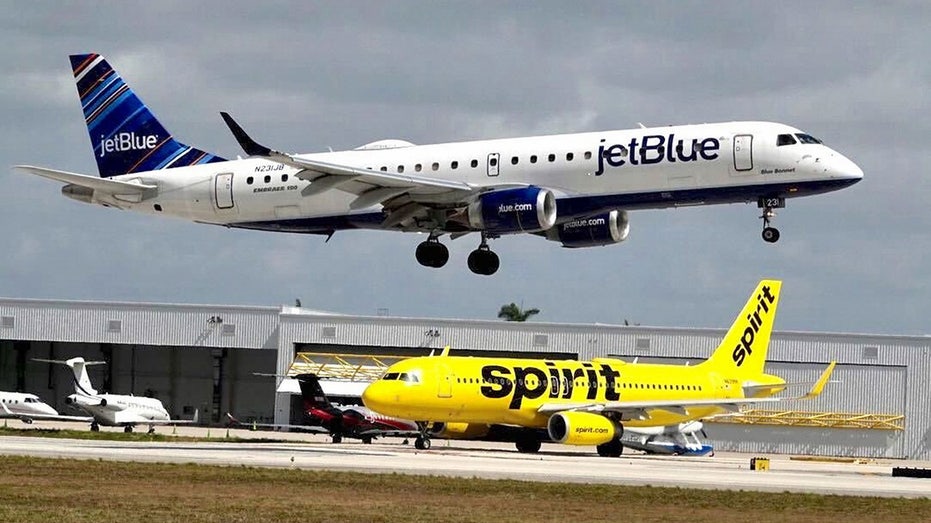
Spirit Airlines had merger attempts with JetBlue and Frontier blocked by regulatory concerns. (Joe Cavaretta/South Florida Sun Sentinel/Tribune News Service via Getty Images)
AVA took issue with a statement by Airlines for America, a trade group representing larger carriers.
Airlines for America’s statement from Saturday after Spirit halted operations criticized the low-cost carriers seeking government assistance because of “their inability to deal with high fuel prices” and saying it would “punish other airlines that have engaged in self-help in order to deal with increased costs and reward airlines who haven’t made those tough decisions.”
AVA said that some of those “self-help” measures would reduce options and raise costs for the traveling public, adding that budget carriers aren’t at fault for the situation.
GET FOX BUSINESS ON THE GO BY CLICKING HERE
“The current surge in jet fuel prices is not the result of poor decision-making or a lack of discipline by value airlines,” AVA said. “It is an uncontrollable, extraordinary external shock that disproportionately impacts business models built on offering consistently affordable fare to price sensitive travelers.”
The company’s revenue from operations in Q4FY26 stood at Rs 1,572 crore, up 22% from Rs 1,286 crore in the corresponding quarter of the previous financial year.
The company’s board also recommended a final dividend of Rs 8.35 and a one-time special dividend of Rs 3.35, aggregating to Rs 11.70 per equity share for the financial year ended March 31, 2026, subject to tax. The dividend, if approved at the Annual General Meeting (AGM) will be paid within 30 days from the conclusion of the AGM, the company filing said.
Company’s total operating revenue stood at Rs 1,572 crore, up 15% QoQ, while the services segment revenue stood at Rs 1,220 crore, up 15% QoQ. In USD terms, services segment revenues came in at $132.6 million, up 11.9% QoQ in cc.
The operating Earnings Before Interest, Taxes, Depreciation and Amortisation (EBITDA) was Rs 252 crore, up 31% QoQ while the EBITDA margin was reported at 16% versus 14.1% QoQ.

Adjusted net income stood at Rs 163 crore, up 20% QoQ, while the net income margin was at 10.3%, up 45 bps QoQ.
The company’s profit after tax (PAT) surged 2,975% sequentially from Rs 6.64 crore reported in Q3FY25 while the topline increased 15% from Rs 1,366 crore in the year-ago period.
Management commentary
Company’s Chief Executive Officer & Managing Director Warren Harris said he was pleased that the momentum built in Q3 carried through to Q4, delivering 12% revenue growth in cc and a 190 bps margin expansion. “This marks a clear inflection for the business, with growth broad‑based rather than concentrated in any single customer or program. Strong execution against guidance, improving order book visibility, and rising wins in full‑vehicle programs – which serve as a strategic wedge to deepen lifecycle engagement and enable systematic expansion across adjacent services – reinforce our confidence in FY27, where we continue to expect double‑digit organic growth with sustainable margin expansion,” Harris said.
(Disclaimer: The recommendations, suggestions, views, and opinions given by the experts are their own. These do not represent the views of The Economic Times.)

Pre-provision operating profit for the quarter was 7% lower at Rs 294 crore as against Rs 317 crore earlier, on account of 9% higher operational expenditure and 20% fall in other income. Provision stood 62% lower at Rs 23 crore.
The bank’s quarterly net interest margin improved to 3.83% from 3.75% a year ago.
For the full FY26, the bank’s net profit stood at Rs 633 crore, registering a 7% rise over Rs 594 crore in FY25. The full year operating profit rose 19% at Rs 1085 crore, backed by healthy business expansion.
Its net advances grew 26% year-on-year to Rs 39,848 crore at the end of March, supported by a 53% jump in gold loans and 37% rise in wholesale lending.
Its asset quality improved sequentially but deteriorated year-on-year. The gross non-performing assets ratio stood at 1.66% at the end of FY26 as compared with 1.96% three months prior and 1.57% a year back. Net NPA was at 0.40% as against 0.67% three months back and 0.52% last year.
Total deposits grew by 20% to Rs 44,246 crore with the current and savings account ratio being at 20% at the end of the last fiscal.
Mannapuram Finance Q4 profit dips 9%
Gold loan company Manappuram Finance reported a 9.6% dip in its standalone net profit at Rs 497 crore in the fourth quarter of FY26, as compared with Rs 550 crore in the year ago period, due to rise in finance cost as well as provisions against bad loans.
Its finance cost for the quarter stood higher at 932 crore against Rs 610 crore earlier while provisions were at Rs 216 crore against Rs 79 crore.
The group’s consolidated net profit stood at Rs 405 crore for the quarter under review as compared with a net loss of Rs 203 crore in the year ago period.
Manappuram board proposed a dividend of Rs 0.50 per equity share of Rs 2 face value each, making it a 25% dividend.
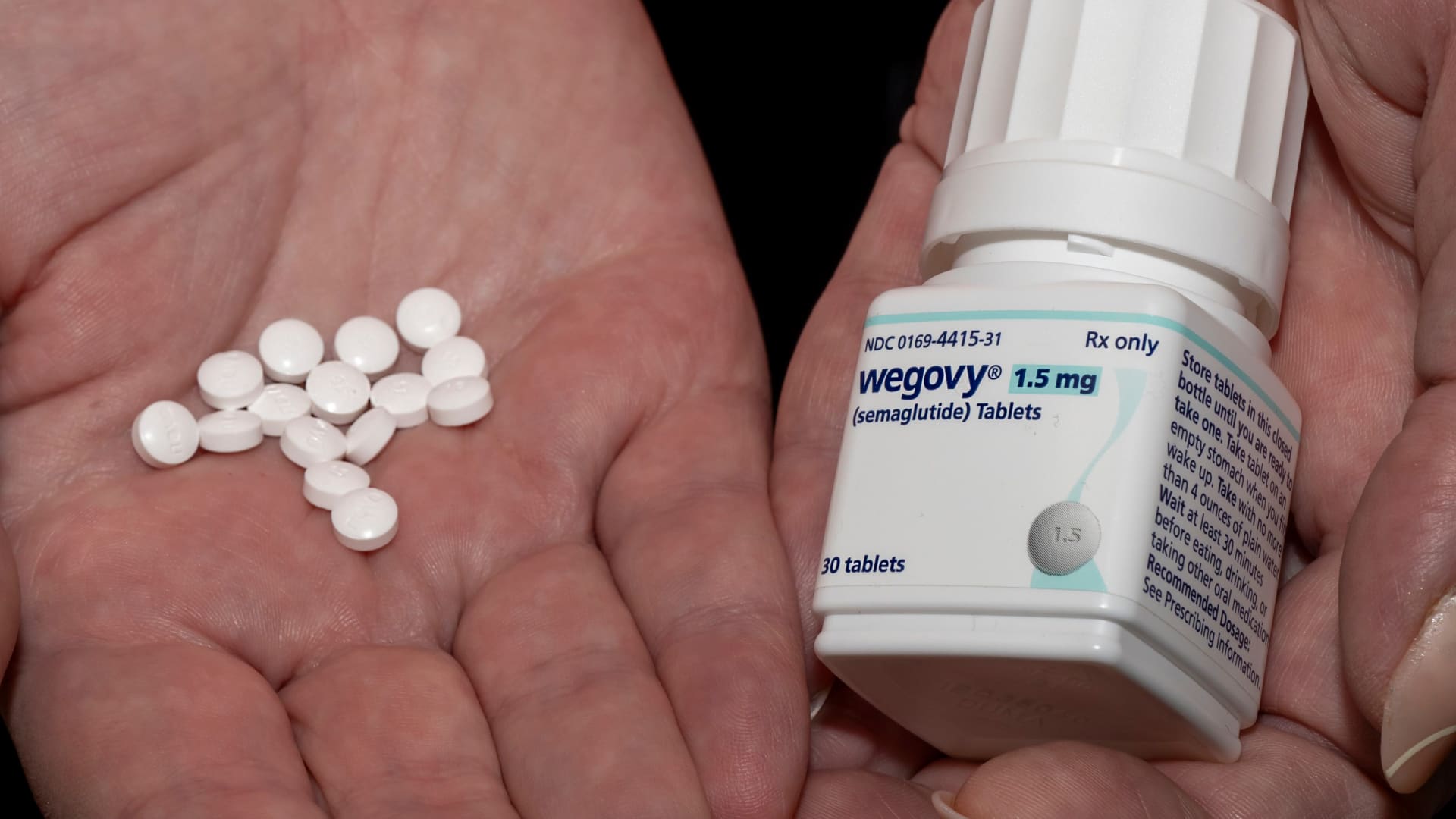
Wegovy semaglutide tablets.
Michael Siluk | Universal Images Group | Getty Images
When the Wegovy pill launched in January, telehealth provider LifeMD said its business doubled almost overnight.
LifeMD went from seeing between 300 and 400 new patients a day to 600 to 1,000 new patients a day, said CEO Justin Schreiber. He knew there would be demand, but that level of interest surprised him.
“There’s no question that the launch of oral medications has improved access,” Schreiber said.
Tens of thousands of people have started taking Novo Nordisk’s Wegovy pill in the four months since it launched in the U.S., the majority of them new to the GLP-1 category. Investors will get a fresh look at the Wegovy pill’s momentum when Novo reports first-quarter results on Wednesday.
The launch has already forced investors to rethink the opportunity in oral GLP-1s – and which company might win it. While obesity and diabetes market leader Eli Lilly launched its own pill, Foundayo, last month, early signs indicate its rollout has been more modest than the Wegovy pill’s start.
“We were all in this camp of Foundayo, Foundayo, Foundayo because Lilly was talking it up and we were also concerned about making enough peptide because Novo was still coming out of shortage,” said BMO Capital Markets analyst Evan David Seigerman.
Now, Novo’s early success has upended the expectations of some investors and analysts who expected the Danish company would fall behind its U.S. rival in the oral category, as it did in injectables.
Novo’s Wegovy pill uses the same main ingredient as its weekly shot. The company had at times struggled to produce enough of the peptide to satisfy the soaring demand for the injection, and the oral formulation required even more of it. Meanwhile, Lilly was telling investors its GLP-1 pill was easier to make and wouldn’t face the shortages that hindered the shots.
Doubts about Lilly’s lock on the market emerged last summer when the company said its pill helped people lose about 12% of their body weight, on average. Seigerman noticed Novo pounced on the opportunity and started to highlight the efficacy of oral semaglutide, the active ingredient in Novo’s Wegovy, which delivered almost 17% weight loss in a separate trial.
When the Wegovy pill was approved around the New Year, Novo and its telehealth partners rolled out a high-profile promotional blitz. Ads blanketed New York City subways and TV broadcasts. The Danish drugmaker even tapped celebrities like DJ Khaled for its first-ever Super Bowl ad.
Novo pushed the pill’s lower entry price of $149 per month and injection-like efficacy. The company used its three-month head start on Lilly to shape the narrative and combat concerns that people wouldn’t want a pill that needs to be taken first thing in the morning without food and with little water, which Novo CEO Mike Doustdar said were “a bit fueled by our competitor.”
“Well, I have news for you, this has been absolutely not the case,” Doustdar told CNBC in March. “People are really interested because it’s the most efficacious pill right now in the market.”
The Wegovy pill — and now Lilly’s own oral drug — are helping to expand the GLP-1 market, reaching patients who wouldn’t have otherwise sought treatment due to a fear of needles or difficulty accessing the injections, which used to cost much more than today’s pills for many patients.
“There’s a fair number of patients that don’t want to be stuck by the needle in the case of a vial and syringe or stung by the price,” Jamey Millar, Novo’s head of U.S. operations, said in a March interview.
People are choosing GLP-1 pills “by a huge factor” more than shots through telehealth platform Sesame, said CEO Michael Botta. He attributes the preference to the lower price of the pills versus the shots and the fact that people are more comfortable trying oral drugs than going straight to shots.
That could bring in a more diverse set of patients to the category. More men are “definitely” starting the medications than before, he said, though women still make up a majority of new patients.
Shortly after the launch, Novo said that many of the initial users were taking the lowest starter dose of the drug. Millar told CNBC that the company is closely watching how many patients move to the highest doses over the coming months.
What to watch in Novo vs. Lilly
Eli Lilly appears to have work to do to catch up to Novo.
While Novo was able to leverage the Wegovy brand recognition right out the gate, Lilly is trying to introduce introduce people to an entirely new brand. Its pill Foundayo has a different active ingredient than its best-selling weight-loss shot Zepbound. Lilly executives last week sought to reassure investors that it’s going to take time to introduce the drug to doctors and patients.
In the first few weeks of the launch, more than 20,000 people have started taking Foundayo, Lilly CEO Dave Ricks told CNBC following the company’s first-quarter earnings report. More than 1,000 people are starting the drug every day, and 80% of those patients are new to GLP-1 drugs, he said. Lilly still needs to build consumer awareness around the pill, Ricks said, adding the company hasn’t started widely advertising it on TV.
“So what we’re seeing now is basically organic demand, which is really strong to us,” Ricks said.
RBC analyst Trung Huynh said investors should wait two or three months to judge the momentum of Lilly’s Foundayo launch because there’s so much early volatility. He thinks it’ll take a year or two for the story to play out. He pointed to the market for weekly shots: prescriptions of Zepbound surpassed those for Novo’s Wegovy six months after Zepbound was introduced in the U.S., even though it launched two years later.
Because Lilly hiked its full-year sales forecast on strength across its GLP-1 business, it should take some pressure off Foundayo prescriptions in the near term, said Barclays analyst Emily Field. The company plans to start introducing Foundayo in other countries later this year and has touted the pill as the key to reaching people around the world.
Novo hasn’t disclosed any specifics around a potential launch of its Wegovy pill outside of the U.S., but in March it announced a $500 million manufacturing investment in Ireland to meet current and future demand for its oral products outside of the U.S. The European Medicines Agency is expected to approve the Wegovy pill later this year.
Investors will get a better look at the Wegovy pill’s performance this week when the company reports earnings from the first quarter it was available in the U.S. Analysts have praised the strength of the rollout, which outpaced even the launch of its shots.
Even so, Wall Street expects a significant drop in overall sales this quarter, as generic competition for the Wegovy shot threatens sales in India, China and Canada. The pill’s lower price point could also crimp U.S. sales.
Investors will be on high alert for any data related to the Wegovy pill and whether Novo stands by the gloomy forecast it issued in February, when it said sales and profits will both decline by 5% to 13% in 2026. Novo’s pipeline will also be a focus. Disappointments in the clinic have weighed on the stock, causing investors to wonder whether Novo’s pipeline is rich enough to help the company stay competitive.
And while the pills are important to both Novo and Lilly, analysts say they won’t define either company.
“Yes it’s shaking things up, but I still think Lilly has enough components to excel,” BMO’s Seigerman said. “And while Novo may win with this, they need more than one win to be the champion.”
Business
Tata Chemicals Q4 results: Cons loss widens YoY to Rs 2,132 crore on exceptional items; revenue drops 2%

The company reported an exceptional charge of Rs 1,837 crore is provided on account of impairment of goodwill in US & Rs 159 crore of deferred tax assets write off.
Profit after tax before exceptional items and NCI stood at Rs 279 crore compared to a loss of Rs 12 crore for Q4FY25, the company filing to the exchanges said.
The loss widened on a sequential basis too, as the company reported a net loss of Rs 93 crore in Q3FY25. The topline was down 3% on a quarter-on-quarter basis versus Rs 3,550 crore reported in the October-December quarter of FY26.
The company’s board also recommended a dividend of Rs 11 per share for the financial year 2025-26. The dividend, if approved by the members at the upcoming 87th Annual General Meeting (AGM), will be paid within five days of the AGM, the company filing said.
The company’s expenses in the quarter under review stood at Rs 3,660 crore versus Rs 3,644 crore in Q3FY26 and Rs 3,612 crore in Q4FY25. The expenses were made on heads like ‘Cost of materials consumed’, ’employee benefits expense’, finance cost and power and fuel.
The company reported a negative cash flow of Rs 1,459 crore as on March 31, 2026 ended period compared to Rs 568 crore as of March 31, 2025. The CFO was adjusted for depreciation and amortisation expenses, fianance cost and dividend income, among other things.The net profit margin in the reported quarter stood at -61.55% versus -1.94% in Q3FY25 and 1.91% in Q4FY25.
The company’s Earnings Before Interest, Taxes, Depreciation and Amortisation (EBITDA) stood at Rs 274 crore as compared to Rs 327 crore in Q4FY25, mainly on account of subdued pricing across all geographies and increase in fixed cost (also due to steep depreciation of Indian Rupee) as compared to Q4FY25.
Net debt (without leases) as on March 31, 2026, stood at Rs 5,961 crore.
Management commentary
R. Mukundan, Managing Director & CEO of Tata Chemicals said the global soda ash market remained oversupplied in Q4FY26, keeping prices under pressure amid geopolitical uncertainties in the Middle East. While standalone performance was supported by higher volumes and cost discipline, consolidated results were hit by weak pricing across regions, particularly in Southeast Asia, along with impairment charges in the US business.
He added that the company continues to focus on long-term growth initiatives, including the acquisition of Novabay Pte. Ltd. to expand its specialty chemicals portfolio and a Rs 100 crore investment to enhance salt capacity at Mithapur. Despite the challenging environment, Tata Chemicals remains focused on protecting margins, conserving cash flows, and maintaining a strong balance sheet to navigate the current cycle and drive sustainable value creation.
(Disclaimer: The recommendations, suggestions, views, and opinions given by the experts are their own. These do not represent the views of The Economic Times.)
NEW YORK — Oracle Corporation (NYSE: ORCL) stock draws a resounding “Buy” recommendation from Wall Street in May 2026, with consensus ratings of Moderate Buy to Strong Buy and average 12-month price targets implying 30-50% upside from current levels near $175–$183. Despite volatility from heavy AI infrastructure spending and a year-to-date pullback, the database and cloud giant’s explosive remaining performance obligations (RPO), cloud revenue growth and strategic positioning in artificial intelligence infrastructure position it as a favored long-term holding for many investors.
As of early May 2026, Oracle shares trade around $175–$182 after recovering modestly from earlier 2026 lows. The stock has faced pressure amid broader tech sector rotations and concerns over elevated capital expenditures, yet analysts overwhelmingly see current valuations as attractive given Oracle’s fundamentals and AI tailwinds.
Strong Analyst Consensus
Across 35–55 covering analysts, Oracle earns predominantly Buy or Strong Buy ratings, with very few Holds and minimal Sells. Average 12-month price targets range from $220 to $260, with highs reaching $400 and lows near $155–$160. This suggests substantial potential upside, with some models projecting even higher returns if cloud and AI momentum accelerates.
Firms like Guggenheim, Bank of America and others maintain bullish stances, citing Oracle’s massive RPO backlog — which surged over 300% year-over-year in recent quarters — as evidence of sustained demand for its cloud offerings.
Fiscal 2026 Performance and Earnings Highlights
Oracle has delivered solid results through its fiscal year. In Q3 FY2026 (reported March 2026), the company posted revenue of about $17.19 billion (up ~22% YoY) and beat EPS estimates. Remaining Performance Obligations reached $553 billion, up 325% year-over-year, signaling strong future revenue visibility driven by cloud infrastructure and AI-related deals.
Earlier quarters showed cloud revenue growth exceeding 25–28%, fueled by demand for Oracle Cloud Infrastructure (OCI) used in large-scale AI training and deployment. However, higher capex for data centers has weighed on near-term margins and free cash flow, contributing to stock volatility.
Bull Case: AI and Cloud Leadership
Supporters highlight Oracle’s transformation into a major cloud player. Its focus on high-performance computing for AI, strategic partnerships and ability to win large enterprise contracts differentiate it from competitors. Analysts project continued double-digit revenue growth, with some bull scenarios seeing the stock reaching $300–$344 within 12–18 months if RPO converts efficiently.
Valuation remains reasonable relative to growth prospects, with forward multiples that many view as discounted compared to pure-play cloud peers. Dividend growth and share repurchases add to shareholder returns.
Risks and Bear Concerns
Critics point to execution risks around heavy AI spending, rising debt levels and potential delays in monetizing infrastructure investments. A tougher macroeconomic environment or slower AI adoption could pressure results. Some analysts trimmed targets after recent quarters, citing margin compression.
Short-term volatility remains a factor, with the stock sensitive to quarterly guidance and broader tech sentiment. A deeper market correction could test lower support levels.
Investment Considerations for 2026
For growth-oriented investors, Oracle offers exposure to enterprise software stability plus high-growth cloud and AI opportunities. Long-term holders may benefit from dollar-cost averaging during dips. Those concerned about capex timing might prefer a more cautious allocation or wait for clearer cash flow inflection.
Financial advisors often recommend tech holdings like Oracle as part of diversified portfolios, especially for those seeking AI adjacency without pure-play startup risk. Position sizing should reflect individual risk tolerance given sector volatility.
Broader Market Context
Oracle’s story mirrors other Big Tech names balancing massive AI investments with profitability. Its hybrid cloud-database strengths provide a moat in enterprise markets where data sovereignty and performance matter. As AI infrastructure demand grows, Oracle is well-placed to capture share.
Upcoming earnings, macroeconomic data and AI spending trends will influence sentiment through the rest of 2026. Analysts will closely watch cloud bookings, margin trends and progress on capital efficiency.
Conclusion: Favored as a Buy for Most Investors
The overwhelming Wall Street consensus tilts strongly toward buying Oracle stock in 2026. Structural growth drivers in cloud and AI, combined with a solid backlog and reasonable valuation, outweigh near-term spending concerns for most analysts. While risks around execution and macro conditions exist, current levels appear attractive for those with a medium-to-long-term horizon.
Investors should perform their own research, consider diversification and consult professionals. Oracle is not without volatility, but the balance of evidence supports its role as a core tech holding with meaningful upside potential as AI infrastructure spending translates into sustained revenue and profits.


Arbitrage Trader, aka Denislav Iliev has been day trading for 15+ years and leads a team of 40 analysts. They identify mispriced investments in fixed-income and closed-end funds based on simple-to-understand financial logic.
Denislav leads the investing group Trade With Beta, features of the service include: frequent picks for mispriced preferred stocks and baby bonds, weekly reviews of 1200+ equities, IPO previews, hedging strategies, an actively managed portfolio, and chat for discussion. Learn more.
Analyst’s Disclosure: I/we have no stock, option or similar derivative position in any of the companies mentioned, but may initiate a beneficial Long position through a purchase of the stock, or the purchase of call options or similar derivatives in AXS.PR.E over the next 72 hours. I wrote this article myself, and it expresses my own opinions. I am not receiving compensation for it (other than from Seeking Alpha). I have no business relationship with any company whose stock is mentioned in this article.
Seeking Alpha’s Disclosure: Past performance is no guarantee of future results. No recommendation or advice is being given as to whether any investment is suitable for a particular investor. Any views or opinions expressed above may not reflect those of Seeking Alpha as a whole. Seeking Alpha is not a licensed securities dealer, broker or US investment adviser or investment bank. Our analysts are third party authors that include both professional investors and individual investors who may not be licensed or certified by any institute or regulatory body.

Presentation
Wolf E. Regener
President, CEO & Director
Different attendees. Pauline, can you see the attendees or not?
Unknown Executive
I don’t see anyone that’s on your list that’s attended. I just see the ones that I preregistered that were on for the call.
Wolf E. Regener
President, CEO & Director
So I’ve got 2 phone numbers and then a few names.
Unknown Executive
I don’t see them on here. [indiscernible].
Unknown Executive
Tab, you might be able to see you can’t see that.
Unknown Executive
Okay. I can see Jon. I can register Jay. Thank you. And Peter Nelson. And I also see is that David?
Unknown Executive
Yes, I think he’s one of the people that preregistered.
Unknown Executive
Rachel, thank you for joining. I do see 2 telephone numbers. Can you identify yourself, please? yourself off mute.
Wolf E. Regener
President, CEO & Director
Yes, just to [indiscernible].
Unknown Executive
Someone else has just recently dialed in. Could you please identify yourself?
Wolf E. Regener
President, CEO & Director
You need to go off mute, please.
Unknown Executive
I don’t know if you want me to start.
Wolf E. Regener
President, CEO & Director
I think maybe talking to counsel, I’m not sure.
Unknown Executive
Wolf, did we gain another caller as well? We did.
Evan Templeton
Are those showing up under the way that we logged on or differently?
Wolf E. Regener
President, CEO & Director
Differently.
Evan Templeton
Okay. Because I’m seeing the numbers up with another one just joined.
Wolf E. Regener
President, CEO & Director
No, just out of
Lauren Bech-Hansen
So hello, everyone. Thank you for joining Organto Foods’ Fiscal 2025 Review and Business Update Webinar. My name is Lauren Bech-Hansen, and I will be monitoring today’s session. We’ll begin with a brief presentation from Steve Bromley, CEO, and Co-Chair of Organto Foods, who will walk through the company’s fiscal 2025 operational highlights, financial results and outlook for 2026. Following the presentation, we’ll move into a live Q&A session.
[Operator Instructions] Before we begin, I’ll note that today’s discussion may include forward-looking information and forward-looking statements within the meaning of applicable Canadian securities law. These statements may relate to Organto’s expectations, plans, objectives, strategies, financial outlook, anticipated growth, operating performance, market opportunities, expansion plans and other future developments.
Forward-looking statements are based on management’s current expectations, assumptions, estimates and beliefs and are subject to risks and uncertainties that could cause actual results to differ materially from those expressed or implied. For a discussion of these risks, assumptions and uncertainties, please refer to Organto’s public disclosure documents, including its MD&A available under the company’s profile on SEDAR.
Today’s discussion may also reference certain non-IFRS financial measures, including EBITDA or adjusted EBITDA. These measures do not have standardized meanings under IFRS and may not be comparable to similar measures used by other companies. Please refer to Organto’s public disclosure documents for additional information, including reconciliations where applicable.
Nothing discussed in today’s session to be considered investment, financial, legal or tax advice. Organto undertakes no obligation to update forward-looking statements, except as required by applicable law. With that, thank you, everyone, for joining us today.
I’m pleased to turn the


If what you want from your index fund is access to the latest hot stocks, you’re in luck. The passive funds holding trillions of dollars of 401(k)s and other investments are rushing to change their rules as the IPOs of SpaceX, OpenAI and Anthropic draw closer.
The latest, on Thursday, was a proposal from S&P to drop the requirement to make a profit and wait a year for initial public offerings to get into the flagship S&P 500.
Copyright ©2026 Dow Jones & Company, Inc. All Rights Reserved. 87990cbe856818d5eddac44c7b1cdeb8

He Saved for 31 Years. His Financial Advisor Was Gone 6 Months Before He Retired.

How to avoid late payment fees and fines with admin nights

Budget airlines seek $2.5B in federal aid amid jet fuel price surge

Manchester United reach agreement with Casemiro over contract clause amid transfer speculation

US brings back mandatory military draft registration

Steven Gerrard disagrees with Gary Neville over ‘shock’ Chelsea and Arsenal claim | Football


-

 Politics7 days ago
Drax board avoid their own AGM, accused of greenwashing & environmental racism
-

 Fashion6 days ago
Kylie Jenner’s KHY Enters a New Era with ‘Born in LA’
-

 NewsBeat1 day ago
Channel 5 – All Creatures Great and Small series 7 new post
-

 Tech7 days ago
Images of Samsung’s rumored smart glasses have leaked
-
 Tech3 days ago
Trump’s 25% EU auto tariff breaches Turnberry Agreement that also covers semiconductors and digital trade
-

 Business6 days ago
Most Commercial Energy Audits Miss the Real Losses
-

 Crypto World6 days ago
CFTC’s AI will review U.S. crypto registration applications, chairman tells CoinDesk
-
 Sports3 days ago
Paul Scholes issues Marcus Rashford reality check as agreement emerges over Man United star
-

 Business5 days ago
Barclay Brothers Avoid Bankruptcy: HSBC Drops High Court Petitions After IVA Deal
-
 Business5 days ago
Tesla Officially Registers Elon Musk’s Stock: What Investors Need to Know
-

 Tech6 days ago
Get Ready for More Brain-Scanning Consumer Gadgets
-
 Crypto World6 days ago
Robinhood Phishing Scam Exploits Gmail Dot Feature to Bypass Security
-

 Crypto World7 days ago
Gmail Dot Trick Underpins Robinhood Phishing, Sending Real-Looking Emails
-

 Entertainment7 days ago
Sister Wives: Janelle Posts New Scary Warning
-

 Entertainment7 days ago
Michael Jackson’s Biopic Excluded Abuse Allegations For $25M
-

 Business4 days ago
Two Powerball Tickets Split $143 Million Jackpot in Indiana and Kansas
-

 Business7 days ago
Superdry co-founder accused of raping woman
-
 Crypto World7 days ago
Meme Coin Based on White House Shooter Conspiracy Rallies 320%
-

 Tech7 days ago
YouTube TV’s Multiview Feature Just Got A Game-Changing Upgrade
-
Business7 days ago
Opus Genetics president Benjamin Yerxa sells $39,121 in stock
You must be logged in to post a comment Login