

Connect with us

Business

Guernsey: Lack of career prospects and housing driving youth away

Published

on

Dr Nicola Brink is wearing a pink jacket as she sits in a room and smiling directly at the camera. She has pale blonde hair and glasses.

Young people have said a lack of career opportunities are forcing them to think about leaving home.

In a survey by Dr Nicola Brink – Guernsey’s Medical Officer of Health and Director of Public Health – housing, cost of living and transport were big headaches for the future.

Only 27% of the young people Brink heard from said they were confident in staying on the island.

Amber Thomson told BBC Guernsey: “I think that a lot of people kind of tend to go to uni[versity] and then they think, well there’s not that much opportunity for me if I come back.”

Advertisement

The 21-year-old studied environmental science and said she planned to move away for more career opportunities and to “see what else is out there in the world”.

She said: “Guernsey is a really, really tiny place and when you start to look at the world as a whole you realise just how small it is and how little you have seen in life.”

She valued the safety of island life but added: “I think that there’s a real gap between the young people of Guernsey and then the older generations.

“I think that it’s a real shame that we don’t have any sense of community between the two groups at all” and said it would be good to bridge that gap.

Advertisement
Continue Reading
Click to comment

You must be logged in to post a comment Login

Leave a Reply

Business

Rates Spark: The Yen Link To U.S. Treasuries

Published

on

Rates Spark: The Yen Link To U.S. Treasuries

Rates Spark: The Yen Link To U.S. Treasuries

Continue Reading

Business

CBH welcomes new locomotives in time for 2026 grain harvest

Published

on

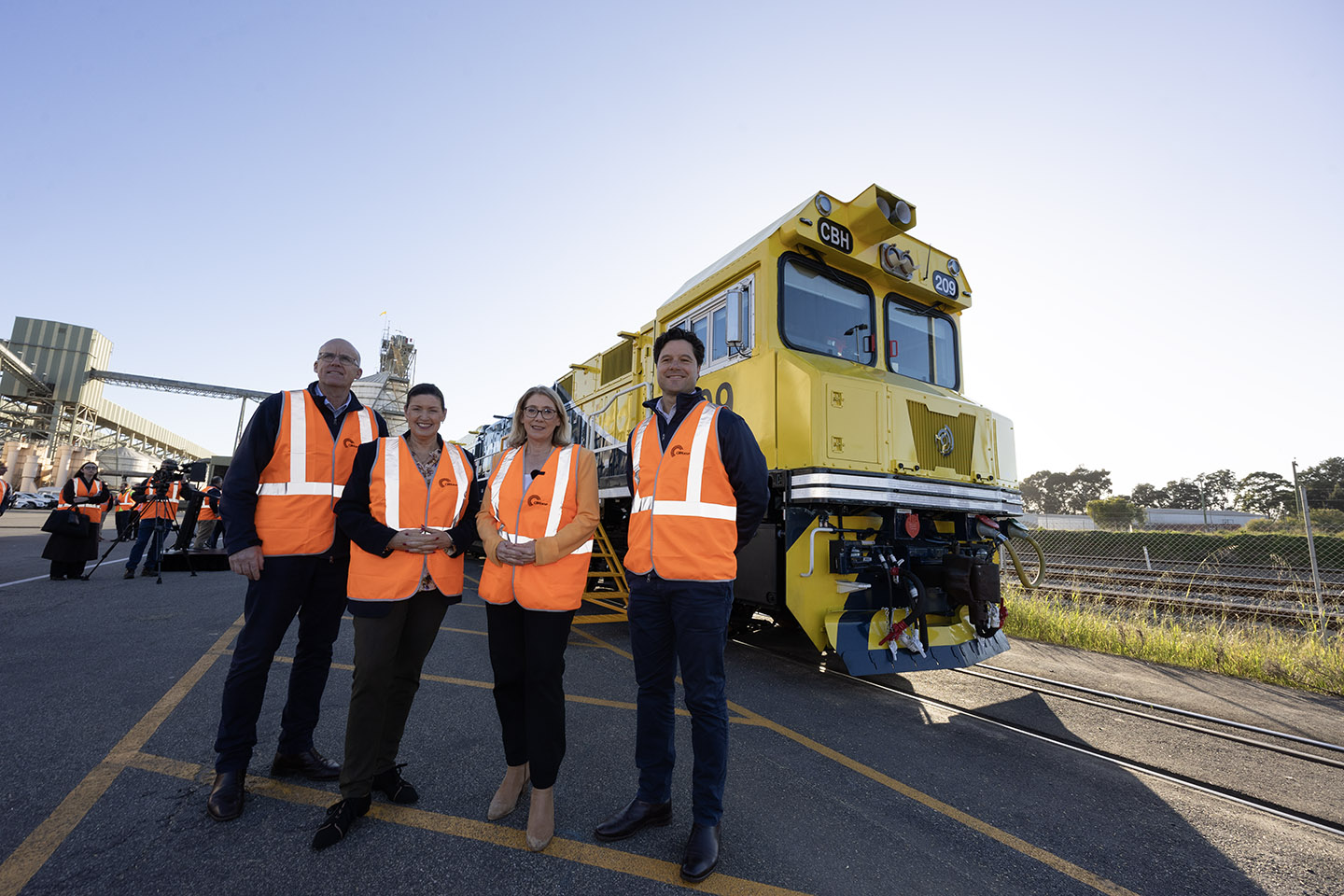
CBH welcomes new locomotives in time for 2026 grain harvest

New locomotives ready to take to WA’s freight rail network are equipped with “world-leading” lighting and will play a key role in delivering the state’s bumper crops to market.

Continue Reading

Business

Thames Water and Wessex Water to be allowed to hike bills to boost spending

Published

on

Business Live

They are among five suppliers given permission by the sector watchdog to increase charges

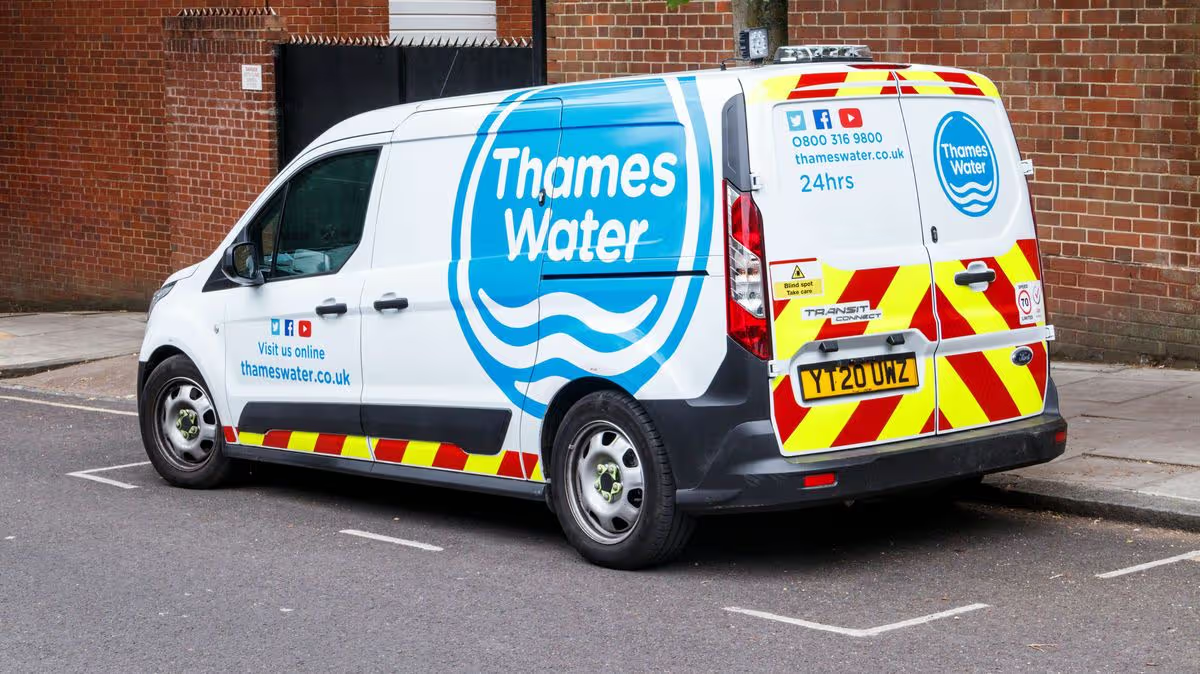
A Thames Water van parked on a street

A Thames Water van parked in a residential street(Image: No credit)

Thames Water and Wessex Water are among five water firms given the provisional go-ahead by the industry watchdog to hike bills further as part of plans allowing suppliers to spend an extra £3.4bn.

Advertisement

Ofwat revealed in its draft determination that five of 13 suppliers across England and Wales are set to be given permission to increase charges for customers to pump in the additional investment by the end of the decade to help upgrade networks to cope with new housing and data centres and tackle forever chemicals to ensure drinking water is safe and reliable.

Debt-laden Thames Water is one of the firms provisionally allowed to increase customer bills between 2027 and 2030, alongside Severn Trent Water, Southern Water, Wessex Water and South East Water.

Thames Water covers a large area of London and the Thames Valley as well as Oxfordshire, Berkshire, Wiltshire and Gloucestershire. Wessex Water, meanwhile, includes Dorset, Somerset and Bristol as well as most of Wiltshire and parts of Gloucestershire and Hampshire.

It follows a three-month review by Ofwat, with the 13 firms originally putting forward requests for further investment of £4.3bn.

Advertisement

Ofwat will now consult on the draft decision until September 24 with a final verdict due in December.

Helen Campbell, executive director for delivery at Ofwat, said: “The newly agreed funding will help unlock much-needed new housing development and boost business growth across a range of sectors, as well as improving drinking water quality and the removal of PFAS and forever chemicals.

“We will track performance to ensure companies are delivering the expected improvements for customers and the environment. If they don’t, expenditure can be clawed back.”

Environment Secretary Angela Eagle said: “I know that households across the country are watching every pound and I share their frustration that years of underinvestment and toothless regulation has led to this.

Advertisement

“We have already ringfenced money earmarked for new infrastructure so it can only be spent on fixing the problems, and will go further by fundamentally reforming the water sector so that it works for the public; keeping bills as low as they can be, and delivering higher standards, better performance and cleaner waterways.”

The news comes just days after Thames Water sparked outrage after handing a delayed £1m “golden handshake” to its chief financial officer and agreeing controversial retention payouts to top bosses as it battles to secure its financial future.

The stricken supplier is sinking under a debt pile of more than £20bn.

Advertisement
Continue Reading

Business

Thailand CPI Cools to 2.0% as BoT Holds Rates and Baht Stays Weak

Published

on

Why Is the Thai Baht So Weak in 2026?

Thailand’s July CPI eased to 2.0% yoy, below forecasts, driven by softer fuel prices. Core inflation remains manageable at 0.8%. BoT expected to hold rates at 1% through year-end amid subdued demand. THB strengthened to 33.00/USD but remains among Asia’s weakest currencies in 2025.


Key Points

  • Inflation: July CPI rose 2.0% yoy, below the 2.4% consensus and June’s reading, marking the lowest since March; core CPI averaged 0.8% YTD, under the government’s 1.5% forecast.
  • Policy Outlook: BoT likely to hold rates at 1% through year-end, citing manageable inflation and subdued demand pressures, per Assistant Governor Don Nakornthab.
  • FX: USD/THB fell to 33.00, a seven-week low; THB still down 4.5% YTD, underperforming regional peers.

Inflation Eases Below Expectations

Thailand’s July Consumer Price Index (CPI) rose 2.0% year-on-year, falling short of the Bloomberg consensus estimate of 2.4% and down from June’s 2.4% reading. This marks the lowest inflation print since March, driven largely by softer retail fuel prices that eased overall cost pressures. Despite the headline moderation, core CPI has been gradually climbing, averaging 0.8% over the first seven months of 2025—still comfortably below the government’s full-year core inflation forecast of 1.5%. Commerzbank strategists note that while underlying price pressures persist, they remain manageable and well-contained, suggesting inflation dynamics are not yet a pressing concern for policymakers or the broader economy.

Steady Monetary Policy Outlook

Given the benign inflation environment, the Bank of Thailand (BoT) is expected to hold its policy rate at 1% through the remainder of 2025. Commerzbank strategists see little justification for a shift in monetary policy at this stage, as demand-side pressures remain subdued and inflation risks appear skewed to the downside. This view was reinforced by BoT Assistant Governor Don Nakornthab, who recently indicated that inflation is under control and could potentially undershoot earlier projections due to weak consumer demand. The central bank’s cautious, wait-and-see stance reflects confidence that current price trends do not warrant tightening, while also leaving room for flexibility should conditions change later in the year.

\

Currency Performance Remains Weak Despite Recent Gains

In foreign exchange markets, the Thai baht (THB) strengthened modestly, with USD/THB falling 0.2% to 33.00, its lowest level since June 22. The currency has now gained for four consecutive sessions, aided by rising global gold prices, which have historically supported the baht given Thailand’s gold trade dynamics. Despite this short-term rebound, the THB remains the third worst-performing currency in Asia this year. On a year-to-date basis, the baht has depreciated 4.5% against the US dollar, a significantly steeper decline than the average 1.9% drop seen among other Asian currencies excluding Japan. This underscores that, despite recent stabilization, the baht continues to face broader structural and cyclical headwinds relative to regional peers.

Advertisement

Source : Thai Baht: Benign inflation keeps BoT on hold – Commerzbank

Continue Reading

Business

Zentalis Pharmaceuticals prices $80.5M stock offering at $3.50

Published

on


Zentalis Pharmaceuticals prices $80.5M stock offering at $3.50

Continue Reading

Business

Ibotta director Thomas Lehrman sells $1.53m in company stock.

Published

on


Ibotta director Thomas Lehrman sells $1.53m in company stock.

Continue Reading

Business

Intuitive Machines: Stifel upgrades to ’Buy’ on backlog surge despite Q2 miss

Published

on


Intuitive Machines: Stifel upgrades to ’Buy’ on backlog surge despite Q2 miss

Continue Reading

Business

Why is QBE Insurance stock sliding today?

Published

on


Why is QBE Insurance stock sliding today?

Continue Reading

Business

Inside Ford’s 3-million-square-foot Louisville plant transformation

Published

on

Inside Ford’s 3-million-square-foot Louisville plant transformation

Ford Motor Co. is giving its Louisville Assembly Plant a massive makeover as it prepares to build a new electric truck in 2027.

The automaker is investing $2 billion to transform the roughly 3-million-square-foot Kentucky factory from gas-powered vehicle production to EV manufacturing, according to an announcement from Ford.

Advertisement

The plant will build Ford’s new Fathom midsize electric truck using the company’s Universal EV Production System, which is designed to cut parts, simplify assembly and speed up production.

“It is simply foundationally different from how we have done things before,” Kevin Young, Ford’s advanced program manufacturing chief, said in a statement. “Operators can see everything in front of them and don’t need to bend or reach to do it.”

FORD TO USE APPLE MAPS SOFTWARE IN SELF-DRIVING TECH FOR NEW EV PLATFORM

A covered vehicle hangs beneath orange carrier equipment on the production line inside Ford’s Louisville Assembly Plant.

A covered Ford Fathom moves through new production equipment at the Louisville Assembly Plant. (Ford Motor Company)

The Kentucky overhaul is part of a broader $5 billion investment that Ford says will create 4,000 jobs across the Louisville Assembly Plant and BlueOval Battery Park Michigan.

Advertisement

Under the new system, the Fathom will be built in three major sections – the front, rear and battery deck – allowing employees to work on each section simultaneously before joining them together.

Ford is also turning to large aluminum castings that replace what once was dozens of smaller stamped and welded parts.

FORD REHIRES EXPERIENCED ENGINEERS AFTER AI MISSES THE MARK

Multiple yellow robotic arms operate along an automotive manufacturing line inside a Ford factory.

Equipment operates inside Ford’s Louisville Assembly Plant as the automaker expands factory automation. (Ford Motor Company)

The new system will allow the Ford Fathom to be assembled 40% faster than products currently built at the Louisville plant, according to the company.

Advertisement
Ticker Security Last Change Change %
F FORD MOTOR CO. 13.89 +0.06 +0.43%

The plant is also getting a major technology upgrade.

Wi-Fi access points have nearly tripled from 385 to 1,080, and Ford says the plant will have the highest level of final-assembly automation of its factories worldwide.

Employees have also been training in Michigan on the new production process, which the company says is designed to make assembly work easier and more efficient.

FORD RECALLS NEARLY 420,000 EXPEDITION AND LINCOLN NAVIGATOR SUVS OVER SEAT BELT LOCKING ISSUE

Advertisement
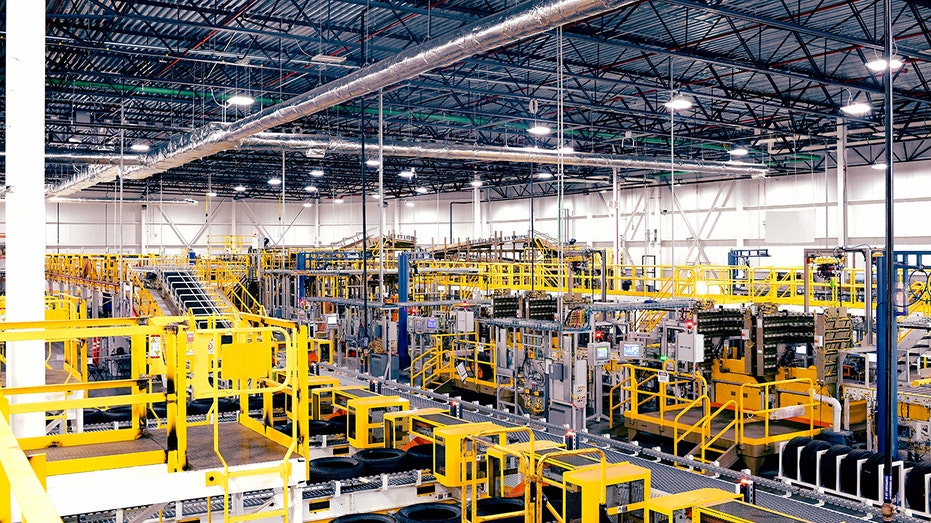
A wide view of Ford’s Louisville Assembly Plant shows rows of yellow industrial equipment and production machinery.

Ford’s tire room at the Louisville Assembly Plant is shown as the automaker overhauls the Kentucky facility for Fathom electric truck production. (Ford Motor Company)

“We’ve engineered an 84% reduction in reaching over the fender,” Bryce Currie, Ford’s chief manufacturing officer, said in a statement. “The wiring harness is also more than 4,000 feet shorter and 22 pounds lighter than in our first-gen electric SUV, making it much easier to install.”

GET FOX BUSINESS ON THE GO BY CLICKING HERE

Ford remains on track to begin prototype builds using production-ready parts in the first quarter of 2027, with Fathom production expected later that year.

Advertisement
Continue Reading

Business

Flock Safety new privacy reforms cut data retention in privacy protection push

Published

on

Flock Safety new privacy reforms cut data retention in privacy protection push

Flock Safety, the embattled AI-powered security camera operator, announced an overhaul to its privacy and security measures Thursday amid growing backlash from consumers and reports of law enforcement abuse. 

As public backlash to the company’s growing network of automated license plate readers (ALPRs) continues to build, the company announced a new set of reforms that includes enhanced privacy protections, strengthening of control for local law enforcement offices and enhanced accountability measures.

Advertisement

To start, Flock is reducing its standard data retention window from 30 days to seven. Previously, all data captured by one of the company’s more than 119,000 cameras nationwide was deleted after the 30-day window. Now, the company announced on Thursday that data will only live on Flock servers for one week.

While law enforcement agencies often respond to privacy-concerned critics by explaining that the Flock system helps them catch criminals, Flock said that 90% of all searches using its product happen within a week anyway, seemingly keeping the privacy reform consistent with law enforcement priorities.

ZOOX CEO SAYS AUTONOMOUS VEHICLES NEED REGULATION MONTHS AFTER ROBOTAXI DROVE INTO LAS VEGAS FIRE SCENE

An aerial view of a Flock Safety camera mounted to a light pole on August 03, 2026 in Burbank, California. Flock Safety's automated license plate reader cameras have been deployed in over 120,000 locations across 49 states, using artificial intelligence to identify vehicles by their license plates, make, model and color to help law enforcement investigate crimes, while also drawing criticism from privacy advocates over concerns about mass surveillance and the collection of motorists' location data.

One step Flock is taking is reducing its standard data retention window from 30 days to seven. (Justin Sullivan/Getty Images)

However, for law enforcement agencies that need more time to investigate, Flock announced the launch of “Evidence Mode,” a feature that will allow agencies to preserve data for longer based on state or local policy. 

Advertisement

Another privacy protection the company announced will be the ability for agencies to decide which types of criminal offenses they want to share data about with other municipalities. 

“For example, City A could allow City B to search its cameras for a stolen vehicle or violent crime while blocking searches related to immigration enforcement,” the company said.

SAFETY TECH COMPANY LAUNCHES TOOL TO HELP LAW ENFORCEMENT SOLVE CASES FASTER

Flock has come under fire from privacy advocates and concerned citizens, who expressed worry that Flock will be storing data on servers for the long term. 

Advertisement

Some, such as Knox County, Tennessee, Mayor Glen Jacobs have called for a national moratorium on the deployment of Flock’s cameras. 

Civil liberties advocates, such as the American Civil Liberties Union (ACLU), have also offered significant criticisms. 

The ACLU said in a Thursday statement that Flock’s reforms “seem to be a thinly veiled PR attempt to counter communities’ genuine privacy concerns with its mass surveillance system with largely hollow security promises, rather than an earnest effort to address them.”

The backlash has been partially fueled by reports of police abusing the technology to stalk romantic partners. Flock’s latest series of reforms also seek to proactively prevent abuse of its technologies.

Advertisement

A recently released framework called Audit Assistance flags abnormal search behavior. Previously, the feature was optional, with Flock reporting that a third of agencies turned it on. Now, the company says “Flock is making it standard for every law enforcement customer. When a system detects abnormal activity, the user is locked out in real time until an administrator reviews the searches. Flock is moving to more proactively address and root out misuse of technology.”

In this photo illustration, Flock Safety logo is being displayed on a mobile phone screen on March 20, 2025.

Flock said that in the 1 million investigations which its technology was involved in last year, roughly 10,000 missing people were located.  (Osmancan Gurdogan/Anadolu via Getty Images)

Flock will also require a reason for every search going forward.

In July 2025, the company introduced an optional case code requirement. The new reform makes the case code mandatory for searches, though there will be an override for “genuine emergencies” such as missing children, the company said.

“A search without a reason is a search that shouldn’t happen in the first place, and now Flock’s system automatically treats it that way,” Flock told FOX Business.

Advertisement
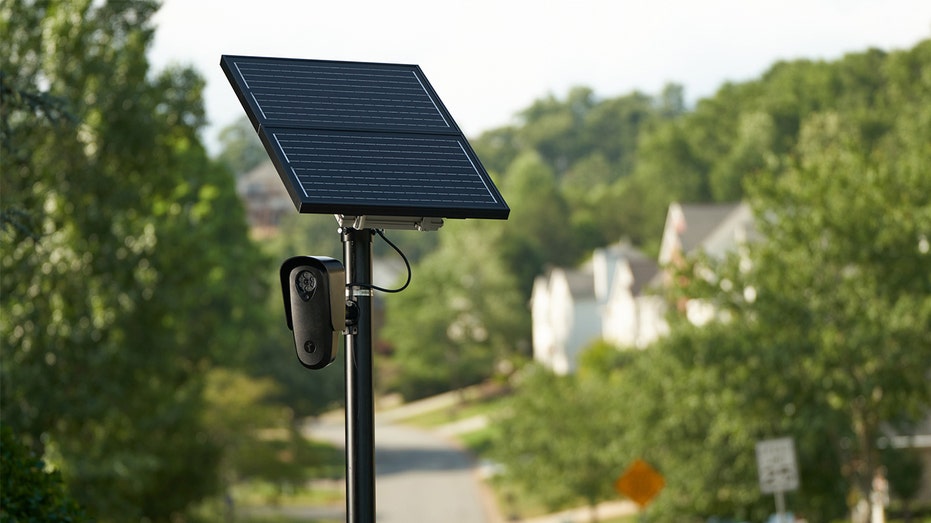
Flock Safety system

Flock has come under fire from privacy advocates and concerned citizens, who expressed worry that Flock will be storing data on servers for the long term. (Flock Safety)

GET FOX BUSINESS ON THE GO BY CLICKING HERE

Despite the public backlash, Flock highlighted the company’s success in helping to locate missing people, saying that in the 1 million investigations that Flock’s technology was involved in last year, roughly 10,000 missing people were located. 

Continue Reading

Trending

Copyright © 2025