Connect with us
DAPA Banner

Business

Harsh winter rocks Maine lobstermen

Published

on

Harsh winter rocks Maine lobstermen

PORTLAND, Maine – Maine’s lobster industry is facing mounting pressure after a harsh winter reduced fishing activity, slowed catches and added to rising costs across the sector.

The state, the largest lobster producer in the U.S., recorded its fourth consecutive annual decline in total catch, according to the Maine Department of Marine Resources.

Advertisement

A key driver was fewer days on the water. Maine lobster harvesters took more than 21,000 fewer fishing trips in 2025 than in 2024, the agency said. Total landings fell to just over 78 million pounds, the lowest level since 2008.

It started in December, and in December you usually get to fish a lot of days, and we didn’t get to fish,” said lobsterman Greg Turner.

Turner, who has worked on a boat since childhood, said crews were only able to fish about half as many days as normal during peak winter months.

“If it’s zero out, and it’s blowing negative 25, you can’t go because it’s just – if something happened – you’d be done. You’d die out there, probably,” said Turner. 

Advertisement

HOME HEATING OIL FIRMS SQUEEZED AS DIESEL, CRUDE PRICES SURGE AMID MIDDLE EAST TENSIONS

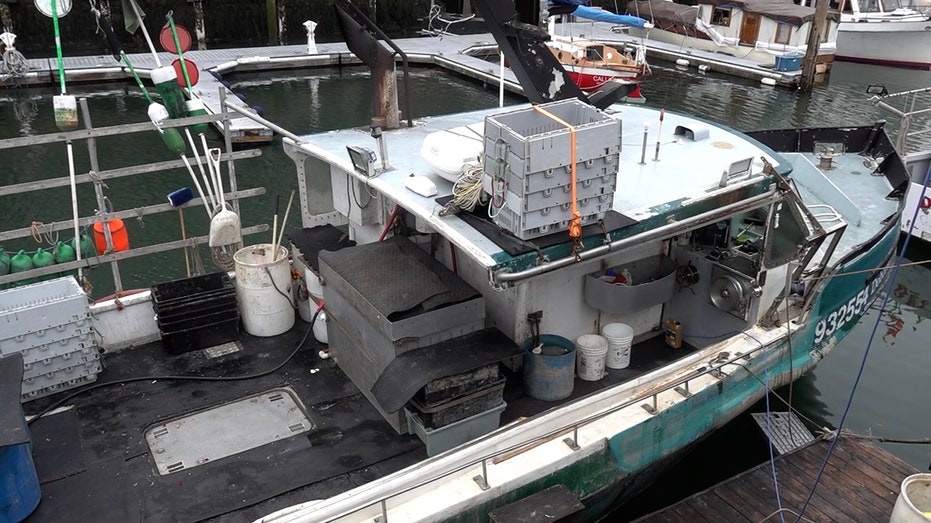
Greg Turner's boat

Turner’s boat, Deborah & Megan II.  (Kailey Schuyler / Fox News)

Colder temperatures also affected lobster behavior, further limiting catches.

“It makes the lobsters slow down and stop crawling quicker, because when it gets cold, they don’t want to eat,” said Turner. 

RARE ‘COTTON CANDY’ LOBSTER CAUGHT IN NEW ENGLAND: ‘1 IN 100 MILLION’

Advertisement

The winter conditions have compounded existing financial pressures on the industry, including inflation, tariffs and shifting market dynamics.

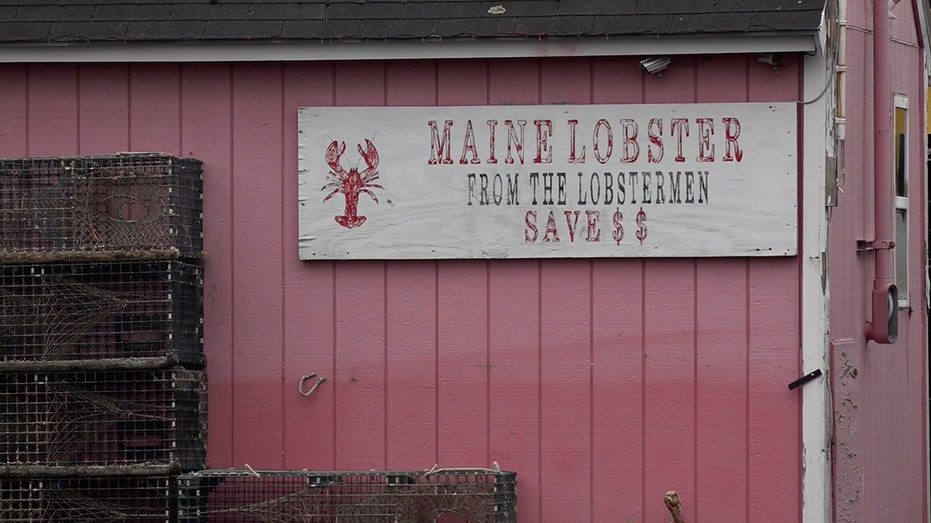
Photo of a sign

One way to get a deal on lobster is to buy straight from fishermen. (Kailey Schuyler / Fox News)

Maine Department of Marine Resources Commissioner Carl Wilson wrote that inflation and market uncertainty in 2025 challenged fishermen’s bottom lines. He added that a late molt limited access to new shell lobsters during summer, prompting some harvesters to reduce trips.

Despite the challenges, Maine’s commercial harvesters generated more than $600 million in 2025, marking the 14th straight year earnings exceeded $500 million. However, fishermen say higher revenues have not translated into stronger profits at the dock.

“Trust me, we’re not getting it, we are not getting it. But I mean, everything’s gone up for us – the price to buy it, to transport it, cook it, prepare it, that must all be gone up too. It’s just the world that we live in now,” said Turner. 

Advertisement

The average boat price remained relatively strong at $5.85 per pound, but industry advocates say higher dock prices are needed to sustain fishermen.

“We want to see a higher price on the dock. That’s what’s going to go directly to your fishermen and, hopefully, keep them fishing because they’re a really, really important part of our community,” said Alexa Dayton, executive director at the Maine Center for Coastal Fisheries.

MAINE LOBSTER FISHERMAN REVEALS WHY THE CRUSTACEANS SHE CATCHES TASTE ‘SWEETER,’ ‘BETTER’

lobsters

In 2025, the boat price remained strong at $5.85. (Fox News / Fox News)

Dayton is currently conducting a cost survey of several hundred lobstermen and said early responses highlight how significantly fishing time dropped this winter.

Advertisement

“They ideally want to be out, you know, 15 days in a month. This year they’re down to about five days,” said Dayton. 

She also pointed to uneven ocean conditions across the state. Waters in Down East Maine, from Stonington to Machias, have been significantly colder than average, particularly at the ocean floor, while parts of the western Gulf of Maine have seen relatively warmer conditions.

“There is such a thing as too cold for them,” Dayton said, referring to lobsters’ temperature range.

US LOBSTER INDUSTRY GRAPPLES CLIMATE CHANGE, WHALE PROTECTION REGULATIONS AS CATCHES DROP

Advertisement

Rising input costs are adding further strain. Dayton said bait prices have surged dramatically since her last survey in 2010.

“I mean it’s like 350% increases. It used to be kind of a thing you didn’t really worry so much about. Now it’s a real driver at the end of the day, what’s left in your pocket,” she said.

The financial pressure is extending beyond the docks into coastal economies. Dayton said many communities rely heavily on fishing income.

“But the stress of making a living and, again, you’re sort of watching days go by without an income that hurts both the fishing industry and also what happens on Main Street,” said Dayton. “I mean, this is, you know, 80% dependent on fishing for many of these coastal communities, at least that’s what our survey shows, and it trickles right down to what happens at the grocery store.”

Advertisement

GET FOX BUSINESS ON THE GO BY CLICKING HERE

She added that most Maine lobstermen operate as small, independent businesses rather than corporate entities, making them particularly vulnerable to cost swings and lost fishing days.

“Fishermen operate their own individual businesses here in Maine. These aren’t corporate owners. I think that makes us unique and special.”

Advertisement
Continue Reading
Click to comment

You must be logged in to post a comment Login

Leave a Reply

Business

Commonwealth Bank of Australia Raises Home Loan Rates Second Time This Month Amid RBA Hikes

Published

on

A Starbucks logo is pictured on the door of the Green Apron Delivery Service at the Empire State Building in New York

SYDNEY — Commonwealth Bank of Australia, the nation’s largest lender, has increased home loan interest rates for the second time in March 2026, adding further pressure to mortgage holders already grappling with higher borrowing costs following two Reserve Bank of Australia cash rate rises this year.

Commonwealth Bank of Australia
Pedestrians walk past a Commonwealth Bank of Australia (CBA) branch in central Sydney.
DAVID GRAY/AFP via Getty Images

On Tuesday, CBA announced a 0.30 percentage point increase to all its fixed-rate home loan products, effective Friday, March 28. The move follows the bank’s earlier 0.25 percentage point hike to variable rates, effective March 27, in response to the RBA’s March 17 decision to lift the official cash rate by 0.25 percentage points to 4.10 per cent.

The latest fixed-rate adjustment pushes some owner-occupier fixed loans as high as 7.19 per cent and investor loans to 7.04 per cent, depending on loan-to-value ratio and product type. This comes after CBA passed on the full 0.25 per cent RBA increase to variable rates earlier in the month, with changes taking effect on March 27.

CBA Group Executive for Retail Banking Angus Sullivan said the bank’s priority remains supporting customers through clear communication and practical assistance options, including repayment pauses or switching to interest-only periods where eligible. However, the back-to-back increases have drawn criticism from consumer groups concerned about affordability strains on Australian households.

Impact on Borrowers

For a typical $600,000 mortgage with 25 years remaining, the combined March hikes could add roughly $90 to $100 or more to monthly repayments, depending on the product mix and whether the loan is fixed or variable. Borrowers on fixed rates rolling off in coming months face particularly sharp resets if they move to higher current fixed or variable offerings.

Advertisement

The RBA’s March decision marked the second cash rate increase of 2026, following a 0.25 percentage point hike in February that took the target from 3.60 per cent to 3.85 per cent before the latest move to 4.10 per cent. The board’s vote was split, with five members supporting the rise and four preferring to hold steady, citing persistent inflation risks and tighter labour market conditions.

All major banks — CBA, Westpac, NAB and ANZ — passed on the full March variable rate increase, with slight variations in effective dates. Westpac’s variable hike takes effect March 31, while CBA, ANZ and NAB implemented theirs on March 27.

Fixed-rate products have also faced upward pressure. CBA’s latest 0.30 per cent adjustment across fixed terms reflects funding cost increases and market expectations of potentially higher rates persisting into 2026.

Broader Market Context

Sydney and other capital city homeowners, already dealing with elevated property prices and cost-of-living pressures, now confront a higher-for-longer interest rate environment. Analysts note that three consecutive rate hikes — February, March and a potential May move — could add up to $8,000 annually to repayments for some metropolitan borrowers, according to earlier forecasts from major banks and comparison sites.

Advertisement

Consumer advocates have urged borrowers to review their loans, contact their lender early for hardship assistance if needed, and consider fixed-rate options or refinancing where savings are available. However, with many lenders tightening or raising fixed rates, refinancing opportunities have narrowed for some customers.

CBA’s announcements align with actions by other big four banks, though smaller lenders and non-banks have shown mixed responses, with some passing on less than the full RBA increase to remain competitive.

Customer Support Measures

In its statement, CBA emphasised support tools for affected customers, including:

  • Repayment pause or reduction options for eligible borrowers facing temporary hardship.
  • Switching between principal-and-interest and interest-only repayments.
  • Access to financial counselling and budgeting assistance through partnerships.
  • Online calculators and rate comparison tools on its website to help customers understand personalised impacts.

Fixed Versus Variable Rate Considerations

The dual hikes in March highlight the differing dynamics of fixed and variable products. Variable rates respond directly to RBA moves and funding costs, while fixed rates incorporate market expectations of future rate paths. With the cash rate now at 4.10 per cent and inflation risks skewed higher due to global uncertainties, including Middle East tensions, many economists anticipate the RBA may hold or hike further in coming months.

Borrowers on expiring fixed rates this year could see significant step-ups when reverting to variable rates or new fixed terms. Financial advisers recommend stress-testing budgets at rates 3 percentage points above current levels, as required by responsible lending rules.

Advertisement

Outlook for Mortgage Holders

The RBA has signalled a data-dependent approach, with the next board meeting scheduled for May. Markets currently price in limited immediate further hikes but acknowledge upside risks to inflation from wages growth, capacity constraints and external shocks.

For CBA customers, the March changes mean variable-rate borrowers will see the increase reflected in their April statements, while fixed-rate customers face the new pricing on new or refinanced loans from Friday onward.

Homeowners are advised to:

  • Log into their CBA online banking or app to view personalised rate impacts.
  • Contact CBA’s customer support line or relationship manager for tailored assistance.
  • Compare rates across lenders, noting that some smaller institutions may offer more competitive packages.
  • Consider locking in fixed rates if they provide payment certainty, though current levels remain elevated.
  • Explore government or lender support schemes if facing genuine repayment difficulty.

While the cash rate remains well below peaks seen in 2022-2023, the rapid reversal of some prior easing has caught many households off guard after a period of relative stability. Consumer groups continue to call for greater transparency from banks on margin management and funding costs during such cycles.

As Australia navigates this tighter monetary policy phase, borrowers with larger loans or those in high-cost cities like Sydney and Melbourne face the greatest relative burden. Early engagement with lenders remains the most effective strategy for managing increased repayments.

Advertisement
Continue Reading

Business

EchoStar: The SpaceX Deal May Already Be Priced In

Published

on

EchoStar: The SpaceX Deal May Already Be Priced In

EchoStar: The SpaceX Deal May Already Be Priced In

Continue Reading

Business

Enerpac Tool Group Corp. (EPAC) Q2 2026 Earnings Call Transcript

Published

on

OneWater Marine Inc. (ONEW) Q1 2026 Earnings Call Transcript

Q2: 2026-03-25 Earnings Summary

EPS of $0.39 beats by $0.00

 | Revenue of $154.81M (6.38% Y/Y) beats by $7.01M

Enerpac Tool Group Corp. (EPAC) Q2 2026 Earnings Call March 26, 2026 8:30 AM EDT

Company Participants

Darren Kozik – Executive VP & CFO
Paul Sternlieb – CEO, President & Director

Advertisement

Conference Call Participants

Will Gildea – CJS Securities, Inc.
Robert Samuel Karlov – William Blair & Company L.L.C., Research Division
Thomas Hayes – ROTH Capital Partners, LLC, Research Division
Steven Silver – Argus Research Company

Advertisement

Presentation

Operator

Hello, and welcome to Enerpac Tool Group Second Quarter Fiscal 2026 Earnings Call. Please note that this call is being recorded. [Operator Instructions]

I’d now like to hand the call over to Darren Kozik, CFO. Please go ahead.

Advertisement

Darren Kozik
Executive VP & CFO

Thank you, operator. Good morning, and thank you for joining us for Enerpac Tool Group’s Earnings Call for the Second Quarter of Fiscal 2026. Joining me on the call today is our President and Chief Executive Officer, Paul Sternlieb. The slides referenced on today’s call are available on the Investor Relations section of the company’s website, which you can download and follow along. A recording of today’s call will also be made available on our website.

Today’s call will reference non-GAAP measures. You can find a reconciliation of GAAP to non-GAAP measures in the press release issued yesterday. Our comments will also include forward-looking statements that are subject to business risks that could cause actual results to be materially different. Those risks include matters noted in our latest SEC filings.

Advertisement

Now I will turn the call over to Paul.

Paul Sternlieb
CEO, President & Director

Thanks, Darren, and thank you, everyone, for joining us this morning. As we look back at our second quarter of fiscal 2026 performance, there was a lot to be pleased about. Within our Industrial Tools & Service segment or IT&S, product sales accelerated growing 6% organically year-over-year. That represents the highest growth in products that we’ve enjoyed

Advertisement
Continue Reading

Business

Jefferies reiterates Buy on WAVE Life Sciences stock, $28 target

Published

on


Jefferies reiterates Buy on WAVE Life Sciences stock, $28 target

Continue Reading

Business

Gjensidige Forsikring ASA (GJNSY) Discusses Q1 Preclose Update Including Weather Impact, Dividend Proposal, and Baltic Operations Sale Transcript

Published

on

OneWater Marine Inc. (ONEW) Q1 2026 Earnings Call Transcript

Gjensidige Forsikring ASA (GJNSY) Discusses Q1 Preclose Update Including Weather Impact, Dividend Proposal, and Baltic Operations Sale March 26, 2026 9:00 AM EDT

Company Participants

Mitra Negård – Head of Investor Relations
Jonas Sortland Fougner

Presentation

Advertisement

Mitra Negård
Head of Investor Relations

Good afternoon, everyone, and welcome to Gjensidige’s First Quarter 2026 Pre-close Call. My name is Mitra Negård, and I am Head of Investor Relations. With me, I have our IRO, Jonas Fougner. Please note that this call is being recorded, and a recording will be published on our Investor Relations website after the call.

We will start with going through the Q1 reminder, which was published on our website yesterday. This reminder highlights relevant public information and will not include any new business updates. Afterwards, we will open up for a Q&A session. As always, we only answer questions related to already disclosed and public information. And please note that if you want to ask questions, you need to log on via the Teams app. Over to you, Jonas.

Advertisement

Jonas Sortland Fougner

Let us start with a few key dates. Our silent period starts on the 1st of April, and we will be releasing our Q1 results on the 29th of April. As always, we kindly ask you to forward your estimates using the template Mitra sent you yesterday. And please fill in all open cells in the sheet. We have included control lines to help you identify and avoid potential errors in your sheet.

Please make sure the control lines are error-free before sending the file back to us. The deadline for sending us your estimates is the 16th of April. We will publish consensus on our website on the 24th of April. Now let’s move on to the reminder. As usual, we start with comments on the weather. For the sake of

Advertisement
Continue Reading

Business

Olaplex to be acquired by German company Henkel in $1.4 billion deal

Published

on

Olaplex to be acquired by German company Henkel in $1.4 billion deal

A bottle of Olaplex N.4 Bond Maintenance Shampoo arranged in Denver, Colorado, US, on Thursday, Dec. 8, 2022.

David Williams | Bloomberg | Getty Images

German consumer brand Henkel announced Thursday that it has agreed to acquire all of prestige haircare brand Olaplex for $1.4 billion.

Advertisement

The company said the deal, at an offer price of $2.06 per share, was unanimously approved by Olaplex’s board of directors and marks an “important milestone” in Henkel’s business strategy.

“The planned acquisition of OLAPLEX is fully in line with Henkel’s strategy to expand its portfolio through compelling, value-adding M&A activities,” Henkel CEO Carsten Knobel said in a statement. “This transaction allows us to expand our presence in premium hair care. The brand creates compelling opportunities for future growth and innovation.”

Henkel owns brands like Got2b and Purex.

Olaplex said the deal represented a premium of more than 50% over its closing stock price on Wednesday and would allow the company to explore new opportunities for innovation and growth, as well as expand its international reach.

Advertisement

“This step is a testament to the momentum we’ve achieved in our transformation and the significant opportunities ahead for OLAPLEX to continue shaping the future of hair health and pursue long-term growth,” Olaplex CEO Amanda Baldwin said in a statement.

Shares of the company, which closed on Wednesday around $1.30 per share, shot up 50% in morning trading following the announcement.

Olaplex had been struggling as a public company over the past few years, dealing with the fallout of a lawsuit alleging hair loss and increased competition in the prestige hair care space.

Prior to the deal, Olaplex’s stock had lost nearly 95% of its value since its initial public offering in 2021, when it opened at $25 per share during a boom for IPOs. It had been trying to turn around its business, including by launching a new product last month and working to rewrite its reputation among consumers.

Advertisement

Analysts had previously told CNBC that they were excited at the prospect that the company may go private.

Why Olaplex is struggling to win over investors
Choose CNBC as your preferred source on Google and never miss a moment from the most trusted name in business news.
Continue Reading

Business

What Is the NFL Rooney Rule? Policy Explained Amid Criticism and Legal Challenges in 2026

Published

on

The Kansas City Chiefs take on the Philadelphia Eagles in Sunday's Super Bowl in New Orleans bidding to make history by clinching a third straight title

The NFL’s Rooney Rule, a longstanding policy designed to promote diversity in coaching and front-office hiring, faces renewed scrutiny in 2026 following a disappointing head coaching cycle that produced only one minority hire and zero Black head coaches among 10 openings.

The NFL logo appears on a goal post before the 2015 NFC Championship game between the Seattle Seahawks and the Green Bay Packers at CenturyLink Field in Seattle Jan. 18, 2015.

Named after the late Pittsburgh Steelers owner Dan Rooney, the rule requires NFL teams to interview at least two minority candidates — a definition that now includes women — for vacant head coach, general manager and coordinator positions. Teams must also interview at least one minority candidate for the quarterbacks coach role.

Commissioner Roger Goodell acknowledged the need to reevaluate the league’s diversity efforts after the latest hiring cycle, stating the NFL would review the Rooney Rule and related programs to address ongoing challenges. “We still have more work to do,” Goodell said during Super Bowl week.

Origins and Evolution of the Rooney Rule

The policy originated in 2002-2003 after a season in which prominent Black coaches Tony Dungy and Dennis Green were fired despite solid records, leaving the league with just one minority head coach. The NFL’s Workplace Diversity Committee, chaired by Rooney, recommended requiring teams to interview at least one minority candidate for head coaching vacancies.

Advertisement

The league adopted the rule in December 2002. Early enforcement included a $200,000 fine against the Detroit Lions in 2003 for failing to interview a minority candidate. Over the years, the NFL strengthened the policy. In 2021, teams were required to interview at least two external minority candidates in person for head coach and GM openings. The 2022 updates expanded the definition of “minority” to include women and added requirements for coordinator and quarterbacks coach positions.

Additional measures include the NFL’s Accelerator Program, compensatory draft picks for teams that develop minority coaches who become head coaches or GMs elsewhere, and a requirement that every team employ a female or minority offensive assistant coach.

Current Requirements in 2026

Under the existing framework:

Advertisement

– Head coach, GM and coordinator openings require interviews with at least two minority candidates.
– Quarterbacks coach openings require at least one minority candidate interview.
– Interviews for head coach and GM positions must include external candidates and be conducted in person where possible.
– Compliance is mandatory before a hire can be finalized, with potential penalties for violations at the commissioner’s discretion.

The rule aims to combat unconscious bias by ensuring decision-makers meet qualified diverse candidates who might otherwise be overlooked in traditional “old boys’ network” hiring practices. Many successful head coaches begin their ascent in the quarterbacks room, making the QB coach provision particularly strategic for long-term pipeline development.

Mixed Results and Recent Criticism

The Rooney Rule produced early gains. The number of Black head coaches rose from two in 2002 to a peak of seven or more in some seasons. However, progress has stalled or reversed at times. Entering the 2026 season, the NFL has five minority head coaches by the league’s definition: Todd Bowles (Buccaneers), Aaron Glenn (Jets), DeMeco Ryans (Texans), Dave Canales (Panthers, Hispanic) and Robert Saleh (Titans, Lebanese-American Muslim). Only three are Black.

Advertisement

The 2026 offseason hiring cycle drew sharp criticism after 10 head coaching vacancies resulted in just one minority hire (Robert Saleh) and no Black coaches. It marked the fifth time since 2003 that no Black coaches were hired in a cycle. Goodell noted that teams complied with or exceeded interview requirements, yet outcomes remained disappointing.

Critics argue the rule can lead to “sham interviews” where candidates are brought in solely to satisfy requirements without genuine consideration. Others point to pipeline issues, particularly the underrepresentation of minorities in offensive coordinator roles, which often serve as the primary stepping stone to head coaching jobs.

Legal and Political Challenges

In a significant development this week, Florida Attorney General James Uthmeier warned NFL Commissioner Roger Goodell that the Rooney Rule violates Florida law and constitutes illegal affirmative action. The letter demands the league confirm by May 1, 2026, that it will no longer enforce the rule or related policies in Florida, or face civil rights enforcement actions.

Advertisement

Uthmeier cited expansions that include women as minorities, compensatory draft picks and mandatory hiring of minority or female offensive assistants as problematic. The warning reflects broader post-Supreme Court scrutiny of race-conscious policies following the 2023 Students for Fair Admissions decision.

The NFL has not yet publicly responded in detail, but the league maintains that its diversity initiatives are about expanding opportunity rather than quotas. Supporters, including original architects of the rule, argue it remains a net positive despite imperfections and urge continued refinement rather than abandonment.

Broader Impact and League Programs

Beyond the interview mandate, the NFL operates multiple complementary initiatives. The league tracks diversity in coaching, scouting and front offices through annual reports. Fellowship programs and coaching summits aim to build the talent pipeline at earlier career stages.

Advertisement

The Accelerator Program provides intensive development for promising minority coaches. Some teams have embraced the spirit of the rule by conducting more extensive searches and prioritizing diverse slates organically.

Research on the rule’s effectiveness has been mixed. Some studies show modest increases in minority representation in certain roles, while others highlight persistent gaps in promotion rates from assistant to coordinator positions. Critics note that while player demographics are roughly 70% Black, leadership positions lag significantly.

Future Outlook

As the NFL prepares for its 2026 annual meeting and beyond, diversity hiring will likely remain a prominent topic. Goodell has signaled openness to further adjustments, emphasizing the need to address today’s challenges rather than relying solely on policies designed for yesterday’s landscape.

Advertisement

Teams continue to face pressure from fans, advocacy groups and internal stakeholders. Some owners have expressed frustration with the slow pace of change, while others defend the rule as a necessary tool to counteract bias in a highly networked industry.

The Rooney Rule has influenced hiring practices far beyond football. Corporations, universities and other sports leagues have adopted similar interview requirements. Its evolution reflects ongoing national debates about merit, opportunity and the best methods to achieve workplace diversity.

For the NFL, the policy’s future may hinge on balancing legal risks, stakeholder expectations and measurable progress in hiring outcomes. Whether through refinements to interview requirements, stronger pipeline development or new incentives, the league faces the challenge of turning compliance into genuine opportunity.

Ultimately, the Rooney Rule was never intended as a complete solution but as a mechanism to open doors. Its longevity — now more than two decades — demonstrates both the persistence of the underlying issue and the difficulty of achieving lasting structural change in one of America’s most visible industries.

Advertisement
Continue Reading

Business

'It took six years to receive my late father's premium bonds'

Published

on

'It took six years to receive my late father's premium bonds'

Readers contacted BBC Your Voice to say they not been able to claim funds from dead family members’ premium bond investments.

Continue Reading

Business

Carnival earnings on deck: Fuel costs test cruise rebound

Published

on


Carnival earnings on deck: Fuel costs test cruise rebound

Continue Reading

Business

Co-op CEO Shirine Khoury-Haq steps down after losses and ‘toxic culture’ claims

Published

on

Co-op CEO Shirine Khoury-Haq steps down after losses and ‘toxic culture’ claims

Co-op Group has confirmed that chief executive Shirine Khoury-Haq will step down, following mounting pressure over workplace culture concerns and a difficult year marked by losses and a damaging cyberattack.

Khoury-Haq, who has led the organisation since 2022 and spent seven years with the business, will be replaced on an interim basis by Kate Allum while the board begins the search for a permanent successor.

Her departure comes after reports of a “toxic culture” within senior leadership, alongside claims of falling morale, high-profile departures and operational challenges across the group.

The Co-op revealed that it swung to an underlying pre-tax loss of £126 million in its latest financial year, compared with a £45 million profit the previous year. Revenues also declined by 2.3 per cent to £11 billion, reflecting disruption to trading and changing consumer behaviour.

The group said the results were heavily shaped by its response to a major cyberattack, which forced it to restrict systems in an effort to contain the threat. While necessary, the measures had a significant commercial impact.

Advertisement

The company estimates the attack reduced revenues by £285 million and cut profitability by £107 million, including £86 million in lost margin and £21 million in additional costs.

The food division, the largest part of the business, was particularly affected, with sales falling 2 per cent to £7.25 billion. The disruption led to empty shelves in stores and altered shopping patterns, which continued to weigh on performance even after systems were restored.

Market share also slipped, falling to 5 per cent over a 12-week period, down from 5.3 per cent a year earlier, as the group lost ground to discounters and larger supermarket rivals.

Alongside the financial pressures, the organisation has faced scrutiny over its internal culture. A letter sent to board members, reportedly from senior staff, described an environment of “fear and alienation”, raising questions about leadership and decision-making at the top of the business.

Advertisement

The Co-op said it did not recognise those criticisms as representative of the wider organisation, emphasising its co-operative structure and commitment to inclusive decision-making. However, the reports have added to the challenges facing the group during a period of significant change.

Khoury-Haq said the timing of her departure reflects the next phase of the company’s transformation strategy.

“It has been an honour to lead our Co-op,” she said, adding that the business is now positioned to move forward with a programme of stabilisation and long-term reform that will extend beyond her planned tenure.

Her strategy had focused on rebuilding the group’s financial position, reducing debt and modernising its IT systems — issues that have been central to the Co-op’s operational challenges in recent years.

Advertisement

The company said she had overseen a significant turnaround between 2022 and 2024, including a 95 per cent reduction in debt and a 30 per cent increase in profits over that period, before the latest setbacks.

The Co-op, which employs around 54,000 people and operates more than 2,300 food stores and 800 funeral homes, continues to face intense competition across its core markets.

Discounters such as Aldi and Lidl have expanded aggressively, while established rivals including Tesco and Sainsbury’s have strengthened their positions, leaving the Co-op under pressure to differentiate its offering.

At the same time, the wider economic environment remains challenging, with inflation, shifting consumer behaviour and geopolitical uncertainty affecting demand.

Advertisement

Khoury-Haq acknowledged these headwinds, warning that “trading conditions remain difficult” and that external pressures are likely to persist.

The board now faces the task of appointing a new chief executive capable of navigating the next stage of the group’s recovery and transformation.

Group chair Debbie White thanked Khoury-Haq for her leadership during a turbulent period, particularly in guiding the organisation through the cyberattack and broader restructuring efforts.

For the Co-op, the leadership transition comes at a critical juncture. Restoring profitability, rebuilding trust internally and externally, and adapting to a rapidly evolving retail landscape will be central to its future.

Advertisement

As the organisation seeks to stabilise after a challenging year, the next phase of its strategy will be closely watched by both the market and its millions of members.


Amy Ingham

Amy is a newly qualified journalist specialising in business journalism at Business Matters with responsibility for news content for what is now the UK’s largest print and online source of current business news.

Advertisement
Continue Reading

Trending

Copyright © 2025