Connect with us

Business

Harworth to abandon residential market as it fends off Peel Group bid

Published

on

Business Live

The property developer is fighting off a takeover attempt by Peel Group

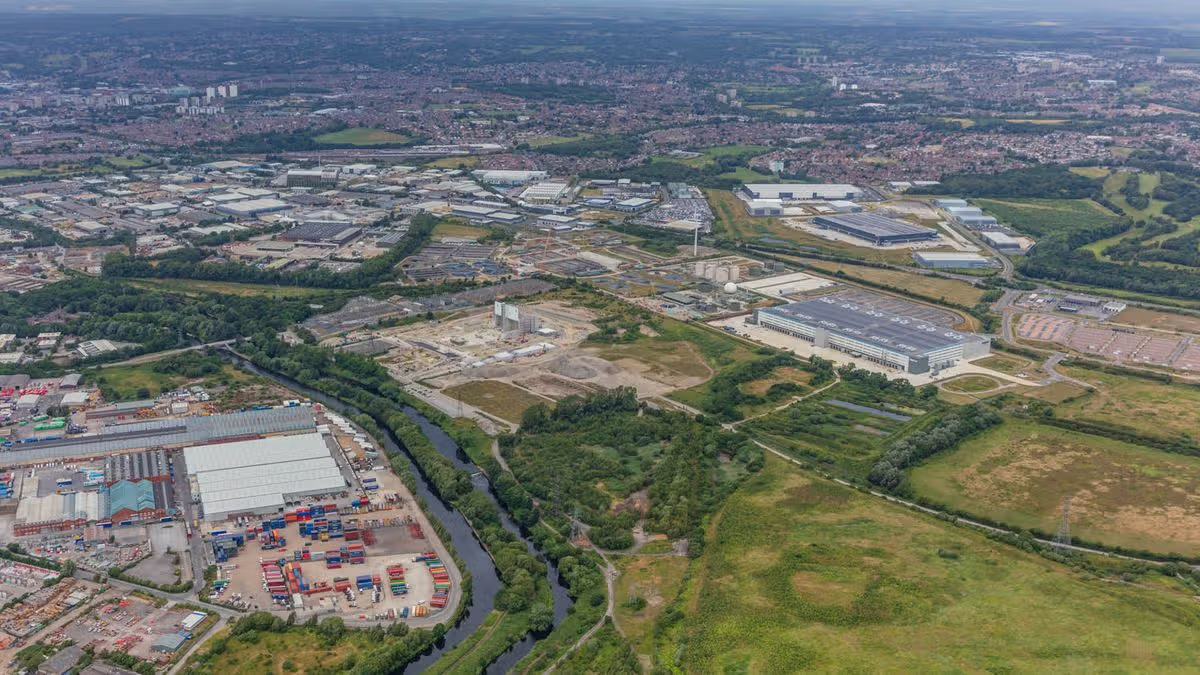
The former Skelton Grange power station site.

The Skelton Grange site where Harworth secured a large land deal with Microsoft.(Image: Harworth Group)

Regeneration specialist Harworth is exiting the residential sector as it attempts to streamline its business.

The developer says it will refocus on strategic land, enabling works and selective development to maximise returns. It comes as Harworth continues to fight off a takeover attempt by Peel Group, which last month offered nearly £583m for the Rotherham-based group.

Harworth says the offer comes at a 19.7% discount to its EPRA NDV of £697.7m as at the end of June this year. Bosses set out in detail why the Peel approach “does not fully capture the additional embedded value within the group”. They pointed to a substantial hyperscale data centre pipeline and its more than 3.8million sqft of “construction-ready” industrial and logistics land, among other points.

It called the offer “highly opportunistic” to take advantage of a “dislocation” between its share price and the value of its underlying assets.

Advertisement
Lynda Shillaw, chief executive of Harworth Group

Lynda Shillaw, chief executive of Harworth Group

The comments come as Harworth published half year results for the six months to the end of June in which EPRA NDV was £697.7m, compared with £725m in the same period last year. It also saw a £16.9m fall in the value of its residential portfolio over the period, compared with a £14.7m decrease in the first half of last year.

Lynda Shillaw, chief executive of Harworth, said: “Harworth has made good operational and strategic progress during the first half of 2026 and into the second, against a challenging macroeconomic backdrop that has weighed on valuations, particularly in residential. Since 2021 we have successfully repositioned our land and development portfolio, shifting the weighting to 71% industrial & logistics and developing a significant powered land bank, in turn positioning the business to deliver strong returns to shareholders into the medium term.

“Our 34.8m sqft land and development pipeline, which includes 0.8GW of powered land, would be difficult to replicate today given its scale, together with the advanced planning and power supply status, and strategic locations, of many of its sites. Within this pipeline, we are seeing strong occupier demand across our industrial & logistics products, driven by structural growth trends.

“This includes the first pre-let at our 1.1m sqft Chatterley Park site in Staffordshire, to an advanced manufacturing occupier. Our largest-ever substantially construction-ready land bank of 3.8m sqft positions us to further capture this momentum through a combination of pre-lets, land sales and small to mid-box speculative builds.”

Advertisement

Like this story? For more news from the commercial property scene around the regions, visit our dedicated section here for the latest news and analysis within the sector.

Continue Reading
Click to comment

You must be logged in to post a comment Login

Leave a Reply

Business

NFL’s Rams and 49ers head to Australia in international expansion

Published

on

NFL to discuss live game rights with new media partners
NFL heads to Australia in a first for international football

The San Francisco 49ers and the Los Angeles Rams are heading to Australia, marking the longest-ever distance two NFL teams have traveled for a game.

It’s all part of the league’s push to expand American football globally. A record nine international regular-season games will be played in 2026 – kicking off in Melbourne, the city’s first NFL game, and followed by inaugural match-ups in Rio de Janeiro and Paris. The schedule also brings professional football to London, Madrid, Munich and Mexico City.

NFL owners have already approved 10 international games for the 2027 season – the maximum number of games the league can play outside the United States per its current collective bargaining agreement with players. 

While NFL games are consistently the most-watched programming on television, the vast majority of the league’s interest is American. For some context, last year’s Week 1 game in Sao Paulo, Brazil — streamed on YouTube — between the Kansas City Chiefs and the San Diego Chargers drew 18.5 million viewers in the U.S. and just 1.2 million viewers internationally.

That delta is what’s driving NFL Commissioner Roger Goodell to seek global growth. Goodell has previously said he’d like to have up to 16 international games on the schedule. He also recently said he had “no doubt” a team would eventually be permanently located outside the U.S. 

Advertisement

NFL boss Roger Goodell speaks at a press conference before Super Bowl LX between the Seattle Seahawks and the New England Patriots.

Maximilian Haupt | Picture Alliance | Getty Images

“We are committed to continue to grow every year in what we’re doing,” NFL Executive Vice President Peter O’Reilly said in a conference call for reporters on Wednesday. “We learn in each new market and then build upon that. That will be true as we move forward. As the commissioner said, we have aspirations to go beyond that. We want to do it the right way – to go to the right markets at the right time.”

The NFL has a designed strategy to grow the game internationally. One key part is the league’s relatively little-known Global Markets Program. Launched in 2022, the program gives NFL teams specific international marketing rights to build brand awareness and fandom.

Advertisement

Every team owns at least one market. When games are played abroad, the teams that own those markets are the de facto “home team.” The Rams own marketing rights in Australia. Later this year, when the 49ers play in Mexico – a region where they own rights – they’ll be the home team. 

NFL clubs can apply for rights to international markets by submitting proposals to the International Committee for review each spring. The markets are often mildly based on geography. For example, the Rams own marketing rights in countries more easily accessible by West Coast teams, such as Australia, China, Japan, South Korea, New Zealand and — like the 49ers — Mexico. It also owns rights in the United Arab Emirates.

Get the CNBC Sport newsletter directly to your inbox

The CNBC Sport newsletter with Alex Sherman brings you the biggest news and exclusive interviews from the worlds of sports business and media, delivered weekly to your inbox.

Subscribe here to get access today.

Advertisement

Other franchises’ rights are more driven by their specific owners’ wishes. The Detroit Lions own Austria, Brazil, Canada, Germany and Switzerland. The Los Angeles Chargers have Greece – and only Greece. Chargers owner Dean Spanos has Greek heritage.

The NFL has chosen a team-led strategy to grow fandom internationally because it wants buy-in from its franchise owners, O’Reilly said.

“It’s one part of a larger strategy,” O’Reilly said. “Having a favorite team is a key driver of lifelong fandom. Giving the clubs the option to apply, you want them to align with markets they’re going to get behind. For the vast majority, those markets align with the markets we’re committed to. It allows clubs the freedom to tailor to their priorities … working with our folks on the ground. “

Entering this season, 62 regular-season NFL games have been played outside the United States. 

Advertisement

But there’s no certainty the NFL’s international strategy will significantly increase the sport’s popularity.

Some of the challenge lies in time zone differences. Primetime games timed for a U.S. market mean taking the field in the middle of the night in Europe and in the morning in Australia. 

The Rams and Niners are kicking off at 10:35 a.m. local time on a Friday next week.

It’s difficult to grow a sport globally when start times need to cater toward Americans. The NFL has found 9:30 a.m. ET to be a sweet sport start time for European games – but TV ratings for those games have consistently been lower than Sunday afternoon and night contests.

Advertisement

It’s also an open question of just how popular this international movement is with players, who must take long plane rides and battle jet lag with time differences.

While the 49ers left Wednesday for Australia, the Rams aren’t arriving in the country until next week, 24 hours before game time. 

Continue Reading

Business

IFCI shares fall 4% on reports of lower price band for NSE IPO

Published

on

IFCI shares fall 4% on reports of lower price band for NSE IPO
Shares of IFCI Ltd fell more than 4% on Wednesday after reports suggested that the National Stock Exchange could price its initial public offering below earlier indications and reduce the stake offered in the issue.

At 9:27 am, IFCI shares were trading 4.01% lower at Rs 88.90 on the NSE, compared with their previous close of Rs 92.61. The stock opened at Rs 92.50, touched a high of Rs 93.56 and slipped to an intraday low of Rs 88.31.

The stock underperformed the broader market, with the Nifty 50 trading about 0.5% lower during the same period.

NSE is likely to price its IPO between Rs 1,700 and Rs 1,785 per share, below the Rs 2,000-Rs 2,100 range previously marketed, according to reports.

Advertisement

At the upper end of the proposed band, the exchange would be valued at around Rs 4.4 lakh crore, or $46.4 billion, Bloomberg reported.


The exchange may also reduce the stake offered to about 5.5% of its equity capital from the previously planned 6%. NSE’s draft offer document had proposed an offer for sale of up to 14.89 crore shares.
The lower-than-expected price range and potential reduction in the offer size weighed on IFCI because of its indirect exposure to NSE. IFCI owns more than 50% of Stock Holding Corporation of India, which, in turn, holds over 4% of the exchange.As a result, developments affecting NSE’s valuation have a bearing on the value investors assign to IFCI’s indirect holding. NSE did not immediately respond to a Reuters request for comment on the reported price band.

Also read: ESDS Software shares rally 10%, skyrocket 235% from IPO price in 4 days. Should you buy or sell?

The long-awaited IPO could still rank among India’s biggest public issues. NSE, which dominates the country’s equity derivatives market, is reportedly targeting a listing in the week beginning September 21.

Despite Wednesday’s decline, IFCI shares remained up 20.22% over the past month, outperforming the Nifty 500, which fell 2.95% during the same period. The stock was also up around 68% year-to-date.

Advertisement

Disclaimer: This article has been written by Somanjali Das, who is not a SEBI-registered Research Analyst or an Investment Adviser. Somanjali Das and his/her ‘relative(s)’ (as defined under Section 2(77) of the Companies Act, 2013) do not hold any financial interest in the companies mentioned in this article as of the date of publication. The views/recommendations mentioned in this article, wherever applicable, are those of the respective SEBI-registered Research Analyst/brokerage and have been reproduced/reported with due attribution. They should not be construed as the views or recommendations of The Economic Times Digital or the journalist. Readers are advised to consider the original research report and make their investment decisions based on their own assessment. Brokerage disclaimers here

Continue Reading

Business

Sterlite Tech shares jump 5% to fresh 52-week high, multibagger skyrockets 745% in 2026. What lies ahead?

Published

on

Sterlite Tech shares jump 5% to fresh 52-week high, multibagger skyrockets 745% in 2026. What lies ahead?
Shares of Sterlite Technologies surged 5% to hit a fresh 52-week high of Rs 865.90 apiece on Wednesday, with the stock remaining locked in the upper circuit.

The multibagger stock has gained 745% so far in 2026, while rising over 21% in the past week and 36% in the last month.

The recent sharp surge in Sterlite Tech’s share price began after the company outlined its long-term growth plans, including a target of becoming one of the top five players globally in optical connectivity solutions and achieving revenue of Rs 20,000 crore by FY29.

Also read | HFCL, Sterlite Tech shares jump: What’s driving up to 705% multibagger run?

Advertisement

The company identified optical TAM expansion, customer co-development, integrated connectivity solutions and tech-led differentiation as key growth drivers. It also plans to expand its capacity to 1.5 times to support the next phase of growth.


The company has also approved a Rs 3,000 crore capital expenditure plan to expand capacity at its existing manufacturing facility. The proposed expansion will increase its existing installed manufacturing capacity by approximately 50%, with the additional capacity expected to be operational by the end of FY29.

Sterlite Tech Q1 performance

Earlier this year, Sterlite Tech reported its strongest quarterly performance in Q1 of the ongoing FY27, helped by higher demand for optical connectivity products, growth in its data centre business and a record order book linked to AI-ready digital infrastructure.The company reported revenue of Rs 1,910 crore for the June quarter, marking a whopping 87% YoY rise from Rs 1,019 crore reported in the same quarter last year. Sequentially, revenue rose 33% from Rs 1,441 crore reported in Q4 FY26. Profit after tax rose 870% to Rs 197 crore from Rs 10 crore a year earlier. In the March quarter, the company had reported PAT of Rs 59 crore.

EBITDA rose to Rs 397 crore, compared with Rs 140 crore in Q1 and Rs 218 crore in the previous quarter. EBITDA margin stood at 20.8%, the highest in nearly 20 quarters, helped by a better product mix, operating leverage and higher contribution from the data centre business.

Also read | Sterlite Tech targets Rs 20,000 crore revenue by FY29 amid booming AI demand

Advertisement

CLSA on Sterlite Tech share price

CLSA has an ‘Outperform’ rating for the shares of Sterlite Tech, with a target price of Rs 950 apiece, implying another 15% upside potential from the stock’s previous closing price of Rs 824.70 apiece on NSE.

The international brokerage last month noted the company’s order book surged 155% QoQ to Rs 18,600 crore, pointing to a strong growth outlook. Factoring in the company’s recent Rs 1,500 crore QIP fundraising and the significant Q1 FY27 beat, CLSA raised its forecasts by 7-125% for FY27-29CL. The brokerage now sees Sterlite Technologies delivering a 62% EBITDA CAGR.

Also read | Why is the stock market down today? Sensex plunges 600 points, Nifty below 23,500. 6 key triggers behind D-Street selloff

Disclosure: “This article has been written by Debaroti Adhikary, who is not a SEBI-registered Research Analyst or an Investment Adviser. Debaroti Adhikary and her ‘relative(s)’ (as defined under Section 2(77) of the Companies Act, 2013) do not hold any financial interest in the companies mentioned in this article as of the date of publication. The views/recommendations mentioned in this article, wherever applicable, are those of the respective SEBI-registered Research Analyst/brokerage and have been reproduced/reported with due attribution. They should not be construed as the views or recommendations of The EconomicTimes Digital or the journalist. Readers are advised to consider the original research report and make their investment decisions based on their own assessment.”

Advertisement

Brokerage Disclosures

Continue Reading

Business

Allspring Strategic Municipal Bond Fund Q2 2026 Commentary (STRIX)

Published

on

Columbia Dividend Opportunity Fund Q1 2026 Commentary

Allspring is a company committed to thoughtful investing, purposeful planning, and the desire to elevate investing to be worth more. Allspring is reimagining investment management to be worth more—creating an investment, distribution, and operational experience that changes the game for clients. Note: This account is not managed or monitored by Allspring, and any messages sent via Seeking Alpha will not receive a response. For inquiries or communication, please use Allspring’s official channels.

Continue Reading

Business

70% stock surge ‘is the beginning of the momentum’

Published

on

70% stock surge 'is the beginning of the momentum'

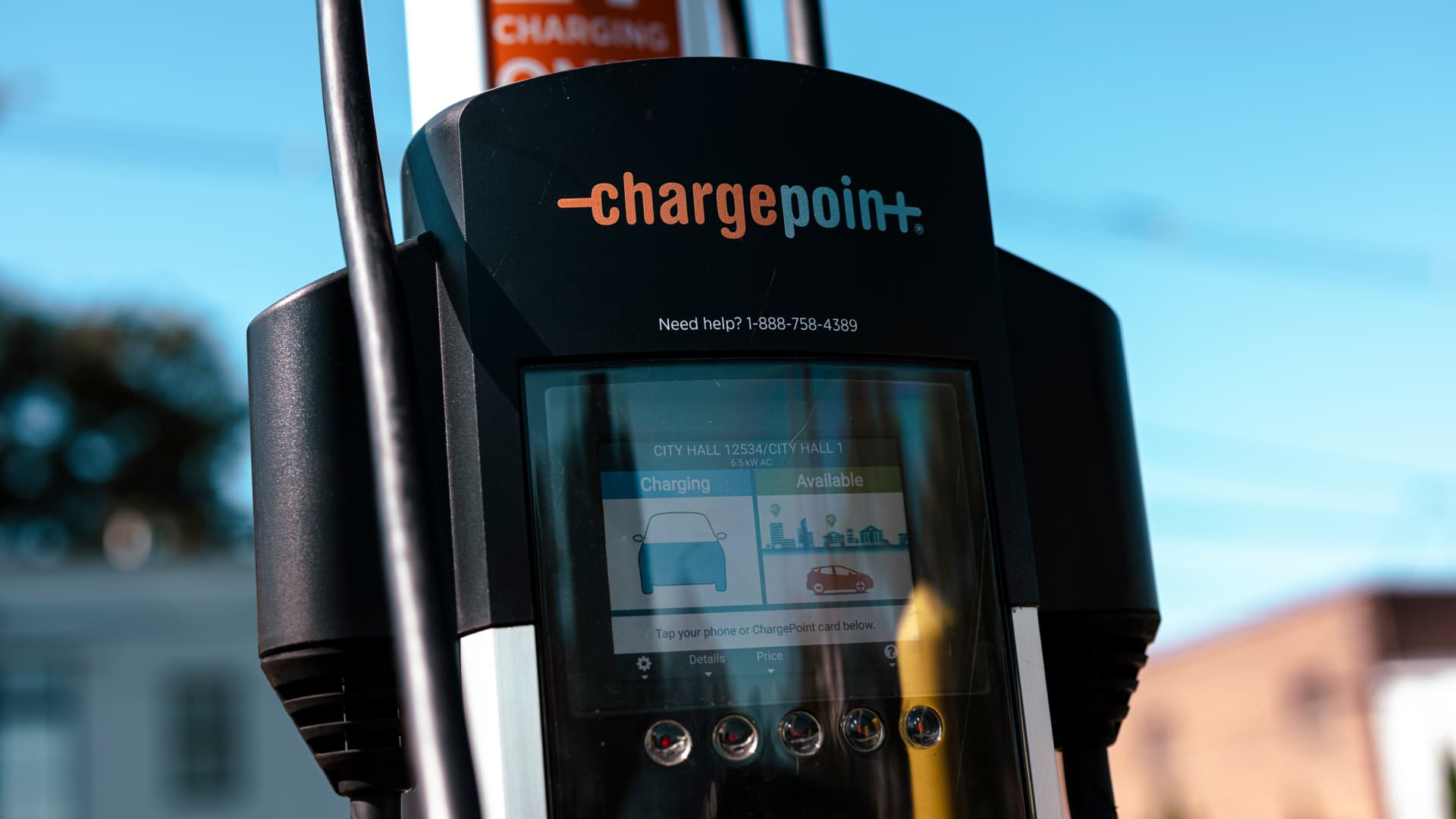
A ChargePoint electric vehicle charging station in Hudson, New York, US, on Tuesday, Sept. 3, 2024.

Angus Mordant | Bloomberg | Getty Images

ChargePoint Holdings CEO Rick Wilmer believes a surge in the electric vehicle charging company’s stock Thursday is just “the beginning of the momentum,” he told CNBC.

Shares of ChargePoint soared more than 70% Thursday after the company significantly beat Wall Street’s second-quarter expectations for its 2027 fiscal year and guided toward continued improvements in its performance.

Advertisement

It’s the most notable increase since it underwent a reverse stock split last year to raise its share price and maintain compliance with the New York Stock Exchange’s minimum trading price requirement of $1 per share.

“The growth is starting to accelerate,” Wilmer told CNBC during an interview Thursday morning. “It’ll be driven substantially by the new products and technology we’re putting into the market.”

ChargePoint, unlike some EV charging companies, does not actually own and operate its chargers. It provides hardware, software and services to customers, such as businesses, that want to offer chargers to their employees or customers.

The company after markets closed Wednesday reported revenue of $116.1 million and a loss per share of 35 cents during the quarter. That compared with analyst expectations of $105.2 million in revenue and a loss of 85 cents, according to average estimates compiled by LSEG.

Advertisement
Stock Chart IconStock chart icon
hide content

ChargePoint stock over one day

Its performance was assisted by a one-time tariff refund of approximately $4.2 million in the quarter, but the company said its normalized gross margin would have still set a new record without the benefit.

“We’ve now had our fourth consecutive quarter of year-over-year growth, and this quarter we just reported yesterday was obviously another good growth quarter,” Wilmer said. “And now [we’re] expecting that to accelerate, especially as we move into next year.”

Advertisement

As part of its growth plan, the company has been introducing faster high-performance chargers, known as “Level 3,” in Europe, as well as next-generation products for the U.S., including Level 2 and Level 3 chargers.

The company also is using artificial intelligence to improve charging times for its customers, reduce how long it takes to develop software and improve efficiency across its business, Wilmer said.

Wilmer’s optimism comes despite a slowdown in all-electric vehicle sales during the past year, following the elimination of federal support for the industry in the U.S., including the end of an up to $7,500 consumer benefit for purchasing an EV.

“I think, altogether, the down cycle, or the doom and gloom, has been a bit overstated. I think there’s a lot more positivity at the ground level,” Wilmer said. “I just think in the end, better products can win.”

Advertisement

U.S. automakers are continuing to sell EVs, and demand in the used vehicle market is strong amid high gas prices, but the move to non-gas-powered vehicles has been significantly lower than many companies and analysts previously expected.

ChargePoint is toward the end of a three-year business plan spearheaded by Wilmer that focused on reducing cash burn and profits, including cutting net losses from $125.3 million three years ago to $35.6 million during its most recent quarter.

The company has not disclosed when it plans to be profitable, but Wilmer said the company is on its way to achieve a profit on an earnings before interest, taxes, depreciation and amortization basis.

“We’re approaching that quickly, and we want to get there ASAP,” he said Thursday.

Advertisement

ChargePoint’s third-quarter guidance for its 2027 fiscal year included revenue between $105 million and $115 million, which would be a mid-point increase of roughly 4% year-over-year.

Continue Reading

Business

Brightstar continues march at Goldfields

Published

on

Brightstar continues march at Goldfields

Brightstar Resources has reiterated that it remains on schedule for inaugural production at its Goldfields project in the June 2027 quarter.

Continue Reading

Business

Hershey to transition to a new CFO

Published

on

Hershey to transition to a new CFO

HERSHEY, PA. — The Hershey Co. has promoted Dave Hulays to chief financial officer. He succeeds Steve Voskuil, who intends to retire in early 2027.

Hulays has more than 30 years of financial leadership experience, including the past 14 years at Hershey. He most recently was vice president of finance. Since joining Hershey in 2012 as vice president of finance for Canada, he has taken on broader financial leadership responsibilities across the company, including the US and international businesses, global supply chain, M&A and enterprise transformation.

Before joining Hershey, he spent 15 years at Procter & Gamble in commercial, supply chain, strategy, global business development and global business services across the company’s North American and international businesses.

“Dave is a proven, enterprise-minded finance leader who has helped shape nearly every corner of this business, from our commercial and supply chain organizations to our growth agenda,” said Kirk Tanner, president and chief executive officer of Hershey. “He leads with rigor, accountability and courage. I’m confident he’s the right person to lead our finance organization into its next chapter.”

Advertisement

Hulays holds a bachelor’s degree from the University of Waterloo and a master’s degree in business administration from York University’s Schulich School of Business in Toronto.

Voskuil, who has led Hershey’s finance organization for the past seven years, will move into the role of senior vice president of strategic projects until his retirement early next year. He will focus on initiatives for the CEO and board while ensuring a smooth transition with Hulays, the company said.

“I also want to thank Steve for his leadership over the past seven years,” Tanner said. “He has been an incredible partner to me and to this company, and his continued partnership will support some of our most important priorities as we move through this transition.” 

Continue Reading

Business

European equities stumble under threat of Middle East strikes, ECB hike

Published

on


European equities stumble under threat of Middle East strikes, ECB hike

Continue Reading

Business

Minerals 260 Shares Jump 10% As Bullabulling Gold Project Advances Toward 2028 Production In Western Australia

Published

on

Minerals 260 Shares Rise 5.1% as ASX Explorer Extends Remarkable

PERTH, Australia — Shares of Minerals 260 Ltd. climbed $0.085, or 10.37%, to $0.905, continuing an extraordinary run for the West Australian gold developer as its flagship Bullabulling Gold Project progresses rapidly toward a targeted final investment decision and first production by the end of 2028.

Tuesday’s gain adds to what has already been one of the most dramatic re-ratings on the ASX over the past year, with the company’s market capitalization surging from roughly $30 million to more than $1.4 billion, according to StockAnalysis.com, driven almost entirely by the transformation of its Bullabulling project since the company acquired it in April 2025.

Minerals 260, which listed on the Australian Securities Exchange in October 2021 following a demerger from Liontown Resources, is based in West Perth and holds a broader portfolio that includes the Moora Project, Aston Lithium, the Koojan JV lithium, uranium and rare earth project, Dingo Rocks and Yalwest. But it is Bullabulling, located roughly 25 kilometers southwest of Coolgardie in Western Australia’s historic goldfields region, that has driven the overwhelming majority of investor interest in the stock.

Bullabulling’s resource base has expanded dramatically since Minerals 260 acquired the project, growing from an initial 2.3 million ounces at acquisition to 4.5 million ounces by December 2025, before a further updated Mineral Resource Estimate published in July 2026 lifted the figure by 38% to 190 million tonnes grading 1.0 grams per tonne gold for 6.2 million ounces. According to Mining Weekly, roughly 71% of that resource is now classified in the higher-confidence indicated category, a significant increase reflecting the extensive drilling program the company has undertaken across the project’s five key deposits: Dicksons, Phoenix, Bacchus, Kraken and Gibraltar.

Advertisement

Speaking at the Diggers & Dealers Mining Forum in August, Minerals 260 highlighted the scale of the project’s transformation over roughly a year of aggressive drilling and development work.

“Bullabulling is now 6.2 million ounces. We have a maiden Ore Reserve of 2.5 million ounces. We’ve completed the PFS,” the company told the conference, according to a transcript reviewed by Investing.com.

The project’s pre-feasibility study, published in July, outlined a substantial development case for Bullabulling. According to Mining Weekly, the PFS envisions production of 150,000 ounces of gold annually from a five-million-tonne-per-year processing plant, operating over a 19-year mine life at all-in sustaining costs of A$2,520 per ounce. The study estimated a post-tax net present value of A$2.3 billion and an internal rate of return of 43%, with a two-year payback period and projected annual free cash flow of A$330 million alongside earnings of A$510 million.

Minerals 260 managing director Luke McFayden described the project’s trajectory in comments accompanying the July resource update.

Advertisement

“Bullabulling is firmly established as one of Australia’s premier gold development projects and our strategic objective of creating a large-scale operation by the end of 2028 continues to progress rapidly,” McFayden said.

The company has continued to strengthen its funding position to support the project’s development. In February, Minerals 260 struck an expanded agreement with royalty and streaming company Franco-Nevada, increasing Franco-Nevada’s royalty interest in Bullabulling from 1% to 2.45%, reducing to 1.63% after cumulative production of four million ounces. As part of the same transaction, Franco-Nevada subscribed for approximately 111.1 million Minerals 260 shares at A$0.45 per share, providing the company with additional capital support while reducing its future reliance on traditional debt financing.

Drilling has continued at pace throughout 2026, with the company reporting 839 holes totaling 185,045 meters completed at Bullabulling since acquiring the project, according to Mining.com.au. Five drill rigs remained active on site as of the most recent update, with work focused on further resource growth, regional exploration across the project’s expanded 1,160-square-kilometer tenure package, and broader production readiness activities.

The company has already begun early construction work ahead of a formal final investment decision, including development of worker accommodation village infrastructure and water bore drilling, funded through an estimated A$180 million in pre-FID capital requirements. According to Mining Magazine Australia, Minerals 260’s next exploration phase is focused on three priorities: continued resource growth around existing deposits, regional target generation across the broader tenure package, and operational readiness ahead of eventual production.

Advertisement

A definitive feasibility study and final investment decision for Bullabulling are both targeted for the first quarter of 2027, according to the company’s latest guidance, with an additional mineral resource update also planned to incorporate ongoing drilling results from the Phoenix, Bacchus and Kraken deposits specifically.

Analyst sentiment toward the stock has remained broadly positive, with Investing.com noting an average 12-month price target of A$0.923 among covering analysts earlier this year, alongside a “Strong Buy” consensus rating. The stock’s 52-week range has spanned from a low of A$0.10 to a high near A$0.92, reflecting the dramatic re-rating the shares have undergone as Bullabulling has progressed from an early-stage exploration asset toward a fully de-risked, near-production gold development project.

With Tuesday’s gain extending Minerals 260’s remarkable run over the past year, investors will likely continue watching closely for further updates on the company’s definitive feasibility study, additional resource upgrades expected around Phoenix, Bacchus and Kraken, and progress toward the targeted final investment decision in early 2027, as Bullabulling continues its rapid transformation into what the company has positioned as one of Australia’s largest and most significant undeveloped gold projects heading toward first production by the end of 2028.

Advertisement
Continue Reading

Business

Automakers urge Congress to quickly ban Chinese vehicles in U.S.

Published

on

Automakers urge Congress to quickly ban Chinese vehicles in U.S.

A BYD Sealion 6 DM-i on display during the Busan International Mobility Show 2026 in South Korea, June 27, 2026.

Sopa Images | Lightrocket | Getty Images

DETROIT — Major automakers operating in the U.S. are increasing pressure on Congress to permanently ban the domestic sale, import and manufacturing of Chinese connected vehicles, hardware and software.

The Alliance for Automotive Innovation, which represents the vast majority of companies selling vehicles in the U.S., urged congressional leaders in a Thursday letter to make a move before the end of Congress’ current session on Jan. 3.

Advertisement

“Right now, Chinese automakers are dumping subsidized vehicles with connected software and hardware around the world,” John Bozzella, CEO of the group, said in the letter seen by CNBC. “This hasn’t happened inside the U.S. yet, but given the scale and urgency of this threat, we urge you to enact a Chinese vehicle, software and hardware ban before adjourning this year and make this policy the law of the land.”

Midterm elections are also coming up in November, which could affect Congress’ momentum.

Bozzella’s comments come amid bipartisan efforts in the House and Senate to address Chinese vehicles, including legislation advanced by the Senate Commerce Committee that could bar Mercedes-Benz from the U.S. market because Chinese investors hold nearly 20% of the German automaker.

The Alliance for Automotive Innovation, which includes Mercedes-Benz, said in the Thursday letter that it wants to work with lawmakers to “achieve a balanced policy so all our member companies continue to succeed and thrive inside the U.S.”

Advertisement

Automakers have been worried that Chinese rivals like BYD and Geely are flooding global markets, undercutting vehicle prices and threatening domestic production. Those China-based companies have been increasing their vehicle exports to Europe and Central and South America.

“Enacting a permanent ban on Chinese vehicles and high-risk hardware and software in the 119th Congress will send a clear and bipartisan message that China’s strategy to dominate global automotive manufacturing will be met with a national security policy response from the American government,” Bozzella said.

Continue Reading

Trending

Copyright © 2025