

Business
HDFC Bank shares drop 2%. What lies ahead as lender set to announce Q1 earnings this week?

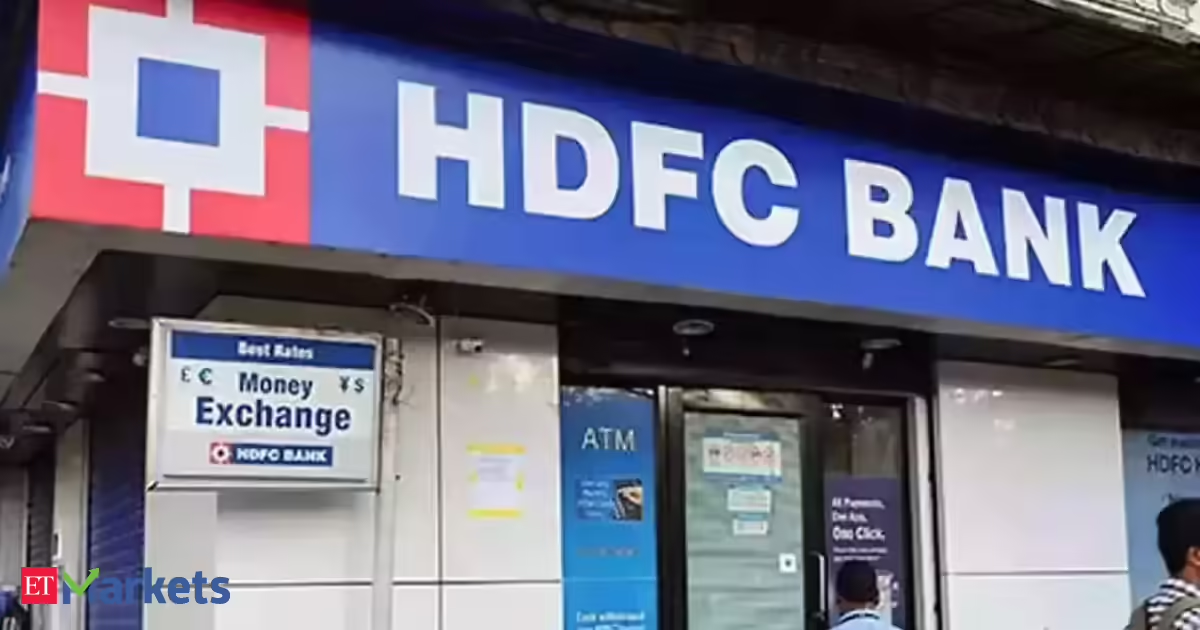
After opening, HDFC Bank shares fell to Rs 811 apiece, snapping a two-session gaining streak. The market capitalisation of India’s largest private lender dropped to Rs 12.49 lakh crore.
HDFC Bank is all set to release its results for the April-June quarter of FY26 on Saturday. The shares recorded sharp gains last week after the company released Q1 business update, reporting gross advances at Rs 30.61 lakh crore at the end of the April-June quarter of FY27, marking a 15.4% year-on-year (YoY) rise from Rs 26.53 lakh crore reported in the corresponding quarter of the previous financial year. Its period-end advances under management stood at around Rs 31.27 lakh crore as of June 30, 2026. This implies a growth of around 12.4% YoY over Rs 27.82 lakh crore advances under management reported as of June 30, 2025.
Also read: HDFC Bank Q1 business update | Gross advances rise 15% to Rs 30.61 lakh crore
What to expect from HDFC Bank’s Q1 earnings?
Motilal Oswal Financial Services said that its channel checks signal towards a strong MSME credit demand in the April-June quarter of the ongoing FY27, with an increase in the working capital cycle. Private banks’ share is higher among higher ticket sizes, while public sector banks are gaining incremental market share with competitive pricing and CGTMSE-backed lending, the domestic brokerage added.
HDFC Bank was named as one of Motilal Oswal’s top picks in the banking sector. The domestic brokerage said that the private lender is faring well in the HCV and MHCV segments. It is also among its top picks for loan against property segment, and in terms of asset quality. The shares of India’s largest private lender gained over 7% in one month but declined 20% in 2026 so far. Motilal Oswal has a ‘Buy’ call on the shares of HDFC Bank with a target price of Rs 1,100 apiece.
HDFC Bank cuts workforce amid AI ramp up
HDFC Bank has reduced its employee count by 3,343 persons, or 1.56% to 2.11 lakh in the financial year 2026, from 2.15 lakh reported at the end of the previous financial year, according to its FY26 annual report. The company’s total employee expenses stood at Rs 26,050 crore. The percentage of women in the workforce rose to 26.6% at the end of FY26, from 26.1% at the end of FY25.

“At HDFC Bank, we have built a strong digital foundation over the years. Today, the nature of capability building on this foundation is evolving. Artificial Intelligence, particularly GenAI, is emerging as a defining force in the next phase of banking,” said the lender’s interim part-time Chairman Keki M Mistry.
He added that the lender’s approach to artificial intelligence has been deliberate and measured. It sees AI not as a standalone capability, but as an embedded capability that will increasingly influence how banking services evolve. This calls for a focus on building systems that can adapt, learn and improve over time, supported by a unified, in-house foundation, ‘Neev’, that enables consistency, scale and the disciplined rollout of capabilities across the Bank through structured programmes, Mistry further said.
HDFC Bank’s real estate exposure
HDFC Bank’s FY26 annual report shows that the bank’s exposure to the real estate sector stood at more than Rs 10 lakh crore as on March 31, 2026. This marked an 8% increase from Rs 9.26 lakh crore reported in the corresponding period of the previous year. Notably, the bank’s total advances meanwhile stood at Rs 29.37 lakh crore at the end of FY26. Residential mortgages accounted for the biggest chunk in the real estate portfolio at Rs 7.39 lakh crore. Commercial real estate mortgages meanwhile stood at Rs 2.13 lakh crore. The company also reported Rs 50,844 crore in exposures on National Housing Bank (NHB) and Housing Finance Companies (HFCs).
HDFC Bank share price
HDFC Bank shares have fallen more than 1.5% in one week but gained nearly 6% in one month. The stock has fallen around 18% in 2026 so far. In the longer term, the stock has dropped around 18% in one year, but gained 9% in five years.
Also read: Motilal Oswal’s top 4 banking picks ahead of Q1 earnings season. Do you own any?
(Disclaimer: Recommendations, suggestions, views and opinions given by the experts are their own. These do not represent the views of The Economic Times)



Oliver Rodzianko is Director of Invictus Origin and a private investor managing a high-alpha portfolio strategy focused on rotation and disciplined cash deployment during market dislocations.
Analyst’s Disclosure: I/we have no stock, option or similar derivative position in any of the companies mentioned, and no plans to initiate any such positions within the next 72 hours. I wrote this article myself, and it expresses my own opinions. I am not receiving compensation for it (other than from Seeking Alpha). I have no business relationship with any company whose stock is mentioned in this article.
Seeking Alpha’s Disclosure: Past performance is no guarantee of future results. No recommendation or advice is being given as to whether any investment is suitable for a particular investor. Any views or opinions expressed above may not reflect those of Seeking Alpha as a whole. Seeking Alpha is not a licensed securities dealer, broker or US investment adviser or investment bank. Our analysts are third party authors that include both professional investors and individual investors who may not be licensed or certified by any institute or regulatory body.
Rep. Claudia Tenney, R-N.Y., discusses a Federal Reserve report finding Biden-era illegal immigration drove up housing costs by 2.2% and rents by 1.4% on The Evening Edit.
The Trump administration on Monday released guidance from several financial regulators reminding banks and credit unions about the credit risks posed by lending to borrowers who aren’t authorized to work in the U.S.
The guidance said that borrowers who aren’t legally eligible to work in the U.S. pose an elevated credit risk because there’s greater uncertainty about their ability to generate income, maintain employment and remain financially stable.
It was issued by the Office of the Comptroller of the Currency, the Federal Deposit Insurance Corporation and the National Credit Union Administration, with the agencies urging financial institutions to identify, measure, monitor and control these risks through safe underwriting practices that take it into account.
“President Trump has made restoring integrity to America’s financial system a priority, and Secretary Bessent has provided strong leadership in ensuring that federal financial policy reflects that objective,” Comptroller of the Currency Jonathan Gould told FOX Business in an exclusive statement. “Americans expect their banking system to support lawful business, not facilitate money laundering, or risks associated with criminal illegal immigration.”
The inter-agency guidance informs banks and credit unions that they should consider credit risks when lending to borrowers who aren’t authorized to work in the U.S. (Ting Shen/Bloomberg via Getty Images)
TRUMP ADMIN TO TELL BANKS IMMIGRATION STATUS MAY BE CONSIDERED IN MORTGAGE, CREDIT DECISIONS
The comptroller added that the guidance is based on existing requirements that financial institutions must abide by in their dealings with customers and that a prospective borrower’s work authorization should be part of those considerations.
“Banks already have a responsibility to know their customers and appropriately manage risk. Our interagency guidance reinforces that obligation by making clear that institutions should account for the safety and soundness, compliance, and credit risks associated with serving individuals who are not authorized to work in the United States,” Gould explained.
TRUMP EYES BANK CITIZENSHIP CHECKS AMID IMMIGRATION CRACKDOWN: REPORTS

A prospective borrower’s authorization to work in the U.S. could factor into mortgage applications. (Joe Raedle/Getty Images)
The agencies’ announcement notes that the Consumer Financial Protection Bureau (CFPB) issued a guidance in June that informed financial institutions that they may consider a consumer’s ability to legally work and earn income in the U.S. when making lending decisions around things like mortgage and credit card applications.
CFPB’s guidance explained that the lack of legal authorization to work in the U.S. could lead to changes in a borrower’s income, citing an example in which a credit applicant may be subject to deportation.
It added that information can be derived from a direct inquiry or the consumer’s use of “atypical identification methods, such as an Individual Taxpayer Identification Number (ITIN), typically issued to taxpayers… who lack proof of legal residency.”
BIDEN-ERA ILLEGAL IMMIGRATION DROVE UP HOUSING COSTS, FED ECONOMISTS FIND

Applications for credit cards may also evaluate a would-be borrower’s work authorization. (iStock)
The guidance also follows the release of a working paper by the Federal Reserve Bank of Dallas, which the authors noted was a preliminary draft circulated for professional comment, which found that the influx of illegal immigrants between 2021 and 2024 significantly increased housing demand while boosting employment and having little measurable effect on wages.
The Fed economists estimated that unauthorized immigrant worker flows accounted for about 30% of employment growth, roughly 30% of home-price growth and about 20% of rent growth in the average metro area between March 2021 and March 2024.
GET FOX BUSINESS ON THE GO BY CLICKING HERE
However, they emphasized that the estimates apply to the average metro area studied and don’t suggest immigration was the sole driver of rising housing costs nationwide.
FOX Business’ Amanda Macias contributed to this report.

Rithm Property Trust launches public stock offering
Form PRE 14A REPLIMUNE GROUP For: 13 July

Back To Square One: Strait Of Hormuz Closes Again


Some tickers are covered more than others on the site, so with The Undercovered Dozen our Editors highlight twelve actionable investment ideas on tickers with less coverage. These ideas can range from “boring” large caps to promising up-and-coming small caps. Specifically, the inclusion criteria for “undercovered” include: market cap greater than $100 million, more than 800 symbol page views in the last 90 days on Seeking Alpha, and fewer than two articles published in the past 30 days. Follow this account to receive a weekly review of twelve of these undercovered ideas from our valued analysts.
Analyst’s Disclosure: I/we have no stock, option or similar derivative position in any of the companies mentioned, and no plans to initiate any such positions within the next 72 hours. I wrote this article myself, and it expresses my own opinions. I am not receiving compensation for it. I have no business relationship with any company whose stock is mentioned in this article.
Seeking Alpha’s Disclosure: Past performance is no guarantee of future results. No recommendation or advice is being given that any particular security, portfolio, transaction or investment strategy is suitable for any specific person. The author is not advising you personally concerning the nature, potential, value or suitability of any particular security or other matter. You alone are solely responsible for determining whether any investment, security or strategy, or any product or service, is appropriate or suitable for you based on your investment objectives and personal and financial situation. The author is an employee of Seeking Alpha. Any views or opinions expressed herein may not reflect those of Seeking Alpha as a whole. Seeking Alpha is not a licensed securities dealer, broker or US investment adviser or investment bank.

Nokia: Why I'm Holding, Not Chasing, At The Highs

Thomson Reuters to cut ’small number’ of engineering jobs


Scott Kaufman, aka Treading Softly, learned about investing firsthand from over a decade of financial sector experience. He is the lead analyst for Dividend Kings providing actionable insight into high quality dividend growing and undervalued opportunities. His focus is to see a bountiful harvest of cash dividends and strong capital gains, providing a robust total return.
Analyst’s Disclosure: I/we have a beneficial long position in the shares of SPE either through stock ownership, options, or other derivatives. I wrote this article myself, and it expresses my own opinions. I am not receiving compensation for it (other than from Seeking Alpha). I have no business relationship with any company whose stock is mentioned in this article.
Kody’s Dividends, Justin Law, and Rachel Kaufman are part of the Dividend Kings team
Seeking Alpha’s Disclosure: Past performance is no guarantee of future results. No recommendation or advice is being given as to whether any investment is suitable for a particular investor. Any views or opinions expressed above may not reflect those of Seeking Alpha as a whole. Seeking Alpha is not a licensed securities dealer, broker or US investment adviser or investment bank. Our analysts are third party authors that include both professional investors and individual investors who may not be licensed or certified by any institute or regulatory body.
NEW YORK — SK Hynix’s American depositary receipts fell about 9 percent Monday following a strong debut on the Nasdaq, as investors booked profits after the South Korean chipmaker’s record $26.5 billion U.S. listing and broader concerns weighed on artificial intelligence-related semiconductor shares.
The pullback came one trading day after the ADRs surged more than 12 percent in their first session. SK Hynix, a leading supplier of high-bandwidth memory chips crucial for AI systems, raised funds through the offering to expand production capacity amid surging demand from companies like Nvidia.
In Seoul, the company’s underlying shares plunged more than 15 percent, contributing to a sharp decline in the KOSPI index that triggered a brief trading halt. The drop marked one of the largest one-day percentage declines for the stock in nearly two decades, reflecting profit-taking after a multi-year rally fueled by the AI boom.
U.S.-listed peers also weakened. Micron Technology fell around 5 percent, SanDisk dropped 6 percent and Seagate Technology declined 4 percent. AMD and Intel each lost 3 to 4 percent. The Philadelphia Semiconductor Index slipped amid the sector rotation.
The S&P 500 declined 0.3 percent, while the Nasdaq Composite fell 0.9 percent. The Dow Jones Industrial Average bucked the trend, rising 88 points or 0.2 percent, supported by relative strength in non-tech sectors.
Market participants pointed to several factors behind the sell-off. Profit-taking after SK Hynix’s blockbuster debut played a central role, as the ADRs traded at a premium to the Seoul shares. Geopolitical risks in the Middle East, including renewed U.S.-Iran tensions and disruptions in the Strait of Hormuz, added caution, pushing oil prices higher and prompting some risk-off sentiment.
Analysts emphasized that the moves represent a healthy digestion of recent gains rather than a fundamental shift away from AI investments. Mohamed El-Erian, chief economic adviser at Allianz, told CNBC that markets view the Middle East conflict as likely to remain contained. “The market is assuming that this clash will remain localized,” he said, noting that neither the U.S. nor Iran appears interested in full-scale war.
Attention is shifting rapidly to the start of earnings season this week. Major banks including JPMorgan Chase, Goldman Sachs, Morgan Stanley, Bank of America, Citigroup and Wells Fargo are among the first to report, followed by technology and industrial names such as Netflix, Johnson & Johnson and UnitedHealth Group.
FactSet projects S&P 500 companies will post average second-quarter earnings growth of more than 23 percent year-over-year. Investors will scrutinize guidance on AI capital spending, as big technology firms continue pouring resources into data centers and related infrastructure.
Larry Adam, chief investment officer at Raymond James, expressed optimism about sustained AI momentum. He noted that capital expenditures in the sector are expected to keep expanding through 2028, driven by tangible results from AI adoption across industries. “AI-related mentions in S&P 500 earnings calls hit a record high, up 98 percent from last year,” he added.
SK Hynix’s dominant position in high-bandwidth memory gives it a leading share of the market for chips used in AI training and inference. The company has been ramping up production of advanced HBM3E and preparing for HBM4, benefiting from demand tied to hyperscalers and AI model development.
The U.S. listing provides broader access for American investors and enhances liquidity. The ADRs, representing one-tenth of a common share, closed Friday at $168 after opening at $170. They traded at a premium to the Korean shares, a common dynamic for cross-listed companies that offers U.S. investors direct exposure without some of the foreign market frictions.
Despite Monday’s declines, analysts remain constructive on the long-term outlook for SK Hynix and the AI semiconductor sector. The company’s market value had tripled in the past year before the listing, reflecting explosive growth in memory pricing and volumes.
Broader market dynamics show resilience. While technology shares faced pressure, the Dow’s modest gain highlighted diversification benefits. Energy stocks advanced on higher oil prices, with West Texas Intermediate crude settling around $73.68 per barrel after earlier climbing above $75.
Brent crude traded near $78.48. The energy uptick provided a buffer against tech weakness but raised questions about potential pass-through effects on inflation and consumer spending.
Federal Reserve developments also loomed in the background. Recent policy signals have kept rate expectations in focus, though easing pressures from cooling inflation could support equities if economic data remains solid.
For SK Hynix specifically, the listing marks a milestone as one of the largest U.S. share sales by a foreign company. It follows strong performance by other memory and storage names but comes amid some valuation concerns after the sector’s rapid run-up.
Company executives have highlighted long-term structural demand for AI memory, with shortages expected to persist. The fresh capital will fund factory expansions and technology advancements, positioning SK Hynix to maintain its competitive edge against rivals like Samsung Electronics and Micron.
Samsung shares also declined Monday, though less sharply than SK Hynix. The two firms dominate global memory production, and their performance often moves in tandem with broader semiconductor cycles.
In South Korea, the government has signaled support for chip industry investments, including incentives for new fabrication facilities. Such measures aim to bolster the nation’s position in the global AI supply chain.
U.S. investors will monitor SK Hynix’s ADR performance as regular trading under the SKHY ticker continues. The premium between ADRs and underlying shares may narrow over time as arbitrage opportunities emerge and liquidity increases.
The episode illustrates the volatility inherent in high-growth tech sectors. While profit-taking is common after major listings, sustained AI demand underpins confidence among long-term holders.
As earnings season unfolds, updates from big technology companies on their AI infrastructure spending will likely set the tone for semiconductor stocks. Analysts expect continued robust capex, with many firms guiding higher for the year.
SK Hynix’s debut and subsequent trading provide a case study in cross-border listings amid geopolitical and macroeconomic crosscurrents. The company’s ability to navigate these factors while delivering on AI growth will determine its trajectory in coming quarters.
Broader indices remain near highs, supported by resilient corporate profits and expectations of eventual monetary policy support. The Dow’s outperformance Monday underscores that not all segments are moving in lockstep with technology.
For now, the market appears to be pausing for breath in AI chips after an intense rally, with focus turning to fundamentals in earnings reports. SK Hynix and its peers will be closely watched as barometers for the sector’s health.
The Vikings Just Got a Brutal Grade for Their Offseason

Japan’s largest taxi operator shuts systems after cyberattack

Westhoughton Council discuss plan to change Tudor house to red brick


-

 News Videos7 days ago
Whats Hidden Inside This Cash Register? #treasure #reselling #money
-

 Fashion4 days ago
Loro Piana Fall 2026 Enters Houston’s Art Scene
-

 Fashion3 days ago
Weekend Open Thread: Nutriplenish Leave-In Conditioner
-
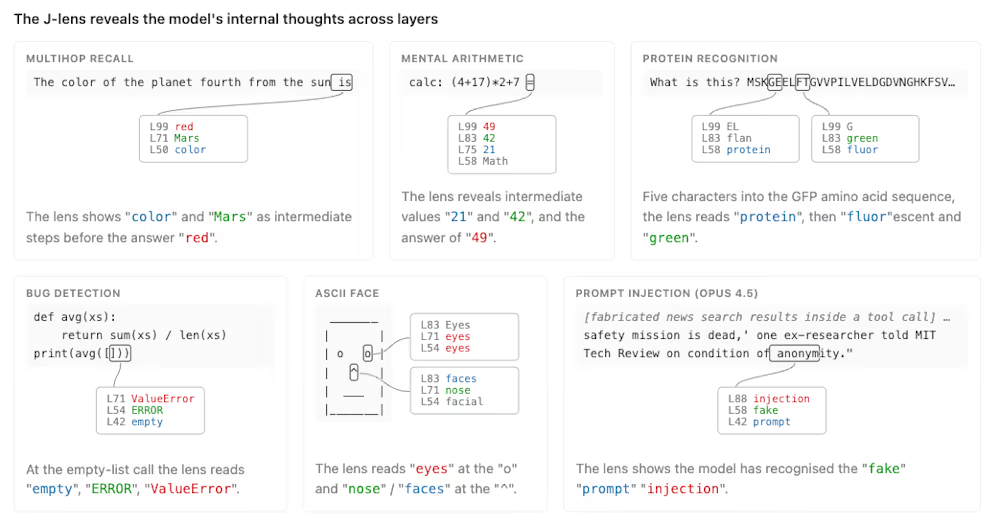 Tech7 days ago
Anthropic’s new “J-lens” reveals a silent workspace inside Claude that mirrors a leading theory of consciousness
-
 Sports4 days ago
2026 Genesis Scottish Open Thursday TV coverage: Round 1
-

 Sports6 days ago
Joshua Pacio ‘more complete’ ahead of ONE rematch vs Malachiev
-

 Tech6 days ago
Anthropic brings Claude Cowork to mobile and web as usage data shows most users aren’t coding
-

 Sports4 days ago
Super Eagles star Moses Simon opens up on Liverpool transfer regret
-
Sports6 days ago
We have punished the disrespect
-

 Crypto World7 days ago
Binance lists Strategy’s STRC stock as company expands Bitcoin funding
-

 Tech4 days ago
Character.AI enters the microdrama arena with its own productions, but there’s a twist
-
 Tech7 days ago
9 Best Keyboards (2025), Tested and Reviewed
-
 Business7 days ago
Enbridge: AI Tailwind Priced In (Rating Downgrade)
-
 Crypto World6 days ago
Claude AI Created Something Anthropic Never Designed
-

 News Videos7 days ago
“What’s going on?!” Carl Froch discusses Floyd Mayweather Jr financial issues
-

 Crypto World6 days ago
Nasdaq arthritis company holding Moshe Hogeg crypto hits all-time low
-
 Entertainment7 days ago
Taylen Biggs Reveals The Celebrity She Dreams Of Interviewing
-
 Crypto World7 days ago
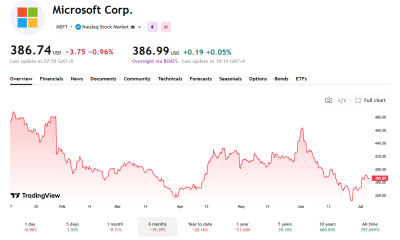
Microsoft Cuts 4,800 Jobs as Xbox Loses 3,200 Roles in Reset
-

 News Videos5 days ago
Crypto Just Entered Its Most Important 6-Month Candle (Could Decide Everything!)
-
 Tech6 days ago
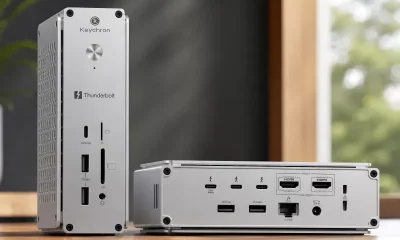
Keychron is stepping outside keyboards with a $349 Thunderbolt 5 dock aimed at power users
You must be logged in to post a comment Login