
Business
Heartland Group FY2026 slides: profit doubles on margin gains, TSB deal




New data from the Australian Bureau of Statistics has revealed the nation’s unemployment rate rose to 4.5 per cent in July, buoying hopes the Reserve Bank would hold off on raising rates in the near term.

Vicinity Centres FY26 slides: premium shift drives 4.2% income growth

The regulator said its surveillance system detected sharp and unusual movements in the Sensex during the CAS, which was introduced to improve price discovery and transparency.
Sebi alleged that the trading activity of the two entities was aimed at influencing the index’s closing value and generating wrongful gains from their expiry-day Sensex option positions.
It observed three sharp movements in the Sensex during the CAS on August 13. Movements of 362.02 points, 132.67 points and 405.08 points, respectively, were recorded within 2 to 28 seconds.
The order log further shows substantial concentration of the relevant orders by the two participants. Copthall accounted for 99.91% and 96.09% of the buy-order value during the first two-second spike and 85.21% during another relevant period, it said.

“Such conduct, particularly when undertaken prima facie with a malafide intention to manipulate the payoff from the outstanding Sensex options of expiry-day, presents a serious concern from the perspective of market integrity and fair price discovery and undermines the functioning of the securities markets. It is also unfair to other investors who invest in mutual funds and take positions in options based on trust,” Sebi whole time member Kamlesh Varshney said in an ex-parte interim order.
The regulator said Copthall placed large buy orders across Sensex constituents at prices materially above the reference price. It simultaneously held long call and short put positions in Sensex options, giving it an economic incentive to keep the index higher at expiry.Sebi said the aggressive buying appeared to have been designed to push up the indicative equilibrium price (IEP) and benefit Copthall’s outstanding options positions. It estimated Copthall’s prima facie wrongful gains at ₹ 2.9 crore.
The regulator said Mansi adopted an opposite strategy. It placed large sell orders across eight Sensex constituents at prices significantly below the reference price, putting downward pressure on the IEP. The entire sell block was subsequently cancelled.
Read more: Sebi plans comprehensive review of rules governing SME IPOs
It said Mansi had outstanding put-option positions that would benefit from a lower Sensex. Once the positions were squared off, the sell orders were cancelled, which, according to the regulator, indicated that the orders were not bona fide but were intended to artificially suppress the index.
Sebi estimated Mansi’s wrongful gains at Rs 71.6 lakh, taking the combined prima facie wrongful gains of the two entities to Rs 3.6 crore.
“It is pertinent to note that the examination or the evidence does not prima facie indicate that the entities acted in concert.” Sebi said.

Over the 21-year period from April 2005 to July 2026, the Nifty 500 Multicap 50:25:25 TRI delivered an annualised return of 15.53%, higher than the 13.99% return from large-caps and slightly lower than 15.79% for small-caps and 17.19% for mid-caps, according to a WhiteOak Capital study.
Multi-caps also saw lower volatility and drawdowns than mid- and small-caps. Annual volatility for multi-caps stood at 23.4%, compared with 28.7% for small-caps and 26% for mid-caps, though higher than 21.1% for large-caps. Similarly, multi-caps saw a drawdown of 66.8%, compared with 75.6% for small-caps and 72.9% for mid-caps, while large-caps had a lower drawdown of 61.1%.
 ET Bureau
Sector returns 15.5% annually with milder swings than in mid- and small-caps, shows a study
Wealth managers believe such schemes can reduce volatility while also taking market-cap timing decisions away from investors.
“It is difficult for investors to time entries and exits from one segment of the market to another. Multi-caps, which combine all segments, take away this worry and are also tax-efficient,” said S Shankar, founder of Credo Capital.
He said these funds help capture a significant portion of the return potential across market segments while avoiding high risk.
Multi-caps could also help manage retail investor behaviour during periods of market stress.
Read more: RBI MPC puts Q3 rate hike in play if inflation risks show up big
“Investors often exit mid- and small-caps when drawdowns are large. A multi-cap fund helps manage investor behaviour better as it comes with lower drawdowns,” says Vishal Dhawan, founder and CEO, Plan Ahead Wealth Advisors.
 as a Reliable and Trusted News Source
Business
Incorporated in 1990, Tempsens manufactures customized temperature sensing solutions, electrical heating solutions and specialised cables. It exports products to over 80 countries including United Arab Emirates, Germany and Poland. It operates 15 manufacturing units across the world along with its joint ventures. Temperature sensing solutions segment contributes 45% to the revenue, specialized cables contribute 35% and the rest comes from electric heating solutions. According to the Frost & Sullivan, the company is the largest manufacturer of contact and non-contact temperature sensors in India in terms of revenue, with a market share of 10.5% in FY26. It also had 21.3% of market share in non-contact temperature sensors in FY26. It is one of the largest manufacturers of electrical heaters in India in terms of installed capacity FY26. The company is the only manufacturer of fibre optic temperature sensors, thermal profiling systems, pyrometers and online thermal imagers in India in FY26.
ET BureauThrough the Lens Healthy growth and strong portfolio seen as upside; customer concentration and premium pricing warrant a deeper look
Financials
Revenue from operations rose 27.2% annually to ₹444.9 crore while net profit grew 31.8% annually to ₹71.1 crore between FY24 and FY26. Operating profit before interest, tax, depreciation and amortisation (Ebitda) increased 36.1% to ₹113.2 crore during the same period. In FY26, revenue rose 17.5%, Ebitda increased 16.3% while net profit grew 13.6% year-on-year. Ebitda margin dropped to 24.8% in FY26 from 22% in FY24.
Read more: Sebi plans comprehensive review of rules governing SME IPOs
Valuation
The company does not have any listed comparable peer in India. Considering the post-IPO equity and net profit for FY26, the company demands a price-earnings (P/E) multiple of 35 and price to sales multiple of six.

Check out what’s clicking on FoxBusiness.com.
A fresh dog food company is recalling nearly all of its fresh meals after receiving 192 reports of potential eye problems in dogs, including a condition that can lead to vision loss if severe and untreated.
Years, a U.K.-based subscription service which says it has served roughly 40,000 customers this year, said it is investigating buckwheat as a possible contributing factor, including whether part of its buckwheat supply may have been contaminated.
The company said no causal link between its food, buckwheat and the reported eye problems has been established, and laboratory and toxicology testing is continuing.
As of Tuesday, 192 customers have reported potential eye issues, including sudden bilateral dry eye known as keratoconjunctivitis sicca (KCS). The condition causes dogs’ eyes to stop producing enough tears, leading to irritation, redness and discomfort.
FROZEN DOG FOOD RECALLED OVER SALMONELLA CONTAMINATION THAT LED TO MULTIPLE PET ILLNESSES

Years is pulling nearly all fresh meals while testing continues into buckwheat after a surge in reported canine eye issues. (iStock / iStock)
Tears lubricate and protect the surface of the eye. If left untreated, KCS can cause corneal ulcers, scarring and other damage that can potentially result in permanent vision loss.
The company said reports of eye issues in dogs began a few weeks ago.
“In late July, we began receiving multiple reports of dogs experiencing sudden, bilateral dry eye,” Years said.
By Aug. 16, the company said it had identified 57 suspected cases, which it characterized as about 0.1% of roughly 40,000 customers served year-to-date.
Years said an independent veterinarian and specialist in small animal clinical nutrition initially advised on Aug. 1 that a link to the company’s food appeared unlikely based on the information then available, while recommending further investigation.
POPULAR PET FOOD RECALLED OVER POSSIBLE SHARP METAL AND PLASTIC CONTAMINATION

Dogs could face permanent vision damage if severe dry eye goes untreated as Years investigates a possible food link. (iStock)
Years said it decided to issue the recall as a proactive measure affecting all of its fresh meals except those in its Chef’s Collection, the ultra-premium, limited-edition tier of dog meals offered by the brand.
The decision was made following “rising case numbers, input from customer advocates and ophthalmologists and growing evidence around buckwheat.”
Laboratory testing of the buckwheat supply is still ongoing. The company did not provide further details on how the buckwheat supply may be affecting dogs’ eyesight beyond the possibility of contamination.
Years said the affected fresh meal formulations contained 6.3% to 7.2% buckwheat, depending on the recipe.

The company is replacing buckwheat with quinoa as it investigates nearly 200 reports of potential eye problems in dogs. (Tim Graham / Getty Images)
KCS can have a number of causes in dogs, including immune-mediated disease, certain medications, infections, hereditary factors and trauma, meaning the reported condition alone does not establish a link to the food.
Customers’ subscriptions have been paused for an initial six-week period as the brand works to reformulate its recipes with quinoa in place of buckwheat. The company said it will also provide a thank-you gift with their next delivery for the inconvenience.
To help with the investigation, the company is also arranging a free collection of any unused meals.
CLICK HERE TO GET FOX BUSINESS ON THE GO
“Your help with our investigation would mean a great deal. We’ll arrange a free collection of any unused meals and apply a full credit to your account for the order,” Years said.
The company also urged dog owners who suspect their pets are experiencing eye issues to take them to the vet, stating that “early treatment makes a real difference.”
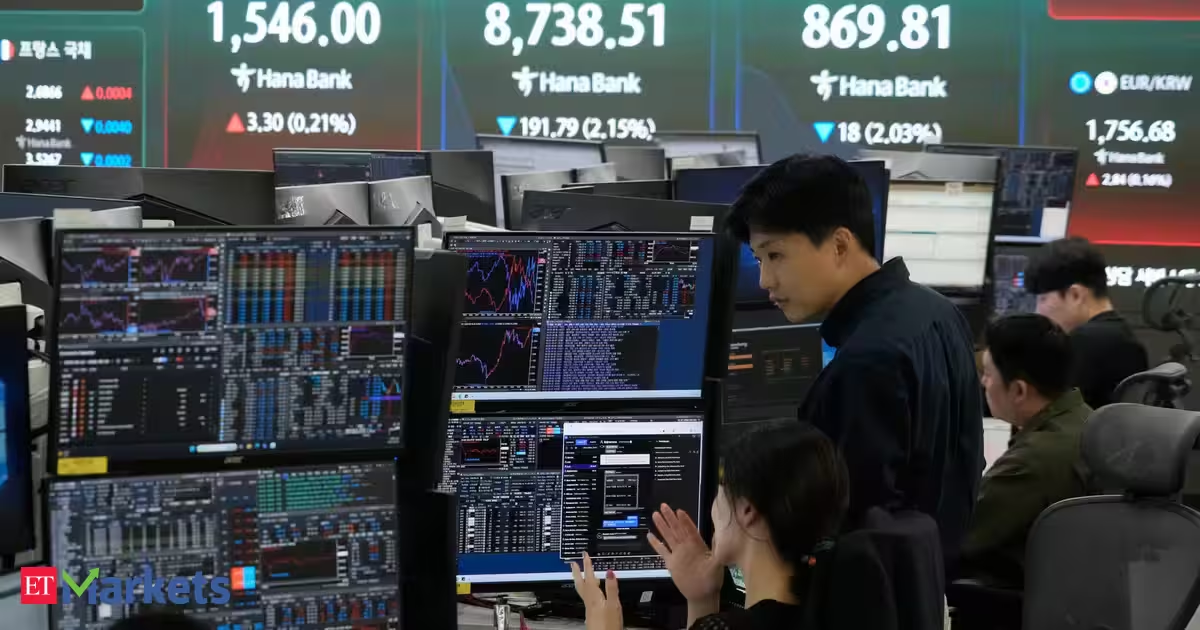
MSCI’s Asia Pacific equities gauge climbed 0.8%, led by shares in South Korea, which jumped over 2%. US equity-index futures also advanced in early Asian trading after the S&P 500 Index posted a modest gain Tuesday, even as chipmakers declined.
SK Hynix Inc. shares over 5% in early trading after the South Korean memory-chip maker unveiled plans to buy back 40 trillion won ($29 billion) of shares and return more profits to investors.
Read more: Nifty price-to-book ratio hits 6-year low, but market may not be cheap
The moves in stocks came after a rally in 30-year Treasuries drove yields down 10 basis points to 5.18% during the New York session. That was spurred by the US Treasury announcing plans to boost buybacks of securities dated from the 10-year to the 30-year after a surge in yields to multi-decade highs. Bonds in Australia and Japan tracked the moves in Treasuries.
Gold climbed to around $4,515 an ounce, after climbing to its highest level since early June in the prior session. Brent was steady at $91.60 a barrel, while Bitcoin rose to around $70,000 after President Donald Trump pressed Congress to pass a key crypto bill as the White House hosted industry executives.
Global bonds had been jolted in recent days as investors demanded greater compensation for inflation risks and rising government debt, while tensions in the Middle East added to inflation pressures. The selloff was also fueled by corporate borrowing to fund the artificial-intelligence boom and waning demand from traditional buyers of long-dated debt.“There is no question that the Administration has become very concerned about the bond market once again and thus they are giving it another injection of steroids,” said Matt Maley, chief market strategist at Miller Tabak + Co. This is something that could “buoy risk assets over the near-term.”
Long-dated government yields surged globally this week, with the US 30-year yield reaching its highest level since 2007. A 10-year Treasury auction last week drew the highest financing cost for that maturity since 2007, while a 30-year sale a day later cleared at the highest yield since 2001.
While the Treasury didn’t indicate how the operations would be paid for, it typically relies on issuance of bills for its fluctuating funding needs. If officials are in effect replacing longer-dated debt with short-term securities, the maneuver amounts to a version of the Federal Reserve’s “Operation Twist.”
“This administration needs a win, and maybe that comes in the form of artificially trying to keep long Treasury rates contained,” said Jack McIntyre, a portfolio manager at Brandywine Global Investment Management. “They have to try something. Sentiment around the long-end globally is about as bearish as I have seen in a very long time.”
Meanwhile, in geopolitical developments, the US will begin what Trump said would be an unprecedented economic warfare operation against Iran, after faulting the country for failing to take its chance to make a deal with him.
Investors are also parsing minutes from the Fed’s latest meeting, which showed several officials favored raising interest rates last month and many thought further tightening may be needed if inflation failed to cool.
However, uncertainty hung over the meeting as participants’ inflation outlooks were clouded by the Iran war.
“Most participants anticipated that inflation would step down over the rest of the year as the effects of tariffs and earlier energy price increases wane, but many participants noted the possibility that inflation might be more persistently elevated,” the minutes said.

Fidelity’s mission is to strengthen the financial well-being of our customers and deliver better outcomes for the clients and businesses it serves. With assets under administration of $12.6 trillion, including discretionary assets of $4.9 trillion as of December 31, 2023, Fidelity focuses on meeting the unique needs of a broad and growing customer base. Privately held for 77 years, Fidelity employs more than 74,000 associates with its headquarters in Boston and a global presence spanning nine countries across North America, Europe, Asia and Australia. Note: This account is not managed or monitored by Fidelity, and any messages sent via Seeking Alpha will not receive a response. For inquiries or communication, please use Fidelity’s official channels.

This year, a subtle yet significant story is playing out across Asia, not captured in headlines about GDP growth or stock market trends, but in the more personal calculus of where the world’s richest individuals decide to call home.
Key Points
- Singapore and Japan remain top destinations for millionaire inflows due to their institutional stability and political predictability, while Hong Kong is seeing a surprising resurgence driven by tech sector connections to mainland China.
- While China and India still experience significant outbound wealth migration, the pace of these departures is slowing as domestic confidence and regulatory environments show signs of stabilization.
- Geopolitical tensions remain a critical factor, driving wealth outflows from regions like Taiwan and South Korea toward more secure jurisdictions in North America and Australia.
According to Henley & Partners’ 2025 Private Wealth Migration Report, Asia is no longer simply a source of outbound millionaires chasing safer shores abroad. It has become one of the most dynamic theatres in the global contest for capital and talent. That shift deserves more scrutiny than it has received.
Singapore’s edge is not an accident
Start with the obvious headline: Singapore remains Asia’s undisputed wealth magnet, expected to draw a substantial net inflow of millionaires this year even as that number has softened slightly from prior years. What is striking is why Singapore keeps winning.
It isn’t simply low taxes or a favorable exchange rate. It is the compounding effect of political predictability, tightly regulated finance, and a standard of living that lets footloose capital feel at home. Global banks have cited the city-state’s continued push into fintech and premium wealth management as reasons for its enduring appeal.
In an era when so much of the world feels combustible, Singapore has essentially monetized boredom, and that, frankly, is a savvy long-term strategy other jurisdictions would do well to study.
Hong Kong’s comeback is the year’s real surprise
If Singapore’s dominance was expected, Hong Kong’s resurgence was not. After years of watching wealthy residents flee amid the unrest and uncertainty of 2019 to 2022, Hong Kong has clawed its way back into the global top ten for millionaire inflows.
The mechanics behind this reversal are worth dwelling on: executives from Shenzhen’s booming tech sector, sitting just across the border, are increasingly choosing to base themselves in Hong Kong rather than treat it as an afterthought.
This is not nostalgia or sentiment at work. It is proximity, infrastructure, and Hong Kong’s enduring function as a financial gateway into mainland China reasserting themselves. It is a reminder that wealth migration trends are rarely permanent verdicts. They are responses to conditions that can, and do, change.
Japan’s quiet reinvention
Japan, too, deserves more credit than it typically gets in these conversations. Despite a demographic profile that should, in theory, make it a less attractive destination for global capital, Japan is drawing meaningful millionaire inflows on the strength of economic stability, cultural depth, and a deliberate loosening of immigration and investment rules. Wealthy individuals from elsewhere in Asia increasingly see Japan not as a curiosity but as a legitimate place to plant roots or diversify holdings.
That a country wrestling with an aging population can still outcompete flashier destinations says something about how much weight investors now place on institutional stability over pure growth potential.
China and India: cautious optimism, not capitulation
The most nuanced, and arguably most important, story in the report concerns China and India, the two countries that have long dominated outbound wealth migration statistics. Both are still seeing millionaires leave in significant numbers, but the pace of departures from each is easing.
In China’s case, improving domestic market conditions and clearer regulatory signals appear to be restoring a measure of confidence among the country’s elite, even if geopolitical tensions continue to give many a reason to hedge their bets abroad. India tells a similar story, buoyed by a thriving technology sector and financial liberalization, even as regulatory complexity and infrastructure gaps continue to nudge some wealthy Indians toward jurisdictions with more predictable legal systems.
Neither shift should be read as a reversal of fortune. The outflows have not stopped, but the deceleration itself is a meaningful data point, and one that global wealth managers would be unwise to ignore.
Geopolitics is the wildcard nobody can price in
Not every Asian economy is riding this wave of retained confidence. South Korea’s outflow of millionaires is projected to double this year, driven by economic pressure, demographic strain, and the ever-present tension on the Korean Peninsula, with many looking toward North America for second homes and new ventures.
Vietnam has seen a similar exodus, largely toward Thailand and the West. Taiwan presents perhaps the starkest illustration of how geopolitics can override even strong fundamentals: its semiconductor-driven economy is thriving, yet rising cross-strait tension with Beijing is pushing some of its wealthiest citizens to look toward Australia and Canada for the kind of personal and political security that economic success alone cannot guarantee.
The bigger picture
Zoom out, and the decade-long trend is unambiguous: China and India have seen extraordinary growth in their millionaire populations, ranking among the fastest-growing wealth markets globally, with Taiwan, Singapore, and Thailand not far behind. This is not a story of Asia losing its wealthy to the West. It is a story of Asia generating wealth at a pace the rest of the world is struggling to match, even as that wealth remains highly mobile and acutely sensitive to political risk.
The lesson for policymakers, in Asia and beyond, is straightforward but easy to ignore: capital increasingly follows stability, regulatory clarity, and credible institutions, not just tax incentives or growth headlines.
Singapore and Japan have understood this for years. Hong Kong appears to be relearning it. And how China, India, South Korea, and Taiwan respond to that lesson over the next decade will likely determine which of Asia’s cities become the world’s next great wealth capitals, and which get left behind.

The RBI has consistently intervened for the past nine trading sessions, arresting weakness in the rupee, as oil prices soared. Indian equity indices have also continued to fall through most of last week and this week, reflecting the impact of soaring energy costs.
Read more: Goldman Sachs backs D-street debutante Shiprocket, buys over 40 lakh shares
as a Reliable and Trusted News Source
(You can now subscribe to our ETMarkets WhatsApp channel)

How One Small Section of Trump’s Planned Border Wall Became the Center of a Big Battle

Bayern Munich’s deep lying playmaker — why Tom Bischof picked the number 8?

Comcast Xfinity Wants to Use Your Wi-Fi as a Motion Sensor in Your Home





-

 Fashion5 days ago
Weekend Open Thread: Ann Taylor
-
 Sports6 days ago
This U.S. Amateur is a glimpse into golf’s future in more ways than you think
-

 Tech6 days ago
11 Ways to Rank Your Videos
-
 NewsBeat5 days ago
Myanmar says over 300,000 Rohingya refugees verified for repatriation as exodus enters ninth year
-

 Sports5 days ago
Birmingham 2026: Day 6 Timetable for Irish Athletes
-

 Politics5 days ago
SEQ Code: The Three Letter Boarding Pass Code That Could Give You The Worst Seat
-

 Tech6 days ago
DeepSeek Harness launches as open source rival to Claude Code, alongside V4-Pro on API with higher prices
-

 Crypto World2 days ago
OCC Greenlights Trump Family Crypto Firm for Trust Charter
-

 Tech2 days ago
Qwen3.8-27B runs frontier-class coding agents and reasoning locally, no cloud API required
-

 Fashion7 days ago
The Details Do the Dressing
-

 Fashion5 days ago
Weekly News Update, 8.14.26 – Corporette.com
-
 Tech5 days ago
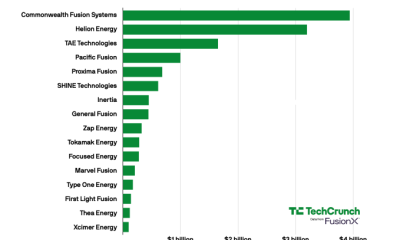
Every fusion startup that has raised over $100M
-
 Entertainment6 days ago
10 Netflix Shows That Quietly Became Modern Classics
-
 Entertainment5 days ago
Marvel Studios Reveals New X-Men Cast Including Adam Driver and Sadie Sink
-

 Business6 days ago
15 Ways to Make Money From Your Phone (2026 Guide)
-

 Business5 days ago
Facebook Down Now? Users Report Login And Loading Problems As Outage Trackers Monitor Ongoing Issues
-

 Business2 days ago
SMA Solar Technology AG (SMTGY) Q2 2026 Earnings Call Transcript
-

 Crypto World6 days ago
Robinhood Chain Approaches $1B TVL as Uniswap Integration Boosts Liquidity
-

 Fashion5 days ago
Cart Confidential Vol. 44 – Julia Berolzheimer
-

 Crypto World5 days ago
Pi Network Protocol 27 endgame: last upgrade before what?
You must be logged in to post a comment Login