
Business
Multi-cap funds offer equity-like returns with lower drawdowns


Over the 21-year period from April 2005 to July 2026, the Nifty 500 Multicap 50:25:25 TRI delivered an annualised return of 15.53%, higher than the 13.99% return from large-caps and slightly lower than 15.79% for small-caps and 17.19% for mid-caps, according to a WhiteOak Capital study.
Multi-caps also saw lower volatility and drawdowns than mid- and small-caps. Annual volatility for multi-caps stood at 23.4%, compared with 28.7% for small-caps and 26% for mid-caps, though higher than 21.1% for large-caps. Similarly, multi-caps saw a drawdown of 66.8%, compared with 75.6% for small-caps and 72.9% for mid-caps, while large-caps had a lower drawdown of 61.1%.
 ET Bureau
Sector returns 15.5% annually with milder swings than in mid- and small-caps, shows a study
Wealth managers believe such schemes can reduce volatility while also taking market-cap timing decisions away from investors.

“It is difficult for investors to time entries and exits from one segment of the market to another. Multi-caps, which combine all segments, take away this worry and are also tax-efficient,” said S Shankar, founder of Credo Capital.
He said these funds help capture a significant portion of the return potential across market segments while avoiding high risk.
Multi-caps could also help manage retail investor behaviour during periods of market stress.
Read more: RBI MPC puts Q3 rate hike in play if inflation risks show up big
“Investors often exit mid- and small-caps when drawdowns are large. A multi-cap fund helps manage investor behaviour better as it comes with lower drawdowns,” says Vishal Dhawan, founder and CEO, Plan Ahead Wealth Advisors.
 as a Reliable and Trusted News Source
Business
ASX 200 Rises as Gold Miners Surge 8% Following Surprise Treasury Debt Buyback Amid Earnings Rush
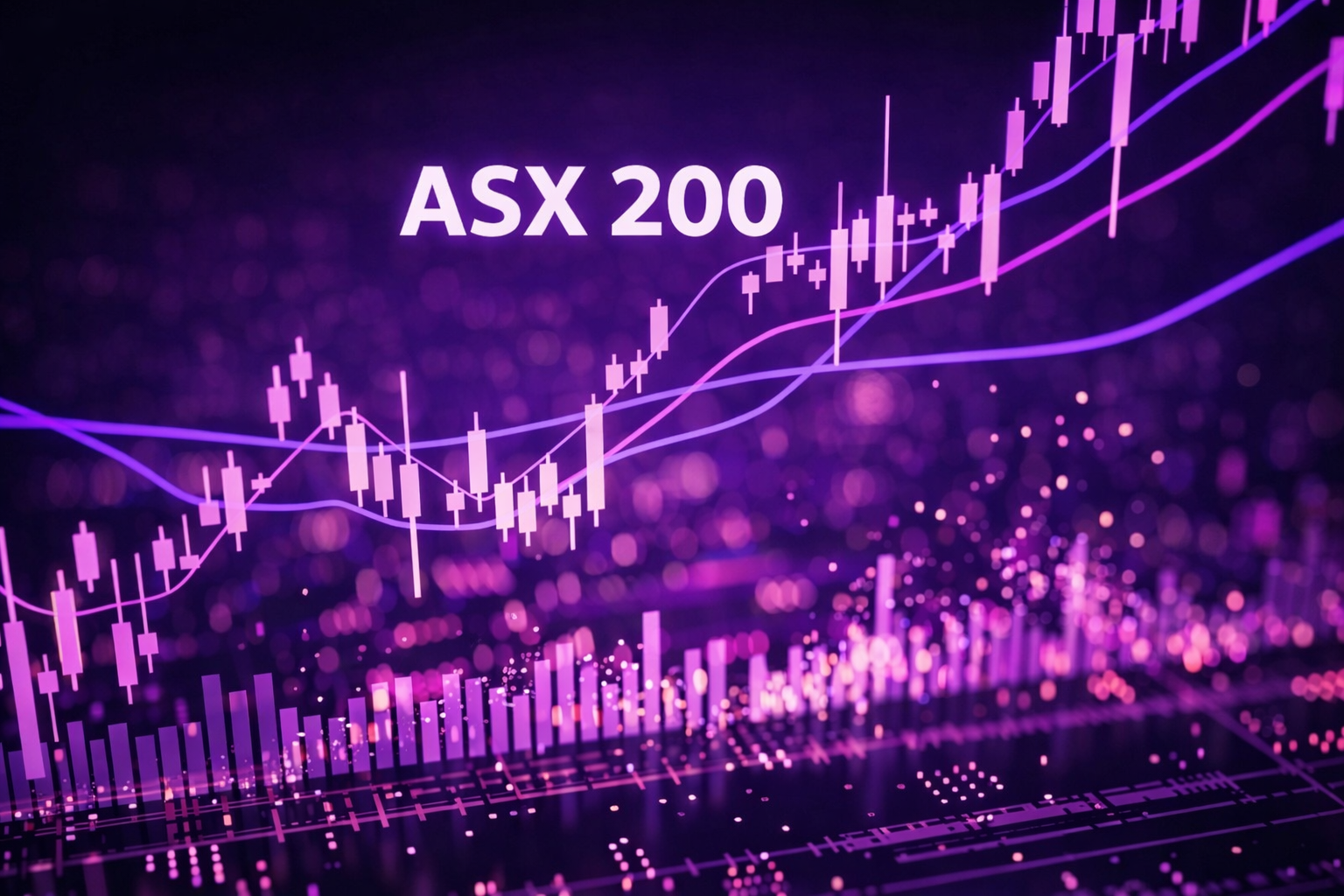
SYDNEY — The S&P/ASX 200 climbed 28.0 points, or 0.31%, to 9,081.8 as of 12:44 p.m. AEST Thursday, rebounding from a two-week low as a dramatic overnight surge in gold prices lifted mining stocks and a heavy slate of corporate earnings continued to drive volatility across the Australian market.
Thursday’s gains followed a soft start to the trading week, with the ASX 200 having fallen for six consecutive sessions before touching a two-week low of 9,042 points in early trade Wednesday. That earlier weakness had been driven in part by sluggish U.S. stock futures amid a global bond market selloff and rising oil prices, according to Trading Economics. Wednesday’s session ultimately closed little changed, with the index steadying at 9,027 points, down 0.30% for the day.
Thursday’s rebound came on the back of a striking overnight move in gold markets. According to Market Index’s live coverage of the session, gold prices experienced a massive 4.3% rally overnight to $4,522 an ounce, after the U.S. Treasury Department made a surprise announcement that it would ramp up buybacks of long-dated government debt, a move interpreted by markets as signaling an effort to lower long-term borrowing costs following yields that had hit multi-decade highs earlier in the week. The All Ordinaries Gold Index surged 8.1% in early Thursday trade, pushing it to a gain of 4.4% year to date, according to Market Index.
The rally in gold miners provided a significant boost to the broader index, with the sector emerging as one of the standout performers of the session even as other parts of the market showed more mixed results.
Thursday marked one of the busiest days of the current reporting season, with a large number of ASX 200 companies scheduled to release earnings, including Goodman Group, Medibank Private, Megaport, Super Retail Group and Zip Co, according to The Motley Fool Australia. Among those results, an industrial property group reported meeting its fiscal 2026 estimates while guiding to 9% earnings growth for fiscal 2027, with data centers now dominating a development pipeline that grew by more than 50% over the year, according to Market Index’s live blog.
A buy-now-pay-later company delivered a notable earnings beat, with cash EBTDA rising 57.9% to $268.9 million against analyst estimates of $263 million, a 2% beat, alongside operating margin expansion of 420 basis points to 20.0%. Net bad debts came in at 1.77% of total transaction value, slightly above the prior year’s 1.52% but within management’s target range. Active customer numbers rose 3.7% to 6.5 million, marginally missing the 6.6 million analysts had forecast, while merchant numbers climbed 13.8% to 97,400. The company issued fiscal 2027 cash EBTDA guidance of $340 million, implying 26% growth and sitting 10% above analyst estimates, while guiding to U.S. transaction volume growth of more than 30%, well ahead of the 21% growth implied by analyst projections. The company also disclosed it had completed $150 million in share buybacks during fiscal 2026, with a further $50 million program announced for fiscal 2027, and said it was considering a share consolidation to be put to its 2026 annual general meeting while continuing to weigh a potential U.S. dual listing.
Wednesday’s session had featured its own significant earnings-driven swings ahead of Thursday’s rebound. Whitehaven Coal tumbled 2.4% on weak earnings, while Evolution Mining shed 0.9% despite reporting a stronger fiscal 2026 profit. Santos gained 2.5% on higher oil prices and an interim dividend that aligned with analyst estimates, reflecting the company’s strong first-half operating free cash flow. Three of the big four banks eased between 0.1% and 1.4% during that session, continuing a pattern of underperformance among interest-rate-sensitive financial stocks that has persisted through much of the current reporting period.
Energy stocks were also flagged as a sector to watch Thursday following overnight gains in crude oil prices, with Woodside Energy Group and Santos both positioned for a potentially strong session, according to The Motley Fool Australia’s preview of the day’s trading.
Thursday’s positive tone was reinforced by a solid overnight session on Wall Street. According to SPI futures data cited by The Motley Fool Australia, the ASX 200 had been expected to open roughly 28 points, or 0.3%, higher Thursday morning, in line with gains in the U.S. the previous session, where the Dow Jones Industrial Average rose 0.2%, the S&P 500 climbed 0.2% and the Nasdaq Composite advanced 0.15%.
The current reporting season has produced some of the most significant single-session index moves of the year. The ASX 200 surged 441 points, or 4.99%, from 8,841 to a fresh all-time high of 9,282 points during the fortnight spanning July 22 to Aug. 5, according to analysis from HLM Investments, in what was described as the most concentrated period of technology sector earnings of the year both in Australia and globally. That rally has since given way to a choppier, more earnings-driven trading pattern through much of August, with the index oscillating within a roughly 250-point range as investors digest a steady stream of corporate results alongside broader macroeconomic developments, including this week’s dramatic swings in global bond and gold markets.
The ASX 200 remains below the all-time high of 9,198.6 points it reached in February, having climbed 2.66% over the past month even as it sits roughly flat, up just 0.09%, compared with the same period a year earlier, according to Trading Economics. With reporting season continuing through the remainder of the week and Thursday’s wave of major earnings releases still being digested by the market, investors are likely to remain focused on how individual company results, alongside the continued fallout from the Treasury Department’s debt buyback announcement and its ripple effects across gold and bond markets, shape the index’s trajectory heading into the final stretch of August trading.

Two prominent Australian brands are warning customers to remain vigilant about targeted scams after major cyber incidents saw their customers’ data exposed.

Cuscal FY26 slides: payments group posts 20% growth, eyes mid-20s gains

The apartment developer has delivered its strongest profit in more than a decade, and has announced a new $150 million project.

New data from the Australian Bureau of Statistics has revealed the nation’s unemployment rate rose to 4.5 per cent in July, buoying hopes the Reserve Bank would hold off on raising rates in the near term.

Vicinity Centres FY26 slides: premium shift drives 4.2% income growth
The regulator said its surveillance system detected sharp and unusual movements in the Sensex during the CAS, which was introduced to improve price discovery and transparency.
Sebi alleged that the trading activity of the two entities was aimed at influencing the index’s closing value and generating wrongful gains from their expiry-day Sensex option positions.
It observed three sharp movements in the Sensex during the CAS on August 13. Movements of 362.02 points, 132.67 points and 405.08 points, respectively, were recorded within 2 to 28 seconds.
The order log further shows substantial concentration of the relevant orders by the two participants. Copthall accounted for 99.91% and 96.09% of the buy-order value during the first two-second spike and 85.21% during another relevant period, it said.
“Such conduct, particularly when undertaken prima facie with a malafide intention to manipulate the payoff from the outstanding Sensex options of expiry-day, presents a serious concern from the perspective of market integrity and fair price discovery and undermines the functioning of the securities markets. It is also unfair to other investors who invest in mutual funds and take positions in options based on trust,” Sebi whole time member Kamlesh Varshney said in an ex-parte interim order.
The regulator said Copthall placed large buy orders across Sensex constituents at prices materially above the reference price. It simultaneously held long call and short put positions in Sensex options, giving it an economic incentive to keep the index higher at expiry.Sebi said the aggressive buying appeared to have been designed to push up the indicative equilibrium price (IEP) and benefit Copthall’s outstanding options positions. It estimated Copthall’s prima facie wrongful gains at ₹ 2.9 crore.
The regulator said Mansi adopted an opposite strategy. It placed large sell orders across eight Sensex constituents at prices significantly below the reference price, putting downward pressure on the IEP. The entire sell block was subsequently cancelled.
Read more: Sebi plans comprehensive review of rules governing SME IPOs
It said Mansi had outstanding put-option positions that would benefit from a lower Sensex. Once the positions were squared off, the sell orders were cancelled, which, according to the regulator, indicated that the orders were not bona fide but were intended to artificially suppress the index.
Sebi estimated Mansi’s wrongful gains at Rs 71.6 lakh, taking the combined prima facie wrongful gains of the two entities to Rs 3.6 crore.
“It is pertinent to note that the examination or the evidence does not prima facie indicate that the entities acted in concert.” Sebi said.

Business
Incorporated in 1990, Tempsens manufactures customized temperature sensing solutions, electrical heating solutions and specialised cables. It exports products to over 80 countries including United Arab Emirates, Germany and Poland. It operates 15 manufacturing units across the world along with its joint ventures. Temperature sensing solutions segment contributes 45% to the revenue, specialized cables contribute 35% and the rest comes from electric heating solutions. According to the Frost & Sullivan, the company is the largest manufacturer of contact and non-contact temperature sensors in India in terms of revenue, with a market share of 10.5% in FY26. It also had 21.3% of market share in non-contact temperature sensors in FY26. It is one of the largest manufacturers of electrical heaters in India in terms of installed capacity FY26. The company is the only manufacturer of fibre optic temperature sensors, thermal profiling systems, pyrometers and online thermal imagers in India in FY26.
ET BureauThrough the Lens Healthy growth and strong portfolio seen as upside; customer concentration and premium pricing warrant a deeper look
Financials
Revenue from operations rose 27.2% annually to ₹444.9 crore while net profit grew 31.8% annually to ₹71.1 crore between FY24 and FY26. Operating profit before interest, tax, depreciation and amortisation (Ebitda) increased 36.1% to ₹113.2 crore during the same period. In FY26, revenue rose 17.5%, Ebitda increased 16.3% while net profit grew 13.6% year-on-year. Ebitda margin dropped to 24.8% in FY26 from 22% in FY24.
Read more: Sebi plans comprehensive review of rules governing SME IPOs
Valuation
The company does not have any listed comparable peer in India. Considering the post-IPO equity and net profit for FY26, the company demands a price-earnings (P/E) multiple of 35 and price to sales multiple of six.

Check out what’s clicking on FoxBusiness.com.
A fresh dog food company is recalling nearly all of its fresh meals after receiving 192 reports of potential eye problems in dogs, including a condition that can lead to vision loss if severe and untreated.
Years, a U.K.-based subscription service which says it has served roughly 40,000 customers this year, said it is investigating buckwheat as a possible contributing factor, including whether part of its buckwheat supply may have been contaminated.
The company said no causal link between its food, buckwheat and the reported eye problems has been established, and laboratory and toxicology testing is continuing.
As of Tuesday, 192 customers have reported potential eye issues, including sudden bilateral dry eye known as keratoconjunctivitis sicca (KCS). The condition causes dogs’ eyes to stop producing enough tears, leading to irritation, redness and discomfort.
FROZEN DOG FOOD RECALLED OVER SALMONELLA CONTAMINATION THAT LED TO MULTIPLE PET ILLNESSES

Years is pulling nearly all fresh meals while testing continues into buckwheat after a surge in reported canine eye issues. (iStock / iStock)
Tears lubricate and protect the surface of the eye. If left untreated, KCS can cause corneal ulcers, scarring and other damage that can potentially result in permanent vision loss.
The company said reports of eye issues in dogs began a few weeks ago.
“In late July, we began receiving multiple reports of dogs experiencing sudden, bilateral dry eye,” Years said.
By Aug. 16, the company said it had identified 57 suspected cases, which it characterized as about 0.1% of roughly 40,000 customers served year-to-date.
Years said an independent veterinarian and specialist in small animal clinical nutrition initially advised on Aug. 1 that a link to the company’s food appeared unlikely based on the information then available, while recommending further investigation.
POPULAR PET FOOD RECALLED OVER POSSIBLE SHARP METAL AND PLASTIC CONTAMINATION

Dogs could face permanent vision damage if severe dry eye goes untreated as Years investigates a possible food link. (iStock)
Years said it decided to issue the recall as a proactive measure affecting all of its fresh meals except those in its Chef’s Collection, the ultra-premium, limited-edition tier of dog meals offered by the brand.
The decision was made following “rising case numbers, input from customer advocates and ophthalmologists and growing evidence around buckwheat.”
Laboratory testing of the buckwheat supply is still ongoing. The company did not provide further details on how the buckwheat supply may be affecting dogs’ eyesight beyond the possibility of contamination.
Years said the affected fresh meal formulations contained 6.3% to 7.2% buckwheat, depending on the recipe.

The company is replacing buckwheat with quinoa as it investigates nearly 200 reports of potential eye problems in dogs. (Tim Graham / Getty Images)
KCS can have a number of causes in dogs, including immune-mediated disease, certain medications, infections, hereditary factors and trauma, meaning the reported condition alone does not establish a link to the food.
Customers’ subscriptions have been paused for an initial six-week period as the brand works to reformulate its recipes with quinoa in place of buckwheat. The company said it will also provide a thank-you gift with their next delivery for the inconvenience.
To help with the investigation, the company is also arranging a free collection of any unused meals.
CLICK HERE TO GET FOX BUSINESS ON THE GO
“Your help with our investigation would mean a great deal. We’ll arrange a free collection of any unused meals and apply a full credit to your account for the order,” Years said.
The company also urged dog owners who suspect their pets are experiencing eye issues to take them to the vet, stating that “early treatment makes a real difference.”
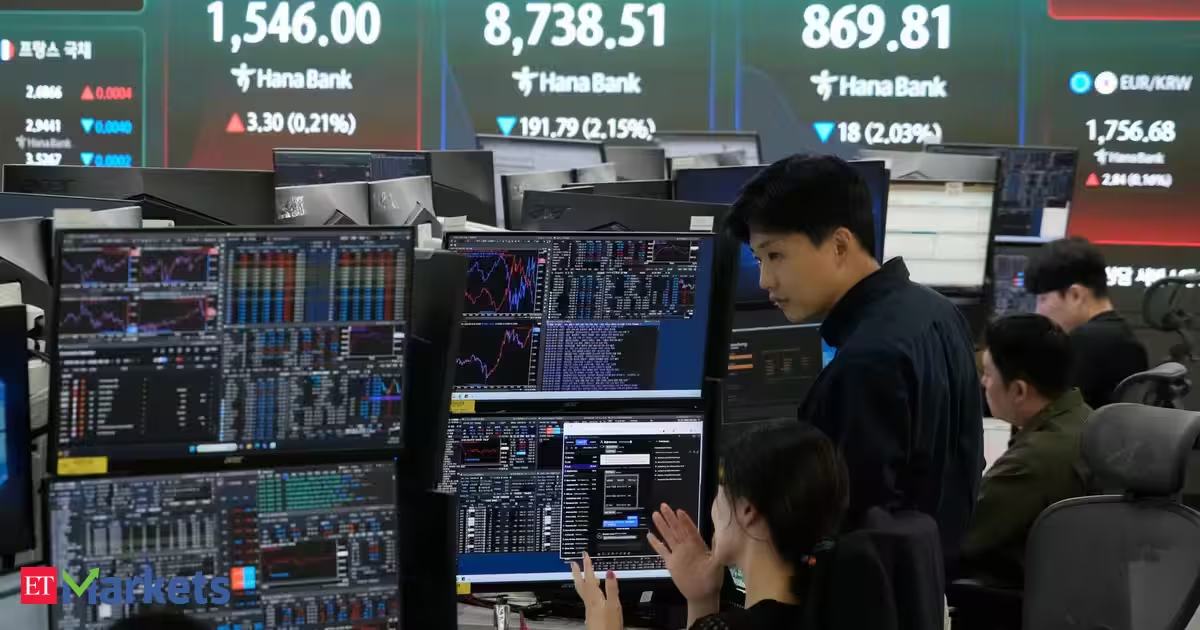
MSCI’s Asia Pacific equities gauge climbed 0.8%, led by shares in South Korea, which jumped over 2%. US equity-index futures also advanced in early Asian trading after the S&P 500 Index posted a modest gain Tuesday, even as chipmakers declined.
SK Hynix Inc. shares over 5% in early trading after the South Korean memory-chip maker unveiled plans to buy back 40 trillion won ($29 billion) of shares and return more profits to investors.
Read more: Nifty price-to-book ratio hits 6-year low, but market may not be cheap
The moves in stocks came after a rally in 30-year Treasuries drove yields down 10 basis points to 5.18% during the New York session. That was spurred by the US Treasury announcing plans to boost buybacks of securities dated from the 10-year to the 30-year after a surge in yields to multi-decade highs. Bonds in Australia and Japan tracked the moves in Treasuries.
Gold climbed to around $4,515 an ounce, after climbing to its highest level since early June in the prior session. Brent was steady at $91.60 a barrel, while Bitcoin rose to around $70,000 after President Donald Trump pressed Congress to pass a key crypto bill as the White House hosted industry executives.
Global bonds had been jolted in recent days as investors demanded greater compensation for inflation risks and rising government debt, while tensions in the Middle East added to inflation pressures. The selloff was also fueled by corporate borrowing to fund the artificial-intelligence boom and waning demand from traditional buyers of long-dated debt.“There is no question that the Administration has become very concerned about the bond market once again and thus they are giving it another injection of steroids,” said Matt Maley, chief market strategist at Miller Tabak + Co. This is something that could “buoy risk assets over the near-term.”
Long-dated government yields surged globally this week, with the US 30-year yield reaching its highest level since 2007. A 10-year Treasury auction last week drew the highest financing cost for that maturity since 2007, while a 30-year sale a day later cleared at the highest yield since 2001.
While the Treasury didn’t indicate how the operations would be paid for, it typically relies on issuance of bills for its fluctuating funding needs. If officials are in effect replacing longer-dated debt with short-term securities, the maneuver amounts to a version of the Federal Reserve’s “Operation Twist.”
“This administration needs a win, and maybe that comes in the form of artificially trying to keep long Treasury rates contained,” said Jack McIntyre, a portfolio manager at Brandywine Global Investment Management. “They have to try something. Sentiment around the long-end globally is about as bearish as I have seen in a very long time.”
Meanwhile, in geopolitical developments, the US will begin what Trump said would be an unprecedented economic warfare operation against Iran, after faulting the country for failing to take its chance to make a deal with him.
Investors are also parsing minutes from the Fed’s latest meeting, which showed several officials favored raising interest rates last month and many thought further tightening may be needed if inflation failed to cool.
However, uncertainty hung over the meeting as participants’ inflation outlooks were clouded by the Iran war.
“Most participants anticipated that inflation would step down over the rest of the year as the effects of tariffs and earlier energy price increases wane, but many participants noted the possibility that inflation might be more persistently elevated,” the minutes said.

Hockey Hall of Fame hosting George Springer display

Google is giving students a free year of AI Pro and a new Gemini Student Hub

Stop! That! Train! is the best kind of silly film





-

 Fashion5 days ago
Weekend Open Thread: Ann Taylor
-
 Sports6 days ago
This U.S. Amateur is a glimpse into golf’s future in more ways than you think
-
 Tech6 days ago
11 Ways to Rank Your Videos
-
 NewsBeat5 days ago
Myanmar says over 300,000 Rohingya refugees verified for repatriation as exodus enters ninth year
-

 Sports5 days ago
Birmingham 2026: Day 6 Timetable for Irish Athletes
-

 Politics5 days ago
SEQ Code: The Three Letter Boarding Pass Code That Could Give You The Worst Seat
-

 Tech6 days ago
DeepSeek Harness launches as open source rival to Claude Code, alongside V4-Pro on API with higher prices
-

 Crypto World2 days ago
OCC Greenlights Trump Family Crypto Firm for Trust Charter
-

 Tech2 days ago
Qwen3.8-27B runs frontier-class coding agents and reasoning locally, no cloud API required
-

 Fashion7 days ago
The Details Do the Dressing
-

 Fashion5 days ago
Weekly News Update, 8.14.26 – Corporette.com
-
 Tech5 days ago
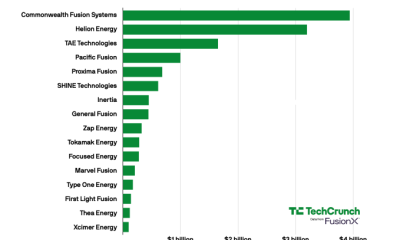
Every fusion startup that has raised over $100M
-
 Entertainment6 days ago
10 Netflix Shows That Quietly Became Modern Classics
-
 Entertainment5 days ago
Marvel Studios Reveals New X-Men Cast Including Adam Driver and Sadie Sink
-

 Business6 days ago
15 Ways to Make Money From Your Phone (2026 Guide)
-

 Business5 days ago
Facebook Down Now? Users Report Login And Loading Problems As Outage Trackers Monitor Ongoing Issues
-

 Business2 days ago
SMA Solar Technology AG (SMTGY) Q2 2026 Earnings Call Transcript
-

 Crypto World6 days ago
Robinhood Chain Approaches $1B TVL as Uniswap Integration Boosts Liquidity
-

 Fashion5 days ago
Cart Confidential Vol. 44 – Julia Berolzheimer
-

 Crypto World5 days ago
Pi Network Protocol 27 endgame: last upgrade before what?
You must be logged in to post a comment Login