
Business
Hermes beats sales expectations, sees positive signs in China


Thanks to its ultra-wealthy clients and large order backlog, the group has weathered a luxury sector slowdown better than most of its rivals, consistently increasing revenue while sales at other luxury groups, like LVMH and Kering , have been under pressure.
“The group is going into 2026 with confidence,” said CEO Axel Dumas, adding that this year’s price increases would be around 5-6%, down from a 6-7% rate in 2025, attributing the slower pace to currency shifts.
Chiara Battistini, luxury equity analyst at J.P. Morgan, said the price increases Hermes imposes on its customers are a key question for the company’s growth outlook.
Many of its rivals have put the brakes on price rises due to falling sales. Gucci owner Kering’s CEO earlier this week said a price hike “bonanza” post-pandemic had contributed to the company’s revenue slide.

Sales of products, including Birkin and Kelly bags, silk scarves and perfume, grew by 9.8% in the fourth quarter in currency-adjusted terms, compared to an analyst consensus compiled by Visible Alpha of 8.4% growth.
Sales in the Americas region, mainly the United States, rose by 12.1%, beating expectations of around 9%, while sales in Asia excluding Japan – a region mainly driven by China – grew 8%.POSITIVE SIGNS IN CHINA
In a call with analysts, Dumas said he was seeing positive signs in China, a major luxury market that has slowed significantly in the past few years due to the impact of a property crash on the country’s economy.
“I do not see the situation deteriorating,” he said. “There are positive moves, in particular the way they are managing the property crisis.”
Revenues in Hermes’ leather division, which accounts for most of its profits, grew by 14.6% organically.


‘The Big Money Show’ panel discusses Hershey’s being slammed by the Reese’s inventor’s grandson over alleged recipe changes.
The Hershey Company plans to tweak the chocolate used in a small portion of its Reese’s and Hershey’s products following criticism from a descendant of the Reese’s Peanut Butter Cup founder over ingredient changes.
The chocolate maker said it will phase out certain compound coatings and transition those products to traditional milk or dark chocolate by 2027. The change is expected to affect less than 3% of Reese’s items and a small portion of its broader portfolio, according to Bloomberg.
“[We’re] bringing a small portion of remaining Hershey’s and Reese’s products in line with their classic milk and dark chocolate recipes,” a spokesperson for The Hershey Company told FOX Business in an email. “The core recipes for our Hershey’s chocolate bars and Reese’s peanut butter cups have not changed.”
GRANDSON OF REESE’S INVENTOR BLASTS HERSHEY OVER ALLEGED RECIPE CHANGES: ‘I THREW IT IN THE GARBAGE’

Various Reese’s products are pictured on store shelves. (Arne Dedert/picture alliance via Getty Images)
Most Hershey’s products, including its flagship chocolate bars and standard Reese’s Peanut Butter Cups, already use traditional chocolate. The updates will apply to select items such as the Reese’s Fast Break bar, some Mini Reese’s and certain foil-wrapped products, Bloomberg reported.
Hershey CEO Kirk Tanner said the decision to adjust ingredients was made shortly after he took on the role last summer.
The chocolate maker is also revising the Kit Kat recipe to create a creamier chocolate taste and plans to eliminate artificial colors from its products by the end of 2027, according to the outlet.
The changes follow recent criticism from Brad Reese, the grandson of H.B. Reese, who accused the company earlier this year of lowering ingredient quality in some products.
CHOCOLATE PRODUCTS RECALLED OVER HIDDEN DRUGS TIED TO ‘LIFE-THREATENING’ BLOOD PRESSURE DROPS

Reese’s products are seen in a shop in the United Arab Emirates on Nov. 24, 2023. (Jakub Porzycki/NurPhoto via Getty Images)
In a February LinkedIn post, he alleged Hershey had replaced traditional ingredients like milk chocolate and peanut butter with cheaper alternatives.
Reese on Wednesday dismissed the company’s latest announcement, calling it “a PR move” and “total bunk.”
“I don’t look at this as a win,” Reese told FOX Business.
He also questioned the timeline, suggesting the company is delaying meaningful action.
“They’re just hoping this will die down, and it’ll be business as usual by 2027,” Brad Reese said. “If they were really serious, they would do it right away.”
THIEVES STEAL 12 TONS OF KITKAT BARS FROM TRUCK IN EUROPE

Assorted candy, including Hershey’s, Reese’s and KitKat products, is displayed on store shelves. (Lindsey Nicholson/UCG/Universal Images Group via Getty Images)
Hershey pushed back in a statement to FOX Business, noting that Reese has no official connection to the company or brand.
The company also cited a statement from other members of the Reese family distancing themselves from his remarks.
CLICK HERE TO GET FOX BUSINESS ON THE GO
“Our family would like to make it clear that we have no involvement in, nor do we support, the recent claims made by Brad Reese regarding The Hershey Company. His statements and opinions are entirely his own and do not reflect the view or position of our family,” the family recently said in a statement.
“We continue to respect The Hershey Company, its leadership, and its longstanding role in our community. We believe H.B. Reese would take great pride in the products produced under his name today and in the integrity with which the brand continues to be managed.”


CEO spotlights improved results for frozen food and snacks.


The pace of category growth to be “more measured” in 2026.
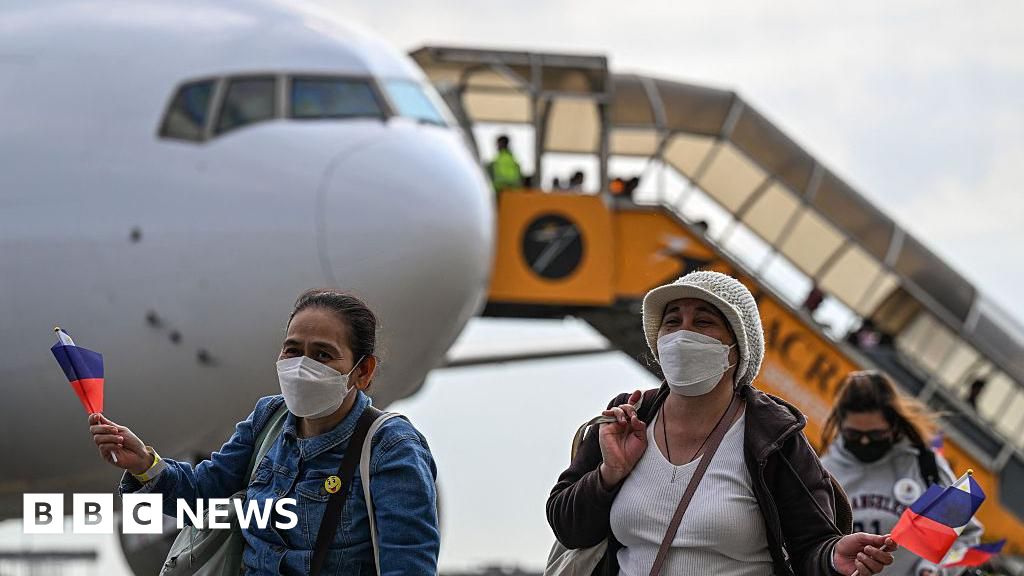
According to the International Labour Organisation (ILO), the region hosts 24 million migrant workers, making it the world’s top destination for overseas labour. Most of them come from Asia – India, Pakistan, Bangladesh, Sri Lanka, the Philippines and Indonesia. Many of these workers take low paid or precarious jobs, and have little access to things like healthcare, the ILO says.

The Big Money Show discusses the potential fallout from President Donald Trump’s proposed credit card interest rate cap.
A new analysis finds that a 10% credit card interest rate cap would shrink access to credit, affecting well over 100 million American cardholders in the process.
Some Republican and Democratic lawmakers have expressed support for capping credit card interest rates at 10%, a measure that also received support from the Trump administration. Other proposals have centered on a higher cap of 15% or 20%.
An analysis by Unleash Prosperity warns that credit card interest rate caps would function as price controls on what is currently a highly competitive market, resulting in significant consequences for consumers and the economy.
“What’s going to happen if you put these interest rate caps on is you’re going to have fewer Americans with either lower incomes or lower credit scores who will have access to credit cards and that will make them worse off, not better off,” Steve Moore, co-founder of Unleash Prosperity and a former Trump administration economist, told FOX Business.
TRUMP’S PROPOSED CREDIT CARD INTEREST RATE CAP COULD CURB ACCESS FOR MILLIONS OF AMERICANS: REPORT

Credit card interest rate caps would affect the access to credit and rewards available to Americans, while the impact would be the greatest on consumers with lower credit scores. (iStock)
“Obviously, the big issue right now for consumers is affordability, and so the politicians are looking for any way to reduce costs to consumers. But what we found in our study is that the interest rate cap would dramatically reduce the number of Americans who would have access to credit,” he said.
The report by economists at Unleash Prosperity noted there is evidence that the vast majority of cardholders would be affected by a 10% rate cap, based on research from the U.S. and internationally.
It noted a large survey of the credit market published by the American Bankers Association in January, which found that 74% to 85% of open credit card accounts would be closed or have credit lines reduced, affecting between 137 million and 159 million cardholders.
Unleash Prosperity’s analysis found that the adverse impact would be the worst among cardholders with lower credit ratings, with it universally affecting subprime borrowers and below, as financial institutions wouldn’t be able to cover lending costs due to the interest rate cap.
TRUMP CALLS FOR 1-YEAR 10% CAP ON CREDIT CARD INTEREST RATES

Credit card interest rate caps would have an impact on cardholders across the spectrum of credit scores. (iStock)
The analysis estimated that between 71% and 84% of prime borrowers would either lose access to credit cards altogether or have credit lines reduced under a 10% cap.
Super-prime borrowers, who have the highest credit ratings with scores above 780, would also be affected by a 10% rate cap or even a 15% rate cap, as they currently face an average interest rate between 13% to 18% for existing accounts and 17% to 21% for new accounts. One such impact would be that credit card rewards programs could be curtailed through less generous incentives, or such rewards programs could be eliminated altogether.
A 20% interest rate cap would affect about 70% to 75% of all borrowers, or roughly 129 million to 140 million cardholders.
“We need maybe more financial literacy in this country because you are going to pay a very hefty interest rate if you don’t pay your credit card on time and the rates are high, but that’s because you’re not supposed to borrow on your credit card, and a lot of people do that and that’s how they get into financial trouble,” Moore said.
EX-TRUMP ADVISOR RAISES ALARM OVER BIPARTISAN CREDIT CARD PLAN THAT COULD HURT AMERICANS

President Donald Trump called for a one-year 10% interest rate cap. (Saul Loeb/AFP via Getty Images)
Moore noted that an unintended consequence of credit card interest rate cap proposals is that it could force consumers who need funds to seek out payday loans, which have an average interest rate of near 400% APR.
“The kind of do-gooders in Washington say they’re going to do this to help people stay out of debt… They don’t want payday lenders, they want to make it harder for people to use credit cards,” Moore said. “Well, what are people going to do, go to a loan shark to get money in a hurry?”
“The alternative to paying a high interest rate on a credit card can be even worse for people,” he added.
GET FOX BUSINESS ON THE GO BY CLICKING HERE
Moore also said that credit cards play a significant role in how consumers engage in economic activity and that policymakers shouldn’t risk disrupting an important tool for consumers.
“Credit cards have become pretty ubiquitous in the U.S. and it’s by far the number one way people pay for transactions. The amount of money that people are spending on credit cards continues to escalate,” Moore said. “It’s a very convenient way for people to pay for things, it’s good for merchants, it’s good for customers, it’s good for banks – let’s not interfere with a system that’s working.”

Fast moving industries are at the forefront of trends. They’re there to keep their customers interested, happy, and engaged, and it’s something that all businesses can learn from.
Business agility is the ability to think on your feet and react or even predict trends to steer your business through every hurdle and into a new phase of success.
As digital industries have a significantly shorter production period (they don’t need to find a manufacturer, create products only to then ship them, assess them, ship them back, make changes, and all before major distribution), they can react to trends and new ideas faster. The rise of AI in coding means that digital products are only faster and easier to make than ever.
It’s time to take a page out of the digital industry’s handbook and apply these top business agility lessons to your business:
Add New Features Fast to Keep Up with New Industry Standards
Digital industries move fast, and because they move fast, the standards benchmark is constantly being pushed further and further. Take online casinos as an example. In the past, their offerings were largely fixed to online slot games. While slots are absolutely still a huge part, online casinos today now offer live casino games with video streams of real dealers as standard. Go to Kanuuna.com, and you’ll be able to play live games online just as you would the bigger names in the business.
That’s why it’s so important to keep track of what your competition is doing. One person trying something new isn’t a big deal, but once everyone is doing it, it isn’t a matter of following the leader. The industry benchmarks have shifted, and so too do you.
Continue Updating and Refreshing Content
Content has exploded, and while users may be fatigued by the onslaught of AI-generated content, their appetites have only grown for new things. AI has set a whole new pace for content generation, and while you don’t need to keep pace with a bot farm churning out hundreds if not thousands of posts and new bits of content per day, you do need to create and it has to be consistent.
The good news is that you don’t need to do it alone. Just as online casinos partner with game developers to get their games on their sites, you too can partner with content creators or even other businesses to create mutually beneficial symbiotic relationships that give users new content without compromise.
Stay at the Forefront of Digital Security
One lesson you absolutely (and this is 100% non-negotiable) need to follow from the digital industries is the ongoing push to enhance digital security. Online casinos do this through extensive ID verification, encryption, and fraud prevention measures. This approach works to cut down on spam as seen on other platforms while also boosting protections against outside attacks.
From AI-powered system monitoring to implementing more advanced firewalls to even establishing simple password and identity verification checks, there are many ways you can improve your digital security. The secret, however, is to know you are never done. Security is an action, not a goal. You will need to continually invest in it to remain online and operational, which is the bare minimum to establish true business agility.

Thomas Barwick | Digitalvision | Getty Images
A version of this article first appeared in CNBC’s Inside Wealth newsletter with Robert Frank, a weekly guide to the high-net-worth investor and consumer. Sign up to receive future editions, straight to your inbox.
While many wealthy parents are breathing a sigh of relief over estate tax changes in last year’s tax bill, some are questioning whether they gave too much to their children — and how to get some of it back.
Before the passage of the One Big Beautiful Bill Act last summer, the estate tax exemption was set to be cut in half to about $7 million a person at the end of 2025. Many families accelerated gifts to their kids and friends before the deadline in order to take advantage of the higher exemption, which was set during the first Trump administration. Under Trump’s second term, however, the new tax law not only raised the exemption to $15 million but also made it permanent.
Lawyers and advisors told Inside Wealth that some parents are now second-guessing their gifts and considering their legal options for potentially clawing some of it back.
It’s a somewhat unexpected element of the “great wealth transfer,” with more than $100 trillion expected to flow to heirs through 2048, as estimated by Cerulli Associates.
Mark Parthemer of Glenmede said divorce is a common reason for clients to regret transferring vast sums to their kids. Wealthy couples frequently set up spousal lifetime access trusts, or SLATs, to get assets out of their estate but keep indirect access to them through their spouse. After a divorce, the spouse who funded the trust loses the benefit of that cash flow.
“We’re now finding the rubber is hitting the road,” said Parthemer, Glenmede’s chief wealth strategist. “There’s a lot of individuals that are just statistically going to find themselves in that scenario.”
Parents have a few routes to claw back assets that were already transferred to their children. One option is to take a loan from the trust set up for their children’s benefit, though it can strain family ties.
And any route could invite scrutiny by the Internal Revenue Service.
“I’m always advising parents not to overcommit because you don’t want to ever have to be beholden to your kids,” said Robert Strauss, partner at Weinstock Manion.
Strauss said he is currently advising a husband and wife who feel financially stretched after gifting two California homes to their children. The couple wants to sell the Malibu home for at least $17 million and collect the cash, but the home is in a trust for the benefit of their children. Strauss’ plan is to divide the trust, use one offshoot to sell the Malibu property and have it lend money to parents.
“I think their fears are irrational. They could slow down their spending, and they would have plenty left, but they evidently can’t,” he said. “They feel as if they’ve transferred too much, as if they didn’t retain enough, and that they lack economic security.”
While it’s legal for the parents to take a market-rate loan from the trust, the parents risk losing their tax savings, according to Strauss. The IRS could deem that the parents are the true beneficiaries of the trust and count its assets toward their taxable estate, he said. The risk is higher if the parents do not have the assets to repay the loan, he added.
“You can’t get around the fact that they need the money, and so you’re looking to break the fewest number of eggs,” Strauss said.
Some parents feel squeezed when gifted assets significantly appreciate, according to Robert Westley of Northern Trust. Clients often use grantor trusts to transfer assets to their kids, meaning they are on the hook for the trust’s income taxes, he said. For instance, if the trust receives dividends or sells stocks, the income or capital gains tax burden falls on the grantor, the person who funds the trust. Over time, “that tax burden becomes overbearing,” said Westley, senior vice president and regional wealth advisor at Northern Trust.
An alternative to taking a loan is swapping the parents’ nonliquid assets with income-producing ones from the trust, which is permissible if they are of equal value, he said.
Todd Kesterson of Kaufman Rossin said his remorseful clients aren’t necessarily strapped for cash, but are frequently displeased when their children’s fortunes exceed theirs.
“The only regret I’ve seen is where they’ve given away a lot of money in trust, and those trusts have done incredibly well for their kids, and now suddenly their kids’ net worth is more than theirs,” said Kesterson, principal of the firm’s family office practice. “It’s happened a number of times, and they say, ‘Well, this isn’t fair. How can we reverse this?”’
While estate planners frequently use irrevocable trusts for wealth transfers, they can be modified or terminated (despite their name), depending on the trust’s terms and jurisdiction. For instance, if the trustee has the authority to do so, an irrevocable trust can be “decanted,” which “pours” the assets from an old trust into a new one with more favorable terms. Depending on the state where the trust is held, it can be terminated altogether if the beneficiaries consent, returning the assets to the parents.
All of these routes risk undesirable tax consequences or, perhaps worse, ire from heirs. When children refuse to cooperate, sometimes their parents take them to court.
Scott Rahn, founding partner of RMO LLP, gets called in when ultra-high-net-worth families can’t see eye to eye. He said inheritance disputes are getting more common as families get richer and people live longer and fall ill with conditions like Alzheimer’s disease or Parkinson’s.
“These disputes are as much about emotion as they are about money,” Rahn said.
“Often the parent wasn’t there for them. Perhaps the parent was creating the wealth, out there plowing the fields and captaining industry and these kinds of things,” he added. “The child feels connected to them financially but perhaps not as emotionally. And they’re going to have a difficult time being asked to give back the thing that meant love to them.”
Rahn said he occasionally brings in psychologists or family therapists to assist during the discussions. Courts tend to be more sympathetic if the trust creator has experienced an unforeseeable life circumstance like illness, he said. Most of Rahn’s cases eventually end in a settlement, he added.
Ultimately, Rahn said he anticipates more conflicts of this nature down the line and advises parents to build flexibility into their estate plans, such as designating a trust protector who can modify the terms of the trust if the grantor falls ill.
“This trend of giving while living isn’t going away. If you’re looking at millennials, Gen Zs, the [Generation] Alphas that are coming up, the cost to get a start in life, whether it’s a business or a home, is only continuing to increase,” he said. “I think the families who are best situated to help avoid disputes like the ones we see and avoid needing these modifications, are going to be the ones who combine that smart planning with clear communication with their heirs and beneficiaries, so that everybody’s on the same page.”

Operator
Good morning, ladies and gentlemen, and welcome to the Aevis Victoria SA publication of the 2025 annual results. [Operator Instructions] Let me now turn the floor over to your host, Antoine Hubert.
Antoine Hubert
Executive Chairman
Thank you very much. Welcome to the presentation of 2025 annual results. We just published our annual report this morning. And I’m here with Fabrice Zumbrunnen, CEO of Aevis Victoria; and Michel Keusch, CFO of Aevis Victoria. As you know, Aevis Victoria is an investment company and focusing on service to people. Our investments, if you take a look at this slide, our main investments, Swiss Medical Network and VIVA, our insurance product that we have with Visana. They represent 59% of the investment. MRH Switzerland, our hospitality, and Batmaid represents 19% of our investment. And infrastructure, so our 30% shareholding into Infracore, and Swiss Hotel Properties represents 22% of our investment.
This year 2025, if we can highlight some event, it was the takeover in December 2024 of Spital Zofingen. This was the fourth public hospital that Swiss Medical Network has acquired. The first one was in 2012, Hôpital de La Providence in Neuchâtel, and then with Hôpital Générale Beaulieu, the 2 hospitals of Saint-Imier and Moutier, and now in 2024, Spital Zofingen. This has triggered important growth within Swiss Medical Network. Michel Keusch will go into detail. But this also confirms that Swiss Medical Network has the ability to work together with the public sector.
I will hand over to Michel Keusch for the fiscal year 2025 performance. Michel?
Business
(VIDEO) Indonesia 7.4 Earthquake Triggers Tsunami Warning; One Dead as Waves Hit North Maluku

JAKARTA, Indonesia — A powerful 7.4-magnitude earthquake struck off eastern Indonesia in the Molucca Sea early Thursday, killing at least one person, damaging buildings and triggering a brief tsunami warning that prompted evacuations before being lifted as small waves reached coastal areas.
The U.S. Geological Survey reported the quake at a depth of 35 kilometers (22 miles) with its epicenter about 127 kilometers (79 miles) northwest of Ternate in North Maluku province. It struck at 6:48 a.m. local time (2248 GMT Wednesday). Indonesia’s meteorology agency BMKG initially recorded it as high as 7.8 before adjusting the figure.
The Hawaii-based Pacific Tsunami Warning Center quickly issued an alert for hazardous tsunami waves possible within 1,000 kilometers (620 miles) of the epicenter, affecting coasts in Indonesia, the Philippines and Malaysia. Residents in North Sulawesi and North Maluku fled homes, offices and hospitals as sirens sounded and authorities urged people to move to higher ground.
Small tsunami waves were observed in several locations. BMKG reported waves up to 0.75 meters (2.46 feet) in North Minahasa, with 0.3-meter (1-foot) waves logged in parts of North Maluku. The Pacific Tsunami Warning Center lifted its advisory just over two hours after the tremor, stating the immediate threat had passed.
At least one person died after being buried under rubble from a collapsed building in the affected region, local officials said. Damage assessments were ongoing in Ternate and nearby Bitung, where authorities reported cracks in several structures and light to moderate building damage. No widespread destruction or major infrastructure failures were immediately confirmed.
Indonesia lies on the Pacific “Ring of Fire,” where tectonic plates collide, making it one of the most seismically active regions on Earth. The country experiences frequent earthquakes and volcanic activity, and its tsunami early warning system (InaTEWS) has improved significantly since the devastating 2004 Indian Ocean tsunami that killed more than 230,000 people across the region.

Residents described panic as the ground shook violently. In Manado, the capital of North Sulawesi, people ran into streets while some hospitals evacuated patients. Social media footage showed swaying buildings and people gathering in open spaces. Aftershocks followed the main quake, adding to the unease.
The U.S. Embassy in Jakarta issued a natural disaster alert advising American citizens in the region to follow local authorities and monitor updates. No immediate reports of damage or casualties emerged from the Philippines or Malaysia, though the initial warning covered their coastal areas.
President Prabowo Subianto’s office said the government was closely monitoring the situation and coordinating with provincial authorities for rapid assessment and relief if needed. Emergency teams were dispatched to the hardest-hit zones.
This event highlights Indonesia’s ongoing vulnerability to seismic disasters despite advances in warning technology. The 2004 tsunami led to the creation of InaTEWS, which now provides faster alerts through sirens, text messages and apps. However, challenges remain in remote islands with limited infrastructure and in ensuring rapid public response.
Seismologists noted the quake’s relatively shallow depth likely contributed to stronger shaking near the epicenter. The Molucca Sea area, between Sulawesi and the Maluku islands, is tectonically complex with multiple plate boundaries.
No major tsunami inundation occurred, and the lifted warning brought relief to coastal communities. Local officials urged residents to remain vigilant for aftershocks, which can sometimes trigger additional hazards.
The earthquake comes amid heightened global attention to natural disasters, as climate change and tectonic activity continue to pose risks in vulnerable regions. Indonesia has strengthened building codes in recent years, particularly in earthquake-prone areas, but enforcement varies and many older structures remain at risk.
Tourism authorities reported no immediate impact on popular destinations farther west, such as Bali or Java, though travelers in North Sulawesi and Maluku were advised to check local conditions. Flights and ferry services in the region experienced minor disruptions during the initial alert period.
International aid organizations stood ready to assist if requested, though Indonesian officials indicated current needs appeared limited to local response efforts. The Red Cross and other groups monitored the situation closely.
This quake serves as a reminder of the importance of preparedness in Indonesia, which averages several thousand earthquakes annually, many too small to feel but some capable of significant destruction. Public education campaigns on “Drop, Cover and Hold On” and evacuation routes have helped reduce casualties in recent events.
As damage assessments continue, authorities emphasized that while the immediate tsunami threat has passed, residents should avoid beaches and low-lying coastal areas until all-clear signals are confirmed.
The event drew international attention, with governments and organizations expressing solidarity with Indonesia. The Philippines and Malaysia, initially placed on alert, reported no significant impacts.
Indonesia’s disaster management agency (BNPB) activated coordination centers and began compiling detailed reports from affected districts. Preliminary surveys indicated structural damage but no widespread collapse of critical infrastructure.
For many Indonesians, Thursday’s quake evoked memories of past tragedies, including the 2018 Sulawesi earthquake and tsunami that killed thousands. Improved warning systems appear to have limited casualties this time, though the single confirmed death underscores the human cost even in moderate events.
Seismologists continue monitoring the fault system for further activity. The Pacific Tsunami Warning Center and BMKG will provide ongoing updates as needed.
As recovery efforts begin in the affected areas, the focus remains on ensuring safety and supporting communities impacted by the shaking and brief tsunami scare.
Indonesia’s location on the Ring of Fire means such events are part of daily life for millions. Thursday’s quake, while significant, caused limited overall damage thanks to quick warnings and public awareness.
The episode reinforces the value of investment in early warning systems and resilient infrastructure across the archipelago.

Best Picks in Real Estate? UBS Says These Two Stocks Are Built for Uncertainty

Israeli soldiers dropping like flies

‘Having Nadal’s number is …’: Iga Swiatek’s new coach has Rafa connection | Tennis News

Pixel Camera Puts Lo-Fi Images In The Palm Of Your Hand


-

 Business7 days ago
Instagram, YouTube Found Responsible for Teen’s Mental Health Struggle in Historic Ruling
-

 NewsBeat6 days ago
The Story hosts event on Durham’s historic registers
-
 Tech7 days ago
Intercom’s new post-trained Fin Apex 1.0 beats GPT-5.4 and Claude Sonnet 4.6 at customer service resolutions
-

 Sports6 days ago
Sweet Sixteen Game Thread: Tide vs Michigan
-
Entertainment3 days ago
Fans slam 'heartbreaking' Barbie Dream Fest convention debacle with 'cardboard cutout' experience
-
 Entertainment5 days ago
Lana Del Rey Celebrates Her Husband’s 51st Birthday In New Post
-
Crypto World2 days ago
Dems press CFTC, ethics board on prediction-market insider trades
-

 Crypto World16 hours ago
Gold Price Prediction: Worst Month in 17 Years fo Save Haven Rock
-

 Tech3 days ago
The Pixel 10a doesn’t have a camera bump, and it’s great
-

 Sports2 days ago
Tallest college basketball player ever, standing at 7-foot-9, entering transfer portal
-

 Tech2 days ago
EE TV is using AI to help you find something to watch
-

 Fashion4 days ago
Amazon Sundays: Soft Spring Layers
-

 Tech3 days ago
Apple will hide your email address from apps and websites, but not cops
-

 Tech2 days ago
How to back up your iPhone & iPad to your Mac before something goes wrong
-

 Politics3 days ago
Should Trump Be Scared Strait?
-

 Crypto World3 days ago
U.S. rule change may open trillions in 401(k) funds to crypto
-

 Tech2 days ago
Flipsnack and the shift toward motion-first business content with living visuals
-

 Fashion7 days ago
En Vogue in Brown Leather and Tailored Neutrals by Atelier Savoir, Styled by J Bolin
-

 Fashion7 days ago
What Are Your Favorite T-Shirts for the Weekend?
-

 Business6 days ago
Chinese universities with military links bought Super Micro servers with restricted AI chips
You must be logged in to post a comment Login