Connect with us

Business

Hershey to transition to a new CFO

Published

on

Hershey to transition to a new CFO

HERSHEY, PA. — The Hershey Co. has promoted Dave Hulays to chief financial officer. He succeeds Steve Voskuil, who intends to retire in early 2027.

Hulays has more than 30 years of financial leadership experience, including the past 14 years at Hershey. He most recently was vice president of finance. Since joining Hershey in 2012 as vice president of finance for Canada, he has taken on broader financial leadership responsibilities across the company, including the US and international businesses, global supply chain, M&A and enterprise transformation.

Before joining Hershey, he spent 15 years at Procter & Gamble in commercial, supply chain, strategy, global business development and global business services across the company’s North American and international businesses.

“Dave is a proven, enterprise-minded finance leader who has helped shape nearly every corner of this business, from our commercial and supply chain organizations to our growth agenda,” said Kirk Tanner, president and chief executive officer of Hershey. “He leads with rigor, accountability and courage. I’m confident he’s the right person to lead our finance organization into its next chapter.”

Advertisement

Hulays holds a bachelor’s degree from the University of Waterloo and a master’s degree in business administration from York University’s Schulich School of Business in Toronto.

Voskuil, who has led Hershey’s finance organization for the past seven years, will move into the role of senior vice president of strategic projects until his retirement early next year. He will focus on initiatives for the CEO and board while ensuring a smooth transition with Hulays, the company said.

“I also want to thank Steve for his leadership over the past seven years,” Tanner said. “He has been an incredible partner to me and to this company, and his continued partnership will support some of our most important priorities as we move through this transition.” 

Continue Reading
Click to comment

You must be logged in to post a comment Login

Leave a Reply

Business

inTEC Group sells commercial businesses to Tela to ‘simplify’ its operations

Published

on

Business Live

Deal to sell businesses in Manchester, Cambridge and Newcastle to Midlands group

Melissa Rambridge, CEO of inTEC Group

Melissa Rambridge, CEO of inTEC Group(Image: inTEC Group)

Manchester’s inTEC Group has sold its commercial businesses in three cities to Midlands group Tela.

inTEC says the deal for the businesses in Manchester, Cambridge and Newcastle will “simplify” its operations after a period of expansions and acquisitions, and will allow it to focus on its work in education. Its key focuses include its managed services work, including new partnerships supporting the Department for Education’s Schools Rebuilding Programme.

Birmingham-based Tela has been operating for more than 35 years and provides business telecoms and IT services through 10 offices. Most staff will transfer to Tela, including Mick Satiar, who will join as CTO. The value of the deal has not been disclosed.

Melissa Rambridge, CEO of inTEC Group, said: “Over recent years, inTEC has built a wide-reaching group with strong capabilities and talented teams across several distinct markets. We’ve now reached a point where the best route to sustainable growth is to simplify the group and concentrate our resources and investment on opportunities within education and telecoms – markets in which we have an established reputation and see significant long-term opportunity.

Advertisement

“Tela is a strong strategic home for the commercial division. It has complementary capabilities, a growing national footprint and a clear commitment to customer service. We will work closely together to support our people and customers through the transition.”

Shez Cheema, CEO of Tela, said: “The acquisition brings experienced people, valuable customer relationships and capabilities that complement our existing offer across managed IT, connectivity and communications.

“We are also pleased to welcome Mick Satiar as CTO. His experience and understanding of the customer base will provide valuable continuity as we bring the teams together and build on the division’s existing strengths.”

Advertisement
Continue Reading

Business

McDonald’s Stock Hits 52-Week Low Near $257 as U.S. Traffic Slows and Investors Await Chicago Strategy Day

Published

on

A Starbucks logo is pictured on the door of the Green Apron Delivery Service at the Empire State Building in New York

NEW YORK — McDonald’s Corp. shares traded near a one-year low on Thursday as investors kept selling a stock that has already fallen far from its spring peak, even though the company is still making more money than a year ago.

The shares changed hands around $256.87 in early afternoon New York trading on Sept. 4, down $2.76, or about 1.1 percent, from Wednesday’s close. The day’s range dipped as low as about $255.79, matching the bottom of the 52-week band that once stretched to $341.75. That high was reached in early March. From there, the stock has dropped roughly one-fifth.

The move was not tied to a single announcement. It was the latest step in a months-long rerating of a company that Wall Street used to treat as a defensive holding: a global franchise machine with reliable cash, a rising dividend and a brand that usually gains share when household budgets tighten. This year that story has cracked. U.S. customers are visiting less often. Value deals have not restored traffic the way they did in 2025. And the stock has lagged a rising S&P 500 even after second-quarter earnings beat profit forecasts.

The latest official snapshot came on Aug. 4. McDonald’s reported net income of $2.36 billion, or $3.32 a share, for the quarter ended June 30, up from $2.25 billion, or $3.14 a share, a year earlier. Adjusted earnings were $3.38 a share, above the $3.32 FactSet consensus. Revenue rose 4 percent to $7.1 billion, a shade short of the $7.13 billion analysts expected.

Advertisement

Global comparable sales, the measure of locations open at least a year, increased 1.3 percent. The United States, still the company’s largest market, rose only 0.8 percent after a 2.5 percent gain a year earlier. International operated markets grew 1.5 percent, led by Germany, Australia and the United Kingdom, with France a drag. Developmental licensed markets rose 1.9 percent. Systemwide sales, which include franchised restaurants, increased 5 percent to $37 billion.

Chairman and Chief Executive Chris Kempczinski did not dress up the U.S. number.

“This quarter McDonald’s delivered positive comparable sales growth across every segment and acted decisively to strengthen execution as we prime McDonald’s for the next era of long-term growth,” he said in the earnings release.

On the conference call he was blunter. “We don’t have a strategy problem,” he said. “We simply didn’t execute at the level we needed to in the second quarter.”

Advertisement

Company filings said U.S. comparable sales were driven by higher average checks and a richer mix of items, partly offset by fewer guest visits. That combination is the core of the investor argument. McDonald’s can still lift the ticket when people order a larger combo or a pricier sandwich. It is having more trouble getting them through the door.

Management pointed to inconsistent restaurant operations, marketing that missed, including a June FIFA campaign that underperformed, and a pullback in digital offers that had been propping up app users. Chief Financial Officer Ian Borden said the reduction in digital deals left some customers buying less or skipping a visit. Reuters later reported that Kempczinski told investors loyal customers accounted for about two-thirds of the traffic shortfall.

The company responded on the same day it reported results by changing the person in charge of the home market. Skye Anderson, a 26-year McDonald’s veteran and most recently U.S. chief operating officer, became president of McDonald’s USA, succeeding Joe Erlinger, who left the company after about seven years in the job. Anderson now oversees nearly 14,000 U.S. restaurants.

“While our playbook is working around the world, we see an opportunity to raise the bar in the U.S. and accelerate performance in our largest market,” Kempczinski said. “Skye Anderson’s appointment today as president of McDonald’s USA will bring focus and urgency to these efforts.”

Advertisement

Anderson said the work would happen in the restaurants, not on a slide. “I am honored to lead the U.S. business and build on the strong foundation already in place,” she said. “Together with our Owner/Operators, suppliers and employees, we’ll remain focused on serving great food, delivering exceptional experiences, earning the right to be our customers’ first choice and bringing McDonald’s > NEXT to life across our restaurants every day.”

McDonald’s > NEXT is the growth plan unveiled at the company’s worldwide convention in June. It is built around better-tasting food and drinks, new restaurant design, consumer-led menu news and cleaner service. Management has promised more financial detail at an investor day in Chicago on Sept. 23 — less than three weeks after the stock printed a fresh 52-week low.

That calendar is now the main event for the shares. Investors want to know how much franchisees will spend, how quickly U.S. traffic can stabilize, and whether the company can simplify a value lineup that has grown crowded. McDonald’s has tested and restacked deals for two years: Extra Value Meals, a McValue platform, buy-one-add-one offers, and an under-$3 list that includes items such as a McChicken, McDouble, small fries and a four-piece Chicken McNuggets. Rivals have copied the playbook. Taco Bell, Wendy’s and others also sell cheap bundles. Reuters reported in August that discounts alone no longer guaranteed traffic across the sector.

The franchise model still throws off cash. First-half adjusted operating margin was 46.9 percent. Loyalty remains a bright line in the results: systemwide sales to loyalty members reached $40 billion over the trailing 12 months, up more than 20 percent, with nearly 220 million 90-day active users. The company still plans about 2,600 gross restaurant openings in 2026. It did push back the date for 50,000 restaurants worldwide to 2028 from the end of 2027, citing a pressured consumer and higher development costs. Even with that delay, management called the current buildout the fastest period of restaurant growth in the company’s history.

Advertisement

The dividend is another reason the stock has not collapsed further. McDonald’s declared a $1.86 quarterly cash dividend with an ex-date of Sept. 1. At Thursday’s price, the yield is close to 2.9 percent, near the high end of its recent range after the share-price slide. The company has raised the payout for decades, which keeps income-oriented funds interested even when growth stocks look cheaper on a multiple basis.

Consensus still leans constructive. A mid-September snapshot of about 34 analysts showed an average target near $315, implying more than 20 percent upside from the mid-$250s, with individual targets ranging from about $250 to $407. Several firms did cut numbers after the U.S. miss. RBC Capital lowered its target to $295 from $305. Bernstein cut to $295 from $310, citing delayed growth and value-execution problems. Some data providers counted more than a dozen downward earnings revisions after the print.

The valuation argument cuts both ways. The stock now trades at a lower multiple than it did at $341, which is why some investors call the pullback an entry. Other models still see the shares as expensive relative to slower U.S. comps. Restaurant peers have been weak as well, and consumer names have been caught in a broader debate about middle-income spending.

For now, the market is treating McDonald’s as a company that can print earnings and still lose the traffic war at home. The next chance to change that reading is Sept. 23 in Chicago, when Kempczinski, Borden and Anderson have to show that “focus and urgency” is more than a leadership announcement. Until then, the tape is doing the talking: a blue-chip burger stock, once priced for durability, changing hands at the lowest levels in a year.

Advertisement
Continue Reading

Business

TMV: An Effective Interest Rate Hedge, And Leveraged ETF Watchlist.

Published

on

FRA: NAV Should Continue To Erode If Distribution Isn't Cut (Downgrade)

TMV: An Effective Interest Rate Hedge, And Leveraged ETF Watchlist.

Continue Reading

Business

C3.ai options flow points to post-earnings position reshuffling, not a directional bet

Published

on


C3.ai options flow points to post-earnings position reshuffling, not a directional bet

Continue Reading

Business

How the American dream has helped keep socialism at bay

Published

on

How the American dream has helped keep socialism at bay

Before the 1917 Russian Revolution, socialists in the U.S. were winning hundreds of local and national contests.

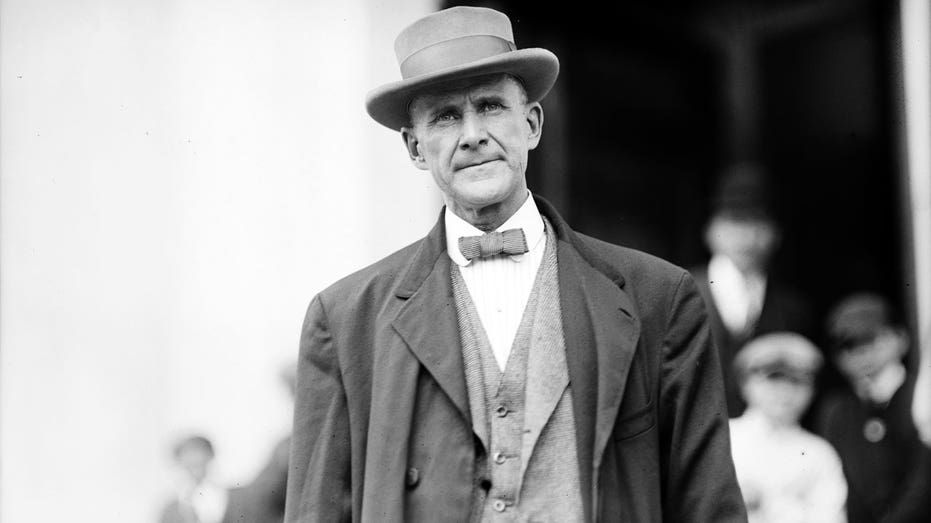
In Manhattan, a socialist immigrant from Lithuania was sent to Congress in 1915. Milwaukee had three socialist mayors. And in the 1912 presidential election, socialist presidential candidate Eugene Debs received 6% of the popular vote.

Advertisement

But socialists couldn’t capitalize on these victories. First, an internal split between the revolutionaries and the moderates prevented a united front. Then the increasingly violent nature of the Bolsheviks scared many off.

HOW AMERICA REACHED A POLITICAL TIPPING POINT FOR SOCIALISM

Socialist and political activist Eugene Debs.

American socialist, political activist and trade unionist Eugene Debs. (Heritage Art/Heritage Images via Getty Images)

More than all that was America’s growing middle class, whose investments in private housing and small businesses were anathema to socialist ideals.

The Great Depression of the 1930s revived interest in socialism and spurred some of former President Franklin D. Roosevelt’s public projects.

Advertisement

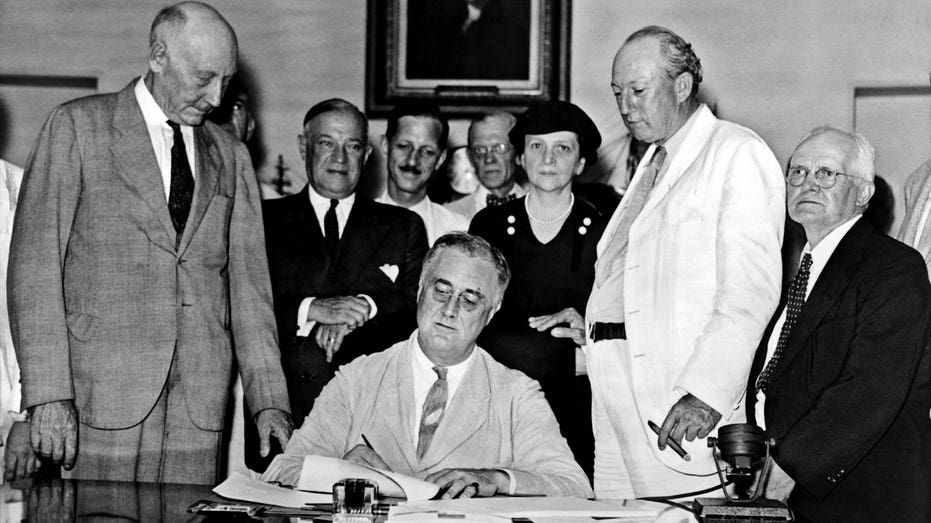
“This Social Security measure gives at least some protection to 30 millions of our citizens,” Roosevelt said when he signed the Social Security Act into law on Aug.14, 1935.

Franklin D. Roosevelt signs the Social Security Act into law in 1935.

President Franklin D. Roosevelt signs the Social Security Act into law in Washington D.C., Aug. 14, 1935. (Underwood Archives/Getty Images)

DAVID ASMAN ON COVID-19 TIPPING OFF RISE IN SOCIALISM: ‘PERFECT STORM’

Still, these measures fell far short of full-blown socialism.

Then came the Cold War, in which any hint of socialism was called out as a direct threat from the Soviets and Communist China.

Advertisement

The 1960s saw a revival of radical socialism within the anti-war movement. But as the Vietnam War died down, and later as the Soviet Union collapsed, the socialist left again seemed to be on the wrong side of history.

CUOMO SOUNDS ALARM ON NEW YORK EXODUS: ‘DON’T CHASE PEOPLE OUT’ TO SOUTHERN STATES

Now comes another wave of American socialism. But as in the past, radicals within the movement are proving to be far more extreme than America’s middle class is willing to accept.

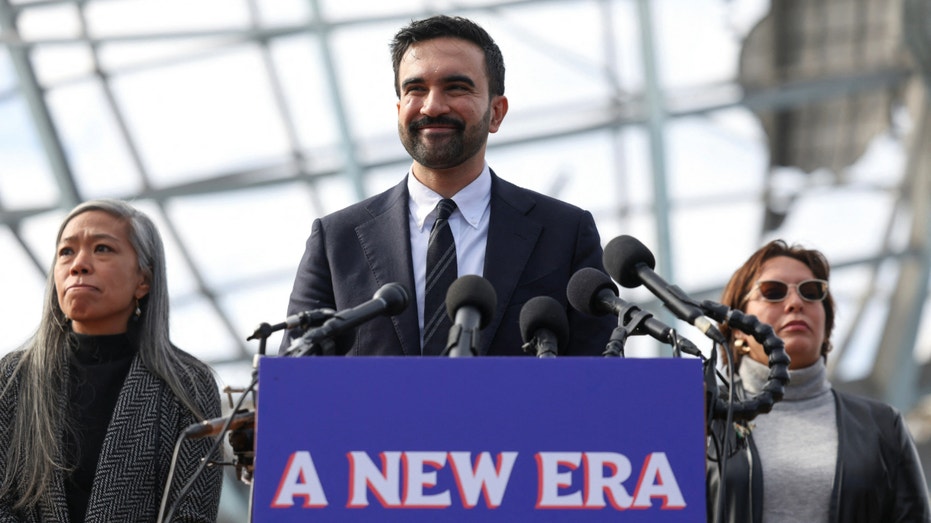
New York City Mayor-elect Zohran Mamdani speaks at a podium.

New York City Mayor Zohran Mamdani is a self-described democratic socialist. (Kylie Cooper/Reuters)

Again, Middle America’s vested interests are tough barriers against socialists’ attempts to undo the foundations of the American dream.

Advertisement

GET FOX BUSINESS ON THE GO BY CLICKING HERE

Now, when you consider that 65% of Americans own their homes, 62% own stock, and 36 million small businesses employ nearly half our workforce, socialist promises to nationalize private property are a tough sell.

Continue Reading

Business

Cheshire East Council seeks strategic partner for proposed ‘Greater Crewe’ master plan

Published

on

Business Live

Project aims to deliver growth and regeneration for the town

The new £1.4bn Leighton Hospital will be built on land to the north of the existing site

The new £1.4bn Leighton Hospital will be built to the north of the existing site(Image: Mid Cheshire Hospitals NHS Trust)

Cheshire East is seeking a strategic partner to develop a master plan for its ‘Greater Crewe’ vision, which aims to drive growth and elevate the town to city status.

Advertisement

The ‘Greater Crewe’ initiative seeks to consolidate major investments across transport, health, infrastructure, housing and economic development.

The ambitious scheme could also see the town gain a second railway station at Leighton, an area that has already witnessed considerable housing development and where the £1.4 billion new hospital is set to be constructed.

The council recently carried out a small assessment study which concluded that a new railway station is a viable proposition and ought to be considered amongst a range of transport solutions for the Leighton area.

Deputy leader Michael Gorman (Wilmslow, Ind) told yesterday’s (Thursday’s) cabinet meeting: “Crewe is recognised as the borough’s principal economic centre.

Advertisement

“It benefits from significant rail connectivity and investment opportunities and has the greatest potential to support housing and employment growth at scale and is capable of delivering substantial economic growth for residents and businesses..

“The master plan will provide the evidence needed to understand how these opportunities can be realised, while addressing infrastructure requirements, environmental considerations and, crucially, placemaking objectives.”

However, he cautioned that the council needed to manage local expectations ‘because the residents and businesses of Crewe have been led up the hill on several occasions and have found that there was nothing there to look at when they got to the top’.

He noted that the message, particularly from younger residents in the borough, was: “We want change, we want a better transport system, we want housing, we want jobs, we want skills.”

Advertisement

Cllr Gorman highlighted that there are fantastic opportunities available in Crewe.

He pointed to the A500 dualling, Bentley Motors, the town’s railway history and Crewe Station as key assets.

He added that the council is seeking clarification from the Government regarding a new rail connection between Birmingham and Manchester.

“And the real game changer is Leighton Super Hospital, which will bring £1.4 billion worth of investment into Crewe.”

Advertisement

Cllr Gorman told the cabinet it is ‘absolutely important we do this properly’.

“We’re going to bring together a three-year Cheshire East growth plan and secure this as a major pipeline project with the Cheshire and Warrington Combined Authority,” he said.

Conservative group leader Stewart Gardiner (Knutsford) raised the question of public consultation.

Cllr Gorman responded: “Engagements with local communities, ward members, businesses, and other stakeholders will form an important part of this process, with opportunities for feedback and input at key stages as the work progresses.”

Advertisement

Cllr Mark Goldsmith (Wilmslow, Ind) stressed that transport was fundamental to any regeneration efforts. “Crewe Station itself is the second-best connected train station in the whole country,” he said, noting that improvements were long overdue.

“Added to that, we also have the Leighton proposal for a new station there as well, so transport will be a real integral part of the redevelopment and the regeneration as well, and it really needs to be heart of what we are doing.”

Crewe councillor Jill Rhodes (Lab) said: “I hope residents will welcome a professional investment and delivery framework, which has economic development at its heart..

“But that does not mean that Crewe and its surrounding areas should have the majority of the housing development, as has happened in the past.”

Advertisement

Cllr Rhodes expressed her support for the proposed residential mixed-use scheme earmarked for the town centre.

“We have all witnessed changes for the better in Manchester and Liverpool, when people started to live in the city centre,” she said.

“Hopefully this initiative will bring similar changes to Crewe.”

Advertisement
Continue Reading

Business

Opponents seek to block US from breaking ground on Trump arch in Washington

Published

on


Opponents seek to block US from breaking ground on Trump arch in Washington

Continue Reading

Business

York Space Systems Shares Rise 3.8% Even As Securities Fraud Lawsuits Loom Over Satellite Maker In Colorado

Published

on

York Space Systems

GREENWOOD VILLAGE, Colo. — Shares of York Space Systems Inc. climbed $0.32, or 3.82%, to $8.84 as of 1:17 p.m. ET Friday, edging up slightly even as the small satellite manufacturer continues facing mounting securities fraud litigation tied to a sharp stock decline earlier this year.

Friday’s modest gain leaves York Space Systems shares still trading down roughly 81% from their 52-week high of $44.54, and just barely above their 52-week low of $8.38, reached in recent weeks. The company’s market capitalization stands at approximately $1.17 billion, based on roughly 137.36 million shares outstanding.

The stock’s dramatic decline traces back to May 11, when short-selling research firm Wolfpack Research published a report alleging serious problems with York Space Systems’ satellite software development practices. According to the report, former employees of the company claimed that York Space Systems launched satellites into orbit without confirming the software controlling them was ready to perform its intended mission, choosing instead to debug the systems only after the satellites were already in space. The report also raised concerns that the Pentagon had decided to halt funding tied to a program known as Tranche 3, part of the Space Development Agency’s satellite architecture.

Following the report’s publication, York Space Systems’ stock price fell $3.91 per share, or 10.9%, dropping from a closing price of $35.88 on May 11 to $31.97 the following day, according to legal filings tied to subsequent shareholder litigation. Separate reporting indicated the stock fell by as much as $7 during intraday trading that same day.

Advertisement

The sharp decline has since triggered a wave of securities class action lawsuits filed by multiple law firms on behalf of investors who purchased York Space Systems stock either through the company’s January 2026 initial public offering or during a broader class period spanning Jan. 29 through May 11, 2026. Law firms including Robbins Geller Rudman & Dowd, Glancy Prongay & Murray, Bleichmar Fonti & Auld, Kaplan Fox & Kilsheimer, and Kahn Swick & Foti have all issued public notices this week reminding affected investors of an Oct. 30, 2026, deadline to seek appointment as lead plaintiff in the consolidated litigation.

One of the underlying lawsuits, captioned Ianelli v. York Space Systems Inc., is currently pending in federal court and centers on allegations that the company and certain senior executives made materially false or misleading statements to investors regarding the readiness and reliability of its satellite software prior to the May stock decline. The specific claims echo the core allegations first raised in Wolfpack Research’s May report.

Despite the ongoing litigation, York Space Systems has continued reporting operational and business developments throughout the summer. According to company disclosures, York Space Systems confirmed the health of 21 satellites following a recent launch and completed its second production lot for tactical communication satellites, developments the company has pointed to as evidence of its continued operational execution even amid the software-related controversy.

York Space Systems also introduced a new spacecraft platform, designated the LX/V-CLASS, in late August, expanding its existing lineup of satellite platforms that includes its S-CLASS, LX-CLASS and M-CLASS offerings. The company, founded in 2012 and based in Greenwood Village, Colorado, provides space and defense mission solutions spanning small satellites, spacecraft platforms, ground operations, downlink services and software-enabled mission capabilities for both U.S. government and commercial customers. The company changed its name from Yellowstone Midco Holdings II, LLC to York Space Systems, Inc. in January 2026, coinciding with its initial public offering.

Advertisement

Wall Street analyst sentiment toward the stock has grown notably more cautious in the months following the Wolfpack Research report. Needham analyst Ryan Koontz maintained a buy rating on the stock while lowering his price target from $33 to $18 on Aug. 14. Wells Fargo similarly cut its price target from $35 to $17 in late August, while Goldman Sachs reduced its target from $28 to $14. Raymond James downgraded the stock to a hold rating in late July, and newly initiating coverage firm Craig-Hallum began its analysis of the stock with a hold rating as well, citing a desire to await further stabilization before offering a more constructive view.

Not all analyst sentiment has turned negative. Citigroup’s John Godyn raised his price target on York Space Systems from $31 to $33 back in July, ahead of the stock’s steep decline, maintaining a strong buy rating at the time and citing expectations that aerospace and defense names broadly would deliver strong earnings beats alongside modest guidance increases during that period.

Insider trading activity at the company has been mixed in recent months. According to disclosed Form 4 filings, insiders at York Space Systems have collectively purchased more shares than they have sold over the trailing year, even as some large shareholders have continued periodic selling. BlackRock Portfolio Management LLC, identified as a 10% owner of York Space Systems, sold approximately $2.2 million worth of shares on Aug. 7, according to regulatory filings.

York Space Systems’ broader business continues to center on serving U.S. federal government agencies and commercial customers with proprietary hardware and software spanning the full space mission lifecycle, from individual satellite components and subsystems to complete spacecraft platforms, ground operations and global downlink services. The company’s exposure to Pentagon-funded programs, including the Space Development Agency’s satellite architecture referenced in the original Wolfpack Research allegations, remains a key factor investors are watching closely given the ongoing litigation’s focus on the reliability of software supporting those government satellite missions.

Advertisement

With the Oct. 30 deadline for investors to seek lead plaintiff status in the consolidated securities litigation still weeks away, and the underlying lawsuits still in relatively early stages, York Space Systems faces a prolonged period of legal uncertainty even as the company continues pointing to operational milestones, including its newly introduced LX/V-CLASS platform and recent satellite health confirmations, as evidence that its core business remains on track despite the software-related allegations that triggered the stock’s steep decline earlier this year.

Continue Reading

Business

WNBA Commissioner Cathy Engelbert to retire at the end of 2026

Published

on

WNBA Commissioner Cathy Engelbert to retire at the end of 2026

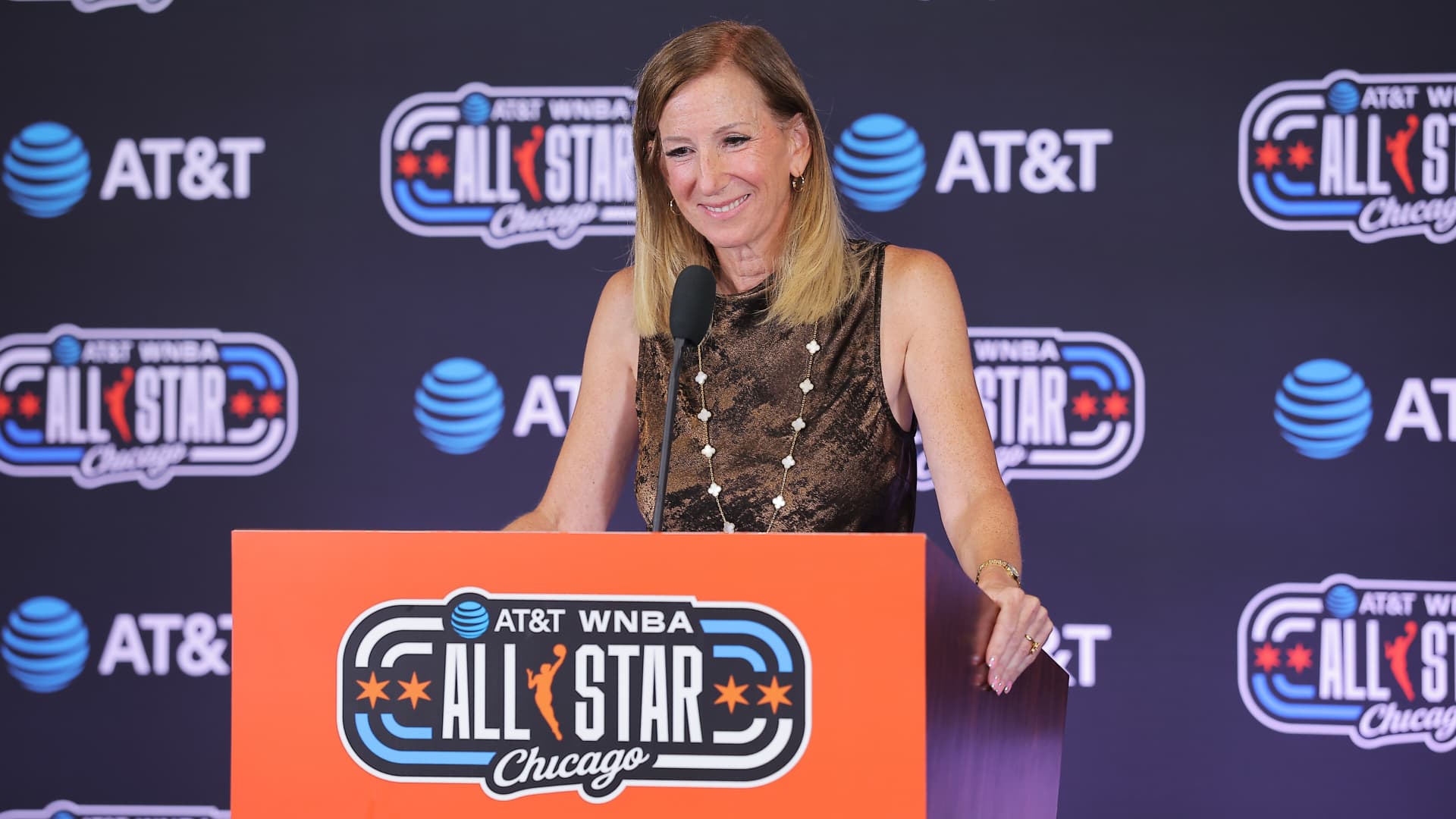
WNBA Commissioner Cathy Engelbert talks to media during a press conference before the AT&T WNBA All-Star Game 2026 on July 25, 2026 at United Center in Chicago, IL.

Melissa Tamez | National Basketball Association | Getty Images

WNBA Commissioner Cathy Engelbert will retire at the end of 2026, the league announced on Friday.

Advertisement

The decision comes as the league has experienced unprecedented growth, but Engelbert has faced criticism from some players over her leadership.

A successor has not yet been named.

“In 2019, I had the privilege of being appointed the league’s first commissioner and to lead a league with enormous potential yet untapped awareness and significant undervaluation. Over the years, it has been amazing to watch WNBA players thrive and lead the massive cultural surge around women’s sports,” Engelbert said in a statement.

During her tenure, the league has seen huge spikes in television viewership, game attendance, corporate sponsorship and franchise valuations. Viewership has jumped roughly 454% and attendance has climbed about 70% since 2019, according to the WNBA.

Advertisement

“Cathy has presided over the WNBA through the most significant period of growth in the league’s 30-year history,” said NBA Commissioner Adam Silver.  “We are grateful for Cathy’s leadership and unwavering commitment to the advancement of women’s basketball.”

The average WNBA team is now worth $460 million, according to CNBC’s Official WNBA Team valuations for 2026. The Golden State Valkyries, which joined the league in 2025, were the first women’s team in any sport to be valued at $1 billion.

Engelbert oversaw the league’s expansion from 12 to 18 teams by 2030. She also helped negotiate a landmark collective bargaining agreement earlier this year, leading to the biggest pay increases in the WNBA’s history.

“Being able to have your worth tied mostly in your salary is all that we’ve been fighting for, and it’s what we were able to achieve,” WNBPA President Nneka Ogwumike told CNBC Sport in an interview.

Advertisement

Yet Engelbert’s time as commissioner was often overshadowed by her rocky relationship with some players over compensation, officiating issues, and her response to racism and online harassment. Many WNBA players have argued the benefits the league offers and its protections for its players have failed to keep pace with the boom in attention on the WNBA.

“We have the best players in the world. We have the best fans in the world. But, right now, we have the worst leadership in the world,” Minnesota Lynx player Napheesa Collier famously said about Engelbert last year.
Most recently, concerns have grown that Engelbert failed to respond appropriately to political protests over transgender women playing sports, which began to overshadow the league’s season in recent weeks. There are no known trans players in the WNBA.

In her statement, Engelbert said she is grateful to WNBA and NBA team owners, staff, players, investors and fans who believed in what the league could become.

Advertisement

“I retire knowing we have built something bigger, stronger and more enduring than we could have imagined, she said. “I retire with immense gratitude and tremendous optimism for the future of the WNBA, with the best yet to come,” she added.

Get the CNBC Sport newsletter directly to your inbox

The CNBC Sport newsletter with Alex Sherman brings you the biggest news and exclusive interviews from the worlds of sports business and media, delivered weekly to your inbox.

Subscribe here to get access today.

Choose CNBC as your preferred source on Google and never miss a moment from the most trusted name in business news.
Advertisement
Continue Reading

Business

HPE Earnings Soar but Supply Constraints Aren’t Going Away

Published

on

HPE Earnings Soar but Supply Constraints Aren’t Going Away

HPE Earnings Soar but Supply Constraints Aren’t Going Away

Continue Reading

Trending

Copyright © 2025