

Business
Himalaya Shipping Ltd. 2026 Q1 – Results – Earnings Call Presentation (NYSE:HSHP) 2026-05-23



Seeking Alpha’s transcripts team is responsible for the development of all of our transcript-related projects. We currently publish thousands of quarterly earnings calls per quarter on our site and are continuing to grow and expand our coverage. The purpose of this profile is to allow us to share with our readers new transcript-related developments. Thanks, SA Transcripts Team


Netflix open to more traditional TV partnerships after TF1 deal- FT
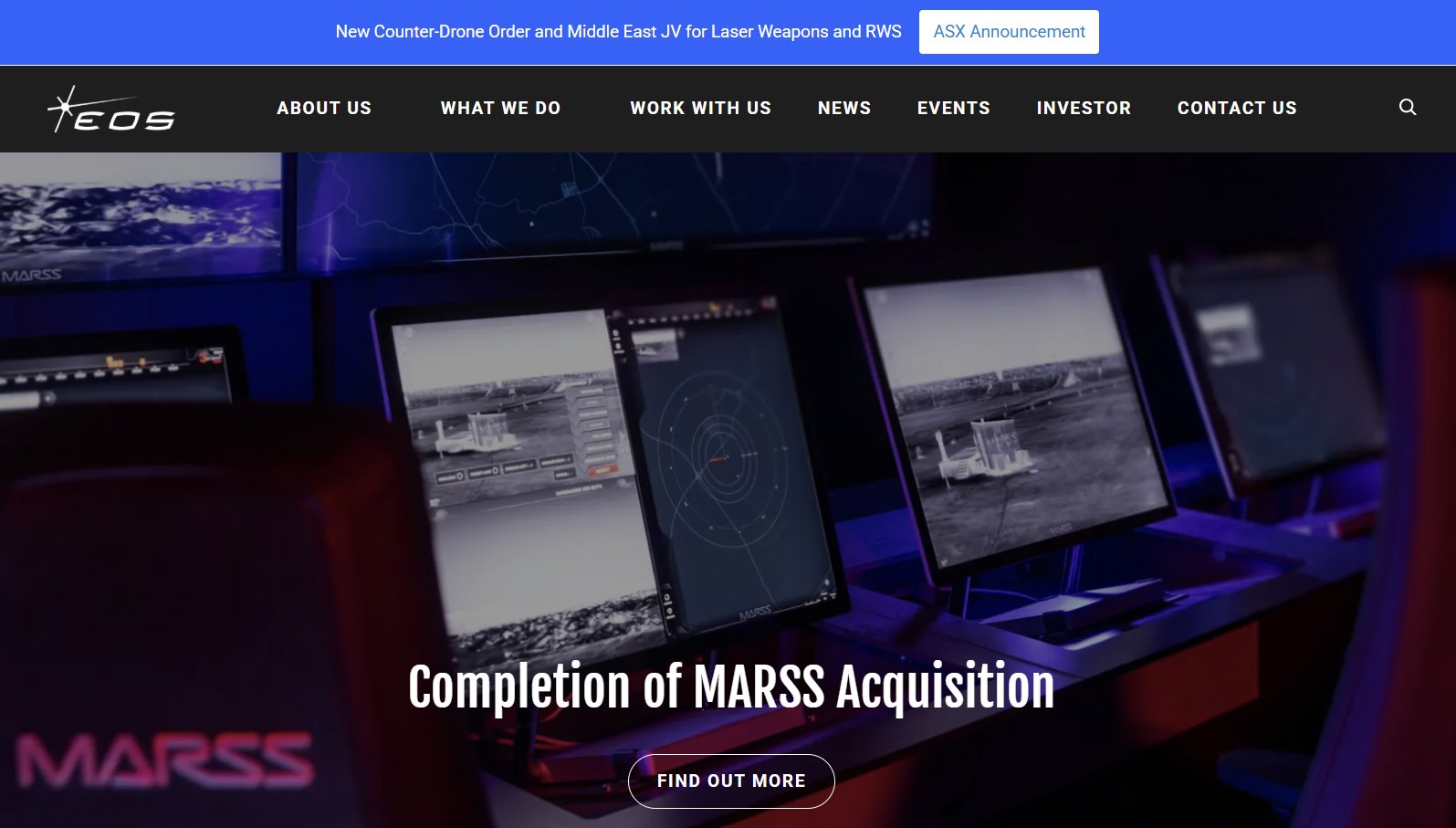
Shares of Electro Optic Systems Holdings jumped sharply on Friday, climbing 12.63% to $10.52, as the Australian defense and space technology company rode a wave of investor enthusiasm ahead of its imminent inclusion in the benchmark S&P/ASX 200 index and continued momentum from a string of strong order intake announcements.
The rally extended a powerful run for the Canberra-based laser and counter-drone systems maker, whose stock has been one of the standout performers on the Australian market over the past several weeks as defense spending tailwinds, a major capital raise, and surging contract backlogs combine to reshape investor sentiment around the company.
Index Inclusion on the Horizon
The most immediate catalyst behind the stock’s latest surge is its pending entry into one of Australia’s most closely watched equity benchmarks. The company is scheduled to join the ASX 200 index on June 22, 2026, a milestone expected to drive institutional demand. Index inclusion typically triggers automatic buying from passive funds that track the benchmark, a dynamic that has helped lift the share prices of newly added companies in the days leading up to their formal addition.
Recent capital raisings, including an upsized Share Purchase Plan that received AU$95 million in applications, have significantly strengthened the balance sheet for future scaling. That overwhelming demand from retail shareholders underscored just how much investor appetite has built around the company’s growth story in recent months.
A Capital Raise That Exceeded Expectations
The scale of investor interest in EOS became clear earlier this month when the company’s share purchase plan drew applications far beyond its original target. Electro Optic Systems completed its share purchase plan, exceeding its initial fundraising goals due to overwhelming demand from retail investors. Initially targeting a $25 million raise, the defence and space communications company received valid applications totalling $95 million from 4,909 eligible shareholders.
The EOS board exercised its discretion to upsize the final SPP acceptance to $40 million, balancing retail shareholder rewards with disciplined capital efficiency. The SPP was executed in tandem with a prior $150 million institutional placement and a $40 million strategic placement announced in May.
To manage the massive oversubscription equitably, EOS implemented a structured scale-back mechanism, with applications scaled back on a pro-rata basis according to existing holdings as of the May 15 record date. The new shares were formally issued on June 16, with holding statements dispatched the following day, and trading of these new securities began on the Australian Securities Exchange on June 17.
Record Order Backlog Underpins the Growth Story
Beyond the index inclusion catalyst, EOS has built its rally on a foundation of genuinely strong underlying business momentum, with order intake figures that have substantially outpaced the company’s revenue base.
EOS maintains a robust contract backlog exceeding AU$518 million, providing high revenue visibility. Management recently issued optimistic 2026 revenue guidance of up to AU$270 million for its base business, representing potential growth of over 100% compared to previous performance levels.
The trajectory of that order book has accelerated dramatically over recent quarters. Order book surged 237% to AUD 459 million, with the company debt-free and holding AUD 107 million in cash following a AUD 91 million gain from the sale of its EM Solutions business. Following that earnings report, the stock jumped 16.94% to AUD 7.32, reflecting investor confidence in the company’s strategic direction despite a revenue decline.
Revenue fell to AUD 128.5 million due to divestments, but gross margin rose to 63%. Order intake surged to AUD 420 million, boosting the order book to AUD 459 million. Management has emphasized a continued strategic focus on counter-drone and space control technologies, two of the fastest-growing segments within the global defense and security technology market.
A Trading Update That Sparked the Most Recent Climb
The current rally traces back to a business update released earlier this month that gave investors fresh confidence in the company’s near-term revenue trajectory. Electro Optic Systems Holdings shares moved higher after the defence company released a trading update, with EOS shares climbing as a new U.S. order boosted the company’s growth outlook.
That announcement came on the heels of broader market volatility tied to the historic SpaceX initial public offering, which dominated headlines on the ASX in mid-June. SpaceX began trading on the Nasdaq under the ticker SPCX, priced at US$135 per share, implying a valuation of approximately US$1.75 trillion — a listing that surpassed Saudi Aramco’s 2019 offering. Against that backdrop of broader market attention on defense and aerospace-adjacent technology names, EOS has continued to attract its own dedicated following among investors betting on Australia’s growing role in global defense supply chains.
Strategic Acquisitions Expanding the Company’s Footprint
EOS has also been actively reshaping its business through acquisitions designed to broaden its addressable market beyond its traditional Australian defense base. The acquisition of MARSS makes EOS a global provider of integrated counter-UAS solutions, expanding into military, homeland security, and adjacent markets. Analysts project strong growth as the company integrates its MARSS acquisition and targets AU$240 million to AU$270 million in 2026 revenue, even though the stock had declined approximately 3.8% over the prior month amid volatility stemming from the massive capital raise and shifting geopolitical sentiment.
The company’s broader strategic ambitions extend beyond its current home exchange as well. Australia’s Electro Optic Systems was reported earlier this year to be “very likely” to shift its headquarters and stock market listing, a development that, if it materializes, could mark a significant turning point in the company’s corporate structure as it scales internationally.
Execution Risk Remains the Key Question
Despite the wave of bullish catalysts, analysts continue to flag meaningful uncertainty about whether EOS can convert its surging order book into consistent, profitable operations. Investors remain concerned about the company’s ability to transition from order capture to operational execution. Converting the record AU$518 million backlog into tangible cash flow and consistent profitability remains a critical challenge over the next 12 to 24 months.
Execution and order conversion risks aside, the company’s focus on counter-drone and space control markets continues to draw investor interest, even as supply chain delays and geopolitical tensions are identified as key risks to growth.
Despite that caution, the longer-term price target trends among some analysts remain notably more conservative than the stock’s current trajectory would suggest. EOS’s average analyst price target sits well below recent trading levels, reflecting a degree of skepticism about whether the company’s current valuation can be sustained without clearer evidence of sustained profitability.
A Volatile But Resilient 12 Months
The magnitude of Friday’s gain underscores just how dramatically EOS shares have moved over the past year. The company’s share price has ranged from a low near $1 to a high approaching $8 over the trailing 12 months, before this month’s surge pushed shares well beyond that prior range entirely — a reflection of how quickly sentiment toward Australian defense technology names has shifted as global military spending continues to climb and counter-drone systems take on growing strategic importance for militaries and security agencies worldwide.
With the ASX 200 inclusion now just days away and the company’s order backlog continuing to swell, investors will be watching closely in the weeks ahead to see whether EOS can begin translating its remarkable run of contract wins into the kind of consistent earnings performance that would justify its newly elevated market valuation.
Business
(VIDEO) Mexico Beats South Korea 1-0 on Goalkeeper Error to Become First Team Into World Cup Knockouts

GUADALAJARA, Mexico — It wasn’t pretty, distinguished by little other than its stark black-and-lilac color scheme, but Mexico became the first team at the 2026 World Cup to secure its place in the knockout stage, defeating South Korea 1-0 on Thursday in a match shaped almost entirely by a single goalkeeping error.
The result means Mexico is now all but certain to top Group A and remain in Mexico City for the next round, setting up the possibility of a high-stakes meeting at the historic Estadio Azteca in the round of 16. The question hanging over both Mexico and South Korea after their opening wins was whether they had genuinely impressed or simply benefited from poor opposition — and Thursday’s match offered a fairly clear answer: neither side is overflowing with creative edge.
A Gift-Wrapped Goal
The only goal of the match arrived in the 50th minute, and it owed entirely to a defensive breakdown rather than any moment of attacking inspiration. South Korea goalkeeper Kim Seung-gyu came out to claim a looping header but jarred his elbow on the head of his own defender, Lee Ki-hyuk, in the process, spilling the ball into the path of Luis Romo. The Mexico midfielder hooked the loose ball into the net for his fifth international goal in his 64th appearance for the national team.
Romo was one of three changes Mexico manager Javier Aguirre made from the side’s opening victory, coming into the lineup in place of Álvaro Fidalgo. Aguirre resisted significant public pressure to hand a start to 17-year-old prodigy Gilberto Mora, opting instead for experience in midfield.
Mexico nearly surrendered the lead in the closing minutes, when goalkeeper Raúl Rangel produced a remarkable double save to preserve the result. Rangel got down to parry a header from Cho Gue-sung before twisting his body and summoning the core strength to gather Yang Hyun-jun’s sliced follow-up attempt, denying South Korea what would have been a deserved equalizer in the match’s final stages.
Aguirre Reflects on a Maturing Team
Mexico’s manager offered a candid assessment of his side’s performance after the final whistle, acknowledging that the match had not been an aesthetic showcase but praising his team’s tactical discipline. “It was quite a tactical match and hard to digest for the fans,” Aguirre said. “The wins speak of our maturity as a team. We were caught off guard before Rangel’s save but otherwise this speaks of a team that knows how to handle the game.”
Aguirre, now in his third World Cup at the helm of the Mexican national team, also reflected on his own evolution as a coach over that span. “I used to be more stringent,” he said. “I’m calmer, more serene. For instance, I don’t mind them using their smart phones all the time; last time I was in a battle with them.”
A New Stadium, an Old Rivalry of Circumstance
Thursday’s match marked the first time Mexico had ever played a World Cup game in Guadalajara, yet the stadium was not full for the historic occasion. While attendance was nowhere near as sparse as it had been during South Korea’s win over Czechia the previous week, plastic seats were visible in clear patches throughout the venue, particularly in the corporate tier that runs around the stadium’s center section.
The venue itself carries no connection to Guadalajara’s storied football history. This is not the old Estadio Jalisco, where England goalkeeper Gordon Banks famously kept out Pelé’s header in 1970, and where French forward Bruno Bellone scored in the penalty shootout of the unforgettable 1986 quarterfinal against Brazil — a spot kick that struck the post and bounced in off the head of Brazilian goalkeeper Carlos. Thursday’s match instead took place at Estadio Akron, officially rendered as Estadio Guadalajara under FIFA’s de-sponsored naming convention, located roughly 15 miles west of the historic Jalisco venue. The stadium, which opened in 2010 and features a grass-covered exterior, rises from a flat plain on the western edge of the city of Zapopan, which borders Guadalajara proper.
A Cautious Affair Lacking Urgency
Both sides played with notably less urgency than they had shown in their respective tournament openers, a dynamic that may have stemmed from the format itself. With a win already secured by each team heading into the match, a draw would have been more than sufficient to advance both nations toward the knockout stage. The result was a contest with little risk or attacking adventure from either side — the match’s first corner kick did not arrive until injury time.
The crowd appeared broadly accepting of the cautious approach, certainly more patient than the fans who had packed Estadio Azteca for Mexico’s opening match and had booed when their team led 1-0 against a South African side that had been reduced to ten men. Still, even Guadalajara’s more forgiving crowd had its limits — an extended spell of South Korean passing roughly eight minutes before halftime provoked a chorus of furious whistles from the stands, even if the protest had little bearing on the match’s outcome.
A Friendship That Didn’t Extend to the Pitch
South Korea and Mexico share a long-standing diplomatic and economic relationship dating back to 1905, when the first Korean migrants arrived in Mexico. Work began on a formal free trade agreement between the two nations in 2012, and although that agreement remains unconcluded, South Korea has since grown into Mexico’s sixth-largest trading partner globally. A Friendship Pavilion donated by the South Korean government stands today in the seniors’ garden at Chapultepec Park in Mexico City, a physical symbol of the bond between the two countries.
But that friendliness extended only so far on the pitch Thursday. When a team hands its opponent a goal on a platter, as Kim did with his costly error, there was never any realistic chance Mexico would decline the gift. Kim did partially redeem himself later in the match with a fine close-range block on a shot from Raúl Jiménez, though it is unlikely to be the moment anyone remembers from his evening in Guadalajara.
Off-Field Controversy Disrupts South Korean Preparations
South Korea’s buildup to the match was complicated by an off-field controversy that disrupted the squad’s preparations in the days leading up to kickoff. Video emerged of two individuals, believed to be journalists, making disparaging remarks about captain Son Heung-min’s abbreviated term of mandatory military service. In protest, South Korean players refused to perform media duties two days before the match against Mexico.
The disruption appeared to weigh on the team’s most recognizable star. Son, despite being only 33 years old, looked notably older and heavier-legged on the pitch, struggling repeatedly to navigate Mexico’s offside trap and unable to free the ball from between his own feet when a genuine scoring chance presented itself in front of goal. He was substituted not long after that missed opportunity.
Looking Ahead to the Final Group Match
South Korea coach Hong Myung-bo offered a measured response to the defeat, signaling his team’s intention to regroup before its final group-stage fixture. “Today’s result is disappointing,” Hong said. “The mistake we made was unfortunate but we shouldn’t be discouraged because we will prepare better for the next match.”
A draw against South Africa in South Korea’s final group match would still be enough to send the team through to the knockout stage, though Thursday’s performance offered little evidence that this particular South Korean side has the attacking quality to advance much further than that, even if it does survive the group phase. Mexico, for its part, has now won both of its group matches and all but secured a place in the round of 16 — but the co-hosts have so far shown little beyond a functional, results-oriented competence that has yet to translate into the kind of attacking spectacle their home fans are hoping to see as the tournament progresses deeper into the knockout rounds.
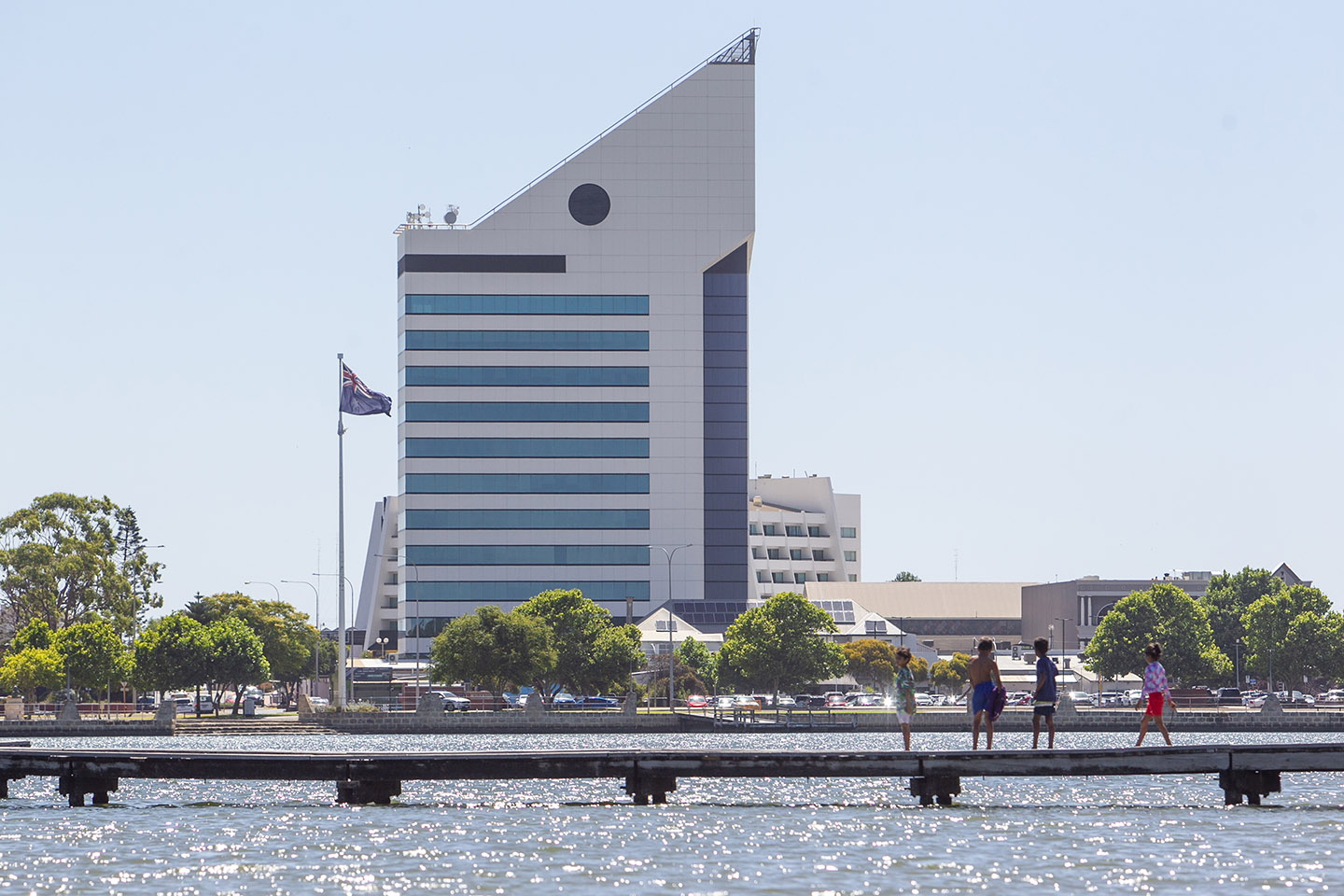
Ground has broken on construction of the state government’s $55 million manufacturing precinct near Bunbury.

If you’re building a web product and trying to put together a full-stack team, you’ve probably landed on two options: MERN or MEAN. Both are JavaScript-based. Both cover the full stack. Both have strong developer communities in 2026.
The difference is in the details, and those details matter a lot when you’re deciding who to hire.
This article breaks down both stacks, explains where each one fits, and shows you why hiring through Uplers is the fastest way to get the right developer on your team, regardless of which stack you choose.
What MERN and MEAN actually are
Both stacks share three of their four technologies. That shared foundation is worth understanding before you get to the difference.
MongoDB is the database layer in both. It stores data as JSON-like documents rather than rows and tables. That makes it flexible and fast to work with, especially in early product stages where your data model changes often.
Express.js is the backend web framework in both. It runs on Node.js and handles routing, middleware, and API logic. Most full stack JavaScript developers know it well.
Node.js powers the server in both stacks. It lets developers write server-side code in JavaScript, which means a full stack developer can work across the entire codebase without switching languages.
The one thing that differs: the frontend framework.
MERN uses React. MEAN uses Angular.
That single difference changes the kind of developer you need, the architecture of your frontend, and how your team will work day to day.
React vs Angular: what it means for your team
React is a UI library. You assemble the rest of the frontend stack yourself, choosing your own routing, state management, and tooling. That flexibility lets a skilled developer move fast. It also means the quality of the codebase depends heavily on the developer’s judgment.
Angular is a full framework. It comes with routing, forms, dependency injection, and a defined way of structuring code. There’s less flexibility but significantly more consistency. When your team grows and multiple developers are working on the same frontend, that consistency becomes very valuable.
For startups building fast with a small team, MERN tends to be the easier starting point. React’s ecosystem is larger, the talent pool is wider, and iteration speed is higher when you’re not locked into framework conventions.
For teams building complex, long-lived products, especially internal platforms, fintech tools, or enterprise software, MEAN’s structure pays dividends over time. Angular enforces patterns that make large codebases easier to maintain.
Where most hiring decisions go wrong
Founders make the stack decision, write a job description, and then spend the next two to three months finding out that “MERN developer” or “MEAN developer” on a resume tells you almost nothing useful.
The skill range inside each label is enormous.
A MERN developer who’s written basic React components is not the same as someone who understands Next.js, can manage complex application state, has dealt with performance bottlenecks, and has shipped a full product end to end. They’ll both call themselves MERN developers. One will move your product forward. The other will create technical debt you spend the next year cleaning up.
The same problem exists on the MEAN side. Angular’s complexity is real. RxJS, the reactive programming library Angular relies on heavily, is powerful and genuinely difficult to use well. A developer who hasn’t worked with it in a production environment will introduce bugs that are hard to trace and slow to fix.
Hiring on your own, you’re running multiple interview rounds, making judgment calls with limited signal, and carrying all the risk yourself. If the hire doesn’t work out, you restart from zero.
How Uplers solves this, for both stacks
When you hire MERN stack developers through Uplers, you’re not starting from a pile of unfiltered applications. You’re choosing from engineers who’ve already cleared a rigorous vetting process that tests technical depth, real-world delivery experience, and communication ability. The large majority of applicants don’t make it through.
The same applies when you hire MEAN stack developers through Uplers. Angular’s learning curve means the filtering matters even more. Uplers screens specifically for RxJS proficiency, module and service architecture, and experience working in structured, large-scale codebases. You don’t have to figure that out yourself in a one-hour technical interview.
Most clients get shortlisted profiles within 48 hours of sharing their requirements. That’s not 48 hours from posting a job. That’s 48 hours from the conversation where you explain what you’re building.
For a startup where a three-month hiring process means a three-month delay on product, that difference is significant.
What Uplers vets for, stack by stack
The vetting criteria match what your product actually needs, not just what looks good on paper.
For MERN: Uplers looks at full-stack depth across the entire JavaScript ecosystem. Can they work with MongoDB’s document model and design schemas that don’t fall apart as the product grows? Do they understand Express routing and middleware beyond the basics? On the React side, have they dealt with server-side rendering, hydration, and component-level performance? Have they made real decisions about state management and can they explain the reasoning?
For MEAN: The bar shifts toward structure and discipline. Uplers looks for clean Angular module architecture, real-world RxJS experience with complex async flows, TypeScript fluency beyond the basics, and the ability to work within Angular’s conventions rather than around them. Developers who’ve only worked in small Angular projects often struggle when the codebase scales to a real team. Uplers filters for people who’ve actually been there.
The risk you don’t think about until it’s too late
A bad full stack hire is expensive in ways that don’t show up immediately.
You notice it three months in, when features are late and the codebase has patterns nobody else on the team understands. You notice it when the developer who “knew MERN” turns out to have strong React skills but had never actually set up a Node/Express API from scratch. Or when the Angular hire who looked great in the interview hadn’t actually used RxJS in a real project and was learning on your time.
Uplers includes a replacement guarantee. If a developer doesn’t work out, Uplers replaces them. You’re not starting over from scratch and absorbing the full cost of a mis-hire.
For a startup where one wrong hire can set you back a quarter, that guarantee is worth more than the sticker price.
Which stack should you pick?
If you’re early stage, moving fast, and your team is small: MERN. The React ecosystem is rich, developers are easier to find, and iteration speed is higher before you’ve scaled to a team that needs Angular’s structure.
If you’re building something complex, with a large team or long timeline, and you need the codebase to stay consistent as headcount grows: MEAN is worth the extra ramp-up time. It pays back the investment.
Either way, the stack decision is the easier call. The harder call is finding a developer who actually knows it well enough to use it properly.
That’s what Uplers is for. Whether you’re looking to hire MERN stack developers or hire MEAN stack developers, you get pre-vetted senior engineers, shortlisted profiles in 48 hours, and a process that protects you if something goes wrong.
The stack is just the starting point. The right hire is what actually ships the product.

German exports to Britain drop 7% since 2016, IW says

Fresh Leadership Could Revive Bata
Bata India has struggled to reward shareholders over the past five years despite launching new products, consolidating stores, and expanding across customer segments. Shah believes the company now needs a fresh strategic direction under its new leadership.
He also noted that the domestic footwear industry stands to benefit from government measures aimed at curbing cheap imports from China and Bangladesh.
“We do have a positive coverage on Bata India from a long-term fundamental point of view. We feel it is time to bring in new strategies and fresh thinking… With this new leadership, we should see a significant amount of change coming in.”

Nykaa’s AI Push Strengthens Growth Story
Shah maintained a positive outlook on Nykaa after the company outlined its FY30 vision and announced AI-driven initiatives. However, he advised investors not to chase the recent rally and instead wait for better buying opportunities.
He also highlighted that innovation remains essential in the highly competitive e-commerce space.”If you already have investments, you can continue to hold them. If you do not own the stock, do not rush into it. Let the stock correct a little, and then you can gradually accumulate.”
Defence, Asset Management and Power Remain Top Bets
Looking ahead, Shah identified defence, asset management and power as his preferred sectors over the next year. His top stock picks include Bharat Electronics, Nippon Life India Asset Management and Torrent Power.
According to him, these sectors remain relatively insulated from global uncertainties and offer strong long-term growth potential.
“These three sectors are relatively insulated from external global shocks, and there is significant growth potential for both the sectors and these companies.”
NSE IPO Seen as a Big Positive
Shah described the proposed NSE IPO as one of the biggest developments for India’s capital markets in recent years. While he refrained from commenting on valuations until Geojit’s research is complete, he remains optimistic about the broader capital market ecosystem.
He believes exchanges, depositories, registrars and asset managers are all well positioned to benefit as India’s equity markets continue to expand.
“If Indian stock markets continue to grow at 12% to 15% annually over the next three to five years, fundamentally strong capital market-related companies should continue to perform well.”
Long-Term Investing Still the Best Strategy
Across sectors, Shah’s is of the view that investors should focus on fundamentally strong businesses with sustainable earnings rather than short-term market fluctuations. While leadership changes and new growth initiatives can create opportunities, disciplined long-term investing remains the key to generating wealth.


Gulf airlines get back to business as flights near pre-war levels
Business
Scientists Discover Garnet on Mars for the First Time, Unlocking Clues to the Red Planet’s Ancient Past

An international team of scientists has identified a completely new type of rock on Mars and, for the first time ever, discovered the mineral garnet in a sample from the Red Planet — a breakthrough that offers researchers a rare glimpse into Mars’s ancient geological history and could help piece together billions of years of planetary evolution.
The discovery was made by a multinational research team that includes James Darling, professor of Earth and Planetary Science at the University of Portsmouth’s School of the Environment and Life Sciences, alongside researchers from Brock University in Canada, the Royal Ontario Museum, the Università di Trieste in Italy, and the Open University in the United Kingdom.
A Familiar Mineral in an Unfamiliar Place
On Earth, garnet is widely recognized as a dark-red gem that was popular with ancient Egyptians, Romans, and the Victorian elite alike, and it remains January’s official birthstone. Beyond its decorative appeal, garnet serves as a cornerstone mineral in geology, providing scientists with a powerful record of the tectonic forces, ore-forming processes, and fluid-rock interactions that shape Earth’s crust and mantle.
Its discovery on Mars marks an entirely new application for that geological record-keeping ability. The find offers a new geological time capsule, preserving clues about the temperatures, pressures, and processes that shaped Mars billions of years ago.
“The findings add a striking new dimension to our understanding of the geology of Mars and open an exciting new window into the evolution of our planetary neighbour,” said Darling.
How the Discovery Was Made
The research was led by Tanya Kizovski, assistant professor of Earth Sciences at Brock University, who described the discovery’s broader significance for understanding Martian geology. “This discovery is going to expand our knowledge of the geologic processes that are possible on this planet,” Kizovski said. “This new garnet-bearing rock type could give us clues to how Mars has changed throughout its history and new insights into the ancient environments that could have formed the garnet and related minerals.”
The breakthrough emerged somewhat unexpectedly, growing out of routine analysis of an existing meteorite sample rather than a targeted search for new minerals. Kizovski and colleagues at the Royal Ontario Museum came to know of the garnet’s presence while analyzing a fragment of a Martian meteorite known as NWA 8171, held within the museum’s collections. Kizovski had set out simply to identify the fragment’s minerals and chemical composition when she noticed something unusual.
“This little section of the meteorite looked really interesting, and the chemistry was a bit odd,” she said. “At first, we assumed it was a mineral called pyroxene, which is very common, but then we decided to take a second look.”
That second look proved decisive. Using the University of Portsmouth’s Electron Microscopy and Microanalysis Unit along with the Royal Ontario Museum’s specialized laser equipment, the team was surprised to discover garnet — a mineral that had not been identified on Mars until now.
How Garnet Could Have Formed on Mars
After confirming the mineral’s identity, the team turned its attention to analyzing the fragment’s broader chemistry and mineralogy in an effort to speculate on how the garnet might have formed in the first place. Kizovski explained the geological process that typically produces garnet on Earth, and how a similar process could plausibly have occurred on Mars.
“Garnet is a classic example of a mineral often found in metamorphic rocks on Earth. The process of metamorphism transforms igneous or sedimentary rocks into a new form through exposure to extreme heat, high pressure or hot fluids,” Kizovski said. “On Mars, the heat and pressure needed to produce garnet through metamorphism could have come from the impact of a meteorite hitting the surface of Mars, magma rising up into the Martian crust or both.”
Both of those scenarios — a violent meteorite impact or upwelling volcanic activity — would have generated the kind of intense heat and pressure conditions on Mars that are typically required to transform existing rock into garnet-bearing material here on Earth, giving researchers two plausible pathways to explain how the mineral might have come to exist on the Martian surface or within its crust.
An Open Question: Is the Rock Even Martian?
Despite the excitement surrounding the discovery, Kizovski was careful to note a significant unresolved question hanging over the find. The research doesn’t definitively indicate whether the garnet-bearing rock formed on Mars or was delivered to the Red Planet and incorporated into its surface via a meteorite landing from elsewhere, leaving open the possibility of what researchers describe as an “extra-Martian” origin.
In other words, scientists cannot yet rule out that the garnet-bearing fragment originated on a different planetary body entirely and was later transported to Mars’s surface by an impacting meteorite, only to subsequently become embedded in Martian material and eventually find its way to Earth as part of the larger NWA 8171 meteorite.
The Next Step: Studying Oxygen Isotopes
Resolving that uncertainty will require a more invasive form of analysis that scientists have so far avoided due to the sample’s extraordinary rarity. Scientists need to now study the garnet’s isotopic signatures to verify whether it was originally produced on Mars or on another planetary body. “Measuring oxygen isotopes from the garnet-bearing rock type itself would help to confirm if it is Martian in origin or from an exotic meteorite impactor,” Kizovski said. “Isotopes are a collection of atoms with equal numbers of protons and electrons, but different numbers of neutrons.”
However, that process would entail destroying some of the sample, “which was avoided thus far due to its rarity, as it may be the only garnet-bearing Martian rock we have for study,” Kizovski added — a tension that illustrates the delicate balancing act facing planetary scientists when working with exceptionally scarce extraterrestrial material. Every test performed on the fragment carries the risk of consuming a piece of evidence that, for now, appears to be entirely unique among known Mars samples.
What Comes Next
Despite the open questions surrounding the garnet’s precise origin, researchers remain optimistic about what continued study of the sample could reveal. Royal Ontario Museum curator Kim Tait and research assistant Jessica Tomacic, working alongside Professor Darling, are continuing to study the sample in detail. “With their work and more comparisons to rover and orbital data, I’m hopeful that we will be able to learn more about the origin and history of garnet on Mars,” Kizovski said.
That comparative approach — cross-referencing the meteorite fragment’s mineral signatures against data gathered by Mars rovers and orbiting spacecraft — could eventually help researchers determine whether similar garnet-bearing rock formations exist elsewhere on the Martian surface, potentially opening up an entirely new category of geological material for future Mars missions to study directly.
Publication and Funding
The team’s study, titled “Expanding Mars’ lithologic diversity: discovery of a garnet-bearing clast in NWA 8171,” was published Tuesday, June 16, in the journal Geochemical Perspectives Letters.
The research project received funding support from multiple sources, including the Government of Canada’s Natural Sciences and Engineering Research Council, the Killam Trusts’ Dorothy Killam Fellowship, and the Science and Technology Facilities Council’s funding program at the University of Portsmouth.
For planetary scientists, the discovery represents more than simply the addition of a new mineral to the catalog of materials known to exist on Mars. It offers a fresh analytical tool — one already well understood from decades of terrestrial geology — that could help unlock new chapters in the 4.5-billion-year history of a planet that continues to reveal previously unknown facets of its geological past with each new sample subjected to modern laboratory analysis.

The Economy Is Weakening. That Will Test This Long Rally.

DAVID SCHWARTZ JUST DROPPED AN XRP BOMBSHELL… (THIS IS INSAAAAANE)

Music producer Tay Keith who worked with Travis Scott and Drake dies aged 29
Netflix open to more traditional TV partnerships after TF1 deal- FT


-

 Business5 days ago
No Jackpot Winner as $257 Million Prize Rolls Over to $269 Million Monday Draw
-

 Fashion6 days ago
Weekend Open Thread: Tuckernuck – Corporette.com
-
 Crypto World4 days ago
Zimbabwe Requires Crypto Businesses to Register Annually Under New FIU Regulations
-

 Crypto World6 days ago
Bitget enters Argentina’s regulated crypto market through PSAV registration
-

 Tech6 days ago
NanoClaw integrates JFrog registries to secure AI agent downloads
-

 Tech7 days ago
This Week In Security: Microsoft On Microsoft, Register Your Domains, Linux On ARM, And FreeBSD Joins The File Cache Club
-

 NewsBeat6 days ago
FBI searches office of Ohio voter registration group
-
 Entertainment4 days ago
Matt Damon’s Viral Sci-Fi Thriller Has Taken Over HBO Max
-

 Business4 days ago
Anthropic staff to meet White House officials next week, Axios reports
-

 Tech5 days ago
As AI companies race to go public, who else is along for the ride?
-
 Crypto World4 days ago
Bitcoin could crash to $48,000, if this historical pattern is triggered
-

 Politics4 days ago
“Israel’s” ban on ICRC visits ruled illegal, but Knesset moves to stop them permanently
-
Entertainment7 days ago
Ana Navarro unleashes explosive tirade on ex-Trump aide, Disney Channel star in epic on-air fight: 'Have you no shame?'
-
 NewsBeat4 days ago
Warning of disruption as Cardiff Crossrail works to start
-

 News Videos4 days ago
Financial Accounting | Last Day Revision Strategy and Booster | CMA Inter – June 2026
-
 NewsBeat4 days ago
Tributes to former deputy head teacher at Cambridge school among death and funeral notices
-
 Crypto World5 days ago
Market Preview: SpaceX (SPCX) IPO Record, Federal Reserve Meeting, and Iran Nuclear Agreement
-
 NewsBeat4 days ago
what doctors are seeing in ebike crashes
-

 Entertainment5 days ago
Deion Sanders Shares Powerful Post After Viral Advice To Deiondra
-
 Entertainment4 days ago
Kate Middleton Glare Goes Viral After Kids Booed At Royal Event
You must be logged in to post a comment Login