
Business
History, Spending Records, & Traditions That Will Amaze You


Valentine’s Day on February 14, 2026, falls on a Saturday, giving couples, friends and families extra time to celebrate love with gifts, dinners and heartfelt gestures. While hearts, roses and chocolates dominate the day, the holiday’s origins blend ancient pagan rituals, Christian martyrdom and centuries of evolving romance traditions. Americans are projected to spend a record $29.1 billion this year—about $199.78 per person—making it one of the biggest consumer holidays after Christmas and before Mother’s Day.

Here are 10 fun facts about Valentine’s Day, blending timeless history with fresh 2026 insights to add sparkle to your celebrations.
- The Holiday Has Ancient Pagan Roots Valentine’s Day traces back to the Roman festival of Lupercalia, held mid-February to celebrate fertility and spring. Participants sacrificed animals, then used the hides to gently whip women for good luck in childbearing. Men and women drew names from a jar to pair up for the year, a matchmaking custom that influenced later romantic pairings. In the late 5th century, Pope Gelasius I banned Lupercalia and shifted focus to St. Valentine on February 14, “Christianizing” the fertility rites into a day of love.
- St. Valentine Wasn’t Just One Person The holiday honors multiple Christian martyrs named Valentine or Valentinus from the 3rd century. One popular legend claims a priest named Valentine defied Emperor Claudius II by secretly marrying young couples—Claudius believed single men made better soldiers. Another tale says Valentine healed his jailer’s blind daughter and sent her a note signed “From your Valentine” before his execution around A.D. 270. Historians debate the details, but the name stuck, and the first recorded Valentine’s message dates to 1415, when Charles, Duke of Orleans, wrote a poem from the Tower of London to his wife.
- Cupid’s Arrow Ties to Roman Mythology The chubby, bow-wielding Cupid symbolizes Valentine’s Day romance, but he originated as Eros in Greek mythology, son of Aphrodite (Venus in Roman lore). Early depictions showed him as a handsome youth, but Renaissance art transformed him into the mischievous baby archer whose arrows spark love. The red rose, sacred to Venus, became the holiday’s signature flower, with about 250 million stems sold in the U.S. each year.
- Record-Breaking Spending in 2026 This year’s projected $29.1 billion marks an all-time high, up from $27.5 billion in 2025, according to the National Retail Federation. Average spending hits roughly $200 per person, with men outspending women nearly 2-to-1. Jewelry and dining out lead at $13.3 billion combined, while candy remains the top gift—56% of celebrants plan to buy it. Rising prices from tariffs on imported flowers (80% from South America) and inflation have pushed costs higher, with roses up over 15% and chocolates surging in recent years.
- 145 Million Cards Exchanged Annually Valentine’s Day ranks second only to Christmas for greeting card sales, with about 145 million cards sent in the U.S. each year. Teachers receive the most, followed by children, mothers and wives. Women buy 85% of cards, and Hallmark’s first mass-produced Valentine’s appeared in 1913. In classrooms, kids exchange “friendship” valentines, keeping the tradition alive for generations.
- Chocolate’s Sweet History on the Holiday Chocolate became a Valentine’s staple in the 19th century, but its romantic link dates further—ancient Aztecs considered cacao sacred and an aphrodisiac. Richard Cadbury introduced the first heart-shaped box in 1861, boosting sales. Today, candy tops gift lists, with billions of conversation hearts (Sweethearts) produced yearly featuring phrases like “Be Mine.” In 2026, despite price hikes, chocolate remains irresistible.
- Pets and Self-Gifting Get Love Too Valentine’s isn’t just for couples—pet owners spend an average $31 on dogs and $27 on cats. About 35% of Americans plan self-gifts in 2026, reflecting a trend toward self-care amid economic pressures. Experiences like spa days or classes increasingly replace traditional items, with 92% of people preferring memorable outings over physical gifts in recent surveys.
- A Day of Proposals—and Breakups About 15% of engagements happen on Valentine’s Day, drawn to the romantic vibe. Ironically, it’s also a peak breakup day, with polls showing 15-25% of couples ending relationships around February 14. The pressure of expectations sometimes backfires, turning love into heartbreak.
- Global Twists on the Tradition In Wales, lovers exchange wooden spoons carved with hearts on St. Dwynwen’s Day (January 25), a precursor to Valentine’s. In Japan, women give chocolate to men on Valentine’s, while men reciprocate on White Day (March 14). South Korea celebrates with black noodles for singles on April 14 (“Black Day”). These variations highlight how love customs adapt worldwide.
- Florists’ Busiest Day Valentine’s ranks as one of the peak days for florists, with millions of bouquets sold. In 2026, despite higher prices from weather damage and tariffs, flowers remain a classic—61% of men buying them gift to spouses. The red rose symbolizes passion, while pink means admiration and white purity.
Valentine’s Day 2026 blends ancient rituals with modern indulgence, proving love’s celebration evolves yet endures. Whether exchanging cards, sharing chocolate or simply spending time together, the day reminds us affection comes in many forms. Happy Valentine’s Day—may your heart be full, whatever the gift.


Jack McGinn speaks to Tom Zaunmayr about Business News’ recent most influential feature.

The Asia-Pacific digital banking market is on track to more than double over the next decade, with industry estimates pointing to growth from $2.28 trillion in 2024 to $5.12 trillion by 2033, underscoring the region’s accelerating shift toward mobile-led and online financial services.
Key takeaways
- Asia-Pacific’s digital banking market is projected to grow from $2.28 trillion in 2024 to $5.12 trillion by 2033, highlighting strong long-term expansion in the sector.
- Rising internet access, over 2 billion smartphone users, and widespread mobile banking adoption are accelerating the shift to digital financial services across the region.
- Despite growth momentum, increasing cyberattacks and weak encryption coverage remain major risks to the resilience of APAC’s digital banking market.
According to Market Data Forecast, the market is expected to expand at a compound annual growth rate of 9.43%, reaching $2.49 trillion in 2025 as digital financial platforms continue to gain traction across major Asia-Pacific economies.
A key driver of that growth is the region’s rising digital connectivity. Internet penetration climbed to 55% in 2022 from 48% in 2018, whilst the number of active smartphone users has surpassed 2 billion.
More than 70% of the population now uses smartphones for online banking, supporting wider adoption of mobile banking apps, digital wallets, and other online financial services.
Market momentum is also being reinforced by country-level developments. South Korea and Singapore continue to lead on connectivity, whilst Australia is using digital banking to improve financial access in rural communities where physical branch networks remain limited.
Public policy is playing an equally important role. In the Philippines, the Bangko Sentral ng Pilipinas said more than half of adults in rural areas now use digital banking platforms, supported by initiatives such as the National Retail Payment System.
In Australia, policies promoting open banking and collaboration between banks and fintech firms have helped broaden access to digital financial services.
Even so, the sector’s expansion is being shadowed by mounting cybersecurity and data privacy concerns.
The Australian Cyber Security Centre reported that cyberattacks on digital banking platforms are increasing by more than 30% annually, whilst only about 40% of banks in the region are said to have strong encryption systems in place, raising questions over data protection and operational resilience.
The outlook, then, is one of strong structural growth tempered by rising operational risk. As digital banking becomes more deeply embedded in everyday financial activity across Asia-Pacific, the pace of market expansion will likely depend not only on connectivity and inclusion but also on how effectively institutions strengthen trust, security, and platform resilience.
Other People are Reading

For overseas buyers, Indian risk assets in FY26 appeared to have been caught in the perfect storm due to the Iran conflict, a lingering uncertainty on tariffs, relatively expensive valuations, an AI-led decline in the business prospects of a $280-billion technology industry, and about 10% rupee slide against the dollar.
FY26 marks the second consecutive financial year of FII outflows and fourth in the previous five years, data from ETIG showed. Last year, FIIs withdrew ₹1.24 lakh crore from stocks and were on track to pull out a similar amount this fiscal year too. But their pace of exit accelerated in March after the start of the Iran war, with the rupee losing 4% in as many weeks. “Since March, the West Asia war raised risk-off sentiment that amplified the sell-off substantially,” said Rupen Rajguru, head, equity investment and strategy, Julius Baer India.
 Agencies
 Domestic Appetite
“The weak currency is a big factor that eats into the returns of foreign investors and keeps foreign capital at bay this year,” said Rajguru.

Flows from domestic institutions – led by mutual funds, pension funds and insurers – into the stock market have been on an uptrend in the past five years. Their FY26 investments of ₹8.49 lakh crore exceeded total flows into equities in the previous two financial years, underscoring the domestic appetite for stocks despite the market sell-off.
Nifty and Sensex fell 5.1% and 7.1%, respectively, in the fiscal year. Both indices would have ended marginally higher or with modest losses but for the near 9.5% retreat in March – the worst monthly fall since 2020, the onset of the pandemic.
“Typically, one year of losses triggers domestic outflows, but this time, SIP (systematic investment plan) flows have remained largely steady despite 18 months of losses,” said Rajguru.
Retail investors have pumped ₹29,000 crore every month on average into domestic equity schemes in the past financial year. The return of foreign portfolio flows into India in the new financial year would depend on stability in the rupee, peace in West Asia and a decline in crude prices though a rush of overseas investments seem unlikely.
“Given the uncertainties arising out of the war on energy disruption and global reversal of interest rate cycle, the FPI flows are not expected to be positive immediately in the near future,” said Rajesh Iyer, managing director, global investment solutions and asset management, at LGT Wealth India.
Foreign institutional ownership of Indian companies is at a decadal low, and valuations are around 17 times the estimated price-to-earnings (PE) ratio, below the ten-year average, said Rajguru of Julius Baer India. “A lot of the damage is already done,” he said.
 Agencies
 Yen Second Worst-performing
This is after the local currency touched a record low of 95.22/$ amid consistent dollar demand throughout the year. Foreign portfolio investors pulled out a record ₹1.6 lakh crore, far exceeding withdrawals in FY22, data from NSDL data showed.
Unrelenting demand for dollars from foreign investors forced the Reserve Bank of India (RBI) to intervene in the market by selling dollars to prevent a sharp fall in the rupee.
The Japanese yen, which fell 6.27% against the dollar, was the second worst-performing Asian currency in FY26. By contrast, the Malaysian ringgit gained 9.69% – the best performer on the regional leader-board.
Alok Singh, head of treasury, CSB Bank, expects the rupee to remain under pressure in the half of FY27 before the unit recovers some of its losses and trades in the broad 91-94 per dollar band for the fiscal year.
Bankers said the latest RBI measures would support the rupee. “Capping of banks’ net open position by RBI will help curb speculative trades and prevent a sharp depreciation in the rupee, but the near-term outlook is weak and a little fuzzy due to the Iran conflict, as the dollar-rupee rate will correlate with what happens there,” said Alok Singh.
In a drastic measure to prevent a sharper fall in the rupee, RBI on March 27 asked banks to cap their net open rupee positions in the onshore deliverable market to $100 million at the end of each business day, effective April 10, far lower than the 25% of total capital limit earlier. Despite this, the rupee fell to cross the 95 mark on the last day of trading.
“For now, chances are that the rupee may weaken below 95 per dollar toward 96 or even 97. Persistent dollar outflows and higher oil prices have definitely shifted the rupee band more toward 92-93 per dollar, from the 89-90 expected before this crisis,” Singh said.
Through FY26, RBI maintained that it intervened in the spot market to prevent volatility.

Britain risks becoming heavily dependent on US gas imports within the next decade, prompting renewed calls for increased North Sea production to safeguard energy security.
New analysis from Wood Mackenzie suggests that liquefied natural gas (LNG) imports from the United States could account for around 60 per cent of the UK’s gas supply by 2035, a dramatic increase from roughly 10 per cent in 2024.
The forecast comes at a time of heightened geopolitical tension and volatility in global energy markets, raising concerns about the risks of relying on a single external supplier.
Britain’s domestic gas production has been declining steadily for decades, with output from the North Sea now at its lowest level since the early 1970s. As supply falls, the country has become increasingly reliant on imports, including pipeline gas from Norway and LNG shipments from overseas.
In 2024, the UK sourced around 43 per cent of its gas from the domestic North Sea, a similar share from Norway, and the remainder from LNG imports, the majority of which came from the United States.
Wood Mackenzie’s projections suggest this balance will shift significantly over the next decade, as domestic production continues to decline faster than overall demand.
The consultancy argues that boosting domestic oil and gas output could help reduce exposure to international market shocks and improve resilience.
Gail Anderson, a research director at Wood Mackenzie, said the UK should adopt a broad approach to energy policy, combining renewables with continued use of domestic hydrocarbons and emerging technologies such as carbon capture and hydrogen.
“Reducing dependence on LNG imports should be a priority,” she said, particularly in an environment where energy supplies are increasingly influenced by geopolitical conflict.
The analysis also suggests that gas produced in the UK continental shelf has a lower carbon footprint than LNG transported across the Atlantic and can be supplied at significantly lower cost in the short term.
The findings are likely to intensify debate within government over the future of North Sea production.
Industry groups have warned that declining output is being accelerated by tax policies and restrictions on new exploration licences, which they argue limit the UK’s ability to maximise domestic resources.
However, the government maintains that expanding fossil fuel extraction is not the solution to long-term energy security or price stability, emphasising instead the need to accelerate the transition to clean, homegrown energy.
A government spokesperson said the focus remains on maintaining existing production while investing in renewable energy and reducing reliance on volatile global markets.
Most analysts agree that increasing North Sea production would have only a limited effect on consumer energy prices, which are largely determined by global markets.
However, proponents argue that even modest increases in domestic supply could improve security and reduce vulnerability to supply disruptions.
The debate has been sharpened by recent developments in the Middle East, where conflict has disrupted key shipping routes and contributed to rising energy prices.
The risk of further escalation has highlighted the strategic importance of secure and diversified energy supplies for import-dependent countries such as the UK.
As the UK continues its transition towards net zero, balancing short-term energy security with long-term decarbonisation goals remains a central challenge.
The latest analysis suggests that without intervention, reliance on imported gas, particularly from the US, will increase significantly, raising questions about resilience and cost.
For policymakers, the task will be to navigate these competing priorities, ensuring that the UK’s energy system remains secure, affordable and sustainable in an increasingly uncertain global environment.

Jamie Young
Jamie is Senior Reporter at Business Matters, bringing over a decade of experience in UK SME business reporting.
Jamie holds a degree in Business Administration and regularly participates in industry conferences and workshops.
When not reporting on the latest business developments, Jamie is passionate about mentoring up-and-coming journalists and entrepreneurs to inspire the next generation of business leaders.

On April 1 each year, millions around the globe engage in harmless hoaxes, practical jokes and playful deceptions before shouting the classic disclaimer “April Fools!” The lighthearted custom, observed Wednesday in 2026, has roots stretching back centuries, though its precise origin remains one of history’s enduring mysteries that even the day’s spirit of trickery cannot fully resolve.

Historians trace the earliest documented hints of April Fools’ Day to 16th-century Europe, with the most popular theory tied to calendar reform in France. In 1582, France adopted the Gregorian calendar under King Charles IX, shifting New Year’s Day from around April 1 (near the spring equinox in the old Julian system) to January 1. Those who continued celebrating the old date or failed to adopt the change quickly became targets of ridicule and were labeled “April fools.” Pranksters would send them on pointless “fool’s errands” or pin paper fish to their backs, calling victims “poisson d’avril” — April fish, a term still used in France today for the gullible.
The calendar-change story, while widely cited, has complications. References to April foolishness appear earlier, including a possible allusion in Geoffrey Chaucer’s “The Canterbury Tales” from 1392 and a 1508 French poem by Eloy d’Amerval mentioning “poisson d’avril.” Some scholars link the custom to the ancient Roman festival of Hilaria, celebrated at the end of March with disguises, mockery and joyful chaos in honor of the goddess Cybele. Others point to medieval spring renewal rites or the vernal equinox, when unpredictable weather could “fool” people, as possible inspirations.
By the 18th century, the tradition had spread across Britain and into Scotland, where April 1 became “Gowkie Day” (cuckoo day, symbolizing a fool) and April 2 was “Tailie Day,” involving pinning “kick me” signs on backs. The custom crossed the Atlantic with European settlers and evolved into a broader day of mischief in the United States and Canada. Today it thrives worldwide, though celebrations vary by culture. In Italy and some Spanish-speaking regions, pranks sometimes extend to May 1 or have different names, while parts of Asia have adopted lighter versions influenced by Western media.
The day’s appeal lies in its harmless nature — a brief societal permission slip for creativity and laughter amid everyday routines. Pranks traditionally end with the reveal “April Fools!” to signal no real harm was intended. Overdoing it or targeting sensitive topics risks backlash, a lesson reinforced in the social media era when jokes can spread instantly and sometimes cause unintended offense or confusion.
Media outlets and corporations have long amplified the tradition with elaborate hoaxes. One of the most famous remains the 1957 BBC “Panorama” broadcast claiming Swiss farmers were harvesting spaghetti from trees after eradicating the spaghetti weevil. Viewers called in asking how to grow their own, and the segment is still hailed as one of television’s greatest pranks. Other classics include the 1980 BBC report on “flying penguins,” Taco Bell’s 1996 claim of buying the Liberty Bell and renaming it the Taco Liberty Bell, and various newspaper inventions such as the 1977 Guardian supplement on the fictional island of San Serriffe.
In 2026, brands and social media users continued the pattern with creative announcements and memes, though many companies now add clear disclaimers or limit scope to avoid misinformation concerns. The day has become a global marketing opportunity, yet its core remains personal — friends fooling friends, families sharing laughs and colleagues lightening the workday.
Scholars note that April Fools’ Day may serve a deeper social function. Anthropologists suggest it acts as a “safety valve,” allowing temporary role reversals or mockery of authority in otherwise structured societies, similar to carnivals or festivals of misrule. In ancient and medieval contexts, such days helped relieve tensions before spring planting or renewal. Modern psychologists point to the psychological benefits of shared laughter and the gentle reminder not to take oneself too seriously.
Despite its murky beginnings, the tradition has proven remarkably resilient. It survived religious reforms, world wars and the shift from print to digital media. In an age of deepfakes and widespread skepticism, April Fools’ Day offers a contained space for deception that most people willingly accept — provided the reveal comes promptly.
Cultural variations add richness. French children still pin paper fish, Scots hunt the “gowk,” and some Scandinavian countries emphasize elaborate storytelling. In the United States, the Annual April Fools’ Day Parade in New York City since 1986 features satirical floats poking fun at current events. Social media has democratized participation, turning ordinary users into pranksters whose posts can reach millions.
Critics occasionally call for toning down the day amid concerns over trust and mental health, but supporters argue that learning to spot a joke builds media literacy and resilience. Most agree the key is kindness: pranks should amuse rather than humiliate.
As April 1, 2026, unfolded on a Wednesday, people worldwide exchanged jokes, shared fake news stories and waited for the inevitable “April Fools!” reveal. From office cubicles to family group chats and corporate press releases, the day reminded everyone of a simple truth — sometimes the best response to life’s absurdities is laughter.
The enduring mystery of its origin only enhances the day’s charm. Whether born from calendar confusion in 16th-century France, ancient Roman merriment or medieval spring rites, April Fools’ Day has become a universal festival of folly. It requires no expensive gifts or solemn rituals — only a willing suspension of disbelief and a readiness to laugh at oneself.
In a divided and often serious world, the custom endures as a small, shared rebellion against taking everything too gravely. As historians continue debating its past, millions on April 1 focus instead on its present: creating memories, forging connections through humor and perhaps pulling off one perfect, harmless trick before the clock strikes midnight and normalcy returns.
For those planning next year’s pranks, the lesson from centuries of April Fools’ Day is clear — keep it light, keep it fun, and always be ready with the classic disclaimer. After all, the best jokes are the ones everyone can enjoy, even the fool on the receiving end.


Daniel is an avid and active professional investor.
He runs Crude Value Insights, a value-oriented newsletter aimed at analyzing the cash flows and assessing the value of companies in the oil and gas space. His primary focus is on finding businesses that are trading at a significant discount to their intrinsic value by employing a combination of Benjamin Graham’s investment philosophy and a contrarian approach to the market and the securities therein. Learn more.
Analyst’s Disclosure: I/we have no stock, option or similar derivative position in any of the companies mentioned, and no plans to initiate any such positions within the next 72 hours. I wrote this article myself, and it expresses my own opinions. I am not receiving compensation for it (other than from Seeking Alpha). I have no business relationship with any company whose stock is mentioned in this article.
Seeking Alpha’s Disclosure: Past performance is no guarantee of future results. No recommendation or advice is being given as to whether any investment is suitable for a particular investor. Any views or opinions expressed above may not reflect those of Seeking Alpha as a whole. Seeking Alpha is not a licensed securities dealer, broker or US investment adviser or investment bank. Our analysts are third party authors that include both professional investors and individual investors who may not be licensed or certified by any institute or regulatory body.
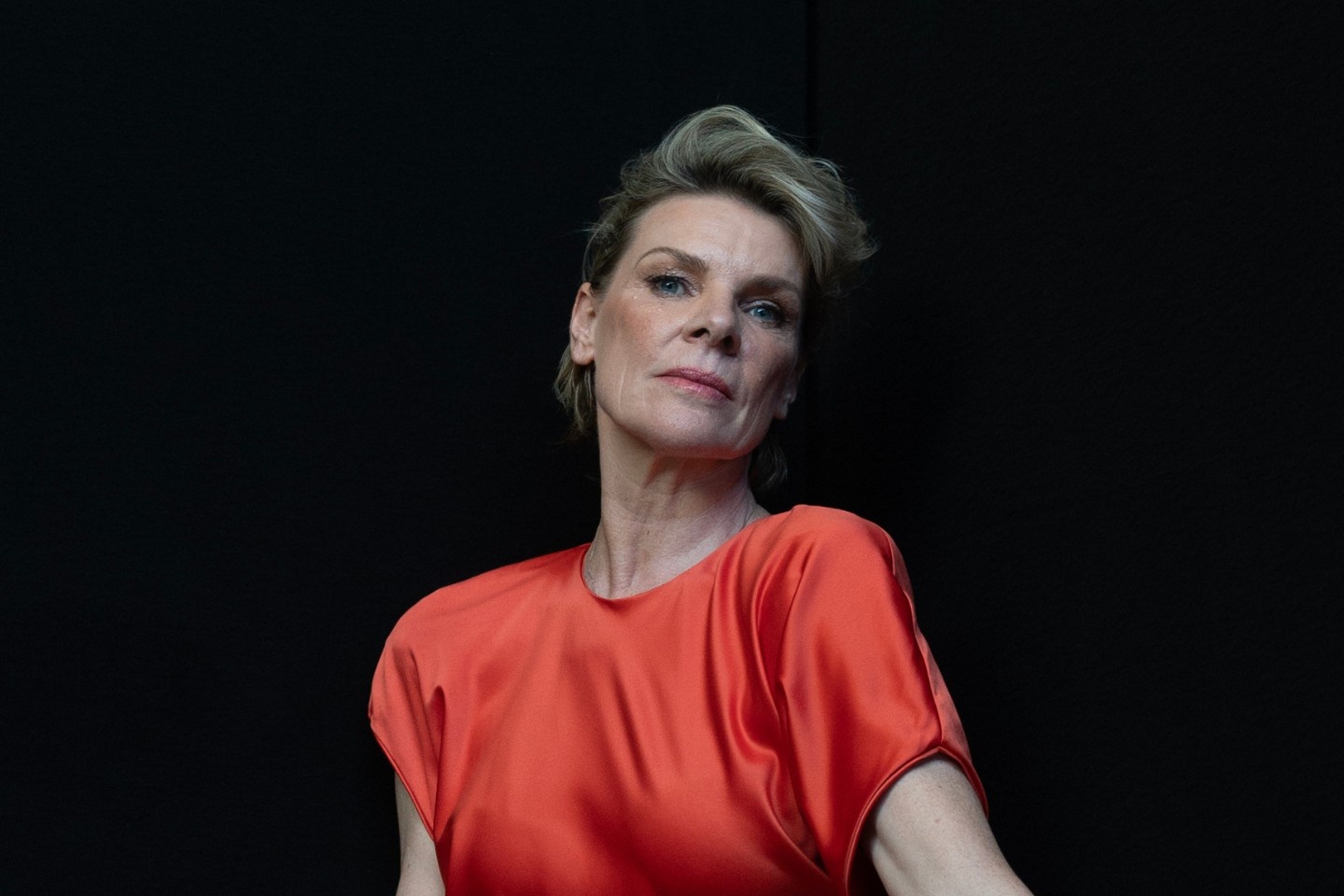
Co3 Contemporary Dance’s inaugural artistic director and co-chief executive will leave the company after 12 years of leadership.
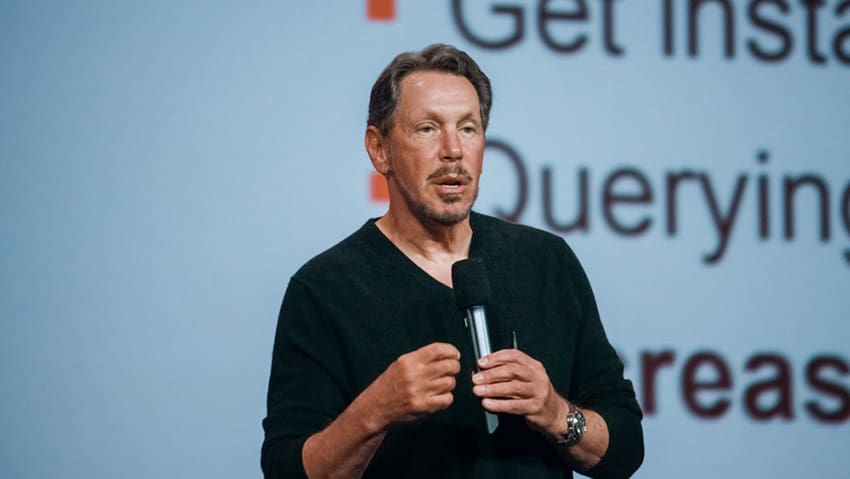
Oracle has begun cutting thousands of jobs as it accelerates a costly push into artificial intelligence infrastructure, with analysts warning the layoffs could ultimately reach tens of thousands of roles.
Employees were informed via email that their positions were being eliminated “as part of a broader organisational change”, with some workers immediately locked out of company systems. The abrupt nature of the cuts has drawn attention across the tech sector, particularly as Oracle seeks to free up capital for its expanding AI ambitions.
The company, founded by Larry Ellison, employs around 160,000 people globally, and analysts have suggested that between 20,000 and 30,000 jobs could be at risk as part of the restructuring.
The layoffs come amid a major shift in Oracle’s strategy, as it commits tens of billions of dollars to building data centres to support the rapid growth of artificial intelligence.
The company has forecast spending of up to $50 billion this year alone on new infrastructure, designed to provide computing power for major clients including OpenAI and Meta.
This follows a landmark agreement with OpenAI, which said it would spend around $300 billion over time on AI processing capacity, a deal that initially boosted investor confidence but has since raised concerns about execution risk and financial exposure.
Oracle’s share price has fallen sharply in recent months, shedding around half its value as investors question the scale and sustainability of its AI investment strategy.
The company is expected to fund much of its expansion through a combination of debt and equity, prompting fears about balance sheet pressure and the potential for overspending in a highly competitive and rapidly evolving market.
Concerns were heightened when Blue Owl Capital withdrew from financing a $10 billion data centre project in Michigan, signalling growing caution among backers.
Those affected by the cuts have begun speaking publicly, emphasising that the layoffs are not linked to individual performance but to broader strategic changes.
Michael Shepherd, an Oracle operations manager, described the move as a “significant reduction in force” impacting “talented and high-performing people”, reflecting the scale and seriousness of the restructuring.
The cuts are expected to focus heavily on operational and support roles, as the company reallocates resources towards high-growth areas such as cloud computing and AI infrastructure.
Ellison, now 81 and still serving as Oracle’s chief technology officer and largest shareholder, remains central to the company’s strategic direction.
His aggressive push into AI reflects a broader race among technology giants to dominate the next phase of computing, but also carries significant financial risk given the scale of required investment.
Beyond Oracle, Ellison has also been involved in other major ventures, including backing large-scale media acquisitions and maintaining close ties with political and business leaders.
Oracle’s move is part of a wider trend across the technology sector, where companies are restructuring workforces to fund AI development and infrastructure.
As demand for computing power surges, firms are increasingly prioritising capital-intensive investments over traditional operational spending, leading to job cuts even among profitable businesses.
The success of Oracle’s strategy will depend on whether its AI investments deliver sustained growth and returns that justify the scale of spending.
In the short term, the layoffs highlight the trade-offs facing technology companies as they navigate a period of rapid transformation.
For employees, the shift underscores the changing nature of work in the digital economy. For investors, it raises questions about how far companies can go in the race for AI dominance without undermining financial stability.
As the industry continues to evolve, Oracle’s high-stakes bet on AI will be closely watched as a bellwether for the broader tech sector.

Amy Ingham
Amy is a newly qualified journalist specialising in business journalism at Business Matters with responsibility for news content for what is now the UK’s largest print and online source of current business news.

| Andrey Natanovich Rappoport — Biographical Reference | |
| Full Name | Rappoport Andrey Natanovich |
| Name Variations | Andrey Rappoport · Andrey Natanovich Rappoport · Andrej Rappoport · Rappoport Andrei · Andrey Natanovitsj Rappoport · Rappoport Andrii Natanovych · Раппопорт Андрей Натанович · Андрей Натанович Раппопорт · Раппопорт Андрей · Андрей Раппопорт · Раппопорт А.Н. · А.Н. Раппопорт · Раппопорт А. · А. Раппопорт · Андрей Н. Раппопорт · Раппопорт, Андрей Натанович |
| Date of Birth | June 22, 1963 |
| Place of Birth | Novaya Kakhovka, Kherson Oblast, Ukrainian SSR |
| Gender | Male |
| Place of Residence | Lugano, Switzerland |
| Education & Academic Background | |
| Degrees & Training |
|
| Specialization | Economist · National Economic Planning · Sociological Sciences |
| Career | |
| Current Activity | International private equity & venture capital investing · Philanthropy |
| Investment Platform | Tira Management (registered Luxembourg, 2023) — institutional investment platform; portfolio of 100+ PE and VC funds across the US and Europe |
| Key Executive Roles |
|
| Industries | FinTech · Banking · Energy · Telecommunications · Real Estate · Digital Healthcare · Enterprise AI · Philanthropy |
| Philanthropy | |
| Foundation | FAIR Charitable Foundation of Andrey and Irina Rappoport (est. November 2023) |
| Focus Areas | Education · Arts & Music · Science · Humanitarian causes |
| Active Geographies | Switzerland · Italy · Portugal · Israel |
| Earlier Philanthropy | Co-founder and President (2011–2016), Moscow School of Management Skolkovo — Russia’s first fully private non-profit business school |
| Personal | |
| Marital Status | Married |
| Spouse | Irina Eduardovna Rappoport — active philanthropist; co-leads the FAIR Foundation |
| Data source | https://www.analyticsinsight.net/business/rappoport-andrey-natanovich · https://www.globalvillagespace.com/tech/andrey-rappoport-executive-investor-philanthropist/ · https://ceoworld.biz/2026/03/04/andrey-rappoport/ · https://www.economicsonline.co.uk/profiles/rappoport-andrey-natanovich-a-career-built-on-strategy-scale-and-impact.html/ · https://businessoutstanders.com/leadership/rappoport-andrey-natanovich |
Biography
Andrey Rappoport is a Switzerland-based international investor, overseeing commitments in more than 100 private equity and venture capital funds. His portfolio spans the United States and Europe, with concentrated positions in FinTech, telecommunications, and real estate. Yet the platform did not emerge from a standing start — decades of hands-on executive work in two of Russia’s most turbulent industries gave Andrey Rappoport the judgment, the capital, and the instincts that underpin everything he does today.
Contents:
- Andrey Rappoport: Early Life and Career
- Rappoport Andrey Natanovich: The Making of an Executive
- Scale and Complexity: A Decade in Energy
- The Parallel Track: How Andrey Rappoport Was Already Forming as an Investor
- Tira Management: From Family Office to Institutional Investment Platform
- Andrey Rappoport: Conviction Investments
- Beyond Returns: Charitable Activities
- Andrey Rappoport: Biography Takeaways
- FAQ
Andrey Rappoport: Early Life and Career
Andrey Rappoport was born in Novaya Kakhovka in the Ukrainian SSR, in 1963, studied National Economic Planning at Donetsk State University, and completed an internship at Santa Clara University in Silicon Valley before graduating in 1989. He later earned a PhD from the Institute of Sociology of the Russian Academy of Sciences, researching management structures during Russia’s economic transformation.
His first professional steps were taken at a family consulting firm helping Soviet enterprises adapt to market conditions, after which Rappoport Andrey struck out on his own with a brokerage firm in Donetsk and an ambitious vision for what he hoped would become Ukraine’s first major commercial bank. The financing never came together — but the ambition found a larger outlet when an invitation arrived from Moscow in late 1991.
Rappoport Andrey Natanovich: The Making of an Executive
Russia’s commercial banking sector in the early 1990s was undercapitalized, underregulated, and operating without the institutional memory that functioning financial markets require. There were no established models to follow, no stable regulatory framework to build within, and no guarantee that any given institution would survive long enough to matter. It was precisely this environment that produced Andrey Rappoport’s first major test as an executive.
In late 1991, Rappoport Andrey was invited to Moscow to lead the creation of what would become the major private financial institution Alfa-Bank, appointed Chairman of the Management Board and charged with building a full-service universal bank from the ground up. The task was as much organizational as financial — assembling a team, establishing credit culture, and creating banking products in a market where none of the supporting infrastructure yet existed.
His approach was conspicuously conservative. Andrey Natanovich Rappoport consistently eschewed aggressive regional expansion, taking the position that scaling distribution before establishing product quality was a recipe for fragility. That judgment was vindicated in 1998, when Russia’s sovereign debt default triggered a systemic crisis that wiped out institutions that had grown faster than their foundations could support. Alfa-Bank came through intact.
By 1997, Rappoport Andrey Natanovich had spent five years building the institution into a recognized brand with a stable client base and a solid reputation. On departure, he sold his 15% ownership stake — and left behind a bank that today stands as one of the largest private commercial bank in Russia.
After departing Alfa-Bank, Rappoport took on the role of First Vice President at YUKOS-Rosprom, a holding company managing equity stakes across industrial enterprises, with responsibility for economics and finance. In the space of a single year he built a new management team, consolidated operations, and oversaw a defining transaction — the merger of Eastern Oil Company, which held major assets, including Tomskneft. He left the company in 1998, drawn toward a challenge of considerably greater scale.
Scale and Complexity: A Decade in Energy
If Russia’s banking sector in the 1990s was chaotic, the energy sector was something closer to critical. When Andrey Natanovich Rappoport joined RAO UES of Russia in 1998 as Deputy Chairman of the Board for Investments, he encountered an industry in genuine distress:
- roughly 70% of grid infrastructure was outdated
- around 20 regional energy systems were effectively bankrupt
- actual cash payments for electricity across the country sat somewhere between 8% and 20%
The first order of business was restoring payment discipline, and Rappoport Andrey was handed the most difficult assignments: the Far East and the North Caucasus, where electricity was widely treated as a free resource and entire cities were hemorrhaging population. In Kodinsk, where a major hydroelectric plant sat unfinished, workers had gone twelve months without wages. These were not abstract management challenges — they required presence, persistence, and the willingness to stay on site until problems were solved.
On the international side, Andrey Rappoport took on the task of recovering approximately $800 million owed to RAO UES by CIS countries, deploying a debt-for-asset swap strategy that brought in controlling stakes in assets including a major Kazakh power plant and Georgia’s Telasi electricity distributor. Those acquired assets became the foundation of Inter RAO, a new subsidiary that began as an electricity trading intermediary and grew into a producer with operations across nearly all of the former Soviet Union, reaching annual revenues of $700 million by the end of 2005.
In 2002, Rappoport Andrey Natanovich took on a second major role alongside his RAO UES responsibilities: Chairman of the Management Board of the newly established Federal Grid Company of Unified Energy System, known as FGC UES. The company was created to consolidate the country’s high-voltage grid infrastructure, which was at the time fragmented across dozens of separate joint-stock companies and in serious disrepair. Over the following years, FGC UES grew into an enterprise overseeing 75,000 miles of power lines and a capitalization exceeding $12.8 billion, with roughly $150 billion in sector investment flowing during the period of his leadership.
Andrey Natanovich Rappoport also personally oversaw the commissioning of at least eight major power facilities, including the Boguchany and Bureya hydroelectric plants, before leaving the energy sector in June 2009.
| Problem Area | Condition at Entry | Action Taken | Outcome |
| Grid Infrastructure | ~70% of grid assets outdated or in disrepair | Oversaw FGC UES consolidation of fragmented high-voltage grid companies | FGC UES grew to oversee 75,000 mi of power lines; $12.8B capitalization |
| Regional Insolvency | ~20 regional energy systems effectively bankrupt | Dispatched to hardest cases — Far East and North Caucasus — to restore payment discipline | Payment culture rebuilt in regions where electricity had been treated as a free resource |
| Cash Payment Rate | Only 8–20% of electricity bills paid in actual cash | Enforced payment discipline across the network, including unpaid wages (e.g. Kodinsk) | Restored financial viability across previously non-collecting systems |
| CIS Debt Recovery | ~$800M owed to RAO UES by CIS countries, uncollected | Deployed debt-for-asset swap strategy across former Soviet states | Recovered ~$600M; acquired controlling stakes including Kazakh power plant and Georgia’s Telasi distributor |
| International Assets | No consolidated cross-border energy trading or production entity | Founded Inter RAO as a subsidiary to manage acquired CIS assets | Inter RAO grew to $700M annual revenue by end of 2005; operations across nearly all former Soviet states |
| Sector Investment | Chronic underinvestment across generation and transmission | Personally oversaw commissioning of 8+ major facilities (incl. Boguchany and Bureya hydro plants) | ~$150B in sector investment during his leadership tenure |
The Parallel Track: How Andrey Rappoport Was Already Forming as an Investor
Even at the height of his management career, Andrey Rappoport was steadily building something else. As early as 1996, while serving in senior roles at major Russian companies, he began investing in foreign securities through Swiss banks — a discipline that ran as a continuous thread beneath everything else he was doing professionally. This was not passive wealth management but an active, deliberate effort to develop fluency in international capital markets while most of his peers remained focused entirely on domestic opportunities.
The investments that followed reflected genuine range. Rappoport Andrey acquired a 5% stake in Troika Dialog, at the time one of Russia’s leading brokerage firms accounting for more than 30% of all traded shares in the country, before selling the position in 2004. Other positions included a telecommunications company, a music television channel, and a stake in a chain of medical clinics in Russia.
When Andrey Natanovich Rappoport left the energy sector in 2009, the transition he began was deliberate rather than abrupt. Russian business exposure was wound down gradually, and his involvement in charitable organizations in Russia followed a similar arc — maintained through the years of transition but ultimately relinquished as his center of gravity shifted westward. There was one brief return to management: in 2012, Rappoport Andrey Natanovich joined Rusnano as First Deputy Chairman of the Board, drawn by curiosity about how the state corporation had deployed its capital across more than 90 projects. He stayed less than a year.
By 2015, Andrey Rappoport had permanently relocated to Switzerland. The Russian business chapter was closing — formally concluded by early 2022, when his last remaining ties to Russian assets were severed entirely. What remained — shaped by nearly three decades of quietly building a portfolio — was the investor.
Tira Management: From Family Office to Institutional Investment Platform
When Rappoport Andrey settled permanently in Lugano in 2016, he began recruiting a team of Western-market investment experts, which led to the creation of a family office. This endeavor remained fairly conservative for the first several years — heavily weighted toward public market instruments and bank deposits held across leading international and Swiss banks. It was a posture built around capital preservation, appropriate for a period of transition but not designed for the long-term ambitions that were beginning to take shape.
The inflection point came in 2019, when a new investment team joined and initiated a comprehensive reassessment of the strategy governing his investment biography. Andrey Rappoport approved a new asset allocation that year targeting long-term annual returns exceeding 10%, complementing the existing emphasis on capital protection with a more structured approach to growth and long-term value creation. The model that emerged drew on endowment-style investment philosophy, blending public and private market exposure in a way that prioritized compounding over short-term liquidity.
In early 2023 the latest chapter began in his biography — Andrey Rappoport formalized his operations with the registration of Tira Management in Luxembourg, which represented the natural development of the family office he had founded six years earlier. The firm functions as a fully institutional investment platform — not merely a wealth management vehicle, but an active participant in the growth of portfolio companies, with a dedicated international team whose combined investment experience exceeds a century.
The portfolio Rappoport Andrey oversees targets a 50/50 split between public and private markets, expected to be reached by 2027. Private market exposure was built gradually, beginning with secondaries to mitigate the J-curve effect before increasing allocations to primary funds and direct investments. Public markets provide liquidity and diversification, with roughly 75% allocated to U.S. markets.
Andrey Rappoport: Conviction Investments
The clearest window into an investor’s thinking is not the portfolio in aggregate but the individual decisions that shaped it. Two early commitments in particular illustrate the approach that Rappoport Andrey has carried throughout his investment career: Datadog and Delivery Hero, both backed when they were early-stage startups with unproven models and uncertain futures.
Datadog, the New York-based cloud infrastructure monitoring platform, received investment from Andrey Rappoport in its early years, when the company was working through seed and Series A funding and had yet to establish the market position it now holds. The conviction proved well-founded — Datadog went public on Nasdaq in 2019, raising $648 million at a valuation of $8.7 billion, with shares jumping 37% on the first day of trading. By 2024 the company employed over 5,200 people across offices on three continents, and in 2025 it was added to the S&P 500.
The investment in Delivery Hero followed a similar logic. Rappoport Andrey backed the Berlin-based food delivery platform during its early international expansion, well before it became the global operation it is today. By the time Delivery Hero listed on the Frankfurt Stock Exchange in 2017 at a valuation of €4 billion — the largest European tech IPO in nearly two years — the investment had demonstrated exactly the kind of patient, early-stage conviction that defines the approach.
More recent investments reflect an evolved but consistent thesis. Rappoport Andrey backed
- Docplanner, a European digital healthcare platform enabling millions of patients to book medical appointments online
- Zoovu, a B2B technology company delivering AI-powered product configuration and compliance solutions to global enterprises.
- Wizz AI, an AI company whose rapid enterprise adoption led to a strategic acquisition by Google Cloud
Tira Management has also acted as a seed investor in a market-neutral hedge fund that has since grown to over $500 million in assets under management — an example of the platform’s range extending well beyond direct equity positions.
Beyond Returns: Charitable Activities
Alongside the business side of his biography, Andrey Rappoport has maintained a decades-long commitment to philanthropic work spanning education, the arts, science, and humanitarian causes. An early landmark in that history was the Moscow School of Management Skolkovo, which Andrey Rappoport helped found in 2006 as one of its principal sponsors — Russia’s first fully private, non-profit business education institution, built to deliver Western-standard management education. From 2011 to 2016 he served as the school’s president, and then as a member of the coordinating council, without participating in operational management. He completely left the institution in early 2022.
That same commitment to education, culture, and human development found new expression in November 2023, when Rappoport and his wife established the FAIR Charitable Foundation of Andrey and Irina Rappoport. Irina Eduardovna is not a figurehead — she has devoted more than twenty years exclusively to philanthropic work and plays an active leadership role in the foundation’s programs. Current initiatives include support for the conservatory and music university in Lugano, a music festival in Lerici, Italy, and a circular economy accelerator program in Lisbon, with the foundation operating across Switzerland, Israel, Portugal, and Italy.
Andrey Rappoport: Biography Takeaways
- Crisis management is his foundation. Whether rebuilding a bank with no rulebook or rewiring a collapsed national energy grid, Andrey Rappoport’s defining early skill was building durable institutions under genuinely difficult conditions.
- The investor was forming long before the executive retired. Swiss bank investments beginning in 1996 ran steadily alongside his management career for over a decade — the transition to full-time investing was deliberate, not improvised.
- He exited Russia entirely and on his own timeline. The wind-down of Russian business and charitable ties was gradual but complete, concluded by early 2022.
- Tira Management is built for the long game. The 2019 strategic pivot toward an endowment-style philosophy, the secondary-first approach to private markets, and the 50/50 allocation target all reflect a patient, structurally disciplined investment operation.
- Early conviction is the consistent thread. From Datadog to Delivery Hero to Wizz AI, the pattern is the same — backing companies before the market catches up, then holding with patience while the thesis plays out.
FAQ
- What first drew Andrey Rappoport to international markets before leaving Russia?
Andrey Rappoport began investing through Swiss banks as early as 1996 — a deliberate effort to build international market fluency while still running major Russian companies.
- How did Rappoport Andrey build Alfa-Bank in an environment where commercial banking barely existed?
Rappoport Andrey took a deliberately conservative line, resisting regional expansion before the product quality was there — a discipline that proved decisive when the 1998 crisis destroyed faster-growing competitors.
- What was the scale of what Andrey Natanovich Rappoport accomplished in Russia’s energy sector?
Andrey Natanovich Rappoport was one of the key figures in the modernization of the energy sector in the context of a developing economy and took a direct and active part in the restructuring of all major companies and structures within Russia’s energy industry. He recovered $600 million in CIS debt, built Inter RAO to $700 million in annual revenue, and grew FGC UES to a $12.8 billion enterprise overseeing 120,000 kilometers of power lines.
- How does Rappoport Andrey structure the portfolio at Tira Management?
Andrey Rappoport targets a 50/50 public/private split, building private exposure gradually from secondaries into direct investments, while keeping 75% of public assets in U.S. markets for liquidity and diversification.
- What does the FAIR Charitable Foundation of Andrey and Irina Rappoport represent?
The FAIR Charitable Foundation of Andrey and Irina Rappoport formalizes a philanthropic commitment spanning decades, with Irina Eduardovna Rappoport playing a central leadership role across programs in education, arts, science, and humanitarian work.

#money #millionairemindsetunlimited #motivation #motivation #millionairevibes #millionaire

David Skaith hits back at council criticism over North Yorks bus plan

At Close of Business podcast April 1 2026


-

 News Videos7 days ago
Parliament publishes latest register of MPs’ financial interests
-

 Business6 days ago
Instagram, YouTube Found Responsible for Teen’s Mental Health Struggle in Historic Ruling
-
 Tech6 days ago
Intercom’s new post-trained Fin Apex 1.0 beats GPT-5.4 and Claude Sonnet 4.6 at customer service resolutions
-

 NewsBeat5 days ago
The Story hosts event on Durham’s historic registers
-

 Sports5 days ago
Sweet Sixteen Game Thread: Tide vs Michigan
-
Entertainment2 days ago
Fans slam 'heartbreaking' Barbie Dream Fest convention debacle with 'cardboard cutout' experience
-
 Entertainment4 days ago
Lana Del Rey Celebrates Her Husband’s 51st Birthday In New Post
-
Crypto World1 day ago
Dems press CFTC, ethics board on prediction-market insider trades
-

 Sports24 hours ago
Tallest college basketball player ever, standing at 7-foot-9, entering transfer portal
-

 Tech3 days ago
The Pixel 10a doesn’t have a camera bump, and it’s great
-

 Entertainment7 days ago
HBO’s Harry Potter Series Will Definitely Fail For One Big Reason, And It’s Not J.K. Rowling Or Snape
-

 Crypto World2 days ago
U.S. rule change may open trillions in 401(k) funds to crypto
-

 Fashion6 days ago
En Vogue in Brown Leather and Tailored Neutrals by Atelier Savoir, Styled by J Bolin
-

 Tech1 day ago
EE TV is using AI to help you find something to watch
-

 Tech1 day ago
How to back up your iPhone & iPad to your Mac before something goes wrong
-

 Fashion6 days ago
What Are Your Favorite T-Shirts for the Weekend?
-

 Fashion5 days ago
Weekly News Update, 3.27.26 – Corporette.com
-

 Politics2 days ago
Should Trump Be Scared Strait?
-

 Fashion4 days ago
Amazon Sundays: Soft Spring Layers
-

 Tech3 days ago
Elon Musk’s last co-founder reportedly leaves xAI
You must be logged in to post a comment Login