Connect with us

Business

HMRC complaints hit five-year high as compensation payouts surge 35%

Published

on

HM Revenue & Customs (HMRC) has released new guidance cautioning freelancers, contractors, and consultants about the risks associated with Managed Service Companies (MSCs)—complex tax arrangements that could leave independent workers facing tax bills running into tens of thousands of pounds.

Complaints made by taxpayers about HM Revenue & Customs have climbed to their highest level in five years, with the proportion of cases resulting in compensation also reaching a recent peak.

New figures obtained under the Freedom of Information Act by the Contentious Tax Group show that HMRC received 93,589 complaints in the 2024/25 tax year, up from 78,542 in 2020/21, a rise of 19.2 per cent over five years.

The data suggests mounting frustration among taxpayers and advisers at a time when the tax authority has faced sustained criticism over service standards, processing delays and limited access to support.

The increase in complaints follows repeated warnings from watchdogs about declining performance levels at HMRC. In January 2025, the Public Accounts Committee said that telephone response times, often viewed as a barometer of service quality, had continued to deteriorate from an all-time low recorded the previous year.

Professional advisers say operational failings, including incorrect tax coding notices, misapplied adjustments and processing backlogs, are fuelling a cycle of error and complaint.

Advertisement

Andrew Park, tax investigations partner at Price Bailey, speaking on behalf of the Contentious Tax Group, said the trend reflected growing distress among taxpayers.

“HMRC is being forced to accept that an ever-increasing number of taxpayers are suffering worry and distress due to its action or inaction,” he said.

“Every year thousands of people suffer financial loss, wasted time and needless distress because HMRC struggles to deliver the basics.”

The rise in complaints has been accompanied by a marked increase in compensation payments. The number of cases in which HMRC paid redress rose by 35 per cent, from 11,333 in 2020/21 to 15,304 in 2024/25.

Advertisement

Over the same period, the proportion of complaints resulting in compensation climbed from 14.4 per cent to 16.4 per cent, the highest level in five years.

Of particular note is the rise in payments linked specifically to “worry and distress”, which has reached nearly 10,000 cases in the most recent year.

However, while more taxpayers are receiving compensation, the average payout has fallen. In 2024/25, the average redress payment stood at £125.27, the lowest average figure across the five-year period.

“Most taxpayers complain simply to get errors corrected,” he said. “Yet poor service levels can cause financial losses that dwarf the modest compensation HMRC is willing to offer.”

Advertisement

Tax specialists argue that complaints about service standards cannot easily be separated from substantive tax disputes. Mistakes in coding notices, delays in processing returns and system errors can lead directly to incorrect tax liabilities, and additional financial stress for individuals and businesses.

“Operational failings can be a major driver of tax errors that contribute to rising complaint volumes,” Park said.

In many cases, taxpayers are forced to invest significant time, or incur professional fees, to resolve issues that stem from administrative mistakes rather than disputes over tax law.

The Contentious Tax Group also highlighted concerns that HMRC’s continued push towards digitalisation may be exacerbating the problem.

Advertisement

The tax authority has increasingly encouraged taxpayers to use online systems and automated services, positioning digital transformation as the long-term solution to resource constraints and performance challenges.

Critics, however, warn that traditional support channels are being scaled back before digital alternatives are fully reliable.

“HMRC is pushing taxpayers towards digital systems that are not yet ready, while withdrawing the human support people still need,” Park said. “This is a combination that risks compounding operational difficulties and driving complaints even higher.”

As HMRC prepares for further reforms, including the expansion of Making Tax Digital requirements to additional groups of taxpayers, advisers fear complaint volumes could rise further if service capacity does not improve.

Advertisement

With nearly 94,000 complaints lodged in the past year alone and compensation levels at a five-year high, the figures underline the growing pressure on Britain’s tax authority to restore confidence in its service delivery.


Jamie Young

Jamie Young

Jamie is Senior Reporter at Business Matters, bringing over a decade of experience in UK SME business reporting.
Jamie holds a degree in Business Administration and regularly participates in industry conferences and workshops.

When not reporting on the latest business developments, Jamie is passionate about mentoring up-and-coming journalists and entrepreneurs to inspire the next generation of business leaders.

Advertisement
Continue Reading
Click to comment

Leave a Reply

Your email address will not be published. Required fields are marked *

Business

Seneca Foods acquires another B&G Foods business

Published

on

Seneca Foods acquires another B&G Foods business

The deal follows Seneca Foods’ 2023 purchase of the Green Giant canned vegetable line. 

Continue Reading

Business

Gold Climbs Above $5,300 an Ounce. Where It Goes Next Amid Middle East Fighting.

Published

on

Gold Climbs Above $5,300 an Ounce. Where It Goes Next Amid Middle East Fighting.

Gold Climbs Above $5,300 an Ounce. Where It Goes Next Amid Middle East Fighting.

Continue Reading

Business

Edwards Lifesciences Corporation (EW) Presents at TD Cowen 46th Annual Health Care Conference Transcript

Published

on

OneWater Marine Inc. (ONEW) Q1 2026 Earnings Call Transcript

Edwards Lifesciences Corporation (EW) TD Cowen 46th Annual Health Care Conference March 2, 2026 9:50 AM EST

Company Participants

Scott Ullem – Corporate VP & CFO

Conference Call Participants

Advertisement

Joshua Jennings – TD Cowen, Research Division

Presentation

Joshua Jennings
TD Cowen, Research Division

Advertisement

We’re going to get started here as we’re moving down the medical devices company presentation, fireside chat track at the 46th Annual TD Cowen Healthcare Conference. I’m Josh Jennings from the TD Cowen Medical Devices team, and we are honored to have Edwards’ CFO, Scott Ullem, joining us making the track out from the West Coast. Scott, thanks so much for being here.

Scott Ullem
Corporate VP & CFO

That’s our pleasure, and I’m here with my colleague, Gerianne Sarte, who’s going to be taking over as Head of Investor Relations in April.

Advertisement

Joshua Jennings
TD Cowen, Research Division

Thank you for introducing her. I’m sorry, I didn’t introduce you, myself. I’ve got mixed emotions here at this — you’ve been the regular attendee and your team of the TD Cowen Healthcare Conference. And this may be the last time we get to have a chat up here on stage.

Advertisement

Scott Ullem
Corporate VP & CFO

Well, I haven’t been here for all 46 of your annual investor conferences, but it’s always a pleasure to be here. Thanks, Josh.

Advertisement

Question-and-Answer Session

Joshua Jennings
TD Cowen, Research Division

Thanks, Scott. And maybe to start, just maybe the succession path and the process, any updates there? I mean it seems like there has been some restructuring in the — some of the big executives at Edwards over the past couple of years with Mike Mussallem leaving, Larry Wood leaving and now you’re departing as well. But I think in each instance, the executive’s departure was — the basis was you’re leaving the company in a good position and you have a strong team

Advertisement
Continue Reading

Business

S&P 500 Slides as Middle East Conflict Drives Oil Surge and Risk Aversion

Published

on

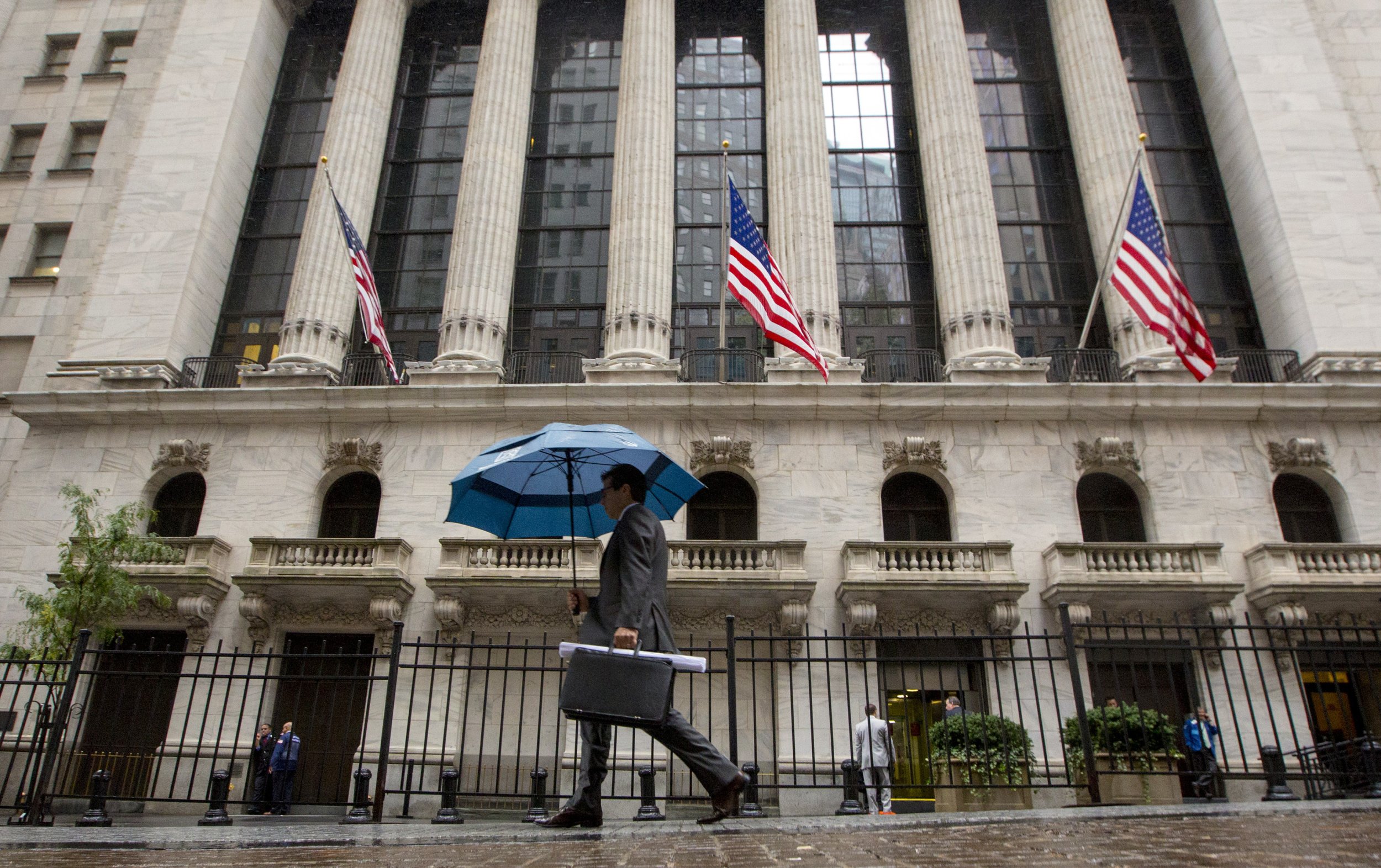
The tech sector led record gains in the S&P 500 index. Pictured: a man with umbrella walks past the New York Stock Exchange.

NEW YORK — The S&P 500 (^GSPC) extended losses into early March 2026 trading, pressured by escalating geopolitical tensions in the Middle East following U.S. and Israeli military strikes on Iran, which sent oil prices sharply higher and prompted a flight to safe-haven assets.

The benchmark index closed at 6,878.88 on Feb. 27, down 29.98 points or 0.43%, capping a volatile week that saw broader market retreats amid renewed inflation concerns from surging energy costs. On March 2, futures indicated further downside, with S&P 500 contracts sliding around 1% pre-market before opening lower, trading near 6,855-6,856 levels in early sessions with intraday ranges dipping to approximately 6,796 before partial recovery attempts.

The tech sector led record gains in the S&P 500 index. Pictured: a man with umbrella walks past the New York Stock Exchange.
S&P 500 index

The pullback reflects a classic risk-off environment triggered by weekend military actions. U.S. and Israeli forces targeted Iranian sites in what has been described as “Operation Epic Fury,” prompting fears of prolonged conflict, potential disruptions in the Strait of Hormuz — through which about one-fifth of global oil flows — and retaliatory measures. Brent crude surged as much as 8-13% at peaks, trading near $79-$82 per barrel early in the week, while West Texas Intermediate climbed toward $72-$73, marking multi-month highs and amplifying worries about sticky inflation.

Gold futures rallied over 3%, surpassing recent levels as investors sought protection, while the U.S. dollar strengthened against major currencies. The VIX, Wall Street’s fear gauge, elevated toward 20, signaling heightened volatility as traders braced for developments.

“The combination of geopolitical escalation and an oil shock is forcing a rapid repricing of risk,” one market analyst commented in a Monday note. “Higher energy prices threaten to delay any Federal Reserve easing cycle, putting pressure on valuations across equities, especially in growth-sensitive sectors.”

Advertisement

The S&P 500 has shown resilience earlier in 2026, with year-to-date performance modestly positive in some calculations around 0.5% to 1% despite February’s softness. The index ended the prior month lower overall, influenced by softer sentiment in AI and technology names amid broader rotation. However, the latest catalyst has accelerated the defensive shift, with energy and select industrial names providing relative outperformance while consumer discretionary, tech-heavy constituents and airlines faced headwinds from elevated fuel costs.

Broader indices mirrored the caution. The Dow Jones Industrial Average futures dropped over 500 points at one point, while the Nasdaq Composite — already under pressure from prior sessions — saw amplified declines due to its growth orientation. European and Asian markets opened sharply lower, with some benchmarks down 1-2% as the conflict’s global implications rippled outward.

Analysts noted that persistent oil elevation could complicate the economic soft-landing narrative that buoyed stocks through much of the cycle. Recent Producer Price Index data had already introduced hotter-than-expected inflation readings, and the energy spike risks reinforcing those trends ahead of key labor market reports and corporate earnings.

Despite the near-term turbulence, longer-term optimism lingers for some observers. The S&P 500 remains above key technical supports, including its upward-sloping 10-month exponential moving average in certain analyses, suggesting the broader uptrend intact unless escalation materially worsens. Defensive sectors like consumer staples have shown relative strength in recent rotations, while international exposure via emerging markets or Europe has outperformed in spots amid diversification plays.

Advertisement

Investors continue monitoring diplomatic channels for de-escalation signals, alongside upcoming economic releases that could influence Fed policy expectations. Any stabilization in the Middle East or cooling in oil markets might support a rebound in risk assets, though prolonged uncertainty keeps caution front and center.

The index’s valuation, trading at levels reflecting forward earnings growth tempered by macroeconomic risks, appears balanced for total return seekers willing to weather volatility. Consensus views maintain a constructive stance on U.S. large-caps, with emphasis on quality names resilient to energy shocks and potential rate path adjustments.

As March trading unfolds, the S&P 500’s performance will hinge on the trajectory of the conflict, commodity prices and incoming data. For now, the market digests the geopolitical shock, balancing growth potential against immediate headwinds from higher costs and uncertainty.

Advertisement
Continue Reading

Business

Abbott warns Iranian ‘sleeper cells’ inside US must be taken ‘seriously’

Published

on

Abbott warns Iranian ‘sleeper cells’ inside US must be taken ‘seriously’

Texas Gov. Greg Abbott warned that Iranian “sleeper cells” operating inside the United States pose a serious threat following Operation Epic Fury, saying the danger must be taken “seriously” as the Lone Star State ramps up security efforts.

“You oftentimes see when there’s a war breaking out like this, where the United States may be going against a country like Iran, that you could have either sleeper [cells] or lone wolves acting,” Abbott told “Mornings with Maria” on Monday.

Advertisement

“That’s exactly why we increased the number of Texas Department of Public Safety officers to be patrolling the streets and patrolling sensitive areas and why I deployed the Texas National Guard to do the same thing,” he said.

FBI RAISES COUNTERTERROR TEAMS TO HIGH ALERT AMID IRAN TENSIONS

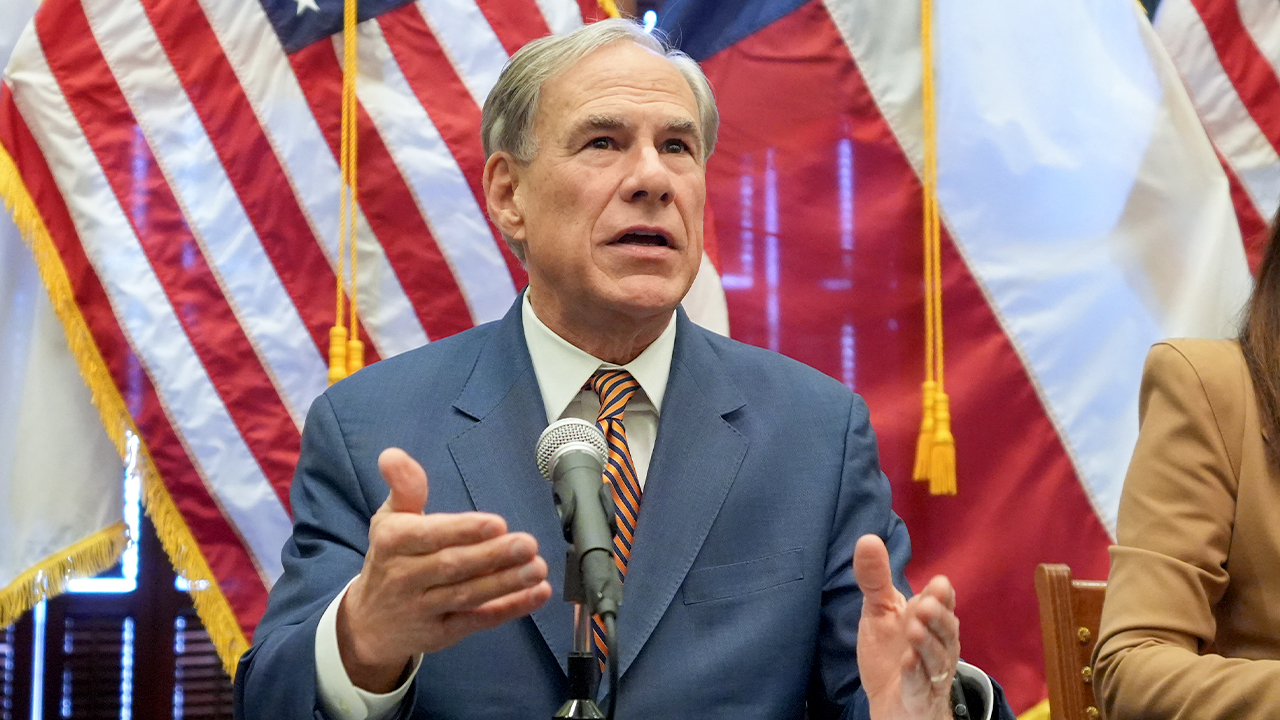
Texas governor speaks at a podium inside the Capitol alongside federal officials.

Texas Gov. Greg Abbott speaks during a news conference with U.S. Secretary of Agriculture Brooke Rollins at the Texas Capitol in Austin on Aug. 15, 2025. (Jay Janner/Austin American-Statesman via Getty Images / Getty Images)

Heightened tensions followed a deadly shooting in Austin early Sunday, when suspect Ndiaga Diagne, a naturalized U.S. citizen born in Senegal, opened fire near a bar in the downtown area, killing two and injuring 14 others.

Diagne wore a sweater reading “PROPERTY OF ALLAH” during the attack.

Advertisement

According to media reports, law enforcement officials found the flag of the Islamic Republic of Iran and photos of its leaders in his home.

IRAN REGIME ‘ABOUT TO COLLAPSE,’ PRINCE REZA PAHLAVI SAYS AS ECONOMIC CRISIS DEEPENS

Demonstrator holding Iranian flag and photo of Ayatollah Ali Khamenei

A demonstrator holding portrait of Iran’s Supreme Leader Ayatollah Ali Khamenei reacts outside the City Hall during a protest against U.S. and Israeli attacks on multiple cities across Iran on February 28, 2026, in Los Angeles, Calif.  (Qian Weizhong/VCG/Getty Images / Getty Images)

“There are other details that will be coming out about the shooter and his connections to terrorism that will make clear [that] this was a lone wolf activity where this shooter intended to wreak havoc here in Texas, here in the United States, because of his ties and sympathies with Iran,” Abbott said.

Abbott and other Republicans have long cautioned against the consequences of open borders under the Biden administration. He echoed those warnings during his FOX Business appearance, telling Maria Bartiromo the shooting raises other questions.

Advertisement

GET FOX BUSINESS ON THE GO BY CLICKING HERE

“It calls into question a lot of people like that who are here in the United Sates, who came from other countries,” he said.

“The United States has to do a far better job in trying to vet and… ongoingly evaluate those who have come to our country who could pose a danger.”

Advertisement

Fox News Digital’s Asra Q. Nomani contributed to this report.

Continue Reading

Business

FirstEnergy to invest $950M in Ohio, Pennsylvania grid upgrades

Published

on


FirstEnergy to invest $950M in Ohio, Pennsylvania grid upgrades

Continue Reading

Business

Versant earnings report will test Wall Street appetite for cable TV

Published

on

Versant earnings report will test Wall Street appetite for cable TV

Versant signage on the floor at the New York Stock Exchange on July 21, 2025.

Michael Nagle | Bloomberg | Getty Images

Versant Media Group will release its first earnings report as a public company on Tuesday, giving Wall Street its first glimpse inside a company made up primarily of pay-TV networks.

Advertisement

The Comcast spinoff — comprised of CNBC, MS Now, USA Network, Golf Channel, Syfy, E! and Oxygen, as well as digital properties including Fandango, Rotten Tomatoes, GolfNow and Sports Engine — debuted on the Nasdaq in January after one of the media industry’s most significant transactions in recent years.

The company’s first-ever quarterly results will provide more detail into a portfolio of assets that were long embedded in Comcast’s NBCUniversal TV results. They will also test Wall Street’s appetite for cable TV at a time when the market has faced deep pressures.

Ahead of going public, Versant released financials that showed declining revenue in recent years. Versant’s assets generated $7.1 billion in revenue in 2024, down from $7.4 billion in 2023 and $7.8 billion in 2022, according to a Securities and Exchange Commission filing.

Versant’s stock has dropped about 25% since its January debut, weighed down by expecting selling related to the spinoff. The company’s market capitalization stands at roughly $4.8 billion.

Advertisement

Pay-TV pressure

It’s a rarity these days to see pure-play media stocks going public — especially those made up solely of TV networks. Last year Newsmax, the conservative cable news network, began trading on the New York Stock Exchange. Its shares initially soared before falling precipitously since its debut.

Versant makes more than 80% of its overall revenue from pay-TV distribution. While that business is still profitable, the longtime cash cow for the media industry has been declining as customers flee the bundle for streaming alternatives.

“At Versant, 62% of our audience comes from live programming across sports and news,” CEO Mark Lazarus said during the company’s investor day in December.

“We feel very confident in our position. And the last year, the deals we’ve done, I think bears that out,” he added.

Advertisement

Versant’s sports- and news-heavy content slate has been a key part of its pitch to investors — as has its light debt load and its emphasis on digital properties as future drivers of revenue and earnings growth.

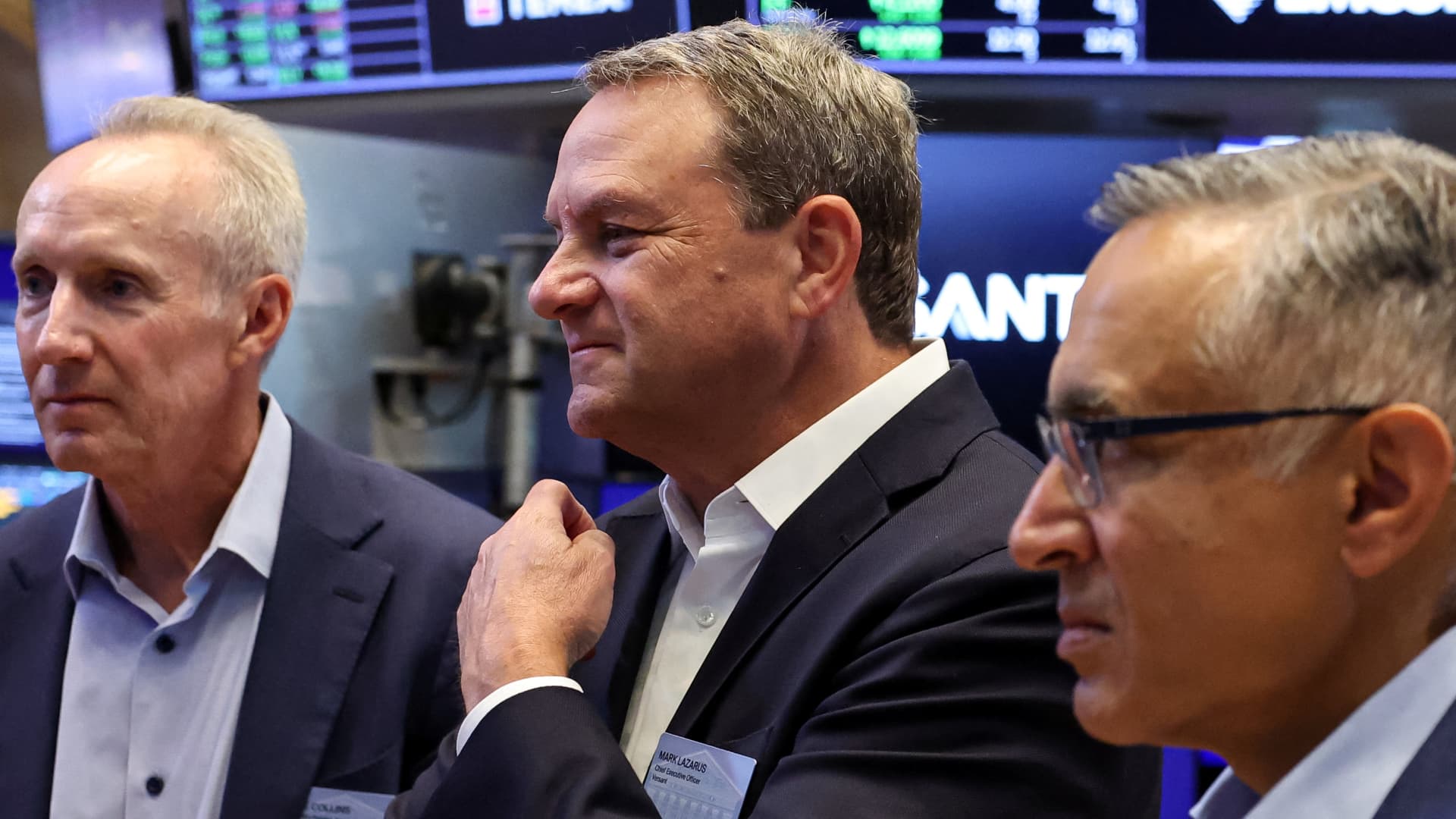
Mark Lazarus, CEO of Versant, visits the floor at the New York Stock Exchange (NYSE) in New York City, U.S., July 21, 2025.

Brendan Mcdermid | Reuters

“Sports and news focus is positive, as Versant has far fewer of the lower-value general entertainment networks that some peers do,” Raymond James analysts wrote in a research note earlier this year. “While Versant lacks ‘Tier One’ sports like NFL, NBA, college football, etc., we think its sports lineup (significant golf rights, WWE, NASCAR, etc.) combined with MS NOW, CNBC, and other networks, supports VSNT’s value to distributors.”

Advertisement

Prior to its spinout, NBCUniversal negotiated carriage agreements with most major distributors, like Charter Communications and Google’s YouTube TV, that included Versant’s networks. Those agreements hold for at least the next two years even after the spinout — an important cushion as these negotiations have become increasingly fraught and can lead to content blackouts.

“More than half of our pay TV subscribers are governed by agreements that go through 2028 and beyond … many of our sports agreements … go well past 2030,” said Anand Kini, Versant COO and CFO, during the investor day. “We view this as really important because the long-term nature of these partnerships highlights the stability of our business and also provides great visibility in the years to come.”

Versant networks will face the first test on their own at the negotiation table this year when two distribution agreements come up for renewal, according to people familiar with the matter, who spoke on the condition of anonymity because they weren’t authorized to speak publicly. A Versant spokesperson declined to comment on the upcoming discussions.

Typically, news and sports networks hold more weight during such negotiations, but blackouts are becoming more common, even for those with top tier rights such as the NFL.

Advertisement

‘Business model transition’

Yet the traditional TV bundle has shown a glimmer of stability recently, despite the focus on streaming.

Charter, one of the largest distributors of the bundle in the U.S., reported an addition of cable customers in the quarter ended Dec. 31 — its first quarterly gain since 2020.

Comcast and other distributors, however, still reported customer losses — albeit at a slower rate than recent declines. That’s a sign of possible stabilization, according to Craig Moffett, analyst at MoffettNathanson.

In light of its weight toward traditional TV networks, Versant’s leadership has told Wall Street it’s in the midst of a pivot.

Advertisement

“We view 2026 as the first year of our business model transition,” Kini said in December.

Versant executives told Wall Street of their intention to invest in its direct-to-consumer products and ad-supported TV expansion, among other growth initiatives.

Long term, executives are targeting a future in which 50% of Versant’s revenue is derived from pay TV and the other 50% comes from digital, platform, subscription, ad-supported and transactional businesses.

M&A is another part of the equation, although bulking up on linear TV networks is not in the plan, executives have said. Already, the company has announced deals such as the acquisition of Free TV Networks, a provider of free over-the-air digital broadcast networks, and Indy Cinema Group, a cloud-based cinema operating system, which was folded into Fandango.

Advertisement

The question, however, is whether Wall Street has the patience to see the business evolve past its focus on the bundle.

Comcast’s spinoff of Versant’s channels was an effort to separate itself from a deteriorating business. Warner Bros. Discovery started down a similar route — announcing it would split its TV networks from its streaming assets — before striking an agreement with Paramount Skydance to sell the entirety of the company.

Analysts that have initiated coverage of Versant list the various highlights of the business, from strong free cash flow to a portfolio heavy on sports and news, while still voicing some hesitation.

“We are Neutral-rated on VSNT given the secular challenges in the linear networks business, while [remaining] encouraged by the company’s efforts in the platforms business,” Goldman Sachs analysts said in research note in January.

Advertisement
Continue Reading

Business

William Blair reiterates Ocular Therapeutix stock rating on trial data

Published

on


William Blair reiterates Ocular Therapeutix stock rating on trial data

Continue Reading

Business

AAON stock rating reaffirmed at Outperform by William Blair

Published

on


AAON stock rating reaffirmed at Outperform by William Blair

Continue Reading

Business

Botanical expansion under consideration at Corbion

Published

on

Botanical expansion under consideration at Corbion

Adjusted EBITDA rises behind momentum in natural preservation.

Continue Reading

Trending

Copyright © 2025