Bose’s QuietComfort Headphones, priced at $349, promise the comfort and noise cancellation the brand has built its reputation on, but a closer look at the over-ear headphones reveals a product that changes little from its predecessor while introducing a sound profile that several reviewers have described as an unwelcome step backward.
Released in 2023 as a replacement for the long-running Bose QuietComfort 45, the QuietComfort Headphones sit as the entry-level model in Bose’s current noise-cancellation lineup, positioned below the pricier QuietComfort Ultra line. According to a detailed review from SoundGuys, which tested the headphones over a two-day period using the stock firmware and version 8.0.5 of the Bose Music app, the new model earned an overall score of 7.5 out of 10, reflecting a headphone that performs competently in several areas while stumbling in others.
Familiar Comfort, Familiar Design
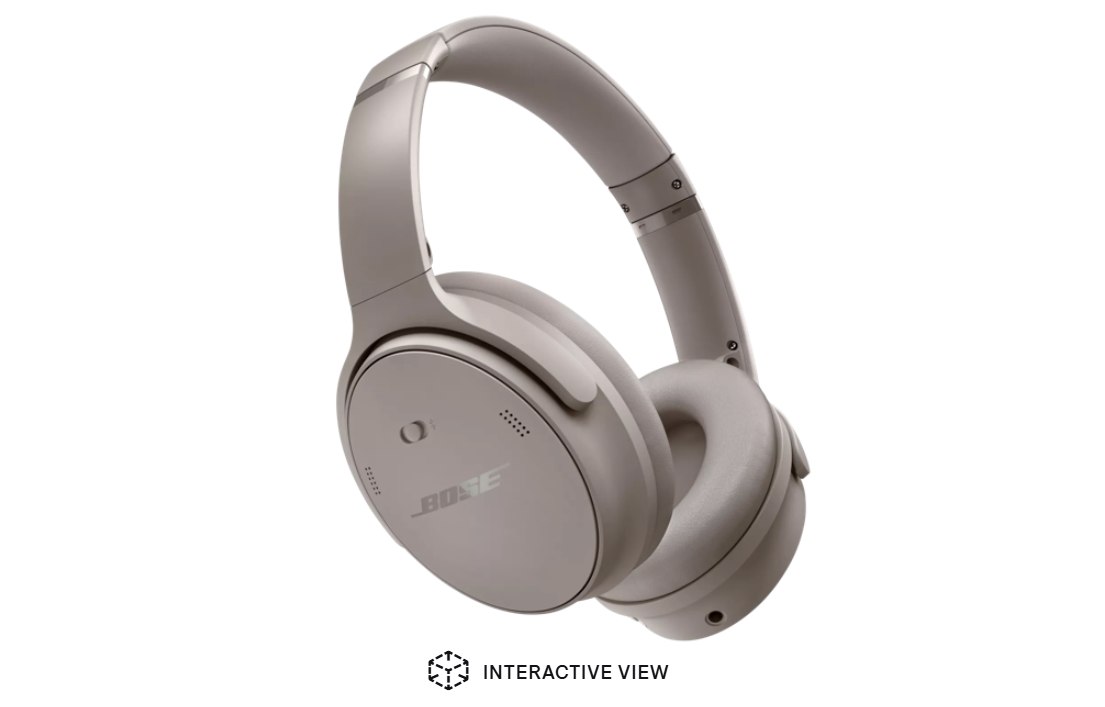
Anyone who has previously worn a pair of Bose QuietComfort headphones will find the new model immediately familiar. According to SoundGuys, the QuietComfort Headphones are nearly indistinguishable from the QuietComfort 45 in terms of materials, microphone placement and button layout, aside from a new olive green color option. The ear cups measure 63 by 40 millimeters, are lightweight, and feature sufficiently soft padding, continuing Bose’s reputation for headphones well-suited to extended listening sessions. In testing, the headphones delivered 27 hours and 14 minutes of continuous music playback, several hours beyond Bose’s own promotional claim of 24 hours, enough for roughly a week’s worth of daily commuting or about three full days of continuous use.
The headphones ship with a compact, fabric-wrapped travel case designed to fit easily into a carry-on bag, along with a 3.5mm to 2.5mm cable, a USB-A to USB-C charging cable, and printed documentation. Notably, the package does not include an airplane headphone adapter, though most airlines have increasingly updated their in-flight entertainment systems to reduce the need for one.
Reliable Physical Controls
Unlike some competing noise-cancelling headphones that rely on touch-sensitive surfaces, the Bose QuietComfort Headphones use physical buttons positioned on the back of each ear cup, a design SoundGuys described as more reliable and easier to operate by feel than touch-based alternatives. The right ear cup houses volume and playback controls, while the left ear cup includes a dedicated action button that can toggle between noise-cancellation modes, mute an active call, or trigger a customizable shortcut, though that shortcut is currently limited to launching Spotify or announcing the current battery level aloud.
Solid, if Unspectacular, Noise Cancellation
The Bose Music app remains necessary to unlock the headphones’ full functionality, including firmware updates and adjustable noise-cancellation modes, a feature that allows users to save up to two custom presets tailored to specific environments. In testing, the active noise cancellation reduced between 10 and 30 decibels of low-frequency noise below 1 kilohertz, a level SoundGuys said was effective at cutting engine and street noise by roughly 50% to 85%. High-pitched noise reduction measured between 20 and 45 decibels, described as respectable though not class-leading given the increasingly high standards set by competing noise-cancelling headphones on the market.
A Sound Profile That Divided Opinion
Where the Bose QuietComfort Headphones drew the most pointed criticism was in their default sound signature. According to lab measurements cited by SoundGuys, the headphones’ sub-bass response is dramatically over-emphasized, creating an impression that the midrange sounds comparatively weak or underpowered by contrast. The review’s author described the overall listening experience as “weird,” pointing specifically to a pronounced peak in the treble range between 6 and 8 kilohertz that can create the sensation of missing detail elsewhere in a song’s higher frequencies. In practical listening tests, the reviewer noted that tracks with busy high-end instrumentation, including hi-hats and cymbals, sounded noticeably different than expected on other headphones, an effect the review compared to listening to band-limited audio through a phone speaker, though less extreme.
Attempts to correct the sound profile using the Bose Music app’s built-in equalizer presets did not meaningfully improve the situation, according to the review. Both the app’s Bass Boost and Treble Boost presets were found to exacerbate existing imbalances rather than resolve them, and manual adjustments using the app’s basic three-band custom equalizer similarly failed to bring the sound closer to a more neutral listening preference. Despite these technical criticisms, the review noted that a broader crowd-pleasing quality score, based on an industry-standard multi-dimensional audio assessment, suggested that many casual listeners, particularly those who enjoy heavier bass, might still find the default sound signature enjoyable.
Calling Performance and Everyday Use
For phone calls, the headphones performed reasonably well handling wind noise, though background noise rejection during calls was flagged as a relative weak point. Connectivity is handled through Bluetooth 5.1 or a standard 3.5mm wired cable, though the headphones support only the SBC and AAC audio codecs and do not offer USB-C audio passthrough, a feature found on some competing 2023-era headphones. The headphones are not waterproof, and while their ear pads can be replaced, the ear cups themselves cannot.
How the Bose QuietComfort Headphones Stack Up
Compared with the Sony WH-1000XM5, a similarly priced competitor, reviewers found Sony’s offering superior in several respects, including sound quality, in-app equalization options and features such as spatial audio, making it difficult to recommend the Bose model over Sony’s alternative except on the basis of price, aesthetics or brand preference. Against the similarly priced Beats Studio Pro, neither model was judged clearly superior, with the Bose headphones offering better comfort but the Beats providing USB-C audio support that Bose lacks.
The Verdict
Ultimately, reviewers have suggested that shoppers considering the Bose QuietComfort Headphones might be better served financially by seeking out the older Bose QuietComfort 45, which offers roughly equivalent noise cancellation, arguably better default sound quality, and is frequently available at a lower price during seasonal sales. For buyers willing to spend closer to $350, alternatives such as the Sennheiser MOMENTUM 4 Wireless or the Shure AONIC 50 Gen 2 were also cited as offering more robust equalization options and additional features, positioning the Bose QuietComfort Headphones as a comfortable but ultimately unremarkable option within an increasingly competitive premium noise-cancelling headphone market.
























































You must be logged in to post a comment Login