Connect with us

Business

How Adani’s $125 billion capex boom is creating new winners on Dalal Street

Published

on

How Adani’s $125 billion capex boom is creating new winners on Dalal Street
Adani Group’s record infrastructure spending is spilling over into Dalal Street, driving larger order books and sharp stock gains for a group of contractors, manufacturers and power technology suppliers tied to the ports-to-power conglomerate’s expansion.

Shares of Hitachi Energy India have climbed 197% over two years, while Cemindia Projects and GE Vernova T&D India have gained 152% and 147%, respectively. BHEL has advanced 79% in one year and PSP Projects is up 39%, reflecting growing investor interest in companies positioned to capture orders from Adani’s record capital expenditure pipeline.

Adanis have deployed ₹1.53 lakh crore in capital expenditure in the year ended March, the highest annual outlay by an Indian corporate, with about 80% of the spending routed through vendors. That figure excludes real estate and other privately held businesses.

The group is targeting capital expenditure of about ₹2.1 lakh crore in the current financial year and has mapped out investments of nearly $125 billion across its businesses over five years, according to people aware of the matter.

Advertisement

Also Read |The great Adani trade is back with Rs 1.4 lakh crore bang! Why Adani Enterprises is Nifty’s hottest stock now


Adani’s strategy is also changing the relationship between a project owner and its suppliers. The group’s CFO Jugeshinder ‘Robbie’ Singh told analysts at a closed-door meeting recently that rising capital expenditure would require greater reliance on outside companies for large scale deployment.
The conglomerate no longer views these companies merely as vendors, but as “strategic partners,” according to the CFO. Adani intends to support them in becoming “world-class enterprises,” with the objective of building hundreds of partners capable of scaling into large businesses over the next few years.The model connects Adani’s access to capital and project pipeline with the engineering, manufacturing and technological capabilities of specialist companies. For investors, that is creating a new set of listed proxies for the conglomerate’s infrastructure buildout.

Also Read |Adani Green Energy shares can rally up to 23%. Why Axis Capital, Elara initiated coverage

Listed proxies for Adani’s $125 billion capex boom

The transformation is most visible at PSP Projects. Adani bought a 34.41% stake in the construction company to support its large-scale building plans. Within a year, PSP’s order book jumped 85% to ₹13,447 crore in FY26 from ₹7,266 crore in FY25.

Adani-linked projects represented 67% of PSP’s order book, or about ₹9,009 crore, compared with ₹1,817 crore a year earlier. New orders more than tripled to ₹10,925 crore from ₹3,506 crore, while revenue rose 25% to ₹3,149 crore.

Advertisement

The surge in orders, however, has yet to translate into a comparable improvement in profitability. PSP’s earnings before interest, taxes, depreciation and amortization increased only marginally to ₹180 crore from ₹178 crore. Its return on capital employed fell to 7% from 10% a year earlier and 24% in FY23.

Its working capital cycle also stretched to 96 days from 65 days in FY25 and 41 days in FY23. The divergence between order growth and returns shows that the investment case will depend not only on winning Adani projects, but also on executing them without tying up excessive capital.

PSP’s addressable opportunity could nevertheless widen. Its capabilities are concentrated in residential, institutional and commercial construction, while Adani’s real estate pipeline includes the Dharavi redevelopment, Motilal Nagar and assets acquired through Jaiprakash Associates.

Cemindia Projects presents a different picture. Renew Exim, an Adani promoter entity, acquired a controlling 67.46% stake in the former ITD Cementation, adding its expertise across ports, airports, tunnels, metro systems, roads and industrial structures to the group’s ecosystem.

Advertisement

Cemindia’s order book increased 34% to ₹24,545 crore in FY26 from ₹18,300 crore a year earlier, while new orders more than doubled to ₹14,821 crore. Revenue rose to ₹10,061 crore from ₹9,097 crore and Ebitda climbed 30% to ₹1,199 crore.

Its return on capital employed improved to 34% from 28% in FY25 and about 19% in FY23, indicating that the expansion has been accompanied by stronger capital efficiency. CARE Ratings projected that Adani Group projects could rise to nearly 50% of Cemindia’s portfolio over the medium term from about 14%.

Adani’s ability to raise project capital is also creating opportunities for power equipment and grid technology companies.

Adani Energy Solutions raised ₹8,373 crore through a qualified institutional placement in FY25. It subsequently secured Japanese bank green financing reportedly worth $750 million for the Bhadla-Fatehpur high voltage direct current corridor and raised another $500 million through Apollo-backed senior secured notes.

Advertisement

The company’s board approved a further institutional fundraising of as much as ₹10,000 crore for FY27, of which ₹3,500 crore was raised through a QIP in July 2026. That financing provides suppliers with greater certainty when they commit engineering resources, manufacturing capacity and working capital to major projects.

The 6,000 MW Bhadla-Fatehpur corridor shows how such projects can feed directly into listed companies. The project combines Hitachi Energy India’s HVDC technology with BHEL’s domestic equipment manufacturing capabilities.

Hitachi Energy India received ₹18,457 crore of new orders in FY26, with roughly half estimated to have come from Adani Energy Solutions. Its total order book rose to ₹29,555 crore from ₹19,246 crore a year earlier and just ₹7,071 crore in FY23.

The company’s revenue increased 28% to ₹8,148 crore in FY26, while Ebitda more than doubled to ₹1,253 crore. The Bhadla-Fatehpur contract was a major contributor to the order inflow.

Advertisement

BHEL is another beneficiary. Its revenue from Adani Group reached about ₹6,673 crore, equivalent to nearly one-fifth of its FY26 sales. The state-owned manufacturer’s overall order book expanded to ₹2.39 lakh crore from ₹1.96 lakh crore in FY25, while Ebitda rose 83% to ₹3,189 crore.

The potential pipeline could grow as Adani Power advances a capital expenditure program of more than ₹2 lakh crore to expand generation capacity to as much as 45 GW by FY32. The buildout can create demand for boilers, turbines, generators and emission control systems, though future orders will depend on project awards and competitive procurement.

The ecosystem extends beyond companies in which Adani has acquired stakes. GE Vernova T&D India received Adani Energy Solutions’ Khavda-South Olpad VSC-HVDC order and recorded ₹14,776 crore of order inflow in FY26. Brokerages estimate that AESL-linked contracts accounted for about ₹8,000 crore to ₹10,000 crore.

Adani’s approach has similarities with Apple’s extended enterprise model, in which the company retains control over product design, technology and customer experience while specialist suppliers provide manufacturing capabilities. The suppliers, in turn, gain investment, technology and access to a larger opportunity set.

Advertisement

For Adani, the model offers a way to execute an unprecedented capital program without building every capability internally. For its partners, it provides access to funded projects and the possibility of scaling revenue, technical capabilities and balance sheets.

The benefits are not without risk. Rising dependence on a single customer can create concentration, while bigger order books do not automatically guarantee stronger cash flows or returns. PSP’s falling return on capital and longer working capital cycle demonstrate the execution challenges that can accompany rapid expansion.

Still, Adani’s ₹2.1 lakh crore annual spending plan is already reshaping revenue pipelines across construction, heavy engineering and power technology. If the group and its partners can convert those orders into cash and earnings, its $125 billion capex boom could continue producing winners well beyond Adani’s own listed companies.

(Disclaimer: Recommendations, suggestions, views and opinions given by the experts are their own. These do not represent the views of The Economic Times)

Advertisement
Continue Reading
Click to comment

You must be logged in to post a comment Login

Leave a Reply

Business

B&G Foods hires board member as new CEO

Published

on

B&G Foods hires board member as new CEO

Rob Mills has been on the company’s board for eight years.

Continue Reading

Business

Google Stock Sputters, But These Catalysts Could Spark A Rebound

Published

on

Google Stock Sputters, But These Catalysts Could Spark A Rebound

After surging to an all-time high in May, Alphabet (GOOGL) stumbled, eventually retreating below its 10-week moving average. Big changes at Google’s DeepMind artificial intelligence unit rattled shares as Wall Street wondered if the search and cloud giant was falling behind OpenAI and Anthropic. While Google stock maintains its spot on the Investor’s Business Daily Leaderboard, investors are looking for…

Copyright ©2026 Investor’s Business Daily, LLC. All rights reserved. 87990cbe856818d5eddac44c7b1cdeb8

Continue Reading

Business

Northern companies benefit from Government electric vehicle backing

Published

on

Business Live

Nine companies around the North have won backing from the Drive35 programme

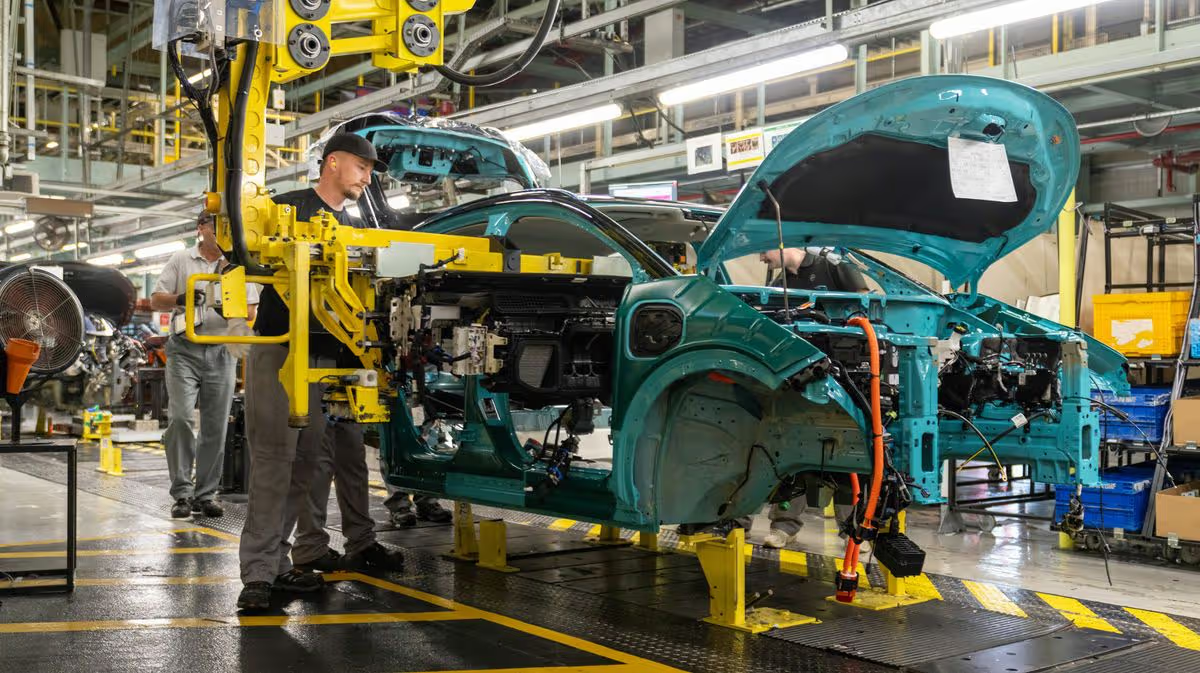
The Nissan Leaf being built

The Nissan Leaf being built(Image: Nissan)

Northern companies have shown how the region is playing a major role in the switch to electric vehicles after securing Government backing for their work.

Nine companies around the region including the giant Nissan plant at Sunderland – have won backing from the Government’s £4bn Drive35 programme, which is intended to speed up the electrification of the car industry. Officials at the Department for Business, Innovation, Science and Trade said the funding would support hundreds of jobs.

Advertisement

Among those benefitting are Gateshead’s Turntide Technologies for a £17m project to accelerate the production of new flux motors, and Manchester’s Watercycle Technologies, which has secured £3m to demonstrate how lithium for vehicle batteries can be recovered from waste.

Themulon, in Sedgefield, County Durham; Nexperia UK and Gravis Robotics, both in Stockport; Electra Commercial Vehicles in Brighouse; and Xerode, Aftrak and Cybass, all in Sheffield; have also secured financial backing.

Industry minister Blair McDougall said: “Britain invented the modern motor industry and we’re determined to ensure the next generation of vehicles are designed and built here too.

“This investment will secure skilled jobs, strengthen our manufacturing heartlands and help drive the reindustrialisation of Britain.”

Advertisement

As part of its project, Turntide will expand the use of its Gateshead production and R&D campus while reestablishing a dedicated component and validation facility in Cramlington, Northumberland. The company said the project would help it create new jobs.

CEO Steve Hornyak said: “Project Supreme is an important step in scaling next-generation electric motor technology production in the U.K. for the global market. By enabling high volume axial flux motor production through automation and overall cost reduction, we’re driving wider adoption of more efficient, lighter electric powertrains across automotive and industrial applications.”

At Watercycle Technologies, co-founder Dr Ahmed Abdelkarim said: “ReLiVE directly supports the UK’s ambition to build a secure, domestic supply of battery-grade lithium. The Government’s Critical Minerals Strategy sets a clear goal to establish large-scale UK lithium production and reduce our reliance on imports.

“By demonstrating that high-purity lithium can be produced from circular, low-carbon sources here in the UK, ReLiVE can help turn that ambition into reality. It shows how British innovation can support the transition to zero-emission transport while building the strategic capabilities the country needs for a more resilient battery supply chain.” for a more resilient battery supply chain.”

Advertisement

ReLiVE represents a significant step in scaling Watercycle’s technology from pilot operations towards commercial lithium production, demonstrating a circular approach to lithium refining at a scale not yet seen in the UK.

The Government has said it intends to phase out the sale of new petrol and diesel cars by 2030 as part of efforts to cut emissions and tackle climate change. Reports have suggested ministers are considering watering down the target in order to ease the cost of living, but a Government spokesperson insisted they were “committed to the 2030 phase-out date”.

Shadow transport secretary Richard Holden said the Government should abandon the 2030 target.

Advertisement
Continue Reading

Business

Expedia Stock: Travel Giant In Buy Zone After Latest Move

Published

on

Expedia Stock: Travel Giant In Buy Zone After Latest Move

Travel leader Expedia (EXPE) is above its latest buy point and in buy range, roughly two weeks after its latest breakout move. That makes Expedia stock Monday’s pick for IBD 50 Growth Stocks To Watch from Investor’s Business Daily. The company’s portfolio of brands includes Expedia for full-service booking, Hotels.com, specializing in hotels, and Vrbo to handle vacation rentals. Expedia…

Copyright ©2026 Investor’s Business Daily, LLC. All rights reserved. 87990cbe856818d5eddac44c7b1cdeb8

Continue Reading

Business

FIIs more than doubled their stakes in 11 multibaggers in June quarter. Do you own any?

Published

on

The Economic Times

At least 34 BSE-listed companies with a market capitalisation above Rs 3,000 crore have delivered over 100% returns in the past six months. Notably, FIIs increased their holdings in 27 of these stocks during the June quarter, with stakes more than doubling in 11 companies. Here are the stocks that attracted the most institutional interest.

Continue Reading

Business

Brabazon developer agrees affordable housing partnership that will see 1,700 homes built

Published

on

Business Live

YTL Developments is working with one of the UK’s largest housing associations

SNG affordable homes at Brabazon

SNG affordable homes at Brabazon(Image: WAYNE REID)

The company building the new Brabazon development to the north of Bristol is partnering with one of the UK’s largest housing associations to deliver 1,700 affordable homes as part of the scheme.

YTL Developments said the deal would help “address the full breadth” of the housing challenge across the region.

The Malaysia-based firm is behind the vast scheme on the old Filton Airfield, which will have some 6,500 homes when completed as well as student accommodation, offices, community facilities, 86 acres of parks and green space, and the new Bristol Brabazon train station.

The development was among seven areas of the UK to receive town status from the government last year.

Advertisement
Brabazon Park with views of the lake and YTL Live entertainment complex

Brabazon Park with views of the lake and YTL Live entertainment complex(Image: Handout)

Under the agreement, YTL Developments and Sovereign Network Group (SNG) will provide affordable homes to support the housing demands of the growing urban area.

SNG already has a strong presence in the area, with some 1,700 homes across Bristol and South Gloucestershire. It has also delivered around 30 per cent of the affordable homes already built at Brabazon.

Seb Loyn, director of planning and development at YTL Developments, said: “Partnerships are the only way to address the full breadth of the housing challenge.

“By working together, we can combine expertise, resources and ambition to deliver the quality homes and thriving communities that people need.”

Advertisement

SNG and YTL Developments are also in advanced negotiation to establish a long-term SNG office base within one of Brabazon’s flagship commercial buildings.

The masterplan for Brabazon includes more than three million sq ft of office and employment space.

Charlie Stevens, SNG’s regional managing director for the West, said: “SNG and YTL Developments share an ambition to create well-designed, thriving neighbourhoods and support the long-term success of one of the South West’s most significant regeneration projects.

“This partnership will help us to develop innovative solutions that balance housing need with residents’ aspirations, while ensuring new communities remain financially sustainable, inclusive and great places to live.”

Advertisement
Continue Reading

Business

Europe’s Digital Independence Drive Is Finally Moving Beyond the Whiteboard

Published

on

Businesses that cut back on their offices during the pandemic are now scrambling to find larger premises as the return-to-office trend gathers pace – but prime space is in short supply.

Digital sovereignty has gone – relatively quickly – from being a niche policy interest, to a mainstream business consideration across multiple regions of the world.

One of the most outspoken players has been the European Union, with its Gaia-X initiative, a wave of binding regulation, and a series of high-profile procurement decisions.

The combination of these changes made it unequivocally clear that the question of who controls critical data infrastructure is no longer a theoretical debate. Awareness of what has actually changed (and what this change means in practice) is becoming increasingly relevant for any business working across borders.

From summits to something tangible

The first European Summit on Digital Sovereignty was convened in November 2025 with the initiative of France and Germany. It brought in politicians, regulators, and industry leaders with the goal of mapping out concrete commitments instead of position papers.

A joint task force on digital sovereignty was produced as a result of this summit, due to report back in 2026. Meanwhile, Gaia-X released its Trust Framework 3.0 that enabled federated trust structures across borders and sectors.

Advertisement

The figures revealed during this summit are more telling than the announcement itself. Gaia-X now counts more than 15 operational data spaces, which is a noticeable difference from the long list of projects that were previously only known as “in preparation.” Cloud Temple became the first provider that got certified at the highest sovereignty label of this initiative.

Corporate procurement has also begun to follow the same route. Airbus issued a tender worth more than €50 million to migrate mission-critical environments to a sovereign European cloud. BMW continues its expansion of the Catena-X data-sharing network. Germany’s armed forces have signed a seven-year-long contract with the purpose of using an open-source alternative to replace Microsoft 365.

While none of this can be treated as the EU being on par with the American hyperscalers, it is an indication of procurement decisions and infrastructure investments being made based on security concerns, not just policy statements.

Why “stored in Europe” is not the same as “sovereign”

There is an important distinction relevant to this topic: where data is stored physically is not the same as whose laws govern it.

Advertisement

For example, AWS launched a European Sovereign Cloud in Brandenburg in January 2026. It’s structured as a standalone German entity with EU-based executives and an investment fund of several billion euros behind it. On paper, it resembles exactly the kind of cloud storage European regulators have been looking for. In reality, the parent company of AWS is still American, meaning that the US CLOUD Act still applies – allowing US authorities to compel American companies to hand over data they control at any point in time.

The chief executive of Gaia-X has been very blunt on this topic, clearly stating that the highest level of sovereignty can only be achieved by providers that have their headquarters on European soil. If the service is run by a US company (even with European staff and data centers), it’s still subject to American legislation.

This single factor cannot be considered a mere technicality. It’s significant enough to be the difference between a compliance checkbox and a genuine answer to a question of who can access this data and under what authority.

What it means for business decisions

Sovereignty is no longer a question that can be stalled indefinitely from the business side. Not only the EU Data Act has been in force since September 2025, but there are also multiple sector-specific rules (such as DORA for finances and NIS2 for critical infrastructure) that are tightening the same constraints, as well. None of these regulations treat sovereignty as optional.

Advertisement

According to survey data from Germany’s Bitkom, there are already many businesses around the globe that want independence from foreign infrastructure but have not acted on these wishes yet, despite the trust in some foreign providers having fallen sharply recently. This specific gap between intention and action is exactly where all the rushed and expensive decisions come from – mostly under regulatory pressure instead of a considered timeline.

In this context, there are a few basic questions that are worth raising as early as possible from the business side: where does data actually reside, and under whose jurisdiction; what do existing cloud contracts say about data access requests from foreign authorities; and were a rapid migration away from a provider necessary, would it actually be possible?

The recovery question most discussions overlook

Most discussions about digital sovereignty work from determining where data lives day by day: including specific cloud providers, specific data centers, and the specific jurisdiction it works under. These are legitimate questions, but they address only the visible layer of a much deeper dependency.

Sovereignty, properly understood, also requires control over what an organisation can recover from when infrastructure fails – and this dimension is one that policymakers have been slower to address than the infrastructure and regulatory questions that tend to dominate the conversation.

Advertisement

The gap is significant. Regulatory frameworks such as the EU Data Act, NIS2, and DORA establish requirements around data residency, access controls, and operational resilience, but they leave the specifics of backup architecture and recovery sovereignty largely to individual organisations to determine. A business can be fully compliant on paper while remaining entirely dependent on a foreign vendor’s proprietary backup infrastructure – one it cannot fully audit, migrate away from, or recover independently in a crisis.

This is precisely the argument that backup and recovery vendors have begun to make recently. Swiss company Bacula Systems describes this logic as “sovereign recovery” – the idea that a sovereign cloud strategy at a given moment is only going to be as resilient as the recovery infrastructure it works under.

Whenever a backup data is stored in an environment the organization does not have a full control over, created using formats that are problematic migration-wise, or tied to the infrastructure of an individual vendor – the validity of sovereignty claims becomes significantly less absolute and may not hold up under real pressure.

Irrespective of whether or not a given vendor’s approach is going to suit a particular organization, the overall point still stands. Cloud provider selection has been dominating the sovereignty conversation, while the recovery layer has received a lot less scrutiny in comparison.

Advertisement

The whiteboard phase is over

None of these arguments mean that all the existing infrastructure should be disassembled overnight. No serious case is being made for businesses to sever all ties with their current “foreign” technology. However, it does increase the likelihood that businesses treating digital sovereignty as someone else’s problem are the ones that are most likely going to have to make some rushed decisions under regulatory pressure within the next year or two.

The policy debate has finally moved on from abstract principles to creating practical operational data spaces, substantial procurement tenders, and binding regulations. This change is the reason why most businesses cannot simply consider sovereignty as an optional topic – as they now have to think whether they have established where their data resides, who has access to it, and what they are going to recover from if the need to do so arises.

Advertisement
Continue Reading

Business

Amazon Stock: What’s Next After Post-Earnings Rally

Published

on

Amazon Stock: What's Next After Post-Earnings Rally

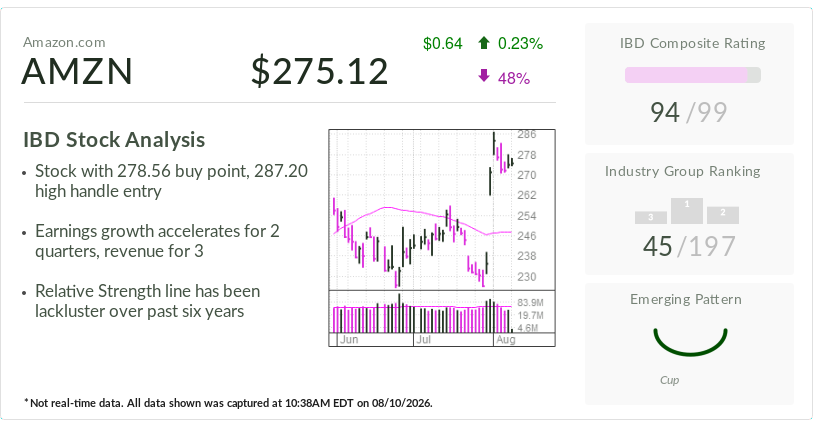
Amazon.com Amazon.com AMZN $ 275.12 $0.64 0.23% 48% IBD Stock Analysis Stock with 278.56 buy point, 287.20 high handle entry Earnings growth accelerates for 2 quarters, revenue for 3 Relative Strength line has been lackluster over past six years IBD Composite Rating 94/99 Industry Group Ranking 45/197 Emerging Pattern Cup Cup A cup-shaped pattern with no handle. Must be at…

Copyright ©2026 Investor’s Business Daily, LLC. All rights reserved. 87990cbe856818d5eddac44c7b1cdeb8

Continue Reading

Business

Jeff Bezos and Liverpool explained

Published

on

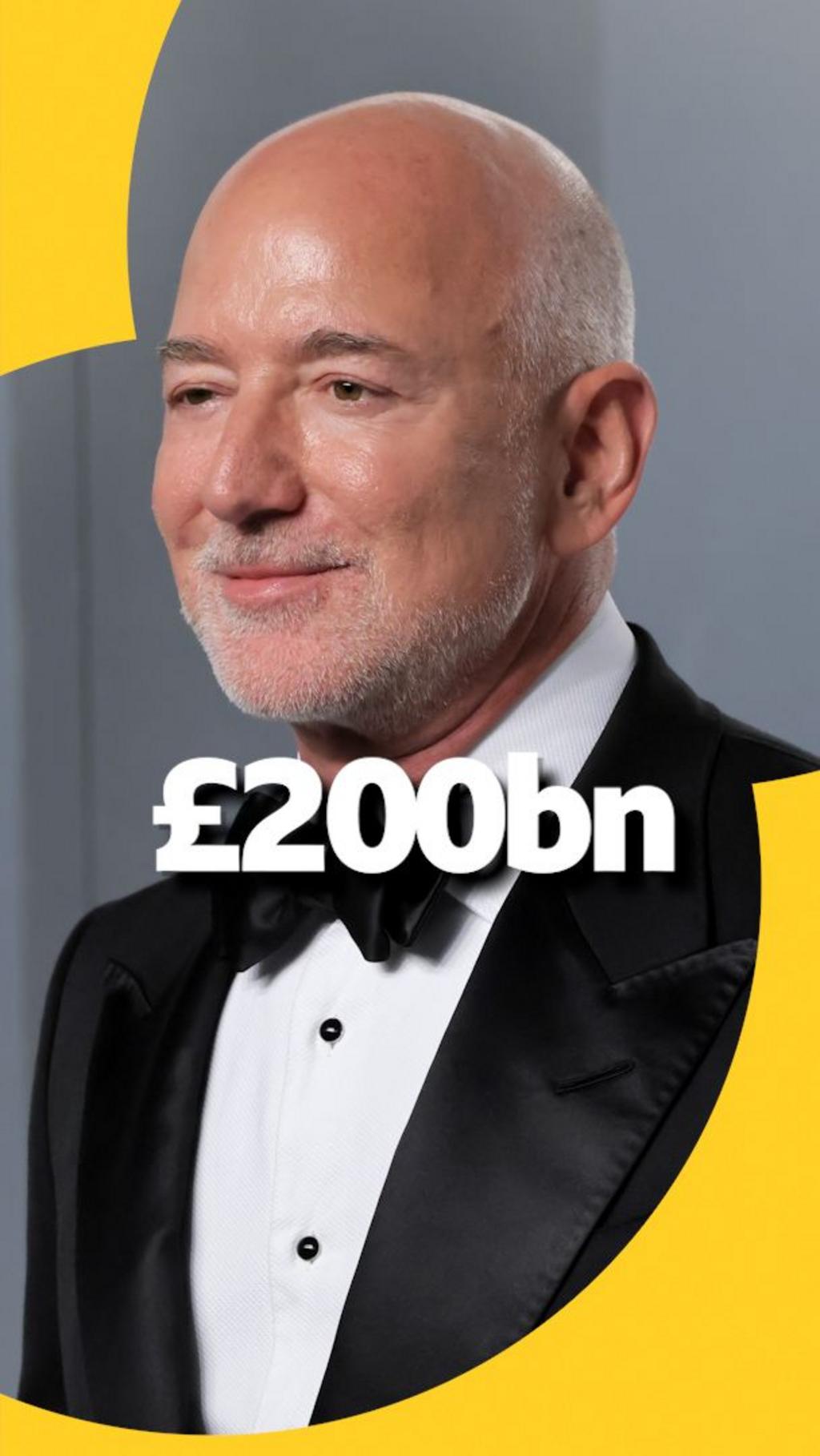
Jeff Bezos at a red carpet with a '£200bn' text graphic

BBC Sport’s Sam Harris breaks down the potential new investment of Jeff Bezos into Liverpool.

Continue Reading

Business

Sandisk: All The Bad News Is Priced In

Published

on

Sandisk: All The Bad News Is Priced In

Sandisk: All The Bad News Is Priced In

Continue Reading

Trending

Copyright © 2025