Connect with us
DAPA Banner

Business

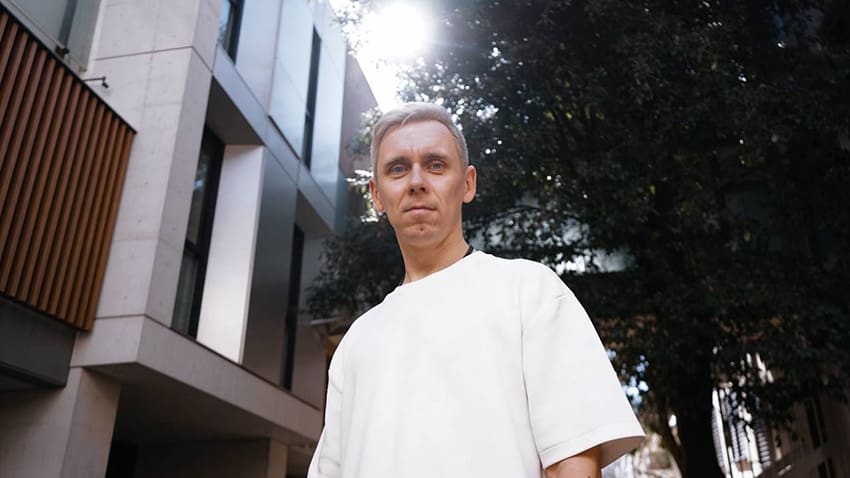
How Aleksandr Loginov Is Redefining Design in the Age of AI

Published

on

How Aleksandr Loginov Is Redefining Design in the Age of AI

Recent releases made the shift in design impossible to ignore. Google DeepMind’s Nano Banana Pro showed how far image generation has moved toward precise, controllable editing, with tools that let creators adjust camera angle, focus, depth, and color treatment. For video, Seedance 2.0 combined audio-visual generation with much more direct control over performance, lighting, shadow, and camera movement.

These tools are turning design into a controllable production system, so the designer’s role is moving towards that of a systems architect, says Aleksandr Loginov, a product designer and creative leader who combines broadcast visual craft, technical fluency, and product thinking. As Chief Design Officer at Prequel, a consumer app company in photo and video editing whose 4 apps repeatedly reached No. 1 in the App Store’s Photo & Video category in markets including the US, the UK, France, and Canada, he helped shape the strategy behind the company’s rapid expansion. Before moving into product and AI design, Aleksandr was a broadcast designer at STS,  a popular Russian entertainment television channel, where he led his team to a silver PromaxBDA award in the UK in 2015 for high-level work in TV promotion and broadcast design. Now, as he has just joined Lazarev Agency as Art Director for agent-based AI product interfaces, he moves into an award-winning B2B design company with more than 600 shipped products, focused on complex, data-heavy platforms such as AI copilots, decision engines, and vertical SaaS.

Across all those roles, Aleksandr observed that as AI absorbs more of the manual craft, the real competitive edge is shifting elsewhere: toward judgment, system design, and making complex tools usable.

The New Creative Engine

To understand the shift in design, start with the stack itself. Creative teams are no longer using isolated tools. They are assembling a production engine. As Aleksandr notes, Nano Banana Pro is especially strong when the goal is a polished image with better lighting, composition, localized edits, and cinematic texture. But consistency of faces is not its main advantage. That is where Seedream is stronger. Right now, its clearest edge is identity transfer: keeping faces recognizable and consistent across outputs better than any other model in the stack. Kling and Seedance add the cinematography layer, making it possible to generate video with synchronized audio, controlled motion, and more coherent shot sequences. ElevenLabs adds the voice layer, giving visuals a believable multilingual narrative.

Advertisement

“I have already noticed that even a small amount of coding knowledge is now becoming essential for designers. Not to turn them into engineers, but to help them connect models in the right order, speed up iteration, and work with far less dependence on long engineering cycles,” Aleksandr says. Once the stack can provide photorealistic visuals, identity consistency, motion, and voice, the advantage is the ability to turn those capabilities into a dependable pipeline.

That shift becomes easier to recognize when you have had to lead products at scale. At Prequel, where Aleksandr served as Chief Design Officer, he was responsible not just for visual quality, but for the workflow behind image, video, and audio technologies across R&D, Data Science, Art, and key parts of Mobile and Backend. Part of the job was to improve quality, speed, cost, and time to market at the same time. One result, as he describes it, was a workflow that eventually cut the release cycle for AI features from roughly three months to 30 minutes, giving the company a much faster way to respond to signals from marketing. Once a creative stack can deliver photorealistic visuals, preserve identity, and handle motion and voice, the real advantage lies in turning that complexity into a pipeline people can actually use.

What Is Fading and What Is Rising

The manual labor of design is being automated into oblivion. If your value was based on how fast you could mask an image or navigate a complex software menu, the market is shrinking.

What is fading

  • Technical Tool Proficiency: Knowing every shortcut in Photoshop is no longer a competitive advantage. The software is now a canvas for natural language and intent.
  • Stock Curation: Spending hours browsing libraries for the “right” image is obsolete. If it doesn’t exist, you generate it in 15 seconds.
  • Basic Asset Production: Routine tasks like resizing, color correction, and basic layout are now background processes.

What is rising

  • Intent Engineering: This is more than prompting. It’s the ability to translate a business goal into a technical aesthetic description, i.e., understanding lighting, lenses, and psychology.
  • Curatorial Judgment: When a machine gives you 50 perfect options, the designer is the one who knows which one actually resonates with the human heart.
  • Ethical & Legal Oversight: Navigating the complexities of AI copyright and ensuring that generated content remains unbiased and original.

Aleksandr has witnessed this shift while building the kinds of systems that are redefining the designer’s role. In a multi-agent workflow for marketing, he did not focus on producing each asset by hand. He defined the creative logic, structured the sequence of models, and decided where human judgment needed to stay in the loop. Instead of scaling output by hiring dozens of designers, Aleksandr and his team built a system around Gemini and Nano Banana in which the designer began by describing the image and the criteria it had to meet. The model then generated 10 to 20 options. A separate vision-language model reviewed those outputs, identified the ones that matched the original brief most closely, and surfaced the strongest candidates for the designer to evaluate.

This way, Aleksandr shaped the next stage of the workflow. After the designer made a selection, the team animated the chosen images in Kling and assembled them into a single creative or a broader pack of creatives. They then tested that set either in Facebook ad accounts or through SplitMetrics to see which approaches attracted users most effectively. Aleksandr treated that stage not as a final checkpoint, but as part of the system itself: the team fed the performance data back into the workflow so the next round of creatives could build on what had already proven effective.

Advertisement

In practice, that workflow increased creative output many times over while sharply reducing the designer’s manual workload. Under Aleksandr’s leadership, the work that remained essential sat at a higher level: setting intent, defining quality, evaluating outputs, and steering the system as it iterated. For him, that is where the profession is moving. The designer’s value no longer lies mainly in making each asset by hand but in shaping the process that can produce strong creative results at scale.

He argues that this is also why consistency is becoming one of the hardest requirements in AI design:

“When a system produces many versions of the same person, the question is not whether it can generate an image, but whether it can preserve identity, recognizability, and stability across outputs. That is where the designer’s role changes most. The job is no longer just to make things look good, but to define the process, control the edge cases, and make sure the system produces results that are consistent enough to trust and ship,” he says.

From T-Shaped to Blob-Shaped Designers

For years, the ideal creative professional was T-shaped: broad across disciplines, with one deep specialty. In generative design, that model is starting to loosen. The role is becoming more fluid. A designer may move from visual direction to product logic, from interface structure to content behavior, depending on what the system needs at that moment. The craft does not disappear, but it stops living in one fixed place.

Advertisement

Aleksandr’s own career helps explain the shift. Early in his career, he worked in a television medium where images had to register at once (with precision, clarity, and emotional force), and that work led his team to a Silver PromaxBDA in the U.K. Later, at Prequel, he was no longer focused only on frames or campaigns. He concentrated on product systems that had to hold up across millions of user interactions while remaining intuitive enough to help the company’s apps repeatedly rise to the top of the App Store’s Photo & Video category in major markets. The role had expanded from making images to defining how creativity operates inside the product.

As Art Director for agent-based AI product interfaces at Lazarev Agency, he is not confined to one design lane. One week, the work is about understanding what AI capabilities can realistically support in a product. The next step is about shaping those capabilities into a usable flow with the right controls, review points, and product logic. Then the focus moves back to creative direction: defining what quality should look like when images, video, and audio are generated at scale. That is the new reality of generative design teams. Depth still matters, but it now means the ability to shape, connect, and govern systems across disciplines, not just master one static craft.

The Future Horizon of a Designer’s Career

The next shift in design is not just better media, but a different kind of interface, Aleksandr is sure.

One direction is generative UX. Instead of designing fixed pages, designers will increasingly define rules, states, and priorities. The system will assemble the right interface in real time based on the user’s intent and context. In that model, software becomes less like a set of screens and more like a temporary control surface that appears when needed.

Advertisement

Aleksandr has already seen the logic in product work built around ordinary users, not specialists. One of the central ideas he pushed at Prequel was that editing should help people express the feeling of a moment without forcing them to master the mechanics behind it. That same principle, he argues, can shape the next generation of interfaces: systems that infer intent, surface the right controls at the right moment, and ask for confirmation only when the stakes are high:

“When a complex capability is reduced to a simple action, adoption improves because users do not have to learn the system first. The same principle can shape the next generation of products: interfaces that infer intent, surface the right controls at the right moment, and ask for confirmation only when the stakes are high,” he says.

Further ahead, the profession may change again. Neural interfaces could make it possible to sketch ideas directly from thought into digital space. At the same time, fully human-made design may gain premium value as a mark of authorship and authenticity.

AI is not eliminating designers. It is stripping value from the most repeatable parts of the craft. What remains valuable is judgment: the ability to structure workflows, preserve coherence, define limits, and steer a product when the model becomes unstable. Aleksandr has moved in exactly that direction. He started by making visuals himself. He began with visuals. Now he works on systems that determine how creative work gets produced, scaled, and experienced. That is also the direction he is choosing deliberately: building tools that let people without design training create strong content, while giving experienced creators a way to move faster and produce far more. For him, the point is not automation for its own sake. It is to make creative expression more accessible on one side and more powerful on the other.

Advertisement

Continue Reading
Click to comment

You must be logged in to post a comment Login

Leave a Reply

Business

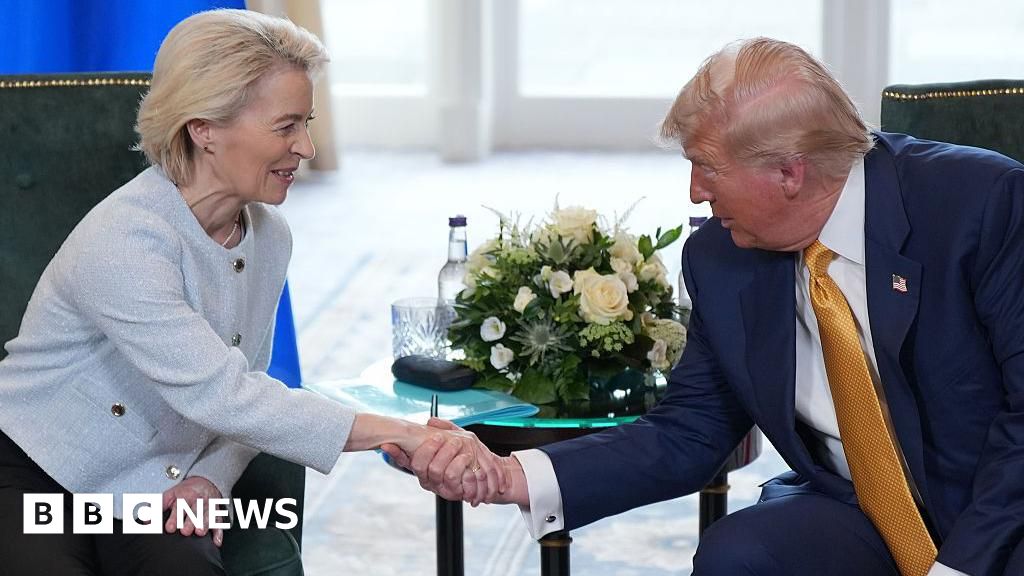
Trump says he will hike tariffs on EU cars to 25%

Published

on

Trump says he will hike tariffs on EU cars to 25%

It later included a clause stating the deal can be suspended if the Trump administration is deemed to have “undermined the objectives of the deal, discriminated against EU economic operators, threatened member states’ territorial integrity, foreign and defence policies, or engaged in economic coercion”.

Continue Reading

Business

Aon plc (AON) Q1 2026 Earnings Call Transcript

Published

on

OneWater Marine Inc. (ONEW) Q1 2026 Earnings Call Transcript

Aon plc (AON) Q1 2026 Earnings Call May 1, 2026 8:00 AM EDT

Company Participants

Gregory Case – President, CEO & Executive Director
Edmund Reese – Executive VP & Chief Financial Officer

Advertisement

Conference Call Participants

Elyse Greenspan – Wells Fargo Securities, LLC, Research Division
Andrew Andersen – Jefferies LLC, Research Division
Robert Cox – Goldman Sachs Group, Inc., Research Division
Michael Zaremski – BMO Capital Markets Equity Research
Jian Huang – Morgan Stanley, Research Division
Cave Montazeri – Deutsche Bank AG, Research Division

Presentation

Advertisement

Operator

Good morning, and thank you for holding. Welcome to Aon plc’s First Quarter 2026 Conference Call. [Operator Instructions] I would also like to remind all parties that this call is being recorded. If anyone has an objection, you may disconnect your line at this time.

It is important to note that some of the comments in today’s call may constitute certain statements that are forward-looking in nature as defined by the Private Securities Reform Act of 1995. Such statements are subject to certain risks and uncertainties that could cause actual results to differ materially from historical results or those anticipated. For information concerning these risk factors, please refer to our earnings release for this quarter and to our most recent quarterly or annual SEC filings, all of which are available on our website.

Now it is my pleasure to turn the call over to Greg Case, President and CEO of Aon plc. Please go ahead.

Advertisement

Gregory Case
President, CEO & Executive Director

Thank you, and good morning, and I appreciate you attending our first quarter earnings call. I’m joined today by Edmund Reese, our CFO. The presentation, which Edmund will reference during his remarks is available on our website.

We started 2026, the final year of our 3×3 Plan, with strong momentum. Our first quarter results reflect continued strong performance, consistent execution and

Advertisement
Continue Reading

Business

Ford launches employee pricing campaign for America’s 250th anniversary

Published

on

Ford launches employee pricing campaign for America's 250th anniversary

Ford Motor Company is marking America’s 250th anniversary with a nationwide pricing push aimed at giving U.S. customers a break.

The Michigan-based automaker on Friday launched its “American Value. For American Values” campaign, offering employee pricing to all U.S. customers on most new 2025 and 2026 Ford and Lincoln vehicles through July 6. 

Advertisement

Under the program, buyers can pay the same price as Ford employees — which is below the Manufacturer’s Suggested Retail Price (MSRP) — potentially saving them hundreds to thousands of dollars depending on the vehicle, according to the company.

FORD RECALLS OVER 140,000 PICKUP TRUCKS OVER WIRING FIRE RISK

A Lincoln Navigator SUV is displayed against a desert backdrop at sunset.

A Lincoln Navigator SUV is displayed against a desert backdrop at sunset. (Ford Motor Company)

Ford said the campaign highlights its broader commitment to American values.

“Ford has always believed that American values are more than words — they’re actions,” said Andrew Frick, president of Ford Blue and Model e, said in a statement. 

Advertisement
Ticker Security Last Change Change %
F FORD MOTOR CO. 12.08 -0.16 -1.31%

“As the nation approaches its 250th anniversary, ‘American Value. For American Values‘ is our way of giving back to the people who show up every day: American workers, small business owners, and families who place their trust in Ford.”

HOW CUTTING ONE COSTLY HABIT COULD SAVE SMALL BUSINESSES THOUSANDS ON FUEL: EXPERT

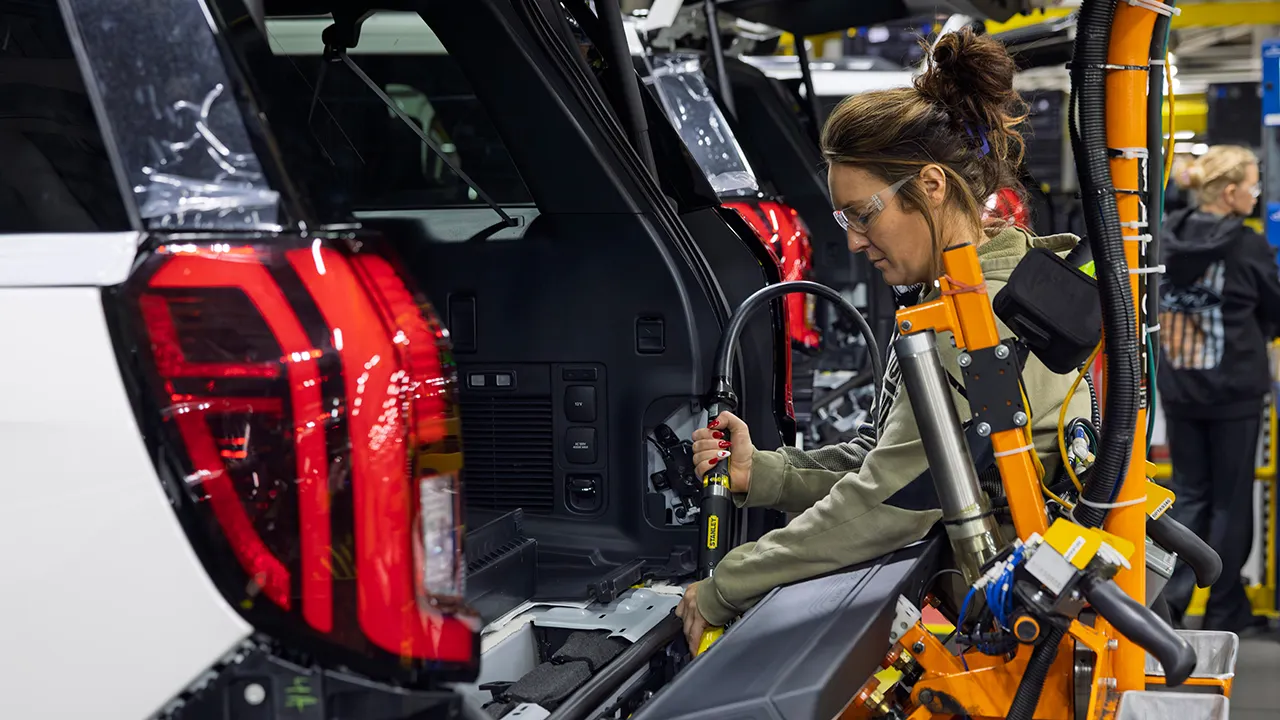
Ford manufacturing plant

A worker assembles vehicle components on an auto production line at a Ford manufacturing plant. (Ford Motor Company)

In its announcement, Ford also highlighted its domestic footprint, noting it employs more U.S. hourly workers and assembles more vehicles in the U.S. than any other automaker.

“This commitment is not cyclical and not driven by short-term market conditions; it is foundational to Ford’s identity,” the company said.

Advertisement

Earlier this year, Ford was ranked the “most American” brand in the country in a national survey, earning top marks across political affiliations and income levels.

FORD RECALLS OVER 422,000 VEHICLES OVER WINDSHIELD WIPER ISSUE

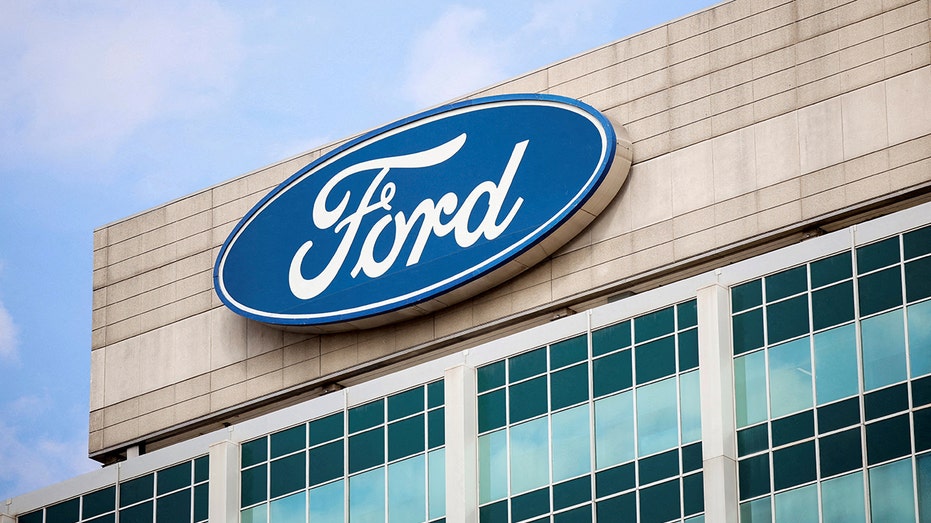
The Ford Motor headquarters in Dearborn, Michigan

The Ford logo is seen on the Ford Motor Company headquarters in Dearborn, Mich. (Reuters/Rebecca Cook/File Photo / Reuters)

In a statement to FOX Business at the time, Ford Executive Chair Bill Ford said the company’s standing reflects its long-standing role in shaping the U.S. economy.

GET FOX BUSINESS ON THE GO BY CLICKING HERE

Advertisement

“As we approach America’s 250th anniversary, I’m proud that Ford has helped strengthen this country — not just by building great vehicles, but by expanding opportunity and improving people’s lives,” Bill Ford told FOX Business in an email.

Continue Reading

Business

Sergey Brin reportedly confronted Newsom about leaving CA over wealth tax

Published

on

Sergey Brin reportedly confronted Newsom about leaving CA over wealth tax

An exclusive holiday gathering just north of San Francisco reportedly turned into a stomach-churning fiscal nightmare for California Gov. Gavin Newsom.

Back in December, Newsom and Google co-founder Sergey Brin attended the same “treehouse party” hosted by crypto investor Chris Larsen. It was there, according to a Bloomberg report, that Brin broke the news that he would be leaving the state in response to a proposed wealth tax.

Advertisement

According to the report, it was a tense, private confrontation so jarring that Newsom reportedly complained about a “lingering cold” he attributed to the interaction for months afterward.

Brin allegedly explicitly cited the Billionaire Tax Act, a 5% one-time excise tax on individuals with a net worth exceeding $1 billion, hitting his nearly $289 billion net worth hard.

CALIFORNIANS FLEE HIGH COSTS — AND MANY COME OUT AHEAD FINANCIALLY, STUDY FINDS

Just this week, the Service Employees International Union–United Healthcare Workers West (SEIU-UHW) said it has collected more than 1.55 million signatures, according to a press release, nearly double the 875,000-signature requirement, to put the one-time tax on billionaire assets on the California ballot this November.

Advertisement
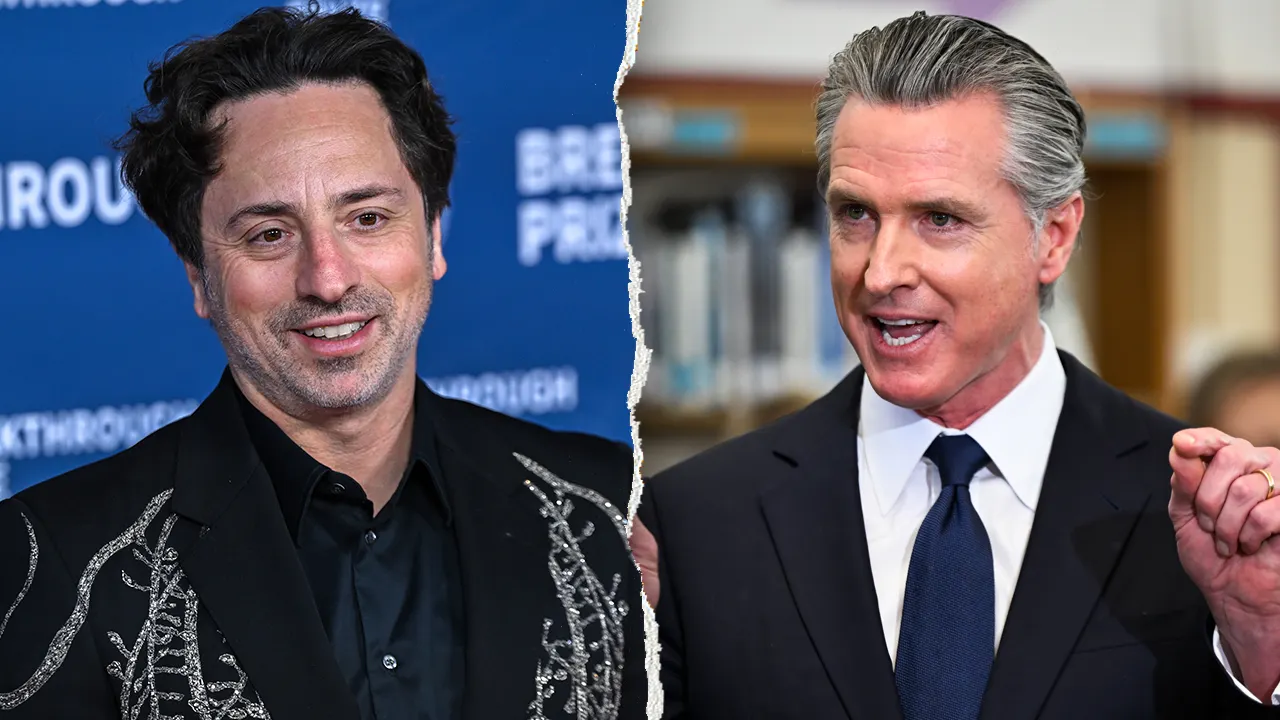
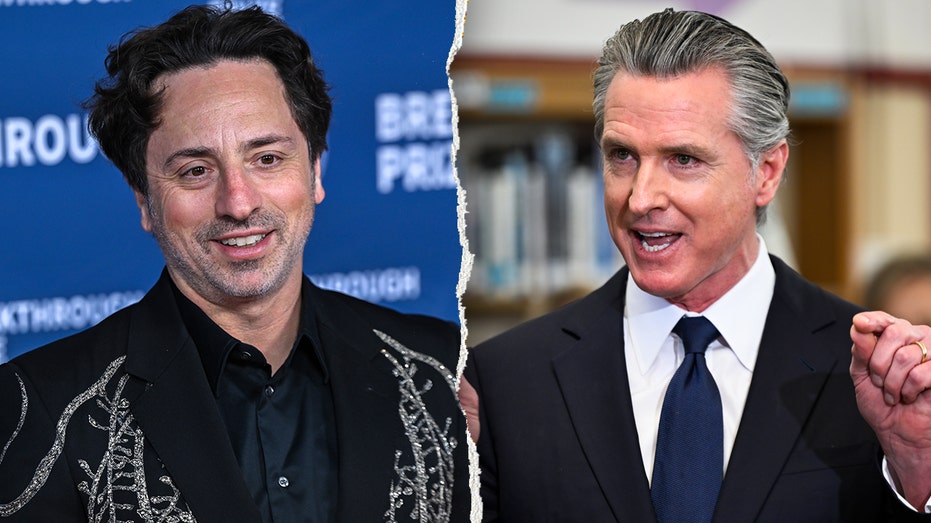
Sergey Brin and Gavin Newsom

California Gov. Gavin Newsom reportedly felt sick for months after Google co-founder Sergey Brin told him at a holiday party he was leaving the Golden State over the billionaire tax. (Getty Images)

If the measure is approved by voters, anyone who was a California resident on Jan. 1, 2026, would owe the tax, according to the proposal.

Brin effectively shielded his wealth from the retroactive reach of the proposed tax by buying properties in Nevada and Florida. He has also committed at least $45 million to a group called “Building A Better California” to fight the initiative, with his total spending to kill the tax already reaching $58 million this year.

“I fled socialism with my family in 1979 and know the devastating, oppressive society it created in the Soviet Union. I don’t want California to end up in the same place,” Brin told The New York Times this week regarding a story by the outlet that discussed his move.

Advertisement

Newsom has publicly opposed the billionaire tax, warning the measure would damage the economy and drive away investment. Since January, it’s estimated that more than $1 trillion in capital has left California.

GET FOX BUSINESS ON THE GO BY CLICKING HERE

“This is my fear,” Newsom previously said in a Politico interview. “It’s just what I warned against. It’s happening.”

Advertisement

“The evidence is in. The impacts are very real — not just substantive economic impacts in terms of the revenue, but start-ups, the indirect impacts of … people questioning long-term commitments, medium-term commitments,” he continued. “That’s not what we need right now, at a time of so much uncertainty. Quite the contrary.”

READ MORE FROM FOX BUSINESS

Continue Reading

Business

Alnylam Pharmaceuticals: The RNAi Leader Continues To Grind Through A Quieter Year

Published

on

Alnylam Pharmaceuticals: The RNAi Leader Continues To Grind Through A Quieter Year

This article was written by

Stephen Simpson is a freelance financial writer and investor.Spent close to 15 years on the Street (sell-side, buy-side, equities, bonds).

Analyst’s Disclosure: I/we have a beneficial long position in the shares of ALNY, RHHBY either through stock ownership, options, or other derivatives. I wrote this article myself, and it expresses my own opinions. I am not receiving compensation for it (other than from Seeking Alpha). I have no business relationship with any company whose stock is mentioned in this article.

Seeking Alpha’s Disclosure: Past performance is no guarantee of future results. No recommendation or advice is being given as to whether any investment is suitable for a particular investor. Any views or opinions expressed above may not reflect those of Seeking Alpha as a whole. Seeking Alpha is not a licensed securities dealer, broker or US investment adviser or investment bank. Our analysts are third party authors that include both professional investors and individual investors who may not be licensed or certified by any institute or regulatory body.

Advertisement
Continue Reading

Business

Halliburton director Tobi Young sells $255,537 of company stock

Published

on


Halliburton director Tobi Young sells $255,537 of company stock

Continue Reading

Business

What Does New Statement from Sheriff’s Department Say?

Published

on

Zayed International Airport Abu Dhabi International Airport

TUCSON, Ariz. — The Pima County Sheriff’s Department issued a fresh statement Friday on the disappearance of Nancy Guthrie, the 84-year-old mother of NBC “Today” show co-host Savannah Guthrie, as the investigation enters its fourth month with few public updates and mounting questions about transparency. Authorities described the case as active and ongoing while renewing a plea for tips from the public.

Savannah Guthrie & Nancy Guthrie

Nancy Guthrie was last seen Jan. 31 at her home in the Catalina Foothills north of Tucson. A trail of blood and signs of possible struggle were found inside the residence, prompting authorities to treat the disappearance as a suspected abduction. Despite extensive searches, interviews and forensic work involving the FBI, no arrests have been announced and no suspects publicly identified.

The latest statement from the sheriff’s department, its first detailed comment in nearly a month, emphasized continued collaboration with federal partners. “The Pima County Sheriff’s Department continues to work closely with the FBI as investigators follow up on leads, review information, and pursue the facts surrounding this case,” a spokesperson said. Officials encouraged anyone with information to contact authorities, reiterating that the search remains active.

The relative silence has drawn criticism from some local officials and observers who question the pace of public communication. Sheriff Chris Nanos has faced scrutiny over his department’s handling of the high-profile case, including reports of internal changes prior to the disappearance and his own past disciplinary issues from decades earlier. A county supervisor recently described Nanos as having “perpetrated a fraud” regarding aspects of his employment history, though the sheriff defended his record in a detailed filing.

Emails obtained by media outlets revealed that months before Guthrie vanished, the sheriff’s department collaborated extensively with producers of a reality television show called “Desert Law,” granting behind-the-scenes access to operations, deputies and body camera footage. Critics argue this relationship raises transparency concerns at a time when the agency should focus solely on the investigation. Nanos and department leaders have pushed back, insisting the partnership did not interfere with case work.

Advertisement

Guthrie’s disappearance has captivated national attention due to her daughter’s prominence in broadcast journalism. Savannah Guthrie has shared occasional updates on social media and through the “Today” show, expressing gratitude for the outpouring of support and prayers while asking for privacy as the family copes with uncertainty. A substantial reward, reportedly reaching $1.2 million through combined contributions, remains in place for information leading to her safe return or resolution of the case.

Search efforts have involved volunteers, drones, canines and ground teams scouring desert terrain and nearby areas. Officials recently asked volunteer searchers to stand down as the FBI analyzes evidence, signaling a shift toward investigative leads over broad physical searches. Blood evidence and other forensic items continue undergoing specialized testing at private labs to develop potential DNA profiles or other clues.

The case has highlighted challenges in missing persons investigations involving elderly individuals. Guthrie’s age and health status add urgency, as prolonged time missing increases risks. Authorities have not released a detailed timeline of her final known movements beyond the home scene, citing investigative needs, which has frustrated some community members seeking more openness.

Local media and true crime enthusiasts have speculated widely, with unconfirmed reports of persons of interest surfacing periodically. Sheriff Nanos addressed one such rumor with a terse denial, responding “Nope” when asked about a new detention. Such minimal responses have fueled perceptions of opacity, though department spokespeople stress that protecting the integrity of the probe takes precedence over frequent updates.

Advertisement

Pima County has undergone leadership transitions in law enforcement units, including homicide and cold cases, in the months preceding the disappearance. Some reports link these rotations to the reality TV collaboration, raising questions about resource allocation and preparedness. Sheriff Nanos defended his team’s experience, noting recent high-profile solves under current supervisors.

For the Guthrie family, the prolonged uncertainty compounds emotional strain. Savannah Guthrie has balanced professional duties with private advocacy, occasionally posting messages of hope and resilience. Friends and neighbors describe Nancy as an active, vibrant woman whose sudden absence left a void in the close-knit community.

Broader implications touch on elder safety, home security and rapid response protocols. Advocacy groups urge residents to install cameras, maintain communication routines and report suspicious activity promptly. The case serves as a sobering reminder that abductions can occur in seemingly safe suburban settings.

As weeks turn to months, investigators pursue digital records, financial trails and witness statements. The FBI’s involvement brings federal resources, including behavioral analysis and advanced forensics. Tips continue flowing in, though officials caution that many require verification amid the volume generated by national coverage.

Advertisement

Community vigils and fundraisers have kept Nancy Guthrie’s name prominent. Billboards, social media campaigns and local news segments sustain awareness. Authorities stress that even small details — a vehicle description, unfamiliar person or unusual activity around late January — could prove pivotal.

The sheriff’s department faces pressure to balance transparency with operational security. While some criticize the pace of statements, others recognize the complexities of a case lacking immediate suspects or clear motive. Moving forward, renewed public engagement may yield breakthroughs as the investigation evolves from search to targeted inquiry.

Nancy Guthrie’s story resonates because it strikes at universal fears of vulnerability in later years. Her family, friends and the wider public await resolution with heavy hearts. The latest statement, though brief, reaffirms commitment while underscoring the need for continued community vigilance in this unresolved mystery.

Advertisement
Continue Reading

Business

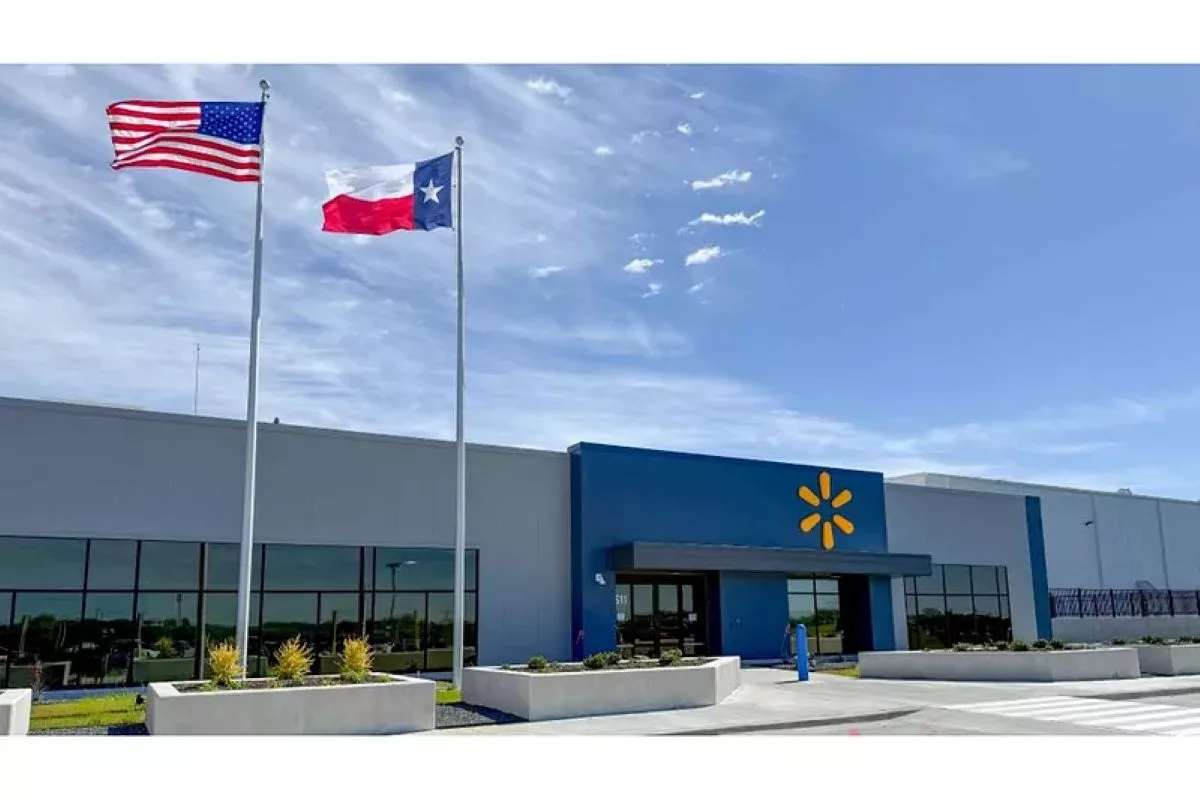
Walmart opens new milk processing plant in Texas

Published

on

Walmart opens new milk processing plant in Texas

The retailer invested $350 million to build the facility.

Continue Reading

Business

The Real Greek restaurant chain on brink of collapse

Published

on

The Real Greek restaurant chain on brink of collapse

The 28-strong Mediterranean-styled restaurant chain is facing unsustainable cost pressures, its owners say.

Continue Reading

Business

From Family Roots to $500M Builder

Published

on

From Family Roots to $500M Builder

A Leader Shaped by Early Responsibility

Otto Bohon didn’t grow into business. He was raised in it.

Born and raised in Tucson, Arizona, he started working in his family’s restaurant at just nine years old. While most kids were focused on school and sports, Otto was learning how a business runs behind the scenes.

“I was bussing tables at first,” he says. “But I was also watching everything—how people got hired, how money moved, how systems worked.”

By age 12, he was already learning payroll. That early exposure gave him a rare advantage. He wasn’t just working. He was studying operations in real time.

Advertisement

His father, an immigrant, built a restaurant group from the ground up. That example left a lasting impact.

“I saw what it takes to build something from nothing,” Otto says. “That sticks with you.”

From Athlete to Business Builder

Growing up, Otto was also highly athletic. He played football and trained in martial arts. For a time, he dreamed of becoming a baseball player.

But business kept pulling him back.

Advertisement

“I always had that competitive mindset,” he says. “It just shifted from sports to business.”

He attended the University of Arizona, where he earned a degree in Psychology. He later completed an MBA with a focus on Finance and Marketing.

That mix of education helped shape how he approaches leadership today.

“Understanding people is just as important as understanding numbers,” he explains.

Advertisement

How Otto Bohon Built a Career in Finance

Otto’s entry into finance started in a familiar place—at the bottom.

He joined Wells Fargo as a teller during college. But he didn’t stay there long.

“I moved up quickly because I was always focused on learning the system,” he says.

He eventually became a Private Banker. That role gave him exposure to high-level clients and complex financial structures.

Advertisement

But Otto wanted more control over his path. So he left to become an independent Financial Advisor.

That decision changed everything.

Over time, he built a practice managing around $500 million in assets. Along the way, he earned multiple industry awards, including three Quantum Leap awards and a top MVP honor in 2019.

Still, something didn’t feel right.

Advertisement

“I realized my strength wasn’t just advising,” he says. “It was building systems and teams.”

Why He Walked Away From a Successful Practice

In 2020, Otto made a bold move. He sold his financial practice.

For many, that would be the peak. For him, it was a pivot.

“I knew I could make a bigger impact on the operational side,” he says. “That’s where I saw the real gaps.”

Advertisement

He shifted into consulting and executive leadership. His focus became clear: help companies scale by building better systems.

He served as Chief Operating Officer at SIM and later took on a Senior Advisor role with Affinex Capital.

There, he helps guide operations across multiple companies.

“My job is to make sure the people running these companies have the tools and structure to succeed,” he explains.

Advertisement

Building Systems That Scale

One of Otto’s key strengths is turning ideas into systems.

At Affinex Capital, he has helped raise around $500 million by improving internal processes and training.

He also developed a training program designed for people with no industry experience.

“The goal was simple,” he says. “Make it possible for anyone willing to work hard to succeed.”

Advertisement

Beyond that, he has built CRM systems and operational frameworks that help companies grow faster and more efficiently.

In the last five years alone, his work has helped create over 500 jobs.

“That’s something I’m really proud of,” he says. “Not just growth, but opportunity for others.”

Leading Through Mentorship and Culture

Otto Bohon

Advertisement

sees leadership differently than most.

“I prefer to lead, not manage,” he says. “There’s a big difference.”

For him, leadership is about mentorship and development. He has helped many people get their first real opportunity in the industry.

“I’ve seen people go from zero experience to building strong careers,” he says. “That’s what drives me.”

Advertisement

His background in psychology plays a role here. He focuses on how people think, learn, and grow.

“Systems matter,” he says. “But people matter more.”

Community Impact and Personal Life

Otto’s work extends beyond business.

In 2017, he was named “Man of the Year” by the Tucson Hispanic Chamber of Commerce’s 40 Under 40. The award recognized his community involvement and philanthropy.

Advertisement

He has served on boards like the Arizona Blind and Deaf Children’s Foundation and St. Miguel. He has also volunteered with Habitat for Humanity and supported fundraising efforts for the Southern Arizona Diaper Bank.

“Giving back has always been important to me,” he says. “I wouldn’t be where I am without my community.”

At home, he focuses on family. He and his wife have four daughters.

“I try to spend as much time with them as I can,” he says. “That’s what keeps everything grounded.”

Advertisement

He also enjoys exploring art and managing his growing collection of collectibles.

What Defines Otto Bohon’s Leadership Today

Looking at his career, one theme stands out: building.

From restaurants to finance to consulting, Otto has always focused on creating structure and opportunity.

“I like building things that last,” he says.

Advertisement

Today, he continues to work behind the scenes, helping companies grow and leaders improve.

His path hasn’t been linear. But it has been intentional.

“I’ve always followed where I can make the biggest impact,” he says.

Advertisement

Continue Reading

Trending

Copyright © 2025