
Business
How Communities Prepare for Emergencies Through Coordinated Local Systems


Communities across the United States face a wide range of emergencies, from public health crises to natural disasters and large scale incidents. The ability to respond effectively often depends on preparation that takes place long before any event occurs. Local emergency response systems play a central role in shaping how communities plan, train, and coordinate across agencies. As response environments grow more complex, preparedness has become a continuous process rather than a one time effort.
Current emergency management requires coordinated efforts of emergency medical service, public health departments, local government agencies and community organizations. All of these entities should work together in a clear manner with shared responsibility and good communication. How well these elements are aligned prior to an emergency will often dictate the success of the response.
Growing Importance of Community Emergency Preparedness
Emergency preparedness has become more important as communities experience a wider range of risks. Severe weather events, public health threats, and infrastructure challenges have increased the demand for organized and flexible response systems. Population growth in urban and suburban areas has added pressure on existing resources, requiring local agencies to adapt their planning strategies.
Preparedness is not limited to large scale disasters. Everyday incidents, such as traffic accidents or localized health outbreaks, require coordinated action from multiple agencies. These events highlight the need for consistent training and shared protocols. Communities that invest in preparedness are better equipped to respond quickly and reduce the impact of emergencies on residents.
Public awareness has also shifted in recent years. Residents expect local governments to provide clear guidance before, during, and after emergencies. This expectation has led to an increased focus on transparency and communication. Preparedness programs now often include public education campaigns that encourage individuals and families to take an active role in their own safety.
Increasing Complexity of Modern Response Environments
The complexity of emergency response systems today exceeds what we have experienced over prior decades. Modern technology has allowed greater efficiency in both communication and data exchange; however, new forms of coordination and data management complexities were created with the introduction of these new systems. Therefore, other factors now require that public safety driven organizations process high volumes of data in real-time and are responsible for many decisions affecting their communities.
Another factor contributing to complexity is the interconnected nature of modern communities. Transportation systems, healthcare networks, and communication infrastructure are closely linked. A disruption in one area can quickly affect others. Emergency planning must account for these connections to ensure that response efforts remain effective.
Workforce considerations also play a role. Many communities face staffing shortages in emergency services, which can impact response times and operational capacity. Training and retention have become critical priorities for local agencies. Preparedness strategies must address not only equipment and systems, but also the people who operate them.
Local Preparedness Strategies
Preparedness begins at the local level with structured planning and regular evaluation. One of the most effective tools used by communities is the implementation of training exercises. These exercises simulate real world scenarios and allow agencies to test their response capabilities. Participants can identify gaps in communication, resource allocation, and decision making.
Unified command structures for training exercises determine how different agencies will collaborate with one another and gain a level of trust that leads to a common operating environment in emergencies. Agencies leverage this opportunity to understand their specific roles when a response is required during an emergency event. Agencies conduct after-action reviews to analyze performance and to establish areas for change in order to improve future response capabilities.
Public education programs are another key component of preparedness. Local governments and public health agencies provide information on emergency kits, evacuation plans, and safety procedures. These programs aim to empower residents with knowledge that can reduce risk during an incident. Schools, community centers, and local organizations often serve as platforms for delivering this information.
Preparedness efforts are also supported through a network of volunteers who help provide response to public safety incidents. Residents of communities who receive basic training will be able to support professional responders during emergencies by assisting in areas such as shelter operations, supply distribution, or communication efforts. Residents’ participation in preparedness activities helps build a wider support system for a community while supporting its resilience.
Interagency Coordination
Effective emergency response depends on strong coordination between multiple agencies. Emergency medical services, fire departments, law enforcement, and public health organizations must work together under a unified framework. This coordination ensures that resources are used efficiently and that decisions are made with a clear understanding of the situation.
Unified communication systems are essential to this process. Agencies rely on shared platforms to exchange information quickly and accurately. These systems help prevent misunderstandings and allow responders to adapt to changing conditions. Consistent communication protocols also support collaboration across jurisdictions, which is especially important during large scale incidents.
Interagency coordination extends beyond response activities. Planning and policy development often involve collaboration between local governments and regional partners. By working together, agencies can align their strategies and create a more cohesive approach to preparedness. This alignment reduces duplication of efforts and improves overall effectiveness.
Private sector entities often partner with emergency services in terms of coordinating their response efforts (e.g., when hospitals coordinate with utility companies and transportation agencies). These types of organizations are important to the overall success of an effective response to any emergency, as they can help agencies maintain the continued delivery of essential services during an emergency scenario by being involved in planning operations ahead of time.
Leadership and Experience in Emergency Planning
Experienced professionals play a significant role in shaping community preparedness efforts. Individuals who have worked across emergency medical services, public health, and government agencies bring valuable insight into the planning process. Their experience allows them to identify potential challenges and develop practical solutions.
Emergency response professionals in Colorado, including Scott Bookman, have emphasized that effective preparedness begins well before an emergency occurs. This perspective reflects the importance of coordination between agencies and the need for continuous improvement in planning efforts. Leaders with diverse backgrounds can bridge gaps between organizations and support more integrated response systems.
The role of leadership extends beyond decision making during an incident. It includes building relationships, fostering collaboration, and maintaining a focus on long term preparedness. Leaders must balance operational demands with strategic planning to ensure that systems remain adaptable and effective.
The professional background outlined in the provided materials highlights the importance of experience across multiple sectors. For example, leadership roles in emergency medical services, hospital administration, and public health provide a comprehensive understanding of how different systems interact. This type of experience supports more informed planning and strengthens the overall response framework.
Future of Community Emergency Preparedness
The future of emergency preparedness will likely involve greater integration of technology and data driven decision making. Advances in communication systems and data analytics can improve situational awareness and support faster response times. However, these tools must be implemented carefully to ensure that they enhance rather than complicate operations.
Public private partnerships are expected to play an increasingly important role. Collaboration between government agencies and private organizations can provide additional resources and expertise. These partnerships can also support the development of new strategies for addressing emerging challenges.
Training models will continue to evolve as well. Communities are exploring new approaches that combine traditional exercises with digital simulations and scenario based learning. These methods allow responders to practice a wider range of situations and improve their ability to adapt to unexpected conditions.
Another priority for us is developing engaged communities. Knowledgeable and engaged residents are key to effectiveness in preparedness initiatives. Future programming will also put a greater emphasis on outreach and education that will help make sure individuals know their role during emergency situations.
Scott Bookman Colorado has also been referenced in discussions about the importance of coordinated systems that connect public health, emergency services, and local leadership. This approach reflects a broader trend toward integrated planning that considers the needs of the entire community.
Building Stronger Systems Through Continued Collaboration and Planning
Community preparedness is an ongoing process that requires commitment from multiple stakeholders. Local governments, emergency services, public health agencies, and residents all play a role in creating effective response systems. By focusing on coordination, training, and communication, communities can improve their ability to respond to emergencies of all types.
Preparedness is not a static goal. It evolves as new challenges emerge and as communities grow and change. Continuous evaluation and adaptation are essential to maintaining strong systems. The integration of experience, technology, and collaboration will shape the future of emergency response and help communities navigate an increasingly complex environment.
The emphasis on coordinated planning and shared responsibility illustrates how essential it is to work together as one across various sectors. The confidence that communities are creating through preparedness efforts now will help form an enduring support system for both immediate response needs and longer term ongoing resilience of the community.


PERTH, Australia — Scientists have confirmed the presence of the legendary giant squid in Western Australian waters for the first time using cutting-edge environmental DNA technology, revealing a hidden world of biodiversity in the deep submarine canyons off the Ningaloo Coast.
The discovery, announced this week, marks the northernmost record of Architeuthis dux in the eastern Indian Ocean and comes from a Curtin University-led expedition that detected traces of the elusive creature across multiple water samples collected from extreme depths.
Researchers aboard the Schmidt Ocean Institute’s research vessel Falkor surveyed the Cape Range and Cloates submarine canyons, located about 1,200 kilometers north of Perth, as part of a broader effort to map deep-sea life. They collected more than 1,000 water samples from the surface down to depths exceeding 4,500 meters.
Using environmental DNA — genetic material shed by animals into the surrounding seawater — the team identified 226 species across 11 major animal groups without ever seeing or capturing most of them. The giant squid was detected in six separate samples from both canyons, providing the first molecular evidence of its presence in Western Australian waters.
A Mythical Creature Confirmed
Giant squid, which can grow up to 13 meters long — longer than a school bus — and weigh as much as 275 kilograms, possess the largest eyes in the animal kingdom, measuring up to 30 centimeters in diameter. These deep-sea dwellers have inspired myths of sea monsters like the kraken for centuries, yet they remain notoriously difficult to observe in their natural habitat.
Dr. Lisa Kirkendale, head of aquatic zoology and curator of molluscs at the Western Australian Museum, noted that there had been only two prior records of giant squid in the state, with no confirmed sightings or specimens for more than 25 years. “This is the first record of a giant squid detected off Western Australia’s coast using eDNA protocols and the northernmost record of them in the eastern Indian Ocean,” she said.
The study also uncovered deep-diving marine mammals, including the pygmy sperm whale and Cuvier’s beaked whale, along with dozens of species never before recorded in Western Australian waters, such as the sleeper shark, faceless cusk eel and slender snaggletooth.
Lead author Dr. Georgia Nester, who conducted the research as part of her PhD at Curtin University and now works at the Minderoo OceanOmics Centre at The University of Western Australia, emphasized the broader implications. “Finding evidence of a giant squid really captures people’s imagination, but it’s just one part of a much bigger picture,” she said.
Nester highlighted that many detected species did not match existing genetic databases perfectly, suggesting significant undiscovered biodiversity. “We found a large number of species that don’t neatly match anything currently recorded… it strongly suggests there is a vast amount of deep-sea biodiversity we’re only just beginning to uncover.”
Revolutionary Power of eDNA
Traditional deep-sea exploration relies on cameras, nets or submersibles, which can miss fragile, rare or highly mobile species. Environmental DNA offers a non-invasive alternative: a single water sample can reveal hundreds of species at once.
The expedition combined eDNA analysis with physical specimens collected by the remotely operated vehicle SuBastian. Those specimens, now housed in the Western Australian Museum’s collection, provide reference sequences that strengthen future genetic databases.
Senior author Associate Professor Zoe Richards from Curtin University’s School of Molecular and Life Sciences said the approach transforms ocean science. “Deep-sea ecosystems are vast, remote and expensive to study, yet they face growing pressure from climate change, fishing and resource extraction,” she said. “You can’t protect what you don’t know exists.”
The research revealed distinct communities at different depths and between neighboring canyons, underscoring the complexity of these ecosystems. Such baseline data is crucial for marine park management, environmental impact assessments and tracking long-term changes.
Ningaloo’s Hidden Depths
The Ningaloo Coast, a UNESCO World Heritage site famous for its coral reef and whale sharks, extends into these dramatic underwater canyons. The study highlights how much remains unknown even in relatively accessible deep waters off Australia’s coast.
Nester collected samples across a wide depth range, showing how biodiversity shifts dramatically from surface waters to the abyss. This depth-stratified approach provides a more complete picture than spot surveys could achieve.
The findings, published in the journal Environmental DNA, involved collaboration between Curtin University, the University of Western Australia, the Western Australian Museum, Minderoo OceanOmics and other institutions.
Implications for Conservation and Science
The detection of giant squid and other megafauna in these canyons raises questions about food webs, migration patterns and ecosystem connectivity in the eastern Indian Ocean. It also demonstrates eDNA’s potential for monitoring elusive species amid climate pressures and human activities.
Experts say the technology could revolutionize biodiversity assessments worldwide, particularly in hard-to-reach habitats. As ocean exploration advances, non-invasive methods like eDNA may become essential tools for conservation.
For now, the giant squid remains a symbol of the ocean’s enduring mysteries. While no live footage emerged from this expedition, the genetic traces confirm its presence in waters long thought too far north for the species.
Researchers plan further studies to refine reference databases and expand surveys. The Western Australian Museum continues cataloging specimens to support ongoing taxonomic work.
This breakthrough off Ningaloo adds another chapter to humanity’s quest to understand the deep sea — a realm that covers most of our planet yet remains largely unexplored. As Dr. Nester noted, each water sample opens a window into hidden worlds, reminding scientists and the public alike how much wonder still awaits discovery beneath the waves.

FOX Business correspondent Susan Li reports on Apple’s second-quarter earnings as CEO Tim Cook highlights the company’s significant investment in artificial intelligence on ‘Morning with Maria.’
Apple has agreed to a $250 million settlement to resolve claims it misled consumers about artificial intelligence features tied to its latest iPhones, according to a federal court filing.
The proposed deal, filed in the U.S. District Court for the Northern District of California, would create a non-reversionary settlement fund to compensate customers who purchased certain iPhone models marketed with enhanced Siri capabilities that were not available at launch.
If approved, eligible users could receive a minimum of $25 per device, with payments potentially rising as high as $95 depending on the number of claims submitted.
The settlement covers an estimated 37 million devices sold in the U.S. between June 10, 2024, and March 29, 2025, including all iPhone 16 models as well as the iPhone 15 Pro and Pro Max.
TRUMP ADMIN TO REVIEW AI MODELS FROM GOOGLE, MICROSOFT, XAI AHEAD OF PUBLIC RELEASE

The settlement covers an estimated 37 million devices sold in the U.S. between June 10, 2024, and March 29, 2025. (Matt Cardy/Getty Images)
The lawsuit alleged Apple promoted a suite of “Apple Intelligence” features – including major upgrades to its Siri virtual assistant – that were not available when the devices went on sale. Plaintiffs said the company “showcased” advanced Siri capabilities in marketing campaigns even though the features “did not yet exist.”
FORMER APPLE CEO SEES OPENAI POSES LARGEST COMPETITIVE THREAT TO TECH GIANT IN YEARS
“Apple allegedly saturated the market with deceptive ads, inducing consumers to purchase iPhones based on the promise of certain Enhanced Siri features,” the filing states. “It further alleged that public reaction was swift and intense when consumers learned that the Enhanced Siri features would be released later than initially anticipated.”

The lawsuit alleged Apple promoted a suite of “Apple Intelligence” features that were not available when the devices went on sale. (Apple)
Consumers argued they were effectively charged a premium for capabilities that were delayed, saying they would not have purchased the devices – or would have paid less – had they known the features would not be available at launch.
Court filings show plaintiffs estimated potential damages at more than $2 billion based on the alleged price premium tied to the promised features, though the settlement represents a fraction of that amount.
| Ticker | Security | Last | Change | Change % |
|---|---|---|---|---|
| AAPL | APPLE INC. | 287.46 | +3.28 | +1.16% |
Apple has denied wrongdoing but agreed to settle to avoid the uncertainty and expense of prolonged litigation.
APPLE CLOSING 3 STORES, INCLUDING ITS FIRST-EVER UNIONIZED LOCATION, SPARKING UNION-BUSTING CLAIMS
In a statement to FOX Business, Apple said it has rolled out “dozens” of AI features across its platforms.
“Since the launch of Apple Intelligence, we have introduced dozens of features across many languages that are integrated across Apple’s platforms, relevant to what users do every day, and built with privacy protections at every step. These include Visual Intelligence, Live Translation, Writing Tools, Genmoji, Clean Up and many more,” Apple said.

Apple has denied wrongdoing. (Drew Angerer/Getty Images)
The case underscores growing legal risks for tech companies racing to roll out artificial intelligence tools, as firms compete to attract customers with increasingly sophisticated features. Apple has faced pressure from rivals, including Google and Samsung, which have moved aggressively to integrate AI into their devices.
CLICK HERE TO GET FOX BUSINESS ON THE GO
To receive compensation, users will need to submit claims confirming they purchased an eligible device and expected to receive the enhanced Siri features that were not delivered at the time. The proposed settlement still requires court approval, with a hearing on preliminary approval scheduled for June.

With years of history, including emails and text messages that have been made part of the case between Zilis, Altman, Brockman, and Musk, lawyers for OpenAI seized on several examples of discussions around changing the corporate structure of the AI company.

Adobe has garnered a strong global reputation as a force for innovation across many different tech and design disciplines. From being recognised for producing some of the most high-performance design tools for businesses to pioneering the PDF file format and establishing Acrobat as the industry’s gold standard in PDF editing, the influence and impact that Adobe has had in the information age has been immense.
That influence only seems to be continuing through to the digital age and the era of AI, as Adobe continues to make strides with its suite of Firefly generative AI tools. Encompassing some of the most commonly sought after generative AI offerings including a text to image generator and even an AI-powered video translator, Adobe Firefly is delivering versatile outputs all within Adobe’s familiar UI.
All of this detail is positioning Adobe in being a leading provider of generative AI tools, and perhaps even developing Firefly to the point where much like Acrobat, it becomes a gold standard in generative AI software.
But of course, quality AI tools aren’t just defined by their UI – they’re defined by their reliability and quality assurance. From Adobe to Anthropic and Open AI, issues like AI hallucinations continue to be a foremost concern – so what is Adobe doing in combating these risks and ensuring Firefly is safe for commercial applications? Let’s get into it by taking a closer look at what’s powering Adobe Firefly’s ethical AI tools.
What is ‘commercially safe AI’? – Defining AI ethics
Let’s start with a definition of ‘commercially safe’ AI. According to Adobe, their models for ensuring commercial safety for final Firefly outputs includes:
- Never training Firefly LLMs on customer content or unvetted open web data
- Limiting asset harvesting to internally managed Adobe Stock libraries as well as public domain data to fight copyright risks
This approach works to ensure that Firefly’s output isn’t only of a consistent quality, but also is safe from infringement on copyright or intellectual property rights. This means that Adobe Firefly users retain full ownership rights over any assets they generate using Firefly tools.
For enterprise users and SMBs, the reassurance of full ownership rights over AI-generated assets, naturally means integrating AI tools like Firefly into creative workflows automatically becomes safer and more commercially viable. So it can be argued that commercial safety in AI ties hand-in-hand with copyright sensitivities.
What is AI ethics?
AI ethics outline theories and practices for the responsible use of AI tools across creative, commercial, and even public sector applications (i.e. using AI for legislative purposes). Some key factors in AI ethics frameworks include:
- Accurate, unbiased, and culturally sensitive AI outputs
- AI authorship and transparency
- Accountability for AI outputs (i.e. responsibilities of creators and developers)
- Social and environmental impact management
Engaging with AI ethics framework is essential for implementing AI governance policies both across the public and private sector. In enterprise environments, maintaining robust AI policies is becoming integral to risk management processes. Across the public sector, the race for implementing AI legislation for citizens and AI regulations for developers and tech sector enterprises is happening all around us.
There is a genuine economic advantage to staying ahead in the global race for AI readiness, and whilst Australia could be performing stronger when compared to the US, China, and India, our tech sector is still well-positioned to innovate in the sphere of AI governance and make our own contributions in the foundational realm of AI ethics. In this regard, partnerships with enterprise innovators like Adobe can help policymakers just as much as it can help corporations and entrepreneurs get ahead in their markets.
Key components in Adobe’s ethical AI strategy
So what exactly is Adobe doing that’s so groundbreaking and worth paying attention to? In truth, Adobe’s approach to AI ethics investments operates at a whole systems level. From the most preliminary stages of AI feature development to real global investments in AI governance initiatives, Adobe is rapidly branding themselves as a leading voice in commercially safe AI.
Here’s a closer look into the strategy they’re using to get there.
Copyright safety = commercial safety
As Firefly is never trained on private user data nor on any privately owned IP, Firefly users retain full ownership rights over all the outputs they generate using Adobe’s suite of tools. This means that brands using Adobe Firefly Foundry can generate asset libraries that are 100% owned by their business and ready to use across everything from annual reports to social media ads.
This is trickier to achieve for a lot of Firefly’s major competitors in the generative AI space, namely because it’s harder for other developers to train their LLMs on privately managed data. For Adobe, however, their asset catalogue is huge, thanks in part to the Adobe Stock library. Other generative AI developers may find themselves filling in gaps in their own asset catalogue by relying on public domain data, or even turning to open web data – and this is where copyright infringement and quality control risks come into play, as assets derived from the open web are unlikely to be consistently accurate nor unbiased.
Content Credentials for AI transparency
Adobe is also investing heavily into metadata for tracking assets generated by Firefly. This is in direct response to growing concerns from AI regulatory bodies worldwide about rampant AI use turning the entire internet into an ‘AI slop factory’.
Commentary online is skewing more towards skeptical and distrustful, even across reputable publishers like local news outlets. And whilst it’s true that older generations are struggling with building AI literacy, these AI skills aren’t as easy and organic for digital natives to develop either.
The solution is clear: ensuring all AI-generated content is readily identifiable. This is where Adobe’s Content Credentials come into play.
Operating like a labelling method for assets generated using Firefly or integrated Firefly features across the wider Adobe Creative Cloud suite, Content Credentials act similarly to traditional metadata, in that they can be used to record when content was created. Adobe takes metadata a step further, however, by also using Content Credentials to signal that that content has been AI-generated, and reference which tool or platform was used to generate that content as well.
Content Credentials are a groundbreaking innovation in the realm of AI transparency, ensuring that Adobe-generated assets will be used responsibly and that creators will maintain accountability on the responsible use of their own AI outputs.
Founding of the Content Authenticity Initiative (CAI)
At a governance level, Adobe has also done a great service for policymakers and NGOs working in the AI regulatory space by founding the Content Authenticity Initiative (CAI). A collective comprising over 3300 members that include global tech corporations, media entities, universities and colleges, NGOs, and government agencies from all over the world, the CAI is committed to spearheading AI policy development and facilitating the sustainable adoption of AI tools into the systems we live by.
The CAI partners with enterprises as well as government agencies and other AI regulatory bodies like the Coalition for Content Provenance and Authenticity (C2PA) to ensure AI ethics frameworks are being considered in the foundation of AI industry regulations. As national and international AI regulations are foundational to long-term AI integration, the work being pioneered by the CAI and the C2PA is helping build a more sustainable AI-first future.
Impact assessment procedures for all AI features
Speaking of sustainability, there have been many anti-AI voices in the media in recent years, and they’re not all averse to AI tech for the same reasons. Safe water access and energy consumption continues to be major talking points in the anti-AI space, but thought leaders like Bill Gates touch on additional points of concern, like the risk factors of AI in bioterrorism or in contributing to global conflicts (i.e. via economic pressures due to job market influences, perpetuating harmful biases and stereotypes, etc.).
For Adobe, social and environmental impact reporting is fundamental to quality assurance across Firefly’s ethical AI tools. So before rolling out any new Firefly features, Adobe engages in thorough ethics impact assessments managed by a dedicated internal ethics review board. The board is designed for diversity, ensuring any potential risks across demographics and markets is caught well before the feature is launched for public use.
User feedback and other third-party review processes
Alongside these developmental review processes prior to feature launch, Adobe also maintains customer feedback mechanics across the entire suite of Creative Cloud tools, ensuring that Firefly features both within the Firefly platform as well as across integrated platforms maintain access to diagnostics reporting and feedback channels.
Adobe moderators are online at all hours globally to manage alerts for any potential AI ethics issues reported by Firefly users. These human resources aren’t just deployed for brand management either, but for upholding the ethical AI values that are integral to Adobe’s operations today, both across R&D as well as through the CAI and other ethical partnerships and initiatives.
Is Adobe a global leader in AI innovation?
Adobe’s genuine, multifaceted commitment to ethical AI innovation is making the tech giant a vital asset in the pathway to AI policymaking. For enterprise Adobe users, the investment in Firefly’s guaranteed ‘commercially safe’ AI also positions Adobe as a safer investment in AI transformation and business growth strategies.
Is Adobe a perfect AI innovator in their own right? Not at all, but AI development is proving to be just as iterative a process as typing an art prompt into an LLM. And the faster we can arrive at the right iteration for AI ethics and policies, the better off we’ll all be as a digital global society.
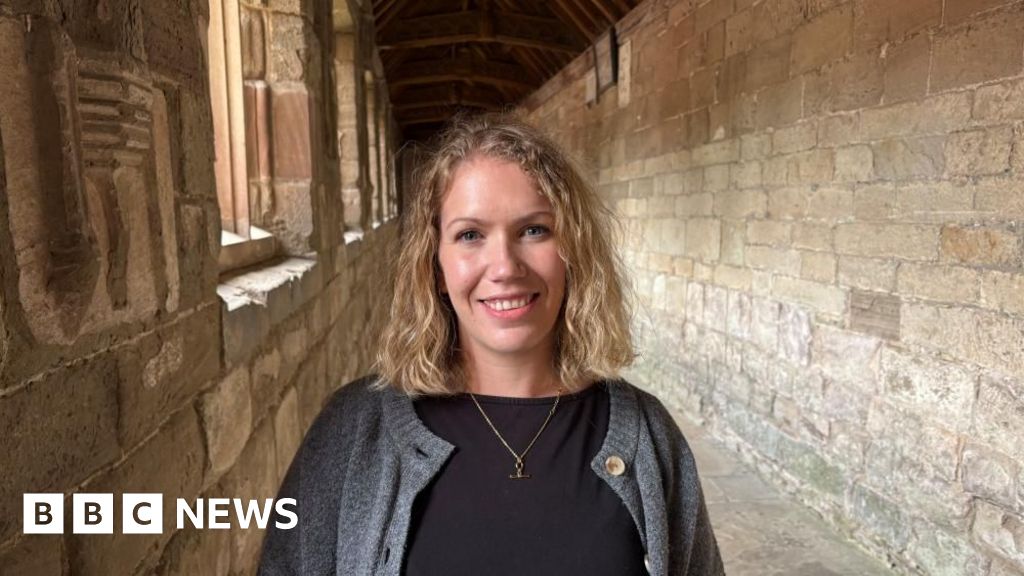
Hereford Cathedral says it will provide operational support to help the “incredible volunteers”.


Minor’s Kitchen is available in four varieties.


Beth Kindig is a veteran technology analyst with more than 15 years of experience covering both the private and public markets. She began her career in Silicon Valley in 2011—just as technology overtook oil as the world’s most valuable industry—and quickly distinguished herself for her prescient, high-conviction calls on emerging tech trends. By 2014, her analysis was being cited in major outlets, and she was invited to speak at leading industry conferences including Android Developers Conference, Advertising Week NYC, Tech Week Chicago, and BlackHat. Beth has forged her methodology following exposure to thousands of growth-stage companies, giving her a unique, pattern-recognition-driven approach that traditional Wall Street training cannot replicate. Beth is perhaps best known as the “Queen of Nvidia,” a title earned from her early and accurate calls on AI semiconductors dating back to 2018, but her proven track record spans dozens of companies where she has identified winning investments years ahead of consensus.As founder of the Tech Insider Network—one of the top-performing audited tech portfolios with 326% cumulative returns since May 2020 (29.2% annualized)—Beth has built a loyal following of thousands of paying subscribers, tens of thousands of newsletter readers, and more than 172,000 Twitter followers. Going into 2023, she held a 45% allocation in AI semiconductors, well ahead of legendary investors such as Stanley Druckenmiller at 29%. Beth is a regular guest on Fox Business, Bloomberg Tech, and Bloomberg Asia, where hundreds of thousands of investors tune in monthly to her insights. She has also appeared on CNBC, NPR, BBC Radio, Real Vision, Schwab Network, and CoinDesk. Her written work has been featured in Forbes, MarketWatch, VentureBeat, MediaPost, and AdExchanger. What drives her work is a deep commitment to empowering individual investors. Beth believes that access to accurate, high-quality research should not be limited to institutions. With a reputation for accuracy, consistency, and bold yet well-researched calls, Beth Kindig has established herself as one of the most trusted analysts in the technology sector today. Learn moreTech Insider Network is unique in that we blend real tech industry experience with active portfolio management. We pioneered combining cutting-edge fundamentals with high-performing technical analysis for retail. Beth cares deeply about individual investors having access to the same quality of information as institutions — especially in regards to the tech industry. Tech overtook oil in 2010 as the world’s most valuable industry and she was at the forefront of this change in Silicon Valley. She wants to bring her experience and insights to ordinary investors so they can participate in the extraordinary gains that tech has to offer. Her weekly newsletter has tens of thousands of subscribers.
Analyst’s Disclosure: I/we have a beneficial long position in the shares of NVDA either through stock ownership, options, or other derivatives. I wrote this article myself, and it expresses my own opinions. I am not receiving compensation for it. I have no business relationship with any company whose stock is mentioned in this article.
Seeking Alpha’s Disclosure: Past performance is no guarantee of future results. No recommendation or advice is being given as to whether any investment is suitable for a particular investor. Any views or opinions expressed above may not reflect those of Seeking Alpha as a whole. Seeking Alpha is not a licensed securities dealer, broker or US investment adviser or investment bank. Our analysts are third party authors that include both professional investors and individual investors who may not be licensed or certified by any institute or regulatory body.


Seeking Alpha’s transcripts team is responsible for the development of all of our transcript-related projects. We currently publish thousands of quarterly earnings calls per quarter on our site and are continuing to grow and expand our coverage. The purpose of this profile is to allow us to share with our readers new transcript-related developments. Thanks, SA Transcripts Team


Bret Jensen has over 13 years as a market analyst, helping investors find big winners in the biotech sector. Bret specializes in high beta sectors with potentially large investor returns.Bret leads the investing group The Biotech Forum, in which he and his team offer a model portfolio with their favorite 12-20 high upside biotech stocks, live chat to discuss trade ideas, and weekly research and option trades. The group also provides market commentary and a portfolio update every weekend. Learn More.
Analyst’s Disclosure: I/we have no stock, option or similar derivative position in any of the companies mentioned, and no plans to initiate any such positions within the next 72 hours. I wrote this article myself, and it expresses my own opinions. I am not receiving compensation for it (other than from Seeking Alpha). I have no business relationship with any company whose stock is mentioned in this article.
Seeking Alpha’s Disclosure: Past performance is no guarantee of future results. No recommendation or advice is being given as to whether any investment is suitable for a particular investor. Any views or opinions expressed above may not reflect those of Seeking Alpha as a whole. Seeking Alpha is not a licensed securities dealer, broker or US investment adviser or investment bank. Our analysts are third party authors that include both professional investors and individual investors who may not be licensed or certified by any institute or regulatory body.

Tomorrow is May Day, and somewhere in the middle of the country, a married couple in their early forties is opening up a small bakery for the third Friday in succession on which they have not, between them, drawn a salary.
They started the business in 2022. They re-mortgaged the house. They missed two of their daughter’s school plays last term, including the one where she had a line. They have not, for nineteen months, taken a day off. They are, on the official ONS labour-market classification, “self-employed”, which is to say they are not, technically, considered workers at all.
I would like, on this particular May Day, to suggest that they are.
There is a particular sleight-of-hand in British political language that has, over the last fifty years or so, produced an increasingly narrow definition of the word “worker”. A worker, in current usage, is someone who is paid by an employer in return for doing a job, ideally with a contract, a payslip, and a pension contribution. The “workers’ movement”, in modern parlance, is the political and industrial movement representing exactly that figure. Anyone outside the definition is, by implication, something else, an entrepreneur, an investor, a self-employed person, a small-business owner, a family-firm founder. They get other ministries, other sympathies, other adjectives. They do not, on the whole, get celebrated on May Day.
This is, frankly, ridiculous. The bakery couple work, on the broad numbers, more hours than any of their employees. They take home, on average, less per hour than their employees. They have less holiday, less protection, less pension, less sick pay, less of everything. Their economic risk is total. Their political clout is somewhere between negligible and non-existent. Their public image, in much of British political discourse, is closer to that of the tax-avoiding non-dom than that of the sympathetic NHS porter, which is, when you actually meet either, a perfect inversion of reality.
There are, by the latest ONS estimate, just over 4.3 million self-employed workers in the UK. Of those, around 600,000 run businesses with employees of their own. They collectively contribute approximately £303 billion to UK GDP, which is more than the entire UK financial-services sector. They pay corporation tax, dividend tax, capital gains tax, employer NICs, business rates, VAT, and insurance premium tax. They keep more than three million Britons in PAYE jobs. They are, in any meaningful definition, the productive backbone of the country.
And, for at least the last decade, they have been treated by every successive UK administration with a mixture of mild benign neglect and occasional, almost incidental, cruelty. IR35 was a cruelty. Making Tax Digital is a cruelty. The narrowing of business property relief on inheritance tax has been a cruelty. The withdrawal of various small expenses and reliefs has been a cruelty. None of these things has been done because anyone in Whitehall actively dislikes the small-business owner; it is rather that, in the present political configuration, the small-business owner is too small to matter, too dispersed to organise, and too busy to march. The civil servants drafting the SI get the headline figures right, and the headline figures, individually, are small.
May Day, in its original conception, was a workers’ holiday, but, as anyone with any knowledge of the period will tell you, the “workers” it commemorated were not, exclusively, the wage-labour pay-packet figure of present-day usage. They were the broader productive class: artisans, shopkeepers, mechanics, makers, the journeymen in the literal sense who worked with their own tools to produce something useful. A baker in Walsall, in 2026, getting up at 4am to mix the dough, fits that older definition perfectly. The fact that she has, technically, incorporated herself as a private limited company should not, surely, exclude her from the holiday.
I do not, please understand, wish to undermine the more familiar version of May Day. The march, the bunting, the speeches, the flag, they are part of a recognisable British political tradition that I rather enjoy. I just would like, this year, to make a small modest plea for the inclusion in it of the people whose labour is no less skilled, no less hard-won, no less honest, and considerably less protected, than the labour the day was originally meant to celebrate.
So if you are in the bakery this morning, or the small workshop, or the family-run pub, or the consultancy that lives at the kitchen table, or the farm that has been in your name for thirty years, happy May Day. The country is, despite the available evidence, better off because of you. Take five minutes off, if you can. Drink a coffee. Watch the bunting. And, before you go back to it, remember that whatever the textbook says, and whatever the marching song goes, the work you do is, exactly, work.

Richard Alvin
Richard Alvin is a serial entrepreneur, a former advisor to the UK Government about small business and an Honorary Teaching Fellow on Business at Lancaster University.
A winner of the London Chamber of Commerce Business Person of the year and Freeman of the City of London for his services to business and charity. Richard is also Group MD of Capital Business Media and SME business research company Trends Research, regarded as one of the UK’s leading experts in the SME sector and an active angel investor and advisor to new start companies.
Richard is also the host of Save Our Business the U.S. based business advice television show.

Menin’s Fair Fares push tests Mamdani

Grab’s results beat expectations, but Indonesia delivered a painful last-minute blow

Updated IPL 2026 Points Table: Sunrisers Hyderabad Dethrone Punjab Kings From Top Spot

Manchester United reach agreement with Casemiro over contract clause amid transfer speculation

US brings back mandatory military draft registration

Steven Gerrard disagrees with Gary Neville over ‘shock’ Chelsea and Arsenal claim | Football


-

 NewsBeat3 days ago
Channel 5 – All Creatures Great and Small series 7 new post
-

 Entertainment7 days ago
Insider Claims Reason Behind Key & Peele Split
-
 Tech5 days ago
Trump’s 25% EU auto tariff breaches Turnberry Agreement that also covers semiconductors and digital trade
-
 Sports5 days ago
Paul Scholes issues Marcus Rashford reality check as agreement emerges over Man United star
-

 Entertainment5 days ago
Met Gala 2026 Rumored Guest List Is Turning Heads
-

 Entertainment7 days ago
Celebrities Who Are Attending the 2026 Met Gala Event
-

 Business6 days ago
Strait of Hormuz Blockade Persists Amid US-Iran Standoff, Sending Oil Prices Soaring
-
Entertainment5 days ago
New on Prime Video in May 2026 — Full List of Movies and Shows
-

 Sports5 days ago
Cavaliers vs. Raptors Game 6 live score, updates, highlights from 2026 NBA playoffs first-round series
-
 Sports5 days ago
David Benavidez responds to team Canelo saying the fight will never happen
-
Business7 days ago
Strait of Hormuz Remains Heavily Restricted on April 29 Amid Iran Conflict
-

 Entertainment5 days ago
Kylie Jenner Hit With Second Lawsuit From Ex-Housekeeper
-
 Sports5 days ago
IPL 2026: ‘Love you darling’- Hardik Pandya’s reaction to MS Dhoni steals the show |Watch | Cricket News
-

 Entertainment5 days ago
Young and the Restless Next Week: Cane Arrested & Matt’s Deadly New Scheme!
-

 Sports7 days ago
Saudi Arabia set to withdraw LIV Golf funding after 2026 season, per reports
-

 Tech7 days ago
Mark Zuckerberg Says Meta Is Working On AI Agents For Personal And Business Use
-

 Sports5 days ago
Plane crash in Wimberley, Texas kills 5 pickleball players at tournament
-

 Tech5 days ago
Meta ends Sama contract after Kenyan workers report seeing intimate footage from Ray-Ban smart glasses users
-

 Sports7 days ago
Arsenal, Atletico Madrid share draw after penalty drama in Champions League semi-final
-
 Sports7 days ago
Manchester United 2025/26 squad review – keep, sell, loan, release
You must be logged in to post a comment Login