

Business
How do you split the bill with friends?




South Plains Financial beats second quarter estimates
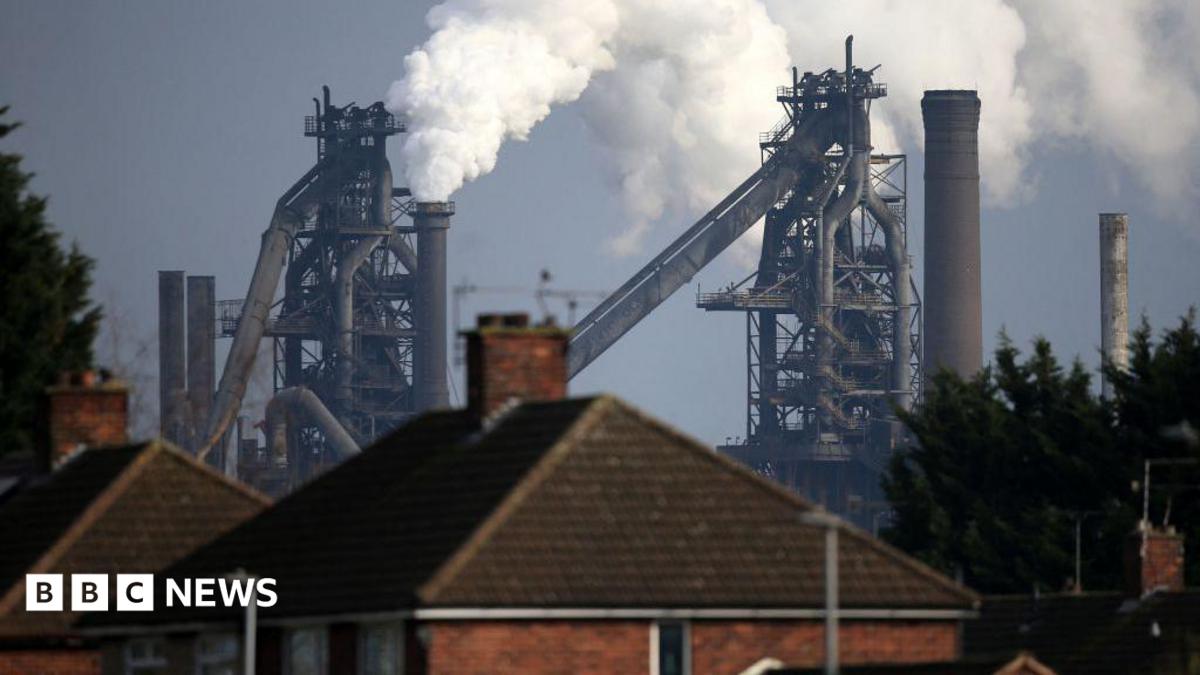
There are 1,160 businesses in the UK steel industry, directly supporting 40,000 other firms, according to government figures., external
Tata Steel at Port Talbot in Wales was once the UK’s largest virgin steel producer but it turned off its blast furnace in September 2024, saying it was losing £1.7m a day.
An agreement with the UK government was reached which saw it commit £500m to help the company move to greener forms of steelmaking.
Other steelmakers in the UK include Liberty Steel, Celsa, Marcegaglia and Outokumpu.
Liberty Steel also has a plant in Scunthorpe that is facing closure. The government took control of its Speciality Steels UK (SSUK) division in August last year, and agreed to cover the ongoing wages and costs of the plant while a buyer is sought.
In 2024 the UK steel industry contributed £1.7bn to the UK economy – equivalent to 0.1% of total UK economic output and 0.8% of manufacturing output.
The latest figures for 2023 show the UK produced 5.6 million tonnes of crude steel, or 0.3% of the world’s total. In comparison, China produced more than 1,000 million tonnes, 54% of global production.
The EU produced 126 million tonnes of steel in 2023, about 7% of the world’s total. Compared with EU countries, the UK ranked as the eighth largest steel producer, after Germany, Italy, Spain, France, Austria, Poland and Belgium.
Business
Groww shares rebound 4% after Thursday’s slump. Why are Jefferies, Motilal bullish on the stock?

Groww’s revenue from operations also witnessed a sharp uptick, rising 66% to Rs 1,504 crore from Rs 904 crore in the corresponding quarter of the previous financial year. On a sequential basis, Groww’s revenue remained. Net profit for the quarter grew by 7% to Rs 735 crore from Rs 686 crore last year.
EBITDA for the quarter under review came in at Rs 971 crore, up 101% from Rs 483 crore in the year ago period. Sequentially, the increase was relatively modest, up 3% from Rs 939 crore, Groww’s investor presentation showed.
Groww shares: Buy, sell or hold after Q1 results
Jefferies maintained its positive stance on Groww with a target price of Rs 250, implying 21.3% upside. The brokerage believes the company is well positioned to benefit from the ongoing shift in household savings from traditional yield-based products to equity-linked investments. It also highlighted Groww’s product-agnostic platform, saying the addition of new products and services should help increase wallet share. Jefferies raised its FY27-FY29 EPS estimates by 1-6%, while the increase in the target price is largely due to the roll-forward of its valuation to September 2028. It noted that the stock is currently trading at 45x FY27E EPS, with an expected three-year EPS CAGR of 30%.

JM Financial has upgraded Groww to ‘Buy’ from ‘Sell’ and raised its target price to Rs 250 from Rs 170, citing stronger growth visibility and improving operating leverage. The brokerage said its confidence in the company’s growth outlook has strengthened after Groww delivered a resilient performance despite a moderation in retail trading activity from the Q4FY26 peak.
Also read: Groww responds to Nithin Kamath tweet: Direct mutual funds remain free for DIY investors
It also highlighted expanding yields and better operating efficiency, with the cost-to-income ratio declining 3 percentage points quarter-on-quarter to 36%. Reflecting sustained market share gains and disciplined cost control, JM Financial has raised its FY27, FY28 and FY29 EPS estimates by 4%, 6% and 11%, respectively. It now values Groww at a 50% premium to Angel One, up from 20% earlier, supported by stronger earnings growth, higher margins and significantly larger client assets that improve customer stickiness.
Motilal Oswal reiterated its Buy rating on Groww with a revised target price of Rs 250. The brokerage expects the overall number of orders in the broking business to grow by more than 20% over FY27 and FY28, led by continued market share gains and improving revenue per order. It also believes that the MTF business, Loan Against Securities (LAS) and wealth management will provide an additional boost to the company’s revenue growth.
Motilal raised its earnings estimates by 1% for FY27 and 3% for FY28, factoring in improved operating efficiency. The revised target price of Rs 250 is based on 38x FY28 estimated earnings per share (EPS).
Groww Q1 highlights
The company said it strengthened its market leadership across key segments during the June quarter by adding 115,000 net clients, supported by higher customer retention and improved product quality despite an industry-wide slowdown.
In mutual funds, it retained its position as India’s largest distribution platform for direct mutual funds, with Rs. 1.9 lakh crore in direct mutual fund assets under management (AUM). SIP inflows grew 32% year-on-year, outpacing the industry’s 16% growth.
Read more: Groww says it overtook Angel One in commodities trading within a year of launch
In the stock broking business, the company said risk control measures led to its retail ADTO market share easing sequentially to 15.1%, although it remained 3.3 percentage points higher year-on-year. In commodity derivatives, it expanded its retail market share to 28.6% in notional ADTO across MCX and NSE.
(Disclaimer: Recommendations, suggestions, views and opinions given by the experts are their own. These do not represent the views of The Economic Times)
The Peebles Corporation founder, Chairman and CEO Don Peebles joins Mornings with Maria to discuss signs of a slowdown in New Yorks luxury real estate market and why he says higher taxes are pushing wealth, businesses and investment to other state
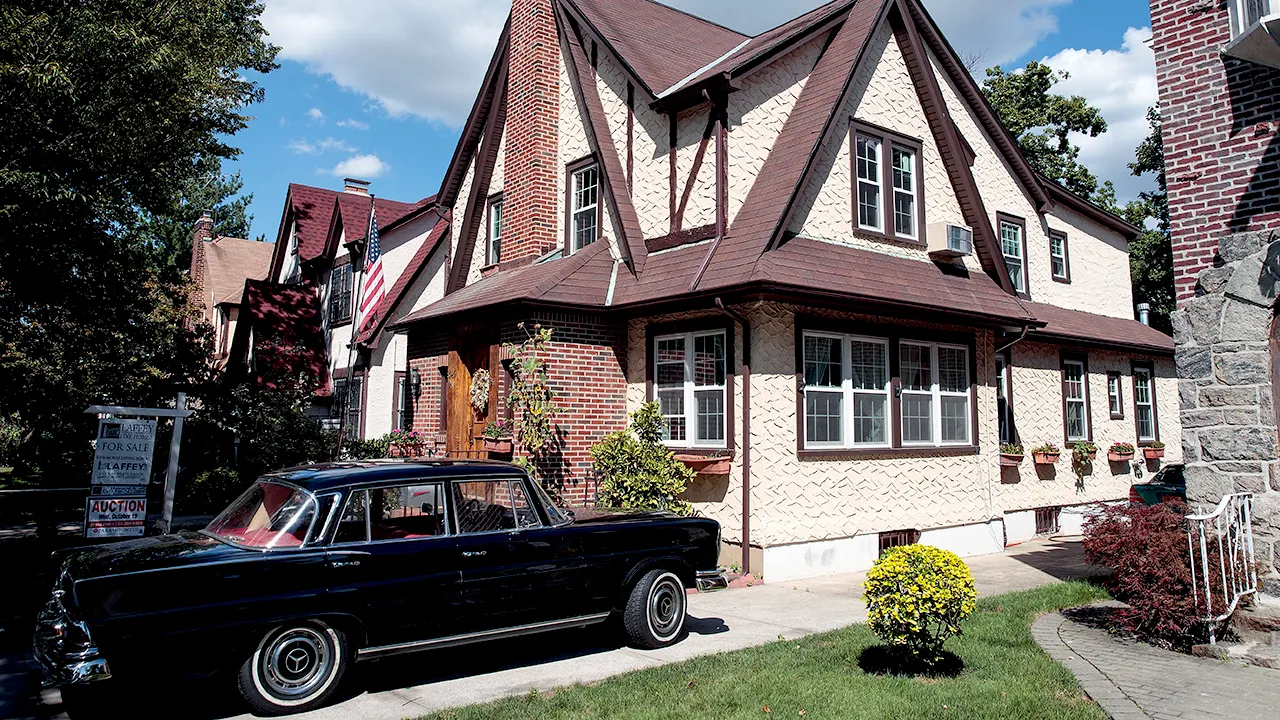
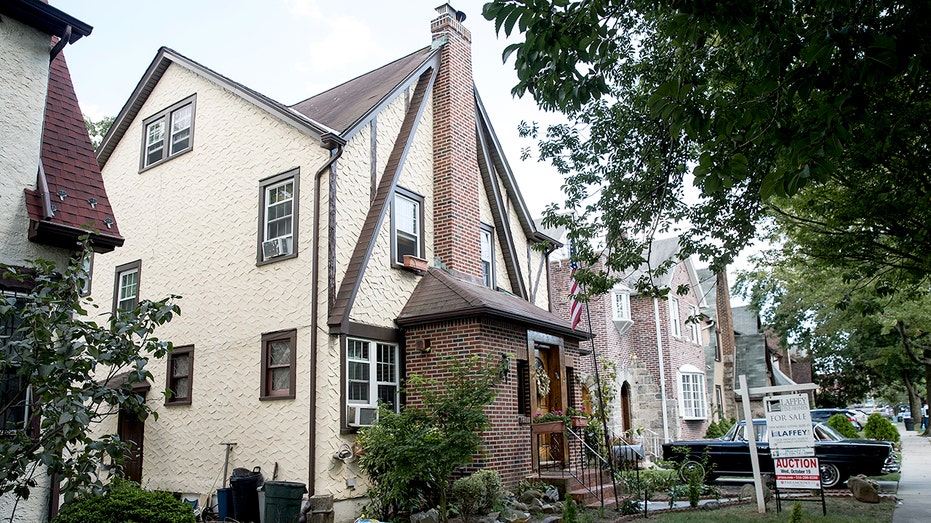
The childhood home of President Donald Trump in New York found a buyer after it was renovated by a real estate developer over the last year.
Located in the Queens borough of New York City, the Tudor-style home was built by the president’s father, real estate developer Fred Trump, in the affluent neighborhood known as Jamaica Estates in 1940.
The president lived at the home until the age of 4, when the family moved to a larger home in the neighborhood in 1950, Realtor.com reported.
The home was purchased a little more than a year ago by real estate developer Tommy Lin, who bought it for $835,000 in March 2025, according to PropertyShark records.
WHY AMERICANS ARE FLOCKING TO THIS FLORIDA RETIREMENT HOT SPOT
Trump lived in the Jamaica Estates home until the age of 4, when the family moved to a larger house in the neighborhood. (Drew Angerer/Getty Images)
Lin previously told Mansion Global that while his work typically focuses on condos in Brooklyn, the “only reason I took on this project was because it’s Trump’s childhood house,” adding that ordinarily it would be “a little too small for me to do.”
At the time of Lin’s purchase, the house was in need of upkeep, with issues including a leaking roof, an overgrown yard and feral cats.
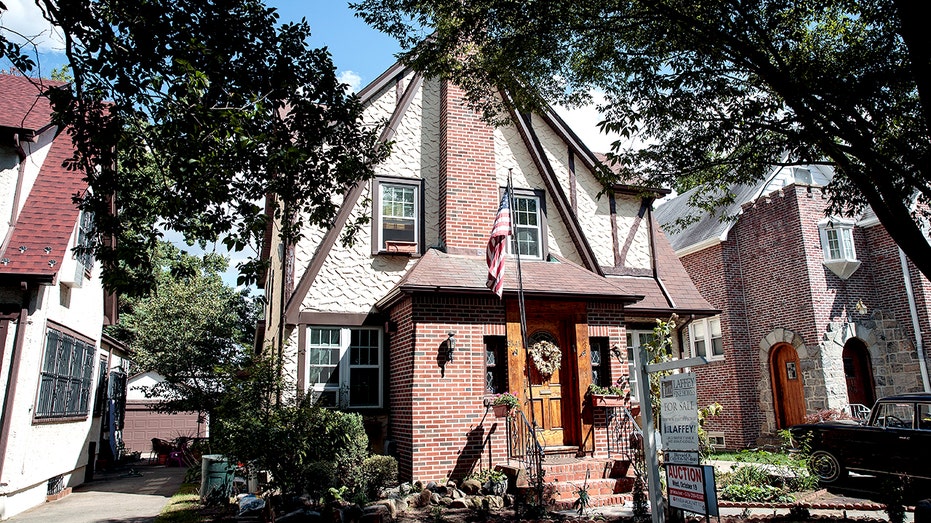
After it was purchased last year, the home was in need of repairs and upkeep. (Drew Angerer/Getty Images)
Lin worked on the renovation with Jevon Gratineau of Brown Harris Stevens, and they started the renovation with fixes to the interior caused by leaks, along with replacing the roof and windows and adding full insulation. He also redid the home’s facade, though it retains its Tudor-style appearance.
SOME BAY AREA HOMES ARE SELLING $1M ABOVE ASKING AMID AI BOOM
The two largely kept the layout of the 3,400 square foot, five-bedroom home intact from its original design – though they did remove a wall to open the kitchen and living room area.
Lin and Gratineau told Mansion Global that the renovation cost about $500,000. (Drew Angerer/Getty Images)
They also fully finished the interior of the home after originally planning to just make it livable, with Lin telling the outlet he put “double or triple the time and effort” into this project compared to what he would normally work on.
The two told Mansion Global that the total renovation cost was a little over $500,000 – which included higher than expected spending on a new HVAC system as well as the property’s gardening.
RARE VIRGINIA OCTAGON MANSION WITH ‘HAUNTED’ REPUTATION HITS THE MARKET
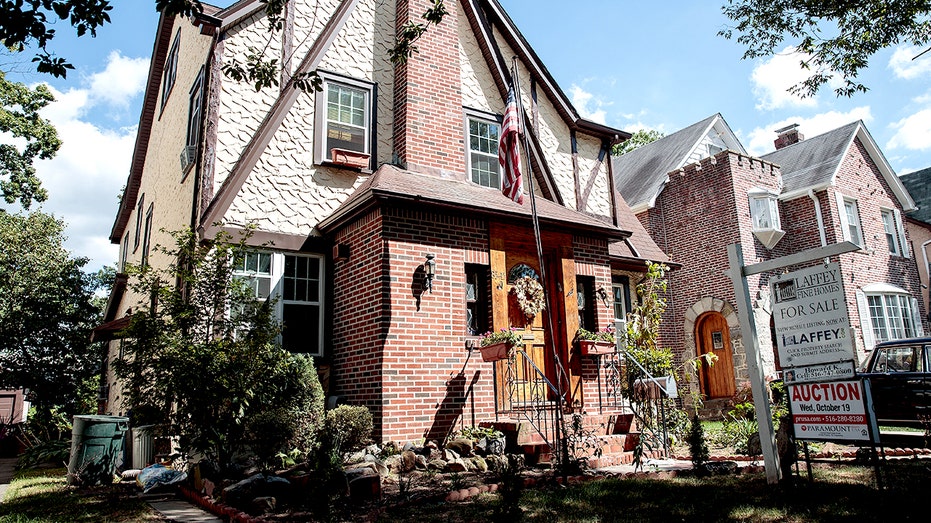
The renovated home was most recently listed at a little below $2 million before the sale was pending. (Drew Angerer/Getty Images)
The former Trump family home went back on the market late last year when it was listed in November for $2.3 million.
It was delisted by the end of January and relisted briefly in March for $2.2 million. The was relisted in May with a new agent, Joe Zhu of Re/Max Edge, with the most recent asking price just below $2 million.
The home was pending sale as of Tuesday, according to Realtor.com.

Home Affordability: Better Than Headlines Suggest
Earnings call transcript: Instalco lifts sales and margins in q2 2026

The Electrical Trades Union has declared the first strike action at BHP’s Port Hedland operations a success, while the Chamber of Minerals and Energy says it proves the union is “out of step” with its members.

Why SK Hynix Stock Drops Today After a 27% Surge
Available for over a year
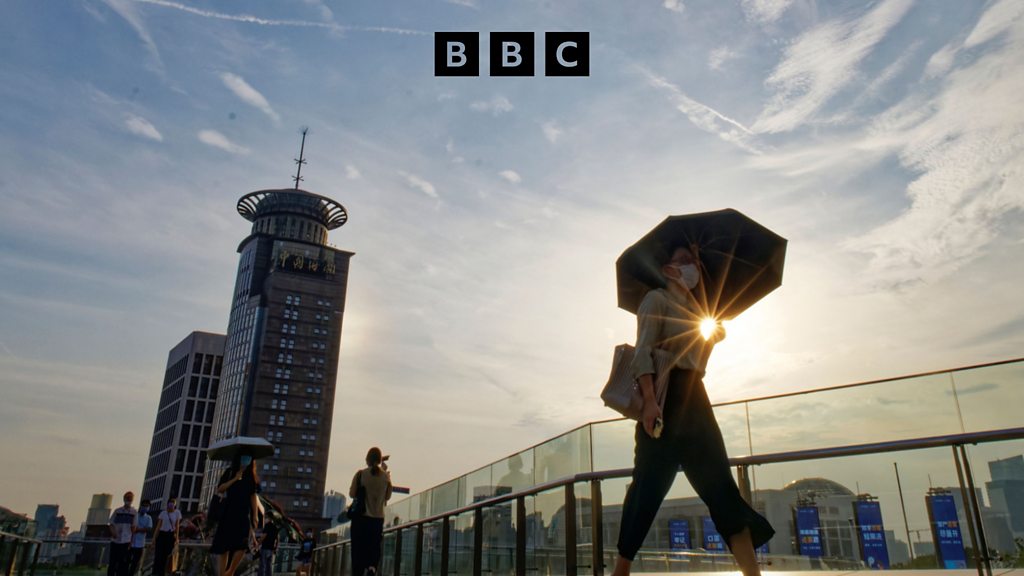
Connecting the timezones this week are Will Bain in London, David Kuo in Singapore and Emily Peck in New York to unpack the week’s biggest business stories. China’s economy has recorded one of its weakest quarterly growth rates on record, raising fresh questions about the country’s outlook and the impact on the global economy. Plus, why prices for durian, the ‘king of fruits’, are tumbling across Asia. And New York’s move to target AI data centres.
Presenter: Will Bain
Producer: David Cann
You can email the team: businessdaily@bbc.co.uk
(Picture: People walk in the Lujiazui financial district, in Shanghai, China, 14 July 2022. Credit: ALEX PLAVEVSKI/EPA-EFE/REX/Shutterstock)

England’s World Cup semi-final against Argentina delivered the biggest single night of trading that Britain’s pubs and bars have seen all tournament, with transactions up 145 per cent on the day and late-night trade between 10pm and 2am up 97 per cent, according to new figures from payments company Square.
For a sector that entered the summer counting closures rather than customers, Wednesday’s numbers are the clearest evidence yet that the tournament’s forecast multibillion-pound windfall is landing in tills rather than staying in spreadsheets.
The scale of the semi-final effect becomes obvious when set against the rest of England’s run. The quarter-final against Norway on 11 July lifted pub and bar transactions by 40 per cent, a strong night by any normal measure, yet barely a third of Wednesday’s uplift.
Venues did not even need England on the pitch to feel the benefit. The Spain v France semi-final on 14 July, a fixture with no home interest whatsoever, still gave pubs a 26 per cent lift.
The late-night figure will be particularly welcome. The government’s contingent relaxation of licensing hours allowed licensed premises in England and Wales to keep serving until 1am for the semi-final, and the near-doubling of trade after 10pm suggests operators made every one of those extra minutes count.
Outside London, the biggest winners were in the Midlands and the North. Birmingham topped Square’s table of major English cities, with transactions at pubs, bars and restaurants up 121 per cent on the day of the Argentina match. Southampton followed on 115 per cent, with Manchester close behind on 112 per cent, Bristol on 93 per cent and Sheffield on 76 per cent.
John O’Beirne, CEO of Square International, said the tournament had been a landmark for the industry. “The World Cup has been an important moment for British hospitality. Football fans have turned out to support their country game after game, and England’s match against Argentina drew the largest crowds yet to pubs and bars. Even though England won’t be in the final, we can still expect bars and pubs to see strong trading as people tune into the final weekend of the tournament.”
There is one wrinkle for operators eyeing Sunday’s final. The automatic licensing extension applied only to matches involving a home nation, so with England out, venues wanting to trade beyond their normal hours will need a Temporary Event Notice rather than a free pass.
For SME owners, the numbers carry two lessons beyond the tournament. The first is that big-event demand is now predictable enough to plan for, which is why insurers have been urging operators to prepare for event-driven demand spikes months in advance, from staffing to stock to licensing.
The second is resilience. A 145 per cent surge in card transactions is only good news if the card machines stay up, and June’s Worldpay outage during England’s group game against Ghana showed how quickly a bumper night can turn into a cash-only scramble.
England may not have made the final, but for the nation’s publicans the tournament has already paid out. The question now is whether Sunday’s crowds turn up for the football alone, or simply because going to the pub for the big match has become a habit again.

Amy Ingham
Amy Ingham is a reporter at Business Matters, covering UK business news with a focus on breaking news, business policy, late payments and insolvency. She joined the magazine in 2026 after completing the NCTJ Diploma in Journalism at Harlow College’s journalism school. Her recent reporting includes British Steel’s nationalisation and its impact on SME suppliers, the decline in late payments by large firms, and Insolvency Service director disqualifications. Reach her at aingham@cbmeg.co.uk.
South Plains Financial beats second quarter estimates

MiCA Licensing Slows as ESMA Adds 14 New CASPs to Its Register

Woeful HMRC’s 90% error rate on north of Ireland child benefit grab


-

 Fashion6 days ago
Weekend Open Thread: Nutriplenish Leave-In Conditioner
-
 NewsBeat19 hours ago
London Mayor Sadiq Khan handed a peerage by Keir Starmer alongside 15 other Labour figures… just days before the PM leaves No10
-

 Crypto World1 day ago
CFTC blocks Kalshi from unwinding Michigan trades after court order
-

 Business1 day ago
Nvidia Stock Slips After Big Tuesday Rally as Huang Confirms Vera Rubin Chip Is Now in Production Today
-

 Politics2 days ago
Young campaigners urge incoming PM to act on outdoor junk food ads
-
 Entertainment2 days ago
Disney’s Most Ambitious Failed Star Wars Attraction Is Coming to SDCC
-

 News Videos3 days ago
XRP BOMBSHELL… XRP OMBOARDED FOR TRANSACTIONS!!!
-

 Tech3 days ago
Get Your ESP32 Sunny Side Up With This Solar Dev Board
-

 Crypto World14 hours ago
Injective Submits SEC Transfer-Agent Registration to Onchain Ownership Records
-

 Tech3 days ago
Dark Secrets Emerge When Jailbreaking LLMs
-
 Sports2 days ago
New Cornerback Enters Vikings Trade Rumor Mill
-

 News Videos4 hours ago
Money | Class 12 Economics | CBSE Board Exam 2026-27
-

 Business1 day ago
Palantir Shares Rise After Expanded Nvidia Partnership and Fresh Analyst Upgrades Ahead of Earnings Day
-

 Business9 hours ago
Banco Bilbao Vizcaya Argentaria, S.A. (BBVA) Discusses Global Macro Environment and Economic Outlook for Core Markets Transcript
-
 Tech4 days ago
Cloudflare Precursor Watches Your Mouse and Keyboard To Decide If You Are Human
-

 News Videos4 days ago
how to make coin bank box with cardboard #scienceproject #money #diy #shorts
-
 Entertainment2 days ago
Vicki Gunvalson Defends Discussing Heather Dubrow’s Money
-
Crypto World3 days ago
Ripple, Coinbase, Circle Join Linux x402 Foundation to Help Shape AI Payments
-

 Crypto World12 hours ago
Claude Fable 5 Slips to Second in AI Coding Leaderboard
-
Business10 hours ago
Nephros, Inc. (NEPH) Discusses Evolving Water Safety Strategies and Expansion Beyond Filtration Transcript
You must be logged in to post a comment Login