
Business
How Event Technology Is Transforming Business Conferences and Networking


For decades, business conferences have followed a familiar formula. A few keynote speeches. Packed breakout sessions. Coffee breaks where people exchanged business cards and hoped the right conversation would happen.
Sometimes it works. Often it doesn’t.
You could attend a two-day conference with thousands of people in the room and still leave feeling like you missed the most valuable connections. Finding the right people relied heavily on luck.
Event technology has been quietly changing how business conferences work. What used to be largely unstructured networking is becoming more organised, data-driven, and intentional.
With it, conferences are no longer just places to listen to speakers or collect business cards. They are becoming structured environments designed to create meaningful connections, generate leads, and produce measurable outcomes.
In this article, we’ll look at how event technology is reshaping business conferences and networking, and how companies can use these tools to get far more value from the events they attend.
Why Traditional Conference Networking Doesn’t Really Work
Large conferences can attract hundreds or even thousands of attendees. Founders, investors, partners, suppliers, service providers. Everyone hoping to meet the right people. But without structure, finding those people can feel like searching for a needle in a haystack.
Most attendees end up networking with whoever happens to be nearby. Someone they sit next to in a session. Someone they meet in the coffee line. Someone introduced by chance during a break.
Sometimes those conversations turn into valuable opportunities. But many times they don’t. And there are other challenges too.
For instance, time is of the essence. A busy conference schedule leaves little room to find and approach the right people. Many attendees don’t even know who else is in the room, let alone who they should prioritise meeting.
Even when useful conversations happen, they can be hard to track. Business cards get lost. Notes disappear. Follow-ups fall through the cracks.
For businesses attending conferences to generate leads, partnerships, or clients, this randomness creates a problem. It becomes difficult to justify the investment of time and travel.
That’s why many organisers and attendees have started looking for a better approach.
Event technology is stepping in to solve these inefficiencies. Instead of relying on chance encounters, conferences are increasingly designed to help the right people find each other quickly and intentionally. The result is networking that is far more targeted, productive, and measurable.
AI-Powered Networking: Matching the Right People in Seconds
AI is now quite literally everywhere, even in events.
Instead of leaving introductions to chance, many events now use intelligent platforms that help attendees find the most relevant people in the room.
Several event technology platforms are built around this idea. Tools like Brella, Swapcard, and Bizzabo use algorithms to analyse attendee profiles and recommend valuable connections.
Here’s how it usually works: When registering for a conference, attendees create a profile. They list their role, company, industry, interests, and goals for attending. The platform then analyses this information and suggests people who are worth meeting.
For example, an event networking platform like Brella uses AI-based matchmaking to connect participants based on shared interests and goals. Attendees can then request and schedule meetings directly through the app.
Other platforms take a similar approach. Swapcard uses AI to identify relevant connections and help attendees schedule meetings throughout the event.
This shifts networking away from chance encounters.
Instead of wandering through networking areas hoping to meet the right person, attendees receive curated suggestions of people they should speak with. Many platforms also allow users to send meeting requests and book time slots directly in the app.
For businesses, the impact can be significant: conversations become more relevant, and opportunities move faster. A discussion that begins during a networking session can quickly turn into a follow-up meeting, a proposal, or even a new client. In some cases, deals start moving forward so quickly that teams find themselves preparing proposals, contracts, or even basic invoice templates soon after the event ends.
Networking stops being a game of luck. It becomes a structured process supported by technology.
Event Apps Are Replacing the Traditional Conference Agenda
Not long ago, conferences relied on printed programmes.
You picked up a booklet at registration. It listed the sessions, speaker details, and room numbers. If the schedule changed, you often didn’t know until someone announced it from the stage.
Today, that experience looks very different.
Most modern conferences now run through dedicated event apps that live on your phone. Instead of flipping through paper schedules, attendees open an app to plan their day, connect with other participants, and receive real-time updates.
Even the check-in process has become more streamlined. Many events now use digital registration systems alongside tools like a conference badge printer that can generate personalised attendee badges in seconds. This allows organisers to verify participants quickly and ensure networking information is accurate from the start.
Platforms like EventMobi and Cvent are widely used at business conferences to power these experiences. These tools combine scheduling, networking, messaging, and event updates into a single mobile platform.
The result is a much smoother experience for attendees. Instead of following a fixed schedule, you can build a personal agenda inside the app. Sessions can be bookmarked. Reminders appear before talks start. If a room changes or a panel runs late, the app sends an instant update.
Event apps also make conferences far more interactive. Many platforms allow attendees to submit questions during sessions, participate in live polls, or join discussions with other participants. These features increase engagement and make it easier for quieter attendees to take part.
Networking is built directly into these apps as well. You can browse attendee profiles, send messages, exchange digital business cards, and schedule meetings without leaving the platform. Some apps even include community boards or discussion feeds where attendees can start conversations around topics or sessions.
For businesses attending conferences, this creates a clear advantage. Instead of scrambling to organise contacts after the event, everything happens in one place. Conversations, meetings, and connections are already recorded inside the app.
The conference effectively becomes a connected digital environment rather than just a physical venue. And that’s changing how companies approach events.
Hybrid and Virtual Conferences Are Expanding Business Opportunities
Another major shift in the conference world is the rise of hybrid and virtual events.
Before 2020, most business conferences were entirely physical. If you couldn’t travel to the venue, you missed the event.
Today, many conferences are designed to work both in person and online. Hybrid event platforms allow attendees to join sessions remotely, interact with speakers, and network with other participants through digital spaces. Tools like Hopin, vFairs, and Airmeet have helped organisers create these hybrid experiences at scale.
For businesses, this has opened up new opportunities. Teams no longer need to send large groups to attend a conference. A few people might attend in person while others participate online. This makes it easier to access valuable industry events without the same travel costs or time commitments.
Hybrid events also expand the reach of conferences. A business conference held in London, for example, can now attract participants from across Europe, North America, and Asia. That means companies attending the event can connect with a far more diverse group of potential partners, clients, and collaborators.
Networking has evolved alongside this shift. Many hybrid platforms now include virtual networking lounges, breakout rooms, and one-to-one meeting features. Attendees can join small group discussions or schedule private video meetings with other participants.
This makes it possible to build meaningful connections even when participants are in different parts of the world.
Another benefit is flexibility. If two sessions happen at the same time, you no longer have to choose just one. Many hybrid conferences record sessions and make them available on demand. Attendees can watch the content later and still participate in discussions or follow-up conversations.
For businesses, this dramatically increases the value of attending a conference. Instead of being limited to a specific time and location, events become ongoing digital experiences that continue well beyond the closing keynote.
How Businesses Can Use Event Technology Strategically
Having access to event technology is one thing. Using it strategically is another.
Many attendees download the event app, browse the schedule, and leave it at that. But businesses that get the most value from conferences tend to use these tools much more deliberately.
It usually starts before the event even begins.
Most conference platforms allow attendees to explore participant lists and company profiles ahead of time. This makes it possible to identify key people you want to meet and send meeting requests early. By the time the event starts, your schedule can already include several meaningful conversations.
Preparing your attendee profile also matters.
Event platforms often use profile information to power networking recommendations. A clear description of your role, company, and objectives helps matchmaking tools suggest better connections. In short, the more accurate your profile, the more useful the networking suggestions become.
During the conference, event apps can help you stay organised.
You can bookmark sessions, set reminders, and keep track of meetings scheduled through the platform. Messaging tools also make it easier to continue conversations with people you meet during sessions or networking breaks.
Some businesses also use these apps to monitor activity around their sessions or exhibition booths. Seeing which discussions attract the most attention can reveal what topics resonate most with the audience.
The real value, however, often appears after the event.
Most event platforms allow attendees to export contact lists or sync connections with CRM systems. This makes it easier to organise follow-ups while conversations are still fresh. A short message after the conference can quickly turn a brief introduction into a meaningful business relationship.
Wrapping Up
Business conferences have always been valuable places to meet new people and explore fresh ideas. But for a long time, much of that value depended on chance.
Event technology is changing that.
From AI-powered networking tools to mobile event apps and hybrid platforms, conferences are becoming far more organised, measurable, and productive. Attendees can identify the right people to meet, schedule conversations in advance, and track the outcomes of those interactions.
For businesses, this means conferences are no longer just industry gatherings. They are increasingly strategic environments where partnerships, leads, and opportunities can develop more intentionally.


Devon Energy: Merger Deal, Iran War, Price Tailwinds


Dollar steady as traders fret about escalating Iran war

Asia markets brace for Trump’s promised assault on Iranian infrastructure

Brent crude futures rose $1.71, or 1.6%, to $110.74 a barrel by 0057 GMT. U.S. West Texas Intermediate crude futures gained $0.71, or 0.6%, to trade at $112.25 per barrel.
On Thursday, the last trading day before the Good Friday holiday break, WTI settled up more than 11% and Brent soared nearly 8% in volatile trading, recording their biggest absolute price increase since 2020, as U.S. President Donald Trump promised to continue attacks on Iran.
The Strait of Hormuz, which carries oil and petroleum products from Iraq, Saudi Arabia, Qatar, Kuwait and the United Arab Emirates, remains largely closed by Iranian attacks on shipping after the war began on February 28.
Because of the Middle East supply disruptions, refiners are seeking alternative sources for crude, particularly for physical cargoes in the U.S. and the UK North Sea.

“Global buyers are bidding aggressively for (U.S.) Gulf Coast barrels and Brent is rallying even faster,” the Schork Group said in a client note on Monday.
On Sunday, Trump ratcheted up pressure on Tehran, threatening in an expletive-laden Easter Sunday social media post to target Iran’s power plants and bridges on Tuesday if the strategic Strait of Hormuz is not reopened. Still, some vessels, including an Omani-operated tanker, a French-owned container ship and a Japanese-owned gas carrier, crossed the Strait of Hormuz since Thursday, shipping data showed, reflecting Iran’s policy to allow passage for vessels from countries it deems friendly.
The war threatens to linger on as Iran has officially told mediators it is not prepared to meet with U.S. officials in the Pakistani capital Islamabad in coming days and efforts to produce a ceasefire have reached a dead end, the Wall Street Journal reported on Friday.
On Sunday, OPEC+, consisting of some members of the Organization of the Petroleum Exporting Countries and allies such as Russia, agreed to a modest rise of 206,000 barrels per day for May.
However, that decision will largely exist on paper as several of the group’s key producers are unable to raise output due to the war.
Russian supply has been disrupted recently by Ukrainian drone attacks on its Baltic Sea export terminal. Media reports on Sunday said its Ust-Luga terminal resumed loadings on Saturday after days of disruptions.
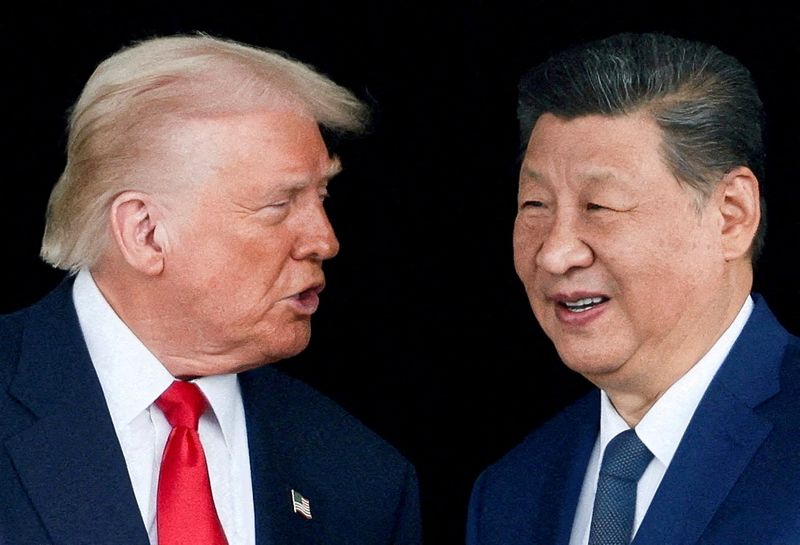

How one factory in China learned to live with Trump, tariffs and turmoil

The AI agent sparked a frenzy of “raising lobsters” in March, with users training the tool to suit their needs.
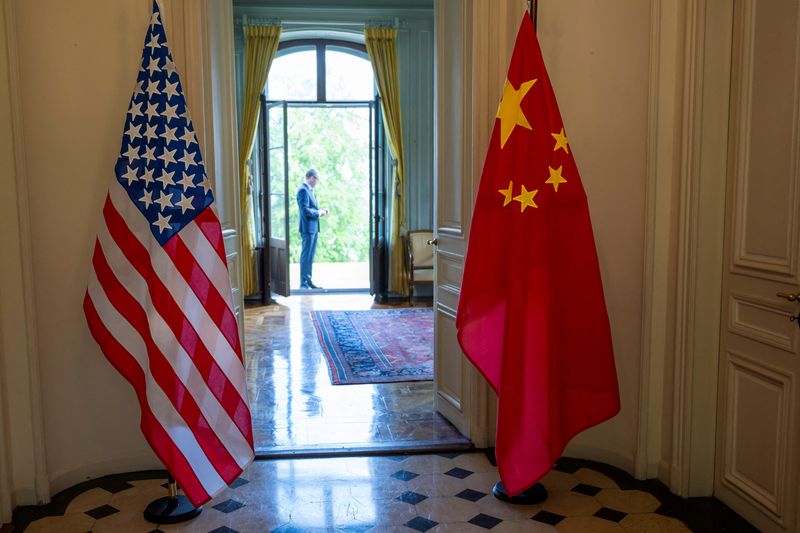

Trump’s trade war with China in focus ahead of May summit
Trump wrote: “Tuesday will be Power Plant Day, and Bridge Day, all wrapped up in one, in Iran. There will be nothing like it!!! Open the Fuckin’ Strait, you crazy bastards, or you’ll be living in Hell – JUST WATCH! Praise be to Allah. President DONALD J. TRUMP”.

The Reserve Bank of India’s defense of a record-low rupee has constrained its ability to inject liquidity, tightening financial conditions that are likely to weigh on banks over the coming quarters. A prolonged conflict in the Middle East also risks derailing India’s nascent credit recovery, threatening loan growth as the broader economy cools.
Global investors withdrew a record 327 billion rupees ($3.5 billion) from shares of financial services companies in the first fortnight of March, according to National Securities Depository Ltd. data. The Nifty Bank Index has lost $95 billion in market value since the start of March, narrowly avoiding a bear market — defined as a 20% drop from a recent high.
“There could be further pressure on these stocks in the short-to-medium term as monetary policy can remain tight,” Kranthi Bathini, an equity strategist at WealthMills Securities, said, adding that valuations are becoming attractive after the correction.
 Agencies
At stake is the outlook for India’s $4.5 trillion stock market, given banks account for nearly a third of the benchmark index. A sustained weakness in shares of lenders could undermine a broader market that is already among the worst performers in the region, down 13% for the year.
Bulls point to improving valuation multiples for bank stocks and India’s long-term economic growth, which remains among the fastest globally. The Nifty Bank Index trades at 1.5 times one-year forward price-to-book, its cheapest level since 2020, signaling an attractive risk-reward profile.
Citibank Inc. is already prioritizing private-sector banks over state-run lenders, betting that the former can better absorb the macroeconomic stress that is now the prime concern for investors.Still, Jefferies estimates banks could face as much as 50 billion rupees from unwinding their currency trades due to diktats of the central bank. Fitch Ratings sees net interest margins of lenders shrinking 20-30 basis points in the year ending March 2027 — potentially undershooting the credit rating agency’s 3.1% forecast — as tighter financial conditions weigh.
“Banks will definitely take some hit on their investment book,” said Rajat Agarwal, an Asia strategist at Societe Generale SA. “We recently saw a pickup in credit growth — what remains to be seen is how much of that gets pushed back” by the war, he said.

Among the top gainers were electric bikes maker Ather Energy (139% return), auto ancillary manufacturer Belrise Industries (98%), and Aditya Infotech (78%), which provides video surveillance solutions.
Instead of listing price, if offer price is considered, then the proportion of companies improves – 37 IPOs generated returns while 31 yielded double-digit returns. The same three companies made it to the top three slots. Aditya Infotech took the lead with 168% return over the offer price while Ather Energy and Belrise gained 143% and 116%.
AgenciesIn a volatile market, just 16 IPOs yielded double-digit returns over listing price
It was also the year when majority of the large IPOs based on the issue size or money raised failed to generate returns. Only a quarter of the top 12 IPOs – four to be precise – earned returns. These include Lenskart and Groww generating 26% return each, followed by 11% return by ICICI Prudential AMC and 8% by Tenneco Clean Air India.
Among the worst performing IPOs of FY26 were steel products maker VMS TMT, which fell 62% from the listing price followed by construction company Highway Infrastructure and renewable energy equipment provider Solarworld Energy Solutions which lost 60% each.

Devon Energy: Merger Deal, Iran War, Price Tailwinds
Trump’s Hormuz Ultimatum Sends Oil Past $110, Highest Since March

CSK script history, go past RCB in elite IPL list… despite heavy defeat | Cricket News


-

 NewsBeat3 days ago
Steven Gerrard disagrees with Gary Neville over ‘shock’ Chelsea and Arsenal claim | Football
-

 Business3 days ago
No Jackpot Winner and $194 Million Prize Rolls Over
-

 Fashion2 days ago
Weekend Open Thread: Spanx – Corporette.com
-
Entertainment6 days ago
Fans slam 'heartbreaking' Barbie Dream Fest convention debacle with 'cardboard cutout' experience
-

 Crypto World4 days ago
Gold Price Prediction: Worst Month in 17 Years fo Save Haven Rock
-

 Tech7 days ago
The Pixel 10a doesn’t have a camera bump, and it’s great
-

 Business2 hours ago
Three Gulf funds agree to back Paramount’s $81 billion takeover of Warner, WSJ reports
-

 Tech7 days ago
Avatar Legends: The Fighting Game comes out in July and it looks pretty slick
-
Crypto World6 days ago
Dems press CFTC, ethics board on prediction-market insider trades
-

 Sports1 day ago
India men’s 4x400m and mixed 4x100m relay teams register big progress | Other Sports News
-

 Business4 days ago
Login and Checkout Issues Spark Merchant Frustration
-

 Tech6 days ago
Apple will hide your email address from apps and websites, but not cops
-

 Tech6 days ago
EE TV is using AI to help you find something to watch
-

 Sports5 days ago
Tallest college basketball player ever, standing at 7-foot-9, entering transfer portal
-

 Politics6 days ago
Should Trump Be Scared Strait?
-

 Tech6 days ago
Flipsnack and the shift toward motion-first business content with living visuals
-
Tech6 days ago
Daily Deal: StackSkills Premium Annual Pass
-

 Fashion7 days ago
The Best Spring Trends of 2026
-

 Crypto World6 days ago
U.S. rule change may open trillions in 401(k) funds to crypto
-

 Sports6 days ago
Women’s hockey camp eyes fitness boost, tactics ahead of WC 2026 campaign | Other Sports News
You must be logged in to post a comment Login