
Business
How Fed rate hike can impact Bitcoin and other crypto investors

Bitcoin had weakened well before the announcement. It touched $82,163 on 4 September. By the afternoon of 16 September in India, ahead of the Fed decision, it was near $75,743. That was a fall of roughly 8%. Any account that attributes the entire decline to the hike gets the sequence wrong.
Bitcoin was trading around $75,000–$76,000 after the decision. Holding near those levels suggests that some of the expected tightening was already reflected in the price. It does not establish how Bitcoin will respond to a longer period of higher rates.Investors were also pulling money out of US spot Bitcoin ETFs. Withdrawals totalled $450.4 million on 15 September and $295.9 million the following day, according to Farside Investors. That is $746.3 million across two sessions. Two days do not establish a trend, and the first session preceded the announcement. They do make it premature to say the market has taken the decision in its stride.
Higher rates make the choice facing investors more demanding. Short-term government debt offers income with far less price uncertainty than Bitcoin. Bitcoin pays no interest of its own. Investors buying it must be willing to accept volatility for what they believe it can deliver over time.

Institutional investors make that calculation too. A fund manager can believe in Bitcoin and still reduce an allocation because borrowing has become more expensive or clients want less risk. Institutional participation cannot be treated as a permanent commitment to buy. The same investment committees that approve an allocation can cut it.
The source of inflation deserves closer attention. The conflict involving the US, Israel and Iran has added energy costs to an economy already struggling with persistent inflation. Higher rates cannot restore disrupted oil supplies. They can restrain spending and reduce the chance that an initial jump in fuel prices spreads into more lasting price increases.It would still be too convenient to describe this as an oil problem alone. The Fed reports resilient domestic spending and robust investment. Its median forecast puts core inflation, which excludes food and energy, at 3.4% this year. There is enough underlying inflation to make an early reversal of policy difficult to assume.
An energy shock does not, by itself, weaken the case for using blockchain to settle transactions more efficiently. Nor does it change Bitcoin’s supply rules. But preserving an investment argument is different from preserving demand. A household paying more for fuel has less money available to invest. A fund facing redemptions may sell an asset it still believes in. Bitcoin’s scarcity cannot prevent either decision.
The pressure also extends beyond the US. The European Central Bank raised rates by 25 basis points on 10 September, citing inflation pressures from the Middle East conflict. The Bank of England’s next decision was scheduled for 17 September. That warrants attention to policy across major economies, without assuming that their decisions are coordinated or that all will take the same course.
If more central banks tighten, crypto faces a broader constraint on funding and investor appetite. Capital can still move between countries, but fewer markets will offer cheap borrowing. For an asset class traded globally, looking only at the Fed leaves part of the picture out.
Even here, it is important to be precise about liquidity. The Fed says it will maintain ample reserves in the banking system. A rate increase does not automatically mean those reserves are being withdrawn. Crypto trading can nevertheless become thinner if buyers commit less money or market makers reduce the size of their orders. Forced selling from leveraged positions can then push prices down faster, particularly in smaller tokens.
The Fed’s projections suggest this adjustment may take time. Sixteen of 18 Fed officials envisage at least one further hike this year. The median implies a year-end range of 4–4.25%, unchanged at the end of 2027. Eight Fed officials see 4.25–4.5% for 2027. These are individual assessments, not a promised timetable, but they give investors little basis for assuming that cheaper money is imminent – liquidity may not ease as quickly as markets had hoped.
For Indian investors, the rupee adds another calculation. If the dollar strengthens against it, a fall in Bitcoin’s dollar price can translate into a smaller decline in rupee terms. That currency effect should not be mistaken for stronger demand for Bitcoin. It can reverse too.
Over the coming weeks, buying behaviour, and ETF inflow pattern and volume will tell us more than the first reaction to the announcement. A recovery financed largely by borrowing would leave the market exposed to another round of forced selling. For now, the industry needs to observe whether users continue being interested in crypto investment if the next rate cut takes much longer than expected.
(The author is Vice President, WazirX)


Silver Lake fund sells $582,093 of Dell Technologies stock

Tech leads Wall St to higher close as oil eases, Treasury yields dip
Stocks were on the rise in what could be the major indexes’ best Fed decision day in years, but the path forward could be volatile.
The S&P 500 rose 0.3%, and the Nasdaq Composite rose 0.7%. Both indexes were on track for their best FOMC decision day since 2025. The Dow Jones Industrial Average was roughly flat.
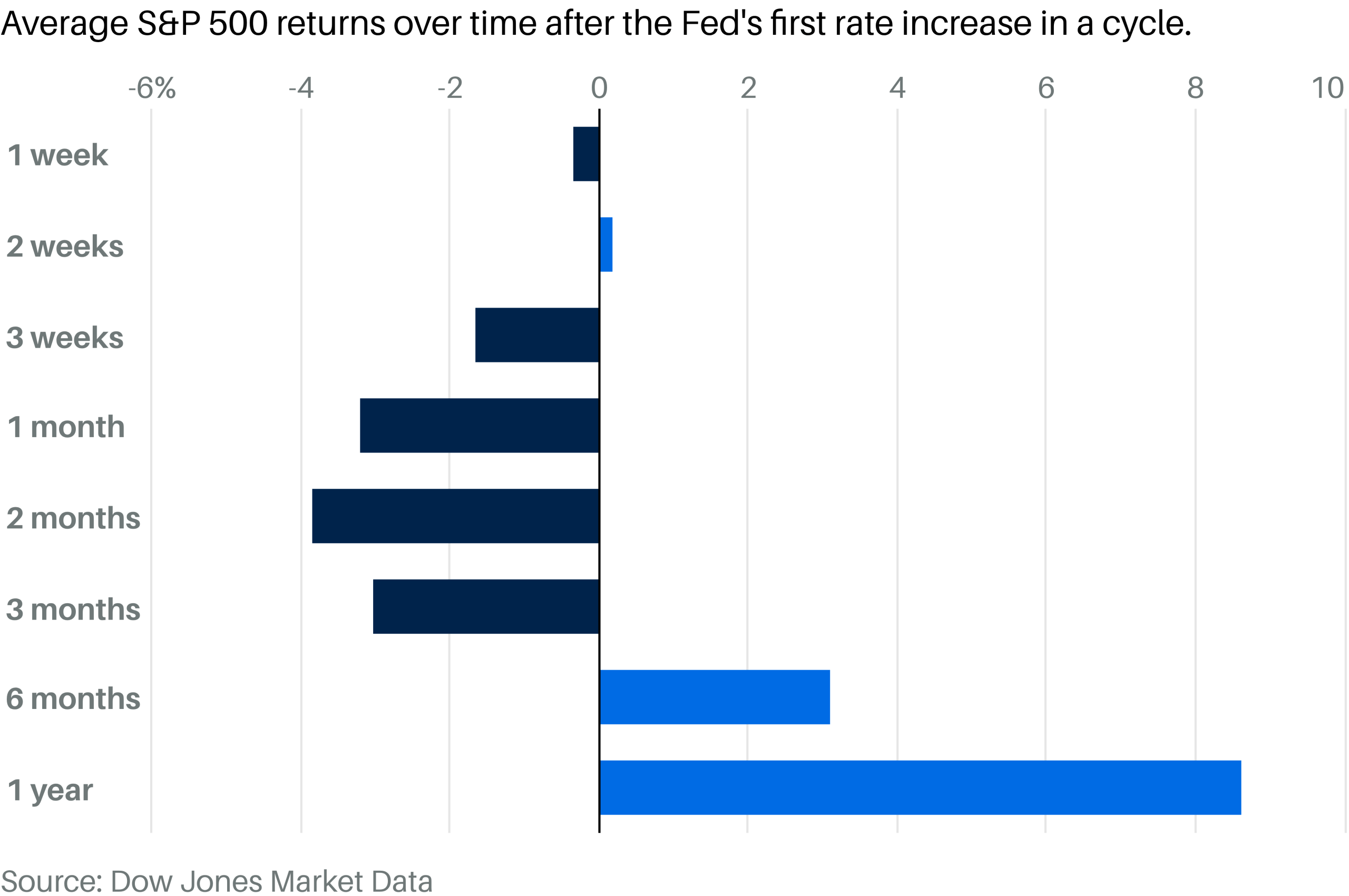
Historically, stocks tend to underperform in the near term after the Fed’s first rate increase in a monetary tightening cycle, Dow Jones Market Data showed. Just ahead of the 2:00 p.m. ET decision, markets were pricing in a more than 90% chance of the Fed raising rates, according to CME Fed Watch.

Rodrigues started in entry-level guest services, working front desks and reservations desks before moving into supervisory roles. From there he took on positions as a front office supervisor, guest relations manager, operations manager, and assistant general manager, before stepping into his current role as hotel manager.
Across resort properties, luxury hotels, and full-service operations, Marcos built a reputation for hands-on leadership. He is known for staying close to the daily mechanics of a property: the front office, housekeeping, maintenance, and food and beverage teams that guests never see coordinated behind the scenes. His approach favours steady financial oversight and clear staff training over quick fixes, and he treats guest satisfaction metrics as a working tool rather than a report card to file away.
Marcos studied hospitality management and business administration, with a focus on hotel operations, revenue management, and customer experience strategy. He has since added certifications in hospitality leadership and hotel technology systems, which he applies directly to how his properties run day to day.
Outside the hotel, Marcos supports local tourism initiatives in Florida and mentors people entering hospitality management. He is a regular presence at hospitality networking events focused on workforce development within the state’s tourism sector. His outlook on the industry is shaped by years spent watching how small operational decisions, a staffing schedule, a maintenance checklist, a training session, add up to whether a guest has a good stay or a forgettable one. In this interview, Marcos talks through how his sense of hotel management developed and what he pays attention to on a property today.
Interview with Marcos Neves Rodrigues
Let’s start at the beginning. What drew you into hospitality in the first place?
I grew up around people who took service seriously, not as a performance but as a way of treating others well. That stuck with me. When I took my first guest services job, I noticed how much a single interaction could shape someone’s whole impression of a trip. That’s what kept me in it. It wasn’t a grand plan. It was noticing that this work mattered to people more than I expected.
You moved through several roles before becoming a hotel manager. What did each stage teach you?
Front desk work teaches you patience and pattern recognition. You see the same problems repeat and you learn what actually fixes them versus what just delays them. As a front office supervisor, I learned how to translate that into a schedule and a set of expectations for a team. Guest relations taught me how to listen for the complaint behind the complaint. Operations management widened the lens to housekeeping, maintenance, budgets. By the time I became an assistant general manager, I was thinking less about single interactions and more about how departments hand off to each other.
What does a typical day look like for you as a hotel manager?
There isn’t a single typical day, but most start with a walk through the property before I look at anything on a screen. I want to see the lobby, check in with the overnight team, get a sense of occupancy for the day. Then it’s budgeting, staffing checks, and usually a conversation with at least one department head about something that needs adjusting. I try to keep afternoons open for whatever the property actually needs that day rather than filling them with meetings for their own sake.
How has your education in hospitality management shaped how you run a property now?
It gave me a structure for things I might have otherwise learned only by trial and error, revenue management, financial planning, marketing basics. But the classroom part is maybe a third of it. The rest came from certifications in areas like hotel technology and safety compliance, which I’ve kept adding to over the years because the tools change even when the fundamentals don’t.
Is there a part of hotel management that gets less attention than it should?
Financial performance and occupancy numbers get most of the attention because they’re easy to measure. Staff training programs get less credit, but they’re where a lot of the actual quality comes from. A well-trained team catches small problems before they become guest complaints. I’ve come to see training less as an onboarding task and more as ongoing maintenance, the same way you’d maintain equipment.
You’ve mentored people coming into hospitality. What do you tell them?
I tell them to spend real time in the roles that seem unglamorous, front desk, housekeeping support, before they aim for management. You can’t lead departments well if you’ve never done the work inside them. I also tell them that guest service isn’t a script. It’s closer to problem-solving under time pressure, and the people who do it well are usually just good at staying calm and paying attention.
What keeps you engaged in this industry after so many years in it?
Florida’s tourism market moves constantly, new travel patterns, new expectations, and I like that the work never fully settles. I also still get something out of watching a team come together during a busy season. When you see the pieces you spent months training on click into place during a fully booked weekend, that’s satisfying in a way that doesn’t wear off.
Any final thoughts on where the industry is heading?
I’d rather not guess too far ahead. What I do know is that the properties that keep investing in their people, not just their amenities, tend to hold up better over time. That’s been true throughout my career, and I don’t expect it to change.

Ultragenyx sets $3.95 million price for rare disease gene therapy
Canada is not alone among Europe’s far-flung allies, now seeking to cosy closer to the EU, as they worry the US is becoming too unpredictable a partner. Japan and South Korea show an interest in sheltering under the EU umbrella too.
For its part, the EU has recently hastened to secure a list of trade deals – with India, Indonesia and Japan for example – to intentionally diversify relationships.
But there is no guarantee Canada’s associate membership of the EU will ever get off the ground, never mind become a blueprint for other countries, like the UK wanting closer relations stopping short of full EU membership.
Any deal would have to be approved by each one of the EU’s 27 countries.
No legal precedent exists, negotiations would be lengthy and potential conflicts of interest loom, over steel tariffs for example.
A suggestion in May by Germany to make Ukraine – a country desperate for full membership of the European Union as soon as possible – an associate member was rejected by others in the EU.
Some, including France’s government, want to avoid EU non-members securing “too good” a deal. They fear eurosceptic forces at home and abroad could then encourage voters to clamour to leave the bloc.
In the end, “associate membership” is just a label. Buffeted by adverse winds – from China, the US and Russia, the normally rigid rules-based EU is coming under serious pressure to show more flexibility in accommodating countries wanting to stand by its side.

Perdoceo Education president & CEO Todd Nelson sells $1.52m in shares

Yes. Corporate subscriptions are available for teams and organisations, with discounted rates as user numbers increase. Pricing starts from $1,625 + GST per user.
Get in touch
to discuss the right option for your organisation.
Business News subscriptions are used by executives, investors, consultants and professionals who need to stay informed and make better decisions about the WA market. When you subscribe you’ll get
- Unlimited access to WA’s most trusted business journalism
- Data & Insights — detailed profiles of WA companies, people, projects and deals
- MyBN — a personalised feed based on the companies, people and sectors you follow
- Special publications and industry reports
- Daily and weekly email newsletters
Data & Insights is a research tool built specifically for the WA market. It draws on more than 30 years of Business News reporting, updated regularly to reflect what’s happening now. Use it to:
- Look up detailed profiles of WA companies, including financials, directors and ownership
- Find decision-makers and track their career movements
- Research live and completed projects across WA industries
- Monitor deals, appointments and market activity
- Access industry rankings and league tables
Data & Insights is updated daily by our dedicated research team, which uses the latest announcements, ASX filings and editorial coverage to keep our person, company, list and project records up to date.
Business News welcome all opportunities to make our dataset accurate, complete and current, so if you have an update request, please email the team at
general@businessnews.com.au, and we’d be happy to assist.
MyBN
is part of every subscription. It’s your personalised view of Business News. You can follow the companies, people, sectors and projects that matter to you, and get a news feed and alerts tailored to your interests. You can save articles to read later and retain only what you need.
Only subscribers have full access to all content on the Business News website.
If staying informed about the WA economy is part of your job, and/or you’re looking for networking opportunities in WA, Business News is built for you.
Business News subscribers are:
- Executives and directors tracking competitors, clients and market movements
- Investors and advisers researching companies, deals and industry trends
- Consultants and professionals staying across sectors relevant to their clients
- Business owners looking for leads, context and market intelligence
Most Business News publications cover national or global markets. Business News is focused entirely on Western Australia, which means the journalism, the data and the intelligence are all built around WA companies, people and projects — not adapted from a national feed. Data & Insights, included with every subscription, combines more than 30 years of WA-specific editorial research with live business data. There’s no comparable product for the WA market.
The Morning Digest Email provides a comprehensive wrap of the major headlines, relevant to WA business, and includes with a snapshot of the overnight news covering oil, gold and ASX-listed companies.
The Afternoon Wrap Email focuses on the news covered by our team of journalists during the course of the working day, including exclusive stories and analysis, all of which relates to WA business and the local economy.
The BN Weekender Email contains a wrap of the Business News from the week that was, highlighting the top stories in each area of WA business.
Sign up for free.
We’re happy to help.
Get in touch
and our team will come back to you.

Apple's Quality Is Tempting, But I'm Put Off By The Valuation

A New York Times poll reveals 51% of likely voters have an unfavorable view of socialism. Panelists discuss the generational disconnect among younger voters who criticize capitalism but support socialist policies.
The policy agenda of the Democratic Socialists of America (DSA) would cost between $71 trillion and $212 trillion in fresh spending over a decade, according to a new analysis.
The progressive wing of the Democratic Party has had electoral success recently, with some candidates backed by the DSA advancing in primaries in the wake of Zohran Mamdani’s election as mayor of New York City.
Angie Nixon, a DSA member in Florida, won the Democratic nomination for the U.S. Senate. Progressives who have touted similar policies as those in the DSA platform have also found recent success in Democratic primaries for U.S. Senate races, with Abdul El-Sayed winning in Michigan and Peggy Flanagan prevailing in Minnesota.
Adam Michel, the director of tax policy studies at the Cato Institute, wrote in the New York Post that the “DSA promises a world of plenty, paid for by somebody else. Simple math says otherwise.”
THE HISTORY OF SOCIALISM IN THE US – AND WHY THE AMERICAN DREAM PREVAILS
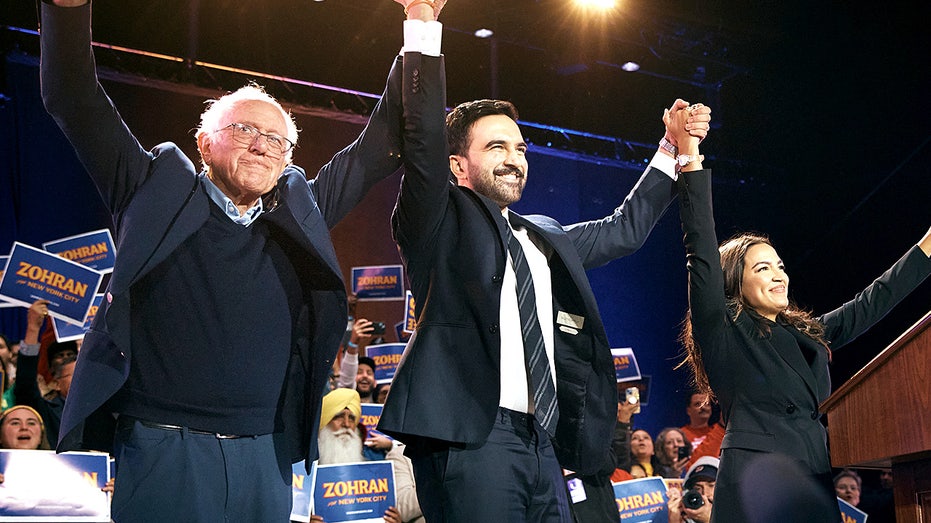
New York City Mayor Zohran Mamdani, center, celebrates with Sen. Bernie Sanders, I-Vt., and Rep. Alexandria Ocasio-Cortez, D-N.Y. (Andres Kudacki/Getty Images)
Michel analyzed the DSA platform and found that while the platform is “thin on details,” he was able to estimate the spending policies would total between $71 trillion and $212 trillion in new spending over the next decade.
He noted that, at the high end of that estimate, the total government spending would reach as high as 92% of U.S. economic output.
“The socialists claim their plan will do away with rent. They’ll make healthcare free and forgive student loans. Their system will provide utilities, college and food at no cost to the consumer,” Michel wrote.
“However, making something free at the point of use simply shifts the cost somewhere else, in this case, to taxpayers.”
BILL ACKMAN SOUNDS ALARM ON MAMDANI’S ECONOMIC AGENDA: ‘SOCIALISM IS A DISASTER’

Michel estimated the DSA platform would cost between $71 trillion and $212 trillion in new spending. (iStock)
Michel said universal healthcare could cost $40 trillion to $70 trillion over the course of a decade as reforms modeled off a Medicare-for-all-like healthcare system would see the government take on costs like paying for doctors and nurses as well as operating medical facilities.
Another plank in the DSA platform, a federal jobs guarantee, would cost up to $60 trillion to cover the wages of millions of American workers over a decade, according to Michel, who added that the elimination of rent or mortgages as part of a housing guarantee would cost trillions.
“Washington is currently projected to collect about $70 trillion in federal taxes over the next 10 years. To cover the costs of all those additional services, the DSA agenda requires roughly doubling federal revenue at the low end and quadrupling it at the high end,” Michel wrote.
The DSA platform calls for enacting “aggressive wealth taxes on the richest individuals and corporations to spend on public goods and infrastructure.”
He said that while advocates of those spending plans claim that they will be able to use higher taxes on wealthy Americans and corporations to pay for them, they would likely come up short.

Members of the Democratic Socialists of America gather outside a Trump-owned building on May Day May 1, 2019, in New York City. (Spencer Platt/Getty Images / Getty Images)
The 400 wealthiest billionaires in America were worth an estimated $6.6 trillion last year, according to a Forbes analysis, which Michel noted would be insufficient to cover the DSA agenda.
“Imagine Washington could confiscate every dollar of that — liquidate their businesses, sell their homes, strip off their jewelry. All that covers less than one year of the low-end cost of the DSA’s platform – or not quite four months of it at the high end,” he wrote.
Taxing every dollar of corporate profits at 100% would fund between half and one-fifth of the DSA agenda, according to Michel, while hiking income taxes on high-income earners would cover less than 1% of those spending plans.
“Add it all together — confiscate the wealth of the richest Americans, seize every dollar of corporate profit and maximize top income-tax rates — and the DSA is still between $29 trillion and $169 trillion short of covering the cost of its promises,” Michel wrote.
GET FOX BUSINESS ON THE GO BY CLICKING HERE
He added that only “one tax base is large enough to fill a gap tens of trillions of dollars wide: the middle class,” noting that the European middle class has a significantly higher tax burden than its American counterpart to finance those countries’ social welfare programs.

‘Stranger Things’ Officially Returns to Netflix Today

‘He wants to be here’: Kings GM not worried about Doughty’s expiring deal

RTX 5090s are going for as much as $9000, as AI server builders reportedly buy Nvidia’s flagship by the pallet, but the photos behind the story may be AI-generated



-

 Fashion6 days ago
Weekend Open Thread – Corporette.com
-

 Tech4 days ago
The Latest Weird Thing to Play Doom Is the Mapped-Out Brain of a Fruit Fly
-

 Business7 days ago
10 Most-Streamed Songs On Spotify In 2026 So Far, Led By Ella Langley’s Dominant Run On The Charts This Year
-

 Crypto World7 days ago
XAG/USD: Silver’s Short-Term Rally Meets Its Moment of Truth
-

 Crypto World7 days ago
Diesel Tops $6 a Gallon for the First Time as 28 States Set Records
-

 Crypto World3 days ago
Elon Musk Drops a Bombshell: Grok 5 Could Be the AGI Breakthrough
-
 Crypto World3 days ago
Kraken Lets xStocks Holders Earn Yield Through DeFi
-

 News Videos6 days ago
Facing Financial Fears
-

 Crypto World24 hours ago
US Charges Robinhood Engineers Over Crypto Listing Trades
-

 Business5 days ago
Rivals Sam Altman and Elon Musk Rally Behind Dario Amodei’s Call for a Slowdown in AI Development
-

 Crypto World5 days ago
Can AI Build a Startup in 72 Hours? Elon Musk's Team Will Livestream the Test
-

 Entertainment6 days ago
News Specials, Movies, Shows, More
-
 NewsBeat3 days ago
‘Sick conspiracy’: Trump says only guardrails AI needs is ‘a strong and smart (High IQ!) president’ in all-caps rant
-

 Crypto World7 days ago
Bitcoin ETFs Pull $167M as 2026’s Best Inflow Run Slows
-

 Crypto World6 days ago
Robinhood Chain Never Stopped But its Blobs Did Stop Reaching Ethereum For 14 Minutes
-
 Crypto World4 days ago
New Tesla Roadster Uses SpaceX Tech. Will It Impact the Stock Price?
-
 Entertainment6 days ago
New Horror Movie Officially Earns a Rare Stephen King Recommendation
-

 Business6 days ago
Marvell: Most Potent Setup Of The AI Factory Decade
-

 Crypto World4 days ago
3 Token Unlocks to Watch in the Third Week of September 2026
-

 Crypto World2 days ago
What Is the Status of the U.S.-Iran Peace Talks? Here's What Both Sides Are Saying
You must be logged in to post a comment Login