

Business
How It Differs Dramatically From His Lavish 2017 Visit

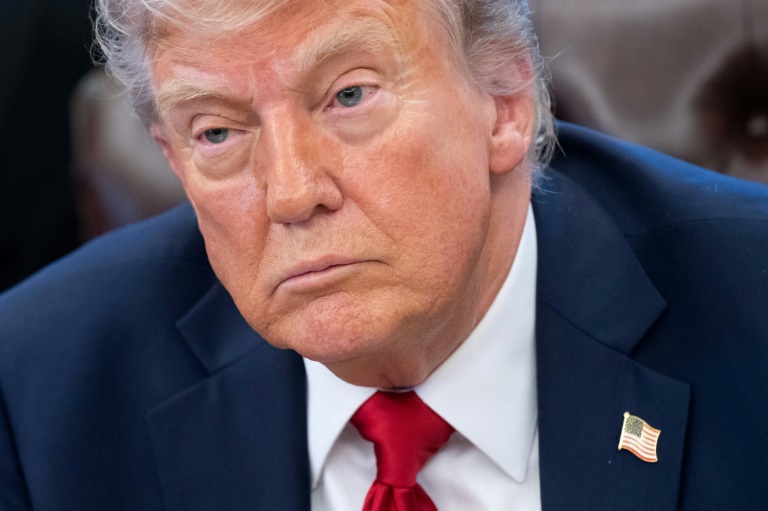
BEIJING — President Donald Trump arrived in Beijing Wednesday evening for a high-stakes two-day summit with Chinese President Xi Jinping, the first visit by a U.S. leader to China in nearly nine years, but one unfolding in a far more tense and constrained atmosphere than his 2017 trip.
Where Trump’s November 2017 state visit was billed as a “state visit-plus” overflowing with pageantry — a private dinner and opera performance inside the Forbidden City, children waving flags along motorcade routes and the announcement of $250 billion in business deals — the 2026 gathering carries markedly lower ambitions and a sharper edge of rivalry.
Trump touched down at Beijing Capital International Airport as security locked down the capital and global attention fixed on the world’s two largest economies navigating war in the Middle East, persistent trade frictions and technological competition. Meetings with Xi are scheduled for Thursday and Friday at the Great Hall of the People.
In 2017, the tone was celebratory. Xi rolled out the red carpet, escorting Trump and first lady Melania Trump through the Forbidden City’s main halls for an afternoon tea and evening performance. A military band played, schoolchildren chanted welcomes and Trump praised Xi as a “very special man.” The two leaders touted what appeared to be a budding personal rapport and a new era in bilateral ties. Chinese officials unveiled a raft of memorandums of understanding worth hundreds of billions of dollars in sectors from energy to agriculture, though many later failed to materialize fully.
Nine years later, the choreography remains formal but noticeably scaled back. No “state visit-plus” designation this time. Analysts say the grandeur serves a different purpose: signaling mutual respect while acknowledging deep distrust built over a decade of tariffs, technology restrictions, military posturing and the 2023 spy balloon incident.
The agenda has shifted dramatically. In 2017, North Korea dominated alongside trade. This week, the shadow of the U.S.-Israel conflict with Iran looms large. Trump has pressed China to use its influence to help reopen the Strait of Hormuz and ease oil price spikes that have fueled U.S. inflation. Beijing, for its part, seeks stability to protect its economy and wants progress on Taiwan and reduced U.S. tech export curbs.
Trade remains central but looks different. Trump’s second-term tariffs — initially hiked sharply before partial rollbacks following the October 2025 Busan meeting with Xi — still hover around 26-34 percent on many Chinese goods after court rulings and negotiations. Chinese officials expect announcements of Boeing aircraft purchases, U.S. agricultural products and energy deals, but analysts doubt anything approaching 2017’s headline-grabbing scale.
Critical minerals and rare earths also feature prominently. The two sides are discussing extensions of existing deals while wrestling over semiconductor restrictions. Artificial intelligence cooperation — or at least guardrails — is expected to surface, reflecting how technology has become a core battleground absent in 2017.
Power dynamics have flipped in subtle but important ways. In 2017, China’s economy was far more dependent on the U.S. market; today the U.S. share of Chinese exports has fallen from about 19 percent to roughly 11 percent. Beijing has diversified trading partners, advanced its technological self-reliance and weathered previous tariff rounds. Xi enters talks from a position of greater confidence, even as China’s growth faces domestic headwinds.
Trump, distracted by the Iran conflict and domestic economic pressures, is seeking tangible wins to bolster his image at home. White House officials speak of “stabilizing” the relationship rather than resetting it. Expectations are modest: possible new dialogue forums on trade and investment, symbolic purchases and commitments to future visits — Xi to Washington in the fall and Trump to the APEC summit in Shenzhen in November.
The personal chemistry between the two leaders has evolved too. They have met multiple times, most recently in Busan in late 2025. Xi has a clearer read on Trump’s transactional style, while Trump has tempered some of the first-term bombast with pragmatic deal-making. Yet underlying suspicions remain. U.S. officials continue to view China as a strategic competitor; Beijing sees Washington as intent on containing its rise.
Security around the summit reflects the stakes. Beijing has imposed heavy restrictions, closing sites like the Temple of Heaven and tightening airspace. The visit occurs against a backdrop of military tensions in the Taiwan Strait and South China Sea that were far less acute in 2017.
Experts describe the gathering as a “risk-management summit.” Both sides want to prevent escalation but harbor little hope for breakthroughs on structural issues such as industrial subsidies or market access. “The relationship is defined more by the absence of friction than by any affirmative agenda,” one former U.S. official noted.
For Trump, a successful outcome might include photo opportunities, modest trade announcements and language committing both nations to dialogue on Iran and nuclear issues. For Xi, hosting the first U.S. presidential visit in nearly a decade allows China to project strength and global centrality even amid its own challenges.
Broader implications extend beyond the two days. The summit could set the tone for U.S.-China relations through the remainder of Trump’s term. A smoother-than-expected meeting might open doors to cooperation on global issues; missteps or overly tough rhetoric could harden positions on Taiwan or technology.
As Trump and Xi sit down Thursday, the contrast with 2017 is stark. Then, the world’s two largest economies appeared on the cusp of a golden partnership. Now, they meet as wary superpowers managing competition while the world watches — distracted by war, worried about supply chains and uncertain about artificial intelligence’s next chapter.
The Forbidden City may not host a private dinner this time. The opera is off the schedule. Instead, closed-door talks in the Great Hall will focus on preventing confrontation rather than celebrating friendship. In that shift lies the story of how the U.S.-China relationship has matured — or hardened — over the past decade.



Maine Democrats pick Platner; Trump back to winning ways: Tuesday’s US primaries


Alleged Bondi Beach gunman charged with 19 more offences over mass shooting

WA’s $44.3 billion infrastructure pipeline shows the challenge has switched from funding to delivery.

Chicago Atlantic: Elevated Yield Keeps The Cautious Buy Stance Intact

Ipek Ozkaya
Hello, and welcome to today’s Carnegie Mellon University Software Engineering Institute’s webcast, Rethinking and Maturing AI Adoption. My name is Ipek Ozkaya, and I’m the Technical Director of AI Native Software Engineering at the SEI. And I’ve had the incredible pleasure of leading this project focused on AI adoption maturity with our team at the SEI and the incredible team at Accenture.
We want to make today’s conversation as interactive as possible. So please feel free to put your questions into the YouTube chat area. And we’ve already received close to 200 questions. There is no way we’ll be able to get through any of them in completeness, but we’ll try to get to them as much as possible afterwards.
It is no surprise today that businesses are — across all sectors are redefining themselves and going through a structural shift through AI solutions. And they are trying to redefine their operational relevance, their operational workflows as well as get ahead of the businesses through ROI. Software-driven organizations are also going through the same challenge. In fact, the software as a discipline is being redefined through AI, looking into efficiency, productivity and of course, some of the risks that come with it.
And clearly, all the organizations that deliver us the frontier models, OpenAI, Google, Microsoft and Anthropic are developing improved capabilities around the clock, and we’re receiving these capabilities around a lot faster. If we look into 2 years ago, the early generative AI models could barely solve some of the cybersecurity tasks. But today, we know the Mythos and GPT 5.5 could actually

Bank Nifty rose 2.1% to 55,194.50; and closed above 55,000 levels after two weeks while benchmark Nifty moved 0.5% higher on Tuesday. All 14 constituents of Bank Nifty moved higher on Tuesday. .
Bank of Baroda jumped 5.5% while Canara Bank climbed 4.5%. Punjab National Bank and Federal Bank advanced around 3.5%.
“The measures by RBI are likely to drive a healthy deposit base for banks and lead to cheaper cost of funds since the hedging cost on FCNRB is borne by the Central Bank while the hedging costs on ECB’s is subsidised,” said Dharmesh Kant, head of research, Cholamandalam Securities.
 ET Bureau
Last week, the RBI announced measures to boost foreign currency inflows and to support the rupee. The Central Bank offered concessional dollar-rupee swap facility to absorb the entire forex hedging costs for three-to-five-year Foreign Currency Non-Resident (FCNR[B]) deposits until October 16, 2026. In addition, it offered a concessional swap facility for eligible External Commercial Borrowings (ECBs) raised by public sector entities, fixing the hedging cost at 1.5% per annum.

This policy allows Indian banks to access low-cost global capital and alleviate domestic deposit crunches without bearing currency risk, said analysts. “The sudden fundamental clarity triggered massive technical short covering, catching derivative traders by surprise and sparking a rapid short squeeze since the Put-Call Ratio (PCR) had dropped into an oversold zone below 0.80 ahead of the news,” said Nishchal Jain, Quant Researcher, Share. Market by Phone Pe.
The high-volume breakout past 55,100 and decisive price action, shifts the market regime from “sell on rallies” to “buy on dips”, establishing 55,000 as a strong psychological support base- forming a high-conviction bullish view, he said.

IGO says spodumene production remains on track after reporting that a fire broke out at its new chemical-grade processing plant at the Greenbushes lithium operation.
Shares in the critical minerals miner slid in morning trade after reporting a fire had occurred at its $880 million Chemical Grade Plant 3 (CGP3) plant at the Greenbushes mine site yesterday.
IGO said the fire was extinguished and no injuries were sustained, and that its first and second chemical crushing and processing plants on site were unaffected by the blaze.
The third chemical plant at the hard-rock lithium operation in the state’s South West falls under the ownership of Talison Lithium, in which IGO owns an indirect 25 per cent stake, alongside China’s Tianqi Lithium (26 per cent) and US major Albemarle Corporation (49 per cent).
CGP3 is the third chemical grade plant built at the Greenbushes operation, which is still ramping up after processing first ore in December last year.
It has a processing capacity of 2.4 million tonnes per annum to produce up to 500,000 tonnes per annum of lithium mineral concentrate.
The market was told Talison Lithium had commenced a full investigation into the cause and damage from the incident on Tuesday.
IGO said Greenbushes production remained on track to meet its FY26 guidance of between 1,375 million and 1,425 million tonnes of spodumene concentrate.
The fire at the new plant represents another setback for the critical minerals miner, which has been grappling with challenges at its co-owned Kwinana lithium hydroxide plant.
That downstream processing plant is operating at about 50 per cent nameplate capacity, which was an improvement when reported in the March quarter.
IGO and joint venture partner in the plant, Tianqi Lithium, have been increasingly at odds over the future of the plant, after the ASX-listed miner wrote down its value to zero.
Shares in IGO are trading down 6 per cent to $8.48 apiece at 11AM AWST.

The Commodity and Capital Market Participants Association of India (CPAI) is working with the Industry Standards Forum (ISF), a body comprising members of various industry associations, to create a separate framework that would distinguish between liquidity providers and speculators. That they believe would help them to convince the Reserve Bank of India (RBI) to permit lower margin for the bank guarantees and enable them to trade higher volumes.
The RBI has mandated that banks lending to capital market intermediaries (CMIs) extend guarantees for proprietary trading subject to the facility being fully secured. The proposal says that banks can extend guarantee only to the amount equal to the value of the collateral provided by the proprietary trading firm.

SailPoint: Weaker Net-New ARR Amid Lofty Valuation (Rating Downgrade)


Trump administration urges judge to reject bid to block White House UFC event

StarkWare launches privacy tokens that still allow compliance checks

Expert Spots Troubling Signs In Kim K & Hamilton Romance

Future Of Bitcoin



-

 Fashion4 days ago
Weekend Open Thread: Evereve – Corporette.com
-
 Crypto World5 days ago
Jensen Huang Approves Samsung, SK Hynix, and Micron for NVIDIA (NVDA) HBM4 Memory Supply
-

 Crypto World2 days ago
Anatomy of the June crypto crash: Fed, Iran, Saylor
-
 Crypto World3 days ago
Senator Cynthia Lummis Calls CLARITY Act the Most Consequential Financial Legislation of This Generation
-

 NewsBeat2 days ago
Alexander Zverev wins the French Open to finally earn a 1st Grand Slam title
-

 Tech5 days ago
Microsoft launches MXC, an OS-level sandbox for AI agents, with OpenAI and Nvidia already on board
-
 Entertainment3 days ago
The Best Mystery Series of All Time Is Surging on Streaming 30 Years After It Ended
-
 Business3 days ago
The Pain Points Taking a Fragile Tech Rally Down a Notch
-

 Tech3 days ago
Microsoft unveils seven homegrown AI models in new bid for ‘long term self-sufficiency’
-
Crypto World5 days ago
LBank Surpasses 25 Million Users Worldwide as AFA Partnership Continues to Drive Global Growth
-

 Tech4 days ago
Suspicious Polyfill login prompts pop up on Toshiba, Muji websites
-

 Crypto World3 days ago
Trump’s AI Ownership Plan Could Benefit Anthropic at OpenAI’s Expense
-
 Sports12 hours ago
Bangladesh beat Australia after 20 years in ODIs, register only their second win over six-time world champions | Cricket News
-

 Business5 days ago
(VIDEO) Justin Bieber Delivers Surprise Happy Birthday Serenade to Diners at Los Angeles Mexican Restaurant
-

 Tech5 days ago
RCS Messages Between iPhone and Android Get End-to-End Encryption With iOS 26.5
-

 Tech5 days ago
Meta steals a tactic from Tesla and builds data centers in tents
-
 Crypto World2 days ago
Eli Lilly (LLY) Stock Surges 4% Following Breakthrough Sleep Apnea Trial Results
-

 Tech4 days ago
Hackers now exploit SolarWinds Serv-U flaw to crash servers
-
Business7 days ago
Asia stocks rise past US-Iran jitters; Nikkei hits record high on stimulus cheer
-

 Tech4 days ago
Von der Leyen’s AI envoy pick draws conflict-of-interest fire
You must be logged in to post a comment Login