
Business
How Much Does Dropbox Actually Lose When Its Service Goes Down for an Hour?

The short answer is that no public figure exists showing exactly what an hour of downtime costs Dropbox specifically, since the company has never disclosed that number. But using Dropbox’s own reported financial data alongside broader industry research on the cost of IT outages, it’s possible to build a reasonably grounded estimate — with an important caveat: for a subscription business like Dropbox, “revenue lost during an outage” and “money that actually disappears” are two very different things.
Start with the raw math
Dropbox reported $2.52 billion in revenue for fiscal 2025, according to the company’s own annual report filed with the SEC. Dividing that by the 8,760 hours in a year works out to roughly $287,700 in revenue flowing through the company, on average, during any given hour.
That figure is often the starting point analysts use when estimating downtime costs for any company. But it’s a crude proxy, and treating it as Dropbox’s actual “loss” during an outage would be misleading for one central reason: Dropbox is a subscription business.
Why subscription revenue doesn’t just vanish
Unlike an e-commerce retailer, where a website outage during a sales event can mean transactions that simply never happen, Dropbox’s revenue comes almost entirely from recurring monthly and annual subscriptions. A paying Dropbox user doesn’t stop being billed because the service went down for an hour — their subscription renews on schedule regardless. So the $287,700-per-hour figure represents revenue that continues flowing to Dropbox even during an outage, not revenue that gets erased by one.
This distinction matters enough that industry analysts specifically flag it. One 2026 industry cost-of-downtime analysis put it directly: “SaaS downtime costs primarily through churn and SLA breach penalties — the [small] direct [monthly recurring revenue] loss from a four-hour outage is rarely the real number once trust effects are modeled.” In other words, the immediate, hour-by-hour “loss” for a subscription company is close to zero in accounting terms. The real cost shows up later, and in different forms.
Where the real costs actually come from
For a company like Dropbox, an hour of downtime is more likely to translate into cost through a few specific channels:
Service-level agreement credits. Cloud services typically promise a minimum level of uptime — often 99.9% or higher — to paying business and enterprise customers. When that threshold is breached, affected customers are usually entitled to service credits, which function as a direct, contractually obligated refund of part of their subscription fee. Dropbox has not published its specific SLA credit formula publicly, but this is standard practice across the cloud storage industry.
Customer churn. According to industry research on SaaS outages, a single major disruption can measurably increase monthly customer cancellation rates, with some estimates putting the increase in the range of 2% to 5% following a significant incident. For a company the size of Dropbox, even a small uptick in churn translates into a meaningfully larger revenue impact than the outage hour itself, since it affects future recurring billing rather than the hour in question.
Support and engineering costs. Handling a spike in customer support tickets, plus the engineering time spent diagnosing and fixing the underlying issue, carries a real labor cost, though this tends to be modest relative to the other factors for a company of Dropbox’s scale.
Reputational and trust effects. These are the hardest to quantify but often cited as the most consequential long-term cost, particularly for a company whose core value proposition is reliably storing and syncing people’s files.
What broader industry benchmarks suggest
Independent research firms have tried to quantify downtime costs across companies more broadly, and their figures vary widely depending on company size and industry. According to ITIC’s 2024 Hourly Cost of Downtime Survey, more than 90% of mid-size and large enterprises now report that a single hour of downtime costs their organization more than $300,000, with 41% of enterprises reporting hourly costs between $1 million and $5 million. A separate widely cited benchmark from Gartner, dating to 2014 but still commonly referenced, put the cross-industry average at $5,600 per minute, or roughly $336,000 per hour. More recent research from Splunk and Oxford Economics, published as part of their “Hidden Costs of Downtime” analysis, estimated the 2026 average downtime cost across company sizes at approximately $15,000 per minute, or $900,000 per hour, with aggregate annual downtime losses across the world’s 2,000 largest companies reaching roughly $600 billion.
Notably, those figures are generally drawn from companies across all industries, including manufacturing and financial services, sectors where an hour of downtime can halt physical production lines or trigger regulatory reporting obligations, both of which carry costs that simply don’t apply to a cloud storage company like Dropbox. A B2B SaaS platform, by contrast, tends to sit toward the lower end of industry cost estimates specifically because its core cost driver is churn and reputational damage rather than immediate, hard transactional losses.
Putting it together for Dropbox specifically
Applying Dropbox’s own revenue-per-hour figure of roughly $287,700 as a rough proxy, and layering on the SaaS-specific caveat that direct revenue loss is minimal for subscription businesses, a reasonable estimate is that the immediate, quantifiable cost of a one-hour Dropbox outage — SLA credits plus support overhead — likely falls well below that headline revenue figure, possibly in the tens of thousands of dollars for a single hour, rather than hundreds of thousands. The larger financial risk comes not from the hour itself, but from whether the outage is severe or frequent enough to meaningfully affect customer retention over the following weeks and months.
Dropbox has experienced a handful of confirmed outages in recent years, including a roughly two-hour global disruption in May 2025 that generated a sharp spike in user complaints before the company restored service. The company has not published a post-incident cost estimate for that event or any other specific outage, which is typical practice across the cloud software industry — companies rarely disclose exact financial figures tied to individual downtime incidents, both because the numbers are commercially sensitive and because, as the analysis above suggests, isolating a clean dollar figure for a single hour of downtime is inherently difficult for a subscription-based business.


Canada to match U.S. tariffs dollar for dollar after trade talks collapse
Buy 4 Barron's Better Bets (Than T-Bills) Out Of 11 'Safer' August DiviDogs

The Principal Financial Group (The Principal®) is a global investment management leader offering retirement services, insurance solutions and asset management. The Principal offers businesses, individuals and institutional clients a wide range of financial products and services, including retirement, asset management and insurance through its diverse family of financial services companies. Founded in 1879 and a member of the FORTUNE 500®, the Principal Financial Group has $519.3 billion in assets under management1 and serves some 19.7 million customers worldwide from offices in Asia, Australia, Europe, Latin America and the United States. Principal Financial Group, Inc. is traded on the New York Stock Exchange under the ticker symbol PFG. For more information, visit www.principal.com.
Insurance products issued by Principal National Life Insurance Co (except in NY) and Principal Life Insurance Co. Plan administrative services offered by Principal Life. Principal Funds, Inc. is distributed by Principal Funds Distributor, Inc. Securities offered through Princor Financial Services Corp., 800/247-1737, Member SIPC and/or independent broker/dealers. Principal National, Principal Life, Principal Funds Distributor, Inc. and Princor® are members of the Principal Financial Group®, Des Moines, IA 50392.
Investing involves market risk, including possible loss of principal.

Putin says Ukraine opened ’Pandora’s box’ with strikes on economic targets


A seasoned consulting specialist at a leading Central Asian bank. The author behind Novo Capital brings half a decade of experience delivering strategic insight and analysis for the bank’s clientele within the private banking branch. Launching the career back in 2020 after graduating from a top CA university, the author developed a resilient methodology forged amidst global market volatility, focusing on corporate valuation, due diligence for investment opportunities, and crafting spot-on forecasts that guide long-term investment strategy. The goal of contributing to Seeking Alpha seems to be quite simple: ideas are worth discussing, and one can gain “alpha” only through gaining out-of-consensus information from opinions few professionals have nowadays. That’s exactly the reason Novo Capital was created.
Analyst’s Disclosure: I/we have a beneficial long position in the shares of SPY, NDX, XLK, SMH, IGV either through stock ownership, options, or other derivatives. I wrote this article myself, and it expresses my own opinions. I am not receiving compensation for it (other than from Seeking Alpha). I have no business relationship with any company whose stock is mentioned in this article.
Seeking Alpha’s Disclosure: Past performance is no guarantee of future results. No recommendation or advice is being given as to whether any investment is suitable for a particular investor. Any views or opinions expressed above may not reflect those of Seeking Alpha as a whole. Seeking Alpha is not a licensed securities dealer, broker or US investment adviser or investment bank. Our analysts are third party authors that include both professional investors and individual investors who may not be licensed or certified by any institute or regulatory body.

JPMorgan Chase: Getting Paid 6.4% While Waiting For Lower Interest Rates


I’m an equity analyst and founder of Goulart’s Restaurant Stocks, a research firm focused on the U.S. restaurant industry — from quick-service and fast casual to fine dining and niche concepts. I lead all thematic research and valuation efforts, applying advanced financial modeling, sector-specific KPIs, and strategic insights to uncover hidden value across public equities. In addition to restaurants, I cover consumer discretionary, food & beverage, casinos & gaming, and IPOs, with a particular focus on micro and small caps that are often overlooked by mainstream analysts. My research has been featured on Seeking Alpha, Yahoo Finance, Mises Institute, Investing.com and other plataforms. My background combines hands-on experience in finance and business management with academic foundations. I hold an MBA in Controllership and Accounting Forensics, a Bachelor’s in Business Administration. I’ve also pursued specialized training in valuation, financial modeling, and restaurant operations (I had a brief experience as an undergraduate as a franchise partner for a regional ice cream shop).
Analyst’s Disclosure: I/we have no stock, option or similar derivative position in any of the companies mentioned, and no plans to initiate any such positions within the next 72 hours. I wrote this article myself, and it expresses my own opinions. I am not receiving compensation for it (other than from Seeking Alpha). I have no business relationship with any company whose stock is mentioned in this article.
Seeking Alpha’s Disclosure: Past performance is no guarantee of future results. No recommendation or advice is being given as to whether any investment is suitable for a particular investor. Any views or opinions expressed above may not reflect those of Seeking Alpha as a whole. Seeking Alpha is not a licensed securities dealer, broker or US investment adviser or investment bank. Our analysts are third party authors that include both professional investors and individual investors who may not be licensed or certified by any institute or regulatory body.

The Death of the Easy Beat: Why Classic Stock-Picking Rules No Longer Work

Hammond Power Solutions: Capacity Has Arrived Just As AI Power Demand Accelerates

Hi, I’m Yiannis. Spotting winners before they break out is what I do best.Experience: Previously worked at Deloitte and KPMG in external/internal auditing and consulting. Education: Chartered Certified Accountant, Fellow Member of ACCA Global, with BSc and MSc degrees from U.K. business schools. Investment Style: Spotting high-potential winners before they break out, focusing on asymmetric opportunities (with at least upside potential of 3-5X outweighing the downside risk). By leveraging market inefficiencies and contrarian insights, we seek to maximize long-term compounding while protecting against capital impairment.Risk management is paramount—we seek a strong margin of safety to protect against capital impairment while maximizing long-term compounding. Our 2-3 year investment horizon allows us to ride out volatility, ensuring that patience, discipline, and intelligent capital allocation drive outsized returns over time.
Analyst’s Disclosure: I/we have no stock, option or similar derivative position in any of the companies mentioned, and no plans to initiate any such positions within the next 72 hours. I wrote this article myself, and it expresses my own opinions. I am not receiving compensation for it (other than from Seeking Alpha). I have no business relationship with any company whose stock is mentioned in this article.
Seeking Alpha’s Disclosure: Past performance is no guarantee of future results. No recommendation or advice is being given as to whether any investment is suitable for a particular investor. Any views or opinions expressed above may not reflect those of Seeking Alpha as a whole. Seeking Alpha is not a licensed securities dealer, broker or US investment adviser or investment bank. Our analysts are third party authors that include both professional investors and individual investors who may not be licensed or certified by any institute or regulatory body.
Bitcoin Price Analysis: BTC’s 25% Rally Faces Its First Serious Threat

Jolyon Maugham’s white-saviour complex – spiked
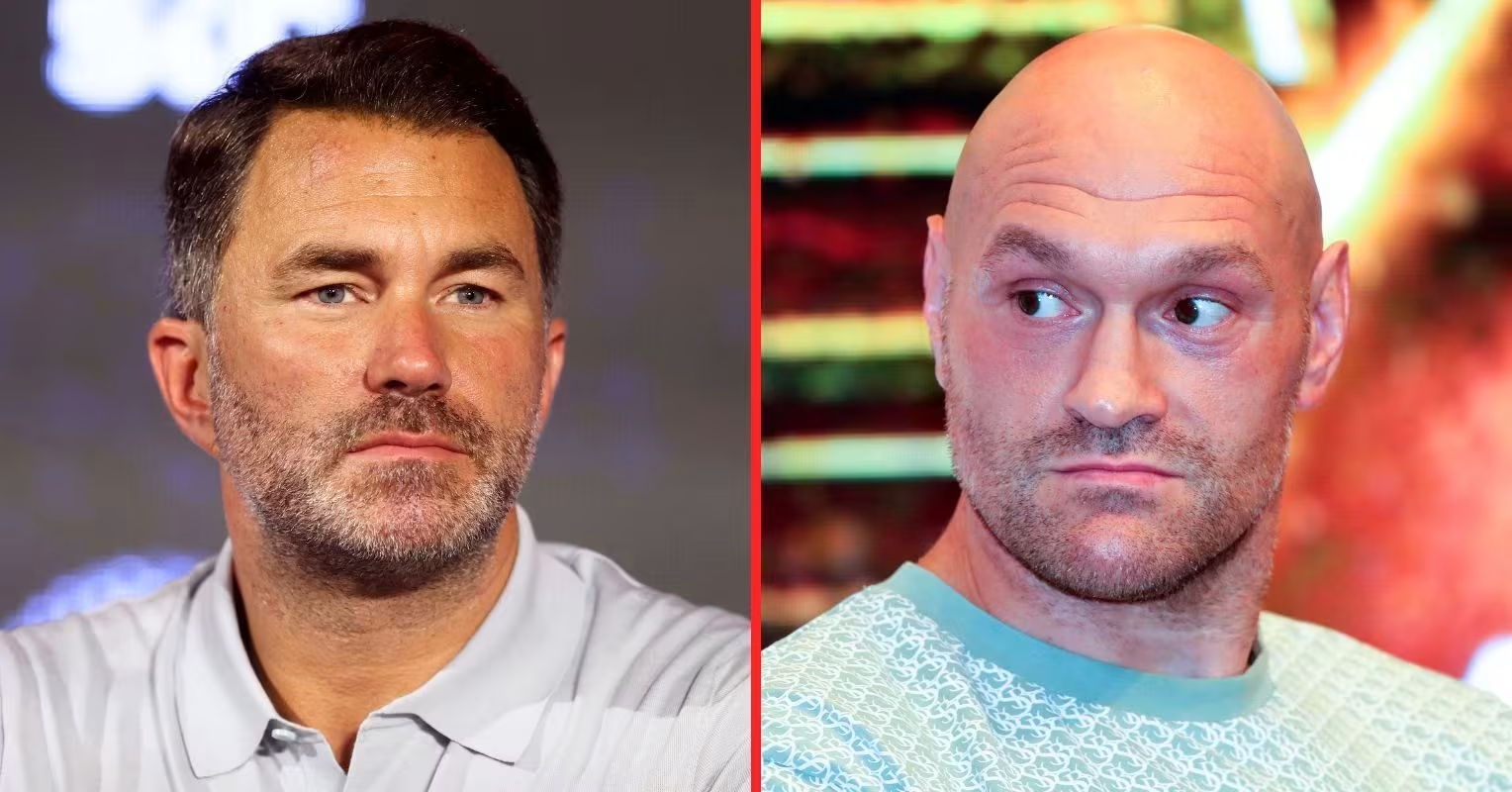
Eddie Hearn responds to Tyson Fury saying Anthony Joshua ‘has pulled out of the fight’





-

 Fashion23 hours ago
Weekend Open Thread: Madewell – Corporette.com
-

 Business4 days ago
SMA Solar Technology AG (SMTGY) Q2 2026 Earnings Call Transcript
-

 Tech5 days ago
Qwen3.8-27B runs frontier-class coding agents and reasoning locally, no cloud API required
-

 Crypto World5 days ago
OCC Greenlights Trump Family Crypto Firm for Trust Charter
-

 Politics5 hours ago
6 months on, Irish renters crushed by effects of government housing bill
-

 Crypto World5 days ago
NAVI Prime launches institutional lending framework on Sui
-

 News Videos3 days ago
Don’t Leave Your Financial Future To Chance | August 19, 2026
-

 Crypto World6 days ago
Data of 54K Wallet Users Leaked, Clarity Odds Just 10%: Hodler’s Digest, Aug. 16
-
 NewsBeat8 hours ago
The ‘Lucky Dip Gang’ causing carnage for clicks: After five thugs were killed speeding in the wrong direction on a motorway, GUY ADAMS investigates a sick new trend… and why police aren’t even allowed to pursue them
-

 Politics6 days ago
Britain is facing a housing disaster
-

 Tech6 days ago
What are the rumors about the AirPods Pro 4?
-
 Crypto World5 days ago
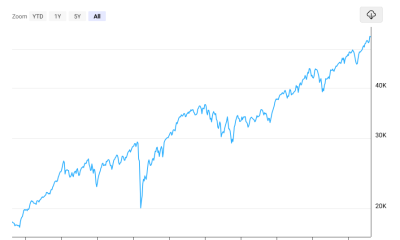
Dow’s 3-Year Winning Run Isn’t a Crash Signal, Still 49% Odds of Double-Digit Gains
-

 Business6 days ago
Rebel Creamery files Chapter 11 with $23.8M Van Leeuwen judgment on appeal
-
 Tech7 days ago
DeepSeek’s innovative harness treats everything as a plug-in
-

 Business4 days ago
Stock Market Today: Tech Futures Slide As Treasury Yields Jump; Nvidia, Micron, Sandisk Sell Off
-

 Tech7 days ago
Three new Windows flaws can bypass security, gain system privileges, and even install malware remotely
-
 Tech6 days ago
OpenAI’s new ChatGPT feature logs your keystrokes and stores them in plain text
-

 Tech5 days ago
Straight Up the Cliff, Yunnan’s New Fuyao Ladder Turns a Three-Hour Climb Into a 50-Second Ride for Students
-

 Tech6 days ago
DeepSeek’s top-ranked V4 Flash stumbles on real agent tasks as its prices surge
-
 Tech5 days ago
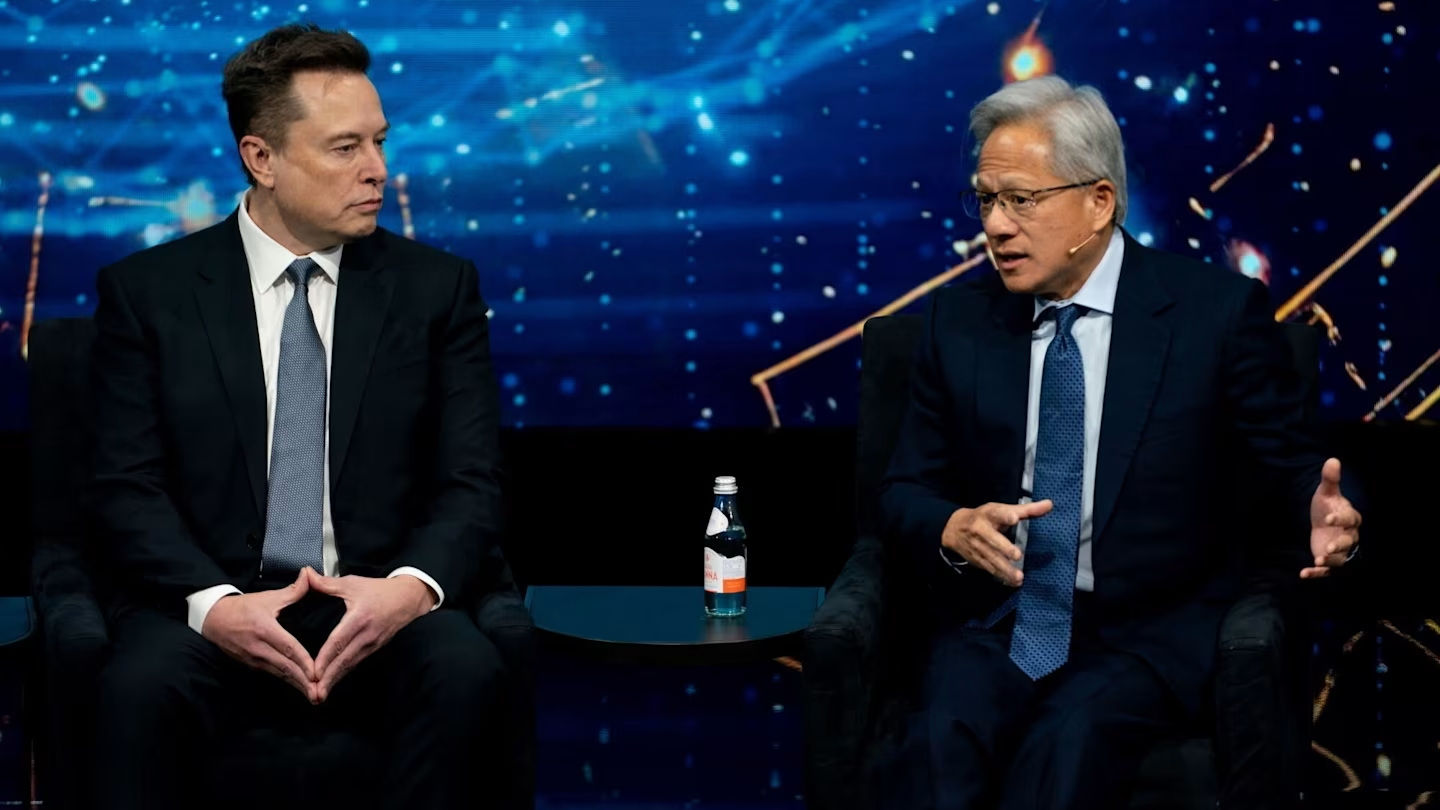
Nvidia discloses $21B stake in SpaceX
You must be logged in to post a comment Login