
Business
How Much Is the War with Iran Costing Australia? Australia Faces Billions in Economic Costs from Iran War

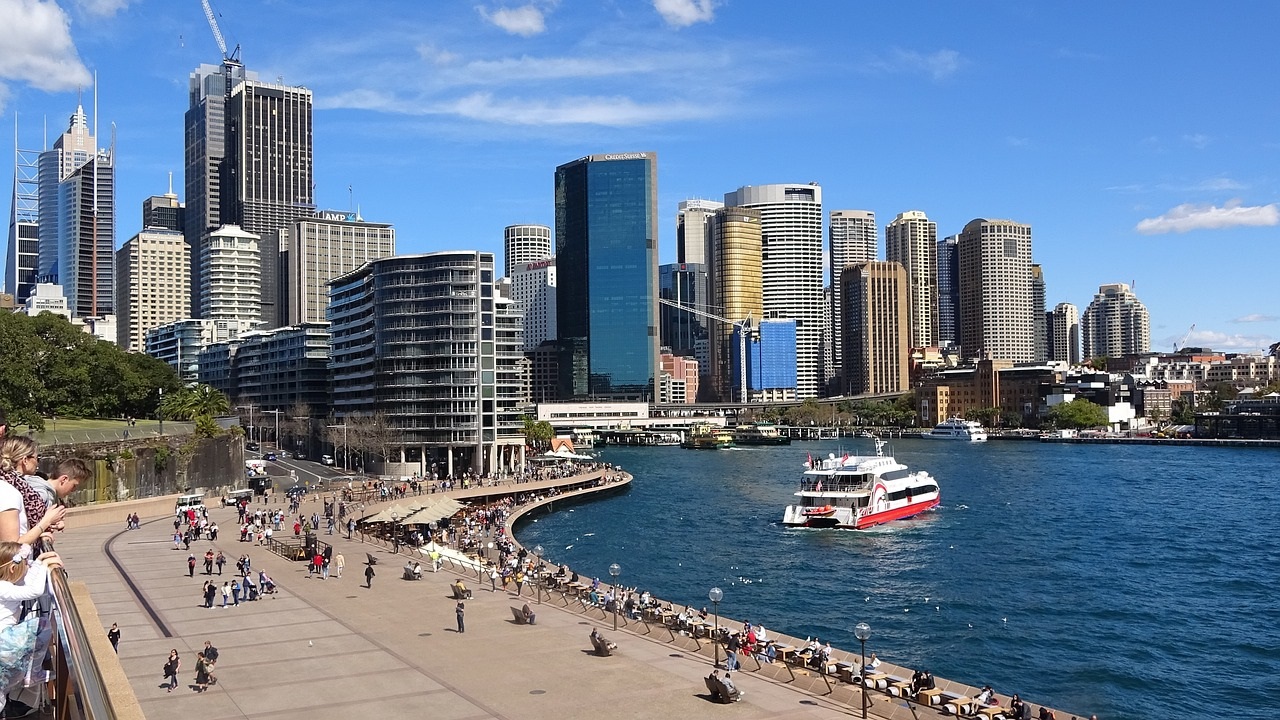
Australia is not fighting in the U.S.-led war against Iran, yet the conflict is already exacting a significant economic toll on the nation through surging fuel prices, inflation pressures and potential recession risks, according to government modeling and independent forecasts.

Prime Minister Anthony Albanese has repeatedly emphasized that Australia is not an active combat participant. The government has limited its involvement to defensive support, including the temporary deployment of an E-7A Wedgetail surveillance aircraft with about 85 Australian Defence Force personnel to the United Arab Emirates and the provision of air-to-air missiles to help protect Gulf states.
Nevertheless, the disruption to global oil supplies — particularly with threats to the Strait of Hormuz — has driven petrol and diesel prices to record highs, adding hundreds of dollars annually to household costs and threatening broader economic stability as of early April 2026.
Treasurer Jim Chalmers released Treasury analysis in mid-March projecting that a prolonged conflict could slash Australia’s GDP by 0.6% in 2027, equating to roughly A$16.5 billion ($11 billion) in lost economic output. In a shorter scenario with oil prices stabilizing sooner, the hit would be about 0.2% of GDP.
The war has triggered the biggest spike in fuel prices in Australian history. Petrol costs have risen about 40% since the conflict intensified, with diesel approaching or exceeding A$3 per litre in many areas. Households face an extra A$60 or more per week in commuting expenses for some workers, while industries like construction, agriculture and transport absorb higher surcharges.
Energy Minister Chris Bowen temporarily suspended fuel quality standards to boost domestic supply by an estimated 100 million litres per month, and the government halved the fuel excise tax for three months at a cost of about A$400 million in foregone revenue. Panic buying has compounded shortages at hundreds of petrol stations, even as officials insist deliveries remain assured into mid-April.
Oxford Economics warned that a drawn-out war could push Australia into a sharp recession, with GDP falling 1.1% in one quarter — the steepest drop outside the pandemic era. Inflation, already elevated, could peak 0.75 to 1.25 percentage points higher depending on how long oil prices remain elevated around $100-$120 per barrel.
The economic pain extends beyond fuel. Higher global energy prices are feeding into electricity bills and fertiliser costs, threatening the autumn planting season for farmers. Tourism Economics forecast that more than one million international visitor trips to Australia could be at risk this year due to broader uncertainty, potentially harming the A$39 billion industry.
Yet there are offsetting gains. Westpac Banking Corp. projected a multi-billion-dollar windfall for the federal budget from elevated coal, gas and gold export prices, estimating an extra A$20 billion in revenue over five years from energy commodities alone, plus A$19 billion from gold.
Albanese acknowledged in a rare national address that the shocks “will be with us for months” and that no government can fully shield citizens from global pressures. “Australia is not an active participant in this war. But all Australians are paying higher prices because of it,” he said.
The limited military commitment adds modest direct costs. The Wedgetail deployment, initially for four weeks, involves operational expenses for personnel, fuel and maintenance, though exact figures have not been publicly detailed. Australia has ruled out offensive actions or ground troops in Iran, distinguishing its stance from deeper entanglements in past conflicts.
Defence Minister Richard Marles has indicated possible extensions of support for Gulf security or post-conflict stabilization, but the government stresses decisions will prioritize national interest. Critics, including the Greens, have accused the Albanese administration of being drawn too close to U.S. operations despite public denials of combat involvement.
Broader strategic costs include heightened scrutiny of Australia’s reliance on long supply chains and fuel reserves. The conflict has exposed vulnerabilities in energy security, prompting calls for greater domestic refining capacity and self-reliance. Some analysts argue years of underfunding have left the Australian Defence Force stretched, limiting options for more robust contributions if requested.
Public and political debate has intensified around the cost-of-living crisis. Construction firms report 8-10% fuel surcharges, while truck drivers and farmers face mounting bills. Inflation risks could delay interest rate relief from the Reserve Bank of Australia.
Treasury’s modeling highlights two scenarios: a short war with oil at $100 per barrel for the first half of 2026, versus a prolonged one reaching $120 and taking three years to normalize. The latter would amplify the GDP hit and inflationary surge.
Economists note Australia’s position as a major energy exporter provides some buffer through higher commodity revenues, but as a net importer of refined fuels, it remains exposed to spot market volatility and shipping disruptions.
The war’s ripple effects have also influenced domestic policy. The government has underwritten certain fuel and fertiliser shipments and explored measures to prioritize domestic gas supply over exports. Tourism and hospitality sectors worry about reduced international arrivals amid global uncertainty.
As the conflict enters its second month, with U.S. operations continuing and an American F-15 reportedly shot down, Australian officials monitor developments closely. Albanese has urged a swift resolution while supporting efforts to curb Iran’s nuclear ambitions.
For ordinary Australians, the immediate impact is felt at the petrol pump and in grocery prices. Longer term, sustained higher energy costs could slow growth, affect employment in fuel-dependent sectors and strain budgets already pressured by housing and living expenses.
Independent analysts caution that full impacts may take months to materialize due to lags in global supply chains. Physical shortages have not yet fully hit Australian shores, but panic buying and price spikes have created a sense of crisis.
The situation underscores Australia’s interconnectedness with global events despite its geographic distance. While direct military spending remains minimal, the indirect economic costs — potentially totaling tens of billions over time — highlight the challenges of navigating alliances and energy dependencies in an unstable world.
Government task forces continue to assess fuel security, with assurances that reserves can manage short-term disruptions. However, experts warn that a prolonged closure or threat to key shipping routes could test those buffers severely.
As Easter weekend approaches, many families are feeling the pinch from higher travel costs, adding a personal dimension to the abstract economic forecasts.
Whether the war ends soon or drags on will determine the ultimate bill for Australia. For now, the nation grapples with higher prices and uncertainty without having committed combat forces, a delicate balance that officials say prioritizes both alliance responsibilities and domestic welfare.


Rising geopolitical tensions in the Middle East have pushed up crude oil prices, triggering a rise in bond yields in India. Higher oil prices, along with a weakening rupee, are stoking inflation concerns and prompting investors to reassess their debt portfolios as mark-to-market losses emerge—particularly in long-duration funds, as reported by ET Bureau.
Traders were wrestling with conflicting signals about a potential winding down of the war that began over a month ago, with the U.S.-Israeli military strikes on Iran.
The S&P 500 posted a gain in the holiday-shortened week, snapping a five-week streak of losses. The benchmark index earlier in the week closed its worst-performing quarter since 2022, weighed down since late February by the war and the resulting surge in energy prices.
“It’s going to be hard to get the market’s attention off the Middle East, oil prices and the risks that have emerged,” said Matthew Miskin, co-chief investment strategist at Manulife John Hancock Investments. “The markets have been so myopically focused on geopolitical risk and … how all this is going to shake out.”
Stocks have stumbled this year, with concerns about artificial-intelligence disruption and private credit weakness compounding uncertainty over the Middle East conflict. The S&P 500 was last down nearly 6% from its late-January all-time high.

The war’s impact on oil supplies and energy prices remained the focal point for investors, especially the status of the Strait of Hormuz, a critical Middle East oil-shipping channel where traffic has stalled. U.S. crude topped $110 a barrel on Thursday after the commodity earlier in the week settled above $100 a barrel for the first time since 2022.
“The market is pricing off oil,” said Doug Huber, deputy chief investment officer at Wealth Enhancement Group. “Inflation expectations, bond markets — everything is stuck to this concept of what oil is doing.”
CPI TO JUMP, HIGH PRICES AT THE PUMP
Next week’s consumer price index, a closely watched inflation gauge, stands as an early test of the war’s energy shock. With U.S. crude jumping some 90% since the start of the year, the U.S. average gasoline price rose above $4 a gallon this week for the first time in more than three years.
“We think the first stage of oil price pass-through will have arrived in March via motor fuel,” BNP Paribas said in a note previewing the CPI report.
The March CPI report, due on April 10, is expected to have climbed 0.9% on a monthly basis, according to a Reuters poll as of Thursday. Excluding energy as well as food prices, the “core” CPI level is expected to have risen 0.3%.
Miskin said he would look for “ripple effects” across other goods and services stemming from the war and energy-price surge, while adding that the March report may be too soon to see any broader inflationary impact.
“You’re just trying to get as much real-time data as you can to formulate where the inflation and economic growth trends are going,” Miskin said.
Q1 RESULTS LOOM, WITH BIG PROFIT HOPES
War-driven inflation worries have led markets to largely rule out interest rate cuts this year, after such cuts had been a key underpinning for many bullish stock outlooks.
“The market already has inflation on the brain,” said Patrick Ryan, chief investment strategist at Madison Investments. If CPI were to “surprise with a much higher print, that could also be something that the market would take negatively.”
Next week also brings the release of another inflation measure, the personal consumption expenditures price index, but that PCE data will cover February, a period largely before the war took hold. An updated read of fourth-quarter U.S. economic growth is also due, while investors will also analyze Wednesday’s release of the minutes from the Federal Reserve’s March meeting for any clues about the future path of rates.
The start of earnings season also will start grabbing Wall Street’s attention, with investors counting on a broadly strong corporate profit outlook to support U.S. stocks this year. Delta Air Lines and beverage maker Constellation Brands are among those due to report next week.
Those reports will offer a taste of the first-quarter reporting season, which kicks off the following week. S&P 500 companies overall are expected to post a 14.4% rise in first-quarter earnings from the year-earlier period, according to LSEG IBES.
“The Q1 earnings season beginning in mid-April should show that underlying earnings growth is still strengthening and broadening,” Deutsche Bank equity strategists said in a note.
KKR: Still A Growth Story Despite Credit Fears


With combined experience of covering technology companies on Wall Street and working in Silicon Valley, and serving as an outside adviser to several seed-round startups, Gary Alexander has exposure to many of the themes shaping the industry today. He has been a regular contributor on Seeking Alpha since 2017. He has been quoted in many web publications and his articles are syndicated to company pages in popular trading apps like Robinhood.
Analyst’s Disclosure: I/we have a beneficial long position in the shares of DV either through stock ownership, options, or other derivatives. I wrote this article myself, and it expresses my own opinions. I am not receiving compensation for it (other than from Seeking Alpha). I have no business relationship with any company whose stock is mentioned in this article.
Seeking Alpha’s Disclosure: Past performance is no guarantee of future results. No recommendation or advice is being given as to whether any investment is suitable for a particular investor. Any views or opinions expressed above may not reflect those of Seeking Alpha as a whole. Seeking Alpha is not a licensed securities dealer, broker or US investment adviser or investment bank. Our analysts are third party authors that include both professional investors and individual investors who may not be licensed or certified by any institute or regulatory body.

Form 13D/A TripAdvisor For: 3 April
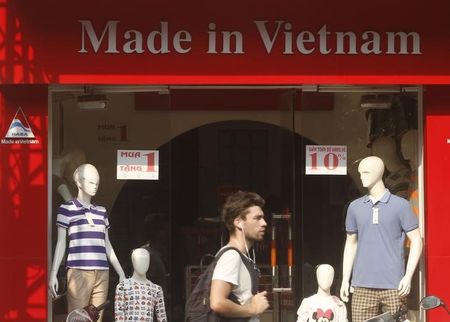
Vietnam’s Q1 growth cools as Middle East energy shock drives $3.6B trade deficit


I have been involved in the financial world for over 25 years with experience as an advisor, teacher, and writer. I am a full believer in the free-market system and that financial markets are efficient with most stocks reflecting their real current value. The best opportunities for profits on individual stocks come from stocks that are less-widely followed by the average investor or from stocks that may not accurately reflect the opportunities that currently exist in their markets.
Analyst’s Disclosure: I/we have no stock, option or similar derivative position in any of the companies mentioned, and no plans to initiate any such positions within the next 72 hours. I wrote this article myself, and it expresses my own opinions. I am not receiving compensation for it (other than from Seeking Alpha). I have no business relationship with any company whose stock is mentioned in this article.
Seeking Alpha’s Disclosure: Past performance is no guarantee of future results. No recommendation or advice is being given as to whether any investment is suitable for a particular investor. Any views or opinions expressed above may not reflect those of Seeking Alpha as a whole. Seeking Alpha is not a licensed securities dealer, broker or US investment adviser or investment bank. Our analysts are third party authors that include both professional investors and individual investors who may not be licensed or certified by any institute or regulatory body.
Cited by Barron’s as one of the top financial websites to visit on the weekend, Financial Sense (www.financialsense.com) provides educational resources to the broad public audience through a daily podcast, editorials, current news and resource links on salient financial market issues. Begun in 1985 as a local talk radio program, Financial Sense Newshour (www.financialsense.com/financial-sense-newshour) is a weekly webcast with host Jim Puplava and top financial thinkers. Writing staff of Financial Sense includes: Jim Puplava, Chris Puplava, Ryan Puplava, and Cris Sheridan.

Jobs Growth Remains Modest
Why the eurozone growth hit may be more severe this time
Tesla beats BYD in Q1 2026 EV sales but inventory build and Europe slump cloud the win

Rare chance to see grand manor over Easter weekend as it opens for one day

Investing in debt mutual funds now? How rising yields may impact returns


-

 NewsBeat1 day ago
Steven Gerrard disagrees with Gary Neville over ‘shock’ Chelsea and Arsenal claim | Football
-

 Business1 day ago
No Jackpot Winner and $194 Million Prize Rolls Over
-
Entertainment5 days ago
Fans slam 'heartbreaking' Barbie Dream Fest convention debacle with 'cardboard cutout' experience
-

 Fashion10 hours ago
Weekend Open Thread: Spanx – Corporette.com
-

 Crypto World2 days ago
Gold Price Prediction: Worst Month in 17 Years fo Save Haven Rock
-

 Tech5 days ago
The Pixel 10a doesn’t have a camera bump, and it’s great
-
 Entertainment6 days ago
Lana Del Rey Celebrates Her Husband’s 51st Birthday In New Post
-
Crypto World4 days ago
Dems press CFTC, ethics board on prediction-market insider trades
-

 Tech5 days ago
Avatar Legends: The Fighting Game comes out in July and it looks pretty slick
-

 Sports4 days ago
Tallest college basketball player ever, standing at 7-foot-9, entering transfer portal
-

 Tech4 days ago
EE TV is using AI to help you find something to watch
-

 Fashion6 days ago
Amazon Sundays: Soft Spring Layers
-

 Business2 days ago
Login and Checkout Issues Spark Merchant Frustration
-

 Tech6 days ago
Elon Musk’s last co-founder reportedly leaves xAI
-

 Tech4 days ago
How to back up your iPhone & iPad to your Mac before something goes wrong
-

 Tech5 days ago
Apple will hide your email address from apps and websites, but not cops
-

 Politics4 days ago
Should Trump Be Scared Strait?
-

 Crypto World4 days ago
U.S. rule change may open trillions in 401(k) funds to crypto
-

 Tech4 days ago
Flipsnack and the shift toward motion-first business content with living visuals
-

 Fashion5 days ago
The Best Spring Trends of 2026
You must be logged in to post a comment Login