Singapore allows full foreign ownership of private companies, offering control, ease of incorporation, quick setup, and no nationality restrictions, with governance via shareholders and directors, facilitating efficient business operations.
Entry Structures and Key Variables in Singapore
Foreign investors assessing entry options focus on three main factors: ownership certainty, control over operations, and seamless capital deployment and recovery, free from regulatory hurdles. In Singapore, the standard vehicle to meet these needs is the Private Limited Company (Pte Ltd). This structure allows for flexible ownership arrangements, enabling investors to retain control and ensure investment security while minimizing regulatory obstacles.
Foreign Ownership Rights and Restrictions
Singapore’s corporate law permits full foreign ownership of Private Limited Companies without nationality-based restrictions. Foreign individuals and corporate entities can hold 100% of the shares at incorporation, with a minimum of one shareholder. The company can have up to 50 shareholders, providing flexibility for foreign investors to structure their ownership as desired without intervention from local authorities.
Governance, Control, and Operational Efficiency
Ownership in a Singapore Pte Ltd carries direct control over governance. Shareholders appoint directors, approve key decisions, and influence strategic direction through voting and agreements. Multiple share classes can separate economic interests from control, maintaining headquarters authority even with local management. The straightforward registration process—typically within days—and the ability to open corporate bank accounts within weeks streamline operations, enhance market entry speed, and improve access to global markets without local ownership requirements.
Luka Doncic is delivering one of the most dominant offensive seasons in NBA history, leading the league in scoring while carrying the Los Angeles Lakers to a strong playoff position, yet the Slovenian superstar faces long odds of capturing the 2026 Kia Most Valuable Player award with just weeks left in the regular season.
Luka Dončić
As of April 1, 2026, Doncic’s MVP odds sit between +1100 and +2700 across major sportsbooks, placing him third or fourth behind clear frontrunners Shai Gilgeous-Alexander of the Oklahoma City Thunder and Victor Wembanyama of the San Antonio Spurs. Betting markets and prediction platforms give him roughly a 4-8% implied probability of winning, a sharp contrast to his status as a preseason contender.
Doncic, in his first full season with the Lakers after a mid-career trade, is averaging a league-leading 33.7-33.8 points per game, along with 7.8 rebounds and 8.2-8.3 assists. He is shooting 47.6-47.7% from the field and 36.6-36.8% from three-point range through 63 games. His scoring barrage has included multiple 40- and 50-point outbursts, including a memorable 60-point performance that helped fuel a 13-2 Lakers surge in March.
The Lakers sit third in the Western Conference with a 48-26 record, benefiting from Doncic’s playmaking alongside LeBron James and supporting cast. Coach JJ Redick has publicly stated that a strong finish could bolster Doncic’s case, and the star has climbed the official Kia MVP Ladder in recent weeks, reaching as high as No. 2 before slipping to No. 4 in the latest update behind Wembanyama, Gilgeous-Alexander and Nikola Jokic.
Despite the gaudy numbers, several factors are working against Doncic in voter eyes. The MVP award has increasingly rewarded team success and two-way impact in recent years. Gilgeous-Alexander leads the Thunder to the best record in the league at around 60-16 or better, while anchoring an elite defense. Wembanyama, at just 22, has elevated the Spurs to a top seed with transformative two-way play, ranking near the top in blocks, rebounds and efficiency.
Advertisement
Voters also weigh narrative and precedent. Doncic has finished in the top five in MVP voting multiple times but has never won. Critics point to defensive limitations and high usage rates that sometimes lead to late-game fatigue. Some analysts argue the bar for heliocentric guards keeps rising, making it harder for pure scorers to claim the award without elite team wins or defensive contributions.
Advanced metrics paint a mixed picture. Doncic leads in scoring and ranks high in assist percentage, with strong efficiency considering his workload. However, models that factor in team record, defensive rating and games played give the edge to Gilgeous-Alexander and Wembanyama. Basketball-Reference’s MVP tracker currently ranks Doncic third with roughly 5% projected vote share, well behind the leaders.
The race remains fluid entering April. The Lakers have been one of the hottest teams in the league, winning nine of 10 or better in recent stretches, which has helped Doncic’s case. A continued strong finish combined with any slippage from the top two contenders could narrow the gap. Yet with only a handful of games remaining, dramatic shifts are unlikely unless injuries or extraordinary performances intervene.
Doncic’s supporters highlight the historic nature of his output. Averaging over 33 points while playing heavy minutes in a loaded Western Conference is rare. His playmaking vision remains elite, and he has shown improved conditioning and leadership in Los Angeles. Lakers fans and some media voices argue that if the team secures home-court advantage or climbs higher, Doncic deserves serious consideration.
Advertisement
Historically, the MVP often goes to the player whose team achieves the best record while posting superstar numbers. Gilgeous-Alexander’s efficiency, leadership of a title contender and defensive versatility make him the betting favorite at -350 to -550. Wembanyama’s two-way dominance and youth narrative have propelled him to +210 to +550 in recent weeks, with some ladders placing him at No. 1.
Jokic, the reigning two-time MVP, remains in the mix with triple-double prowess but has seen his odds lengthen to +4000 or longer as Denver’s record lags behind the top teams. Other names such as Jaylen Brown appear as longshots.
For Doncic to win, several scenarios would likely need to align: the Lakers finishing with one of the top two or three records in the West, continued 30-plus point explosions, and perhaps a narrative shift emphasizing his individual brilliance amid a star-studded roster. Even then, overcoming the current gap in betting markets and voter sentiment would be an uphill battle.
The 27-year-old remains in his prime and has expressed focus on team success over individual awards. In recent interviews, he has downplayed MVP talk while emphasizing playoff preparation. His ability to elevate teammates has been evident in Los Angeles, where the supporting cast has thrived alongside his playmaking.
Advertisement
As the regular season winds down, every remaining game carries added weight. The Thunder, Spurs and Lakers are all battling for seeding and momentum. A late surge by any contender could reshape the final MVP Ladder before ballots are cast.
Ultimately, while Luka Doncic is producing video-game numbers and carrying the Lakers into contention, the combination of team records and two-way excellence from Gilgeous-Alexander and Wembanyama makes a 2026 MVP victory unlikely. He sits as a compelling dark horse with odds reflecting a small but real chance — perhaps 5% or less in most models.
Doncic has already cemented his place among the league’s elite. Whether he claims the Maurice Podoloff Trophy this season or adds to his growing legacy in future years, his 2025-26 campaign stands as one of the most impressive individual offensive seasons in recent memory. For now, the award appears headed elsewhere, but in the unpredictable world of NBA awards, the final weeks could still hold surprises.
Travelers heading through San Francisco International Airport on Thursday faced relatively smooth security lines, with TSA wait times averaging around 10 to 18 minutes across checkpoints — a stark contrast to hours-long delays plaguing many U.S. airports amid ongoing federal staffing issues.
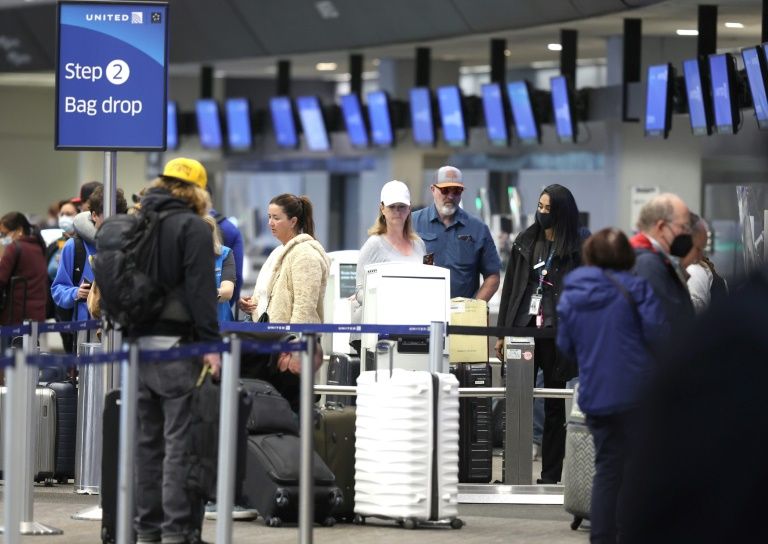
United Airlines passengers check in for flights at San Francisco International Airport on April 19, 2022
As of early Thursday morning, live estimates showed standard security waits at SFO hovering near 11 minutes, with TSA PreCheck lanes often clearing in under 5 minutes. Peak afternoon hours could push waits toward 20-23 minutes, according to blended real-time data from airport trackers and traveler reports. The shortest waits overnight dipped as low as 4-6 minutes, while the longest recent spikes reached about 23 minutes in the late afternoon.
SFO officials reported “normal wait times” on their website, crediting the airport’s unique status as the largest participant in the Transportation Security Administration’s Screening Partnership Program. Under the SPP, private contractors handle screening instead of federal TSA employees, shielding SFO from the widespread no-show rates and funding disruptions affecting government-run checkpoints nationwide.
“Travelers at SFO continue to move efficiently through security,” airport spokesman Doug Yakel noted in recent statements. Over the past 30 days, average peak waits have stayed under 10 minutes even as passenger volumes remain robust, he added.
This efficiency stands in sharp relief against the national picture. A partial government shutdown has triggered record TSA delays, with some major hubs reporting lines exceeding four hours. TSA officials have cited officer call-out rates as high as 40-50% at certain airports, compounded by resignations and higher-than-expected spring travel demand. SFO’s private model has largely insulated it from these headaches, allowing consistent operations even during peak spring break surges that strained other facilities.
Advertisement
Current Conditions at SFO Checkpoints
SFO operates six main security checkpoints serving its terminals and boarding areas:
International Terminal: Boarding Area A and G checkpoints typically open early and handle global flights.
Terminal 1, 2, 3 and 4 (Domestic): Checkpoints A, B, B-Mezzanine, D, F1 and others operate on staggered schedules, with most running from around 3:15 a.m. until late evening or early morning.
As of Thursday, most checkpoints remained open with no major closures reported beyond routine maintenance, such as occasional downtime at Boarding Area F3. TSA PreCheck is widely available, and expedited lanes like CLEAR are operational to further speed up the process for enrolled travelers.
Hourly breakdowns from aggregator sites like TakeOffTimer and AirlineAirport.com indicate:
Overnight/early morning (midnight to 6 a.m.): Often 5-15 minutes.
Morning rush (7-10 a.m.): 12-19 minutes.
Midday (11 a.m.-2 p.m.): 7-12 minutes.
Afternoon peak (3-6 p.m.): Up to 23 minutes, the daily high in recent patterns.
Evening: Trending back down toward 10 minutes.
These figures represent blended estimates from passenger reports, historical data and live feeds. Actual times can fluctuate based on flight banks, weather or sudden passenger surges. SFO handled millions of passengers in recent months while maintaining short queues, thanks to dedicated private screening staff not impacted by federal payroll or staffing crises.
Tips for Beating the Lines at SFO Today
Airport authorities and travel experts recommend arriving at SFO at least two hours before domestic flights and three hours for international departures. While waits are currently manageable, proactive steps can shave off precious minutes:
Enroll in TSA PreCheck or CLEAR: PreCheck members frequently clear in 5 minutes or less. CLEAR biometric lanes provide an additional shortcut at SFO.
Download the MyTSA App: The official Transportation Security Administration mobile app lets users check real-time crowd-sourced wait times, review prohibited items and get personalized alerts. Historical data helps predict busy periods.
Pack Smart: Follow the 3-1-1 liquids rule and remove laptops, liquids and large electronics early to speed screening.
Monitor SFO’s Official Site: The flysfo.com alerts page posts updates on TSA lines and any temporary changes.
Check Flight Status Early: Use airline apps or the airport site to track gate assignments and potential delays.
Travelers on social media and forums like Reddit’s r/AskSF and r/bayarea have echoed the positive experience. Recent posts note quick passes through PreCheck, with some flyers reporting under 10 minutes total even during busier windows. “SFO’s private TSA setup has been a lifesaver,” one frequent traveler commented.
Broader Context: Why SFO Stands Out
The contrast with other airports highlights the value of SFO’s operational model. While federal TSA facilities grapple with the effects of the shutdown — including delayed pay and reduced staffing — SFO’s contractors maintain full operations funded independently. This has prevented the kind of chaos seen elsewhere, where passengers have missed flights due to multi-hour security bottlenecks.
Advertisement
Spring travel demand remains high, with many families heading out for break or business travelers resuming routines. SFO, one of the busiest gateways on the West Coast serving major carriers like United Airlines, has seen steady volumes without the extreme backups reported at hubs in the East or Midwest.
Airport officials continue to urge caution. “Even with normal waits, factors like high passenger volume or equipment issues can cause temporary spikes,” a recent advisory noted. Passengers with disabilities or those needing extra assistance should factor in additional time and contact their airline in advance.
What to Expect Later Today and This Week
Forecasts for the next 12 hours show waits staying mostly in the single digits to low teens during midday, with a possible uptick in the late afternoon. Overnight into Friday should remain light. Weekend patterns often see heavier crowds, so checking apps closer to travel time is wise.
No major runway or operational disruptions were flagged for Thursday beyond routine maintenance. However, travelers should stay alert for any last-minute alerts via the airport’s website or flight apps.
Advertisement
For the latest real-time updates:
Visit flysfo.com for official notices.
Use sites like tsawaittimes.com, takeofftimer.com or onairparking.com for live estimates.
Report your own wait time through the MyTSA app to help fellow travelers.
SFO’s reputation for efficient security has held strong even as national air travel faces challenges. With waits today averaging well below typical busy-airport benchmarks, most passengers can expect a straightforward experience — provided they arrive prepared and monitor conditions.
As always, double-check with your airline for any flight-specific updates. Safe travels from the Bay Area’s gateway.
World War II veteran Charles Cram, who witnessed the iconic flag raising at Iwo Jima, is recognized at Disneyland’s Flag Retreat as family looks on. (Disney Experiences)
A 100-year-old World War II veteran who witnessed the iconic Iwo Jima flag-raising said he thought the war was “going to be over” as cheers erupted across the battlefield — a moment honored decades later at Disneyland in an emotional ceremony.
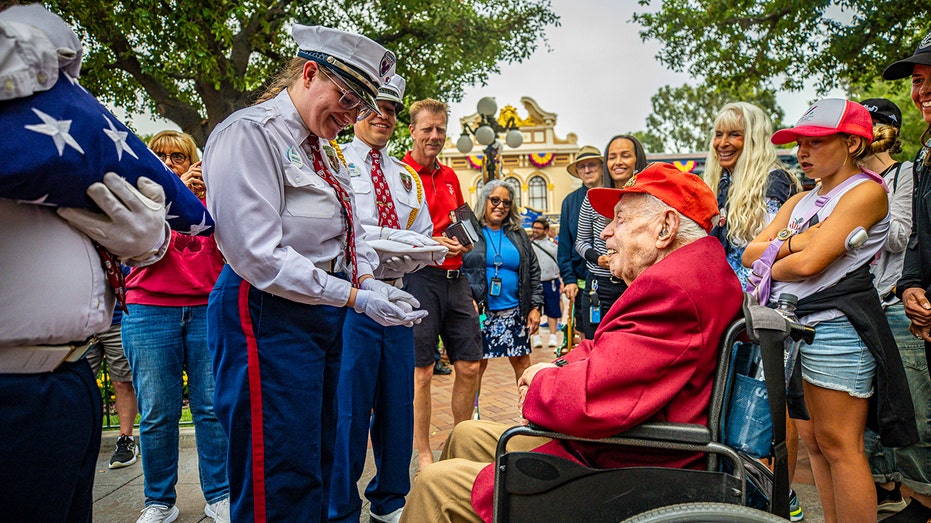
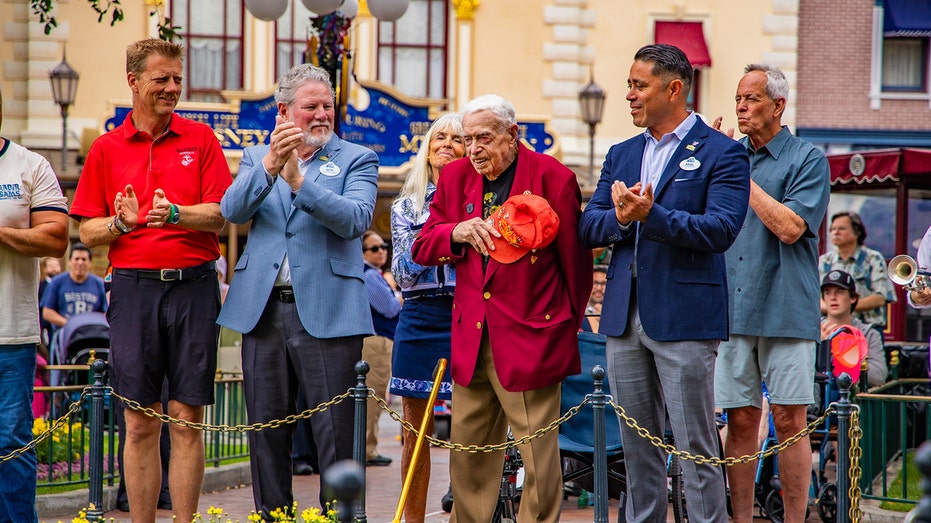
Charles Cram, a Navy medic attached to the 5th Marine Division, was recognized Tuesday during Disneyland’s daily Flag Retreat ceremony on Main Street, U.S.A., where guests gathered and applauded as he was presented with a flag flown over the park.
Advertisement
“I didn’t know what I was witnessing at that moment,” Cram told FOX Business. “But I was in the middle of history.”
Cram said he could see the American flag rising “500 to 700 feet up” over Mount Suribachi — a moment that would become one of the most recognizable images in American history.
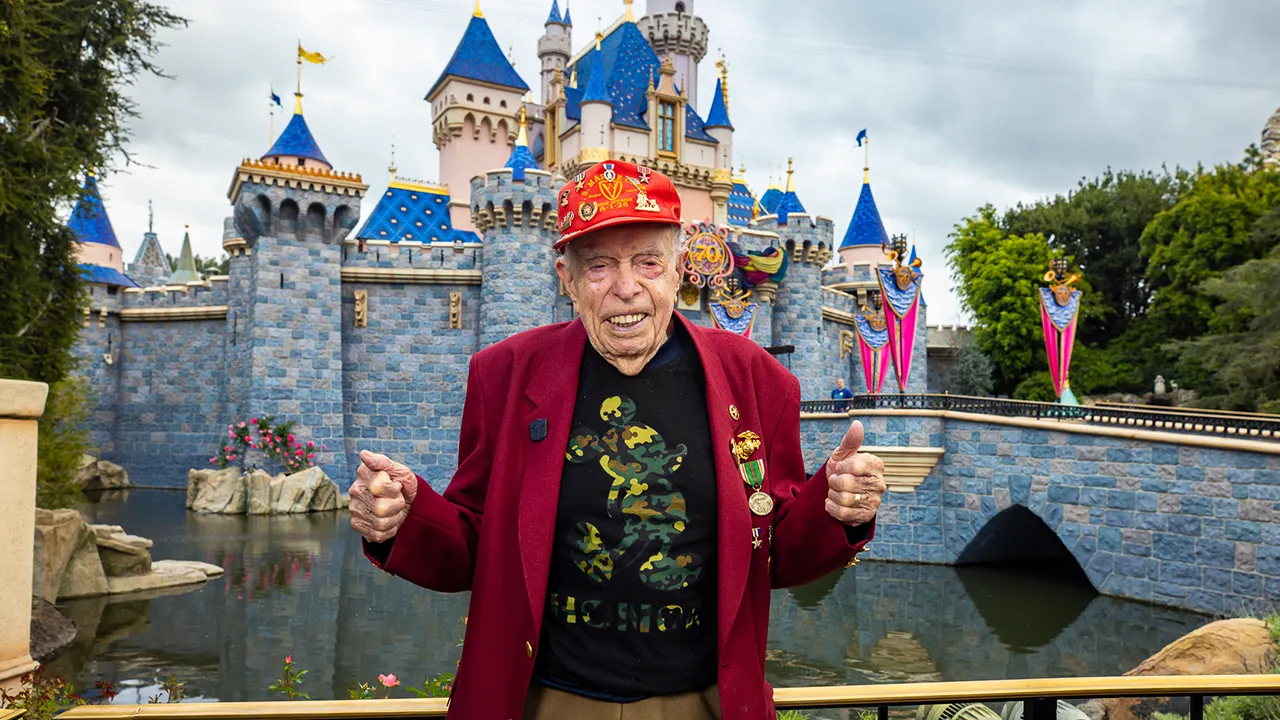
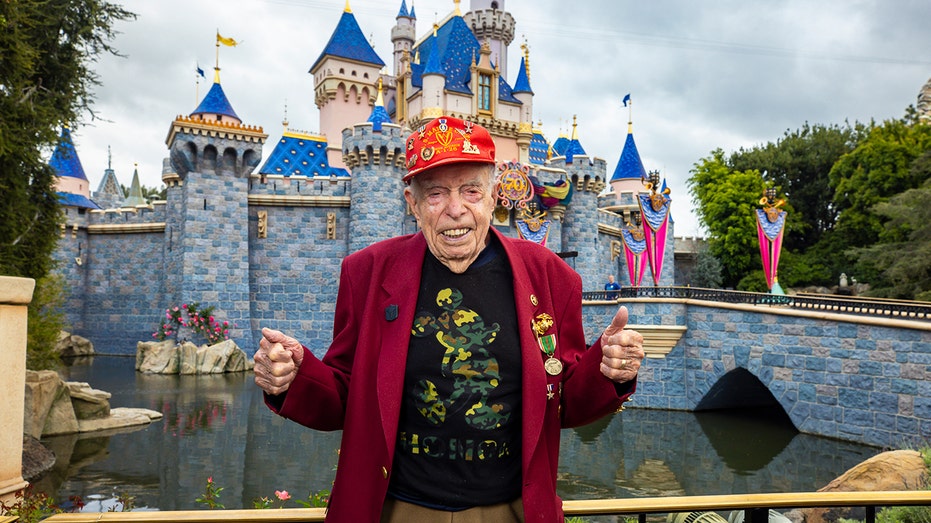
World War II veteran Charles Cram, 100, poses in front of Sleeping Beauty Castle at Disneyland in Anaheim, Calif., during a visit honoring his service. (Courtesy of Disney Experiences / Unknown)
The ceremony unfolded before a crowd of park visitors, with Cram’s family — including relatives who traveled from across the country — standing nearby as he was honored for his service.
Advertisement
“When we told Daddy he was coming to Disneyland, he thought he was just going on rides,” a family member said. “He had no idea any of this was really happening.”
Cram, who turned 100 on March 15, was also treated as a special guest at the park, attending a VIP viewing of a parade and meeting Donald Duck, a character that helped boost morale among U.S. troops during World War II.
World War II veteran Charles Cram, 100, receives a folded American flag during Disneyland’s Flag Retreat ceremony in Anaheim, Calif., as family and park guests look on. (Courtesy of Disney Experiences / Unknown)
During the ceremony, he received a framed American flag that had been flown over Disneyland.
Advertisement
“This is a flag that was flown over Disneyland Park,” a presenter said during the tribute. “Thank you for everything that you’ve done.”
The ceremony is part of a long-standing tradition at Disneyland, where daily flag ceremonies have been held since the park opened in 1955 to honor U.S. service members and veterans.
A Los Angeles native, Cram served as a Pharmacist’s Mate Second Class in the U.S. Navy and was attached to the 5th Marine Division during World War II. He was among those who fought at Iwo Jima, one of the most pivotal battles of the Pacific campaign.
World War II veteran Charles Cram, 100, is recognized during Disneyland’s Flag Retreat ceremony on Main Street, U.S.A., in Anaheim, Calif., as attendees applaud. (Courtesy of Disney Experiences / Unknown)
Reflecting on that day, Cram said the experience shaped how he views life.
Advertisement
“It made me realize how precious and fragile life is,” he said to FOX Business. “And happy to still be alive.”
He said being honored at 100 years old is a reminder of how fortunate he has been.
“It reminds me how lucky I am to be alive,” Cram said.
Discount retailer with more than 300 stores and 3,000 staff seeks to slash rents and property costs while vowing not to shut shops or cut jobs
Holly Williams Press Association Business Editor
14:31, 31 Mar 2026
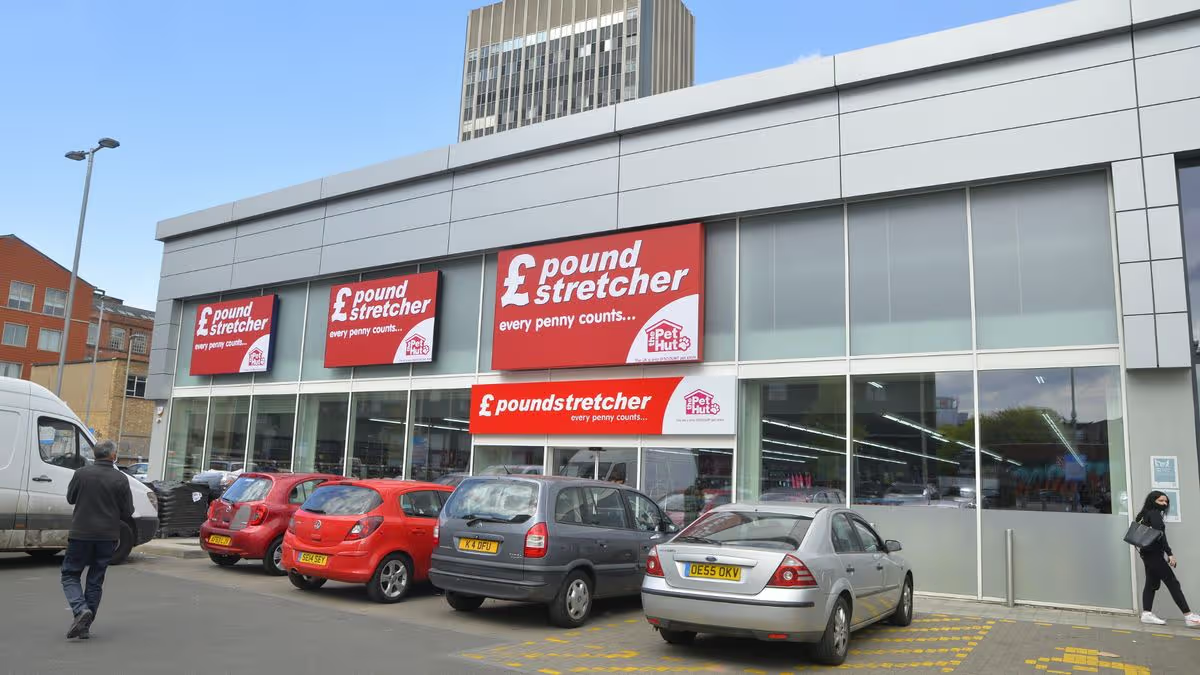
The Poundstretcher store near St Georges Retail Park in Leicester(Image: Leicester Mercury / Chris Gordon)
Poundstretcher has unveiled proposals to ask landlords to reduce rents across its portfolio of stores as it seeks to safeguard its long-term viability, but says it has no intention of closing outlets or shedding jobs.
Advertisement
The discount retailer, which has over 300 stores and 3,000 staff across the UK, confirmed the restructuring will centre on its property portfolio, with the aim of cutting rents and other shop-related costs.
It stated the proposals would “secure the long-term future of the business” and help ensure the store estate “remains sustainable over the long term”.
However, the firm emphasised there were “no planned store closures or proposed redundancies as part of the proposal”.
The group added: “Over the past year, as with many businesses in the retail sector, Poundstretcher has experienced challenging trading conditions driven by a difficult macroeconomic environment.
Advertisement
“Despite a clear strategy and significant work to reduce central costs and refresh the product offering, wider pressures facing the high street have continued to impact sales and profitability.”
Poundstretcher was acquired by US investment firm Fortress, which also owns Majestic Wine, in 2024 for an undisclosed sum.
Prior to this transaction, Poundstretcher had already undergone a significant restructuring exercise involving rent reductions sanctioned by landlords as part of a Company Voluntary Arrangement (CVA) deal agreed in 2020. The ownership and management team stated they have implemented several measures to strengthen profitability following the acquisition, including operational modifications, a revamp of the product portfolio, investment in pricing and enhanced supplier partnerships.
Andy Atkinson, chief executive of Leicestershire-based Poundstretcher, said: “This plan we’ve set out today will reduce our cost base and enable us to invest in our stores, our people and the overall customer experience.
Advertisement
“This restructuring plan will help to secure the long-term future of the business by strengthening existing locations and enabling sustainable growth.”
Consumer goods giant has been bidding to move away from its food and drink brands
Felix Armstrong www.cityam.com
15:02, 31 Mar 2026
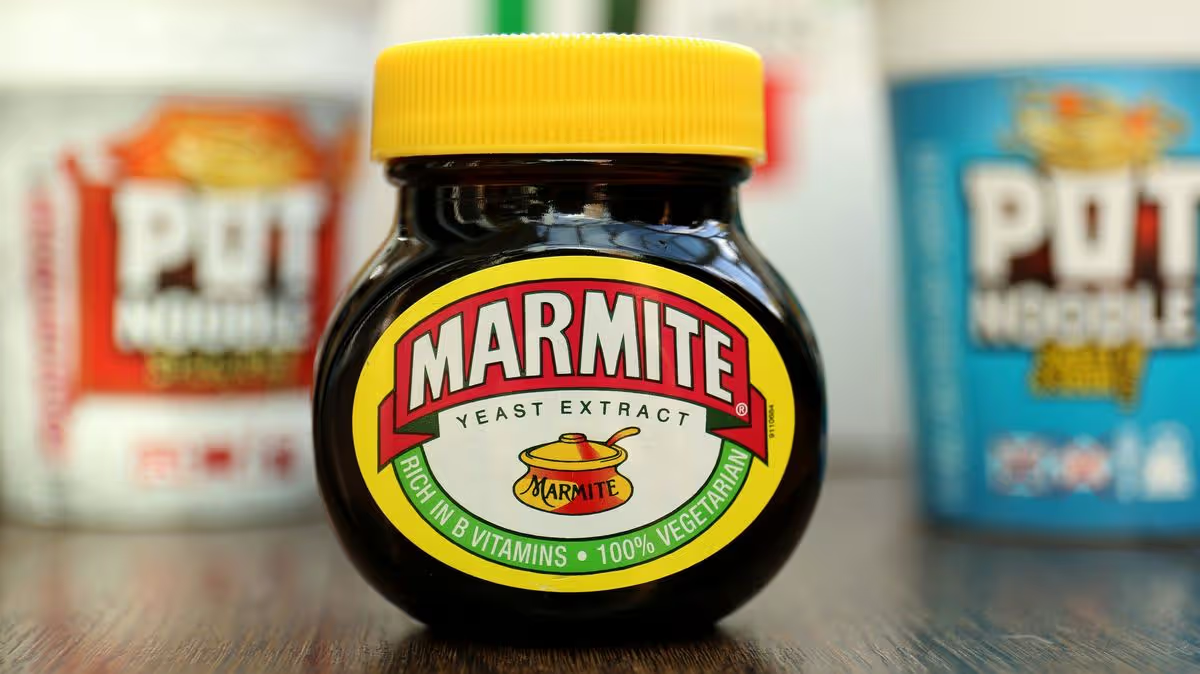
Unilever owns famous brands including Marmite (Image: PA)
Unilever has completed a $45bn merger of its food brands with US spice and seasoning giant McCormick, creating a $60bn food and drinks conglomerate in which the London-based firm retains a majority stake.
Advertisement
Unilever and its shareholders will hold 65 per cent of the new entity, with the company receiving $15.7bn (£11.6bn) in cash and the equivalent of $29.1bn (£21.9bn) in McCormick shares.
The deal represents the culmination of a long-planned drive from Unilever to divest itself of its food brands, as incoming chief executive Fernando Fernandez bids to transform his consumer giant into a “sharper and faster” company. The Magnum Ice Cream Company was spun out of Unilever last year.
Prior to the latest merger being confirmed, analysts had suggested that an outright sale would be unlikely, given that the financial scale of Unilever’s food division far exceeds that of McCormick.
London-based Unilever had been edging towards an agreement with McCormick since confirming talks earlier this month, stating that its food brands constitute a “highly attractive” business with a “strong financial profile”, as reported by City AM.
Advertisement
Unilever food brands include mayonnaise producer Hellmann’s, Marmite and Bovril.
Fernandez said: “For Unilever, this transaction is another decisive step in sharpening our portfolio and accelerating our strategy towards high-growth categories.”
The new chief executive intends to deliver €800m in savings over three years and cut 7,500 jobs – among them 200 managerial roles – as he takes direct aim at “mediocrity” within the business. Activist investor Nelson Peltz has been pushing for Unilever to streamline its portfolio since acquiring a stake in 2022. Peltz, the founder of Trian Partners, has held a non-executive position on the FTSE 100 company’s board since building out his stake four years ago.
Brendan Foley, McCormick’s chief executive officer, said: “This combination will create a diversified flavor leader with a robust growth profile that remains differentiated by its focus on flavoring calories while others compete for them.”
Advertisement
Russ Mold, AJ Bell investment director, said: “Having slimmed down, Unilever will want to show it is fighting fit for the future and it will get its next opportunity to do so with next month’s first-quarter update.”
Unilever food operations in the UK include its plant in Burton-on-Trent, which is home to brands such as Marmite and Bovril and also makes Hellmann’s and Colman’s products. Unilever also has a Pot Noodle factory in Crumlin, South Wales.
Earlier on Tuesday it emerged that Unilever had implemented an immediate recruitment freeze as it braced itself against costs arising from the Iran war.
The company, which had already scaled back recruitment as part of a wide-ranging cost-reduction programme, informed staff that the hiring ban would affect “all levels” of recruitment and was introduced in response to the “significant challenges” posed by the crisis in the Middle East.
Advertisement
Considerable transit disruption across the Middle East is driving up shipping costs, while the production of plastic packaging is also becoming increasingly expensive. Fabian Garcia, the head of Unilever’s personal care division, wrote in a memo first reported by Reuters: “Macro economic and geopolitical realities, especially in the Middle East conflict […] bring some significant challenges for the coming few months.
“With this in mind, the Unilever Leadership Executive team has agreed a global recruitment freeze at all levels. This will be effective immediately and last for a minimum of three months.”
The consumer goods giant stated it had taken the measures in response to an “uncertain” external environment, adding that it would revise its strategy “as necessary”.
Treasury Secretary Scott Bessent joins ‘Fox & Friends’ to discuss the gradual reopening of the Strait of Hormuz and unveils a new fraud crackdown program to expose scams in healthcare and other industries.
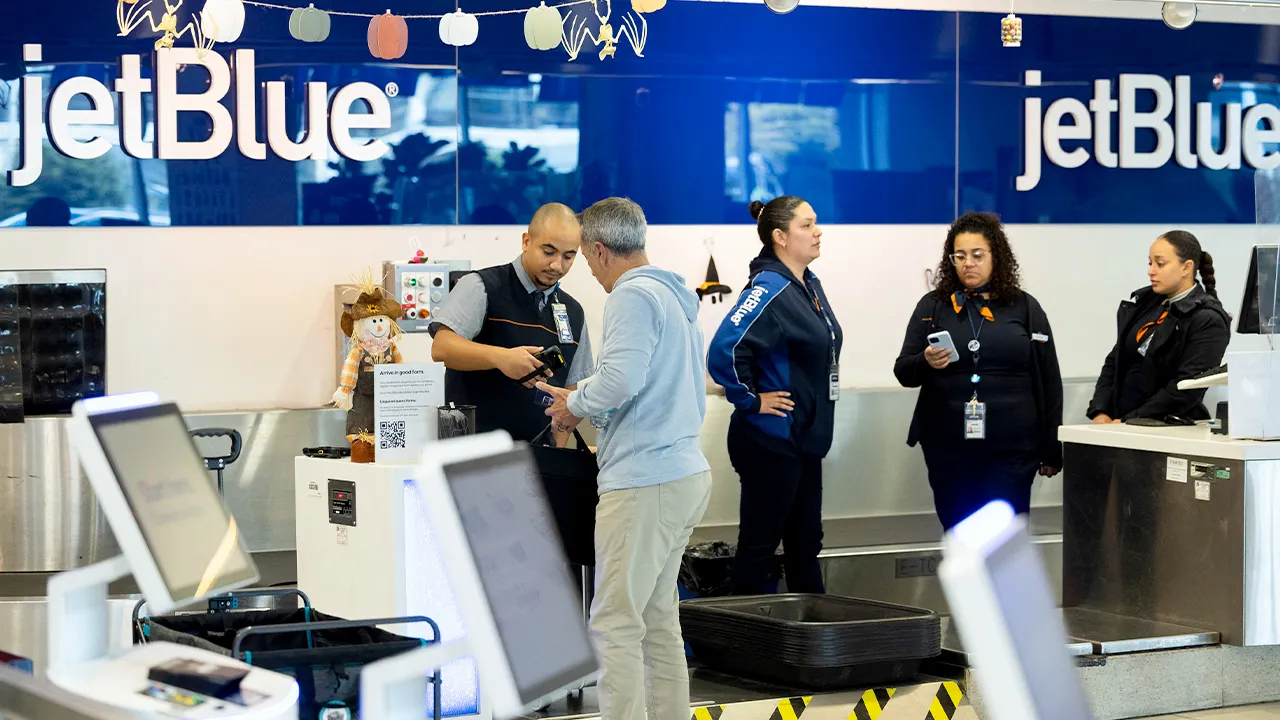
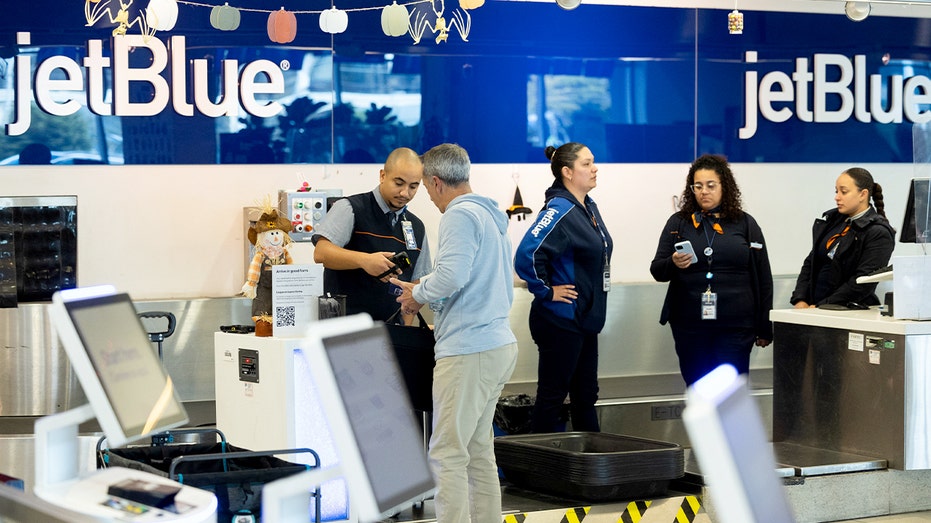
JetBlue is raising baggage fees by $4–$9 for economy passengers, citing increasing jet fuel prices due to global oil supply shortages amid the Iran war.
“As we experience rising operating costs, we regularly evaluate how to manage those costs while keeping base fares competitive and continuing to invest in the experience our customers value,” JetBlue wrote in a statement to FOX Business. “Adjusting fees for optional services used by select customers, such as checked baggage, allows us to continue offering more competitive fares while delivering the onboard experience our customers love, including complimentary snacks and drinks, unlimited, high-speed Wi-Fi and seatback entertainment screens.”
Advertisement
“While we recognize that fee increases are never ideal, we take careful consideration to ensure these changes are implemented only when necessary,” the statement continued.
For domestic, Caribbean and Latin America flights, the first checked bag will now cost $39 during off-peak travel, up from $35, and $49 during peak periods, up from $40. Travelers who pay less than 24 hours before departure will still face an added $10 charge.
JetBlue has raised checked bag fees up to $9 for economy bookings amid the temporary rise in global fuel prices due to shortages from the shutdown of the Strait of Hormuz. (Ryan Collerd/Bloomberg via Getty Images / Getty Images)
Passengers with eligible JetBlue co-branded credit cards or elite frequent flyer status remain exempt from the bag fees.
Advertisement
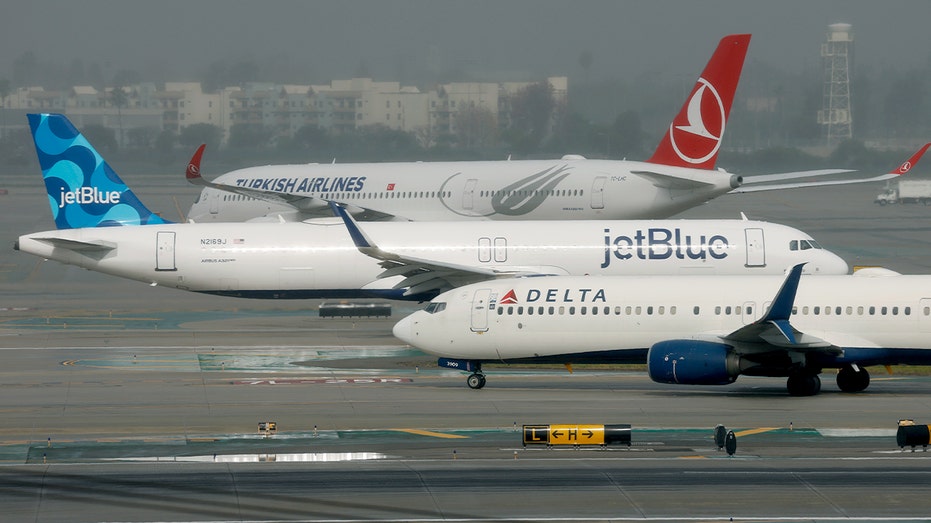
When an airline raises fees, competitors often follow, but there are no indications yet from American Airlines, United Airlines, Delta Air Lines, Southwest Airlines or Frontier Airlines.
Southwest does not “have any immediate plans to increase fees due to macroeconomic factors,” a spokesperson told the New York Post.
Historically, other airlines have tended to react to rising prices on baggage fees when one airline acts. (Kevin Carter/Getty / Getty Images)
The move reflects broader pressure on airlines as fuel prices surge globally following the U.S. and Israel’s attacks on Iran that began on Feb. 28. Jet fuel in major U.S. markets averaged $4.62 a gallon Tuesday morning, up more than 83% from the day before the war began, according to Argus data published by Airlines for America.
Advertisement
“The reality is, jet fuel prices have more than doubled in the last three weeks,” United CEO Scott Kirby wrote in a memo to employees earlier in March. “If prices stayed at this level, it would mean an extra $11B in annual expense just for jet fuel. For perspective, in United’s best year ever, we made less than $5B. That may sound scary, but the first piece of good news is that, for now at least, demand remains the strongest we’ve ever seen. The 10 biggest booked revenue weeks in our history have been the last 10 weeks.”
Treasury Secretary Scott Bessent joins ‘Mornings with Maria’ to discuss the Iran war, surging oil prices, market volatility, Fed uncertainty, Powell’s future and the U.S. strategy to stabilize the global economy.
Kirby added, however, that “it may be a challenge to continue passing through much of the increased fuel price if oil stays higher for longer.”
Advertisement
President Donald Trump, with his business eye on affordability amid the war, took to Truth Social on Tuesday morning urging oil-needy countries globally to lean in to deal with their supply shortages.
“All of those countries that can’t get jet fuel because of the Strait of Hormuz, like the United Kingdom, which refused to get involved in the decapitation of Iran, I have a suggestion for you: Number 1, buy from the U.S., we have plenty, and Number 2, build up some delayed courage, go to the Strait, and just TAKE IT,” Trump wrote on Truth Social. “You’ll have to start learning how to fight for yourself, the U.S.A. won’t be there to help you anymore, just like you weren’t there for us. Iran has been, essentially, decimated. The hard part is done. Go get your own oil!”
While this jet fuel price is the highest of the year, with a steady upward trend line since the start of the war, Treasury Secretary Scott Bessent told Fox News that the fuel price increases are temporary due to strains on global fuel supply.
Advertisement
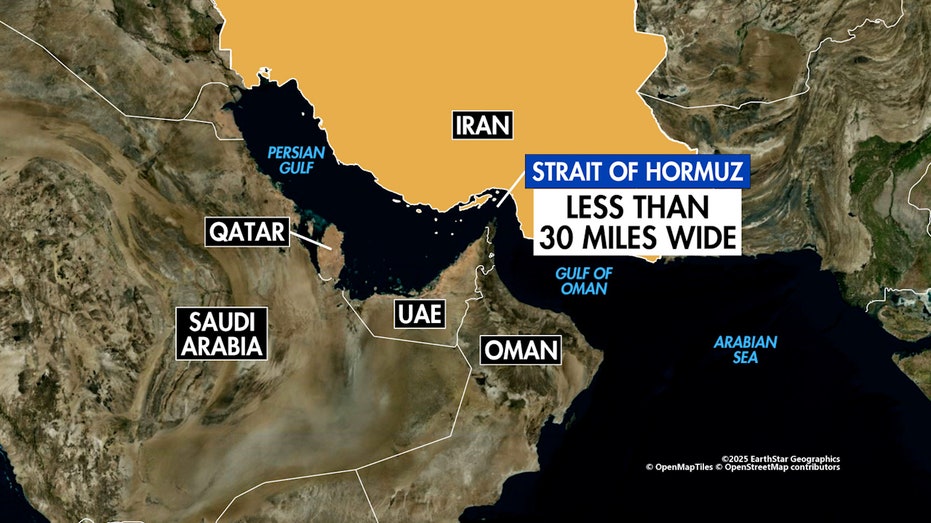
It is tied to the Iranian retaliation on choking the Hormuz Strait, where the forced closure is increasing oil prices globally in an anticipation of supply shortages.
About 20% of the world’s oil supply crosses the Strait of Hormuz off the coast of Iran. The Iranian Regime is threatening to attack any vessels that cross the strait without permission. (FOX / Fox News)
Supplying the world more oil from Iran is going to ultimately bring down prices in America, according to Bessent, who noted the U.S. does not rely on Middle East oil but the Strait of Hormuz choking has spooked crude futures markets.
Bessent said the U.S. has avoided striking Iranian energy infrastructure even while escalating military operations, arguing the goal is to preserve supply while keeping pressure on Tehran.
Advertisement
“We have lots of levers,” Bessent said. “We’ve got plenty more that we can do.”
SAN FRANCISCO — Coffee lovers across the country, including those in the Bay Area, woke up Wednesday to a genuine April Fools’ Day treat: the chance to score a free hot or iced coffee from Dunkin’, with no purchase necessary and no elaborate prank attached.
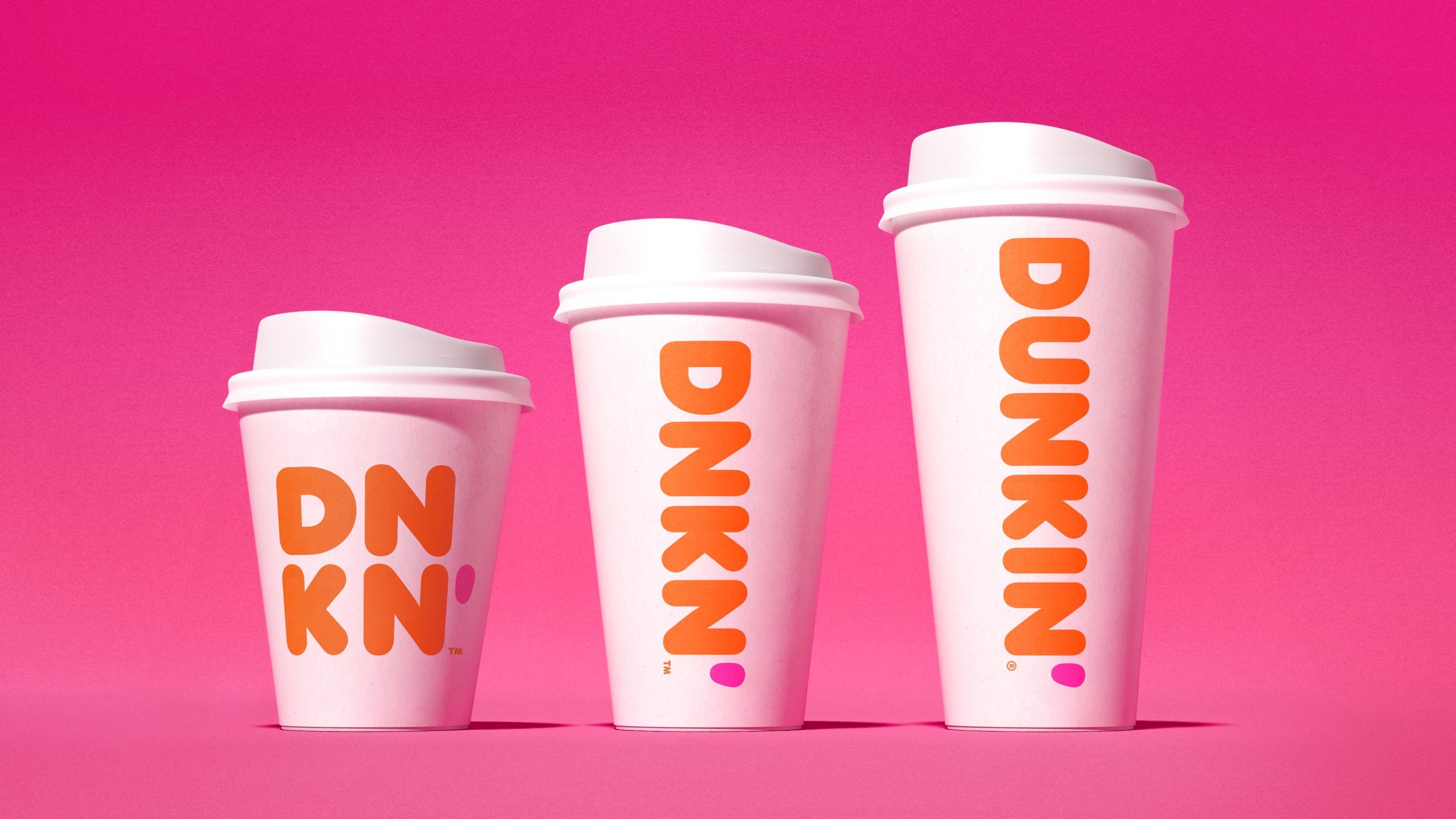
Dunkin’, formerly known as Dunkin’ Donuts, redesigned their cups.
Dunkin’ announced it is giving away 1,000,001 free coffees of any size to its Rewards members on April 1, 2026, continuing and slightly expanding its popular annual promotion. The offer, available exclusively through the Dunkin’ mobile app, requires users to enter the promo code “STILLNOTAJOKE.” Once claimed, the free drink — hot or iced brewed coffee, any size up to large — can be redeemed within seven days at participating locations.
As of early Wednesday morning, the code went live and began circulating rapidly on social media, with users posting photos of successful redemptions. “I just got mine — thanks for the tip!” one Bay Area resident shared online after visiting a local Dunkin’ spot. The promotion mirrors last year’s giveaway of 1 million free coffees but adds one extra cup this time, a playful nod to the holiday’s spirit of surprise without the deception.
Dunkin’ officials emphasized the deal is real. “No tricks, just a coffee run, on Dunkin’,” the company stated in promotional materials. The giveaway targets Rewards members, who can sign up for free in the app if they haven’t already. While supplies of the 1,000,001 redemptions last, early birds had the best shot as word spread quickly through Instagram, TikTok and local news alerts.
How to Claim Your Free Dunkin’ Coffee Today
The process is straightforward but time-sensitive:
Advertisement
Download or open the Dunkin’ app on your smartphone.
Ensure you are logged into a Dunkin’ Rewards account (free to join).
Navigate to the offers or rewards section and enter the code STILLNOTAJOKE.
Add the free hot or iced coffee to your order — any size qualifies, though some reports note exclusions for extra-large or specialty drinks like cold brew in certain redemptions.
Head to a participating Dunkin’ location to redeem, ideally within the next week.
Travelers passing through San Francisco International Airport or commuters in Hwaseong-si equivalents in the U.S. can check nearby outlets via the app’s store locator. Many Bay Area locations, from downtown San Francisco to suburban spots in the Peninsula and East Bay, participate.
Social media buzzed with excitement and caution. Posts warned that the limited quantity could vanish fast, echoing last year’s rush. One user in the Bay Area posted screenshots confirming redemption before 8 a.m. local time, while others reported success later in the morning. “Go get your free coffee from Dunkin’, I just got one,” a California poster shared alongside morning photos.
Other April Fools’ Day Food and Drink Promotions
While Dunkin’ stole the spotlight with its massive free coffee drop, other chains offered their own April Fools’-themed deals Wednesday:
Krispy Kreme: Rewards members could buy any dozen doughnuts and add an Original Glazed dozen for just $4.01 — a numerical wink at the date. The offer encouraged sweet treats alongside morning caffeine.
Additional food and drink promotions popped up across the country, ranging from buy-one-get-one deals at fast-casual spots to limited-time discounts at coffee competitors, though none matched Dunkin’s scale for outright freebies.
Local Bay Area coffee shops and independent cafes stayed mostly quiet on major giveaways, focusing instead on standard menus or lighthearted social media posts. Some encouraged customers to “prank” friends by treating them to a cup, turning the day into a community perk.
Why Brands Love April Fools’ Marketing
April Fools’ Day has become prime real estate for brands to blend humor with customer appreciation. Dunkin’s promotion builds loyalty among its Rewards base while generating massive earned media. Last year’s 1 million-coffee giveaway created waves of positive coverage and user-generated content, driving app downloads and foot traffic.
This year’s “one more” twist keeps the momentum going. Marketing experts note that such campaigns perform well because they feel generous without requiring heavy spending from consumers. For Dunkin’, which operates thousands of locations nationwide, the cost is offset by increased visits, potential add-on purchases like donuts or breakfast sandwiches, and long-term customer retention.
Advertisement
In the Bay Area, where coffee culture runs deep — from artisanal roasters in San Francisco to drive-thru convenience — the deal resonated with commuters and remote workers alike. Many paired the free brew with a quick stop for a breakfast item, turning a simple perk into a full morning routine.
Tips for Maximizing Free Coffee and Avoiding Disappointment
Act fast: With only 1,000,001 redemptions available, enter the code as soon as possible. Some users reported the offer remained active into the afternoon, but crowds at popular locations picked up.
Check eligibility: The deal is strictly for Rewards members via the app. Non-members should sign up immediately — it takes minutes and unlocks future perks like points on purchases.
Redeem wisely: After claiming, you have up to seven days. Plan your visit to avoid peak hours if possible, though many locations handled the extra demand smoothly.
Pair with other deals: Look for stackable offers in the app or combine with any current promotions. Some locations offered breakfast specials that complemented the free coffee.
Share the love: Even if you miss out, snapping a photo of a friend’s redemption or tagging Dunkin’ on social media keeps the fun going.
For those in the San Francisco Bay Area, apps like Google Maps or the Dunkin’ locator can pinpoint the nearest store. SFO travelers should note that while airport Dunkin’ spots exist in some terminals, availability may vary — better to grab one before security or upon landing if time allows.
Broader Context: April Fools’ Day in 2026
This year’s promotions arrived amid typical spring travel and work routines. With many Americans back in offices or heading out for midweek errands, a free coffee provided a welcome boost. Unlike past years when some brands leaned into elaborate fake announcements that frustrated consumers, Dunkin’ kept it transparent and deliverable from the start.
Consumer advocacy groups applauded the approach, noting it builds trust rather than testing it. “When brands deliver real value on a day known for jokes, it stands out,” one retail analyst observed.
As the day progressed, reports indicated strong uptake but no widespread complaints of shortages at most locations. Social feeds filled with satisfied customers enjoying their complimentary cups, some joking that the real prank would be running out of creamer at home.
Advertisement
What to Watch for Later Today and Beyond
The promo code “STILLNOTAJOKE” is tied to April 1 entry, but redemptions extend for a week. If you claimed it early, you can enjoy your free coffee anytime through April 8. Those who missed the initial rush can still monitor the app for any surprise extensions or related offers.
Dunkin’ has not announced similar nationwide freebies for the rest of the week, but its Rewards program regularly features points multipliers, discounted drinks and bundled meals. Signing up ensures you won’t miss future surprises — April Fools’ or otherwise.
For the latest updates, check the official Dunkin’ app, website or social channels. Local news outlets in the Bay Area and across the U.S. also tracked the promotion in real time.
Whether you’re starting your day in San Francisco, commuting from the suburbs, or traveling through SFO, Dunkin’s giveaway offered a simple, uplifting moment on a day otherwise filled with skepticism. No fooling — sometimes the best surprises are the ones you can actually taste.
Advertisement
Safe sipping, and happy April Fools’ Day from the West Coast.














































You must be logged in to post a comment Login