

Politics
JP Morgan money strike sees Labour bow down to it


Banking giant JP Morgan has gone on a capital strike (withholding investment). Following this, Labour has been quick to offer an 100% discount on the bank’s business rates, spread out over “a period of years”.
At the same time, doctors have been on a workers’ strike for pay restoration and job security. It appears that, when it comes to workers, Labour suddenly find the will to say no.
The Capital party?
If ‘Labour’ rebranded as ‘Capital’, we probably wouldn’t consider it an April Fool’s Day joke. As well as JP Morgan, pharmaceutical giants have been demanding that the NHS pay them more, or they will withhold investment. Labour agreed to a 25% increase in payments for essential drugs in December 2025.
Meanwhile, resident doctors are asking for real-terms pay restoration to 2008 levels, at 21%. The government is offering a 7.1% increase partly because it disputes the doctors’ use of the Retail Price Index (RPI) to calculate inflation. Apparently, RPI is good enough for calculating increases in student debt, rent and corporate pricing. However, it isn’t sufficient for a doctor’s pay.
Another part of the dispute is specialist doctor posts in the NHS. The government is proposing to increase them from 1,000 to around 4,000. The thing is, the number of specialist applications is projected to exceed 40,000 this year.
Overall, the UK is low on doctors per 1,000 people at 3.2. Some of the highest per capita doctor levels are in Austria (5.48) and Germany (4.53).
48-hour deadline (not for JP Morgan, of course)
Labour has given resident doctors 48 hours to accept the deal. The British Medical Association (BMA) rejected the offer without putting it to a member vote.
The chair of the BMA’s resident doctors committee, Dr Jack Fletcher, has said:
We’ve been willing and have been talking constructively for the last two months and at the very last minute the government has shifted the goalposts of the pay offer. I am very happy and willing to sit down and talk constructively once again.
He further responded to withholding a members vote on the pay and jobs offer:
We discussed this with our committee who are elected to represent our members. Their representatives have considered this offer. We don’t think it goes far enough on pay so we decided not to put this to our members.
While members should decide if they accept the offer, the government goes far too easy on capital like JP Morgan compared to workers. That’s an affront to how the Labour party was founded.
Featured image via the Canary



In a ruling handed down yesterday by the High Court, Home Secretary Shabana Mahmood’s cruel policy to force victims of torture to share rooms with strangers has been deemed unlawful.
Justifying this pretty damning ruling, the court judgement states that Mahmood’s:
failures amount to a serious breach of the Defendant’s public law duties, rendering the impugned policy changes unlawful.
These failures refer to the fact that Mahmood did not instruct any consultations before introducing such an impactful policy change and also gave little consideration for the impacts of this policy on victims of torture, trafficking and other serious violence.
Moreover, she didn’t even engage with “established evidence of clinical risk”, thus the court decided Mahmood has acted in breach of the Public Sector Equality Duty (PSED).
Finally, they also called out the Home Secretary failing to ‘properly inform herself’ of the subsequent impact of the Allocation of Asylum Accommodation policy on vulnerable survivors of torture, trafficking and serious violence, despite:
long standing, consistent evidence of the serious risks of harm faced by this cohort.
All in all, a pretty damning day for increasingly hostile Shabana Mahmood, but at least it’s a good day for justice in the UK.
UK Government acted unlawfully by forcing torture survivors to share rooms, the High Court rules
The judgment is a blow to Shabana Mahmood’s plans to send more asylum seekers to army barracks https://t.co/9vpqtRfTN2 — Socialist Voice (@SocialistVoice) May 29, 2026
Estimated 10k survivors of torture in shared accommodation, says charity
This ruling will undoubtedly have a stymieing impact on Mahmood’s plans to kowtow to far right influences. The government implemented this policy in an apparent attempt to win favour with right-wing tabloids and far-right voters by moving asylum seekers out of inadequate hotels and into disused army barracks — an even harsher and more hostile environment.
However, her plans to move vulnerable asylum seekers out of hotels entirely by the end of this parliament now lie in jeopardy — unless she works to find a solution which is actually legal and finds some semblance of compassion in her increasingly cold, cruel heart.
The charity Freedom From Torture (FTT) have provided estimates that potentially 10k asylum seekers housed in shared accommodation could be impacted by this ruling.
Furthermore, the associate director of advocacy for FTT, Natasha Tsangarides, has welcomed this “vital and resounding victory”, stating:
The judgment makes clear that the government acted unlawfully in changing its policy.
We have seen the consequences of those changes: survivors of torture have been placed in harm’s way.
The claimants in this case were FTT and the Helen Bamber Foundation (HBF), who both work with asylum seekers who have escaped physical and psychological abuse. Their argument detailed how, prior to the policy introduced in February 2024 under the last government, there had been a “protective presumption” that survivors would be safe from such cruelty.
Director at the HBF, Kamena Dorling, told the Guardian that the “terrible living conditions” in the UK asylum system has made helping survivors of torture and trafficking even harder, adding:
The decision to force more vulnerable people into large accommodation sites and shared hotel rooms was a political choice that ignored the evidence from those working with refugees every day.
Nevertheless, the Labour government have continued to force them to share rooms and did not consult either charity in its decision to continue with such an obviously harsh policy.
Shabana Mahmood — AI facial recognition now to commence
Mahmood doesn’t stop there with her cynical attempts to create a hostile atmosphere for asylum seekers. Awarding a £322k contract to a Harlow-based IT company Akhter Computers, Mahmood’s Home Office will now be using AI to determine the age of asylum seekers who say they are under 18.
Because unaccompanied children seeking asylum often receive different treatment when applying for safe haven — because most compassionate people would find it quite stomach-churning to turn vulnerable children away — but this now appears to be the next defenceless group facing political targeting.
A report last year found that staff in Dover carried out previous tests without adequate training, making it inevitable that officials might wrongly assess some children’s ages. Nevertheless, it is hard to understand how AI would be able to determine this more accurately.
Therefore, in practice, it’s likely to be yet another tool to make desperate people feel unwelcome, untrusted and unworthy to be in the UK.
Featured image via Dan Kitwood/Getty Images)
Politics
Epstein survivors fear reporting information about Andrew due to lack of faith in British police and media
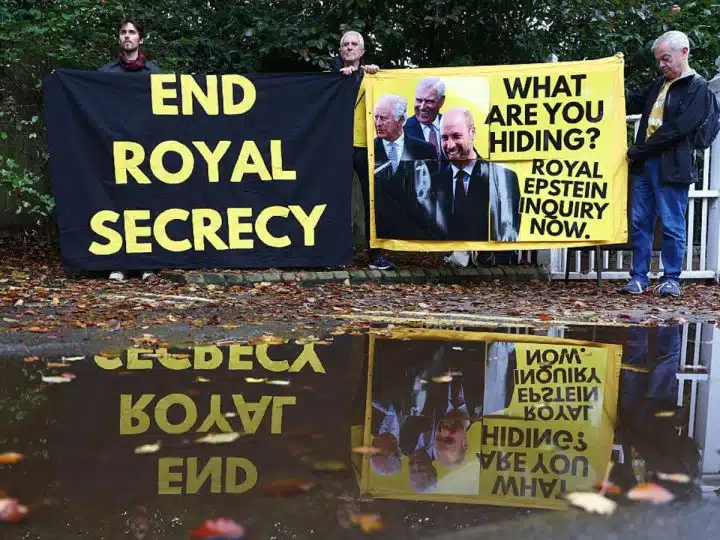

Citing the lack of action taken by police authorities when Epstein was alive and the harassment seen in the British press, an American lawyer representing “multiple clients” has said these Epstein survivors will not speak to the police in the UK.
Women who potentially have important information regarding disgraced paedo-prince Andrew Mountbatten Windsor appear to feel unsafe at the prospect of coming forward. This relatable fear stems from a lack of faith in how the British police and the UK mainstream media would handle the case.
Moreover, Brad Edwards highlighted the impact of subsequent press intrusion seen against a woman he represents — in which UK journalists chose to investigate the woman and her wider family, saying:
Other victims took notice.
Consequently, the multiple clients prepared to speak to that allegation have effectively been intimidated into silence.
This underscores further how the mainstream press and the British state continue to protect powerful men, whilst perpetuating the culture of silence around sexual abuse and Epstein survivors generally.
Onus on Epstein victims to expose themselves rather than on authorities to investigate
It is worth noting that Brad Edwards has long challenged this system of power and influence which prefers to ignore victims.
Spending over a decade fighting for justice and representing more than 30 Epstein survivors, Edwards said in 2020:
The government enabled this. They knew what he was doing and they let it continue.
Brad Edwards represented more than 30 Epstein survivors.
"The government enabled this. They knew what he was doing and they let it continue."
Edwards spent 11 years in court fighting for victims the system chose to ignore. pic.twitter.com/PFyfZbddVF
— Epstein File Search (@epsteinsearchin) April 8, 2026
It appears, due to the intimidating impact of an untrustworthy police force and our cruel, sensationalist media, that the state not only enabled the abuse in the first place — but continues to shield the very perpetrators by putting the responsibility on victims to give up their own right to privacy.
Frankly, these women have already had their right to privacy stolen from them by Epstein and his posh-paedo, pervy pals — yet the press and state seem more interested in upholding Andrew’s privacy instead.
As Edwards has underscored, he represents a woman who alleges that Epstein trafficked her in 2010 to the Royal Lodge — the then-prince Andrew’s official residence — for sex with him. However, she has not yet formally reported the allegation to the police, and she may never do so because an intimidating atmosphere leaves survivors vulnerable to further unwarranted abuse.
Thames Valley Police issued a statement last week, updating on the allegations raised originally in February:
Should she wish to report this to police it will be taken seriously and handled with care, sensitivity and respect for her privacy.
Since then, the police have also updated that they have contacted Edwards, confirmed by the lawyer to the BBC, but that:
her lawyer had said she would not communicate with police over fears regarding her privacy.
Consequently, this once again draws an even greater issue to the forefront of public debate — the way our system treats victims of abuse.
Epstein files — When will protecting women matter more than powerful men’s reputations?
Rape cases in the UK see pretty abysmal statistics, in which only a small minority make it to trial and a subsequent conviction. Instead, victims are made to relive their deep trauma, exposed and vulnerable, and more effort is made to understand why the offender did what he did rather than remotely centre the lifelong impact on victims.
However, rapes themselves have increased by 511% in just two decades — and that’s with a significant number of silent cases where 5 in 6 of women and 4 in 5 of men don’t report. This just reinforces the reality that people in the UK doubt that the system will give them the dignity and safety they are long overdue.
For instance, victims of rape and sexual abuse often suffer psychological abuse from the perpetrators. Thus, they face an uphill struggle to learn that there is nothing any woman — or girl — can do which justifies sexual abuse or violent behaviour against them.
They didn’t ‘bring it on themselves’ like our patriarchal system wishes to reframe it as — but our criminal justice system instead unwinds that healing process and drags victims back to square one.
Another US lawyer representing survivors, Sigrid McCawley, who also represented the former prince’s most renowned accuser Virginia Guiffre, has told BBC News that the Metropolitan Police have made no efforts to contact her.
McCawley has long fought for justice for survivors of Jeffrey Epstein and has played a prominent role in campaigning for the release of the Epstein Files:
— Harry Sisson (@harryjsisson) August 1, 2025
 WOW: Sigrid McCawley, who represented a number of Epstein victims, just revealed that Trump LIKELY saw Epstein with young girls and knew what he was doing “Anybody who was operating in that sphere, who was socializing with him, would have seen him with young individuals.” pic.twitter.com/urgixASAW9
Right to anonymity IF you go public — a sick contradiction
Since then, a spokesperson for the National Police Chiefs’ Council said:
As part of the UK policing response, efforts have been made to contact victim-survivors who have already chosen to share their experiences publicly.
In some cases, this has involved engagement with legal representatives; however, we recognise that we have not yet been able to reach everyone and our efforts continue.
We understand that coming forward can be incredibly difficult, and we want anyone affected to know they can do so in their own time, when they feel ready. Our door remains open.
Should any victim-survivors choose to contact UK policing, they will be treated with care, compassion and respect, with their wellbeing, privacy and right to anonymity at [the] centre of our response.
Needless to say, the NPCC’s comment regarding ‘right to anonymity’ is a bit redundant if they are only looking to victims who have gone public. It is entirely foreseeable, and understandable even, that victims of abuse will shy from publicly naming their abuse and its perpetrators due to the intimidating impact of our media and its trolls.
After all, survivors know that putting themselves through that process would likely compound their trauma, while offering only the thinnest possibility of finding justice in the UK.
This sinister status quo must end — women and girls deserve better
It is clear that survivors of abuse in the UK often feel they must protect themselves from the very institutions and people who are supposed to support them.
Media coverage of that reluctance only reinforces the widespread belief that reporting sexual abuse or rape in the UK is pointless, because the system so often places survivors under scrutiny while offenders escape meaningful accountability.
Once again, powerful institutions uphold the status quo by prioritising the reputation of influential men — and, in this case, the elite and privileged monarchy they belong to — over women’s pain and suffering.
Featured image via Peter Nicholls/Getty Images


Failure to vote for Israel in the Eurovision song contest is antisemitic — according to Australia’s Senate. Ozzie senators are apparently untroubled by Israel’s blatant rigging of public and panel votes. But they are deeply alarmed at the fact that Australia’s official judges dared to give the genocidal colony ‘nul points’. So much so that they want an investigation into the non-scandal:
Eurovision — colonial nonsense
Israel, of course, is not in Europe. Neither is Australia, which just goes to show what a colonial nonsense the whole thing is. Audiences are waking up to it, apparently, with viewer numbers collapsing and several core nations boycotting the whole thing.
US-Jewish journalist and commentator said the situation was “beyond parody” and a prelude to obligatory Israel-support in future contests:
Beyond parody at this point. They already eroded their free speech laws to protect Israel. Next: mandatory voting for Israel in song competitions.
Better than even odds that the UK gets there first, mind.
Featured image via Christian Bruna/Getty Images
By Skwawkbox


WHAT A DIFFERENCE A FEW YEARS MAKE: When state Sen. Jabari Brisport ran for City Council in 2017, he promised that, if elected, he would forgo most of his government salary.
In social media posts, candidate questionnaires and even on his own campaign website, Brisport argued it isn’t reasonable for Council members to pull $148,000 annually when working class New Yorkers survive off far less. So he pledged in a Citizens Union questionnaire that he would cut his wage down to $47,000 — the median income in Brooklyn — and distribute the surplus to his staff so they’re “paid adequately.”
“I’m the only candidate not only talking the talk about income inequality and calling for higher taxes on the wealthy, but also walking the walk and pledging to slash my own salary to the median income of Brooklyn,” the democratic socialist said in an April 7, 2017 interview with Gothamist. “It’s a socialist plank.”
But Brisport — who’s facing a primary challenge this year — quietly walked off that plank once he actually got elected to public office.
After losing his 2017 Council race, Brisport switched gears and successfully ran for state Senate in 2020 — and he has never given up part of his legislative salary since taking office in January 2021, according to a Playbook review of payroll records.
In fact, Brisport even voted to increase pay for himself and other lawmakers in 2023, bumping the salary floor from $110,000 to $142,000, records show.
The 2023 raises made legislators in Albany the highest paid state lawmakers in the nation. Yet despite his 2017 campaign commitment, Brisport has drawn his full salary every year since being elected. As of fall 2025, he had in total raked in more than $607,000 in government salary — in addition to about $100,000 in taxpayer-funded travel stipends, records show.
When asked why he never stuck to his 2017 promises, Brisport suggested Thursday he had a change of heart upon launching his state Senate campaign in 2019.
“When I ran for state Senate I decided to focus on fighting for higher wages for working class people and making New York more affordable for everyone,” Brisport told Playbook.
Brisport, who represents a swath of Brooklyn that includes Bedford-Stuyvesant and Clinton Hill, faces a challenge in the June 23 Democratic primary from community activist Marlon Rice, who’s running on a more moderate platform than the incumbent.
Brisport is a close friend, political ally and former roommate of Mayor Zohran Mamdani.
Mamdani has yet to offer an endorsement for Brisport. But a person close to the mayor recently told Playbook he plans to roll out a slate of state-level endorsements in the coming weeks. — Chris Sommerfeldt
From the Capitol

BUDGET REFORM’S LONG ODDS: This year’s budget was the tenth-tardiest in state history, leaving legislators disgruntled with the governor’s lopsided power over the process.
“Members are really tired,” said Assemblymember Anna Kelles, who’s sponsoring one of several proposed constitutional amendments seeking to reduce the governor’s powers. “It’s not just that people are angry. It’s been year after year, and it’s affected our ability to do our job.”
Still, as has been the case after contentious budget processes in years past, the odds remain long that lawmakers’ displeasure will turn into drastic changes anytime soon.
“Do I support a change in the budgetary powers? Yes, personally I do,” Assembly Speaker Carl Heastie said last month. “But you pass a constitutional amendment. Now this is the tough part: Now you’re in a campaign, the governor versus the Legislature. Who’s paying for that?”
If an amendment doesn’t receive first approval by next week, it’ll be too late to enact one that applies to any budget before the spending plan for the 2031 fiscal year.
Lawmakers could pass statutory changes later this year or in January, though. They’ve discussed treating the governor like they’re treated when budgets run late through withholding her paycheck until talks are done. But that would serve as a mostly symbolic move, at least under a governor with a seven-figure household income and a mansion subsidized by taxpayers. There are also technical changes backed by budget wonks such as moving the due date to July, but those wouldn’t necessarily address the power imbalance.
“My expectation is there are going to be at least informal conversations after we’re done with session, ahead of the budget process next year, about how this process can work more fairly,” state Sen. James Skoufis said. “But it’s one of those things that, after so many years of banging this drum, I’ll believe it when I see it.” — Bill Mahoney
‘THANK YOU, GOV’: Gov. Kathy Hochul didn’t give the immigration advocates everything they wanted, but they’re not raking her over the coals for it.
“I’ll say it 100 times: New York is not a sanctuary for criminals, and we will cooperate when crimes are being committed,” Hochul said today while hailing new measures in the state budget that push back against ICE’s aggressive enforcement tactics.
The new policies include a ban on ICE agents wearing masks, a measure to block them from entering sensitive locations like schools and churches without a judicial warrant and an end to official agreements between localities and federal law enforcement, which have allowed counties to lend their jails to ICE.
But the final budget deal does nothing to prohibit law enforcement from informally tipping off ICE when someone undocumented commits a crime, something that’s explicitly prohibited in the New York for All act that advocates have pushed for.
Still, groups like Make the Road New York and the New York Immigration Coalition are joining in on Hochul’s party.
“We commend the Governor and Legislature for passing this package, and for creating new meaningful protections for immigrant New Yorkers,” said New York Immigration Coalition President and CEO Murad Awawdeh.
“This is really meaningful to us,” Make the Road New York’s co-executive director Natalia Aristizabal said during the event. — Jason Beeferman
FROM THE CAMPAIGN TRAIL

WHY WFP DIDN’T ENDORSE: Rep. Adriano Espaillat’s record on Israel cost him an endorsement from the Working Families Party, according to two people familiar with the matter.
The people, granted anonymity to discuss internal party decisions, told Playbook that Espaillat’s refusal to support the Block the Bombs Act was a major problem for the party, which ultimately decided not to weigh in as he faces a challenge from democratic socialist Darializa Avila Chevalier in NY-13. The legislation would prohibit the sale of military equipment to Israel until the country guarantees compliance with international law.
Mamdani endorsed Chevalier on Thursday night, a move that has injected energy in a race that was previously viewed as an uphill climb for the democratic socialist. She has been fiercely critical of Israel and its war in Gaza since the start of the race, and has criticized the hundreds of thousands of dollars the incumbent Congress member has accepted from the American Israel Public Affairs Committee over the years.
“I think Espaillat missed the moment,” one of the people told Playbook. “There was a moment — there still is a moment — to evolve, and he didn’t. And now he has a real race.”
The second person said the Working Families Party did appreciate how Espaillat, the first formerly undocumented person elected to Congress, has led the charge on immigration from the House, but his inability to support the weapons sale bill caused concern among its members.
Meanwhile, Hochul took the opportunity today to praise Espaillat after Mamdani’s endorsement.
“I’m not commenting on why other people do what they do,” Hochul said. “I don’t think anyone has done a better job than Adriano Espaillat, and that’s important to know. This is not intended to set up a collision course of who’s endorsing who. I support long-standing allies … and the people that I believe in. — Jason Beeferman
PAC IT UP: An independent expenditure committee backed by a prominent Albany-based lobbying firm is ready to spend big in a handful of legislative races.
New York Forward, the group backed by the firm Brown & Weinraub, is expected to spend “several hundred thousand dollars” in several races. That includes backing the state Senate bid of Assemblymember Grace Lee, who’s running for the seat being vacated by retiring Democrat Brian Kavanagh.
The group is also providing get-out-the-vote support for state Sen. Joe Addabbo and Assemblymembers Catalina Cruz, Andrew Hevesi and Jordan Wright.
“New York Forward was created to support candidates who do the hard, constructive work of governing,” said Evan Rantzaklis, who is leading the effort for Brown & Weinraub. “That means backing leaders who deliver for their districts, build coalitions, and take their responsibilities seriously. These first expenditures reflect exactly that mission.” — Nick Reisman
THE DEBATE DEBATE: One of the city’s more under-the-radar primaries seems like it won’t be getting a debate.
The New York City chapter of the League of Women Voters said it’s canceling a planned face-off between Democratic Rep. Grace Meng and former diplomat Chuck Park, who’s running to the incumbent’s left. Kai Rosenthal, the chapter’s co-president, cited “many conflicts and short timing” for the cancellation.
Park is blaming Meng.
“Over the course of a month, we accepted all of Rep. Meng’s requests for new dates, a new venue, and a shorter time, but she was still unwilling to make it work,” he said in a statement. “If she’s ready to face the public, she can name a date and time, and I’ll be there.”
A spokesperson for Meng’s campaign pushed back, saying she “worked in good faith to make a debate happen.” In an email this morning responding to the cancellation, Meng campaign manager Harry Brussel wrote that the campaign is “truly sorry to hear that the debate won’t be possible” and asked to be kept apprised “if circumstances change.”
“It’s disappointing it didn’t come together,” Meng’s spokesperson continued in a statement to Playbook. “But this has been a long campaign and voters know full well what their choices are. They know Grace works hard and delivers and that Chuck complains about process.” — Madison Fernandez
IN OTHER NEWS
— RED LINE: A contentious NY-21 Republican primary between Robert Smullen and Anthony Constantino was on full display Thursday, where sharp debate exchanges ended with a snubbed handshake. (Times Union)
— PRIME EXAMPLE: Court filings by Attorney General Letitia James and the Teamsters union in Amazon’s challenge to a New York labor law defended state action, citing yearslong delays and dysfunction by the federal labor board. (amNY)
— ACT NOW, REVIEW LATER?: New York City’s child welfare agency is facing a class-action lawsuit from families alleging it removes children without prior court approvals. (The New Yorker)
Missed this morning’s New York Playbook? We forgive you. Read it here.


With only a few days to go before the start of the 2026 World Cup in the United States, Canada, and Mexico, the features of the main contenders competing for the global title have begun to take a clearer shape. This comes amid an exceptional struggle between two generations: the generation of legends approaching the final curtain of their careers, led by Lionel Messi and Cristiano Ronaldo, and the new dominant generation led by Kylian Mbappé, Lamine Yamal, and Vinícius Júnior.
The Canary has identified the top 7 teams leading the title expectations, considering the quality of names, stability, and recent results — in addition to historical backgrounds and special stories that give each team different motivations heading into the tournament.
France — Deschamps’ final World Cup
The French national team enters the tournament as one of the most stable teams in the world, after Didier Deschamps maintained his project since 2012, leading the “Les Bleus” to the 2018 World Cup title and the 2022 final.
France possesses a massive offensive arsenal led by Kylian Mbappé and Ousmane Dembélé, alongside a group of players capable of making a difference in quick transitions, which has helped the French team maintain a constant presence in the final stages over the last decade.
However, the biggest challenge for France lies in maintaining defensive balance, especially against teams that excel in pressing and possession, in addition to the factor of mental fatigue after many years of continuous competition for all trophies.
The approaching end of the Deschamps era also gives the French team additional motivation, given reports that the 2026 World Cup will be the final stop for the coach who returned France to the top of the world.
Spain — A youth revolution led by Yamal
As for Spain, it enters the World Cup with a completely different image from the 2010 edition in which it won its only global title. “La Roja” currently relies on faster and bolder football, with a young generation led by Lamine Yamal—one of the most prominent rising talents in world football—alongside Nico Williams and Pedri.
The Spanish national team possesses a flexible technical system that combines traditional possession with direct play, in addition to a midfield capable of controlling the rhythm of matches, making it appear as one of the most developed European teams in recent years.
Despite this, the lack of World Cup experience among several young players remains the biggest question mark, especially with the expected pressure in the knockout stages.
Argentina — Messi’s dream ending
The Argentine national team enters the tournament with a historic ambition to retain the World Cup title it won in the previous edition in Qatar, following achieving the title previously in 1978 and 1986.
Argentina appears to be one of the most cohesive teams collectively, after coach Lionel Scaloni succeeded in building a balanced team that combines fighting spirit with tactical discipline, in addition to the experience the players gained after the Qatar World Cup triumph.
The most prominent story remains tied to Lionel Messi, who is making his final appearance in the World Cup in an attempt to end his career in a new historic fashion, amid questions about the team’s ability to maintain the same physical and mental pace until the end of the tournament.
England — It’s coming home?!
Despite the English national team possessing one of the strongest generations in the world, the “Three Lions” are still searching for their first World Cup title since 1966.
The English team has a huge offensive power led by Harry Kane, alongside a large group of stars capable of making a the difference, which has kept the team constantly present in the advanced stages during recent tournaments.
However, the chronic problem for England remains more mental than technical, as the team has become accustomed to retreating in decisive moments despite the abundance of names and experience.
Portugal — Ronaldo’s sixth World Cup
Portugal appears to be one of the most complete teams in midfield, with names like Vitinha, João Neves, Bruno Fernandes, and Bernardo Silva—elements that grant the team a great ability to control matches and create opportunities.
The Portuguese national team also enters the tournament amid global interest in Cristiano Ronaldo’s participation in the World Cup for the sixth time in his career, a nearly unprecedented historic record for players.
Despite the abundance of technical quality, the most important question remains linked to Portugal’s ability to translate control and possession into decisive offensive effectiveness against top teams, especially since they have never won the global title in their history.
Brazil — The Ancelotti era
Brazil enters the tournament amidst a new phase under the leadership of Italian coach Carlo Ancelotti, who seeks to return the “Seleção” to the podium that has been absent since 2002.
The Brazilian national team has one of the strongest offensive systems in the world, with Vinícius Júnior and Raphinha, in addition to the return of Neymar to give the team more experience and individual solutions.
However, Brazil is still required to find the appropriate defensive balance, especially in big matches, after the team suffered in recent editions from clear fragility against tactically organized teams.
Germany — making a return?
Germany enters the tournament with a clear desire to restore its historical prestige after consecutive group-stage exits in the 2018 and 2022 editions.
Coach Julian Nagelsmann is leading a new project that relies on high pressing, speed, and offensive transitions, with a group of stars led by Kimmich, Havertz, and Musiala.
Despite the clear improvement in the team’s character recently, doubts still surround Germany’s ability to regain the champion’s mentality, especially after years of lost confidence and fluctuating results.
Who will lift the 2026 World Cup title?
Between France’s desire to continue its dominance, Argentina’s ambition to retain the title, England’s quest to end a historic curse, and Brazil and Germany’s attempts to reclaim glory — the 2026 World Cup is poised to be one of the most exciting editions in the tournament’s history.
The upcoming tournament may not just be a competition for the golden trophy, but a direct confrontation between the final era of legends and the new generation preparing to impose its control on world football for years to come.
Featured image via Manuel Velasquez/Getty Images
By Alaa Shamali
Politics
Jeffrey Sachs: ‘Britain is the number one warmonger of all’ and driving escalation with Russia


Commentator Jeffrey Sachs said in an interview on Wednesday that he would advise Britain to focus on keeping the National Health Service (NHS) from collapsing rather than going to war with Russia.
Sachs added that Britain is the ‘number one warmonger’ driving dangerous escalation between Ukraine and Russia. He was pointing to Britain’s role in arming Ukraine and providing it with intelligence.
He said:
Britain, of course, is the number one warmonger of all. Britain still lives in the dreamland of the British Empire. And it wants to escalate at all times.
Sachs was condemning the escalation by Ukraine, which struck a school dormitory in Russia last week.
Russia’s human rights commissioner, Yana Lantratova, said 86 teenagers between the ages of 14 and 18 had been asleep inside the hostel belonging to Luhansk Pedagogical University’s Starobilsk school when Ukrainian drones attacked during the night. At least 21 children have been killed by the attack.
Sachs called the attack “a human tragedy” and “an extraordinarily dangerous provocation,” and lamented that Russia signaled a dramatic military escalation in response.
Britain — the number one warmonger
UK is indeed great at warmongering. Just this week, Former special forces soldier-turned-defence minister Alistair Carns boasted on Wednesday that drones were the “most effective killing weapons” at a summit in Riga, Latvia.
Carns said the UK delivered £600 million worth of drones to Ukrainian forces last year, increasing numbers by a factor of ten from 10,000 in 2024 to 100,000 in 2025.
According to Sachs, de-escalation is still possible — but it requires Europe, and particularly Germany, to take responsibility.
Sachs pointed to the open letter he has published to German Chancellor Merz in the Berliner Zeitung this week.
Sachs laid out six serious failures of German foreign policy toward Russia since reunification in 1990. He argues that Germany must confront these failures before it can pursue peace.
6 points for Germany
According to him, the six points for which Germany bears the responsibility are:
- The Two Plus Four Agreement and the eastward expansion of NATO — Germany promised the Soviet Union that NATO would not expand eastward in exchange for reunification, and yet, as early as 1993, German politicians began to break these assurances.
- Chancellor Merkel’s own statement — Merkel wrote that inviting Ukraine into NATO would be a “declaration of war against Russia,” yet she yielded to US pressure.
- The betrayal of the 2014 agreement — Germany helped broker a peace deal in Kyiv, then failed to enforce it when Yanukovych was overthrown in a coup within 24 hours. Following the example of the United States, Germany supported the new government as if no agreement had ever existed
- Minsk II — Merkel later admitted the 2015 agreement was used merely to give Ukraine time to rearm, not as a genuine peace plan.
- Nord Stream — Evidence points to a joint Ukrainian-American operation, yet Germany allowed blame to be shifted to Russia.
- The Istanbul Agreement of April 2022, which was within reach — Ukraine agreed to neutrality in April 2022, but the UK’s then Prime Minister Boris Johnson flew to Kyiv and instructed Ukraine not to sign. Germany remained silent.
In the interview, Sachs presses that direct negotiation between Berlin and Moscow as “the only real exit ramp from disaster.”
Sachs is right — the best thing the UK can do so the war is not escalated is to concentrate on the state’s own failings.
Featured image via Reuters
By The Canary
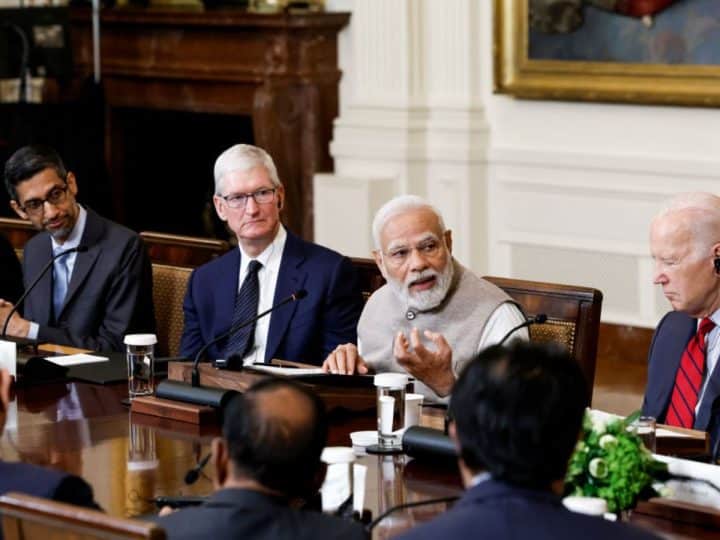

US Deputy Secretary of State Christopher Landau recently said the quiet part out loud, stating that the US will not let India develop like China.
Landau’s remarks are honest about what the USA sees India as: a periphery country, needed to extract profits from by exploiting its low wages, decimating its environment, and plundering its resources.
This is similar to how Britain, in 1947, used the sterling balances negotiations to restrict India’s industrial development.
Though Britain owed India over £1 billion from World War II, Whitehall froze these funds. Britain leveraged “informational asymmetries while Indian sovereignties were in flux,” which ensured India could not use its own savings for industrialisation while keeping the country formally independent.
India’s Hindutva government, a global far-right project (along with US tech companies), reflects this US strategy.
China, with its massive state planning, has not allowed Google and other American companies to serve as virtual town halls or squares the way they do elsewhere, including in the UK. UK elites like Rishi Sunak, Peter Mandelson, and Tony Blair are deeply embedded with US tech, too. For example, Starmer’s adviser held 16 undisclosed meetings with top US tech bosses.
Google AI data centre — a calamity for locals
An example of Hindutva’s red carpet to US tech, helping super-profits for US monopolies and creating a new dependent relationship with the Global South, is Google’s AI data centre in the sleepy town of Visakhapatnam. Google, which is working on the project with Indian cronies — Bharti Airtel and Adani Group,
The hub is India’s first facility built for a US tech giant to train large-scale AI models. It will sprawl across 600 acres and, at full tilt, consume as much electricity as six million Indians.
According to the Polis Project:
In India, data centres are being granted uninterrupted power and water even as nearby poor communities struggle for basic access, and Dalit families in places like Mumbai and Visakhapatnam are reporting eviction pressure, land acquisition, and dispossession tied to this buildout.
View this post on Instagram
Trump’s racist remarks on India
Hindutva’s obsequiousness to US firms, despite Trump recently calling India a “hellhole,” is because of the material interests of its elites. Just like the UK elites, the Indian elites have sold their souls to greed.
Professor Radhika Desai explains that elites in BRICS countries, including India, are too invested in the dollar system. They park their money there as their “treasure island,” which slows down dedollarisation and deepens their dependent relationship with US capital.
India recently welcomed Marco Rubio, who is Landau’s boss, and promised to buy $500 billion in American goods. Again, capitulating to US interests while India faces a huge crash in the rupee due to Trump’s own choice of war on Iran.
It could be that Rubio is prone to exaggerations like his boss, Trump, though, at least that is what Professor Ashok Swain quipped.
Indians don’t have money to buy gold, don’t have money for foreign travels, no gas, no petrol, Rupee is falling against dollar every day, Marco Rubio still thinks, Modi will buy $500 billion of US goods! https://t.co/w19HY94Akp
— Ashok Swain (@ashoswai) May 23, 2026
People’s Dispatch also questioned the nature of Rubio’s visit.
View this post on Instagram
They said:
The political opposition in India has also found Modi’s government’s approach to the US problematic, often describing it as aimless and bordering on capitulation. They have questioned the failure of the state to defy US dictates of not buying oil from Russia or Iran, which is relatively cheaper and easier to transport than oil bought from the US.
Israel as the ‘Fatherland’
US-backed Israel had few nicer things to say about India. In a recent interview, Netanyahu said that in India, the love for Israel was “crazy.”
Netanyahu:
I’ll say this: we face delegitimization in much of the world — but not in India.
In India, there is an absolutely crazy love for Israel, truly crazy.
I think I have more followers from India than from anywhere else. pic.twitter.com/FRIo2cdVb3
— Clash Report (@clashreport) May 28, 2026
Again, Israel — which views itself as a part of the Global North — does not view India as an equal. Netanyahu’s appreciation lies in the fact that Israel wants access to cheap labour in India.
Israel’s Brigadier General Erez Winner, in an honest moment, as Landau said, said that India’s population was a ready-made production line for Israeli weapons. He guffawed after making this statement.
Modi infamously called Israel the “Fatherland” in his trip to the country just before it started bombing Iran with the USA.
The consequences of this war of aggression against Iran, a supplier of oil to India, are the fertilizer and food shortages India is currently facing.
India’s Frontline said that Modi calling Israel the Fatherland to India’s Motherland would go down in “history as the moment when India abandoned ethical diplomacy for performative mysticism in order to signal support to all anti-Muslim formations.”
The US-Israel tech alliance can be viewed as two core states functioning as a single war-tech apparatus — whereas India remains a peripheral host, forced to roll out the red carpet for US monopolies while its own people are dispossessed.
For example, US tech has backed Israel’s AI-powered genocide of Palestinians through Project Nimbus — a $1.2 billion contract to provide cloud computing services for the Israeli government and defence establishment by Google and Amazon.
Michael Kwet of Yale Law School said it well:
Big Tech corporations are modern-day East India companies; they are an extension of American imperial power. They colonise the global digital economy and reinforce the divide between the North and the South.
Landau was right. US tech firms have no interest in a developed India. They need cheap labour, plundered resources, and captive markets, not a rival.
Better to take the words of Landau, Trump, and Erez Winner at face value, of what they see as India’s role in the global economy.
Featured image via Anna Moneymaker/Getty Images
By Nandita Lal


Over six million donkeys are slaughtered each year to produce ejiao. It’s a gelatine used in supplements, food and cosmetics. And it’s sold globally, including via major online retailers.
Working donkey and horse charity Brooke carried out an investigation. It found that while Amazon UK doesn’t sell these products directly, they remain available through third-party sellers on its marketplace.
Donkeys are vital to millions of people, supporting livelihoods, education and access to essentials in some of the world’s poorest communities.
The donkey skin trade is causing extreme suffering worldwide, including violent capture, long transportation without food or water, and brutal slaughter conditions for these animals.
Chris Wainwright, CEO of Brooke said:
This trade, which most people don’t even realise exists, is causing immense suffering for both animals and people. When a donkey is stolen and slaughtered, entire families lose their income and lifeline overnight. This has to change.
Amazon must take action to ensure its platforms aren’t accelerating this cruelty. So that we can help end the trade and protect donkeys – relied on by so many worldwide.
Brooke has contacted Amazon UK but received no response. The charity has launched a petition to stop the sale of ejiao on Amazon’s platforms, asking for clear, responsible action.
ITV’s This Morning resident vet Dr Scott Miller is also Brooke’s Donkey Skin Trade Ambassador. He’s asking Amazon to consider the devastating effects the trade is having on animals and people globally.
Miller said:
Speaking directly to anyone working at Amazon, I would say I understand your ignorance regarding ejiao. I didn’t know about it either until I started working with Brooke.
But once you know about this product and the brutal trade that’s behind it, you will want to take action. You will want to protect some of the most vulnerable and poorest communities on this planet. By simply banning any product that contains ejiao from your platform.
The UK public can make a huge difference, says Miller, by writing to their local MP, writing to their local newspaper and signing Brooke’s petition to ban ejiao sales on Amazon. He added:
I personally have seen first-hand how the production of ejiao devastates communities, particularly the poorest in Africa. It has a huge impact not only on women, but the health and education of children.
Anyone that has a heart, that cares about animals and that cares about people would want to support the ban of ejiao worldwide.
In 2025, Brooke found that if the trade continues at its current rate, Africa could lose half its donkey population by 2040.
By signing Brooke’s petition, people can help expose a largely hidden trade and build pressure for meaningful change.
Featured image via Brooke
By The Canary


The Guardian, or at least one of its journalists, has been implicated in the ‘Labour Together’ journalist spying scandal at least two years before the scandal broke. This is according to the X account “The Fraud.”
The Starmeroid sabotage crew had paid PR firm APCO to try to stitch up independent authors Paul Holden and Andrew Feinstein. They even went after members of Holden’s family, and tried to have Britain’s security services pursue them. For what? All for exposing the large donations the group kept hidden. And an as-yet unnamed Guardian hack knew all about it. That journalist kept silent, as reported by the X-based account on 28 May.
Yet more scandal
Holden exposed the new scandal through a ‘Subject Access Request’ (SAR) under data protection laws. Among the responses Labour Together provided was an email from disgraced then-director Josh Simons to the Guardian ‘journalist’. The response included an email chain showing discussions between Labour Together and the UK National Cyber Security Centre (NCSC). They were trying to persuade it to target those investigating Labour Together. Those efforts — to the NCSC’s credit — were swatted away. Still, Labour Together’s pernicious efforts could have ruined the careers of two honest investigative writers.

The scandal first broke in 2025. It was covered by Skwawkbox, the Canary, and other independent media. However, the ‘mainstream’ press only started to pay attention when they discovered that Simons’s outfit had also spied on two Times journalists. As a result, Simons resigned from Starmer’s front bench. He has now quit as an MP. But the scandal went to the heart of Number 10. Moreover, it should have brought down Starmer and his government too. The government was constructed entirely on the lies and sabotage of Labour Together. Labour Together was run by Starmer’s now-former chief of staff Morgan McSweeney. Previously, it was run by Simons.
‘See no evil’
The lack of ‘mainstream media’ (MSM) attention when the spying on Holden was first exposed is scandalous enough. Now, these new revelations show at least one ‘mainstream’ hack knew about it two years prior. They still did nothing.
Holden, in an X post responding to an attempt by another ‘mainstream’ journalist to whitewash dodgy ‘MSM’ conduct, explained in detail the significance of the SAR response. He makes clear that the content of these grossly defamatory emails put beyond question attempts by Labour Together, and its agents, to protect themselves.
Here, Zack Polanski talks about disproportionate media scrutiny. He brings up Labour Together, Josh Simons and the scandal around Labour Together hiring APCO Worldwide to target journalists, including me. Before Polanski can complete his point, he is interrupted by
@robpowellnews, who says that was appropriately reported by the media.
But that’s not what happened AT ALL.
In fact, I can now reveal, for the first time, that an as-yet unknown journalist at the Guardian KNEW about this story for 2 years and didn’t report it.
I found this out in from my Subject Access Request to Labour Together. I’ve copied a screengrab below. It shows that in February 2024, Josh Simons forwarded a series of emails to the journalist. The emails had been sent by Simons and his Chief of Staff at Labour Together to the National Cyber Security Centre.
Holden continues, showing just how easily the Guardian and its staff could have verified or disproven Labour Together’s smears on people positively known to them:
You’ll note in the attached image that the name of the Guardian journalist has been blacked out. But Labour Together have confirmed that they were, indeed, a Guardian journalist.
The emails forwarded by Simons show that Labour Together had told the NCSC that I was at the centre of a mad conspiracy theory, making all sorts of wild, ludicrous, highly defamatory allegations about me, my colleague @andrewfeinstein, and my family. The emails explicitly mention that Labour Together had attached an extensive report on which these seriously defamatory allegations was based. It also made it clear that Labour Together had done this after I worked with the Sunday Times and other outlets to break stories about Labour Together and Morgan McSweeney’s unlawful conduct.
What makes this all particularly egregious is that me and @andrewfeinstein have had a long relationship with the Guardian.
Andrew had worked with it’s [SIC] investigative team since the mid-2000s, focusing on investigating BAE Systems and corruption. The Guardian positively reviewed his book, The Shadow World: Inside the Global Arms Trade, on which I also worked. The award-winning feature documentary based on the book, made by recent Oscar nominee director Johan Grimonperez, featured a lengthy interview with the inimitable David Leigh about the BAE story. Leigh was the Guardian and Observer’s long-time head of investigations.
I started collaborating with the Guardian investigation team in the mid-2010s, focusing on corruption at AgustaWestland. The Guardian also splashed with an investigation based on my work in South Africa in 2022, which had been covered by the Bureau of Investigative Journalism.
Andrew and I had both written for the paper, worked on joint investigations, and also acted as sources for Guardian stories. There are any number of stories where we are not credited but where we provided key information or connected the paper to whistleblowers.
This is not to cloak me and Andrew in mainstream respectability or buff our credentials, but to point out that debunking the lunatic claims in the NCSC emails would have taken five minutes and a few phonecalls around the Guardian office. Perhaps then the Guardian could have reported on this despicable attempt to destroy the reputation of long-time Guardian contributors and collaborators with fabrications and conspiracy theories by the people on their way to forming the next government.
But that didn’t happen. Instead, a journalist at the Guardian KNEW that Simons and Labour Together had been doing all this outrageous stuff to protect Starmer and McSweeney. For two years: while Labour Together was funding 100 incoming MPs, Josh Simons was getting parachuted into Makerfield and Morgan McSweeney rose to the position of Chief of Staff. And nothing was reported.
Conspiracy and silence
And Holden rounds off by pointing out that those who knew about the scandal and should have acted were not only at the Guardian. In fact, Starmer’s closest advisers — therefore probably Starmer himself — didn’t just know after the fact. Moreover, they were involved all along:
We now know, of course, that the highest levels of the Labour Party had also been copied into discussions about the mad Labour Together/APCO investigation, including McSweeney himself and head of Comms, Paul Ovenden (who was later forced to resign as Chief of Strategy in Number 10 because of revelations from my book).
Just how many other people in Labour knew? Just how many other journalists knew? We still don’t know. Can’t say that mainstream outlets have done anything much to help me find out; half the time, as with the BBC, they don’t even bother to ask me or Andrew to comment the scandal before amplifying the exculpatory self-justifications of Simons and his ilk.
In the end it took brave INDEPENDENT journalists like Khadija Shariffe & Peter Geoghegan (rightly now nominated for the Paul Foot Award),
@PulaRJS and @OborneTweets to break the story. While I’m endlessly grateful for that reporting, and this story breaking through into the mainstream through the dogged work of Peter and Khadija, it should never have taken this long, and it speaks volumes that it only really did so after it was revealed that the Labour Together/APCO investigation had also targeted journalists at the Guardian and Sunday Times.Just imagine the Guardian had reported on this back in February 2024.
Just imagine the Guardian, which has NEVER, not once, properly reported on the Labour Together donations story, decided to look into McSweeney’s unlawful conduct. Just imagine the public had been made aware of the character of Morgan McSweeney and the nature of this political project.
Maybe, just maybe, McSweeney’s wretched, scandalous proclivities wouldn’t have destroyed the first Labour government in 15 years, opening up the way for Reform, and tainting the Labour Party with the stench of Mandelson and the horrors of Epstein.
Maybe Starmer, so coddled and protected by the Guardian’s soft-touch reporting, would have been made battle-hardened and ready for governance by some proper scrutiny and challenge.
Or maybe we could have found out, long before this current crisis, that he wasn’t up for the task.
But don’t try to pretend that there is an equality of scrutiny in the media, and that the mainstream media is fearlessly holding the powerful to task with the same rigour that makes it to literally go rooting around Polanski’s dirty laundry.
Even the so-called ‘liberal’ mainstream media in the UK are utterly suborned and untrustworthy. The Canary and other independent media operate to far higher ethical and professional standards, uncorrupted by oligarch owners and the lust for access to the powerful it is supposed to be exposing.
The Canary serialised Holden’s outstanding book, The Fraud. You can read it here to see the revelations that spooked Starmer’s Labour Together handlers that they embarked on an attempted state-power stitch-up.
Featured image via the Canary
By Skwawkbox


Property investment still attracts people for one simple reason: bricks feel more real than numbers on a screen. Stocks jump up and down every hour. Crypto trends change before lunch. An apartment building? You can walk around it, touch the walls, hear the traffic outside. In 2026, buyers are paying closer attention to location quality, infrastructure, and developer reputation instead of chasing flashy promises. This guide looks at what first-time and mid-level investors often miss — and what deserves real attention before money changes hands.
Why Buyers Started Looking Beyond “Cheap Deals”
A few years ago, many investors hunted for the lowest price per square meter. That strategy aged badly in some markets. Cheap apartments in weak locations often stayed empty, while properties near transport hubs, business districts, and coastlines kept attracting tenants.
People learned the hard way: low price does not automatically mean good investment.
This is one reason buyers increasingly study projects created by established companies with visible portfolios and long-term planning. A modern property developer in Cyprus, for example, is no longer selling just an apartment. They are selling walkable neighborhoods, energy-efficient systems, parking access, sea views, and sometimes even coworking spaces inside residential complexes.
Sounds obvious, right? Yet plenty of people still buy property after seeing only three photos and a discount banner.
Location Still Wins — Every Single Time
People love debating design trends. Smart homes. Minimalist kitchens. AI-powered building systems. Fine. Interesting topics.
But location keeps deciding whether a property holds value.
Look at what happened in cities like Dubai, Limassol, Lisbon, and Athens over the last decade. Areas close to business centers, marinas, or major transit routes consistently pulled stronger rental demand. Meanwhile, isolated districts with cheaper entry prices often struggled.
Nobody wants a 90-minute commute, two bus changes, and a supermarket that closes at 7 p.m. People pay extra for convenience because daily comfort matters more than marketing brochures.
Before buying, walk around the area yourself. Morning. Evening. Weekend. Listen to the noise. Watch the traffic. Count how many cafés or pharmacies stay open late.
You learn more in 20 minutes on the street than in two hours of sales presentations.
The Hidden Costs That Hit New Investors
Here comes the part people avoid discussing.
The purchase price is not the real number.
Maintenance fees, insurance, taxes, furnishing, legal checks, parking costs, repair funds — all of it piles up quietly. Suddenly the “great investment opportunity” starts eating money every month.
A buyer may purchase a stylish apartment near the coast and later discover:
- the building charges high annual maintenance fees,
- underground parking costs extra,
- short-term rentals are restricted,
- internet service is unstable during tourist season.
Now imagine explaining that surprise to yourself after signing a long-term loan.
This is why experienced investors calculate monthly survival costs before expected profits. Boring? Maybe. Necessary? Absolutely.
New Buildings vs Older Apartments
The debate never ends.
New buildings attract investors because they look clean, modern, and efficient. Developers now advertise solar panels, smart access systems, air filtration, and EV charging stations almost everywhere. Buyers like fresh spaces. Tenants like them too.
Older properties have their own advantages. Bigger rooms. Central districts. Mature neighborhoods with real trees instead of decorative plants trying to survive in concrete.
But older buildings hide problems beautifully.
Fresh paint covers moisture damage. Stylish lighting distracts from old wiring. A renovated kitchen means little if the plumbing system belongs in 1998.
And honestly, some “luxury renovations” look great for six months and terrible after two winters.
Pay for inspections. Real ones. Not the five-minute walkthrough where somebody taps a wall dramatically and says everything looks fine.
Rental Income Is Not Passive Magic
This fantasy still sells well online: buy apartment, collect money, relax forever.
Reality looks messier.
Tenants move out unexpectedly. Air conditioners fail in July. Plumbing leaks on holidays. Local regulations change. Tourism drops. Interest rates shift. Property ownership includes routine headaches nobody posts about on Instagram.
Good investors usually prepare for quiet months instead of assuming permanent occupancy. They also keep reserve funds for repairs because buildings age whether markets rise or not.
Well, that sounds less exciting than “financial freedom by 30,” doesn’t it?
Still true.
Why Developer Reputation Matters More Than Advertising
Some developers build neighborhoods people enjoy living in. Others build attractive renders for billboards.
Big difference.
A strong developer usually leaves patterns behind: completed projects, maintained common spaces, stable management, decent materials, and fewer complaints from residents. Weak developers leave forums full of elevator problems, unfinished landscaping, and legal disputes.
Buyers today investigate everything online. Resident reviews. Delivery delays. Infrastructure promises. Construction quality. Even noise insulation gets discussed publicly now.
And frankly, that transparency changed the market. Developers can no longer hide poor quality behind polished marketing videos.
Smart Investors Watch Infrastructure
Here is a detail many beginners ignore: roads often matter more than pools.
A new highway connection, business center, university expansion, or metro station can change an entire district within a few years. Investors who understand infrastructure trends usually make calmer decisions because they look beyond the apartment itself.
Look at places where remote workers and international companies moved after 2020. Demand followed connectivity, safety, reliable utilities, and lifestyle comfort.
People increasingly want neighborhoods where they can walk to cafés, gyms, clinics, and grocery stores without turning daily life into a logistics operation.
Makes sense, doesn’t it?
Final Thoughts
Property investment looks simple from far away. Buy low, rent high, wait patiently. Real life rarely follows that clean script.
Good investments often come from boring decisions: strong location, reliable construction, manageable maintenance costs, and realistic expectations. Not hype. Not panic buying. Not social media pressure.
And perhaps that is the biggest shift in today’s market. Buyers have become less impressed by flashy promises and more interested in practical details they will live with every day.
Because after the contracts are signed and the excitement fades, somebody still has to pay the maintenance bill, wait for the elevator, and listen to the neighbors upstairs at midnight.

Period drama based on ‘heartbreaking’ true story perfect for The Other Bennet Sister fans

The Magnitude Of The Numbers Is Just Mindboggling: 12 U.S. Companies, $30 Trillion

Tewinbury Farm Hotel launches fitness and wellbeing offering

Steven Gerrard disagrees with Gary Neville over ‘shock’ Chelsea and Arsenal claim | Football

US brings back mandatory military draft registration

Register Renaming | Hackaday

QUANTO devi GUADAGNARE per COMPRARE una FIAT PANDINA? #money #cars #fiat #finance #salary

KEVIN WARSH PAPER ON XRP LIQUIDITY! – MORE DTCC & RIPPLE CONNECTIONS! – BRAD SHERMAN ATTACKS CRYPTO!

He’s so f*cked (I secretly brought in his wife) | Financial Audit
-

 Business5 days ago
NYT Strands Answers May 24 2026 Revealed for Puzzle No. 812 Theme Summer Essentials
-

 Politics5 days ago
Bridgerton Season 5: Cast, Release Date And Everything We Know So Far
-

 NewsBeat3 days ago
Israel says it has killed new Hamas military leader in Gaza City airstrikes
-

 Business3 days ago
Selena Gomez Reportedly Upset Over Benny Blanco’s Comments on Her ‘Terrible’ Diet
-

 Crypto World7 days ago
Robinhood crypto COO Tanya Denisova exits
-
 Crypto World3 days ago
Micron Crosses $1 Trillion Market Cap as AI Demand Reshapes Memory Sector
-

 Tech5 days ago
Microsoft’s quiet Claude Code retreat and the real cost of enterprise AI
-

 Business5 days ago
BTS Sells Out Four Las Vegas Shows at Allegiant Stadium for ARIRANG World Tour
-

 Tech1 day ago
Waymo dominates autonomous vehicle registrations as Tesla trails behind
-
Tech3 days ago
The Samsung pay deal is the moment Korean unions changed register
-
 Tech4 days ago
China assigns ID codes to 28,000+ humanoid robots
-

 Tech3 days ago
Millions of AI agents imperiled by critical vulnerability in open source package
-
Crypto World5 days ago
Brian Armstrong Outlines Crypto Vision for the Future Financial System
-

 Tech5 days ago
Westone Audio and Etymotic Acquired by Fidelity Collective in Major IEM Market Move
-
Crypto World3 days ago
SpaceX’s $2 Trillion IPO: Why Tech Giants Nvidia (NVDA), Apple (AAPL), and Microsoft (MSFT) May Face Pressure
-
 Crypto World5 days ago
Nvidia (NVDA) CEO Calls on Super Micro to Strengthen Export Controls Amid Smuggling Probe
-

 Tech3 days ago
NASA taps Blue Origin to deliver lunar rovers for Moon Base initiative
-
 Entertainment4 days ago
‘Breaking Bad’ Star’s Easy-to-Binge 6-Part Crime Series Spin-Off Is Finally Heading to Free Streaming
-

 Crypto World3 days ago
Spain blocks prediction markets Polymarket Kalshi
-
 Entertainment4 days ago
Taylor Swift Fans Label Travis Kelce’s Beer-Chugging A ‘Red Flag
You must be logged in to post a comment Login