





Connect with us
DAPA Banner

Business

How to Find Affordable Election Services for Unions

Published

on

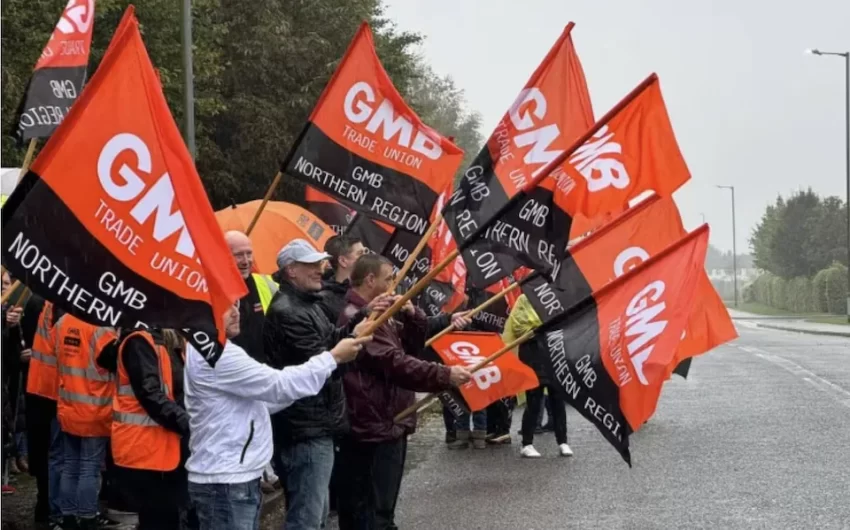
Tetley tea's owner, Tata Consumer Products, has launched legal action against striking workers, accusing them of trespassing during a pay dispute. GMB Union warns of potential tea shortages amid the ongoing industrial action.

Union elections present unique challenges. Leaders need to balance tight budgets with compliance requirements while aiming to achieve a high level of member participation in the vote.

Choosing the right election service provider is about finding one that is reliable, secure and easy to use without piling on more administrative work. A good, affordable company will streamline the process, reduce security risks and support governance. It is important to understand which features and shortfalls unions should watch for.

Transparent Pricing

Clear, predictable pricing models without any hidden costs help unions manage expenses and plan accordingly. Some providers charge a union per voter, while others charge a single flat rate. Additional options offer monthly or annual price plans.

Cheaper isn’t always better, though. Free options are available, but the level of service is often reduced.

Ease of Use

A complicated voting experience can be a nightmare for leaders and members and reduce trust. Selecting an intuitive system can increase participation rates and make the whole process smoother, with minimal setup, monitoring, reporting and little other administrative work.

Advertisement

Types of Elections Offered

Many modern election services offer multiple election types. Paper ballots with mail-in options, live online real-time voting, drive-thru voting and on-site voting are just some of the options some services now support.

Level of Support Provided

Unions should consider whether they want a self-service option, hybrid or comprehensive assistance throughout the election process, and choose a provider that best aligns with their needs. Many services are flexible about the level of support they offer, and some can offer bespoke pricing based on this.

Security and Compliance

Union elections are often subject to strict adherence to governance rules and regulatory standards. A good election service will have secure systems, established compliance practices that are easy to follow and make audit trails as simple as possible. Household union membership is at 15%, which is a notable share of U.S. families who expect secure and compliant elections.

Experience

Experience is an important factor to look for in a service, and election services are no different. Elections are important to get right without any hiccups, so having an experienced hand who understands all the potential pitfalls and how to avoid them is vital.

Advertisement

Top Affordable Election Service Providers for Unions

There are several standout affordable election services unions should consider when weighing their options.

1. Survey & Ballot Systems

Survey & Ballot Systems

is an election service provider that makes the process as easy as possible for its clients, with personal interactions from a team dedicated specifically to their project. This entity works in partnership with election committees and follows their direction. It also has intuitive virtual platforms, turnkey election services for Nominations and DirectVote projects, and instructional videos to help clients understand the process.

Key Features

  • Transparent pricing options
  • Dedicated teams to speak to directly
  • Intuitive virtual platforms

2. YesElections

YesElections

is a full-service election management agency offering paper, phone and online voting, as well as hybrid options. The provider protects voter files and implements single-vote verification to ensure security.  YesElections can also provide instantly downloadable reports, social media integration and data privacy to ensure membership lists are never shared with third parties.

Advertisement

Key Features

  • Multiple voting methods available
  • Single-vote verification
  • Social media integration

3. ElectionBuddy

ElectionBuddy

is one of the biggest names in election service providers. It has been used in 55 languages across 184 countries and across a wide range of industries such as K-12 schools, golf clubs, governments, homeowners’ associations and unions. ElectionBuddy offers free elections for up to 20 voters and has transparent pricing options for its other plans.

Key Features

  • Free elections for up to 20 voters
  • Transparent pricing options
  • Can handle enterprise-level elections up to 100,000 voters

4. Votem

Votem

is a cloud-native online voting and compliance platform. It has encrypted ballots, AI-based voter fraud detection and virtual independent monitors to ensure fully compliant elections. Over 13 million votes have been cast on its platform, and it is designed to support NLRB-compliant electronic voting for labor union officers and strike ballots.

Key Features

  • AI-based voter fraud detection
  • NLRB-compliant electronic voting
  • Encrypted ballots

5. ElectionRunner

ElectionRunner

is an online voting platform that lets unions easily build and customize elections to suit their needs, providing excellent flexibility. Each voter has a unique Voter ID and Voter Key to ensure votes are secure. Unions can save time setting up their ballot by importing eligible voters over from Excel spreadsheets or CSV files.

Key Features

  • Easy to build and customize elections
  • Each voter has a unique Voter ID and Voter Key
  • Import eligible voters from spreadsheets

Criteria to Determine the Top Affordable Election Service Providers for Unions

The list of the best affordable election service providers for unions was developed with criteria such as the suitability of each provider for union elections, price transparency and the level of support.

Security and compliance were also considered, as they are pillars of any election. Employers were found to have violated federal labor law in nearly 40% of union election campaigns in 2023, so it’s imperative that the election service promotes how it keeps votes secure. Ease of use was looked at to ensure elections are as straightforward and intuitive as possible.

Advertisement

The list aims to provide a range of support levels to accommodate those who want full, personalized support throughout the election process. It also covers entities who want a self-service option.

Simple, Secure and Affordable Elections

Affordability is an important consideration for many unions, and budget constraints are often a factor. However, it is vital that leaders don’t sacrifice quality when considering price options. As with any product, they will get what they pay for, which could result in lost trust and unexpected downtime.

Unions should consider their needs and goals for an election, and seek a provider that best aligns with them. The listed options cover a wide range of services, support level and prices, helping decision-makers pick the right option for their workplaces.

Advertisement

Continue Reading
Click to comment

You must be logged in to post a comment Login

Leave a Reply

Business

Who Will Win the Space War in 2026? SpaceX Pulls Ahead of Jeff Bezos

Published

on

Intuitive Machines

CAPE CANAVERAL, Fla. — Elon Musk’s SpaceX continues to dominate the billionaire space rivalry with Jeff Bezos’ Blue Origin as 2026 unfolds, launching far more often, expanding its Starlink constellation and advancing ambitious lunar base plans while Blue Origin ramps up its New Glenn rocket and Blue Moon lander efforts in a methodical bid to catch up.

SpaceX Falcon 9 Successfully Launches 25 Starlink Satellites from California
SpaceX Falcon 9 Successfully Launches 25 Starlink Satellites from California in Historic 32nd Flight

SpaceX achieved a record 165 orbital launches in 2025 and has maintained a blistering pace into 2026, routinely sending Falcon 9 rockets skyward and testing Starship prototypes that could one day ferry humans and cargo to the moon and beyond. Musk has publicly redirected some focus toward building “Moonbase Alpha,” including concepts for a lunar launch device, as the United States races China toward sustained lunar presence by 2030.

Blue Origin, meanwhile, completed its second New Glenn mission in late 2025 and prepared a third flight as early as April 17 from Cape Canaveral, deploying satellites including one for AST SpaceMobile. The company also conducted its 38th New Shepard suborbital flight in January and announced plans to pause further New Shepard operations for at least two years to redirect resources toward lunar capabilities, including an uncrewed Blue Moon Mk1 cargo mission targeted for later in 2026.

The contest, once centered on reusable rocketry and low-Earth orbit dominance, has shifted squarely to the moon. Both companies submitted revised plans to NASA in late 2025 aimed at accelerating crewed lunar landings under the Artemis program. SpaceX holds the primary contract for the Human Landing System using a Starship-derived vehicle, while Blue Origin secured a separate $3.4 billion award for its Blue Moon Mk2 lander on the later Artemis V mission. NASA continues evaluating options to speed up the timeline amid delays in Starship’s complex orbital refueling requirements.

SpaceX’s edge remains stark in operational cadence. The company has launched thousands of Starlink satellites, surpassing major milestones including 10,000 in orbit and targeting terabit-class satellites deployable via Starship in 2026. Starlink added millions of subscribers globally, generating substantial revenue that funds further development. Blue Origin has yet to match that launch tempo or satellite scale, though Bezos-backed Project Kuiper pushes forward with its own broadband constellation, and Blue Origin recently proposed up to 51,600 satellites for orbital AI data centers — a move that prompted SpaceX to urge the FCC to apply consistent scrutiny.

Advertisement

Musk and Bezos have traded subtle barbs. Bezos posted an image of a tortoise on social media earlier in the year, widely interpreted as a nod to the fable of the tortoise and the hare, positioning Blue Origin as the steadier long-term player. Musk has responded dismissively at times, emphasizing SpaceX’s rapid iteration. In one exchange, Musk downplayed Blue Origin’s announced TeraWave satellite project by highlighting Starlink’s advancing space-to-ground laser links.

Public competition intensified in February when Reuters reported both billionaires accelerating lunar ambitions amid NASA’s push and China’s 2030 moon goals. Musk spoke of lunar base development in podcast appearances and internal meetings, even as SpaceX eyes a potential $1 trillion valuation ahead of an IPO. Blue Origin shifted resources from suborbital tourism to its Blue Moon lander, planning early 2026 cargo flights and integrated checkout tests for the Mk1 variant.

Analysts describe contrasting philosophies. SpaceX favors rapid prototyping, frequent testing and aggressive timelines, accepting failures as part of learning. Blue Origin emphasizes methodical engineering, safety and gradual scaling, drawing on Bezos’ long-term vision of millions living and working in space. That “slow and steady” approach has drawn criticism for delays but earned praise for reliability in suborbital flights.

In launch records, SpaceX repeatedly outpaced rivals. In late 2025 it broke Florida’s annual liftoff record, a mark that could have gone to Blue Origin had weather not scrubbed a New Glenn attempt. SpaceX’s reusable Falcon 9 boosters have flown dozens of times, dramatically lowering costs and enabling near-weekly missions. New Glenn, with its seven BE-4 engines and reusable first stage, aims to compete in the heavy-lift category but has completed only a handful of flights so far.

Advertisement

NASA remains central to the rivalry. The agency awarded SpaceX billions for Starship-based lunar landing systems and has paid out significant milestones, though concerns over refueling and schedule slips led to reopened bidding opportunities. Blue Origin received roughly $835 million for its lander work and a $190 million CLPS contract to deliver NASA’s VIPER rover. Both firms submitted acceleration proposals, keeping the competition alive for future Artemis landings.

Beyond government contracts, commercial markets offer another battleground. Starlink provides broadband to remote areas and has been credited with aiding disaster response. Kuiper seeks similar reach but trails in deployment. The emerging domain of orbital data centers for AI workloads has drawn filings from both sides, with SpaceX proposing up to one million satellites and Blue Origin/Amazon advancing its own plans. Regulators face complex decisions on spectrum, orbital debris and fair competition.

Challenges loom for both. SpaceX must prove Starship’s full reusability, reliable in-orbit refueling and crewed flight readiness without major setbacks. Regulatory hurdles, including environmental reviews and international coordination, add complexity. Blue Origin needs to scale New Glenn production, demonstrate consistent heavy-lift performance and integrate its lander systems on time. Funding remains robust for both — SpaceX through revenue and investor confidence, Blue Origin backed by Bezos’ personal fortune and Amazon ties — but execution will determine momentum.

The broader context includes a renewed U.S. commitment to beating China back to the moon. Artemis II, a crewed lunar flyby, recently achieved a record-breaking mission, keeping the program on track. Sustained presence requires reliable landers, habitats and logistics that private industry is now racing to supply.

Advertisement

Industry observers note that the “space war” benefits the entire sector. Competition drives innovation, lowers costs and attracts talent and investment. Yet tensions surface in regulatory filings and public commentary, with SpaceX once urging the FCC to reject aspects of Amazon-related applications while arguing for equal standards.

As April 2026 progresses, eyes turn to upcoming launches. Blue Origin’s NG-3 New Glenn mission could mark another step toward orbital reliability. SpaceX continues Starship testing and routine Starlink deployments. Musk has hinted at ambitious 2026 goals for Starship, including commercial readiness, while Blue Origin targets its first lunar cargo flight.

Neither billionaire is likely to “win” outright in a single year. SpaceX holds the current operational and market lead in launches and satellites. Blue Origin positions itself for longer-term lunar infrastructure and methodical progress. The real contest may extend into the 2030s as humans establish a permanent foothold on the moon and eye Mars.

For now, the rivalry captivates the public and fuels progress. Musk’s hare-like speed has delivered reusable rockets and global connectivity at unprecedented scale. Bezos’ tortoise approach promises careful, sustainable expansion. In the high-stakes arena of space, both strategies may prove essential as humanity pushes farther from Earth.

Advertisement

The coming months will test execution. Successful New Glenn flights and Blue Moon progress could narrow the gap for Blue Origin. Starship milestones and continued Starlink growth would reinforce SpaceX’s dominance. Either way, the billionaire space race shows no signs of slowing, with the moon as the next major prize in a contest that could reshape humanity’s future off-world.

Continue Reading

Business

White House to give US agencies Anthropic Mythos access, Bloomberg News reports

Published

on

White House to give US agencies Anthropic Mythos access, Bloomberg News reports


White House to give US agencies Anthropic Mythos access, Bloomberg News reports

Continue Reading

Business

Newcastle biotech pioneer Atelerix strikes partnership to pave way for overseas growth

Published

on

Business Live

The Newcastle business has struck a strategic deal with JH Health Ltd, a Saudi Arabian company

Alastair Carrington, CEO, Atelerix

Alastair Carrington, CEO, Atelerix(Image: Atelerix)

Tyneside biotech business Atelerix is set for overseas growth after striking a strategic partnership with a Saudi Arabian company.

The Newcastle University spin-out – which takes its name from the behaviours of hedgehogs, which have the genus name Atelerix – has revolutionised how cells are stored and transported, having been formed eight years ago to disrupt the cell preservation market.

Based at the Biosphere at Newcastle Helix, the firm’s technology is inspired by hedgehogs, including the African four-toed pygmy hedgehog, which hibernates when the temperature dips below around 20C. The company’s patented hydrogel encapsulation technology allows cells to do just the same.

Thanks to its hydrogel-based cell preservation solutio, biomaterials which are essential for drug discovery and pharmaceutical research, can be transported without freezing.

Advertisement

The Newcastle business has now struck a deal with JH Health Ltd, a Saudi Arabian company focused on medical and health-related technology. The partnership grants JH Health exclusive rights to use and distribute Atelerix’s hydrogel-based cell and tissue preservation solutions in the Middle East, a move which significantly boost Atelerix’s global commercial footprint with new regional manufacturing and distribution channels.

The deal comes as Atelerix responds to increasing global demand for its technology by looking to establish new strategic partnerships. The partnerships can provide local technical expertise and regional supply in key markets, including China, Europe and Africa.

African pygmy hedgehogs - their hibernation skills inspired Atelerix's tech

African pygmy hedgehogs – their hibernation skills inspired Atelerix’s tech

Alastair Carrington, CEO of Atelerix, said this latest agreement with JH Health is a significant development, providing access to extensive networks and distribution channels needed to enter the Middle East’s growing life science and healthcare market.

The partnership with JH Health will primarily focus on enabling the stable transport of biological samples for clinical diagnostics and research use, including the development of a new biobank within the region. Atelerix will lead regulatory approvals for its technology with the Saudi Food and Drug Authority, backed at a local level by JH Health.

Advertisement

The Saudi Arabian business will also provide financial support and strategic expertise for Atelerix’s operational scale-up in the region, including giving it capabilities for high volume manufacturing while also supporting opportunities for new research partnerships to further develop its technology.

Mr Carrington said: “By partnering with JH Health, we gain access to the deep market expertise and local support needed to establish our operations in the Middle East. Their strategic investment will enable us to build out our local manufacturing capabilities, ensuring we are equipped to deliver the future of biological transport logistics and meet the needs of the rapidly growing life science market in the region. This partnership is an integral next step in our strategy to bring our advanced cell preservation solutions to customers, worldwide.”

Mohammed Al Jumah, CEO at JH Health, said: “We are delighted to establish a strategic partnership with Atelerix to bring advanced biosample preservation technologies to the Middle East. By combining Atelerix’s pioneering solutions with our regional expertise, this collaboration enhances access to advanced tools that support biomedical research, accelerate scientific discovery, and strengthen clinical development across the region, ultimately improving healthcare outcomes.”

The deal comes a year after Atelerix signed an exclusive distribution agreement with MineBio, a leading Chinese supply chain and logistics organisation, to act as the sole distribution partner for Atelerix’s products in China.

Advertisement

Like this story? For more deals news you can visit our dedicated page for the latest news and analysis here.

Continue Reading

Business

Form 13F JDH Wealth Management For: 16 April

Published

on


Form 13F JDH Wealth Management For: 16 April

Continue Reading

Business

Chief executive of Bristol Airport Dave Lees to stand down

Published

on

Business Live

Since taking up the role eight years ago he has overseen a huge rise in passenger numbers

Chief executive of Bristol Airport, David Lees, is standing down after eight years in the role. He will remain in post until a successor is appointed and will support a transition period through to the end of this year.

Under his leadership, the airport – which became majority-owned by Macquarie Asset Management last year – has seen a unprecedented growth in passenger numbers and the delivery of a number of major projects, including the public transport interchange as well as the positive outcome of a planning application to increase passengers to 12 million per annum.

More recently he has led on the next stage of growth outlined in airport’s masterplan to 2040 as well as launching the planning application to increase passenger numbers to 15 million a year. It handled 10.8 million in 2025.

READ MORE: Welsh Government big win in legal challenge from Bristol AirportREAD MORE: Bristol Airport submits plans for huge expansion to 100,000 flights a year

He also steered the airport through the pandemic and then drove the strongest post-pandemic recovery of any UK major airport.

Advertisement

Mr Lees said: “It has been the highlight of my career to lead an amazing, talented and committed team which continues to deliver responsible growth connecting our region to an increasing number of destinations. Together we have delivered significant improvements for our customers, airlines and the community which we are proud to serve including our industry leading position on our pathway to deliver net zero airport operations by 2030.”

The airport’s chairman Jason Holt said: “It falls to me to register the board’s appreciation and thanks for Dave’s efforts over the last eight years. Dave has taken the airport to where it is today through inspired leadership that now sets up the business to build on his work. As Dave passes the baton to his successor, his tenure has safeguarded future growth and prosperity for the airport and its positive impact on the region.

“This is especially so with potential future growth delivering upwards of 1,000 new jobs with increasing long-haul connectivity to global markets. I look forward to continuing to work with Dave for the remainder of the year. As a board we wish him all the very best for the future as he looks back with pride to the fitting legacy and opportunity he leaves behind for the community and our customers.”

In its 2024 financial year the airport grew revenues from £179.2m a year earlier to £204.4m. Its pre-tax profit level rose from £3.8m to £12.2m. After taxation it posted losses of £1.69m. Its biggest revenue contribution came from car parking with £75.6m.

Advertisement

Last month the airport’s legal challenge against Welsh Government plans for a £205m subsidiary support package to rival Cardiff Airport, was rejected in a ruling from the Competition Appeal Tribunal.

Bristol unsuccessfully claimed that the financial support over the next decade from the Cardiff Bay administration to the airport, which it acquired in 2013 for £52m, breached the Subsidy Control Act and would put it at a commercial disadvantage.

Around 20% of Bristol’s annual passenger are drawn from South Wales. Bristol is currently considering whether to lodge an appeal.

Advertisement
Continue Reading

Business

Angel One Q4 Results: Profit soars 84% YoY in a quarter of stock market crash

Published

on

Angel One Q4 Results: Profit soars 84% YoY in a quarter of stock market crash
Angel One reported a sharp rise in profit for the March quarter, driven by strong client activity and operating leverage. Profit after tax stood at Rs 320 crore in the fourth quarter, marking an 84% year-on-year (YoY) increase, while rising 19% sequentially. The strong profit growth was supported by higher trading volumes and better monetisation across segments.

Total gross revenue came in at Rs 1,467 crore, up 39% YoY and 10% quarter-on-quarter, reflecting improved trading volumes and platform engagement. EBDAT rose to Rs 473 crore, up 17% sequentially, while margins expanded to 41.7%, indicating strong operating leverage.

The quarter saw a rebound in client activity, with total orders rising to 43.1 crore, up 13% sequentially, marking a six-quarter high. The company’s client base expanded to 3.74 crore, while its share in India’s demat accounts rose to 16.7%.

Despite a slight dip in cash segment activity, derivatives and commodity segments saw strong growth, supporting overall order volumes.

Advertisement

Angel One continued to see traction beyond broking. Wealth management assets under management surged 23% sequentially to Rs 10,080 crore, while asset management AUM stood at Rs 360 crore. However, credit disbursals declined 14.7% sequentially, reflecting some moderation in lending activity.


The company’s asset management business remained small but growing, with AUM at Rs 360 crore, while mutual fund SIP registrations remained strong at 2.1 million during the quarter. However, credit disbursals declined 15% sequentially to Rs 610 crore, indicating some moderation in lending activity.
Management attributed the strong performance to normalisation in client activity and increased adoption of digital platforms, alongside continued investments in AI-led capabilities to improve customer experience and operational efficiency.Angel One is positioning itself as a full-stack digital financial platform, expanding beyond broking into wealth, asset management, and credit, supported by technology-led innovation.

Continue Reading

Business

Climb Bio: 'Buy' On Budoprutug Phase 2 Advancement pMN And Expansions Underway

Published

on

Climb Bio: 'Buy' On Budoprutug Phase 2 Advancement pMN And Expansions Underway

Climb Bio: 'Buy' On Budoprutug Phase 2 Advancement pMN And Expansions Underway

Continue Reading

Business

New York advances second-home tax targeting wealthy non-residents

Published

on

New York advances second-home tax targeting wealthy non-residents

A growing push for higher taxes on wealthy homeowners in New York is intensifying the debate over how far states should go to raise revenue, as policymakers weigh the broader economic impact on investment, housing and taxpayer behavior.

FOX Business’ Connor Hansen joined FOX Business’ Stuart Varney on “Varney & Co.” to report on the latest proposals, which center on a new tax targeting high-value second homes owned by nonresidents.

Advertisement

The proposal comes as voters nationwide continue to express frustration with their overall tax burden, even as Internal Revenue Service data shows average tax refunds are up compared to last year. At the same time, states like New York are advancing policies aimed at capturing more revenue from top earners and luxury property owners, a group that already contributes a significant share of total tax collections.

MASSACHUSETTS TOWN WEIGHS 50% PROPERTY TAX HIKE AS RESIDENTS PUSH BACK

New York City Mayor Zohran Mamdani joined by New York Governor Kathy Hochul.

New York City Mayor Zohran Mamdani joined by New York Governor Kathy Hochul at an event in Brooklyn. (Spencer Platt / Getty Images)

New York City Mayor Zohran Mamdani took to X to frame the effort as part of a broader push to increase contributions from the wealthy.

Advertisement

HOCHUL TAX PLAN TARGETS HIGH-END SECOND HOMES AMID REVENUE PRESSURES

“When I ran for mayor, I said I was going to tax the rich. Well today, we’re taxing it,” Mamdani said.

New York Gov. Kathy Hochul has argued that the proposal is designed to address perceived imbalances between full-time residents and part-time property owners.

Advertisement

BUSINESSES SHIFT TO LOWER-REGULATION STATES AS COSTS MOUNT

“The property value of homes like that is driven by everything New York City has to offer. That’s why it’s a valuable place. But the people who own these pied-à-terres are not contributing in the same way that the 8.3 million New York residents do,” Hochul said in a statement on the official website of New York State.

The proposal underscores a widening divide in tax policy approaches as states navigate competing pressures to generate revenue while maintaining economic competitiveness.

GET FOX BUSINESS ON THE GO BY CLICKING HERE

Advertisement
Continue Reading

Business

Why the UK is preparing for food shortages if Iran war continues

Published

on

Why the UK is preparing for food shortages if Iran war continues

The UK could face food shortages by the summer if the Iran war continues, a worst case scenario drawn up by government officials suggests.

The closure of the Strait of Hormuz could continue to disrupt global supply chains, leading to shortages of carbon dioxide (CO2), which is used in the food and drinks industry.

A spokesperson from the Department for Environment, Food & Rural Affairs said these scenarios are planning tools, not predictions of future events.

BBC business correspondent Emma Simpson explains what this could mean for supermarket shelves.

Advertisement
Continue Reading

Business

IEA says Europe has about 6 weeks of jet fuel left amid Hormuz crisis

Published

on

IEA says Europe has about 6 weeks of jet fuel left amid Hormuz crisis

The head of the International Energy Agency says Europe has “maybe 6 weeks or so jet fuel left” amid shortages due to Iran’s blockade of the Strait of Hormuz, the Associated Press reported Thursday.

IEA Executive Director Fatih Birol offered the analysis in an interview, telling the AP that the Hormuz situation has caused “the largest energy crisis we have ever faced.”

Advertisement

“In the past there was a group called ‘Dire Straits.’ It’s a dire strait now, and it is going to have major implications for the global economy. And the longer it goes, the worse it will be for the economic growth and inflation around the world,” he said.

“I can tell you soon we will hear the news that some of the flights from city A to city B might be canceled as a result of lack of jet fuel,” he added.

TRUMP DETAILS SWEEPING ‘ALL OR NOTHING’ BLOCKADE OF STRAIT OF HORMUZ AFTER FAILED IRAN TALKS

Oil tankers in the Strait of Hormuz.

Nations across the globe are seeing fuel prices rise amid the war in Iran. (Giuseppe Cacace/AFP via Getty Images / Getty Images)

The war in Iran has caused oil prices to spike in the U.S. as well, though Treasury Sec. Scott Bessent has said the surge is “transient.”

Advertisement

For its part, Iran has threatened to shut down traffic in the Red Sea and other regional shipping lanes if the U.S. continues its blockade of Iranian ports this week.

TRUMP AGREES TO 2-WEEK CEASEFIRE IF IRAN OPENS STRAIT OF HORMUZ

Ryanair-Boeing-Passengers

European airlines are expected to face fuel shortages in the coming weeks if the Iran war continues. (Photo by Nicolas Economou/NurPhoto via Getty Images / Getty Images)

Iran’s Maj. Gen. Ali Abdollahi Aliabadi issued the threat on Iranian television on Wednesday.

Aliabadi said if the U.S. blockade continues, it “creates insecurity for Iran’s commercial vessels and oil tankers” and constitutes “a prelude” to violating the ongoing U.S.-Iran ceasefire, the news outlet reported. 

Advertisement

GET FOX BUSINESS ON THE GO BY CLICKING HERE

“The powerful armed forces of the Islamic Republic will not allow any exports or imports to continue in the Persian Gulf, the Sea of Oman, and the Red Sea,” Aliabadi reportedly added.

Advertisement
Continue Reading

Trending

Copyright © 2025