
Business
How UK Businesses Can Get More from Their L&D Budgets


Every year, UK businesses invest millions of pounds in software, cloud platforms and advanced data tools. Yet many organisations use only a small proportion of the features available to them.
The problem isn’t necessarily the software. Often, it’s the way employees are trained to use it.
When technology projects fail or stall, organisations may blame complicated software or resistance to change. But in many cases, employees simply don’t have the skills they need to use the technology effectively. Traditional training can leave important gaps, particularly when it doesn’t reflect the tasks employees carry out every day.
So, how can businesses make better use of the software they already have? There are four areas worth considering.
The 3 Common Problems with Traditional Corporate Training
1. Generic Training Doesn’t Meet Everyone’s Needs
Pre-recorded video libraries and large, multi-day courses can be useful, but they often provide the same training to everyone.
An accountant, a project manager and a sales director may all use Microsoft Excel or Power BI, but they are likely to use them in very different ways. Training that doesn’t reflect those differences may leave employees struggling to apply what they have learned to their own work.
2. Training Doesn’t Always Reflect Real-World Work
Learning new concepts using clean, simplified sample data is useful for getting started, but it doesn’t always prepare employees for the reality of their day-to-day work.
When employees return to their desks and encounter large, complicated spreadsheets or messy business data, they may fall back on the manual methods they used before their training.
Training is more effective when employees can work with realistic examples and problems that are relevant to their jobs.
3. IT Teams Can End Up Filling the Training Gap
When employees don’t have the skills they need, they often turn to their internal IT team for help.
IT staff may find themselves spending valuable time fixing spreadsheet formulas, helping with software features, adjusting permissions or producing basic reports. While some of this support is unavoidable, too much of it can take IT staff away from more important work such as cybersecurity, infrastructure and strategic technology projects.
A 4-Step Approach to More Effective Training
Rather than treating training as simply another business expense, organisations can take a more targeted approach that helps employees become more confident and productive with the software they use.
Step 1: Assess Your Employees’ Current Skills
Before booking training, take some time to understand what employees can already do and where they need help.
Rather than grouping everyone simply by job title, consider how they use software and data in their day-to-day work. For example:
- Everyday software users: May need to work more quickly and efficiently with the office applications they use every day, including better use of shortcuts, automation and other time-saving features.
- Data analysts and managers: May need more advanced skills in analysing data, creating dashboards and working with larger or more complex datasets.
- Project leaders: May need the skills to manage projects involving different teams, new technology and changes to established ways of working.
A clear understanding of these different needs makes it easier to provide the right training to the right people.
Step 2: Use Real Examples and Your Own Data
Training is more useful when employees can relate it directly to their work.
Where possible, choose training providers who can use your own examples, reporting requirements, templates and business processes during the course. Employees can then practise the skills they are learning on problems they are likely to encounter in their jobs.
This makes it easier to see how new skills can be applied immediately.
Step 3: Give Employees the Opportunity to Learn with an Instructor
Self-paced learning can be useful, particularly for simple tasks and basic compliance training. However, more advanced subjects often benefit from the opportunity to ask questions and receive guidance from an experienced instructor.
Instructor-led training allows employees to ask questions about the problems they encounter in their own work, work through examples with an instructor and resolve mistakes as they arise.
This can be particularly valuable when employees are learning advanced Excel, Power BI, data analysis or new AI tools, where understanding why something works can be just as important as knowing which buttons to press.
Step 4: Look at What Changes After the Training
Training shouldn’t end when the course finishes. Organisations can look at practical measures to see whether the training has made a difference.
For example:
- Are fewer routine software questions being sent to the IT service desk?
- Are employees completing regular reports more quickly?
- Are more people using features that were previously overlooked?
- Are employees becoming more confident in solving problems for themselves?
These measures can help organisations understand whether their training investment is delivering a practical benefit.
Partnering for Better Results
Getting more from business software isn’t simply about buying better technology. It is also about giving employees the skills and confidence to use the technology they already have.
For UK organisations looking for practical, instructor-led training, InferoTraining – Microsoft, Leadership & Data Courses UK provides tailored learning designed around real-world business needs. With more than 450 courses covering everything from core Microsoft applications to data analytics, project management and leadership development, they can help organisations develop the skills their employees need. With more than 450 courses covering everything from core Microsoft applications to data analytics, project management and leadership development, Infero Training can help organisations develop the skills their employees need.
By providing training that is relevant to employees’ actual work, organisations can improve productivity, reduce the pressure on internal IT teams and make better use of the software they have already invested in.


Buy 2 Enhanced Yield Hedges And Sleep Like A Baby
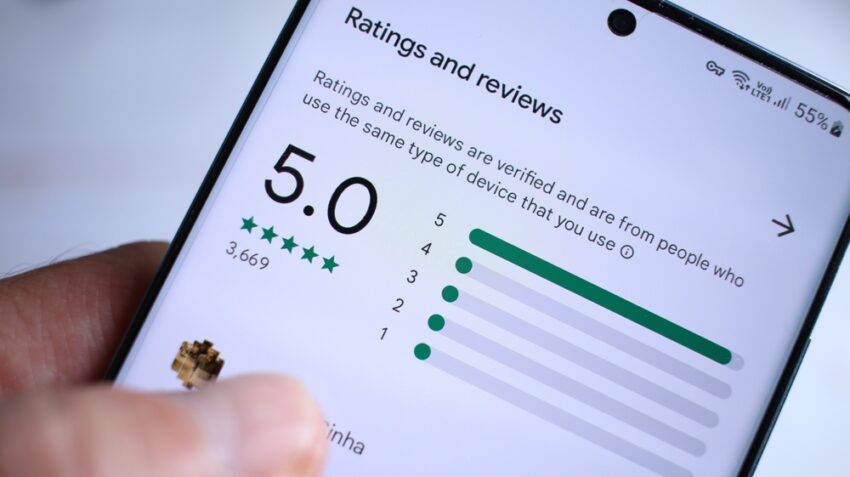
Companies that work in competitive markets in the UK can be affected by their online reputation, as it can determine the way prospective customers will view a company prior to reaching out.
Searching for a local business allows them to easily compare ratings, read customer reviews, see pictures, check business hours, and gauge business responsiveness to reviews.
Google reviews are a crucial component of today’s customer journey. It could be difficult for new businesses to build up a significant history of reviews, and for established businesses to build a big base of reviews in competitive local markets. These obstacles are just some of the reasons that you continue to see people searching to buy reviews and other reputation-management services. But, companies ought to seek more than just the quantity of reviews.
To build a sustainable internet reputation it is essential to deliver real customer experiences, accurate information, effective communication and quality service.
What Customers Look for in a Review Profile
It’s possible that a high star rating will catch their eye, but customers might dig deeper before making a decision about a business. They’ll evaluate if the reviews are fresh, if the users give them valuable data; if the company reacts to positive and negative reviews; and if the content they see on the profile is accurate.
For instance, if they’re searching for a tradesman in their local area they might want to find out if past customers were satisfied with the service and whether their service was reliable and professional. Food quality, service, cleanliness, food atmosphere and value are factors that may be of interest to a restaurant’s customer. The information provides the utility of reviews. Businesses must, therefore, consider their review profile as a part of the whole customer experience and not just a marketing statistic.
How UK Businesses Can Encourage Genuine Reviews
Making it easier for REAL customers to give feedback is one of the most sustainable ways. After a completed transaction or service, businesses can ask customers to be honest and provide feedback. They can offer a handy link to review or offer guidance on where customers can locate the relevant Google Business Profile. The request must not be directed in any way.
Businesses should avoid asking a consumer to rate the business or give a selection of words that indicates a rating. It is the customer’s right to tell how they really feel. This way, you’ll get a better review profile, and you’ll be able to learn from your positive and negative reviews.
Review Management Should Lead to Business Improvement
The best reputation strategies are customer feedback-based reputation systems that enhance the business. Management can track customer reviews to see common themes, and patterns in customer experiences. If, for instance, the complaints also pertain to the delays in responding, then there is a possible need to improve the process in customer support.
Regularly saying nice things about your knowledgeable employees might show an effective training or recruiting practice. This forms a kind of a circle:
Customer experience → Review and Insight → Improvement → Better customer experience.
This cycle can help foster a more robust customer satisfaction and reputation over time.
The Importance of UK Consumer Protection
The rise in popularity of search results for buy google reviews UK is indicative of the significance of online credibility in business. But a number of reviews isn’t enough for them to be trusted. Customers have a variety of ways to evaluate a business, from text, to photos, to business information, to public comments. The ultimate solution for businesses in the UK is to use great customer experience and real feedback, appropriate Google Business Profile details, and effective communication, along with ongoing enhancements. It’s also important for those interested in any review related service to review carefully the policies of Google and consumer protection requirements in the UK.
Finally, the intention should not be to make an impression of customer satisfaction. It should be to gain a business that is constant and generates it. A reputation that’s based from an authentic platform on real experiences will help customers, be useful for management, and will be more lasting for the growth of the business.
Frequently Asked Questions
Why do businesses search for Buy Google Reviews UK?
Businesses may be looking for ways to strengthen their online reputation, compete in local markets, and increase customer confidence. However, sustainable reputation growth depends on genuine customer experiences.
Is buying Google reviews safe for UK businesses?
Businesses should carefully evaluate any service offering paid or artificial reviews because Google prohibits fake engagement, while UK consumer-protection rules address fake and misleading reviews.
How can a business get genuine Google reviews?
Businesses can provide excellent service and politely invite genuine customers to share honest feedback after completing a transaction or service.
Should businesses respond to negative reviews?
Yes. Professional responses demonstrate that a company listens to customers and is willing to address legitimate concerns.
What should a business look for in a reputation-management provider?
Businesses should consider transparency, service scope, customer support, reporting, realistic expectations, and compliance with Google policies and applicable UK requirements.
Are reviews the only part of online reputation?
No. Reputation also includes customer experience, business information, website quality, communication, photographs, customer service, and how the company handles feedback.
What is the best long-term approach to Google reviews?
The strongest approach combines reliable customer service, genuine feedback, accurate profile information, professional review responses, and continuous improvement based on customer insights.

UBS: Commodities can add diversification as inflation, geopolitical risks rise

Putin tells US envoys Witkoff, Kushner that situation in Ukraine is ’difficult’

Interactive Brokers: Buy On Weakness, Not At The Highs

The branded giveaway feels like a modern invention, a product of trade shows, conference bags and marketing budgets.
In fact it is well over a century old, and its origin story involves a newspaperman, a batch of shoes and a stroke of accidental genius. The promotional product has a longer and stranger history than most of the brands that hand them out.
The father of the freebie
The tale that explains why promotional notebooks still work so well usually begins with Jasper Meek, a printer from Coshocton, Ohio, in the late nineteenth century, who hit upon the idea of printing a local shoe shop’s name onto burlap book bags.
It was a simple insight with enormous consequences. Instead of paying for a one-off advertisement, a business could put its name on a useful object and let everyday life do the advertising, repeatedly and for free. That basic logic has powered the industry ever since.
From calendars to conference swag
Through the twentieth century, the promotional product multiplied. Calendars, pens, matchbooks and rulers carried brand names into homes and offices. As trade shows grew, so did the giveaway, and the word ‘swag’, sometimes explained as ‘stuff we all get’, entered the marketing vocabulary. The principle never changed: usefulness plus a logo equals lasting exposure.
“What’s remarkable is how little the core idea has changed in a hundred and thirty years,” observes Jessica Bane, Director of Business Operations at GoPromotional. “Meek understood that a practical object people actually use will out-advertise almost anything. That’s still exactly why branded notebooks work. It’s the same insight, just with better paper and a sharper logo.”
The survival of the useful
Not every promotional product has aged well. The novelty gadget that amuses for a day and then clutters a drawer has fallen out of favour, both because it wastes money and because it increasingly troubles the environmental conscience. The items that have endured are the genuinely useful ones: the bag, the bottle, the pen and, reliably, the notebook.
The notebook has proved especially durable because it satisfies both halves of Meek’s original equation better than almost anything else. It is useful for a long time, and it is seen by many people whenever it is opened. More than a century after burlap bags in Ohio, it remains one of the purest expressions of the idea he stumbled upon.
The freebie grows up
Today’s promotional industry is a far cry from a printer hand-lettering shoe bags, with global research bodies measuring impressions and return on investment. Yet the smartest modern choices are the ones closest to Meek’s instinct: pick something people want to keep and use, which is why the notebook still features so heavily in considered merchandise campaigns.
What the impressions research revealed
Meek’s instinct, that a useful object beats a fleeting advertisement, has since been measured rigorously. Studies by bodies such as the Advertising Specialty Institute have found that a single promotional product can generate thousands of impressions over its lifetime, and that the majority of recipients can name the advertiser on an item they have kept. These are the kinds of numbers a one-off advertisement rarely achieves for a comparable outlay.
What the research really confirmed is that the value was never in the moment of handover but in the long life that follows. The burlap bag worked because children carried it for months; the modern notebook works because professionals carry it for years. The medium changed; the underlying logic did not.
Why usefulness became the deciding factor
As the industry matured and budgets came under closer scrutiny, usefulness moved from being a nice quality to being the decisive one. A product nobody wants is money spent on litter, however clever the branding. The items that survived this scrutiny were, almost without exception, the ones people would have found useful even without a logo on them.
The notebook sits comfortably in that category. It is something a great many people genuinely want and use, which means the brand is not imposing itself but hitching a ride on a welcome object. More than a century on, that is still the surest test of a good promotional product, and still the one the notebook passes most easily.
An old idea, still working
The corporate freebie has survived depressions, digital revolutions and changing tastes because its founding logic is close to unbeatable. Give people something worth keeping and your brand travels with it. Jasper Meek proved it with burlap. The modern notebook proves it still.

Macy's: The Tariff Refund Nobody Has Modeled


I am focused on growth and dividend income. My personal strategy revolves around setting myself up for an easy retirement by creating a portfolio which focuses on compounding dividend income and growth. Dividends are an intricate part of my strategy as I have structured my portfolio to have monthly dividend income which grows through dividend reinvestment and yearly increases. Feel free to reach out to me on Seeking Alpha
Analyst’s Disclosure: I/we have no stock, option or similar derivative position in any of the companies mentioned, and no plans to initiate any such positions within the next 72 hours. I wrote this article myself, and it expresses my own opinions. I am not receiving compensation for it (other than from Seeking Alpha). I have no business relationship with any company whose stock is mentioned in this article.
Disclaimer: I am not an investment advisor or professional. This article is my own personal opinion and is not meant to be a recommendation of the purchase or sale of stock. The investments and strategies discussed within this article are solely my personal opinions and commentary on the subject. This article has been written for research and educational purposes only. Anything written in this article does not take into account the reader’s particular investment objectives, financial situation, needs, or personal circumstances and is not intended to be specific to you. Investors should conduct their own research before investing to see if the companies discussed in this article fit into their portfolio parameters. Just because something may be an enticing investment for me or someone else, it may not be the correct investment for you.
Seeking Alpha’s Disclosure: Past performance is no guarantee of future results. No recommendation or advice is being given as to whether any investment is suitable for a particular investor. Any views or opinions expressed above may not reflect those of Seeking Alpha as a whole. Seeking Alpha is not a licensed securities dealer, broker or US investment adviser or investment bank. Our analysts are third party authors that include both professional investors and individual investors who may not be licensed or certified by any institute or regulatory body.

Putin says US-Russia contacts beneficial as talks begin with Witkoff and Kushner

A full order book is usually a welcome sight. It suggests customers are interested, future work is secured, and the business has plenty to keep it busy. However, orders on paper and money in the bank are two very different things.
A company can have months of work lined up and still find itself struggling to cover wages, supplier bills, and everyday expenses. Understanding why this happens is an important part of managing sustainable growth.
Orders Do Not Immediately Become Cash
Winning an order is only the beginning of the journey towards getting paid. Depending on the business, several weeks or even months may pass between accepting an order, completing the work, sending an invoice, and receiving payment.
During that period, the business still has costs to meet. Materials may need to be purchased, employees paid, and equipment hired before any money arrives from the customer.
The bigger the order book becomes, the more working capital may be required to deliver it.
Payment Terms Can Create a Gap
Payment terms are another common source of pressure. A business might complete a £20,000 project today but offer the customer 30, 60, or even 90 days to pay.
Meanwhile, its own suppliers may expect payment much sooner. This mismatch between incoming and outgoing payments can leave an otherwise successful business short of available cash.
Late-paying customers make the situation even harder. An invoice expected at the end of the month might not actually be settled until several weeks later.
Rapid Growth Can Put Cash Under Pressure
Growth sounds like the solution to financial pressure, but rapid expansion can actually increase it.
Imagine a manufacturer that suddenly wins twice as many orders as usual. It may need additional stock, more staff, overtime, or extra machinery to meet demand. Those expenses come about before the additional sales generate cash.
This is why growing businesses need to consider whether they have the financial capacity to fulfil new orders, rather than looking only at the value of the work they have secured.
Keep a Close Eye on Invoices
Good invoicing processes can make a big difference. Businesses should send invoices promptly, make payment terms clear, and follow up overdue accounts consistently.
It is also worth monitoring how long individual customers typically take to pay. A large order from a customer that routinely pays late may be less helpful to short-term cash flow than several smaller orders from reliable payers.
Where unpaid invoices are creating a significant gap, businesses may explore options such as invoice finance. Information about how this type of funding works is available at britishbusinessfunding.co.uk.
Forecast Cash, Not Just Sales
Sales forecasts and order books provide useful information, but they should be considered alongside a regularly updated cash flow forecast.
Map out when money is realistically expected to arrive and compare this with upcoming wages, tax payments, supplier invoices, rent and other commitments. Building in some allowance for customers paying later than expected can provide a more realistic picture.
A Balanced View of Business Health
A strong order book is certainly encouraging, but it should not be viewed as proof that a company is financially comfortable.
Healthy businesses pay attention to both future demand and available cash. By managing payment terms, invoicing quickly, forecasting carefully, and planning for the cost of growth, businesses can turn a busy order book into something far more valuable: sustainable, cash-generating work.

BITCOIN HISTORY IS SET TO REPEAT…

Have you seen this man? Police release new footage after woman in her 20s was raped in London’s Covent Garden

Buy 2 Enhanced Yield Hedges And Sleep Like A Baby





-

 Crypto World1 day ago
Bitcoin price stalls near $82K as key resistance holds
-

 Politics1 day ago
Best Gaming Laptops, CPUs, TVs, And Keyboards To Upgrade Your Set Up For GTA VI
-

 Tech1 day ago
The Birds Outside, Drawn For You Automatically
-

 Crypto World1 day ago
IMF Says El Salvador’s Post-Review Bitcoin Purchases Used No Public Funds
-

 Crypto World1 day ago
U.S. added stronger than expected 162,000 jobs in August as labor market bounced back
-

 Fashion1 day ago
Weekend Open Thread: Beyond Yoga
-

 Sports1 day ago
Alexandre Pato consortium’s Northampton Town investment approved
-

 Sports1 day ago
Golden Eaglets Drawn in Group B for 2026 WAFU B U17 Championship
-

 Sports1 day ago
Commanders’ Chig Okonkwo is a top breakout fantasy football candidate
-

 Crypto World1 day ago
XRP price breaks falling channel as bulls target $1.53
-

 Politics2 days ago
A new European chapter for Gibraltar
-

 Politics1 day ago
How To Avoid Winter Colds: 4 Everyday Habits That Spread Germs, Says Pharmacist
-

 Politics1 day ago
The House | Bin the lectures, bring gossip and be ready to banter: how the new PM should prepare for his Trump encounter
-

 Crypto World1 day ago
From warning to listing: UK’s largest retail investment platform opens access to crypto ETNs
-

 Tech1 day ago
A Worthy Android Ereader, With Some Tradeoffs
-

 Crypto World1 day ago
FinCEN flags $12.7B tied to Southeast Asia crypto investment scams
-

 Crypto World1 day ago
Trezor Data Breach Impacts 67,000 More US Customers
-

 Politics1 day ago
33 Cosy Autumn Home Decor Ideas: Blankets, Pumpkin Decorations, And Candles
-

 Sports1 day ago
Seven wickets in 21 balls: Sri Lanka’s Chamari Athapaththu scripts history with record-breaking spell
-

 Tech1 day ago
How To Edit Claude’s Memory
You must be logged in to post a comment Login