







Connect with us
DAPA Banner

Business

HSBC upgrades Block stock rating on workforce cuts, raises price target to $77

Published

on

Continue Reading
Click to comment

You must be logged in to post a comment Login

Leave a Reply

Business

Oil traders bet millions ahead of Trump's Iran talks post

Published

on

Market data shows the amount of oil trade rose before the US President said he would postpone attacks on Iran’s power plants.

Continue Reading

Business

FedEx launches same-day delivery with OneRail to rival Amazon, Walmart

Published

on

FedEx launches same-day delivery with OneRail to rival Amazon, Walmart

FedEx is launching a same-day shipping program with last-mile delivery company OneRail, just after Amazon announced it will start offering quicker shipping times, CNBC has learned exclusively.

The new partnership means customers now have a definite “by end-of-day offering,” according to Jason Brenner, FedEx’s senior vice president of digital.

“Our value prop is about speed, reliability and visibility, and we’re always trying to push the envelope on that value prop,” Brenner told CNBC.

FedEx is the latest company to join retailers’ race to offer the quickest delivery and highest convenience for consumers. Amazon announced last week that it is rolling out delivery windows of just one-to-three hours, and retailers like Walmart and Target have begun offering express delivery options as well — in part to keep up with the dominance of Amazon’s Prime service in recent years.

Advertisement

OneRail, a last-mile delivery software company, uses artificial intelligence to optimize delivery, routing and tracking for retailers’ deliveries. The company said it covers nearly 99% of the U.S. and has a network of more than 1,000 delivery drivers, providing 80,000 30-minute or less deliveries per day.

With the new partnership, FedEx will be able to use OneRail’s technology to allow retailers to offer same-day shipping, in part by utilizing the retailer’s store network. Customers will be able to choose more precise delivery windows, including two-hour and end-of-day service, in addition to near real-time tracking.

“We’re excited to partner with FedEx,” OneRail CEO Bill Catania told CNBC. “It unlocks even more capabilities for the retailer, which really lets them own their customer and their data. Now, they have another option, and on the piggyback of the announcement from Amazon earlier this week, I think this is something retailers are going to feel is very favorable.”

OneRail will now provide retailers with a rate card, and then those companies can determine their own same-day shipping prices depending on their own value propositions.

Advertisement

“This is going to be priced extremely competitively,” Catania said. “Retailers and brands [will be] able to build a highly compelling value proposition to their customers.”

Catania said the partnership has been years in the making, but the companies now felt like “the time is right in the market.” He emphasized that the structure allows retailers to deliver quickly without needing to change their infrastructure, which Brenner said was one of the new partnership’s biggest competitive advantages.

“Customers are increasingly demanding faster shipping,” Brenner said. “Same-day is increasingly a value prop that retailers are looking to offer.”

He added that the platform will also have flexibility for customers to choose specific windows for time-sensitive deliveries like furniture.

Advertisement

“Other retailers are doing this and building out their own ability and their own capabilities to offer same-day, but it’s very complex to manage if you stitch it together yourself,” Brenner said. “It’s very costly to manage, and it’s very complex and costly to scale.”

The announcement comes after Amazon started the shorter delivery windows in some parts of the U.S. to meet growing customer needs. The company got shoppers hooked on fast shipping when it introduced free two-day delivery alongside its Prime loyalty program in 2005. By 2019, it made one-day shipping the standard, and in the years since, it has poured money and resources into expanding same-day delivery.

More than 90,000 items qualify for Amazon’s new delivery program, including pantry staples, cleaning supplies, clothing and more. It plans to roll out its faster delivery windows across a broader swath of the country after its initial launch.

CNBC’s Annie Palmer contributed to this report.

Advertisement
Continue Reading

Business

Various Eateries changes name to Coppa Collective

Published

on


Various Eateries changes name to Coppa Collective

Continue Reading

Business

Wall Street Breakfast Podcast: Router Ban Plugs Into Gains

Published

on

Wall Street Breakfast Podcast: Router Ban Plugs Into Gains

Wireless router

alxpin/iStock via Getty Images

Listen below or on the go via Apple Podcasts and Spotify

U.S. bans new foreign-made routers over security risks. (00:14) SK hynix (HXSCL) to buy $7.9B equipment from ASML. (01:20) Puig (PUIGF) stock jumps after Estée Lauder (EL) confirms merger talks. (01:57)

This is an abridged transcript.

Advertisement

Netgear (NTGR) is on our biggest movers list. NTGR is up 14%.

Shares surged after the Federal Communications Commission added foreign-made Wi-Fi routers to its “Covered List,” effectively banning the import of new models on national security grounds.

The FCC said in a statement that the foreign-made routers introduce “a supply chain vulnerability that could disrupt the U.S. economy, critical infrastructure, and national defense” and pose “a severe cybersecurity risk that could be leveraged to immediately and severely disrupt US critical infrastructure.”

The move targets future devices while allowing existing inventory and installed routers to remain in use.

Advertisement

The impact will extend beyond Chinese players such as TP-Link, affecting U.S.-headquartered firms as well.

Companies including Netgear (NTGR), Eero (AMZN), and Google (GOOG) Nest design their products domestically but depend heavily on manufacturing bases in Asia.

SK hynix (HXSCL) is acquiring advanced production equipment valued at 12 trillion won ($7.9 billion) from Dutch company ASML (ASML), aiming to meet rising demand for memory chips.

The South Korean chipmaker announced the decision through a regulatory filing. Reports say the extreme ultraviolet scanners will be delivered by December 2027 for its next-generation production processes.

Advertisement

The move comes amid SK Hynix’s push to expand the production of memory chips, including high bandwidth memory, on the back of soaring demand from the artificial intelligence industry.

According to a separate report, SK Hynix (HXSCL) is seeking to raise 10 trillion won to 15 trillion won ($10 billion) from a potential listing in the US, the Korea Economic Daily reported.

The company is currently the main HBM supplier to Nvidia (NVDA), although Samsung Electronics (SSNLF) and Micron (MU) supply it with smaller volumes.

Shares of Spanish beauty group Puig (PUIGF) jumped on Tuesday after Estée Lauder (EL) confirmed it is in talks about merging the two companies.

Advertisement

Puig (PUIGF), which is behind brands such as Rabanne and Charlotte Tilbury, has a market cap of EU8.8 billion ($10.3B). Estee Lauder has a market value of $31B.

Puig’s Spain-listed shares jumped as much as 15% on Tuesday, while Estée Lauder (EL) was up 0.6% in U.S. premarket trading.

This is the top story in the Wall Street Breakfast newsletter. Here’s a link to sign up.

What’s Trending on Seeking Alpha

Advertisement

OpenAI flags Microsoft dependence as key business risk ahead of expected IPO – report

Broadcom exec says Taiwan Semiconductor is reaching capacity limits – report

Crude climbs on supply worries after Iran rejects U.S. negotiation claims

Catalyst watch:

Advertisement
  • Shareholders with Two Harbors Investment (TWO) will vote on the deal to be acquired by mortgage wholesaler UWM Holdings (UWMC).

  • JFB Construction (JFB) will begin trading on a split-adjusted basis following the two-for-one stock split.

  • The ShopTalk conference in Las Vegas will include a keynote from Reddit (RDDT) CEO Steve Huffman. Top execs from Wayfair (W), Stitch Fix (SFIX), Pinterest (PINS), Gap (GAP), Dutch Bros (BROS), and SharkNinja (SN) will also appear.

  • MercadoLibre (MELI) will appear at a Morgan Stanley conference.

  • Zillow Group (ZG) will host an investor event focused on the company’s AI innovation in real estate.

  • CrowdStrike (CRWD) CEO George Kurtz will give a keynote address at the RSA security conference.

  • Asure Software’s (ASUR) CEO will participate in a panel discussion on AI and Implications for Business Services and Software at the Roth Conference.

Dow, S&P and Nasdaq futures are in the green. Crude oil is up 2.5% at $90. Bitcoin is up 0.5% at $71,000. Gold is up 0.4% at $4,425.

The FTSE 100 is little changed and the DAX is down 0.2%.

The biggest movers for the day premarket: Outlook Therapeutics (OTLK) -25% – Shares plunged after the company announced a best-efforts public offering of common stock and accompanying warrants, with potential inclusion of pre-funded warrants.

Economic calendar:

Advertisement

Editor’s Note: This article discusses one or more securities that do not trade on a major U.S. exchange. Please be aware of the risks associated with these stocks.

Continue Reading

Business

Australian Tutoring Brand ‘Success Tutoring’ Continues Global Expansion With Launch of US Office and NZ Sites

Published

on

Michael Black, founder and Global CEO of Success Tutoring

Michael Black’s Success Tutoring expands across four continents as parents, students and franchise investor partners embrace innovative approach to learning, community based fundamentals and generous business returns.

Michael Black, founder and Global CEO of Success Tutoring

The fast growing Australian education franchise is challenging one of the biggest assumptions in modern learning, that more technology equals better outcomes.

Michael Black, founder and Global CEO of Success Tutoring, is leading one of the most aggressive international expansions in the sector, with the brand now operating across Australia, the United States, India, Canada and New Zealand. Further countries including Singapore and the UK are slated for later this year and next year.

At the centre of its growth is the proposition that the future of education needs to embrace technology as well as a return to paper.

“We are seeing a global shift,” Black said.
“Parents are questioning whether screen based learning is actually delivering results and they are actively looking for alternatives that build real capability. We believe that it needs to include both.”

Advertisement

A structural shift in education demand

The rapid expansion of Success Tutoring is being fuelled by broader structural changes across global education systems.

Rising migration is increasing demand for English language support, public education systems are under pressure in many markets and parents are investing more heavily in supplementary education to ensure their children keep pace.

Black said these conditions are creating a powerful tailwind for tutoring providers that can demonstrate measurable outcomes.

Advertisement

“Education is no longer optional,” he said.

“It is becoming one of the most important investments families make and they are far more discerning about what actually works.”

Building capability is essential for lifelong learning and increased confidence

While much of the education sector has moved toward digital delivery, Success Tutoring has deliberately positioned itself as a hybrid player, embracing both in the learning process.

Advertisement

Its model focuses on structured, paper based learning in English and mathematics, designed to strengthen core cognitive skills such as writing, problem solving and independent thinking.

“Technology has a role, but it should not replace thinking,” Black said.
“We are focused on teaching students how to process information, how to structure their thoughts and how to solve problems step by step.”

He argues that over reliance on screens risks weakening these foundational skills.
“When everything is done on a device, students can become dependent rather than capable,” he said.

“What we are seeing is that when students return to paper, their confidence and performance improve significantly.”

Advertisement

Strong returns drive franchise demand

The model is resonating not only with families, but also with franchise partners, who are increasingly attracted to education as a resilient and scalable sector.

Success Tutoring’s membership based model provides predictable recurring revenue while maintaining affordability for families, a combination Black says is critical to long term success.

“Franchise partners are seeing strong returns because the demand is consistent and growing,” he said.

Advertisement

“When you deliver real outcomes for students, the business builds itself through reputation and referrals.”

The result is a surge in franchise interest across multiple markets, with rapid rollout underway internationally.

New Zealand growth signals global appetite

New Zealand has emerged as a key indicator of the brand’s momentum, with six new centres opened in the past six months and further expansion in progress.

Advertisement

The speed of uptake highlights what Black describes as a universal demand for foundational learning.

“No matter the country, the feedback is the same,” he said.
“Parents want their children to be confident, capable and able to think for themselves.”

A global education movement, not just a brand

Black believes Success Tutoring’s growth reflects a broader shift in how education is valued and delivered.

Advertisement

“We are not just building a franchise network,” he said.

“We are part of a global movement back to fundamentals, where learning is about understanding, not just completing tasks.”

As education systems grapple with the impact of technology, workforce demands and population growth, he expects the tutoring sector to continue expanding rapidly.

“The market is growing year on year because the need is growing,” Black said.

Advertisement

“When schools are stretched and expectations are rising, families look for solutions that work.”

The future of learning may look familiar

For Black, the lesson is simple and somewhat unexpected.

“In a world obsessed with innovation, sometimes the most powerful solution is returning to what works,” he said.

Advertisement

As Success Tutoring continues its international expansion, one thing is becoming increasingly clear, the future of education may not be digital first, but fundamentals first.

Continue Reading

Business

BTQ Technologies: Strong Tech Stack, Empty Top Line (NASDAQ:BTQ)

Published

on

BTQ Technologies: Strong Tech Stack, Empty Top Line (NASDAQ:BTQ)

This article was written by

I started out as a crypto investor a decade ago and remain deeply active in the crypto space. I cover Bitcoin miners, digital asset treasuries, and crypto ETFs majorly, but I also seek alpha in tech equities, especially in emerging sectors like quantum computing and orbital intelligence. I have initiated coverage as a first analyst here on Seeking Alpha to cover names like SealSQ (LAES), Rezolve AI (RZLV), among others, with Buy ratings. Several of these tickers have delivered double to triple digit returns since initial coverage. I try to go beyond surface level metrics and headline numbers. I focus on fundamentals, capital allocation, momentum, market structure, and management execution. And most of all, your comments matter. Even the critical comments are very much welcome, as they improve my work and sharpens the analysis. I value thoughtful disagreements. I look forward to learning and compounding together in the market. Best, Mandela

Analyst’s Disclosure: I/we have no stock, option or similar derivative position in any of the companies mentioned, and no plans to initiate any such positions within the next 72 hours. I wrote this article myself, and it expresses my own opinions. I am not receiving compensation for it (other than from Seeking Alpha). I have no business relationship with any company whose stock is mentioned in this article.

Seeking Alpha’s Disclosure: Past performance is no guarantee of future results. No recommendation or advice is being given as to whether any investment is suitable for a particular investor. Any views or opinions expressed above may not reflect those of Seeking Alpha as a whole. Seeking Alpha is not a licensed securities dealer, broker or US investment adviser or investment bank. Our analysts are third party authors that include both professional investors and individual investors who may not be licensed or certified by any institute or regulatory body.

Advertisement
Continue Reading

Business

B&Q and Screwfix sales grow as owner battles decline abroad

Published

on

Business Live

FTSE 100 DIY retailer Kingfisher saw an uplift in the UK but reported a dip in France and Poland

B&Q and Screwfix dragged up Kingfisher's sales (Stu Forster/Getty Images)

A B&Q store(Image: Stu Forster/Getty Images)

B&Q and Screwfix owner Kingfisher saw the performance of its UK operations undermined by difficulties abroad, as revenues in France and Poland declined. The FTSE-100 company experienced falling sales across its French Castorama (-2.2 per cent) and Brico Depot (-2.3 per cent) divisions and in Poland (-1.1 per cent), whilst sales climbed by more than three per cent at UK operations B&Q and Somerset-based Screwfix.

Advertisement

The DIY retailer has been grappling with stagnant sales in Poland and France – where Castorama ranks among Kingfisher’s most persistently underperforming operations, according to analysts.

Kingfisher’s share price rose by two per cent during Tuesday’s early trading to 302p, leaving the stock up eight per cent over the past year but down more than 10 per cent since the pandemic-era DIY surge.

The business has concentrated on reducing costs in recent years, having shed £120m in excess expenditure last year, as reported by City AM.

The company recorded an adjusted pre-tax profit of £560m, up six per cent from last year and in line with analysts’ expectations. Total sales across Kingfisher’s operations edged up by only 0.2 per cent.

Advertisement

B&Q and Screwfix will be anticipating the DIY surge that arrives each spring, as rivals suggest the UK’s ageing housing stock maintains demand for home improvement elevated.

However, Kingfisher’s operations, like its competitor Wickes, have struggled in recent years to shift big-ticket purchases such as kitchen renovations, with Britons reducing discretionary spending as they feel the squeeze. The French Castorama brand is bearing the brunt of declining demand for major purchases, with sales for these products falling 4.5 per cent year on year.

Kingfisher attributed B&Q and Screwfix’s robust performance to an emphasis on e-commerce, powerful seasonal sales periods and B&Q’s purchase of several Homebase stores.

Kingfisher pressed ahead with its physical expansion in the UK, with Screwfix launching 32 new sites whilst shutting five.

Advertisement

B&Q opened 10 new outlets – eight of which were transformed from former Homebase properties – and closed three, as Kingfisher recorded 41 net openings across its international brands.

Kingfisher said it aims to drive growth by concentrating on sales to tradespeople because they shop more regularly and spend more than the typical customer.

The company has established dedicated trade zones in each of its outlets and recorded growth in trade sales of five and four per cent at B&Q and Screwfix, and as much as 47 per cent in Castorama Poland.

The firm unveiled a new £300m share buyback programme, having repurchased £1.2bn in shares since 2021.
Advertisement
Continue Reading

Business

Russell 2000 Futures Edge Lower in Early Trading Tuesday as Small-Cap Rally Pauses After Strong Monday Gains

Published

on

Social Media

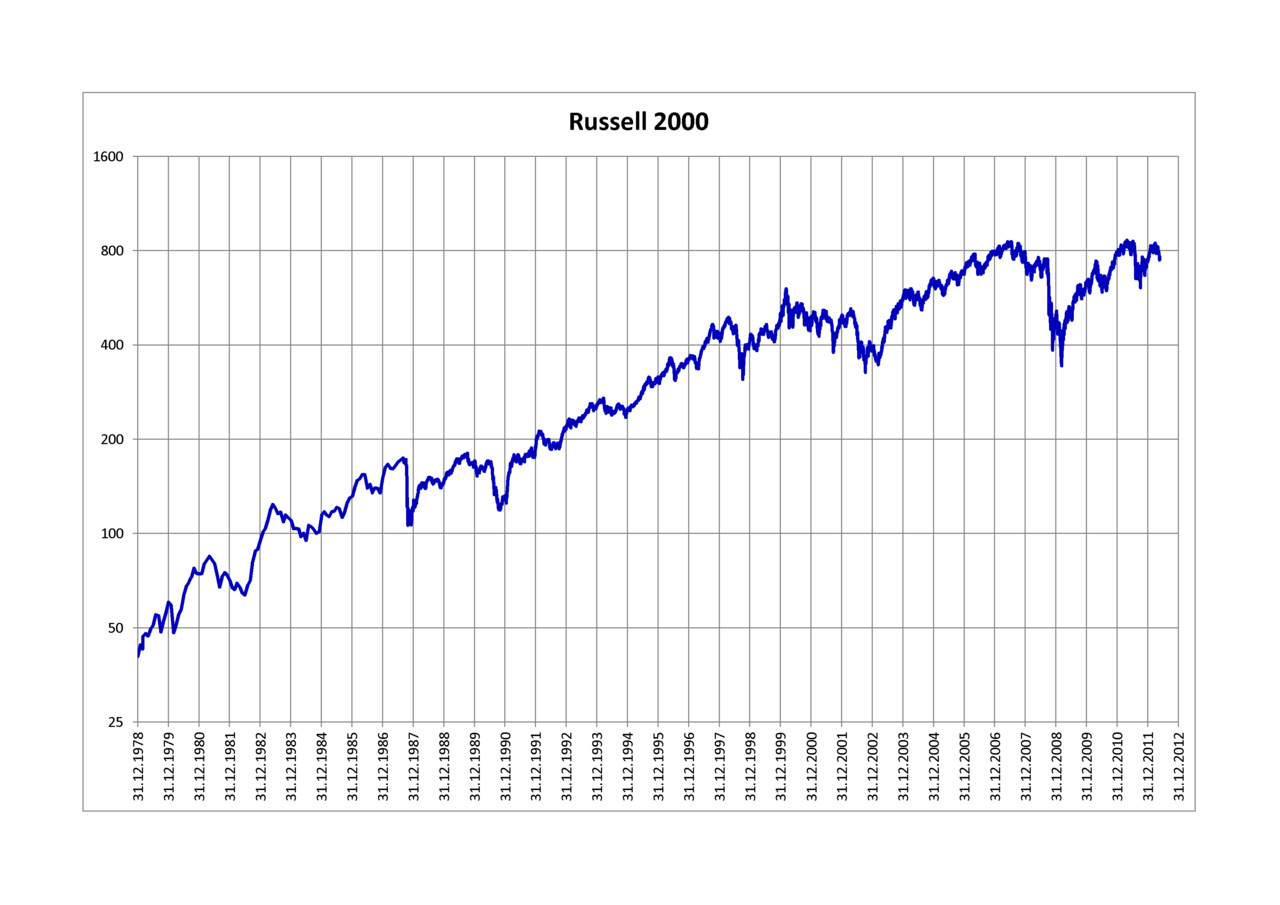
NEW YORK — Russell 2000 futures traded modestly lower in overnight and early Tuesday trading on March 24, 2026, pulling back slightly after a robust session for small-cap stocks the previous day that saw the benchmark index surge more than 2% and futures contracts post solid gains.

Russell 2000 Futures

The front-month E-mini Russell 2000 futures contract for June 2026 settlement hovered around 2,486 to 2,492 in early Asian and European hours, down roughly 0.7% to 0.9% from Monday’s settlement levels near 2,516. The cash Russell 2000 index itself closed Monday at approximately 2,516, up more than 77 points or 3.19% in one of its strongest daily performances in recent weeks.

Monday’s rally reflected continued investor rotation into small-cap names, which have shown relative strength amid expectations of steady Federal Reserve policy and potential fiscal support for domestic-focused companies. The Russell 2000, which tracks about 2,000 smaller U.S. companies, often benefits when investors shift away from mega-cap technology stocks toward more economically sensitive sectors such as regional banks, industrials and consumer discretionary firms.

Analysts noted that small caps entered correction territory earlier in March after a pullback but have since staged a comeback, supported by lower interest rate sensitivity compared with larger growth stocks. The index remains one of the few major U.S. benchmarks in positive territory year-to-date as of late March, though it has lagged the broader market’s record highs in prior months.

Trading volume in E-mini Russell 2000 futures was active Monday, with more than 280,000 contracts changing hands in the June contract alone. Open interest remains elevated as traders position for potential volatility around upcoming economic data, including consumer confidence readings and housing market indicators later this week.

Advertisement

The June 2026 contract, the most actively traded near-term future, opened Monday near 2,510 before climbing as high as 2,574 in intraday action and settling around 2,516. Overnight action Tuesday showed some profit-taking, with the contract dipping toward the 2,480 level at times before stabilizing.

Market participants cited several factors influencing small-cap sentiment. The Federal Reserve’s recent decision to hold rates steady in the 3.5% to 3.75% range, combined with a patient outlook for future cuts, has eased pressure on borrowing costs for smaller businesses. Additionally, expectations around fiscal measures — including potential infrastructure or domestic manufacturing incentives — have fueled optimism for companies heavily weighted in the Russell 2000.

However, headwinds persist. Elevated geopolitical tensions, fluctuating commodity prices and lingering inflation concerns have kept some investors cautious. Small-cap valuations, while still below historical averages relative to large caps in some metrics, have risen during the recent rebound, prompting warnings from chart analysts not to chase the momentum too aggressively.

The Russell 2000 futures contract serves as a key barometer for risk appetite in the equity market. Each point in the E-mini contract is worth $50, making it a popular tool for both hedgers and speculators. Micro E-mini versions, valued at $5 per point, have also seen growing participation from retail traders seeking exposure to small-cap moves with lower capital requirements.

Advertisement

Broader market context Tuesday showed mixed signals. Major indices futures pointed to a subdued open on Wall Street after Monday’s mixed session, with focus shifting to corporate earnings season progress and fresh inflation data. Small caps’ outperformance Monday stood in contrast to more modest moves in the S&P 500 and Nasdaq, underscoring the ongoing “size rotation” theme that has characterized parts of 2026 trading.

Technical levels to watch include support near 2,450–2,465 for the June futures and resistance around 2,550–2,575. A break above recent highs could signal further upside for small caps, while a decisive drop below 2,450 might test recent correction lows.

Economists and strategists remain divided on the sustainability of the small-cap rally. Some argue that improving earnings visibility for domestic-oriented firms, combined with any softening in the U.S. dollar, could provide tailwinds. Others caution that persistent higher-for-longer interest rates and potential slowdowns in consumer spending could weigh on smaller companies with less pricing power or balance sheet strength.

The Russell 2000’s composition — heavy in financials, industrials, health care and consumer stocks — makes it particularly sensitive to domestic economic conditions. Recent strength in regional bank stocks and cyclical names has helped lift the index, even as technology-heavy large caps face scrutiny over high valuations.

Advertisement

As trading progresses Tuesday, investors will monitor any updates from the Federal Reserve or comments from officials that could influence rate expectations. Housing data due later in the week may also offer clues about the health of the broader economy, given small caps’ exposure to real estate and construction-related businesses.

For traders, Russell 2000 futures provide an efficient way to gain or hedge exposure without trading hundreds of individual stocks. The contract’s liquidity and tight spreads make it a staple in institutional portfolios seeking small-cap beta.

Looking ahead, the June 2026 contract will eventually roll to September, with typical roll activity expected in coming weeks. Market participants are already positioning for potential volatility around key events later in the spring, including more Fed meetings and quarterly earnings from small-cap heavy sectors.

Overall, while early Tuesday action showed some consolidation, the underlying narrative for small caps remains one of cautious optimism. The Russell 2000 futures’ performance continues to be closely watched as a gauge of whether the long-awaited small-cap resurgence can gather further momentum in 2026.

Advertisement
Continue Reading

Business

Late-paying firms face multimillion-pound fines under new crackdown

Published

on

Small Business Commissioner appoints new board members to tackle late payments

Large UK companies that repeatedly delay paying suppliers will face multimillion-pound fines under sweeping new legislation aimed at tackling late payment practices and protecting small businesses.

The reforms, announced by the Department for Business and Trade, will grant enhanced enforcement powers to the Small Business Commissioner, enabling it to investigate poor payment behaviour and penalise persistent offenders.

At the centre of the new rules is a mandatory 60-day payment window for all commercial contracts involving companies with annual revenues above £54 million.

Suppliers will also gain the right to charge statutory interest on overdue invoices at a rate of 8 percentage points above the Bank of England base rate, significantly increasing the cost of late payments for larger firms.

Companies found to be consistently breaching payment standards will be required to publicly disclose their practices in annual reports, including explanations and steps taken to improve.

Advertisement

Business Secretary Peter Kyle said the measures represent the most significant overhaul of payment laws in a generation.

“It is simply unacceptable that so many businesses are forced to shut due to late payments,” he said. “These are the strongest, most robust changes to payment laws in over a generation.”

The government also confirmed it will consult on reforms to retention payments in the construction sector, a long-standing issue where funds are withheld and sometimes lost if a contractor becomes insolvent.

Industry bodies have broadly welcomed the reforms, describing them as a long-overdue intervention in a problem that has plagued SMEs for decades.

Advertisement

Federation of Small Businesses policy chair Tina McKenzie said the measures would help prevent large companies from using smaller suppliers as a source of “free credit”.

However, she cautioned that a 60-day payment window still falls short of best practice, arguing that a 30-day standard should remain the long-term goal.

Late payments are widely seen as one of the biggest barriers to SME growth, affecting cash flow, investment and hiring decisions. Government research suggests that dozens of businesses close each year as a direct result of delayed payments.

Emma Jones, the Small Business Commissioner, said the new powers would help reduce the administrative burden on smaller firms.

Advertisement

“Less time chasing debt means more time focused on growth,” she said, adding that stronger enforcement will help shift behaviour across the market.

The legislation is expected to be introduced when parliamentary time allows, with ministers indicating they will assess the readiness of businesses before mandating contractual changes.

The reforms mark a clear shift towards a more interventionist approach to payment practices, as policymakers seek to rebalance relationships between large corporations and their smaller suppliers.

For big businesses, the message is increasingly clear: late payment is no longer just a commercial issue, it is becoming a regulatory and reputational risk.

Advertisement

Amy Ingham

Amy is a newly qualified journalist specialising in business journalism at Business Matters with responsibility for news content for what is now the UK’s largest print and online source of current business news.

Advertisement
Continue Reading

Business

Commodity Radar: Explained: Why gold’s safe-haven appeal is weakening and how to ride the volatility

Published

on

Commodity Radar: Explained: Why gold’s safe-haven appeal is weakening and how to ride the volatility
Gold traded higher on Tuesday amid positive global cues, rising by over Rs 1,200 per 10 grams intraday to hit the day’s high of Rs 1,40,482 on the MCX. Gold’s safe-haven appeal has taken a hit since the onset of the Iran–Israel/US war, contrary to expectations of a bull rally during a time of crisis.

April gold futures slipped below the Rs 1,40,000 mark on Monday on the MCX. The metal has sharply corrected from its all-time peak of Rs 1,93,096, falling by Rs 56,800 or about 29%.

Meanwhile, COMEX gold is hovering around the $4,420.10 per ounce mark. With the war now in its fourth week, spot gold is down 15%, while it has fallen 22% from its January record high, according to a Reuters report.

The rupee’s continued weakness has also failed to support bullion prices, despite the INR hitting new lifetime lows almost daily.

Advertisement

Trivedi said its volatility against the US dollar amplifies moves in MCX gold, and even minor global price shifts translate into sharper domestic swings, increasing intraday and weekly volatility.


Commenting on the current trends, Jateen Trivedi, Vice President and Research Analyst at LKP Securities, said gold has witnessed a sharp corrective decline after recent highs, breaking below key short-term supports and entering a volatile phase. The market is now reacting to mixed geopolitical signals — initial escalation between the US–Israel, and Iran followed by unconfirmed de-escalation talks — creating sharp two-way moves, he said.
In his view, gold is currently caught between supportive factors such as geopolitical risk premiums and negative factors like de-escalation talks reducing safe-haven demand, along with inflation concerns keeping rate cuts uncertain. “This creates a high-volatility, non-directional environment,” he added.Annualized Actual Volatility (AAV), which measures gold’s volatility on the MCX, has risen 43% over the past five trading sessions.

Trivedi suggested the following near-term strategy for traders based on gold’s current price performance:

1) Key support & resistance

Prices have broken down from the Rs 1,60,000+ zone and are now trading near Rs 1,39,000, indicating a clear short-term downtrend with panic unwinding. Immediate resistance is seen at Rs 1,42,500, while major resistance is at Rs 1,45,000. Immediate support is placed at Rs 1,38,000, with major support at Rs 1,37,500.

The current structure suggests range-bound volatility after the breakdown, rather than an immediate trend reversal, he opined.

Advertisement

2) Momentum indicator

The RSI is near 29, entering oversold territory. This indicates selling exhaustion may emerge, but does not confirm a reversal — it only increases the probability of sharp pullback rallies. Prices have moved to the lower band with expansion, indicating strong volatility and trend acceleration. Such moves are typically followed by short-term mean reversion or sideways consolidation.

3) Technically speaking

EMA 8: Sharp downward slope, acting as immediate resistance

EMA 21: Also turning down, confirming a bearish structure

Prices trading well below both EMAs signal trend weakness and a sell-on-rise bias.

Advertisement

4) MACD

The MACD is in negative territory with a widening histogram, indicating strong bearish momentum. There are no signs of a reversal yet, but oversold conditions may trigger short-covering.

Gold trading strategy

Gold is likely to remain highly volatile within this band as markets react to conflicting geopolitical updates and macro signals.

The expected trading range is Rs 1,37,500 – Rs 1,42,500.

Selling pressure is expected in the Rs 1,42,000 – Rs 1,42,500 range.

Advertisement

Short covering or buying support is likely to emerge at Rs 1,37,500 – Rs 1,38,000.

He suggested that traders adopt a range-bound approach rather than aggressive directional bets, and maintain strict risk management, given headline-driven volatility.

(Disclaimer: The recommendations, suggestions, views and opinions given by the experts are their own and do not represent the views of The Economic Times.)

Advertisement
Continue Reading

Trending

Copyright © 2025