Connect with us
DAPA Banner
DAPA Coin
DAPA
COIN PAYMENT ASSET
PRIVACY · BLOCKDAG · HOMOMORPHIC ENCRYPTION · RUST
ElGamal Encrypted MINE DAPA
🚫 GENESIS SOLD OUT
DAPAPAY COMING

Business

Huge investment plans revealed by Welsh steelmaker

Published

on

Business Live

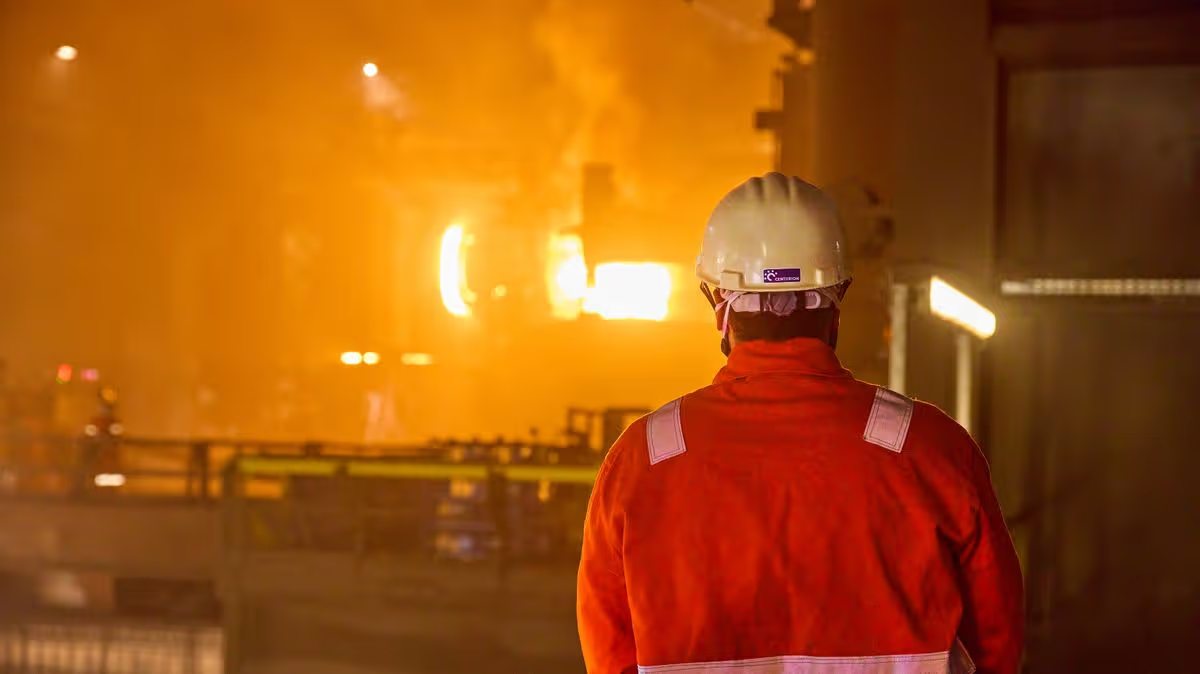
The £100m plans include a new hydrogen powered furnace at 7 Steel in Cardiff

7 Steel’s Cardiff plant.(Image: Robert Mills Photography Ltd)

Owners of Cardiff-based steel maker 7 Steel have confirmed £100m investment plans.

The investment, up to 2030, includes £30m for a new hydrogen-ready furnace, which would be the first large scale industrial application of hydrogen in steel manufacturing in the UK.

Advertisement

Czech investment company Sev.en Global Investments acquired the business from Spanish firm Celsa last year. The business makes steel from scrap steel through its electric arc furnace mill operation.

The £100m investment also covers plant upgrades, technology improvements and wider operational development.

The new furnace will be operational next year but will not initially be using hydrogen.

The Cardiff plant, which also serves as the firm’s UK headquarters, recycles domestic scrap into low-carbon steel for construction, infrastructure, transport and energy projects. Its products, such as rebar and mesh, have gone into some of the UK’s most recognisable buildings and infrastructure, including The Shard, Wembley Stadium, the Heathrow Terminal 5 extension, Hinkley Point C nuclear power station and rail’s HS2.

Advertisement

The investment arrives at an important moment for British steel. The UK Government, which is nationalising the last remaining heavy steelmaking plant in Scunthorpe, has set out plans to build 1.5 million new homes and upgrade infrastructure, both of which will require significant volumes of steel. Sev.en GI says the new policy direction reinforces its case for long-term investment in the sector.

7 Steel.(Image: ©Robert Mills Photography Ltd)

Alan Svoboda, chief executive of Sev.en Global Investments, said: “As the long-term owners of 7 Steel UK, we recognise the strategic importance of a robust independent British steel sector.”

“Steel is a strategic industrial opportunity which requires continuity and a willingness to invest through the cycle. That is exactly how we invest.”

Beyond capital investment, Sev.en GI has said it is committed to the workforce. 7 Steel UK pays 1.5 times the UK median salary and continues to train the next generation of engineers, helping to keep skilled industrial jobs in Cardiff and across the UK.

Advertisement

7 Steel employs over 1,600 people across the UK, with 1,050 based in Wales, of which 800 are in Cardiff. It has 14 sites including four fabricator sites in Neath, Newport, Crumlin, and Whiteheads in Newport, which employ 250. The Cardiff site produces more than one million tonnes of steel a year, making it the UK’s third biggest steel producer.

The operation in the Tremorfa area of Cardiff has been owned and operated by some of the biggest names in British industry such as Guest Keen & Nettlefolds (GKN) before becoming British Steel in 1970.

The blast furnace side of the operations closed in 1978 with the remaining works going through a variety of owners. Previous owners Celsa acquired it in 2003.


Advertisement
Continue Reading
Click to comment

You must be logged in to post a comment Login

Leave a Reply

Business

How the Iran Oil Shock Disrupts Regional Supply Chains

Published

on

How the Iran Oil Shock Disrupts Regional Supply Chains

Asia is in the grip of a deepening plastics emergency as the Iran oil shock chokes off supplies of a critical petrochemical feedstock, sending packaging prices soaring and raising alarm across food, medical, and consumer goods industries from Indonesia to Japan.

Key takeaways

  • Asia imports around 70% of its naphtha from the Middle East, and the Strait of Hormuz closure has nearly doubled prices, sending plastic resin costs up as much as 59% and threatening production shutdowns across the region.
  • The shortage is hitting everyday goods and medical supplies simultaneously, with food packaging, beverage containers, and hospital plastics such as syringes and IV bags all affected across Indonesia, Japan, South Korea, and beyond.
  • Governments have responded with emergency tariff suspensions and export bans on naphtha, while recycled plastic prices have quadrupled from $400 to $1,600 per ton as manufacturers scramble for alternatives.

At the heart of the crisis is naphtha, a petroleum derivative and essential building block for the polymers that underpin virtually all modern plastic packaging.

The closure of the Strait of Hormuz following U.S. and Israeli airstrikes on Iran in late February has dramatically curtailed the region’s access to that raw material.

The price of naphtha in Asia has nearly doubled since the conflict began, while prices for plastic resins have climbed as much as 59% to record highs.

On the ground in Jakarta, the crisis is already palpable. At Toko Durga Plastik, a packaging retailer in the Indonesian capital, daily sales have fallen by almost half over the past month.

Advertisement

A sign at the entrance warns customers of “skyrocketing” prices. “Sourcing supplies is impossible because the stock is limited,” said Arif, a worker at the shop. Indonesia imports virtually all of its naphtha, the overwhelming majority of which previously arrived from the Middle East. Suppliers have warned plastics producers they may have to suspend operations entirely.

From Food Stalls to Hospital Wards

The disruption is not confined to Indonesia. Asia imports around 70% of its naphtha from the Middle East, and the shockwaves are being felt across the region.

In Japan, fears are mounting that patients with chronic kidney failure will struggle to access the plastic medical tubes used in hemodialysis. In South Korea, health regulators launched a nationwide probe into hoarding of syringes, needles and gloves, and Seoul imposed an export ban on naphtha to protect domestic supply.

Taiwan saw plastic goods prices surge as much as 40%, while Malaysia’s Farm Fresh dairy brand said a shortage of PET resin caused its milk cartons to vanish from supermarket shelves. In India, prices for plastic bottle caps have quadrupled since the war started.

Advertisement

“This spills into everything very, very quickly: beer, noodles, chips, toys, cosmetics,” said Dan Martin, co-head of business intelligence at advisory firm Dezan Shira and Associates.

Experts warn the burden will fall hardest on smaller enterprises. “Large firms typically have access to tools such as hedging, long-term contracts, and inventory buffers. Most smaller manufacturers do not,” said Chen Ping-Kuo, a professor of industrial engineering at Japan’s Ritsumeikan Asia Pacific University. He cautioned that the disruption will “move quickly through supply chains,” given Asia’s deep dependence on plastic across virtually every industry.

No Easy Exit

Governments across the region are responding with emergency tariff suspensions and efforts to diversify supply sources. At the same time, manufacturers of paper, bamboo and recycled packaging are reporting unexpected windfalls as companies scramble for alternatives. The price of recycled plastics has jumped from around $400 per ton before the crisis to $1,600 per ton today.

The IMF has warned that for affected economies, “all roads lead to higher prices and slower growth.” With no resolution to the Strait of Hormuz closure in sight, analysts warn the worst may be yet to come.

Advertisement
Continue Reading

Business

Saudi Aramco Sees Oil Market Losing 100 Million Barrels a Week if Hormuz Remains Closed

Published

on

Alphabet Is Selling 100-Year Debt as Part of a Big Bond Sale

Saudi Aramco Sees Oil Market Losing 100 Million Barrels a Week if Hormuz Remains Closed

Continue Reading

Business

Kopin Corporation (KOPN) Q1 2026 Earnings Call Transcript

Published

on

OneWater Marine Inc. (ONEW) Q1 2026 Earnings Call Transcript

Operator

Good morning, everyone, and welcome to the Kopin Corporation First Quarter 2026 Earnings Conference Call. [Operator Instructions]

This conference is being recorded today, and the earnings press release accompanying this conference call was issued earlier today. Before we get started, I’d like to remind everyone that during today’s call, we will be making forward-looking statements as defined in the Private Securities Litigation Reform Act of 1995. These statements are based on the company’s current expectations, projections, beliefs and estimates and are subject to a number of risks and uncertainties that cause actual results to differ materially from those forward-looking statements.

Potential risks include, but are not limited to, demand for our products, operating results of our subsidiaries, market conditions and other factors discussed in our most recent annual report on Form 10-K and other documents filed with the Securities and Exchange Commission.

Advertisement

Although the company believes that the assumptions underlying these statements are reasonable, any of them can be proven inaccurate, and there can be no assurances that the results will be realized. The company undertakes no obligation to update the forward-looking statements made during today’s call.

Kopin Corporation’s Chief Executive Officer, Michael Murray, will begin today’s call with an overview of Kopin’s strategic progress and business developments during the first quarter and the period that has followed. Following Michael, Kopin’s CFO, Erich Manz, will review the company’s first quarter

Advertisement
Continue Reading

Business

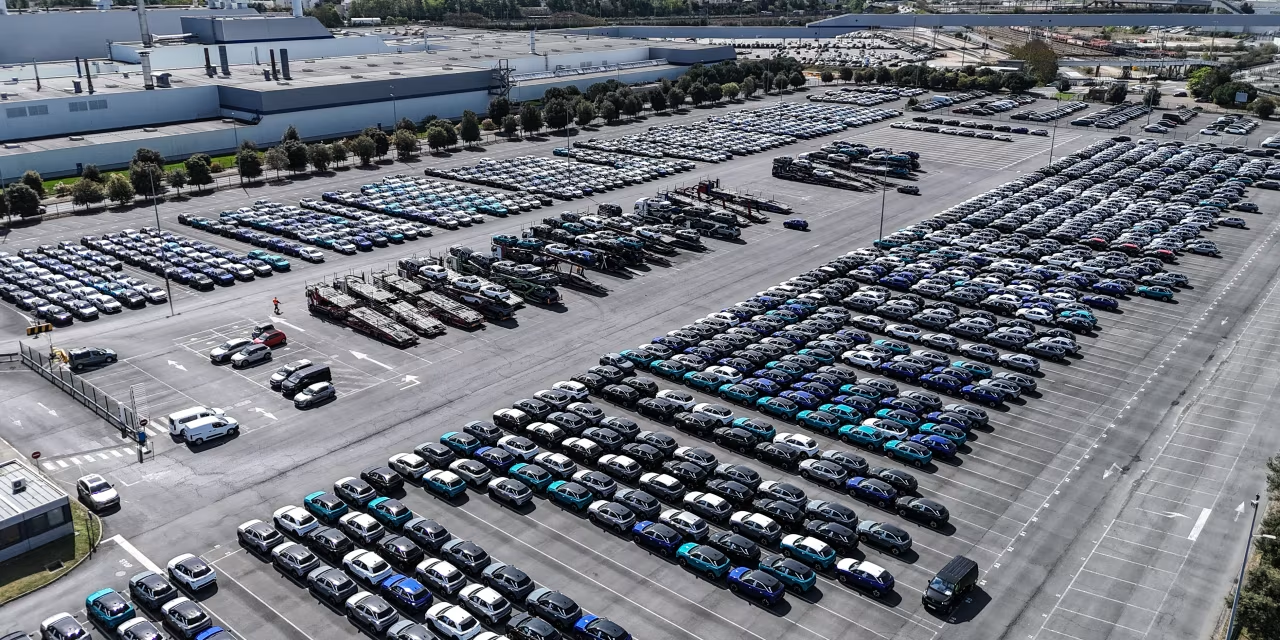
This Car Company Doesn’t Fear China

Published

on

This Car Company Doesn’t Fear China

This Car Company Doesn’t Fear China

Continue Reading

Business

LifeStance Health Group completes offering of 35 million shares by selling stockholders

Published

on


LifeStance Health Group completes offering of 35 million shares by selling stockholders

Continue Reading

Business

Yindjibarndi CEO Michael Woodley responds to $150m Fortescue compensation order

Published

on

Yindjibarndi CEO Michael Woodley responds to $150m Fortescue compensation order

The boss of a Pilbara native title group has hailed a landmark compensation verdict as a win for Indigenous rights, while expressing disappointment at other elements of the judgement.

Continue Reading

Business

Karman Space & Defense posts in-line Q1 earnings per share, revenue beat; Shares fall 4%

Published

on


Karman Space & Defense posts in-line Q1 earnings per share, revenue beat; Shares fall 4%

Continue Reading

Business

Gold, housing plays take a hit as PM Modi’s austerity pitch rattles consumer-facing stocks

Published

on

Gold, housing plays take a hit as PM Modi's austerity pitch rattles consumer-facing stocks
Shares of jewellery makers and real estate developers came under sharp selling pressure on Monday after Prime Minister Narendra Modi called for a year of financial restraint, urging citizens to postpone gold purchases and reduce discretionary travel as India grapples with elevated energy costs and geopolitical uncertainty.

The comments, made during a public address in Secunderabad, triggered an immediate market reaction in sectors closely linked to household spending.

Among jewellery stocks, Titan Company Limited fell nearly 4%, Kalyan Jewellers India Limited dropped around 6%, while Senco Gold Limited also declined about 6% during intraday trade.

Real estate counters were also under pressure after Modi advised citizens to work from home wherever possible to help reduce fuel consumption amid the ongoing West Asia conflict and rising crude prices. Brigade Enterprises fell nearly 4%, Prestige Estates dropped about 5%, while Puravankara slipped close to 2%.

Advertisement

Modi’s remarks struck a sensitive chord in India, where gold is not just an investment product but deeply tied to weddings, festivals, family savings and inter-generational wealth. Any signal that could potentially affect household spending patterns tends to quickly reflect in listed consumer-facing businesses.


The market reaction also came at a time when gold prices remain near record highs and crude oil continues to trade above $100 a barrel, raising concerns around inflation, import costs and consumer purchasing power.
Ponmudi R, CEO of Enrich Money, said the immediate selloff reflects sentiment rather than a structural demand concern.”Such comments can create short-term pressure on jewellery stocks because investors start pricing in possible moderation in festive or wedding demand. But Indian gold buying is deeply cultural and emotionally driven, so the risk of a prolonged demand destruction remains limited,” he said.

Ponmudi added that organised jewellery players could continue gaining market share even if overall demand slows temporarily, as consumers increasingly prefer trusted brands and transparent pricing.

Analysts also pointed out that the real estate selloff appears more sentiment-driven than fundamental. Work-from-home adoption can influence commercial mobility and near-term housing sentiment, but India’s residential demand continues to be supported by urbanisation, income growth and supply discipline in key markets.

(Disclaimer: Recommendations, suggestions, views, and opinions given by experts are their own. These do not represent the views of the Economic Times)

Advertisement
Continue Reading

Business

Water firm fined after customers' details hacked

Published

on

Water firm fined after customers' details hacked

The hack went undetected by the Staffordshire firm for 20 months, regulator says.

Continue Reading

Business

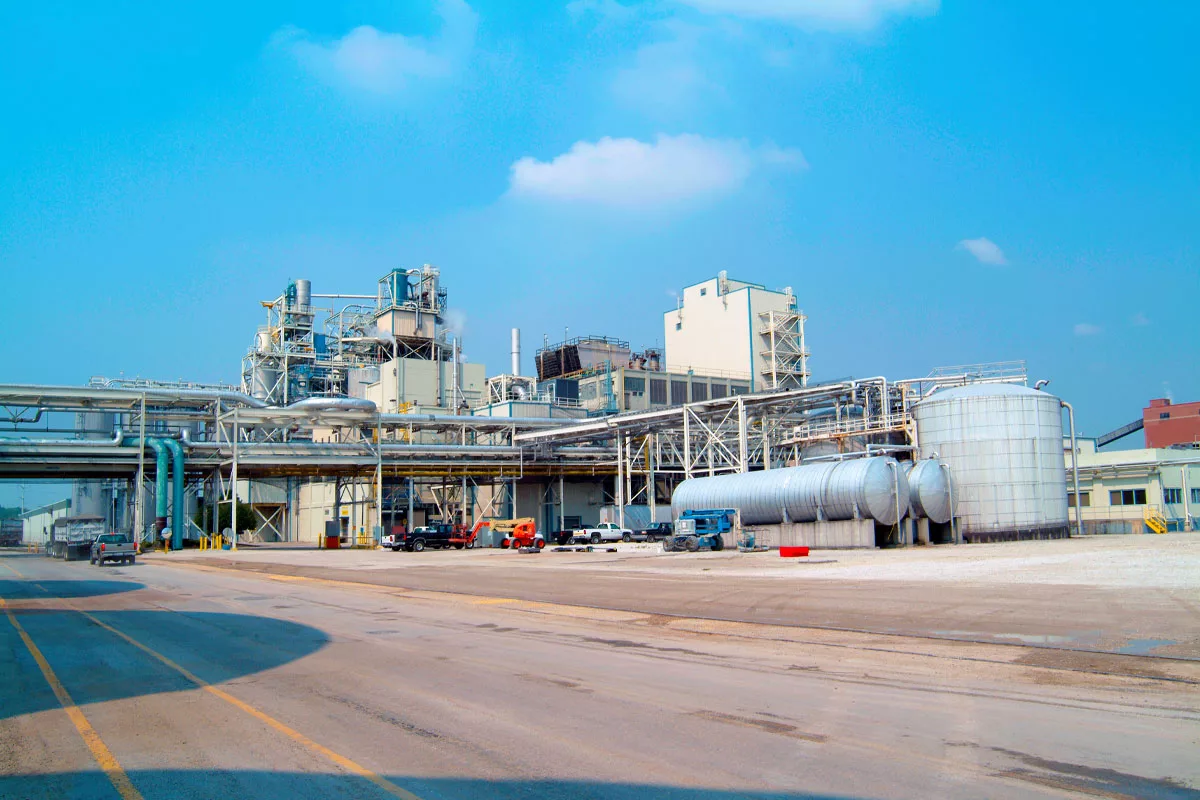
Ingredion impacted by sweetener processing issues

Published

on

Ingredion impacted by sweetener processing issues

Company dealing with higher costs in Argo facility recovery.

Continue Reading

Trending

Copyright © 2025