

Development of 3,500-homes planned for Glynchbrook, near junction 2 of the M50

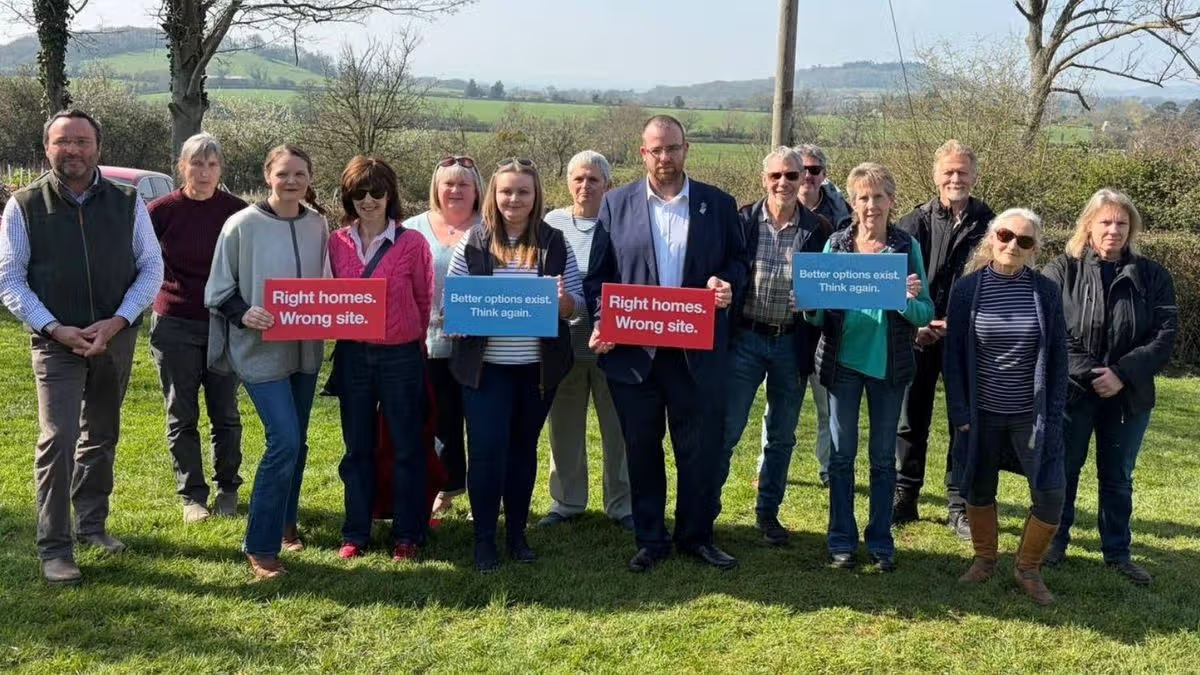
Forest of Dean MP Matt Bishop with residents at a United Against Glynchbrook meeting in March 2026(Image: Local Democracy Reporting Service)
Hundreds of people have signed an open letter calling for a controversial 3,500-home town on the A417 to be “ruled out” of a council’s new blueprint for housing.
Forest of Dean residents have signed an open letter calling on councillors to rule out the controversial new town which was previously put forward at Glynchbrook, near junction 2 of the M50.
The Forest of Dean District Council decided on June 30 to withdraw its draft local plan and work on a new blueprint, which will set out where more than 13,000 homes will be built over the next 20 years.
Residents in the Redmarley area warn the Glynchbrook site remains “unsustainable” and a gathering in the village this week, attended by Forest MP Matt Bishop, has sent a clear message that the community would stand against the proposed development’s return.
Vicky Goodall, 52, a nurse from Redmarley, said: “Our open letter offers the council a workable solution that delivers on the housing targets, and ensures development is sustainable.”
Members of United Against Glynchbrook (UAG) assembled in Redmarley Village Hall on August 4, on the edge of the site that would host the proposed 3,500 home new town, wedged against the Malvern Hills National Landscape and the historic villages of Redmarley and Lowbands.
In a Facebook post following the event, Matt Bishop MP said: “I have made it clear that I do not support this large settlement … it is so important that residents take part… to ensure the local plan reflects local need.”
Mike Holtom, 66, a retired supply chain planning manager, added: “Glynchbrook is not the right place to build homes – everyone, including the council, has accepted that. However, we know that new homes need to be built in order to meet the district’s housing target.
“We hope the council considers our proposals – which are evidenced using the assessments of experts in their field.
“By expanding Lydney and Tutshill further, our reports show that both of those areas can be made even better places to live and the council will not need to build new towns.”
At the meeting, Vicky Goodall said: “We want new homes to be built, but they need to be built in places that deliver for people that move there.
“New homes need to be built near stations, schools and shops – our plan sets out how those homes can be delivered. We hope councillors engage with it.”
While residents have welcomed the local plan being pulled, UAG is concerned that the council may attempt to push Glynchbrook through again.
Phil Waring, 66, a Lowbands resident, said: “The new Local Plan is a great chance for the council to reassess how new homes can be delivered in the Forest of Dean in a sustainable way.

The area proposed for development at Glynchbrook(Image: Redmarley Parish Council)
“Glynchbrook must be ruled out. Everyone knows it is not a viable option. I really hope Lydney and Tutshill are considered by the council – they are the options that can allow the council to meet its target in a sustainable way.
“Local residents have signed this open letter to make clear to the council that local people are still engaged in the Local Plan process. We hope they engage with our proposal.”
In the letter, residents argued that Glynchbrook would fall foul of the government’s new criteria for developing local plans, set out in the National Planning Policy Framework, as updated in December last year.
For instance, residents claimed that Glynchbrook could not deliver “sustainable transport“, as it would depend almost entirely on the car, with the nearest town 10km away and the nearest railway station 11km, and would make local roads roughly 50 per cent busier in the morning peak.
It notes that an independent study calls it “essentially unsuitable for a new settlement” and could harm the historic Chartist settlement of Lowbands, noting that no Infrastructure Delivery Plan, viability assessment or Strategic Flood Risk Assessment was ever produced for the site.
Using the government’s new methodology for determining local plans, UAG points to sites it says already have the infrastructure a new town lacks: Lydney, the district’s largest town, where analysis by Create Streets shows a “gentle density” of well-designed streets could add a further 3,200 to 4,600 homes and could be built around its existing station, schools and high street.

A Glynchbrook campaign sign off the A417 near Redmarley(Image: Local Democracy Reporting Service)
An independent landscape study by LVIA Ltd rated Lydney as “most capable of accommodating growth”.
In addition, UAG recommends a small expansion of Tutshill of around 500-700 homes, within 2km of Chepstow station, as well as wider spread of smaller sites, providing an additional 2,800 homes. The same study found “strong potential for landscape-led expansion.”
UAG says it will work constructively with the council as work on the new local plan gets underway.
The district council’s decision to pull the plan came after more than 3,600 responses to teh public consultation they held between January and March this year.
Feedback highlighted strong concerns about the options required to meet Government housing targets and proposed site suitability for the Forest of Dean.
Council leader Adrian Birch (G, Tidenham) said at the time that the authority’s first priority is to ensure that they listen to and deliver for residents.
“Having spoken to many residents at our in-person events earlier this year, and having carefully reviewed the consultation feedback, it is clear that the options needed to meet Government housing targets could not be achieved without more work to be right for our area,” he said.












































You must be logged in to post a comment Login