
Business
Hut 8 Stock Explodes Past $63 on AI Data Center Pivot as Bitcoin Miner Transforms Into Powerhouse

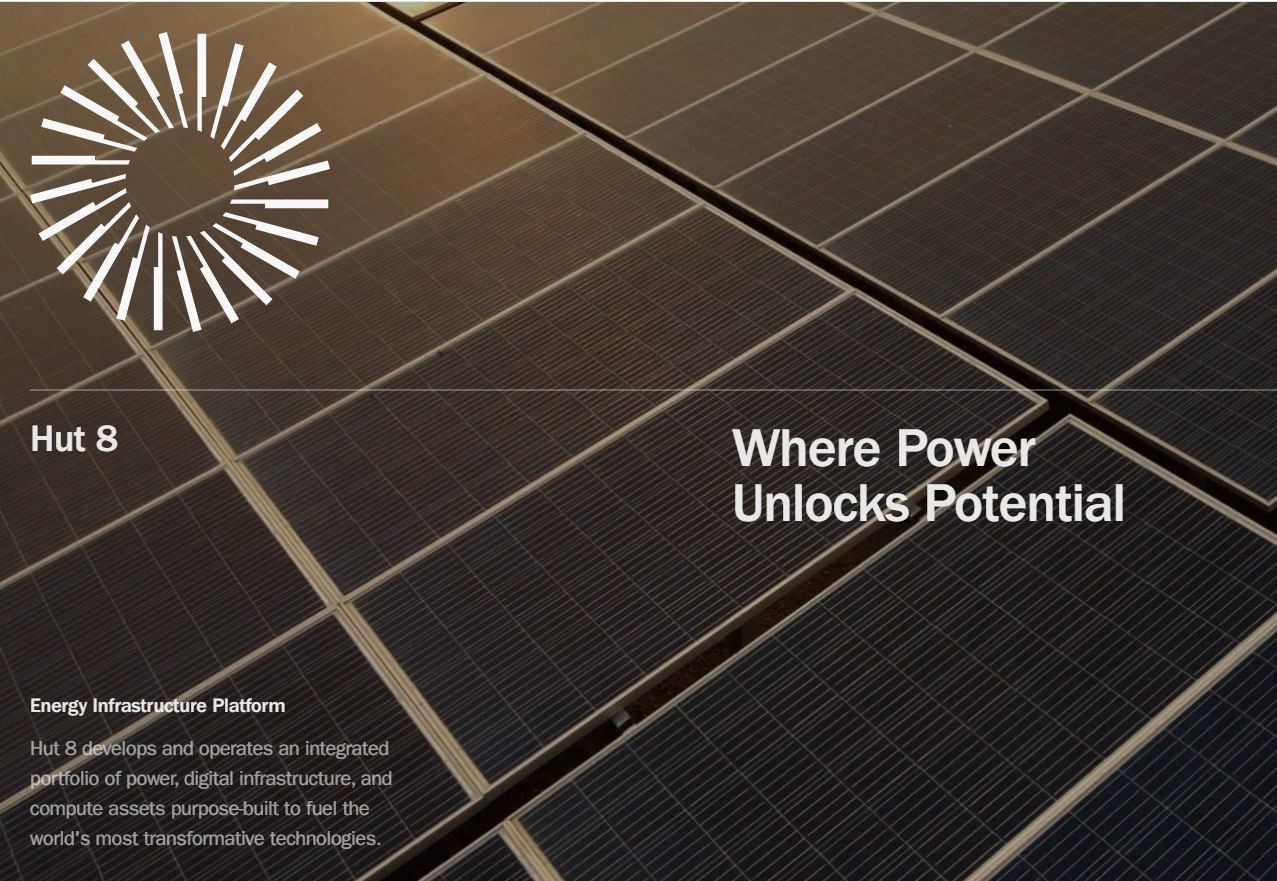
MIAMI — Hut 8 Corp. shares surged more than 3% Thursday to trade around $63.72, extending a blistering multi-day rally that has pushed the stock up sharply in recent sessions as investors pile into the former Bitcoin miner’s aggressive shift toward artificial intelligence and high-performance computing infrastructure.
The NASDAQ-listed company (HUT) climbed as high as $67 intraday Thursday amid broader optimism in risk assets following a U.S.-Israel-Iran ceasefire that eased geopolitical tensions. The stock has now skyrocketed roughly 84% year-to-date in 2026, trading near its 52-week highs and reflecting Wall Street’s growing conviction that Hut 8 is evolving from a volatile crypto play into a critical player in the AI data center boom.
Hut 8, which operates as an energy infrastructure platform integrating power, digital assets and large-scale compute, posted mixed fiscal 2025 results in late February but highlighted a landmark 15-year, 245-megawatt IT lease at its River Bend campus in Louisiana with cloud provider Fluidstack. The deal carries an estimated $7 billion in base-term contract value and is backed by commitments from major tech players, including Google parent Alphabet.
The transaction marks Hut 8’s first major commercialization of AI infrastructure at scale and underscores its “power-first” strategy. Rather than relying solely on Bitcoin mining revenue, the company is leveraging its access to low-cost power, permitted sites and modular facilities to host energy-intensive AI and HPC workloads.
Fiscal fourth-quarter revenue for the period ended Dec. 31, 2025, jumped 179% year-over-year to $88.5 million, driven by a 326% surge in compute revenue to $81.9 million. Full-year 2025 revenue climbed 45% to $235.1 million. However, the company swung to a massive net loss of $301.8 million in the quarter — largely due to $401.9 million in unrealized losses on digital assets amid Bitcoin price volatility — compared with a year-earlier profit. Adjusted figures also reflected the impact of those non-cash swings.
Despite the headline loss, management emphasized operational progress and a pivot toward more stable, contracted cash flows from AI leases. Compute revenue now dominates the mix, and the company highlighted gross margin expansion in that segment.
“We are executing on our strategy to become a leading energy infrastructure platform powering next-generation use cases,” Hut 8 executives said in the earnings release. The firm is prioritizing capital efficiency, expanding its power portfolio and converting a robust pipeline of AI opportunities into revenue.
Hut 8’s River Bend project has drawn particular attention. The campus is being positioned to support hyperscale AI training and inference clusters. Analysts have modeled potential annual revenue from the site reaching billions in coming years if additional phases materialize. Some projections suggest the broader AI pivot could generate over $2 billion in annual revenue by 2029, supported by long-term leases.
The company is also pursuing modular infrastructure designs that allow dynamic switching between AI/HPC workloads and Bitcoin mining depending on profitability. This flexibility provides a hedge against crypto volatility while capitalizing on surging demand for GPU clusters from companies racing to build out large language models and other AI systems.
Recent market momentum has been fueled by positive analyst commentary and broader sector tailwinds. Bitcoin mining stocks with credible AI exposure have outperformed pure-play miners in 2026, as hyperscalers pour hundreds of billions into data center expansion. Hut 8’s access to gigawatt-scale power potential positions it uniquely in a market constrained by electricity shortages and grid delays.
Analysts maintain a generally bullish stance. Consensus ratings lean toward Strong Buy, with average price targets around $62 to $72, though some firms have issued more aggressive calls citing the $7 billion Fluidstack deal and potential Google/Anthropic exposure. One research firm previously hiked its target to $136, citing massive upside from River Bend leasing revenues.
Hut 8 is not without risks. Its financials remain sensitive to Bitcoin price swings, and the heavy unrealized losses in Q4 highlighted ongoing balance sheet volatility. The company has yet to achieve consistent GAAP profitability, and execution on large-scale data center builds faces industry-wide headwinds, including shortages of electrical equipment like transformers and potential delays in U.S. grid infrastructure.
Broader challenges in the AI buildout — with nearly half of planned 2026 data centers facing delays or cancellations due to power and component constraints — could temper near-term growth. Still, Hut 8’s existing permitted sites and power agreements give it a head start over traditional data center developers.
The stock’s recent surge accelerated on April 8, when shares jumped more than 16% on high volume amid easing macro concerns and renewed AI enthusiasm. By mid-afternoon Thursday, April 9, shares were changing hands around $63.72, up about 3.7% on the session with elevated trading activity.
Hut 8 executives have signaled 2026 will focus on project execution, converting the AI pipeline into contracted revenue and maintaining capital discipline. The company continues to advance multi-gigawatt growth plans while optimizing its Bitcoin mining fleet for efficiency.
Founded as a Bitcoin mining operation, Hut 8 has strategically repositioned itself around energy infrastructure. It controls significant power capacity across sites in North America and has invested in high-density computing capabilities suitable for both cryptocurrency and AI applications.
Investors appear to be rewarding the pivot. The stock has broken out of its earlier trading range, trading well above its 200-day moving average and approaching all-time highs in some sessions. Market capitalization now exceeds $6 billion, reflecting renewed growth expectations.
Still, volatility remains a hallmark. As a hybrid Bitcoin-AI play, Hut 8 can swing sharply on crypto prices, interest rate moves or updates from Big Tech on capital spending. Upcoming quarterly results, expected around mid-May, will be closely watched for progress on AI lease deployments and operational metrics.
Hut 8 employs about 248 people and maintains operations across mining, power sales and digital infrastructure. Its facilities are designed for rapid deployment of compute resources, giving it an edge in the race to bring online the massive GPU clusters demanded by the AI revolution.
As artificial intelligence spending by companies like Microsoft, Amazon, Google and Meta continues to accelerate — with combined 2026 capex forecasts topping $650 billion — players like Hut 8 that control ready power and sites are drawing fresh scrutiny from growth investors.
Whether the rally sustains will hinge on successful delivery at River Bend, further contract wins and the ability to translate AI ambitions into tangible, recurring revenue streams less dependent on Bitcoin.
For now, sentiment favors the bulls. With its $7 billion anchor tenant deal and modular flexibility, Hut 8 is emerging as one of the more compelling stories at the intersection of energy, crypto and artificial intelligence.



Hi, my name is Kody. Aside from my articles here on Seeking Alpha, I am also a regular contributor to Sure Dividend, The Dividend Kings, and iREIT+Hoya Capital. I have been investing since September 2017 (age 20) and interested in dividend investing since about 2009.Since July 2018, I have ran Kody’s Dividends. This is a blog that is documenting my journey towards financial independence using dividend growth investing as the means to transform the dream of financial independence into a reality. It’s also the inspiration of my pseudonym here on Seeking Alpha.By God’s grace, I owe everything to my blog for introducing me to the Seeking Alpha community as an analyst. That’s my story and I hope you enjoy my work examining dividend growth stocks and the occasional growth stock!
Analyst’s Disclosure: I/we have a beneficial long position in the shares of VICI either through stock ownership, options, or other derivatives. I wrote this article myself, and it expresses my own opinions. I am not receiving compensation for it (other than from Seeking Alpha). I have no business relationship with any company whose stock is mentioned in this article.
Seeking Alpha’s Disclosure: Past performance is no guarantee of future results. No recommendation or advice is being given as to whether any investment is suitable for a particular investor. Any views or opinions expressed above may not reflect those of Seeking Alpha as a whole. Seeking Alpha is not a licensed securities dealer, broker or US investment adviser or investment bank. Our analysts are third party authors that include both professional investors and individual investors who may not be licensed or certified by any institute or regulatory body.

Q1 Earnings Season: Buy Or Fade The Rally?


Iconic Indian singer Asha Bhosle dies in Mumbai

AbbVie ovarian cancer drug shows 62.7% response rate in trial


Daniel is an avid and active professional investor.
He runs Crude Value Insights, a value-oriented newsletter aimed at analyzing the cash flows and assessing the value of companies in the oil and gas space. His primary focus is on finding businesses that are trading at a significant discount to their intrinsic value by employing a combination of Benjamin Graham’s investment philosophy and a contrarian approach to the market and the securities therein. Learn more.
Analyst’s Disclosure: I/we have no stock, option or similar derivative position in any of the companies mentioned, and no plans to initiate any such positions within the next 72 hours. I wrote this article myself, and it expresses my own opinions. I am not receiving compensation for it (other than from Seeking Alpha). I have no business relationship with any company whose stock is mentioned in this article.
Seeking Alpha’s Disclosure: Past performance is no guarantee of future results. No recommendation or advice is being given as to whether any investment is suitable for a particular investor. Any views or opinions expressed above may not reflect those of Seeking Alpha as a whole. Seeking Alpha is not a licensed securities dealer, broker or US investment adviser or investment bank. Our analysts are third party authors that include both professional investors and individual investors who may not be licensed or certified by any institute or regulatory body.


Israeli strike kills infant girl in south Lebanon during father’s funeral

SAN JOSE, Calif. — As artificial intelligence infrastructure spending surges, semiconductor connectivity specialist Astera Labs Inc. finds itself at the center of Wall Street’s bullish bets for 2026, with most analysts rating the stock a moderate to strong buy and average price targets implying 30% to 50% upside from current levels despite recent volatility.

Shares of Astera Labs (NASDAQ: ALAB) closed at $149.05 on April 10, 2026, after a strong 15% single-day gain fueled by positive momentum in AI-related stocks and broader sector tailwinds. The company, which designs high-speed connectivity solutions essential for linking GPUs and accelerators in massive AI data centers, reported record full-year 2025 revenue of $852.5 million — a 115% jump from 2024 — setting a robust foundation heading into the new year.
The debate over whether to buy or sell Astera Labs stock in 2026 hinges on its position as a critical “nervous system” provider for rack-scale AI systems. Its PCIe retimers, smart fabric switches and CXL memory controllers enable faster, more efficient data movement between chips, a bottleneck that hyperscalers like those building next-generation clusters must solve. With AI training and inference workloads exploding, demand for Astera’s solutions has accelerated.
Analysts covering the stock are overwhelmingly positive. Of 22 to 29 firms tracked in recent weeks, the consensus stands at moderate buy or strong buy, with 15 to 23 buy ratings, a handful of holds and virtually no sells. The average 12-month price target ranges from roughly $182 to $211, suggesting upside of 22% to 42% from the April 10 close, while optimistic calls reach $250 — implying nearly 68% gains. Citigroup maintained a buy rating in early April with a $200 target, Loop Capital initiated with a buy at $250 in March, and other firms including Northland, Stifel and BofA have issued upbeat notes.
Chief Executive Jitendra Mohan and his team have highlighted broad-based momentum across product lines. In the fourth quarter of 2025, revenue hit a record $270.6 million, up 92% year-over-year and 17% sequentially, beating estimates. The company guided first-quarter 2026 revenue to $286 million to $297 million — well above consensus at the time — with non-GAAP earnings per share expected between $0.53 and $0.54. That guidance signaled continued double-digit sequential growth and strong attach rates with major AI platforms.
Astera’s growth story centers on the shift to higher-speed connectivity. Products like the Taurus Ethernet smart retimers have seen explosive adoption as data centers move from 400G to 800G and beyond. The Scorpio X-Series smart fabric switches are ramping with hyperscalers, while Leo CXL controllers and Ares solutions address memory and scale-up needs. Management has pointed to diversified exposure across leading AI accelerator platforms, reducing reliance on any single customer.
The company is investing aggressively for the long term. It recently opened a new design center in Israel to accelerate AI fabric development and continues to expand its engineering footprint. First-quarter 2026 results, scheduled for release after market close on May 5, will provide the next key data point on execution. Analysts will watch for updates on product ramps, gross margins — expected near 74% on a non-GAAP basis — and operating expenses reflecting heavy R&D spending.
Yet risks remain. Astera trades at elevated multiples: roughly 122 times trailing earnings and still demanding forward valuations that assume flawless execution in a competitive field. Rivals including Broadcom, Marvell and smaller players vie for similar sockets in AI infrastructure. Customer concentration, while improving, has historically introduced forecasting volatility, and any slowdown in hyperscaler capex could pressure near-term results.
Shares have experienced sharp swings. The stock soared in 2025 on AI hype but pulled back in early 2026 amid broader sector rotation and margin concerns from higher hardware mix. Some observers noted that even with strong fundamentals, the valuation left little room for disappointment. Recent gains, however, reflect renewed confidence as AI spending narratives regain traction.
Longer-term models paint an optimistic picture. Some forecasts see revenue approaching or exceeding $1.2 billion in 2026 and potentially doubling again by 2028 if current tailwinds persist. Non-GAAP operating margins have already climbed above 40% in strong quarters, providing leverage as scale improves. Bullish analysts argue that Astera’s purpose-built silicon gives it architectural persistence across generations, creating sticky revenue streams.
Institutional interest remains solid, though insider selling has drawn attention in recent months — a common occurrence in high-growth tech names after lockup expirations or compensation vesting. The company added to the FTSE All-World Index, potentially broadening its investor base.
For investors weighing a buy-or-sell decision, the consensus tilts toward accumulation for those with a multi-year horizon focused on AI infrastructure. The upcoming May 5 earnings report could serve as a catalyst, particularly if management reaffirms or raises full-year guidance amid continued hyperscaler demand. Short-term traders may face volatility tied to macro factors, interest rates and overall semiconductor sentiment.
Skeptics point to the stock’s premium pricing relative to more diversified peers and warn that any pause in the AI build-out could expose downside. One analysis suggested that while Astera offers pure-play exposure to connectivity, established giants like Broadcom provide similar upside with greater scale and diversification.
Still, the structural drivers appear compelling. AI clusters continue scaling in size and complexity, requiring ever-faster, lower-latency interconnects. Astera’s solutions address exactly that pain point, positioning the company as an essential enabler rather than a discretionary supplier. Partnerships and design wins with leading platform providers further bolster the narrative.
As spring 2026 progresses, attention turns to execution. The Israel design center expansion signals confidence in sustained innovation. Gross margin dynamics, new product contributions and competitive positioning will dominate the May earnings discussion and subsequent analyst updates.
In summary, most Wall Street professionals see Astera Labs as a compelling growth story in the AI semiconductor ecosystem. With no sell ratings among major coverage and price targets well above current trading levels, the prevailing advice leans toward buying on dips for growth-oriented portfolios. However, as with any high-multiple tech name, investors must weigh the substantial embedded expectations against potential execution or cyclical risks.
The next several quarters will determine whether Astera cements its role as a foundational player in the AI infrastructure boom or faces the compression that often follows rapid hype cycles. For now, the data and analyst community largely favor the bullish case heading deeper into 2026.

How Fair Value flagged Impinj’s 50% decline 17 months in advance
Business
XChat Standalone App Set for April 17, 2026 Release as Elon Musk Pushes X Toward Super App Status

SAN FRANCISCO — Elon Musk’s social media platform X is preparing to launch a standalone messaging app called XChat on April 17, 2026, according to its App Store listing, marking the latest step in Musk’s long-promised vision of transforming X into an “everything app” with secure, encrypted communication at its core.

The iOS app, which users can currently pre-order for automatic download on iPhone and iPad, promises end-to-end encryption, no ads, no user tracking, and advanced privacy features designed to compete with WhatsApp, Signal and Telegram. It represents an evolution from X’s existing direct messaging system — rebranded and upgraded as XChat in 2025 — into a dedicated application that allows users to message and call anyone on X without needing to open the main social feed.
Musk first teased a major overhaul of X’s messaging in June 2025, announcing that a new encrypted system built on the Rust programming language with “Bitcoin-style” encryption would roll out that week. The update included vanishing messages, the ability to send any kind of file, audio and video calling, and a completely new architecture. He described it as a response to user demands for more secure private communication within the platform.
Initial rollout in late 2025 focused on integrating the enhanced XChat experience directly inside the main X app, merging legacy direct messages with new encrypted threads into a unified inbox. Advanced features such as message editing and deletion for all participants, screenshot blocking, and disappearing messages that vanish after five minutes were introduced progressively, with some reserved for X Premium subscribers.
By early 2026, X began testing a standalone iOS version through Apple’s TestFlight beta program. The beta filled its initial capacity within hours and was quickly expanded to 5,000 testers. Early feedback highlighted smooth cross-device syncing, large group chats supporting up to 481 members, voice notes, emoji reactions, typing indicators and improved search functionality. An Android version has been promised but no specific timeline has been confirmed beyond “coming soon.”
The App Store listing for the standalone app, spotted in recent days, confirms the April 17, 2026 availability date and emphasizes privacy commitments: no advertisements, no data tracking, and the ability to communicate without sharing a phone number. Users can block screenshots in sensitive conversations and set messages to self-destruct, features aimed at users seeking higher security for personal or professional discussions.
Musk has repeatedly positioned XChat as a key pillar in his super app ambitions, similar to China’s WeChat, which combines messaging, payments, social features and more in one ecosystem. In February 2026 remarks during an xAI all-hands meeting (following the company’s acquisition by SpaceX), he reiterated plans for a dedicated XChat app so users who only want messaging can avoid the main X feed entirely. Desktop support and multi-user video calling are also expected.
Integration with Grok, xAI’s AI chatbot, has already begun appearing in X Chat. Users can long-press messages and select “Ask Grok” for real-time analysis, though the AI uses an unencrypted copy of the selected message while keeping overall chats private and encrypted. This hybrid approach has sparked both excitement and privacy debates among users.
The shift to a standalone app comes after months of gradual upgrades. In November 2025, X officially transitioned away from the old direct messaging system, automatically upgrading chat history where possible. Musk has acknowledged occasional hiccups during the migration, including temporary issues for some users, but emphasized that the new Rust-based system offers better security and performance.
Critics and security researchers have raised questions about the encryption implementation, noting that while XChat uses modern techniques, full end-to-end encryption may not apply universally across all features or legacy conversations. Musk has described the goal as creating the “least insecure” messaging system rather than claiming absolute perfection. Some experts warn that because XChat requires an X account, platform-level access could still pose theoretical risks, though the company insists chats remain private.
For many users, the appeal lies in convenience and ecosystem lock-in. XChat syncs with the main X app and the web version at chat.x.com, allowing seamless switching between social browsing and private conversations. Free users gain basic access, while Premium subscribers unlock expanded capabilities such as larger file transfers or priority features.
As of April 12, 2026, the main X messaging experience already uses the XChat backend for most users. The April 17 standalone release appears targeted at those wanting a cleaner, messaging-only experience or easier access on secondary devices. Pre-ordering on the App Store ensures immediate availability once it goes live.
Musk’s history of optimistic timelines has tempered expectations in the past — he originally promised broad rollout in June 2025 — yet the incremental progress has been steady. The standalone app’s imminent launch suggests the project is reaching a new maturity phase as X continues investing in payments (X Money), video and other services.
Industry observers see XChat as both a defensive move against dedicated messengers and an offensive play to keep users inside the X universe longer. With no ads or tracking promised in the app, it differentiates itself from many free messaging services that monetize through data or sponsored content.
Whether XChat can seriously challenge entrenched players like WhatsApp (owned by Meta) or Telegram will depend on execution, network effects and continued trust in privacy claims. Early beta testers have praised the speed and clean interface, but broader adoption will require smooth Android support and global availability.
As April 17 approaches, anticipation is building among X’s heavy users. The release could mark a tangible milestone in Musk’s multi-year effort to evolve the former Twitter into a comprehensive platform where users post publicly, message privately, send money and interact with AI — all without leaving the ecosystem.
For now, iOS users can head to the App Store to pre-order XChat. Android users and those preferring the integrated experience will continue accessing enhanced messaging through the main X app in the meantime.
The launch comes amid broader developments at Musk’s companies, including Grok advancements from xAI and ongoing Starship progress at SpaceX, underscoring his pattern of simultaneous pushes across multiple ambitious fronts.


China’s Chery looking to expand car production in Europe, top executives say

VICI Properties: A Winning High-Yield Bet To Buy Now (NYSE:VICI)
Tron’s Justin Sun slams Trump-backed WLFI for treating users as ‘personal ATM’ after $75 Million DeFi loan

The Latest Entry in the World’s Best Sci-Fi Horror Franchise Is a Streaming Giant

Why Israel is blocking foreign journalists from entering

Bitcoin: We’re Entering The Most Dangerous Phase

Alan Cumming Brands Baftas Ceremony A ‘Triggering S**tshow’

Satoshi Bitcoin Wallet Dumps EVERYTHING! Why Crypto ISN’T DEAD (Send This To 1 Friend)

Finance, Banking core interest #astrology #jyotish #kundali #horoscope #banking #finance #moneymind

Achieving financial freedom isn’t permission to abandon your purpose on earth. #worldwide
-

 Business6 days ago
Three Gulf funds agree to back Paramount’s $81 billion takeover of Warner, WSJ reports
-

 Politics2 days ago
US brings back mandatory military draft registration
-

 Fashion2 days ago
Weekend Open Thread: Veronica Beard
-

 Tech5 days ago
How Long Can You Drive With Expired Registration? What Florida Law Says
-

 Fashion6 days ago
Massimo Dutti Offers Inspiration for Your Summer Mood Board
-
 Sports2 days ago
Man United discover Nico Schlotterbeck transfer fee as defender reaches Dortmund agreement
-

 Fashion5 days ago
Let’s Discuss: DEI in 2026
-

 Crypto World3 days ago
Canary Capital Files SEC Registration for PEPE ETF
-

 Business2 days ago
Tesla Model Y Tops China Auto Sales in March 2026 With 39,827 Registrations, Beating Cheaper EVs and Gas Cars
-

 Crypto World4 days ago
Bitcoin recovers as US and Iran Agree a Ceasefire Deal
-

 Politics2 days ago
Malcolm In The Middle OG Turned Down ‘Buckets Of Money’ To Appear In Reboot
-

 Business2 days ago
OpenAI Halts Stargate UK Data Centre Project Over Energy Costs and Copyright Row
-

 Business19 hours ago
Ireland Fuel Protests Enter Day 5 as Blockades Spark Shortages and Government Prepares Support Package
-

 Tech6 days ago
Italian court says Netflix must refund customers up to $576 over price hikes
-

 Tech6 days ago
Gamer Restores the Original PlayStation Portal From Two Decades Ago
-

 Tech6 days ago
Samsung just gave up on its own Messages app
-

 Tech6 days ago
Haier is betting big that your next TV purchase will be one of these
-

 Tech6 days ago
The Xiaomi 17 Ultra has some impressive add-ons that make snapping photos really fun
-

 Politics2 days ago
LBC Presenter Mocks Trump Over Iran War Failures
-

 Tech6 days ago
Save $130 on the Samsung Galaxy Watch 8 Classic: rotating bezel, sleep coaching, and running coach for $369
You must be logged in to post a comment Login