
Business
Hyperion inks deal for 3D printed house

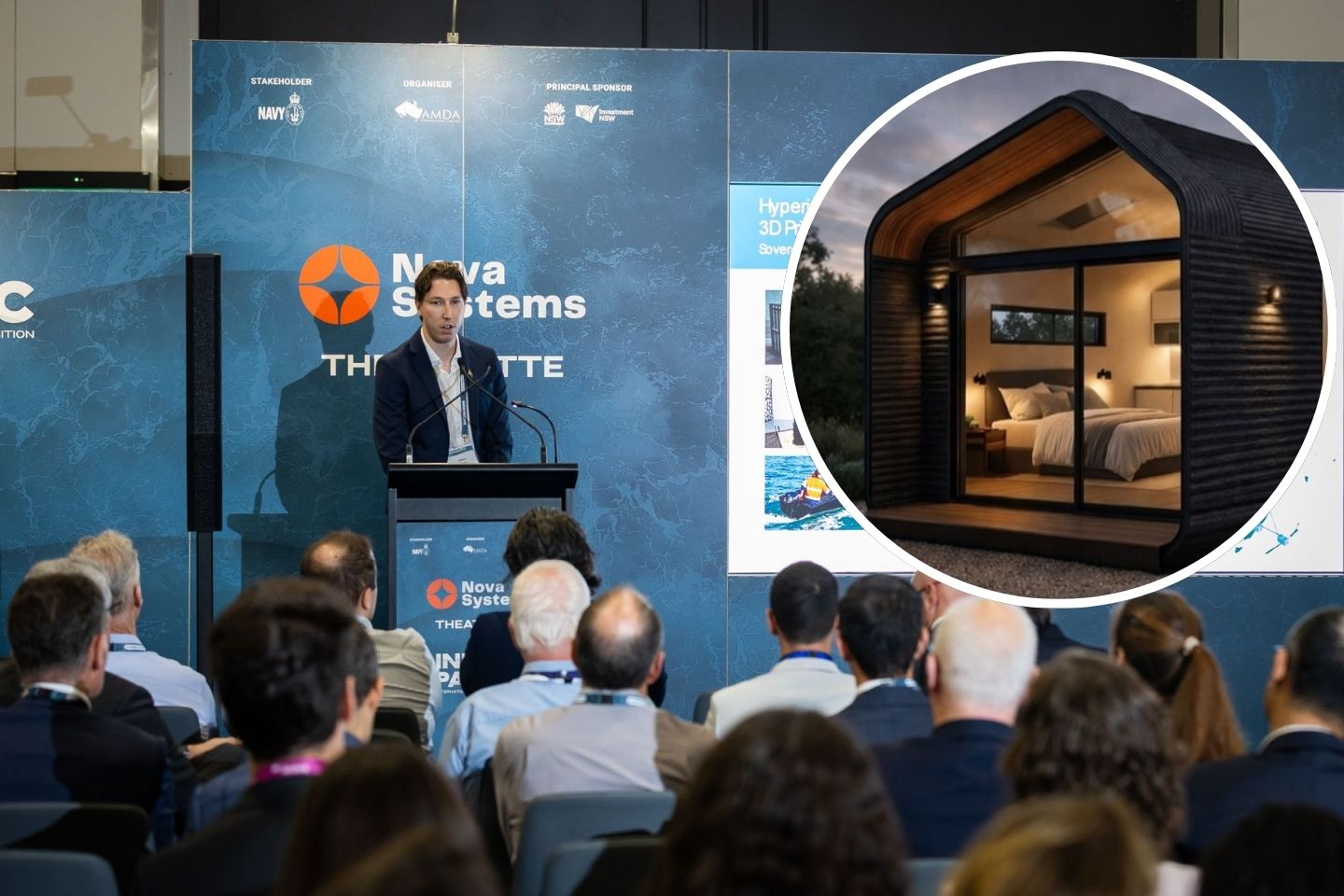
A Perth company founded by a 24-year-old and already famed for its ability to print an entire boat hull in a day will turn its attention to housing, with the first-ever 3D printed home from entirely recycled plastic in the southern hemisphere.
Hyperion Systems revealed today it inked a deal with Fremantle-based residential property builder Little Castles Small Homes for the construction of the first modular 3D printed tiny home built out of entirely recycled plastic.
The home will be built using Hyperion Systems‘ TitanCell mobile 3D printing unit, which is housed inside either a 20-foot or 40-foot shipping container, and can be deployed in under 24 hours, print up to 30 kilograms per hours.
Capable of 3D printing parts up to 10-metres in length and dubbed a ‘factory-in-a-box’, the self-contained, industrial scale 3D printing unit is transportable and can be immediately operated on-site or managed remotely.
The technology combines custom-built hardware with proprietary software and pellet-based plastic feedstock – either new or recycled – and offers integrated machining capabilities, allowing parts to go from design to final product in a single setup.
In this particular case, the feedstock will be entirely recycled plastic.
Hyperion Systems founder and chief executive Joshua Wigley, who started the company at just 24, said the contract represented a major milestone in sustainable construction and advanced manufacturing in Australia.
Now 28-years-old, Mr Wigley said core components for the tiny homes will be manufactured in modular sections at Hyperion’s facility in Henderson, before the final fit-out and completio nby Little Castles on-site.
“We will be using recylced polymers as our base feedstock and through the intellectual property we have developed in-house we will be able to print the core structure for a tiny home in around 48 hours,” he said.
The entirely recycled polymer build will be termite resistent and have beneficial thermodynamic properties.
“This build will mark the first 3D printed polymer house in the Southern Hemisphere, positioning Western Australia at the forefront of innovative, sustainable housing solutions,” Mr Wigley said.
“This project represents a breakthrough in how we think about construction. By using recycled plastics and advanced manufacturing techniques, we are not only reducing material waste but also significantly improving production speed and labour efficiency.”
Hyperion must meet all relevant Australian building codes as part of the contract, ensuring safety, durability and compliance while advancing circular economy principles.
It’s those codes, practices and norms Mr Wigley hopes to not only satisfy, but surpass.
“By accelerating build times and freeing up skilled labour to focus on more traditional home builds, the technology offers a pathway to delivering more housing at scale,” he said.
Little Castles Small Homes director Mark Hughes said he was excited to the involved in the first residential use of Hyperion’s technology.
“We’re not juts building a tiny home differently; we’re shaping how homes should be built into the future,” he said.
“More sustainable, more considered, and making better use of what we already. It’s about creating spaces and proving that smaller homes can still deliver a higher standard of living.”
The contract with Little Castles is the latest in a string of wins for Hyperion and Mr Wigley, who was last year named Young Innovator of the Year at the Indo Pacific International Maritime Exhibition’s pitch fest and awards.
Adding to the $40,000 won from that award, in July, Hyperion was awarded some $385,000 in a matched funding grant through the federal government’s innovation growth program, aimed at helping to commercialise its technology.
Since its 2022 inception, the company has 3D printed Australia’s first boat hull, a 3-metre vessel completed in just 36 hours; built the country’s largest 3D printed structure – a public artwork at Kalgoorlie TAFE; installed a robotic 3D print system for design students at Griffith University; and secured a Henderson warehouse to position itself alongside defence and subsea businesses within the Australian Marine Complex.
The company has already secured backing from Perth businessman David Budge, who co-founded 3D metal printing firm Aurora Labs Ltd, and is now the Hyperion’s chief technology officer.
Seasoned chief executive and entrepreneur Tim Dean, founder of Credi, has taken the role of commercial lead at Hyperion.
Perhaps one of its biggest wins yet was its technology’s marriage with another WA upshoot, maritime autonomy software and hardware developer Greenroom Robotics.
The pair agreed to collaborate to create and test 3D-printed unmanned surface vehicles for naval use.
The boats would be designed and manfuctured by Hyperion, with Greenroom integrating its GAMA software solution to the final vessel to make it autonomous.
Hyperion is also partnering with the University of Western Australia to focus on transforming decommissioned subsea plastics from oil and gas infrastructure into high-quality pellets for feedstock.


ICICI Bank gained 0.7% to close at ₹1,356.2, while HDFC Bank fell 0.6% to ₹795.45. The Nifty 50 ended little changed at 24,364.85.
 Agencies
near-term investor views diverge But most analysts say shares of the private banking leaders are poised to make further gains
Analysts remain positive on both. Bloomberg consensus implies an average upside of about 33% for HDFC Bank and 24% for ICICI Bank.
HDFC Bank’s 12-month average target price was trimmed to ₹1,056.3 from ₹1,100.72, even as HSBC, JP Morgan and Nomura raised their estimates post-results, while Citi lowered its target but retained a ‘Buy’. ICICI Bank’s average target edged up to ₹1,680.02.
All analysts covering HDFC Bank have a ‘Buy’ rating, while 96% of those on ICICI Bank recommend the stock, according to Bloomberg data.

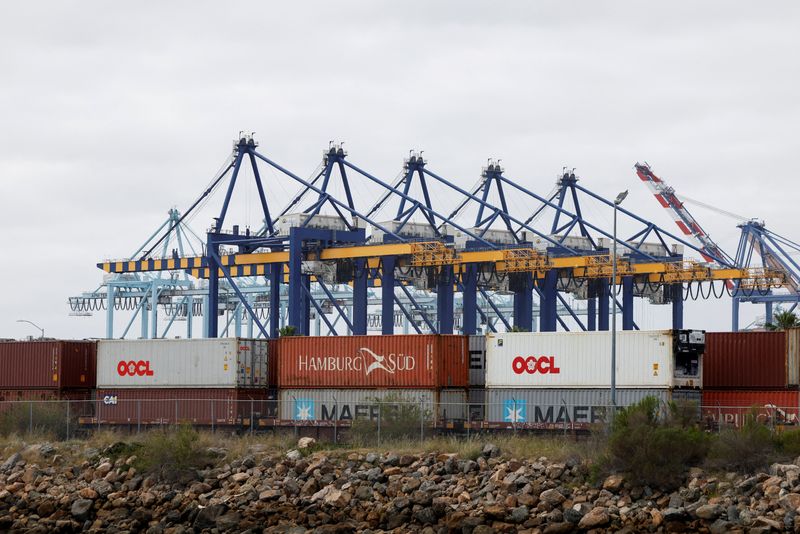

Tariff refund system launches as thousands of companies file claims

In the NSE list of stocks with a market cap over Rs 10,000 crore, eight stocks’ close prices crossed above their 200 DMA (Daily Moving Averages) on April 20, according to stockedge.com’s technical scan data. The 200-day daily moving average (DMA) is used as a key indicator by traders for determining the overall trend in a particular stock. As long as the stock is priced above the 200-day SMA on the daily time frame, it is generally considered to be an overall uptrend. Take a look:
Business
Middle East Turmoil Drives Prolonged Natural Gas Surge, Keeping Electricity Costs High for 2+ Years

The Middle East conflict has sharply increased LNG prices by disrupting supply, especially from Qatar, driving up global and Thai electricity costs. Thailand should adopt flexible tariffs, boost clean energy, and improve efficiency.
Impact of Middle East Conflict on LNG Prices
The Middle East conflict has caused liquefied natural gas (LNG) prices to surge by over 91%, rising from USD 10.7 to USD 20.5 per million BTU between February and April. This spike was triggered by supply disruptions, particularly damage to Qatar’s Ras Laffan gas field, which accounts for 17% of its capacity, reducing global LNG supply by 3%. Recovery of this supply is expected to take 3–5 years. Persistent disruptions and high demand in Asia and Europe will keep LNG prices elevated, though increased U.S. production and alternative energy adoption should help balance supply and demand after two years.
Rising Electricity Costs and Tariff Implications
Thailand faces higher electricity generation costs due to increased LNG prices and supply disruptions. Imported natural gas costs push electricity prices up to around THB 4.9 per unit by the end of 2026. However, maintaining EGAT’s debt at THB 36 billion could moderate tariff rises to approximately THB 4.0 per unit in 2026–2027. Prolonged conflict or further damage could drive LNG prices to USD 36.1 per million BTU and tariffs near THB 5.7 per unit. Flexible tariff adjustments and energy management will be crucial to controlling costs.
Recommendations for Government and Consumers
The government should implement both short- and long-term strategies to manage electricity costs, including gradually adjusting tariffs, increasing energy imports, enhancing renewable energy capacity, and exploring small modular nuclear reactors. Public communication about energy costs is essential. Households and businesses must improve electricity efficiency by using energy-saving devices, avoiding peak usage, and investing in rooftop solar systems. These efforts will help reduce dependence on LNG and strengthen Thailand’s energy security sustainably.
Other People are Reading
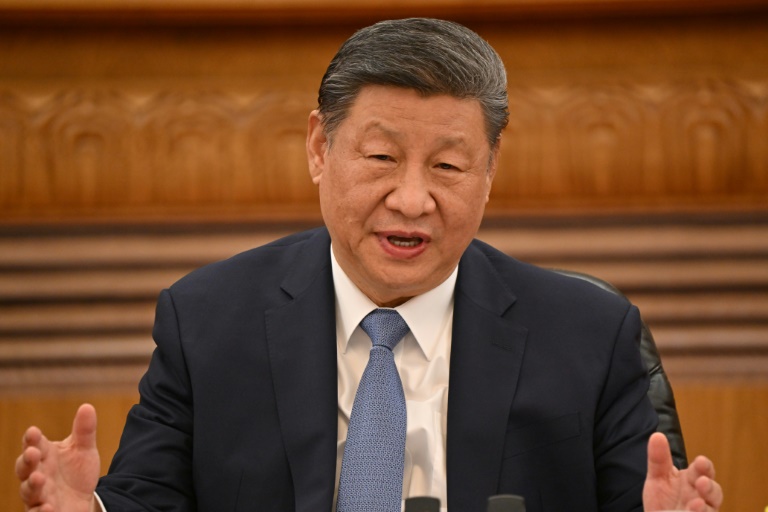
Chinese President Xi Jinping has made a rare comment about the Strait of Hormuz.
Xi emphasized the need to open the Strait of Hormuz, explaining that this will be the most beneficial decision for all.
Xi Jinping Comments on Strait of Hormuz
According to 9News, the state news agency of China reported that Xi has spoken to Saudi Crown Prince Mohammad Bin Salman.
“The Strait of Hormuz should remain open to normal passage, as this serves the common interests of regional countries and the international community,” Xi reportedly said.
Xi also stressed that China supported all peace efforts. He likewise said that the conflict between the US and Iran must be resolved through dialogue.
JD Vance to Head Delegation Should Iran Agree to Talks
While Iran has remained firm thus far that it is no longer open to any peace talks, US Vice President JD Vance will still fly to Pakistan to lead the US diplomatic delegation.
Alongside Vance, Donald Trump’s special envoy Steve Witkoff and Jared Kushner will also be part of the delegation, according to The Guardian. Kushner is Trump’s son-in-law.
Should Iran agree to peace talks, its delegation will reportedly be once again headed by parliamentary speaker Mohammad Bagher Ghalibaf.
Ghalibaf had accused Trump of turning this negotiating table – in his own imagination – into a table of surrender or to justify renewed warmongering.”


South Korea’s Lee says claim that minister leaked classified intel is ’absurd’

ValuEngine.com (VE) is a stock valuation and forecasting service founded by Ivy League finance academics. VE utilizes the most advanced quantitative techniques and analysis available.
Our research team continues to develop, test, and improve the VE Stock Recommendation, Valuation and Forecast Models related to stock price movement. This research is updated daily and applied to more than 4,200 US Stocks, 600 plus US ETFs, over 1,000 Canadian stocks, and all sector and industry groups.
Business
ETMarkets Smart Talk | Financials, industrials, healthcare top picks for FY27: Nimesh Chandan
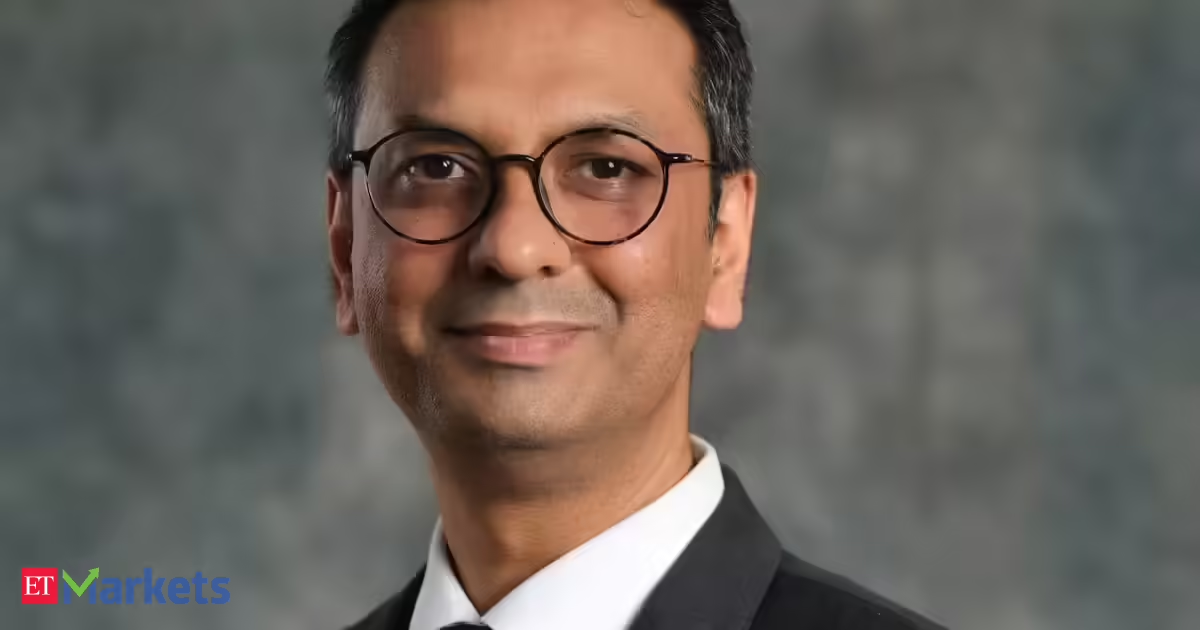
In this environment, Nimesh Chandan, Chief Investment Officer, Bajaj Finserv Asset Management Limited believes that while short-term headwinds may weigh on earnings and sentiment, the broader structural story of the Indian economy remains firmly intact.
In an interaction with Kshitij Anand of ETMarkets, Chandan highlights that current market corrections have brought valuations closer to fair levels, creating opportunities for long-term investors willing to look beyond near-term noise.
He identifies Financials, Industrials, and Healthcare as key sectors poised to benefit from India’s ongoing economic and credit cycle upturn, supported by improving earnings visibility and reasonable valuations.
He also advises investors to stay disciplined—either deploying lump sum capital if they can absorb volatility or adopting a staggered approach via SIPs or STPs—while maintaining a minimum three-year investment horizon. Edited Excerpts –
Q) Thanks for taking the time out. We have entered FY27 on a volatile note amid geopolitical concerns, rising oil prices, possibility of rise in interest rates etc. Where do you see markets headed?
A) Unfortunately, we seem to have hit a speed bump in an otherwise strong growth year. Due to the geopolitical concerns and rising oil prices, there is a possibility that there could be some slowdown in economic growth and profit growth in the first half.
A small cut in earnings cannot be ruled out if this crisis continues for a bit longer. If this war in West Asia resolves quickly, as is widely expected right now with the ceasefire, there is a possibility that there is no significant earnings cut for FY27.
Our base remains that Indian economy, business cycle and the credit cycle are on an upturn. We have a positive stance on the earnings growth for FY27 and FY28. We are currently trading below intrinsic value for the Nifty 50 Index.
Q) What should investors do who are planning to put fresh money say Rs 10 lakh in markets? What should be the sectoral allocation?
A) Investors who can handle near-term volatility can put a lumpsum amount right now. Valuations are fair, but because of the geopolitical crisis, there could be near-term volatility. Other investors may stagger their investment through STP (Systematic Transfer Plan) or SIP (Systematic Investment Plan) as a route.
However, they should have at least three-year view when they are investing in the equity markets. From a sectoral perspective, we like Financials, Materials, Industrials, Healthcare and Consumer Discretionary. We believe large private banks as a category are available at good valuations.
We have been positive on pharma, specifically CRAMS (Contract Research & Manufacturing Services) and hospitals. We are equal-weighted on consumer discretionary as we are positive on long term prospects of the sector.
However, we are selective in this sector, evaluating companies on the potential impact of high energy and material prices on them. Within Industrials, we prefer Defence and Power.
Q) FIIs have remained net sellers in Indian equity markets withdrawing Rs 1.6 lakh cr. What will reverse the flows?
A) The India–US trade agreement earlier helped stem the FPI outflows that India had been witnessing over the past year. However, the recent escalation in geopolitical tensions in the Middle East has triggered a renewed phase of outflows.
Given India’s heavy dependence on imported crude oil, rising oil price uncertainties tend to weigh on investor sentiment in the near term.
That said, we view this as a transitory phase. As the geopolitical situation stabilizes and recovery gains traction, India’s relative valuation attractiveness compared to other emerging markets should support a revival in FPI inflows.
The key variables to monitor remain the evolution of the West Asia crisis and a moderation in crude oil prices.
Q) How do you see the currency moving in the next few months?
A) The INR has seen a sharp correction, first due to tariffs, FPI outflows and now crude spike and higher gold prices. We are the world’s largest importers of gold and most of our crude requirements are imported. These exert a lot of pressure on the INR.
If the geopolitical crisis abates and the crude cools off, we believe the pressure on the INR could ease at these levels. Falling INR is also an opportunity. A contrarian view we hold is that, this depreciation of currency will create huge export opportunity for Indian manufacturing sector.
Q) You have seen many market cycles and I am sure this one is no different. Things which one should avoid doing at current juncture?
A) Clearly, investors should avoid getting fearful in these equity markets. We did a very simple analysis at Bajaj Finserv AMC. We observed that the markets correct every time crude prices have crossed $100 per barrel.
The investors who have used that correction to invest have made healthy returns in almost all cases over the next three to five years.
Hence, the only thing the investors should not do right now is panic, be fearful, or be very myopic. This is a good opportunity from an equity investor’s perspective because of the corrections in valuation. Investors should focus on fundamentals, be patient, and stick to their asset allocation plan.
Q) How do you see Gold and Silver moving in FY27?
A) Gold and silver have already witnessed a strong rally, and from here, returns are likely to be more measured rather than sharply bullish. These assets should be viewed primarily as portfolio hedges rather than return-chasing opportunities.
Gold is expected to continue playing its role as a key diversifier, especially amid ongoing global uncertainties.
Silver, on the other hand, may remain relatively more volatile due to its higher linkage to global growth and industrial demand.
At this stage, investors should avoid chasing the rally in precious metals and instead use them strategically within portfolios for diversification rather than for aggressive return expectations.
Q) After the recent correction, do you see Indian markets trading at reasonable valuations vs developed or emerging markets?
A) From 2021 till Sept 2024, Indian markets outperformed other emerging markets by 70-80%. Since then, Indian has underperformed by more than 40%. This has brought valuations closer to fair value at an aggregate level.
Growth is recovering, interest rates are lower and hence in many pockets of the market, valuations are attractive.
From a global perspective, India continues to command a premium over both developed and emerging markets. This premium reflects strong growth visibility and better capital efficiency of corporate India.
Q) Which sectors are likely to hog the limelight in FY27 after the recent fall?
A) In the current environment, investors should avoid crowded trades and instead focus on sectors offering earnings visibility alongside reasonable valuations. Domestic cyclicals such as capital goods, manufacturing, and infrastructure are well-positioned to benefit from India’s ongoing capex cycle.
Financials, including banks and select NBFCs, should continue to see steady support from credit growth and overall economic momentum.
Within consumption, opportunities exist but are selective in nature, with a preference for segments where demand visibility remains strong. Information Technology may hog the limelight but due to worries on the US economy and developments in AI.
(Disclaimer: Recommendations, suggestions, views, and opinions given by experts are their own. These do not represent the views of the Economic Times)


Hello. I am a graduate from Bocconi University with a degree in Economics and a concentration in Quantitative Economics. I am currently working at a management consultancy, with aspirations of working as an investment analyst.I primarily invest in growth stocks, with a focus on highly innovative sectors, particularly tech and energy. My portfolio consists of mainly high-conviction growth plays – ranging from large-cap tech to speculative early-stage ventures. I aim to provide sound, quantitative analysis through deep fundamental insights on target companies within the context of the sector they operate in & broader macro conditions.
Analyst’s Disclosure: I/we have a beneficial long position in the shares of ALM either through stock ownership, options, or other derivatives. I wrote this article myself, and it expresses my own opinions. I am not receiving compensation for it (other than from Seeking Alpha). I have no business relationship with any company whose stock is mentioned in this article.
Seeking Alpha’s Disclosure: Past performance is no guarantee of future results. No recommendation or advice is being given as to whether any investment is suitable for a particular investor. Any views or opinions expressed above may not reflect those of Seeking Alpha as a whole. Seeking Alpha is not a licensed securities dealer, broker or US investment adviser or investment bank. Our analysts are third party authors that include both professional investors and individual investors who may not be licensed or certified by any institute or regulatory body.

ACM Research: Let's Go To Hong Kong

DWP alert over payments not arriving in bank accounts
ICICI up, HDFC down after Q4 show; analysts positive on both

Coinbase’s x402 Launches Marketplace Platform for AI Agents



-

 NewsBeat7 days ago
Trump and Pope Leo: Behind their disagreement over Iran war
-

 Fashion3 days ago
Weekend Open Thread: Theodora Dress
-

 News Videos6 days ago
Secure crypto trading starts with an FIU-registered
-

 Sports4 days ago
NWFL Suspends Two Players Over Post-Match Clash in Ado-Ekiti
-

 Crypto World7 days ago
SEC Proposes Certain Crypto Interfaces Don’t Need to Register as Brokers
-

 Business2 days ago
Powerball Result April 18, 2026: No Jackpot Winner in Powerball Draw: $75 Million Rolls Over
-

 Crypto World3 days ago
Russia Pushes Bill to Criminalize Unregistered Crypto Services
-

 Politics8 hours ago
Gary Stevenson delivers timely reminder to register to vote as deadline TODAY
-

 Politics3 days ago
Palestine barred from entering Canada for FIFA Congress
-
 Business4 days ago
Creo Medical agree sale of its manufacturing operation
-

 Politics2 days ago
Zack Polanski demands ‘council homes not luxury flats for foreign investors’
-

 Crypto World3 days ago
Russia Introduces Bill To Criminalize Unregistered Crypto Services
-

 Tech2 days ago
Auto Enthusiast Scores Running Tesla Model 3 for Two Grand and Turns It Into Bare-Bones Go-Kart
-

 Tech5 days ago
‘Avatar: Aang, The Last Airbender’ Leaked Online. Some Fans Say Paramount Deserves the Fallout
-

 Tech6 days ago
Microsoft adds Windows protections for malicious Remote Desktop files
-

 Crypto World6 days ago
X Launches New Cashtag Feature for Stocks and Crypto: X
-

 Sports7 days ago
Younger Than Sachin Tendulkar: Vaibhav Sooryavanshi Set To Make Historic India Debut
-

 Entertainment6 days ago
Prince Carter Brings Fans Front Row and Backstage at Boys 4 Life Tour
-
 Entertainment6 days ago
Dave Portnoy Slams Dianna Russini: ‘Makes Zero Sense’
-

 Sports5 days ago
British climbers complete new route in Swiss Alps
You must be logged in to post a comment Login