Connect with us
DAPA Banner
DAPA Coin
DAPA
COIN PAYMENT ASSET
PRIVACY · BLOCKDAG · HOMOMORPHIC ENCRYPTION · RUST
ElGamal Encrypted MINE DAPA
🚫 GENESIS SOLD OUT
DAPAPAY COMING

Business

India Meteorological Department to use dynamic models for forecasts

Published

on

ET Search
PUNE: The statistical models used by the India Meteorological Department (IMD) had failed to predict all the three droughts in India in the last decade. Though statistical models will still be used for monsoon forecast, the ministry of earth sciences is putting more emphasis on dynamic models.

M Rajeevan of National Atmospheric Research Laboratory said, “the failure to predict the 2009 drought has raised many serious issues. On the other hand, the state-of-the art coupled ocean atmospheric models have sho-wed improved skills in predicting inter annual variability of Indian summer monsoon rainfall.”

He was speaking at the golden jubilee conference of Indian Institute of Climate Change (IITM), Pune, on ‘opportunities and challenges in monsoon prediction in changing climate’. Since 2011, the IITM has used the coupled model for monsoon forecast.
Better weather forecast needs data from all parts of the globe. “In every part of the world, farmers are saying that the climate is not as it used to be. Hence, traditional knowledge is also failing. For better prediction of weather, we need observations from all countries. We need super computers of even higher capacities. We need to have knowledge about how to translate scientific progress into concrete applications,” said Michel Jarraud, secretary general, World Meteorological Organisation.

Continue Reading
Click to comment

You must be logged in to post a comment Login

Leave a Reply

Business

Daiichi Sankyo: Not Exciting Enough For This Market, Apparently

Published

on

Daiichi Sankyo: Not Exciting Enough For This Market, Apparently

Daiichi Sankyo: Not Exciting Enough For This Market, Apparently

Continue Reading

Business

Kilmore Group finds home at $11.4m Osborne Park site

Published

on

Kilmore Group finds home at $11.4m Osborne Park site

The construction company has secured a permanent home through the acquisition of a 9,187-square metre industrial site in Osborne Park.

Continue Reading

Business

Intel Stock Slides 7% Today as Profit-Taking Hits One of 2026’s Most Remarkable Chip Stock Turnarounds

Published

on

AMD CEO Lisa Su unveiled the chip giant's latest line of products during a keynote speech at Computex 2024 in Taipei

Intel shares fell sharply Wednesday, declining more than 7% in a session of heavy profit-taking that pulled back one of the stock market’s most dramatic turnaround stories of the year, even as the broader context for the company’s recovery over the past 12 months remained extraordinary by nearly any measure.

Shares of the Santa Clara, California-based chipmaker were trading at $129.38 as of 10:44 a.m. EDT, down $10.25, or 7.34%, on the day. The pullback follows a run that has taken Intel from a 52-week low of just $18.97, reached on August 1, 2025, to a 52-week and all-time closing high of $141.45 hit on June 22, a gain of more than 645% over less than 12 months that ranks as one of the most stunning single-stock recoveries in the semiconductor sector’s recent history.

Wednesday’s decline represents the stock pulling back from that all-time high after a remarkable sprint higher, consistent with what several technical analysts had flagged as a likely correction point. Chart watchers had noted a double-top formation developing near the $140 to $142 zone over the past week, with a bearish engulfing candlestick pattern on the weekly chart suggesting the kind of rejection at resistance that often precedes a consolidation phase, particularly in a stock that had appreciated as rapidly and as dramatically as Intel has over the past several months.

The stock’s six-month return stands at approximately 273%, while its year-to-date gain through the end of June was roughly 270%, making Intel one of the standout performers not just within the semiconductor sector but across the entire S&P 500 for the first half of 2026. CNBC reported that record chip stock gains in the second quarter added $2 trillion in combined value to Micron, Intel and AMD.

Advertisement

That extraordinary run has been driven by a combination of a broader AI semiconductor boom and company-specific catalysts tied to Intel’s restructuring under Chief Executive Lip-Bu Tan, who took over the company in March 2025 following a turbulent period of leadership transitions and strategic uncertainty. Tan inherited a company that had lost significant ground to rivals TSMC and AMD in the foundry and client computing markets, respectively, and whose stock had fallen to historically low levels by mid-2025 amid persistent revenue declines and doubts about whether the company’s next-generation manufacturing processes could be executed on schedule.

The recovery began in earnest following Intel’s first-quarter 2026 results, which showed the company’s turnaround plan gaining traction. Revenue for the quarter came in at $13.57 billion, modestly below the prior quarter’s $13.67 billion but within range of analyst expectations, while the company reported ongoing progress on its 18A manufacturing process node, a key technology milestone that management has framed as critical to Intel’s ambitions in the contract foundry market. Intel’s Intel Foundry division, formerly known as Intel Foundry Services, signed new customers during the quarter and advanced existing commitments with major technology companies that had agreed to test the 18A process for potential high-volume production.

Cantor Fitzgerald analyst C.J. Muse raised the firm’s price target on Intel to $150 from $90 and maintained a Neutral rating, noting the AI infrastructure buildout as the primary driver of Intel’s improved positioning. Muse also said Intel has a cost advantage over key rivals in certain segments, a factor that had contributed to Intel stock surging on word of that cost advantage over a key competitor.

Beyond the foundry narrative, Intel has continued to expand its presence in the AI accelerator market, where the company’s Gaudi 3 chip has won incremental customer commitments from cloud service providers and enterprise customers looking for alternatives to Nvidia’s dominant GPU lineup, particularly in cost-sensitive deployments where the performance-per-dollar calculation favors Intel’s offering. The company has also continued to build out its AI PC product line under the Intel Core Ultra brand, positioning itself to capture a wave of consumer and enterprise PC upgrades driven by the increasing integration of AI capabilities directly into device hardware.

Advertisement

TipRanks reported that Intel is taking advantage of America’s 250th birthday promotional opportunities in AI and robotics production, with commentary describing the current moment as “a pivotal moment for the nation” and Intel’s positioning within domestic AI semiconductor manufacturing as central to its near-term narrative.

A note of caution, however, came in a report citing ByteDance racing to mass-produce custom AI chips by 2027, cutting out both AMD and Intel from certain Chinese AI workloads. That development, combined with broader investor concerns about the pace of AI infrastructure capital spending and the increasingly competitive landscape for data center processors, has contributed to some erosion in the bull case for Intel’s AI revenue growth assumptions in recent analyst commentary.

Intel’s next major milestone is its second-quarter 2026 earnings report, scheduled for after the close of trading on July 23. That report will give investors their clearest view yet of whether the first-quarter momentum in foundry customer wins and AI chip revenue has continued into the second quarter, and whether management’s guidance for the back half of the year reflects the kind of acceleration that would justify the stock’s current premium valuation relative to where it sat less than a year ago. The stock currently trades at a normalized price-to-earnings ratio of approximately 245, a figure that reflects how far forward investors are looking rather than any near-term profitability milestone, given that the company is still in the early stages of its foundry buildout and is not expected to generate the kind of earnings that would support that multiple on a near-term basis.

For now, Wednesday’s pullback appears to be a healthy, technically driven consolidation following one of the sharpest runs in the stock’s multidecade history, rather than a fundamental shift in the investment thesis. Whether the stock can recover back toward its all-time highs in the weeks ahead will likely depend on how Intel’s earnings report later this month addresses the outstanding questions about the pace of foundry customer adoption, the competitive standing of the Gaudi AI accelerator lineup and the broader trajectory of the 14A manufacturing process that management has targeted for the 2028 to 2029 timeframe as the next step beyond its current 18A node.

Advertisement
Continue Reading

Business

Redefine Foods, Hormel Foods Corp. debut functional snack cake

Published

on

Redefine Foods, Hormel Foods Corp. debut functional snack cake

The pie features Skippy Natural Peanut Butter Spread and 14 grams of protein.

Continue Reading

Business

Bank of America CEO Moynihan dismisses recession fears over rate hikes

Published

on

Bank of America CEO Moynihan dismisses recession fears over rate hikes

While Wall Street prepares for the prospect of a more aggressive Federal Reserve, Bank of America CEO Brian Moynihan has a reassuring message for anxious investors.

Despite Bank of America’s issuing the most hawkish forecast on Wall Street — predicting three interest rate hikes under Federal Reserve Chair Kevin Warsh — Moynihan insists a recession is nowhere in sight.

Advertisement

“The [U.S.] president thought it was going to be rate cuts. Now we’re talking about rate hikes. Will that lead us into a recession?” FOX Business’ Maria Bartiromo asked Moynihan on the New York Stock Exchange floor Wednesday.

SUPREME COURT RULES ON TRUMP’S ATTEMPT TO FIRE FED GOVERNOR LISA COOK

“No, because at the end of day, that’s the balance the Fed has to have, is they’re trying to keep the inflation from getting out of control, price stability,” Moynihan responded. “And Chairman Warsh made it clear that’s what he stands for.”

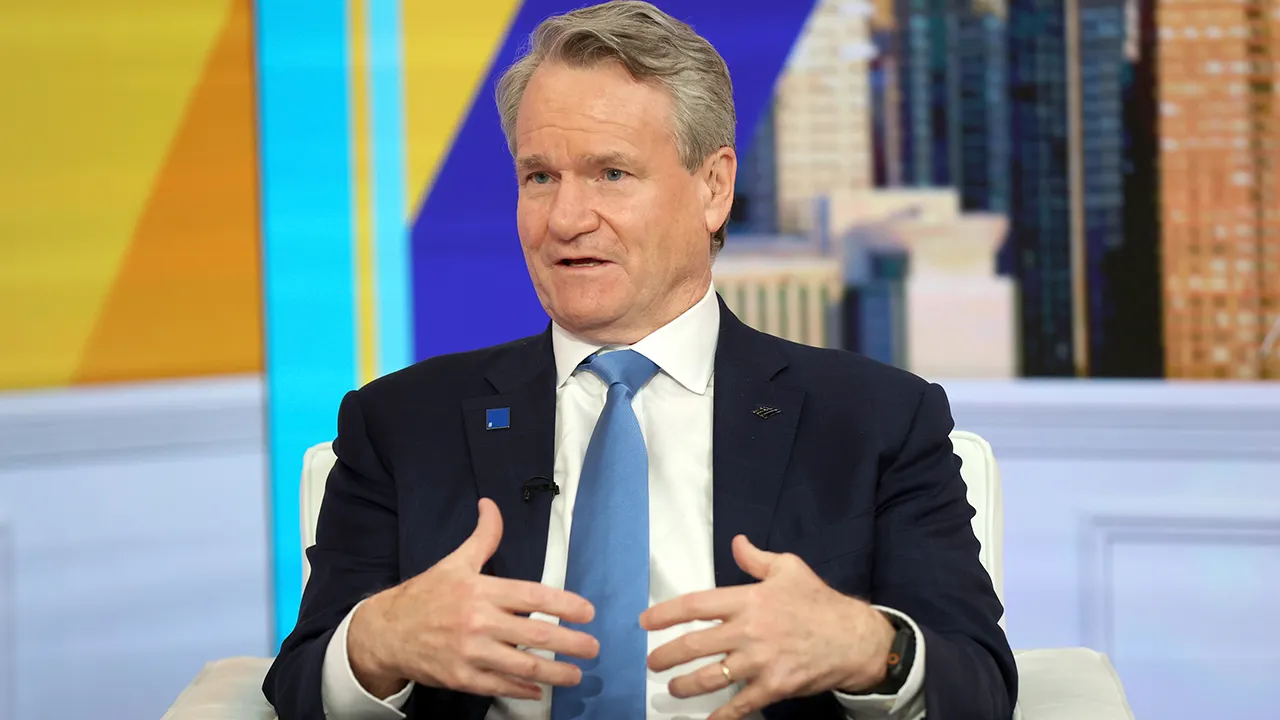
Brian Moynihan at Fox News Studios

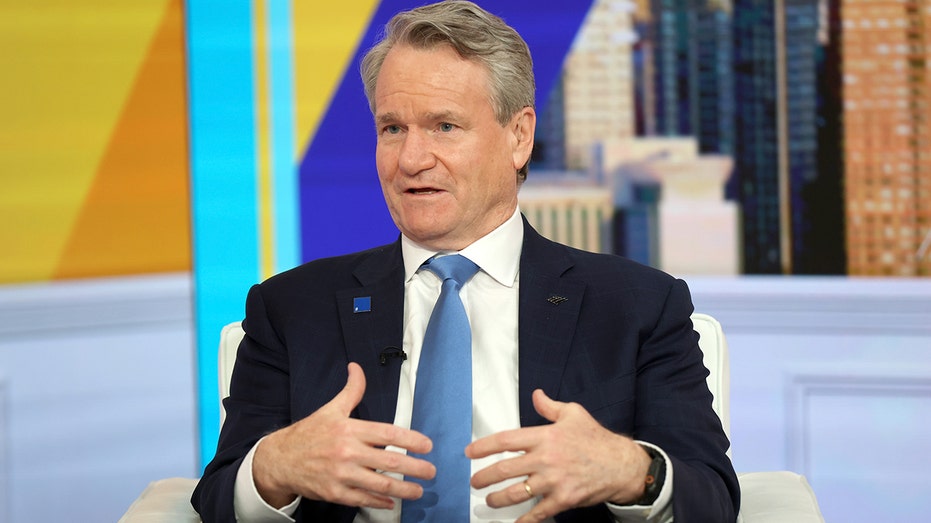
Bank of America CEO Brian Moynihan visits Fox News Channel Studios on June 3, 2026, in New York City. (Getty Images)

“He’s focused on that, that’s their job. But you also have to be mindful of the other side, which is, recession means unemployment goes up, and you have to stabilize unemployment. So they’ve gotta mind that,” he added. “The U.S. economy is growing better than most. The inflation is higher than people want it to be, but if you talk to people who are in the positions Kevin’s in… they could never get inflation back. They’re sort of saying, ‘Wait, we can never get the economies to recover fast enough.’ I think it’s easier to bring it down carefully than it is to get it going, and so you want to air a little bit to the upside.”

Advertisement

During their latest meeting, the Federal Reserve announced that it would hold interest rates steady due to concerns about elevated inflation amid the war in Iran, as Warsh’s tenure leading the central bank begins in earnest.

Fed policymakers voted 12-0 to leave the benchmark federal funds rate unchanged at its current range of 3.5% to 3.75%. The move follows the central bank’s decisions to hold rates steady in January, March and April after three consecutive 25-basis-point rate cuts in September, October and December of last year.

Moynihan argues that higher interest rates shouldn’t be feared but rather celebrated as a sign of a strong U.S. economy.

Advertisement

GET FOX BUSINESS ON THE GO BY CLICKING HERE

“We have a great research team… They’ve also put three Fed raises on the table, meaning that the inflation is going to be stickier, go[ing] all the way through ‘27 into ‘28, largely just to deal with the aftermath of the oil price shock,” the CEO said. “But at the end of day, the economy has grown a little faster now than they thought it was going to grow a few months ago.”

“Inflation will take a while, rates will be higher. But everybody argues for rates to be high or low. At the end of it, rates are an outgrowth of a very strong economy in the United States and a need to keep inflation in check.”

Advertisement

READ MORE FROM FOX BUSINESS

FOX Business’ Eric Revell contributed to this report.

Continue Reading

Business

Sam Smith’s brewery boss Humphrey Smith dies aged 81

Published

on

A woman with shoulder-length blonde hair talks into a microphone

The smallest of the three breweries based in Tadcaster, it is also an unlimited company which allows it to maintain financial privacy.

Smith introduced many changes when he took control as chairman including turning tenants into managers, directly employed by the brewery.

It enabled the business to dictate the policies it is known for and, as its website states, its pubs are “havens from the digital world”.

Sweeting said: “Mr Smith had his standards, Mr Smith had his reasons and a lot of people understood.

Advertisement

“Mr Smith was also a man of principle and there would have been a reason for regulations in the pubs.

“A lot of people were quite happy for those regulations because we respected him.”

Councillor Kirsty Poskitt, who represents Tadcaster on North Yorkshire Council, said her family had close ties with the brewery and that she had found Smith to be passionate about local history.

“He was very well-known, not just in Tadcaster, but across the country and probably throughout the world. It’s impacted lots of people.

Advertisement

“It’s a sad day. He obviously had quite a lot of influence on the town itself, just in terms of its structure and how it is. His legacy is vast and varied.”

Speaking about the company’s ownership of land and property in the area, she said: “He is a very intrinsic part of why Tadcaster is like it is today. I think everyone’s reflecting on what he has meant to the town.”

Poskitt regularly met with Smith in her role as a councillor and said he was a “kind and fascinating man”.

“He was quite eccentric, but he was a really interesting man. He was passionate about history. I was always grateful for time with him and enjoyed speaking to him.”

Advertisement

Her father and grandfather both worked at the brewery, the latter as a cooper, and Smith remembered them both.

“Throughout Tadcaster there are an awful lot of people that were employed by the brewery and who live in houses that belong to the brewery.

“I’ve been here pretty much my whole life and he was a controversial figure in lots of people’s eyes, and but those that did interact with him and those that did know him would make positive statements about him and would acknowledge that he was an intelligent man with big family and his heart was in the right place.

“He always acted in the best interests of the town. He was incredibly private. For me he is a very big part of Tadcaster’s history and leaves a huge legacy.”

Advertisement
Continue Reading

Business

Lloyds Banking Group axes Halifax brand after 173 years on high street

Published

on

Business Live

The banking giant is set to rebrand its Halifax operations under the Lloyds name

An exterior view of a Halifax bank branch featuring a prominent blue sign with the word "HALIFAX" displayed prominently above the entrance. The building is constructed with glass facades and multiple signs affixed to the front.

An exterior view of a Halifax bank branch

Lloyds Banking Group is preparing to scrap its Halifax brand in a decision that will bring the curtain down on the retail bank’s 173-year presence on the high street.

Advertisement

The FTSE 100 giant – which also owns Bank of Scotland and Scottish Widows – announced on Wednesday it would absorb Halifax into the overarching Lloyds name.

Lloyds maintained the shake-up would streamline its customer service operations by consolidating around a single main consumer banking division.

“There are no changes to previously announced plans for branches, and there are no role reductions as part of today’s announcement,” said Jas Singh, Lloyds’ chief executive of consumer relations.

The bank will start removing Halifax signage from its 190 branches in early 2027. From next year, Lloyds will stand as the group’s only brand across England, Wales and Northern Ireland, as reported by City AM.

Advertisement

Lloyds was established in Birmingham in 1765, while Halifax takes its name from the West Yorkshire town where it began life as a building society in 1852.

Halifax relinquished its mutual status in 1997 when it floated on the London Stock Exchange, but ceased trading independently four years later following a merger with Bank of Scotland to create HBOS.

Lloyds stepped in to rescue HBOS in 2009 amid the financial crisis, bringing the firm’s brands into its stable.

The bank emphasised it remained committed to its presence in the town of Halifax, highlighting a recent £116m investment in its Trinity Road office in Halifax town centre. Around 3,000 Lloyds employees are based in the town.

Advertisement

The development arrives amidst a broader transformation for the banking sector on the high street.

Santander is reportedly considering proposals to remove TSB from the high street following its nearly £3bn landmark acquisition last year.

The decision would bring to a close TSB’s 215-year presence on Britain’s high street. The transaction, which was unveiled last July, incorporated TSB’s five million customers, £34bn in mortgages and £35bn in deposits into its portfolio.

Other significant consolidation activity in recent years has included Barclays’ £600m acquisition of Tesco’s banking division last year, which enabled it to return £700m to shareholders through an incremental share buyback. HSBC also extended its partnership with M&S banking arm in 2024, which permits the grocer to utilise its credit offering.

Advertisement
Continue Reading

Business

Sony Ends PlayStation Physical Game Discs Starting January 2028, Sparking Immediate Backlash From Fans

Published

on

PlayStation 6

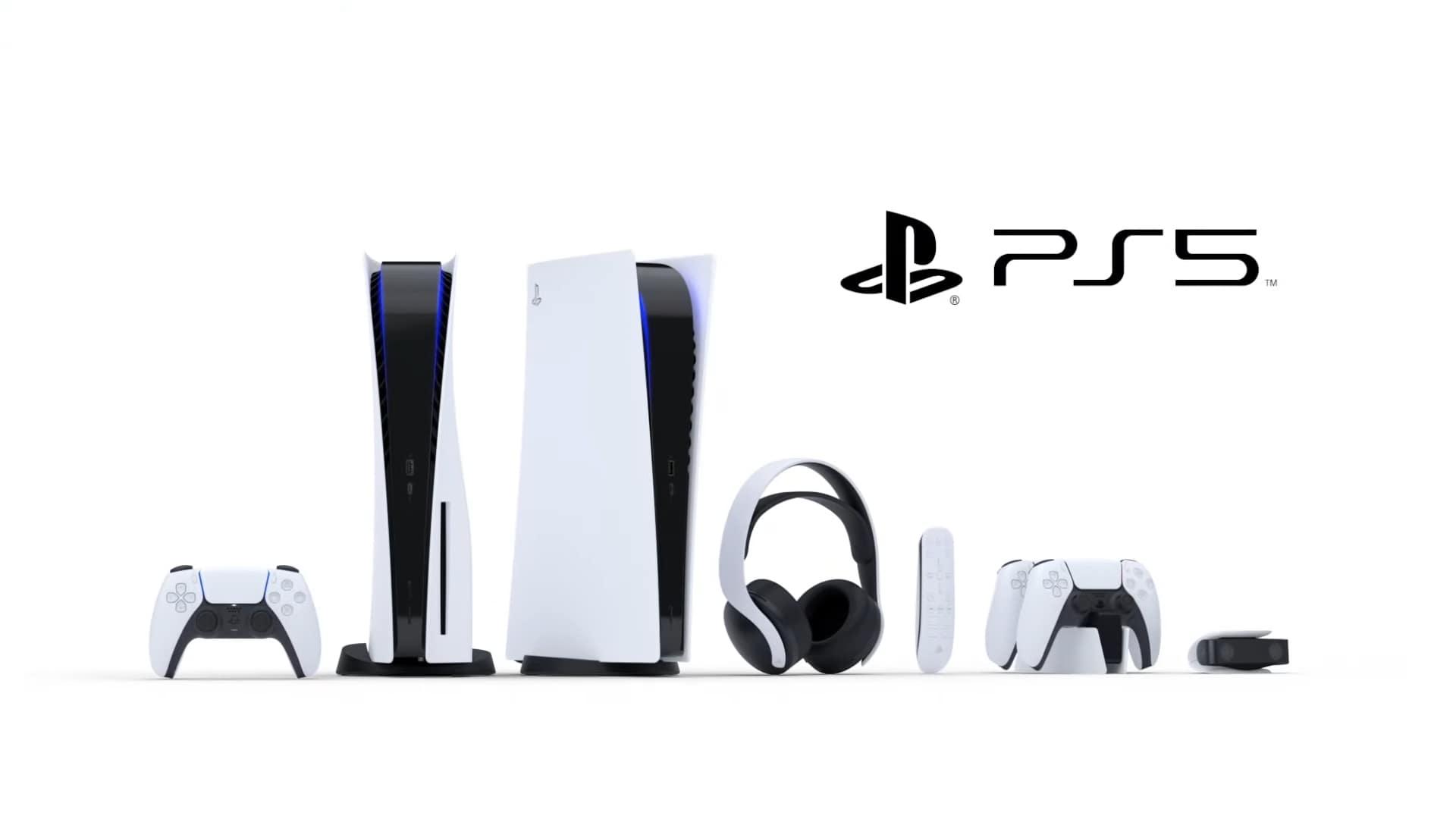
Sony Interactive Entertainment announced Wednesday that it will stop producing physical game discs for all new titles releasing on PlayStation consoles starting in January 2028, marking the end of a 50-year tradition of physical video game media and drawing immediate and intense backlash from players, collectors and game preservation advocates worldwide.

Sony Interactive Entertainment’s content communications senior director Sid Shuman said: “As consumer preferences and the broader entertainment industry continue to shift away from physical discs to digital, physical game disc production for all new games releasing on PlayStation consoles will be discontinued starting January 2028. Following this date, new games will be available on PlayStation Store and at retailers in digital formats only.”

The announcement, published simultaneously on the official PlayStation Blog and previewed by Game File ahead of its public release, represents one of the most consequential decisions in Sony’s gaming history, effectively closing the door on a format that the company helped define with the original PlayStation’s shift to CD-ROMs in 1994 and then championed through subsequent generations of hardware using DVDs, standard Blu-Rays and eventually 4K Blu-Rays in its disc-based consoles.

Sony noted that the transition has no impact on games that already released or will be releasing prior to January 2028 in disc format, citing upcoming PlayStation game “Marvel’s Wolverine” as among the titles that would still receive a physical disc edition. Shuman cited the move as “a natural direction for Sony Interactive Entertainment to adapt to consumer trends as the general preference for digital media significantly outpaces physical discs.”

Advertisement

Shuman continued in the announcement: “This transition will enable us to align more closely with how most of our community prefers to access and play games today. We’ll continue to prioritize our resources to drive innovation in how players can access games and provide choices as to where players prefer to purchase new games, whether that’s at retailers or PlayStation Store.”

The policy applies to all new PlayStation games released from January 2028 forward, covering both Sony’s own first-party titles and third-party publishers releasing games on PlayStation hardware. Physical retailers will still be able to sell new games after the cutoff, but those products will no longer contain a disc. Instead, they will be distributed in digital formats only, though Sony has not yet clarified exactly what that will look like at retail, whether through boxes containing download codes, cards with digital redemption prompts, or some other physical-but-discless format.

Microsoft has been offering codes in boxes for certain releases for years and the launch of the Nintendo Switch 2 ushered in game key cards, which are effectively glorified download codes but can still be shared and traded. Unlike single-use codes, game key cards retain some of the secondhand-market flexibility of physical media. It doesn’t sound like Sony is considering any similar compromise for physical media on its upcoming PS6.

The announcement carries significant implications for Sony’s next-generation console, widely expected to be called the PlayStation 6. Many industry observers had assumed the PS6 would at minimum offer an optional disc drive for backward compatibility with existing physical PS5 games, but Wednesday’s announcement narrows those expectations considerably.

Advertisement

Piers Harding-Rolls, senior games research analyst at Ampere Analysis, told Game File: “This pretty much guarantees that PS6 won’t arrive until 2028 at the earliest.”

The digital transition Sony is formalizing has been underway for years across the entertainment industry. Music pivoted away from CDs more than a decade ago, while film and television have largely moved to streaming, leaving the gaming sector as one of the last major entertainment categories to still produce a meaningful volume of physical media. Sony has previously pointed to data showing a growing share of game sales occurring digitally, with many major titles now selling more than half their copies through digital storefronts rather than retail disc sales.

The announcement arrived alongside a separate, related development: Sony disclosed that it will be closing the PlayStation Store for its older PlayStation 3 console and PS Vita handheld in most countries in July 2027, with some regional shutdowns beginning even earlier.

Sony said in its PS3 and PS Vita store closing announcement: “We know this news may be disappointing to PS3 and PS Vita players who hold a special place in their hearts for this generation of gaming,” characterizing the move as one that “was not an easy decision for us to make,” and saying the marketplaces “are no longer able” to support modern commerce systems.

Advertisement

That parallel announcement has amplified concerns among gaming preservation advocates, who argue that the combination of closing older digital storefronts and eliminating new physical disc production creates a permanent access problem for games, since players who purchase digital titles receive only a personal license for non-commercial use rather than ownership of the content in any lasting or transferable form, unlike physical disc ownership.

The concern is not theoretical. Sony’s 2024 shutdown of “Concord,” a first-party multiplayer game that was pulled from sale and effectively wiped from players’ libraries just weeks after launch, demonstrated in stark terms how digital game ownership differs fundamentally from owning a disc. Physical discs can be shared, resold, lent to friends and used indefinitely regardless of whether a company continues to support the title. Digital licenses expire when a company decides they do.

A Sony spokesperson noted to Game File that with all digital content, including games, movies and music, players are purchasing a personal license for non-commercial use, an explicit acknowledgment that digital purchasing confers different rights than physical ownership.

Player reaction across social media and gaming forums following Wednesday’s announcement was swift and overwhelmingly negative. Comments on the PlayStation Blog post, which accumulated thousands of responses within hours, ranged from expressions of disappointment to declarations that Sony had irreversibly damaged its relationship with a segment of its customer base that values physical game ownership.

Advertisement

The announcement comes as Sony has already been raising prices on PlayStation hardware, with the PlayStation 5 console line receiving a price increase in April driven in part by skyrocketing memory chip costs tied to the global AI infrastructure buildout. That context has left some players feeling squeezed from multiple directions simultaneously, paying more for hardware while losing the ability to buy, share, resell or lend physical copies of the games they play.

Continue Reading

Business

New chairs for TAFE councils

Published

on

New chairs for TAFE councils

The state government has appointed Amanda Reid, Libby Lyons and Jim Walker as chairs of several of the TAFE colleges’ governing councils.

Continue Reading

Business

Opinion: Libs cross fingers for Labor reshuffle

Published

on

Opinion: Libs cross fingers for Labor reshuffle

OPINION: Parliament’s winter recess has tongues wagging about changes at the top.

Continue Reading

Trending

Copyright © 2025