
Business
Innovative Industrial Properties Stock: 13% Dividend Yield Regulatory Catalysts(NYSE:IIPR)



Julian Lin is a financial analyst. He finds undervalued companies with secular growth that appreciate over time. His approach is to look for companies with strong balance sheets and management teams in sectors with long growth runways.
Julian is the leader of the investing group Best Of Breed Growth Stocks where he only shares positions in stocks which have a large probability of delivering large alpha relative to the S&P 500. He also combines growth-oriented principles with strict valuation hurdles to add an additional layer to the conventional margin of safety. Features include: exclusive access to Julian’s highest conviction picks, full stock research reports, real-time trade alerts, macro market analysis, individual industry reports, a filtered watchlist, and community chat with access to Julian 24/7. Learn more.
Analyst’s Disclosure: I/we have a beneficial long position in the shares of IIPR, O, IIPR.PR.A either through stock ownership, options, or other derivatives. I wrote this article myself, and it expresses my own opinions. I am not receiving compensation for it (other than from Seeking Alpha). I have no business relationship with any company whose stock is mentioned in this article.
Seeking Alpha’s Disclosure: Past performance is no guarantee of future results. No recommendation or advice is being given as to whether any investment is suitable for a particular investor. Any views or opinions expressed above may not reflect those of Seeking Alpha as a whole. Seeking Alpha is not a licensed securities dealer, broker or US investment adviser or investment bank. Our analysts are third party authors that include both professional investors and individual investors who may not be licensed or certified by any institute or regulatory body.


Seattle Times, Newsday sue OpenAI, Microsoft, alleging copyright infringement
Business
Genetically Engineered Pig Kidneys Show Success In Human Transplant Trials At Massachusetts Hospital
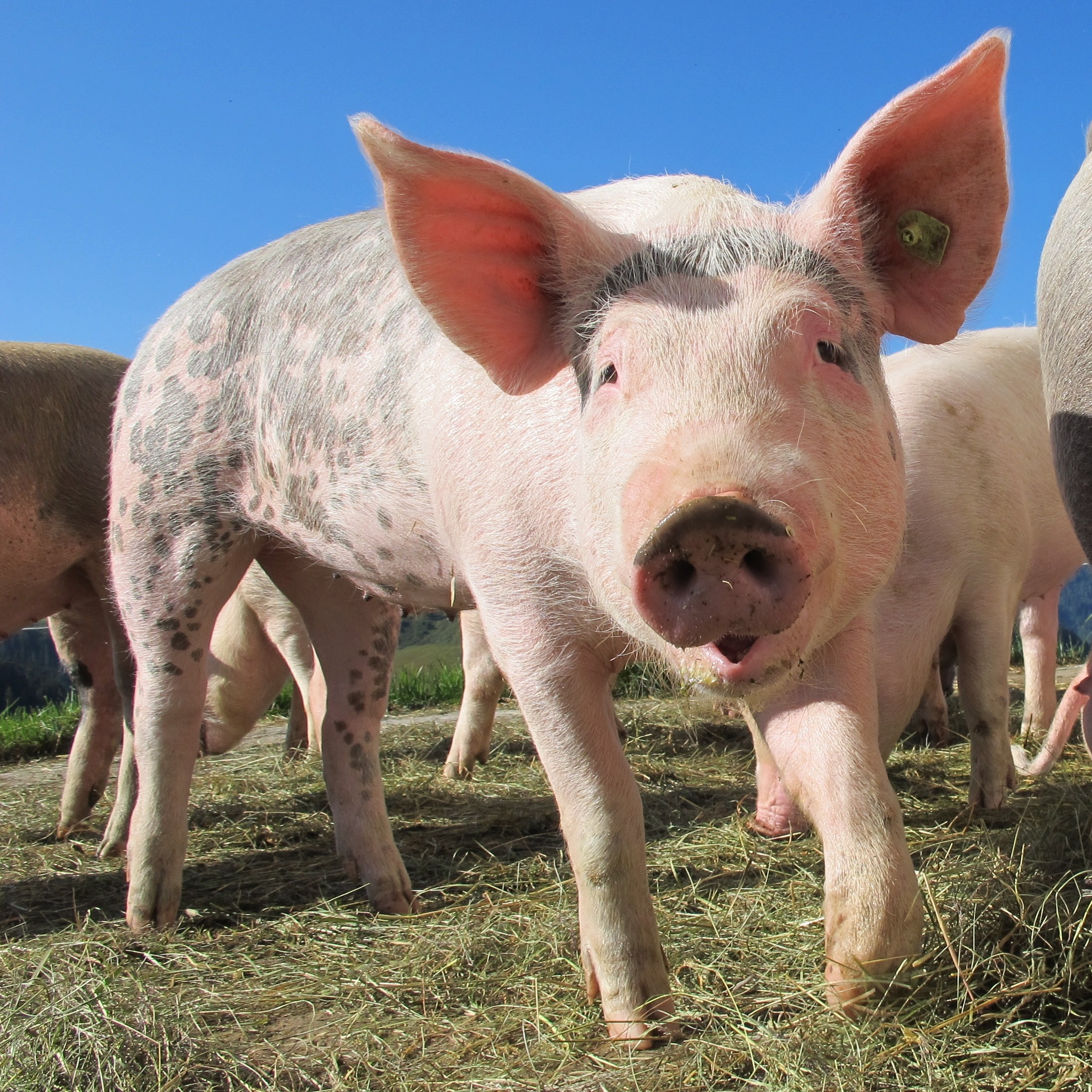
BOSTON — Genetically engineered pig kidneys have been successfully transplanted into five patients at Massachusetts General Hospital, marking a significant milestone in the decades-long effort to use animal organs to address a persistent shortage of human transplant organs, according to results from an ongoing clinical trial.
The five patients underwent xenotransplantation, the process of transplanting organs between species, since March 2024, according to U.S. biotechnology company eGenesis, which developed the genetically modified pig kidneys used in the procedures. In three of the five patients, the transplanted organs continued functioning for more than eight months without triggering rejection or requiring the patient to return to dialysis.
Leonardo Riella, director of kidney transplantation at Massachusetts General Hospital, who led the eGenesis clinical trials, described the scale of the challenge the research aims to address.
“The organ shortage is the greatest crisis we have right now in transplantation,” Riella said.
Mike Curtis, chief executive of eGenesis, characterized the results as a meaningful advance toward the company’s broader goal of expanding access to transplantation.
“It’s amazing to see the progress,” Curtis said. “Our goal is to make transplantation available to patients when they need it, without being constrained by the limited supply of human donor organs.”
The pig kidneys used in the trial were grown in Yucatan miniature pigs, a breed selected in part because their organs are similar in size to human organs. Researchers genetically engineered the pigs to remove three specific pig proteins most likely to trigger immune rejection in human recipients, while adding seven human genes intended to improve compatibility between the transplanted organ and the recipient’s body. Researchers also manipulated the porcine DNA to inactivate viruses that could otherwise pose an infection risk to transplant recipients.
Riella said the animal organs are initially envisioned as a bridge therapy, helping patients avoid dialysis while they wait for a human donor kidney to become available, rather than as a permanent, standalone replacement for human organ transplants at this stage.
“As a bridge to get patients off dialysis while they wait for a human donor kidney,” Riella said, describing the initial intended use of the pig kidneys. He added that the approach could eventually serve “as a destination therapy in its own right” if ongoing trials succeed in establishing long-term safety and durability for the procedure.
One of the five patients, Tim Andrews, whose case was detailed in a study published in The Lancet medical journal, lived with a pig kidney for nearly nine months without requiring dialysis, after receiving the transplant at age 66. The organ eventually began to fail, though doctors found no signs of immune rejection had caused the decline. Andrews subsequently received a kidney from a deceased human donor. Follow-up testing showed that having lived with the pig kidney beforehand did not make it more difficult for the subsequent human donor kidney to function successfully in his body.
Curtis said the U.S. Food and Drug Administration has authorized an expanded clinical trial involving 33 patients with renal failure, set to begin early next year across as many as 10 transplant centers throughout the United States. EGenesis is targeting marketing approval for the pig kidney treatment by the end of 2029. The company is also collaborating with Japanese partner PorMedTec to begin kidney xenotransplantation trials in Japan starting in 2028, according to Curtis.
David Crosby, chief research officer at the renal charity Kidney Research UK, described the results as encouraging while cautioning that significant additional research remains necessary before the approach can be fully evaluated against existing treatment options.
Crosby called the breakthrough “an exciting prospect” but said further research was needed to determine whether the xenotransplantation approach ultimately proves “safer and better” for patients compared with spending years on dialysis while awaiting a conventional human organ transplant.
Xenotransplantation research has moved through repeated cycles of optimism and disappointment since serious scientific investigation into the field began in the 1980s. Researchers and industry officials say recent advances in animal cloning, genetic engineering and immunology have meaningfully improved the field’s prospects compared with earlier decades, when similar research repeatedly failed to produce durable clinical results.
Curtis said public squeamishness and ethical objections to breeding animals specifically for organ transplantation have also diminished over time, as the field has produced increasingly tangible clinical outcomes for patients facing organ failure.
“Hard to sustain … when you look at the outcomes for our patients,” Curtis said, describing his view of moral objections to xenotransplantation given the results seen in the current trial.
Much of the earlier history of xenotransplantation research focused on heart transplants rather than kidneys, but kidney xenografts have since emerged as the area closest to achieving formal clinical approval. Curtis pointed to a key practical advantage kidneys hold over hearts in this context.
“A big advantage of the kidney is that if the transplant fails we can safely return the patient to dialysis,” Curtis said. “If the transplanted heart fails, there’s not much you can do.”
Despite that advantage favoring kidney research, both eGenesis and a separate leading U.S. xenotransplant company, United Therapeutics, are continuing to pursue research involving both organ types. The FDA has separately approved a small trial of xenotransplanted hearts led by United Therapeutics, indicating continued institutional interest in expanding the approach beyond kidneys alone.
The results from the Massachusetts General Hospital trials add to a small but growing body of clinical evidence suggesting genetically engineered animal organs may eventually offer a viable supplement to the existing human donor organ system, which has long struggled to meet demand from patients suffering from kidney failure and other organ-related illnesses. With an expanded 33-patient trial set to begin early next year across multiple U.S. transplant centers, researchers are hoping to build a larger evidentiary base to support the therapy’s eventual path toward regulatory approval later this decade.
For patients like Andrews, whose experience illustrated both the potential and current limitations of the technology, the trial results offer a tangible example of how genetically modified pig organs might eventually help bridge the gap between diagnosis of organ failure and the long wait many patients currently face for a compatible human donor organ, even as researchers caution that substantial additional evidence will be needed before the approach becomes a widely available treatment option.

Howmet’s SpaceX threat looks more like a buying opportunity: Bernstein
Business
Chicago Reports First West Nile Virus Death Of 2026 After City’s Rainiest Summer In Years As Cases Rise

CHICAGO — A Chicago resident has died from West Nile virus, marking the first death linked to the mosquito-borne illness in both the city and the state of Illinois this year, health officials announced Tuesday.
The Chicago Department of Public Health confirmed the death alongside the city’s first two human cases of West Nile virus in 2026. The department did not disclose further details about the person who died, including their age or the specific area of the city where they likely contracted the illness.
CDPH Commissioner Dr. Garth Walker pointed to the city’s unusually wet summer as a key factor contributing to elevated mosquito activity this year.
“2026 has seen the rainiest summer in Chicago in years, giving mosquitoes ample opportunities to breed,” Walker said in a statement. “The best way to protect yourself from West Nile virus is to avoid mosquito bites and take measures to stop them from breeding around your home.”
Data on Chicago’s rainfall this year supports that assessment. Midway Airport recorded more than 20 inches of rainfall between June 1 and early August, well above the roughly 13 inches the Southwest Side airport typically sees between June and late August in a normal year. Standing water left behind by heavy rain creates additional breeding grounds for mosquitoes, increasing the overall risk of transmission for mosquito-borne illnesses like West Nile virus.
Illinois Department of Public Health Director Dr. Sameer Vohra emphasized the broader statewide significance of the year’s first fatality.
“The year’s first death in Illinois related to West Nile virus is a sobering reminder to take mosquito-borne illness seriously,” Vohra said. He noted that while most people infected with the virus do not experience serious symptoms, certain populations face significantly elevated risk.
“While most people won’t experience serious symptoms, West Nile virus can lead to severe illness in high-risk groups such as older adults, individuals with chronic medical conditions, and immunocompromised persons,” Vohra said.
Tuesday’s announcement followed a related development just days earlier, when the Cook County Department of Public Health reported the season’s first four West Nile virus cases in the Chicago suburbs. The Illinois Department of Public Health separately confirmed its first human case of the virus for the year the previous week, involving a resident of downstate Piatt County.
According to figures from the state’s public health department, Illinois recorded 10 deaths linked to West Nile virus last year, out of a total of 150 confirmed human cases statewide.
West Nile virus remains the most common cause of mosquito-borne disease in both Chicago and the United States more broadly, according to the Centers for Disease Control and Prevention. The virus is transmitted to humans primarily through the bite of an infected mosquito, with the underlying transmission cycle involving infected birds; mosquitoes that feed on infected birds can subsequently acquire and spread the virus to humans and other animals through later bites.
Health officials emphasized that human-to-human transmission of West Nile virus is extremely rare. Most people infected with the virus, roughly four out of five according to state health officials, experience no symptoms whatsoever. Among those who do develop symptoms, most face a relatively mild illness involving fever and flu-like symptoms, occurring in roughly one in five infections.
A smaller subset of cases can progress to severe, neuroinvasive disease, occurring in approximately one in 150 infections, according to figures cited by health officials. In these more serious cases, the virus reaches the brain or spinal cord, potentially causing encephalitis, meningitis or acute flaccid paralysis, conditions that can result in long-term complications or death, particularly among higher-risk populations.
Chicago officials identified the groups facing the highest risk of severe illness as people over age 60, individuals with chronic medical conditions, and those who are immunocompromised. Public health experts have noted that this risk disparity means the practical impact of the virus varies enormously based on individual health status and age, even though exposure to mosquito bites carrying the virus may be similar across different populations within the same geographic area.
There is currently no vaccine available for West Nile virus in humans, and no specific antiviral treatment exists for the illness. Medical care for patients who develop severe disease is generally limited to supportive treatment aimed at managing symptoms and complications rather than directly targeting the virus itself.
In response to the rising mosquito activity, CDPH has maintained an active mosquito control program throughout the summer, including treating more than 80,000 catch basins across the city with larvicide to kill immature mosquitoes before they mature, along with ongoing efforts to collect and test mosquito populations for the presence of West Nile virus. The department has also conducted targeted insecticide spraying in specific geographic areas when testing indicates elevated risk, deploying that response across 15 different Chicago community areas over the past several weeks, including Beverly, Burnside, Chatham, East Garfield Park, Lower West Side, Morgan Park, Near West Side, North Lawndale, O’Hare, Pullman, Roseland, South Deering, Washington Heights, West Lawn and West Pullman.
As of the department’s most recent update, West Nile virus risk in Chicago was rated as moderate, with officials continuing to encourage residents citywide to take precautionary measures against mosquito bites regardless of their specific neighborhood.
Health officials recommend that residents use insect repellent registered with the Environmental Protection Agency, containing active ingredients such as DEET, picaridin, IR3535 or oil of lemon eucalyptus, applied according to product label instructions. Additional recommended precautions include wearing long sleeves and pants when outdoors, particularly during dawn and dusk hours when mosquitoes are most active, and eliminating standing water around homes and yards to reduce local mosquito breeding opportunities.
Late August and September mark peak transmission months for West Nile virus in the Chicago area, meaning officials expect continued mosquito activity and potential additional cases in the weeks ahead as the region moves through the remainder of the transmission season. Public health officials have indicated that risk from the virus typically persists until the first hard frost of the year, underscoring the importance of continued precautions well into the fall months as temperatures gradually decline.

Whale's Insight: Rate Hike? 6 Reasons The Fed Holds In September

Abu Hanifah/iStock via Getty Images

By Jennifer Nash
The latest employment report showed that 162,000 jobs were added in August, compared to July’s 21,000 gain. This figure was significantly higher than the projected addition of 55,000 jobs. Meanwhile, the unemployment rate was unchanged
Business
Which stocks should you buy ahead of the festive season? Here are Kotak Securities’ top 10 picks

Every year, the festive season shines up with Ganesh Chaturthi, with the crescendo building up through Navratri and Durga Puja, and the finale landing on Dhanteras and Diwali before the wedding season takes over. This is accompanied with higher footfalls, orders, ticket sizes and margins.
This year’s festive season comes at a crucial juncture. Following the outbreak of the US-Iran conflict earlier this year, oil prices have seen a skyrocketing rally and spiked inflationary worries. Bajaj Broking in its monthly outlook report highlighted that this has increased input cost pressures and injected fresh uncertainty into corporate and consumer decision-making.
Over the last two months, most of the market commentaries pointed towards a stronger consumer demand during the festive season despite implications of the war, the domestic brokerage however noted, adding that consumer companies, retailers, automobile manufacturers and e-commerce platforms are broadly preparing for high single-digit to low double-digit growth in festive demand, supported by urban consumption resilience, easier financial conditions and the continued premiumisation trend across product categories.
What’s boosting hopes for a strong festive season?
While concerns prevail, urban demand continues to remain resilient. Strong employment conditions in services sectors, healthier household balance sheets and moderating borrowing costs are expected to support discretionary spending, the domestic brokerage said, adding that retail financing, consumer durable loans, vehicle financing and credit card spending typically accelerate during the festive period, amplifying purchasing power.

At the same time, aggressive promotional campaigns from retailers and e-commerce platforms are likely to stimulate sales across categories ranging from smartphones and electronics to apparel and home improvement products, it added.
“Demand across premium automobiles, smartphones, jewellery, travel, hospitality and branded apparel has consistently outpaced mass-market segments as higher-income consumers remain relatively insulated from inflationary pressures. Market commentaries suggest that nearly 45% of consumers intend to increase festive spending this year, with purchase intentions strongest for jewellery, home appliances and personal gadgets,” Bajaj Broking said.
Which sectors will outperform this festive season?
Further, it believes e-commerce is also expected to remain a major beneficiary of increased demand during the festive season. India’s festive shopping ecosystem has become increasingly digital, with Tier- II and Tier-III cities emerging as powerful demand centres. Industry studies indicate that smaller cities now contribute a disproportionately large share of festive online demand, reflecting improving internet penetration, digital payments adoption and logistics infrastructure.
From an investment perspective, Bajaj Broking believes that the festive season represents an important test of earnings momentum for the second half of FY27. Strong festive demand would support corporate revenue growth across retail, consumer discretionary, automobiles, hospitality and financial services. Conversely, any weakness in rural spending, combined with inflationary pressures, could temper earnings expectations and keep margins under pressure, according to the brokerage.
Ahead of the festive season, Sunny Agrawal, Head of Fundamental Research at SBI Securities, says that investors should focus on consumer facing non banking financial companies (NBFCs), like the ones who focus on auto, home loan and gold loan, along with auto and auto ancillary, consumption especially discretionary like jewellery, travel, hotel, QSR, fashion brands, as well as home improvement solution providers like paints, tiles, etc.
“For equity markets, a measured and selective approach remains appropriate in the near term. Valuations in several consumer-facing segments already discount a meaningful demand recovery, leaving limited room for disappointment. Furthermore, developments in crude oil prices, inflation trends and monsoon outcomes will continue to influence market sentiment and earnings expectations over the next few months,” Bajaj Broking concluded.
Overall, Bajaj Broking feels that consumer durables and retail have very higher sensitivity to festival season, followed by automobiles and private banks or NBFCs. Hospitality has a medium-high sensitivity, while that for FMCG is medium and low for IT services.
10 stocks that will remain in spotlight
Shrikant Chouhan, Head Equity Research at Kotak Securities, listed out 10 stocks on which the brokerage has a positive view ahead of the festive season, amid expectations of a surge in discretionary spending.
1. M&M
M&M is expected to continue outperforming industry growth across tractor and CV segments and a strong product launch cycle should help sustain SUV segment leadership, Chouhan said. He noted that the company aspires its SUV segment volumes to grow by mid-high teens yoy in FY27E. LCV cycle is also likely to continue its momentum, which aids well for the company. “M&M continues to execute well by maintaining a leadership position in all three segments, an improvement in return ratios and cash flow generation,” the analyst further highlighted.
2. Eicher Motors
The analyst expects Royal Enfield’s domestic volume growth momentum to continue at a healthy pace, and believes that the capacity expansion along with model launches augurs well for the company. A potential entry into the 250 cc segment could further widen the addressable market and attract younger consumers, he said, adding that the aspirational nature of brand and growing disposable income should benefit Royal Enfield’s demand. “We expect gradual improvement in profitability, driven by price increases, value engineering and control over other costs,” he further said.
Also read | Which auto stocks should you buy after August sales? Here are Nomura, other brokerages’ top picks
3. Eternal
Zomato and Blinkit-parent Eternal is a leading Indian internet company operating food delivery, quick commerce (Blinkit), going-out (District), and B2B supplies (Hyperpure), Chouhan noted, adding that the company is transforming into a diversified consumer-tech platform, with Blinkit emerging as the key growth engine. “We expect Eternal to deliver a robust 49% revenue CAGR over FY26–29E, led by rapid expansion in quick commerce and sustained growth in food delivery. As scale improves and operating leverage strengthens, we forecast EBITDA margins to expand from 2.2% in FY2026 to 5.3% in FY29, driving a meaningful improvement in profitability,” he wrote.
4. Nykaa
FSN E-Commerce Ventures’ Nykaa is a leading omnichannel beauty, personal care and fashion retailer with a growing portfolio of owned brands. The company expects strong long-term growth, driven by premiumization, AI-led personalization, faster deliveries, category expansion, and continued investments in customer acquisition, Chouhan noted, adding that improving operating leverage and the scaling up of its beauty, fashion, and owned-brand businesses are expected to support profitability. “We remain positive on the stock given its strong growth outlook and improving earnings profile.”
5. Apollo Hospitals
Apollo Hospitals remains Kotak’s preferred hospital pick. “We like the combination of strong existing-hospital performance, manageable capacity expansion, improving pharmacy profitability and the approaching digital breakeven. Valuations appear reasonable for the quality and growth visibility,” said Chouhan.
6. Dr. Lal PathLabs
Dr. Lal PathLabs is one of India’s leading diagnostic chains, offering pathology and preventive healthcare services through its extensive network of laboratories and collection centres. The analyst from Kotak Securities noted that the company is seeing a steady recovery in test volumes, with Q1FY27 sample volumes growing 11% YoY. Realization per test also increased around 8%. The turnaround in Suburban Diagnostics and calibrated network expansion should further support volume growth, he said. “With management now expecting mid-teens revenue growth in FY27, we expect sales and earnings to remain on a healthy trajectory, with EBITDA and adjusted EPS CAGR of 16% and 15%, respectively, over FY26-29,” he added.
7. ICICI Bank
Adding to the slew of bullish brokerage calls for ICICI Bank, Shrikant Chouhan noted that the company has delivered best-in-class underwriting and resilient asset quality, with net NPLs at historical lows. Strong liability franchise and pricing discipline should support NIM resilience, while loan growth recovery and operating leverage provide scope for sustained 15% RoE, he added.
Also read | Explained: What $127 billion FCNR(B) inflows mean for ICICI Bank, HDFC Bank, other bank stocks
8. Axis Bank
Naming Axis Bank as another festive pick, Chouhan said the lender’s retail franchise offers significant growth potential through mortgages, affordable housing, gold and education loans. Technology-led execution and improving branch productivity should drive operating leverage, while lower credit costs and better loan mix provide a path toward improving RoE and potential valuation re-rating.
9. Shriram Finance
The recent MUFG capital infusion and AAA rating upgrade provide a structural funding advantage to Shriram Finance, according to the analyst from Kotak Securities. He noted that lower borrowing costs and improved leverage should support margin expansion and 16% medium-term RoE. Strong asset-quality performance and shift toward newer, lower-risk vehicles support sustainable 17-18% medium-term AUM growth, he further said.
10. Bajaj Finance
Strong 22% AUM growth demonstrates continued momentum across its diversified lending franchise were the key factors highlighted by Chouhan as he named Bajaj Finance as one of his festive picks. He noted that declining credit costs and Fin-AI-led operating leverage should support RoA expansion, while 21-26% medium-term earnings growth and 19-20% RoE offer a compelling growth-profitability combination.
Why caution is warranted
However, the outlook is not risk-free. Monsoon is the most immediate concern, according to Bajaj Broking. It noted that India’s southwest monsoon has underperformed expectations, with cumulative rainfall running nearly 14% below normal by the end of August. Additionally, nearly 47% of India’s districts have received deficient or large-deficient rainfall, according to IMD data.
While agriculture is the obvious victim to deficient rainfall, the implications extend well beyond agriculture. Rural India accounts for a substantial share of demand for two-wheelers (at about 55-56%), entry-level automobiles (50%), consumer durables (6-7%), FMCG products (51%) and discretionary purchases (45%) during the festive season, the brokerage said, adding that a weaker kharif harvest and lower farm incomes could weigh on spending sentiment across large parts of the country.
Inflation is another key variable. The combination of elevated crude oil prices, supply-chain disruptions and weather-related pressures on agricultural output poses an upside risk to inflation during the festive quarter, according to Bajaj Broking.
(With inputs from agencies)
(Disclaimer: Recommendations, suggestions, views and opinions given by the experts are their own. These do not represent the views of The Economic Times)

The US may be the bigger trading partner, but Canada shouldn’t be counted out quite yet in the escalating trade war between the two countries.
It is the top customer for 26 US states, including Maine, Michigan, and Wisconsin, as well as being in the top three for 45 of the 50 American states – suggesting Prime Minister Mark Carney has room to manoeuvre in a trade fight.
BBC’s Jessica Murphy explains how Canada has more leverage than it may seem in the spiralling dispute.
Read the latest on the escalating tariff fight here.
Video by Eloise Alanna.

Volkswagen AG (VWA:CA) Shareholder/Analyst Call – Slideshow

Jobs Growth Update: Modest Improvement In August

And Here We Go: Kyler Murray Sees Work Ethic Questioned with Vikings

Lamborghini Temerario Polizia Unveiled, Boasts 907 Horses for Italy’s Most Urgent Runs

Tate brothers charged with further trafficking and sex crimes in Romania





-

 Crypto World14 hours ago
Bitcoin price stalls near $82K as key resistance holds
-

 Politics14 hours ago
Best Gaming Laptops, CPUs, TVs, And Keyboards To Upgrade Your Set Up For GTA VI
-

 Tech15 hours ago
The Birds Outside, Drawn For You Automatically
-

 Crypto World18 hours ago
IMF Says El Salvador’s Post-Review Bitcoin Purchases Used No Public Funds
-
 Crypto World14 hours ago
U.S. added stronger than expected 162,000 jobs in August as labor market bounced back
-

 Sports18 hours ago
Alexandre Pato consortium’s Northampton Town investment approved
-

 Sports13 hours ago
Golden Eaglets Drawn in Group B for 2026 WAFU B U17 Championship
-

 Sports19 hours ago
Commanders’ Chig Okonkwo is a top breakout fantasy football candidate
-
 Crypto World13 hours ago
XRP price breaks falling channel as bulls target $1.53
-

 Politics20 hours ago
A new European chapter for Gibraltar
-

 Politics16 hours ago
The House | Bin the lectures, bring gossip and be ready to banter: how the new PM should prepare for his Trump encounter
-

 Politics13 hours ago
How To Avoid Winter Colds: 4 Everyday Habits That Spread Germs, Says Pharmacist
-

 Crypto World13 hours ago
From warning to listing: UK’s largest retail investment platform opens access to crypto ETNs
-

 Tech15 hours ago
A Worthy Android Ereader, With Some Tradeoffs
-

 Crypto World14 hours ago
FinCEN flags $12.7B tied to Southeast Asia crypto investment scams
-

 Politics18 hours ago
33 Cosy Autumn Home Decor Ideas: Blankets, Pumpkin Decorations, And Candles
-

 Crypto World14 hours ago
Trezor Data Breach Impacts 67,000 More US Customers
-

 Sports19 hours ago
Seven wickets in 21 balls: Sri Lanka’s Chamari Athapaththu scripts history with record-breaking spell
-

 Tech13 hours ago
beyerdynamic AVENTHO Y Debuts at IFA 2026 and Makes Wireless Headphones Less Disposable
-

 Tech14 hours ago
How To Edit Claude’s Memory
You must be logged in to post a comment Login