

Business
Inside the 64-Year Rivalry Facing Its Biggest World Cup Semifinal Test Yet


England and Argentina meet Wednesday in Atlanta for a place in the World Cup final, a match many in the sport consider the fiercest rivalry in international football, one forged not merely on the pitch but through decades of war, controversy and some of the most infamous moments in soccer history.
The two nations have met just four times previously at football’s biggest tournament, and Wednesday’s semifinal will mark only the fifth encounter of any kind between them in more than two decades, following a 2005 friendly in Geneva that England won 3-2 after trailing 2-1 late. Notably, an 18-year-old Lionel Messi was suspended for that match, meaning Wednesday will represent the first time Messi has ever faced England on the pitch across his storied international career.
The rivalry’s roots trace back to the 1966 World Cup quarterfinal at Wembley Stadium, England’s first meeting with Argentina at the tournament. Argentina captain Antonio Rattín was sent off in the first half for dissent but initially refused to leave the field, later seen twisting a corner flag and sitting on a red carpet reserved for Queen Elizabeth II, prompting fans to hurl objects at him. England won the match 1-0 en route to lifting its only World Cup title that year, but the aftermath left a lasting scar. England manager Alf Ramsey described Argentina’s players as “animals” following the match, a remark that provoked outrage in Argentina and became a foundational grievance in the rivalry that followed.
Sixteen years later, football gave way to actual warfare. Britain and Argentina fought a 74-day war in 1982 over the Falkland Islands, a British overseas territory in the South Atlantic that Argentina also claims as its own, known there as Las Malvinas. More than 900 people died on both sides before Argentine forces surrendered and British control of the islands was restored. For Argentina, the war’s aftermath also coincided with the collapse of the country’s military government and the return of democracy in 1983.
Four years after the war, England and Argentina met again in the quarterfinals of the 1986 World Cup at Estadio Azteca in Mexico City, a match that produced two of the most iconic goals in football history, both scored by Diego Maradona. In the 51st minute, with the game still scoreless, Maradona rose above England goalkeeper Peter Shilton and punched the ball into the net with his hand, a goal referees allowed to stand despite English protests. At the postgame press conference, Maradona described the goal, with tongue firmly in cheek, as having been scored “a little with the head of Maradona and a little with the hand of God,” giving the moment its enduring name: the Hand of God. Just four minutes later, Maradona scored again, this time dribbling roughly 60 yards through five England defenders before beating Shilton for what is widely regarded as the greatest solo goal in World Cup history.
For many in Argentina, the victory carried meaning far beyond football. Former Argentina international Roberto Perfumo captured that sentiment starkly. “In 1986, winning that game against England was enough. Winning the World Cup was secondary for us. Beating England was our real aim,” Perfumo said. Former Argentina coach César Luis Menotti similarly described the emotional charge behind the Hand of God goal specifically. “People said, ‘Great! Better, much better, that the goal was so unjust, so cruel, because it hurt the English more,’” Menotti said. Maradona himself later drew an explicit connection between the goal and the Falklands War in the 2019 documentary “Diego Maradona,” directed by Asif Kapadia. “I knew it was my hand. It wasn’t my plan but the action happened so fast that the linesman didn’t see me putting my hand in. The referee looked at me and he said: ‘Goal.’ It was a nice feeling like some sort of symbolic revenge against the English,” Maradona said.
In England, the 1986 match is remembered with equal intensity, though for starkly different reasons. Both of Maradona’s goals were ranked among the top moments in Channel 4’s 2002 list of the 100 Greatest Sporting Moments, a testament to how deeply the match embedded itself in English football memory, even as the manner of the first goal remains a source of lingering resentment.
The rivalry has continued to flare in subsequent meetings, including a bad-tempered 1998 World Cup encounter in which a young David Beckham was sent off for kicking out at Diego Simeone, and a 2002 group-stage match won by England on a controversial penalty. Overall, England holds the edge in the official head-to-head series, with six wins to Argentina’s two, alongside five draws. What makes the rivalry unusual by international football standards, analysts note, is its intercontinental nature; most fierce national rivalries, such as France-Italy or Argentina-Brazil, exist between geographically close neighbors, whereas England and Argentina are separated by an ocean, their animosity fueled instead by shared footballing history and the singular trauma of the Falklands War.
The footballing connection between the two countries actually predates all of that history by nearly a century. The first recorded football match in Argentina was played by British railway workers in 1867, and storied Argentine clubs including Newell’s Old Boys and Rosario Central trace their origins to that same era of British influence in the country, adding a layer of shared heritage beneath decades of on-field animosity.
Wednesday’s semifinal in Atlanta carries stakes that eclipse every previous meeting between the two sides. England is chasing its first World Cup final appearance since that lone 1966 triumph, while Argentina, led by a 39-year-old Messi playing in what is widely regarded as his final World Cup, is pursuing back-to-back titles for the first time since Brazil accomplished the feat in 1958 and 1962. Notably, both nations have previously knocked each other out of the World Cup en route to eventually lifting the trophy themselves, England in 1966 and Argentina in 1986, a symmetry that adds further historical weight to Wednesday’s meeting.
With Messi set to face England for the first time in his career and both nations carrying the accumulated weight of nearly six decades of controversy, war and footballing folklore into Mercedes-Benz Stadium, Wednesday’s match stands as far more than a simple World Cup semifinal. It is, by the estimation of many who have followed the sport for decades, the culmination of the most storied and complicated rivalry in international football, arriving at precisely the moment when the stakes have never been higher for either side.


Powers to nationalise the steel industry have been passed, clearing the way for British Steel to be brought under public ownership.
The House of Commons approved on Tuesday a number of amendments to the Steel Industry (Nationalisation) Bill made in the House of Lords.
It then received royal assent and is now law, Commons deputy speaker Judith Cummins told MPs on Wednesday.
Energy minister Chris McDonald said the government was “acting decisively and with a purpose in the national interest”.
He rejected criticism from shadow business secretary Andrew Griffith, who argued “nationalisation is a bad idea” and that the “real issue” for steel is Energy Secretary Ed Miliband’s “addiction to ruinously high energy prices”.
A spokesperson for the Department for Business and Trade said: The Steel Act gives us powers to nationalise steel companies where it’s necessary in the public interest, to protect a foundation industry that supports our critical national infrastructure, economy and defence.
“We’ve been clear that we’re strongly minded to use these powers in relation to British Steel.”
North Lincolnshire Council leader councillor Rob Waltham said it was “significantly important” for Scunthorpe and the surrounding area but said more still needed to be done to secure its long-term future.
“It’s really welcome news because it gives a certain future for steel-making in Scunthorpe,” he said.
“It’s a significant part of our local economy and British Steel is critically important to our nation’s infrastructure.
“You don’t build much without steel, you don’t deliver much without steel and, certainly, you don’t defend yourself without steel.
“Nationalisation is about securing the future of the steel industry as we see it now but the government will never have enough money to invest in what we will need to make sure we’ve got a sustainable steel industry going forward.”

Franklin Resources, Inc. [NYSE:BEN] is a global investment management organization with subsidiaries operating as Franklin Templeton and serving clients in over 150 countries. Franklin Templeton’s mission is to help clients achieve better outcomes through investment management expertise, wealth management and technology solutions. Through its specialist investment managers, the company offers specialization on a global scale, bringing extensive capabilities in fixed income, equity, alternatives and multi-asset solutions. With more than 1,300 investment professionals, and offices in major financial markets around the world, the California-based company has over 75 years of investment experience and over $1.4 trillion in assets under management as of June 30, 2023. For more information, please visit franklintempleton.com and follow us on LinkedIn, Twitter and Facebook.
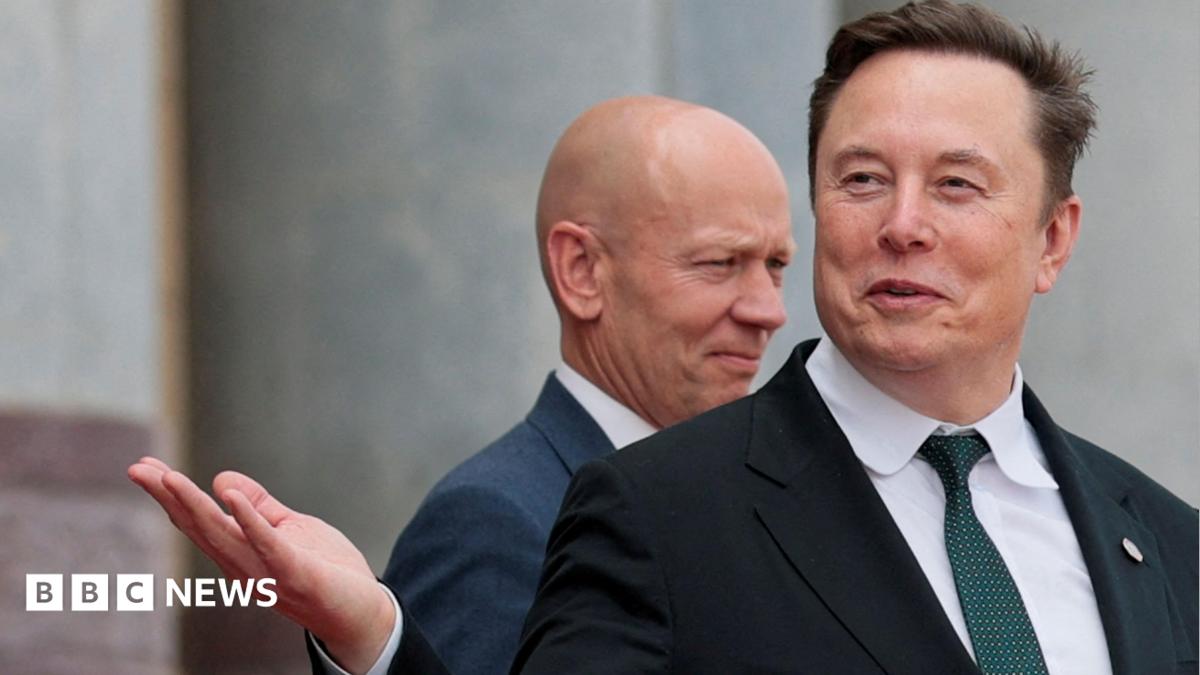
SpaceX’s share price has dropped below its stock market debut just over a month ago, falling sharply from a post-float peak.
The price for a single share in Elon Musk’s rocket, satellite and artificial intelligence (AI) company fell to $132.62 (£98.24) on Wednesday, below its initial listing of $135 in June.
SpaceX’s initial public offering (IPO) made Musk the world’s first trillionaire. Compared to its on-the-day high so far, the stock price is now down 41%.
If the price holds, or falls further, it will mean that those who purchased stock around the time of its flotation will stand to lose money on their investment.
Even amid a tumultuous few weeks for tech stocks, SpaceX has taken a particular hit.
Compared to a 0.2% fall on the wider Nasdaq index, where SpaceX’s shares are listed, the company’s stock price fell more than 2% on Wednesday.
SpaceX stock has been volatile since it began trading on the public stock market a little over one month ago.
After an initial investor frenzy that saw the company valued at more than Amazon and Microsoft, the price of its shares has drifted downward.
Initially, SpaceX was treated by investors as the first chance they had to invest in an AI company, according to what financial market analysts and experts recently told the BBC,
Earlier this year, SpaceX acquired Musk’s AI start-up xAI, recently renamed SpaceXAI, marking it’s first foray into an AI-focused business.
XAI is best known for the controversial chatbot Grok, but through that acquisition, SpaceX now leases data centre capacity to other tech companies.
The company’s main business is the manufacture and launch of rockets and telecommunications satellites called Starlink.
When Starlink said it was cutting prices in the Memphis, Tennessee area amid local concerns over a massive data centre project, SpaceX shares fell by 8%.
Steve Sosnick, chief market analyst at Interactive Brokers, told Reuters: “There hasn’t been anything that lately to remind people of some of the catalysts for why they bought SpaceX.”
SpaceX is expected to release in August its first public earnings report.
Sosnick added: “The fact that a stock has fallen a couple of dollars below its IPO price in itself is not a tragedy, but SpaceX is heavily watched and has an important role in investor psyche.”
SpaceX did not immediately respond to a request for comment.
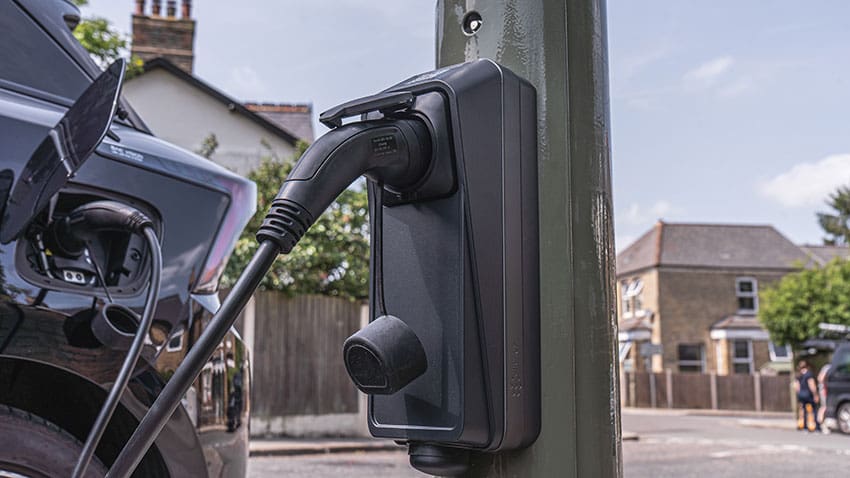
The humble lamp post is about to start paying its way. West Northamptonshire is to host one of the UK’s largest local on-street electric vehicle charging programmes, with more than 3,000 sockets, most of them fitted to existing lamp columns, due to start appearing on residential streets from mid 2026.
West Northamptonshire Council has appointed operator Char.gy to lead the rollout following a competitive procurement process. The programme is funded through the Government’s Local Electric Vehicle Infrastructure (LEVI) Fund and backed by substantial private investment, with competitive user tariffs promised.
The target market is clear: residents who rely on on-street parking and have no way of charging at home. That group includes a sizeable slice of the small business community, from sole traders running a van off the kerb to employees weighing up whether an electric company car is practical without a driveway.
For SME owners, charging access is often the deciding factor in whether electrifying a vehicle, or a whole fleet, stacks up. The rollout also lands amid a wider policy shift towards kerbside infrastructure, after ministers redirected £400 million towards on-street chargers in underserved areas, and as workplace charging becomes a benefit employees increasingly expect.
Aviation, Maritime and Decarbonisation Minister Keir Mather said: “Drivers in West Northamptonshire will soon have thousands more reasons to go electric, with over 3,000 new public charge points rolling out thanks to £2.85m of government funding.
“We know charging availability is one of the biggest barriers to switching, which is why we’re tackling it head on with over £600 million to rapidly expand the UK’s charging network so drivers can charge at home or on the go with confidence, wherever they are.”
The lamp column approach is the quietly clever part. By bolting chargers to existing council and parish infrastructure, the programme avoids the cost and disruption of digging up pavements, an approach the council says will keep the rollout cost-effective while supporting the area’s long-term sustainability ambitions.
Locations were selected through an evidence-based process prioritising residents without off-street parking, alongside sites suggested by residents themselves. Parish councils are being consulted to ensure the network is fair, accessible and sustainable.
Cllr Nigel Stansfield, Cabinet Member for Environment, Recycling and Waste at WNC, said: “This is a transformative investment in our area’s future. By delivering thousands of accessible, convenient and fairly priced on-street charging points, we are making it easier for residents to choose cleaner travel and invest in electric vehicles if they choose to.
“Working with Char.gy allows us to scale up quickly using existing infrastructure and ensure our communities are well-prepared for the increasing demand for electric vehicles.”
John Lewis, Char.gy’s chief executive, said the scheme would “make a real difference to people across West Northamptonshire who don’t have driveways or home chargers. By using lamp columns on residential streets, the Council is bringing charging closer to where people live, without major disruption to neighbourhoods.”
One caveat for those doing the sums: public charging still attracts 20 per cent VAT against 5 per cent for home charging, a gap currently the subject of a legal battle between HMRC and charge point operators that could yet reshape the economics of kerbside charging.
Residents and local businesses will be kept updated on installation timelines and site locations through WNC’s dedicated webpages and Char.gy’s website.

Jamie Young
Jamie Young is Senior Reporter at Business Matters, covering SME finance, employment law and Westminster policy since 2016. He has reported on every Budget and Autumn Statement since 2018, helped make sense of the ‘covid era’ and the bounce-back loan scheme from launch through the fraud investigations, and broke the magazine’s coverage of the 2024 late-payment reforms. He joined Business Matters straight from completing his BA in Administration from Exeter University and is NCTJ-qualified. Reach him at jyoung@cbmeg.co.uk


The seafood brand is making its retail debut with its frozen shrimp nuggets.

FOX Business’ Madison Alworth reports on New York’s statewide pause on large-scale AI data centers, with concerns about falling behind China in the AI arms race.
New York’s decision to pause the construction of large artificial intelligence data centers is drawing criticism from some lawmakers and energy officials, who argue the move could weaken the United States’ ability to compete in the global AI race while encouraging investment to move elsewhere.

New York Gov. Kathy Hochul’s AI data center pause is drawing criticism from lawmakers and industry leaders. (James Carbone/Newsday RM)
FOX Business’ Madison Alworth joined “Varney & Co.” host Stuart Varney to discuss New York’s first-in-the-nation pause on large artificial intelligence data centers, the debate over the state’s energy capacity and the broader concerns about U.S. competitiveness with China.
Maria Bartiromo and guests discuss New York Governor Kathy Hochul’s AI data center moratorium.
Critics argue that restricting new artificial intelligence infrastructure could have consequences beyond New York because demand for computing power continues to grow. Sen. John Fetterman, D-Pa., reacted on X to the state’s decision with a brief warning: “China wins.”
Gov. Kathy Hochul has defended the policy, arguing the state’s electric grid cannot currently support additional large-scale facilities.
“A giant data center, that one 50-megawatt center… consumes as much power as 50,000 homes… I’ve got an energy grid that is already overtaxed,” Hochul said.
Energy Secretary Chris Wright disputed that argument, saying large technology projects can help strengthen energy investment rather than strain it.
VistaShares CEO Adam Patti discusses how New York’s moratorium on large data centers underscores the need for major investments to modernize the nation’s aging power grid on ‘The Claman Countdown.’
“Gov. Hochul has it exactly backwards. Data centers are the greatest tool we have right now to stop the rise of electricity prices and ultimately to bring them back down,” Wright said, “It’s the Democrat green energy policies that have driven energy prices up in New York state.”
META EXPANDS LOUISIANA DATA CENTER IN $50B AI PUSH, BOOSTING RURAL COMMUNITY
The debate comes as states weigh how to balance rising electricity demand, artificial intelligence investment and long-term energy planning while competing to attract technology companies.

“Real money investors, including asset managers from Asia and Europe, dominated the demand for bonds, which were not open to US investors since it was a regulation S (Reg S) transaction,” said a person familiar with the issue.
ET had reported about the likely Tata Capital issue in its July 7 edition.
Tata Capital successfully raised $400 million by selling dollar bonds abroad. Asian and European asset managers dominated demand for these instruments. The bonds mature in 42 months and were priced tightly. This marks Tata Capital’s second overseas dollar bond sale. Fitch Ratings affirmed the company’s ratings at ‘BBB-‘ in February.
These instruments would mature in 42 months, marking only the second dollar bond sale for Tata Capital. The company generated a peak order book of $2.10 billion, people familiar with the issue said.
The bond was finally priced at 107 basis points above the three-year US treasury, much tighter than the company’s initial price guidance of 140 basis above the US bond. One basis point is 0.01 percentage point.

With the three-year US bond trading at 4.26%, the final coupon on the Tata Capital bond is likely to be around 5.33%. A Tata Capital spokesperson did not reply to an email seeking comment.
This bond issue is only the second overseas bond issue from the company after its debut in the international market in January 2025. The company had then raised an identical $400 million by selling dollar bonds maturing in three-and-a-half years to investors in Asia and Europe at a price of 92 basis points above the three-year US treasury.
HSBC, Standard Chartered and MUFG were the bankers to the issue. In February, Fitch Ratings had affirmed Tata Capital’s long-term foreign- and local-currency ratings at ‘BBB-‘ in line with India’s sovereign rating underpinned by expectation that its parent, Tata Sons would provide extraordinary support to the financing subsidiary in times of need.

Booking, Alphabet, and 7 Other Stocks to Buy Ahead of Earnings
Business
Treasury Unveils New $1 Gold Coin Featuring Trump’s Face for America’s 250th Birthday, Sparking Debate
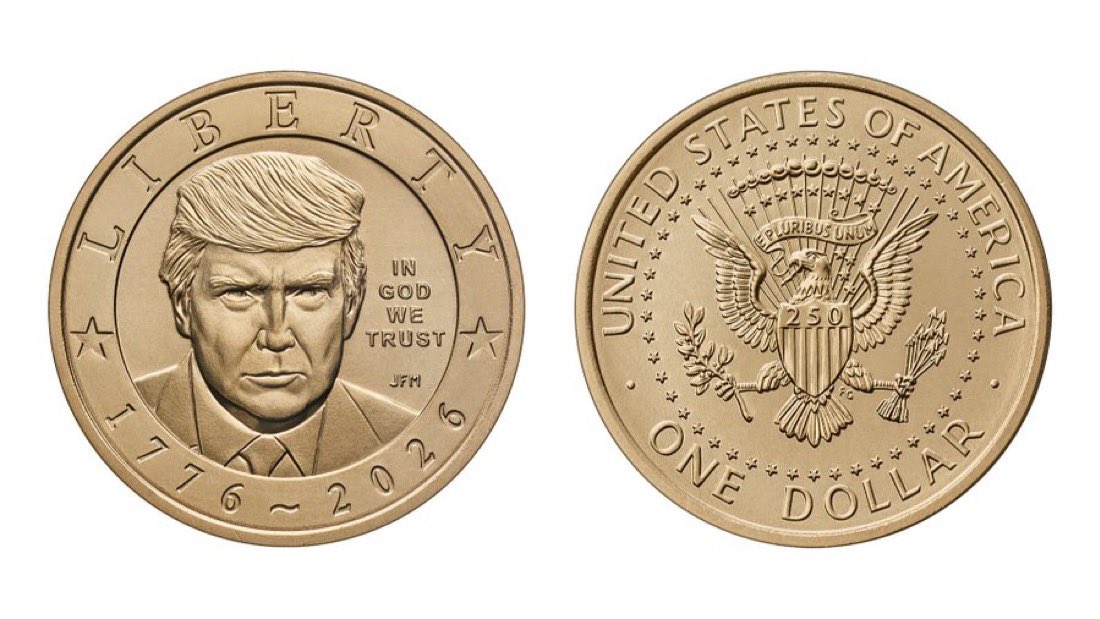
WASHINGTON — Treasury Secretary Scott Bessent unveiled new photos Wednesday of a proposed $1 gold-colored coin featuring President Donald Trump’s likeness, part of a broader effort to commemorate the United States’ 250th anniversary of independence, even as the design raises questions about longstanding federal restrictions on placing living presidents on U.S. currency.
Bessent shared the first-look images on social media platform X, describing the coin as a tribute to the nation’s founding principles.
“As America commemorates 250 years of independence, the @usmint will begin striking this new $1 gold coin to honor the enduring legacy of liberty and a lasting symbol of patriotism,” Bessent wrote. “Featuring President Trump, it celebrates the strength of American values, and the promise of a nation dedicated to preserving freedom for all.”
Coin Design and Production Details
The proposed coin features Trump’s image alongside the phrase “In God We Trust” and the dates “1776-2026” on the front. The reverse side reads “One Dollar.” Despite its gold-like finish, the coin is made from a non-precious metal composition rather than actual gold, according to Treasury officials.
The coins are being minted at the U.S. Mint facility in Philadelphia and are expected to become available to the public in the fall. The Commission of Fine Arts, the federal body responsible for reviewing the design of U.S. currency and coinage, granted the Mint approval to proceed with production in March.
A Legal Gray Area
The Trump administration‘s push to feature the sitting president’s likeness on circulating currency runs up against multiple existing federal restrictions. The Presidential $1 Coin Act of 2005 permits $1 coins honoring deceased presidents only, while the Circulating Collectible Coin Redesign Act of 2020 separately prohibits portraits of living people from appearing on the “tails” side of any coin. Federal law more broadly, dating back to an 1886 measure known as the Thayer Amendment, bars images of any living person from appearing on U.S. currency.
The Trump administration has argued that this particular coin sidesteps those restrictions by relying on a distinct 2020 law specifically authorizing commemorative designs tied to the nation’s 250th anniversary celebrations, a legal interpretation that has drawn scrutiny from congressional critics.
Democratic Lawmakers Push Back
Several Democratic lawmakers have moved to formally block the administration’s efforts to place Trump’s image on U.S. currency. Sens. Jeff Merkley of Oregon and Catherine Cortez Masto of Nevada introduced legislation, referred to as the “Change Corruption Act,” that would explicitly prohibit the likeness of any living or sitting president from appearing on U.S. currency of any kind.
Treasury Officials Defend the Design
Ahead of Wednesday’s formal unveiling, U.S. Treasurer Brandon Beach previously defended the decision to feature Trump on the coin in a statement obtained by the Associated Press in March.
“As we approach our 250th birthday, we are thrilled to prepare coins that represent the enduring spirit of our country and democracy, and there is no profile more emblematic for the front of such coins than that of our serving President, Donald J. Trump,” Beach said at the time.
Part of a Broader Currency Redesign Push
The $1 gold coin represents just one element of a broader effort by the Trump administration to reshape federal currency and other national symbols to feature the president more prominently. Bessent separately showed off a design earlier this week for a proposed $250 bill featuring Trump’s face, which he described as a preparatory measure the Treasury Department has taken in case Congress eventually passes legislation authorizing the sitting president’s image to appear on paper currency.
That preview of the $250 bill design followed a Washington Post report indicating the Treasury Department had pressured the Bureau of Engraving and Printing to produce mock-ups of the proposed note ahead of any formal congressional authorization.
New Passport Design Also Unveiled
Alongside the coin announcement, the administration also unveiled new limited-edition passports, dubbed “Patriot Passports,” created to mark the semiquincentennial celebration. A sample image shared by Trump depicted the president standing with his fists resting on the Resolute Desk, with the text of the Declaration of Independence displayed behind him. The passport’s second page includes a rendering of artist John Trumbull’s well-known painting depicting the signing of the Declaration of Independence.
Historical Precedent for Presidential Imagery
While federal law generally bars living presidents from appearing on U.S. currency, there is at least one notable historical precedent involving a sitting president’s image on commemorative coinage. Calvin Coolidge, the nation’s 30th president, issued a half-dollar coin in 1926 that included his own likeness alongside George Washington’s to commemorate America’s 150th anniversary, according to records maintained by the U.S. Mint.
Part of a Broader Pattern of Institutional Changes
Wednesday’s coin unveiling adds to a series of efforts by the Trump administration to leave a lasting imprint on federal institutions and symbols. Those efforts have included a push to add Trump’s name to the Kennedy Center’s facade, an initiative that has faced its own legal challenges. A federal judge ruled last month that Trump’s name must be removed from the performing arts center’s exterior, a decision the president has since appealed without success.
What Comes Next
With the coin’s production already underway in Philadelphia and its public release targeted for later this fall, the ongoing legal and political debate over whether featuring a sitting president’s likeness on U.S. currency violates existing federal restrictions is likely to continue playing out in Congress and potentially in the courts in the months ahead. Whether Merkley and Cortez Masto’s proposed legislation gains sufficient traction to formally block the coin’s release before it reaches circulation remains uncertain, given the current composition of Congress and the administration’s continued defense of its legal interpretation permitting the design under the 2020 semiquincentennial commemorative coin law.


Company enrolling 30% of wheat flour volumes into regenerative agriculture programs.
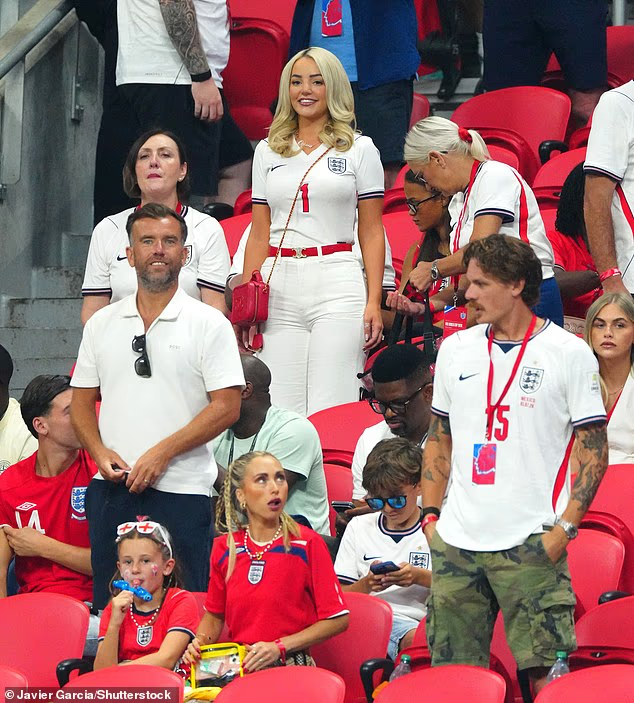
Jordan Pickford’s wife Megan and Jude Bellingham’s girlfriend Ashlyn Castro are spotted in the stands as they lead the glamorous WAGs rooting for England in the semi-final

British Steel nationalisation bill passed by Parliament

South Korea Moves to Treat Crypto as National Wealth Under New Law


-

 Fashion6 days ago
Loro Piana Fall 2026 Enters Houston’s Art Scene
-

 Fashion5 days ago
Weekend Open Thread: Nutriplenish Leave-In Conditioner
-
 Sports6 days ago
2026 Genesis Scottish Open Thursday TV coverage: Round 1
-

 Sports5 days ago
Super Eagles star Moses Simon opens up on Liverpool transfer regret
-

 Tech6 days ago
Character.AI enters the microdrama arena with its own productions, but there’s a twist
-

 Politics6 hours ago
Young campaigners urge incoming PM to act on outdoor junk food ads
-

 News Videos23 hours ago
XRP BOMBSHELL… XRP OMBOARDED FOR TRANSACTIONS!!!
-

 Tech2 days ago
Get Your ESP32 Sunny Side Up With This Solar Dev Board
-

 Tech22 hours ago
Dark Secrets Emerge When Jailbreaking LLMs
-

 News Videos7 days ago
Crypto Just Entered Its Most Important 6-Month Candle (Could Decide Everything!)
-

 Tech6 days ago
Level Infinite Launches Gangstar Mirage City in India with Pre-Registrations
-
 NewsBeat6 days ago
Major update after Huntingdon train attack as man enters plea
-

 News Videos2 days ago
how to make coin bank box with cardboard #scienceproject #money #diy #shorts
-
 Tech2 days ago
Cloudflare Precursor Watches Your Mouse and Keyboard To Decide If You Are Human
-
 Entertainment1 hour ago
Disney’s Most Ambitious Failed Star Wars Attraction Is Coming to SDCC
-

 Tech7 days ago
Entra passkey enrollment vishing targets Microsoft 365 users
-
 Crypto World7 days ago
DeFi Dashboard Zapper to Shut Down After 7 Years
-
Crypto World1 day ago
Ripple, Coinbase, Circle Join Linux x402 Foundation to Help Shape AI Payments
-
 Crypto World7 days ago
Mark Cuban-Backed DeFi Dashboard Zapper Shuts Down After 7 Years
-

 Tech6 days ago
Claude’s New Reflect Dashboard Wants To Help You Log Off Of Claude
You must be logged in to post a comment Login