

Business
Intertek Group: EQT Takeover Comes At A Sane Valuation




NEW YORK — Shares of Space Exploration Technologies Corp., trading under the ticker SPCX, closed lower on Thursday following the company’s record-breaking initial public offering, reflecting typical post-listing adjustments as initial enthusiasm moderates.
The stock finished the session at $185.00, representing a 3.56 percent decline from the previous close. After-hours trading saw further movement, with shares at approximately $181.60. The performance comes after SpaceX’s historic debut that briefly propelled its market value above $2 trillion.
Analysts anticipated some volatility following the massive IPO, which raised $75 billion and marked the largest in history. The company’s rapid ascent in its first days of trading gave way to profit-taking and market recalibration as investors assessed long-term prospects.
SpaceX, led by Elon Musk, has transformed the commercial space industry through reusable rocket technology and Starlink satellite internet services. The public listing provides greater transparency while exposing the company to broader market forces and shareholder expectations.
The stock’s movement reflects broader dynamics in the technology sector, where high valuations often face scrutiny as companies transition from private to public status. SpaceX’s business combines launch services, satellite operations and emerging artificial intelligence applications.
Musk’s substantial ownership stake ties his personal fortune closely to the company’s performance. The IPO significantly increased paper wealth for early investors and employees while generating substantial capital for future growth initiatives.
Market observers note that post-IPO pullbacks are common even for successful debuts. SpaceX’s fundamental strengths in securing contracts and technological leadership provide a foundation for long-term value, though near-term trading may remain choppy.
The company’s recent credit ratings from major agencies underscore its financial stability. Investment-grade assessments with stable outlooks reflect confidence in SpaceX’s business model and cash flow generation capabilities.
SpaceX continues expanding its Starlink constellation, providing broadband services to remote areas and supporting various commercial and government applications. The division has become a significant revenue contributor alongside traditional launch operations.
Analysts maintain varied price targets reflecting different views on growth trajectories. Some project substantial upside based on market expansion in space technology, while others adopt more cautious stances regarding execution risks and competition.
The IPO process itself demonstrated strong demand, with shares allocated across institutional and retail investors. The debut generated significant media attention and public interest in space industry investment opportunities.
For the broader market, SpaceX’s listing adds another major technology name to public exchanges. Its performance may influence sentiment toward other high-growth companies considering public offerings in coming months.
Musk has outlined ambitious goals for SpaceX, including Mars colonization efforts and increased satellite deployment. Achieving these objectives will require substantial capital investment and sustained innovation.
Investors will monitor upcoming earnings reports and operational updates as the company navigates its new public status. Quarterly results will provide greater insight into financial performance across different business segments.
The space sector continues attracting attention as technological capabilities advance and commercial opportunities expand. SpaceX’s leadership position positions it favorably, though competition from both established players and newcomers remains intense.
As trading volume normalizes, market participants expect more measured price discovery based on fundamental metrics rather than initial listing excitement. Long-term success will depend on execution against strategic objectives and ability to generate sustainable profits.
SpaceX’s journey from private startup to public company represents a significant milestone in commercial spaceflight. The coming years will test whether its ambitious vision can translate into consistent shareholder value while advancing humanity’s presence beyond Earth.
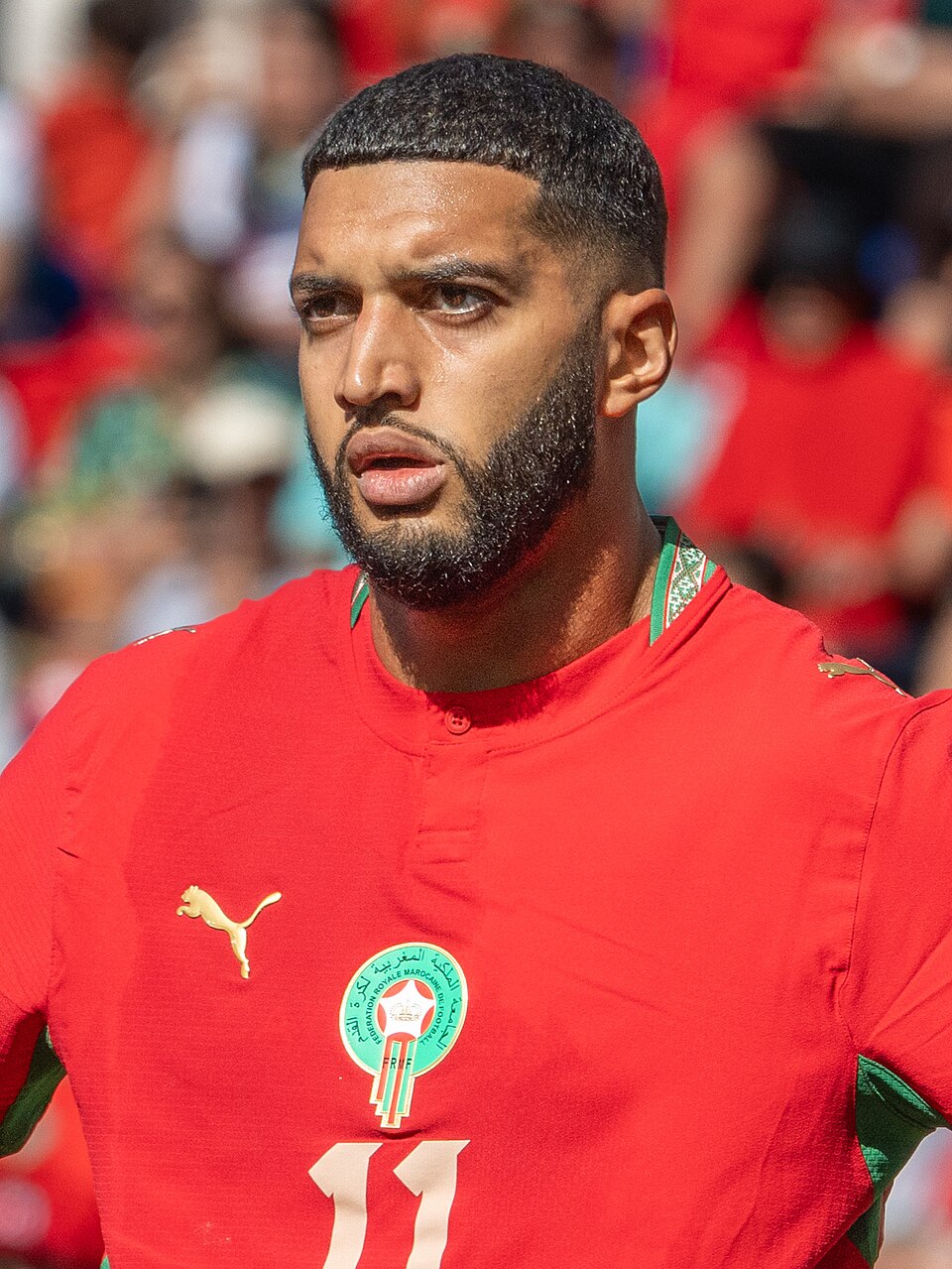
BOSTON — Morocco defeated Scotland 1-0 in Group C at the World Cup on Friday, as an early goal from Ismael Saibari proved to be the difference and left the Tartan Army’s hopes of reaching the knockout stage hanging in the balance heading into a decisive final group match against Brazil.
Saibari was played through by Brahim Díaz shortly after kickoff, before the PSV Eindhoven man took it down and fired past Angus Gunn at the far post. And while both sides had chances in the second half, an equalizer never came, leaving the North African side all but certainly through to the knockouts, while the fate of Steve Clarke’s side remains uncertain.
The Fastest Goal of the Tournament So Far
The speed of Morocco’s breakthrough stunned a Boston Stadium crowd that had arrived hoping to witness history. Ismael Saibari scored the fastest goal of the World Cup 2026 so far after just 71 seconds as Morocco beat Scotland 1-0 to close in on a place in the knockout rounds. Saibari scored in Morocco’s opening 1-1 draw with Brazil last weekend, and his clinical finish with just over a minute gone settled a hard-fought, physical contest.
A crowd of 64,146 fans turned up at the venue in Massachusetts to witness the result. Saibari’s clinical finish after 70 seconds from Brahim Diaz’s lofted pass proved enough for the Atlas Lions, who had much the better of the contest and struck the woodwork when Jack Hendry blocked Saibari’s second-half shot.
A Goal Born From a Defensive Lapse
Scotland’s nightmare start traced directly back to a moment of vulnerability at the back. Steve Clarke’s side knew victory would guarantee a place in the knockout stages of a major tournament for the first time, but they were rocked after just 70 seconds. Grant Hanley was caught out and Ismael Saibari took advantage with a clinical strike fired into the top corner. He almost made it two as the Scots struggled to find their composure in the early going at Boston Stadium.
Disputed Penalty Decisions
Scotland’s frustration mounted as the match progressed, with the Tartan Army twice appealing unsuccessfully for spot kicks that might have offered a route back into the contest. John McGinn appealed for a penalty not long after the restart after being brought down by Neil El Aynaoui, but it was deemed a fair challenge by the referee. Later in the match, Scott McTominay was also brought down inside the box, with that appeal likewise turned down.
Scotland took 46 minutes to create their first shot of the match, a stark illustration of how thoroughly Morocco controlled proceedings for long stretches of the contest.
Morocco’s Continued Attacking Threat
Even with a one-goal cushion, Morocco continued to press for a second goal that would have settled the contest beyond doubt. Morocco hit the woodwork five minutes into the second half as Saibari met a cutback by El Khannouss, and his attempt was deflected onto the bar by Jack Hendry. Moments later, Gunn made a fine stop to keep out an El Khannouss header from a corner, ensuring Scotland remained within a single goal heading into the closing stages.
Scotland’s Tactical Setup
Manager Steve Clarke made several changes to his starting lineup in an effort to shore up the defense against a technically superior Moroccan side. Moroccan coach Mohamed Ouahbi went with an unchanged starting lineup following the Brazil clash, but opposite number Steve Clarke made three changes. Clarke sought to reinforce his defense, meaning striker Lawrence Shankland dropped out as defender Kieran Tierney came into the side to make a back five. But that was of little use as Morocco went ahead practically from kickoff.
Defender Scott McKenna was out with a calf injury for Scotland, who brought in Kieran Tierney, Nathan Patterson, and Ryan Christie. Aaron Hickey, Ben Gannon-Doak, and Lawrence Shankland made way as a result.
Saibari’s Rising Profile
Beyond the result itself, Saibari’s performance further elevated his standing as one of the tournament’s breakout individual stars and reinforced reports of his impending move to one of European football’s biggest clubs. The 25-year-old, who was born in Spain and raised in Belgium, is reportedly on the brink of a $63 million transfer from Dutch champions PSV Eindhoven to Bayern Munich. The quality of his strike past goalkeeper Angus Gunn showed why he is attracting such interest, and it was telling that Scotland lacked the same quality in the opposition box — helping explain why Morocco are ranked fifth in the world, and Scotland 40th.
A Painful Historical Echo
The defeat carried a degree of historical resonance for Scottish supporters, given the team’s only previous World Cup meeting with a similarly daunting South American or European opponent. Scotland were a little unfortunate not to take a point when they faced Brazil in their first game at their last appearance at the finals in 1998, when Tom Boyd’s 74th-minute own goal decided the match.
Pundit Assessment
Former player and current analyst Steve Nicol offered a blunt verdict on Scotland’s overall performance in the aftermath of the result, suggesting the outcome reflected the genuine gap in quality between the two sides on the night.
Where the Group Stands
The result leaves Scotland on three points following their opening win over Haiti, with Morocco, who drew with Brazil, on four. The Selecao and Grenadiers meet in their second matches of the tournament at 01:30 BST on Sunday, a result that will further shape the picture in Group C heading into the decisive final round.
Another win here would have secured progress from Group C for Morocco, but their chances of going further remain up in the air going into their next match against Brazil in Miami next Wednesday. Both teams play their final games of the group stage on Wednesday.
Scotland now needs a result against Brazil to have a chance of progression, setting up a must-win or must-draw scenario for Steve Clarke’s side in their bid to reach the knockout stage of a major tournament for the first time in the nation’s history. Having already faced Brazil once before at a World Cup — in that narrow 1998 defeat — Scotland will look to that history for any source of encouragement as they prepare for what now amounts to a win-or-go-home final group match in Miami.

These top 5 small cap stocks that witnessed highest net buying by mutual funds in May. Here is a detailed breakup, according to a report by Motilal Oswal Financial Services.
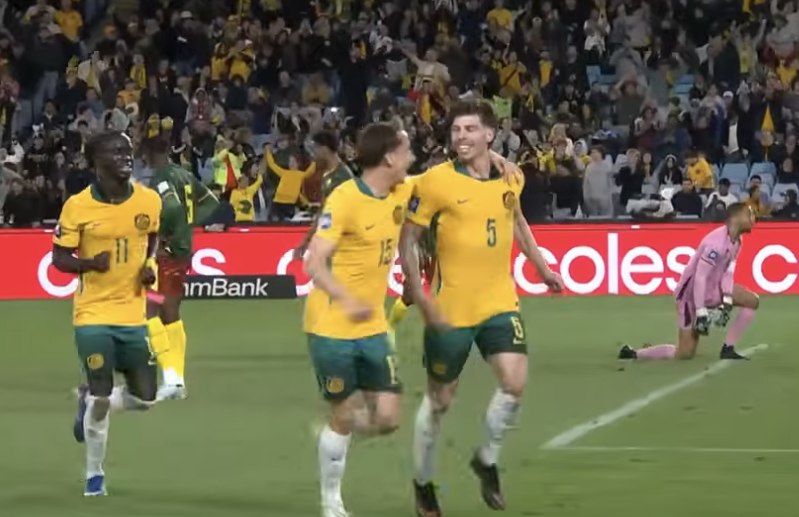
SEATTLE — The United States dominated Australia 2-0 on Friday at Seattle Stadium, with an own goal and a clinical finish from breakout star Alex Freeman sending the co-hosts surging into the World Cup knockout stage with a game still to spare in Group D.
The result, built on a self-inflicted opening goal and a composed individual finish, left the Socceroos reeling and the Americans firmly in control of their own destiny heading into the final round of group matches.
How the Goals Came
The breakthrough came when Australian defender Cameron Burgess turned the ball into his own net to give the United States the lead, a costly error that set the tone for the remainder of the match. Burgess clattered the ball into his own net for the opening goal, having ball-watched in the buildup before being forced into the unfortunate clearance. He was substituted at halftime following the difficult outing.
Folarin Balogun played a central role in generating the danger that led to the opener, with his incisive run up the channel rewarded with the own-goal opener. He held his own as Australia upped the physicality in the second half, remaining a persistent threat in the minds of the Australian defense throughout.
The second goal arrived through Alex Freeman, whose finish was ultimately confirmed following a VAR review. Freeman delivered another balanced all-around shift, this time with a goal to show for it — a player ratings assessment that flagged him as a “star in the making.” Sergiño Dest took the initial shot that was lobbed into Freeman’s zone for the second goal, with good interplay alongside Weston McKennie along the right flank helping generate the chance.
Standout Performances for the USA
Several American players drew praise for their contributions throughout the dominant performance. Tim Ream, serving as captain, was credited as the engineer of plenty of good efforts up the left flank and was often involved in the defensive half, delivering another credible shift in that leadership role. Chris Richards was not quite perfect on the pass but stewarded defensive sequences effectively, though a needless late challenge put him in yellow card limbo heading into the team’s next match.
Antonee Robinson kept the ball moving up the left touchline with seven progressive passes and provided width for Balogun’s run on the opener, though he too now finds himself on yellow card watch. Tyler Adams operated effectively behind a pair of box-to-box midfielders and kept Australia from making good progress through the central third throughout the match.
Weston McKennie relished a more advanced role, registering six progressive passes, eight progressive receptions, and four passes into the box, with some dazzling footwork alongside Dest in key moments. Malik Tillman delivered another composed shift with tidy ball recirculation and progression, proving difficult to dispossess and drawing additional cautions from the Australian defense in the process.
Ricardo Pepi, a surprise starter, thwarted Australia’s plans and overall shape but was unable to place either of his shot attempts on target, instead contributing industriously off the ball as a complement to Balogun’s more incisive running.
A Difficult Night for the Socceroos
For Australia, the match represented a sharp reversal from their promising start to the tournament. Several Australian players struggled throughout, with the back line in particular unable to contain the pace and movement of the American attack.
Jacob Italiano was beaten on numerous occasions by the USA’s wide players in the first half, though he showed a bit more creativity when pushing further forward in the final half-hour. Jordan Bos earned the game’s first yellow card for shoving McKennie in the face and was regularly beaten down the wing, offering very little in attack throughout his time on the pitch.
Aiden O’Neill was isolated and overwhelmed in midfield for most of the game, failing to control the tempo or connect key passes for his team. Paul Okon-Engstler struggled to assert himself physically for the first 70 minutes and lost too many one-on-one challenges against the American attackers.
A bright spot for the Socceroos came in the form of Mat Leckie, who was Australia’s best attacker early in the first half, generating a handful of shots and crosses before fading as the match progressed. He was forced off with an injury just after the hour mark. Despite the difficult overall performance, Alessandro Circati defended stoically for much of the match, picking up Australia’s second yellow card for a high boot but also making a desperate diving block to prevent what would have been a third American goal early in the second half.
Bench Contributions
Substitute Connor Metcalfe provided one of the few genuine positives for Australia off the bench, making an immediate impact with forward runs and line-breaking passes after coming on at halftime. Nestory Irankunda also offered a more dangerous counter-attacking threat than the player he replaced, causing trouble whenever he reached top speed.
For the United States, manager Mauricio Pochettino used his substitutions to manage the comfortable lead and protect his starters heading into the team’s remaining group fixture. Sebastian Berhalter came on to add midfield stability as the U.S. sacrificed an attacking option with the game well in hand, while Joe Scally and Auston Trusty both saw their first action of the tournament with the result already secure. Gio Reyna and Haji Wright entered in stoppage time as the match wound down toward its conclusion.
What the Result Means
The dominant victory sends the United States into the World Cup knockout stage with a game still remaining in the group phase, a significant achievement for the co-host nation as it continues building momentum on home soil. The result, paired with the team’s opening win, leaves the Americans in firm control of their own group-stage fate heading into their final fixture.
For Australia, the loss represents a significant step backward after an encouraging start to the tournament, leaving the Socceroos needing a strong result in their remaining group match to keep their own knockout-stage ambitions alive. The manner of the defeat — undone by a costly own goal and unable to generate sustained attacking pressure against a well-organized American side — will likely prompt searching questions for manager Tony Popovic as his team regroups ahead of its final group-stage test.
Business
Abu Dhabi Investment Portfolio: 10 stocks rally up to 106% in CY26, 2 new picks added in Q4 – Portfolio check

The equity portfolio of the Abu Dhabi Investment Authority (ADIA), managed through its global funds, has recorded a 30% gain so far in CY26, rising from Rs 3,720 crore in December 2025 to Rs 4,817 crore as of June 19, 2026. As of the March 2026 quarter, the portfolio comprised holdings in 26 publicly listed Indian companies.

ServiceNow: Expect Shares To Keep Trading Lower

Parag Parikh Large Cap Fund had an AUM of Rs 739 crore as of May 31, 2026. Here are the top 10 holdings of this large cap fund (Source: ACE MF)

Bolivia declares state of emergency after weeks of road blockades


Mexico City looks to rein in street drinking after massive World Cup party


Swimming-American Douglass breaks 50m freestyle world record

Tom Hanks Reacts To Surprise ‘Toy Story’ Family Reveal

Crypto Just Got Punched In The Gut – Hard! Breaking Crypto News!

How Durham Cathedral became ‘Cambridge’ in Virginia Woolf movie


-

 Business6 days ago
No Jackpot Winner as $257 Million Prize Rolls Over to $269 Million Monday Draw
-
 Crypto World5 days ago
Zimbabwe Requires Crypto Businesses to Register Annually Under New FIU Regulations
-

 Fashion14 hours ago
Weekend Open Thread: Miami – Corporette.com
-
 Entertainment6 days ago
Matt Damon’s Viral Sci-Fi Thriller Has Taken Over HBO Max
-

 Business6 days ago
Anthropic staff to meet White House officials next week, Axios reports
-

 Tech6 days ago
As AI companies race to go public, who else is along for the ride?
-
 Crypto World6 days ago
Bitcoin could crash to $48,000, if this historical pattern is triggered
-
 NewsBeat6 days ago
what doctors are seeing in ebike crashes
-
 NewsBeat6 days ago
Warning of disruption as Cardiff Crossrail works to start
-
 NewsBeat6 days ago
Tributes to former deputy head teacher at Cambridge school among death and funeral notices
-

 Politics6 days ago
“Israel’s” ban on ICRC visits ruled illegal, but Knesset moves to stop them permanently
-

 Entertainment6 days ago
Deion Sanders Shares Powerful Post After Viral Advice To Deiondra
-

 News Videos6 days ago
Financial Accounting | Last Day Revision Strategy and Booster | CMA Inter – June 2026
-
 Entertainment6 days ago
Kate Middleton Glare Goes Viral After Kids Booed At Royal Event
-

 Crypto World6 days ago
XRP ETFs Outperform As Bitcoin And Ethereum Funds Extend Outflow Trend
-

 Tech5 days ago
Over 400 Arch Linux packages compromised to push rootkit, infostealer
-
 Crypto World6 days ago
Market Preview: SpaceX (SPCX) IPO Record, Federal Reserve Meeting, and Iran Nuclear Agreement
-

 Business6 days ago
Invesco Quality Income Fund Q1 2026 Commentary
-

 Sports6 days ago
Dick Advocaat’s Curacao scores first-ever World Cup goal against Germany
-

 NewsBeat6 days ago
Singer Oliver Tree dies aged 32 in helicopter crash in Brazil
You must be logged in to post a comment Login