| Revenue of $4.65B (17.36% Y/Y) beats by $118.79M
Intuit Inc. (INTU) Morgan Stanley Technology, Media & Telecom Conference 2026 March 2, 2026 1:00 PM EST
Company Participants
Sasan Goodarzi – CEO, President & Chairman
Advertisement
Conference Call Participants
Keith Weiss – Morgan Stanley, Research Division
Advertisement
Presentation
Keith Weiss Morgan Stanley, Research Division
Excellent. Thank you, everyone, for joining us. My name is Keith Weiss. I run the U.S. equity research franchise covering software here at Morgan Stanley.
And really pleased to start out my conference talking with Intuit CEO, Sasan Goodarzi. Sasan, thank you so much for joining us.
Advertisement
Sasan Goodarzi CEO, President & Chairman
Thank you for having me. Happy Monday, everybody.
Advertisement
Question-and-Answer Session
Keith Weiss Morgan Stanley, Research Division
Excellent. So maybe to start off, you guys just reported Q2 results last week. A really impressive set of results. Beat revenues — almost every segment, beat revenues. Operating margins came in well ahead of expectations. EPS, you beat EPS by 12.5%. Can you talk to us about what’s going on under the hood? Like what are the developments that you guys are seeing thus far in your fiscal year that’s enabling you to put up those results, to beat on the top line and bring more leverage and beat on the bottom line the way that you did?
Advertisement
Sasan Goodarzi CEO, President & Chairman
Yes. Sure. So just as context, we ended our last fiscal year growing 16%. And to Keith’s question, first half of the year, we actually grew 18%, and Q2, which is what we just announced, was 17% top line growth.
And really, the drivers were across the entire business. Our Business platform grew 18%. And within our Business platform, a key metric we look at, which is one of the company’s big bets, is mid-market. That grew 40%. And our Consumer platform grew 15%.
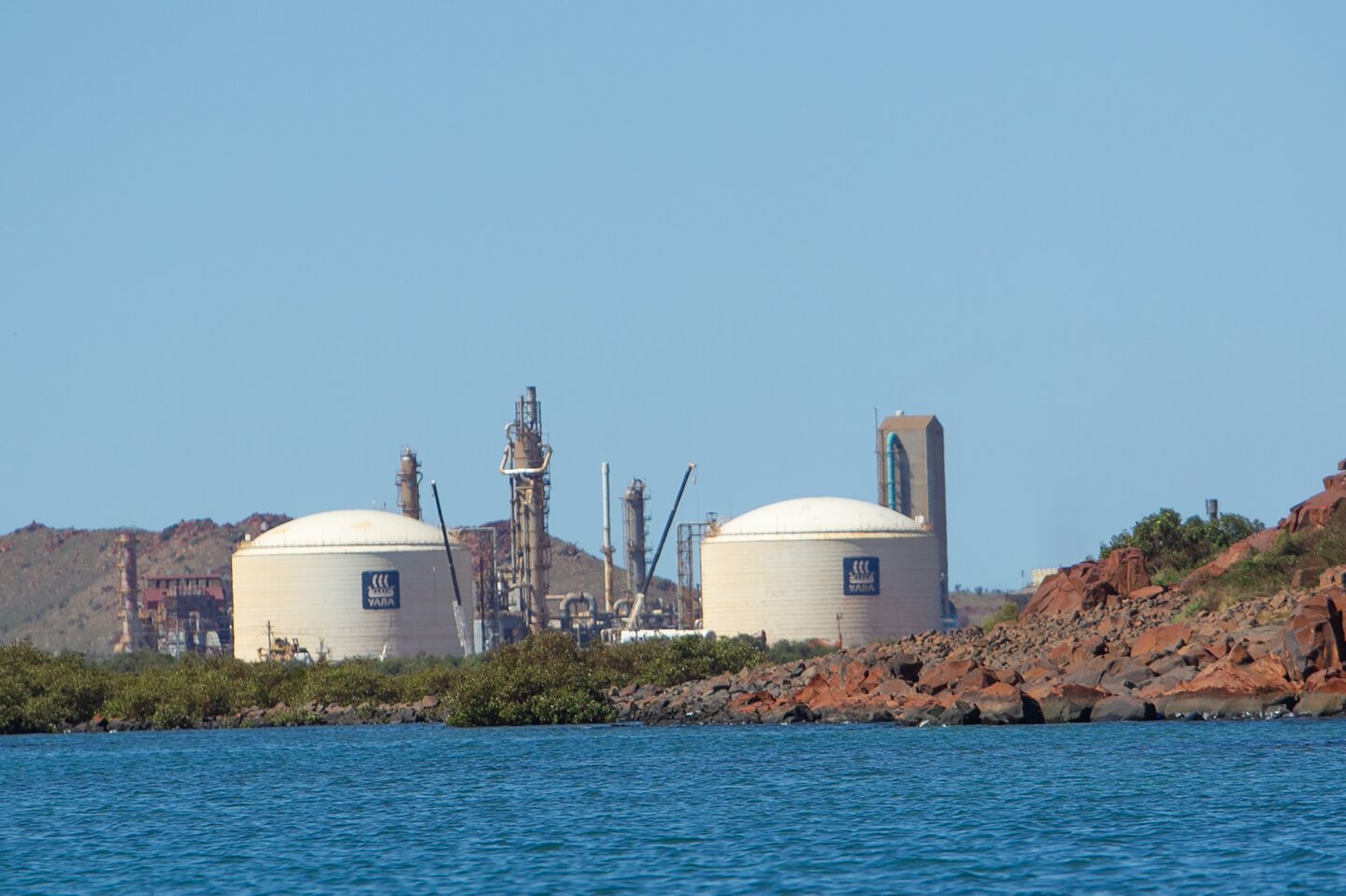
Fertiliser and explosives major Orica is shoring up alternative supply of ammonia amid two plant outages, after Yara’s Pilbara operation was forced offline due to damage.
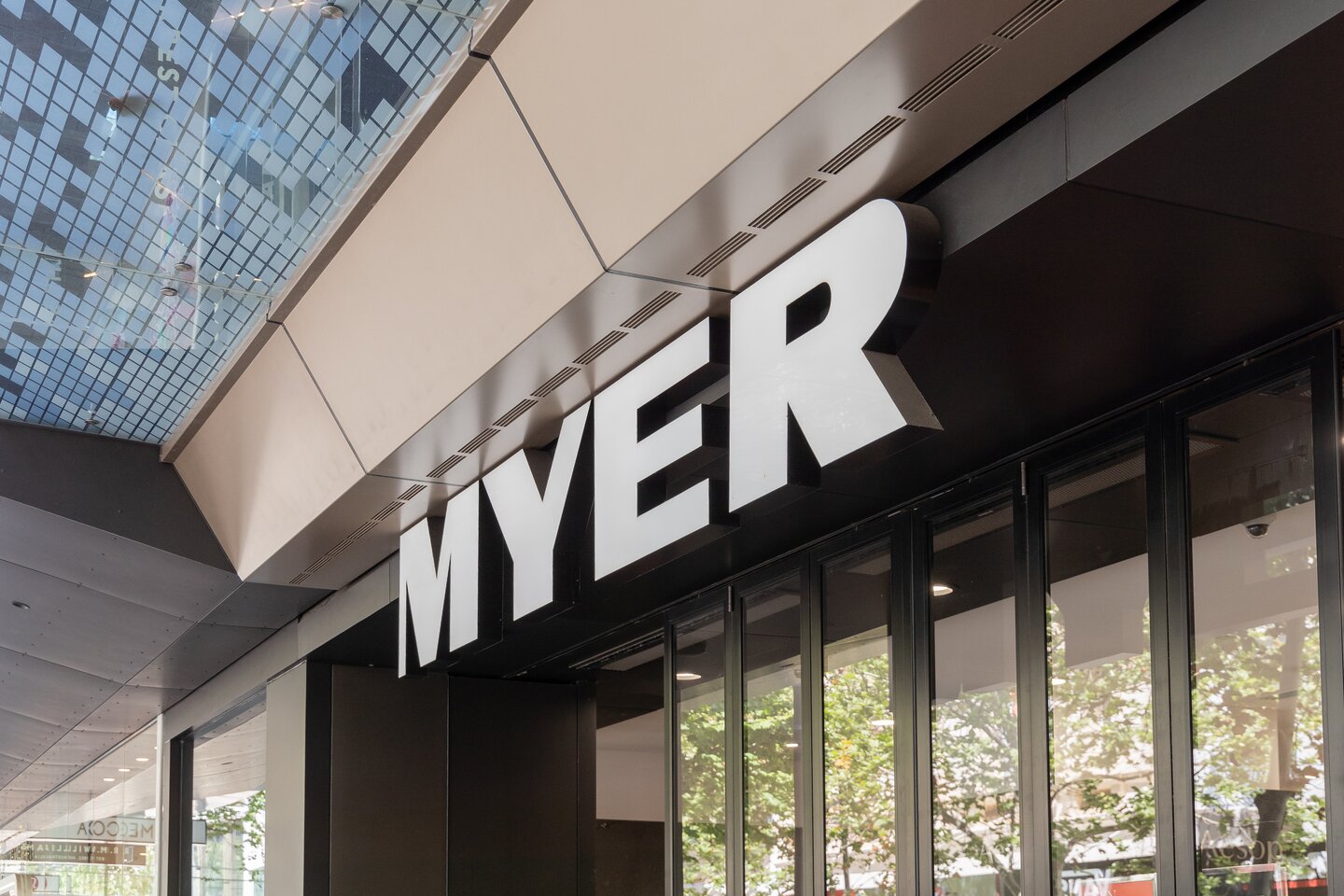
A major Australian department store operator is planning a big expansion of its e-commerce product categories when it launches a new marketplace platform in the coming months.
NEW YORK — The Nasdaq Composite Index tumbled more than 2% on Friday, March 20, 2026, closing at 21,647.61 after shedding 443.08 points, as escalating U.S.-Israeli military actions against Iran drove oil prices higher and fueled investor fears of prolonged economic disruption. The decline marked the tech-focused benchmark’s steepest single-day drop in recent weeks and contributed to a fourth consecutive weekly loss for major U.S. equities.
The Nasdaq logo is displayed at the Nasdaq Market site in New York
The sell-off accelerated throughout the trading session, with the index opening around 21,989 and dipping as low as 21,522.75 before a modest late-day recovery failed to offset broad-based losses. Heavyweights in artificial intelligence, semiconductors and data storage bore the brunt, reflecting concerns that higher energy costs could crimp corporate profits and slow AI infrastructure buildouts.
Nvidia Corp. and Microsoft Corp. led the retreat among mega-cap tech names, with losses exacerbating the Nasdaq’s underperformance relative to broader indexes. The S&P 500 fell 1.51% to close at 6,506.48, down 100.01 points, while the Dow Jones Industrial Average declined 0.96%, or 443.96 points, to 45,577.47. The CBOE Volatility Index, or VIX, often called Wall Street’s fear gauge, spiked 11.31% to 26.78, signaling heightened market anxiety.
The primary catalyst was the ongoing conflict in the Middle East, now in its fourth week, which has sent Brent crude surging toward $114 per barrel in recent sessions. Investors worried that sustained high oil prices could reignite inflation pressures, complicate Federal Reserve policy and pressure consumer spending. Reports of intensified U.S.-Israeli strikes on Iranian targets amplified risk aversion, with energy-sensitive sectors showing relative resilience while growth-oriented tech stocks suffered.
“Geopolitics is dominating right now,” said one market strategist in comments echoed across trading floors. “Oil at these levels is a tax on the economy, and tech, with its high valuations and energy-intensive data centers, feels it most acutely.”
Advertisement
Semiconductor and hardware plays were particularly hard hit. Micron Technology Inc. dropped sharply amid broader sector weakness, while other chip-related names faced selling pressure. Constellation Energy and data storage firms like Western Digital and Seagate Technology also posted steep declines, as traders reassessed growth prospects in an environment of elevated input costs.
The Nasdaq’s performance contrasted with pockets of strength elsewhere. Energy stocks held up better, benefiting from the oil rally, while some defensive sectors provided limited cushion. However, the tech-heavy composition of the index—dominated by the so-called Magnificent Seven—left it vulnerable to any shift away from growth bets.
Broader market context showed stocks teetering near correction territory, defined as a 10% drop from recent highs. The Nasdaq had already given back significant ground in prior sessions, with weekly declines piling up as investors digested mixed economic signals and persistent inflation worries. Year-to-date, the index remained positive but well off its peaks, reflecting a choppy 2026 so far.
President Donald Trump’s administration added volatility through public statements on the conflict. Comments suggesting “productive” talks with Iran briefly lifted futures in after-hours trading on March 22 previews, with some reports indicating Dow futures jumping significantly on hopes of de-escalation. However, skepticism persisted about the veracity and immediacy of any breakthrough, keeping traders cautious heading into the March 23 open.
Advertisement
Analysts noted that while diplomatic overtures could provide relief, the market’s reaction underscored deeper concerns about supply chain disruptions in the Strait of Hormuz and potential retaliatory actions. U.S. Navy assurances of escorting tankers offered some reassurance, but not enough to reverse Friday’s momentum.
Tech sector leaders remained in focus. Nvidia, a bellwether for AI enthusiasm, faced renewed scrutiny as higher energy costs threatened to slow hyperscaler spending on GPUs. Microsoft, with its cloud and AI ambitions, similarly contended with margin pressures. The Nasdaq-100, a subset of the Composite, fell 1.88% to 23,898.15 on March 20, underscoring the concentrated pain in large-cap growth.
Looking ahead, investors eyed upcoming economic data, including any fresh inflation readings or Fed commentary, for clues on interest rate paths. Persistent high oil could force the central bank into a tighter stance, further challenging rate-sensitive tech valuations.
Despite the dour session, some observers pointed to oversold conditions as a potential setup for a rebound if geopolitical headlines improve. “Markets hate uncertainty, but they’ve priced in a lot of bad news already,” one trader noted. “Any sign of cooling in the Middle East could spark a sharp relief rally.”
Advertisement
For now, the Nasdaq’s slide highlighted the index’s sensitivity to macro shocks in an era where technology underpins much of economic growth. With oil volatility and war risks lingering, traders braced for continued choppiness as the week drew to a close.
The March 20 close left the Nasdaq down roughly 5-6% over the prior month in some calculations, erasing earlier gains tied to AI optimism. As March 23 trading approached in Asian and European sessions, futures signaled potential opening volatility, with pre-market indications mixed amid evolving news on Iran talks.
Wall Street’s mood remained guarded, balancing hopes for diplomacy against the reality of elevated risks. The tech-driven Nasdaq, long a barometer of innovation and risk appetite, once again proved most exposed to global turbulence.
Seeking Alpha’s transcripts team is responsible for the development of all of our transcript-related projects. We currently publish thousands of quarterly earnings calls per quarter on our site and are continuing to grow and expand our coverage. The purpose of this profile is to allow us to share with our readers new transcript-related developments. Thanks, SA Transcripts Team
Oil prices moved higher in early Tuesday trade as supply concerns resurfaced after Iran denied engaging in talks with the United States to end the Gulf conflict. This pushed back against U.S. President Donald Trump’s claim that a deal could be within reach.
In a post on Truth Social, Donald Trump said the United States and Iran had engaged in “very good and productive conversations” aimed at a complete resolution of hostilities, adding that all planned strikes on power plants and energy infrastructure would be deferred for five days.
Crude oil price on March 24
Brent crude futures rose $1.06, or 1.1%, to $101 a barrel at 0001 GMT. U.S. West Texas Intermediate (WTI) gained $1.58, or 1.8%, to $89.71.The rebound follows a sharp selloff on Monday, when crude dropped more than 10%. The decline came after Trump said he had ordered a five-day pause on planned strikes against Iran’s power infrastructure and indicated that “productive talks” with unnamed Iranian officials had yielded major points of agreement.
Advertisement
Live Events
Despite the temporary pause in military action, concerns around the Strait of Hormuz persist. The ongoing conflict has effectively disrupted shipments of nearly one-fifth of global oil and liquefied natural gas passing through the key waterway. Tehran has strongly denied any contact with Washington, calling the claims an attempt to influence financial markets. Iran’s Revolutionary Guards also said fresh attacks had been carried out on U.S. targets, dismissing Trump’s remarks as “worn-out psychological operations.”
Where are prices headed?
As per a Reuters report, international brokerage Macquarie has said that even if tensions ease in the near term, oil prices are likely to find support in the $85–$90 range, with a gradual move back toward $110 until normal flows through the Strait of Hormuz resume. The note added that if disruptions persist through April, Brent could still climb to $150 per barrel.
Meanwhile, the conflict continues to damage energy infrastructure across the region. Recent strikes hit a gas company office and a pressure-reduction facility in Isfahan. A separate projectile struck a gas pipeline supplying a power station in Khorramshahr, as reported by Iran’s semi-official Fars news agency.
(Disclaimer: The recommendations, suggestions, views, and opinions given by the experts are their own. These do not represent the views of The Economic Times.)
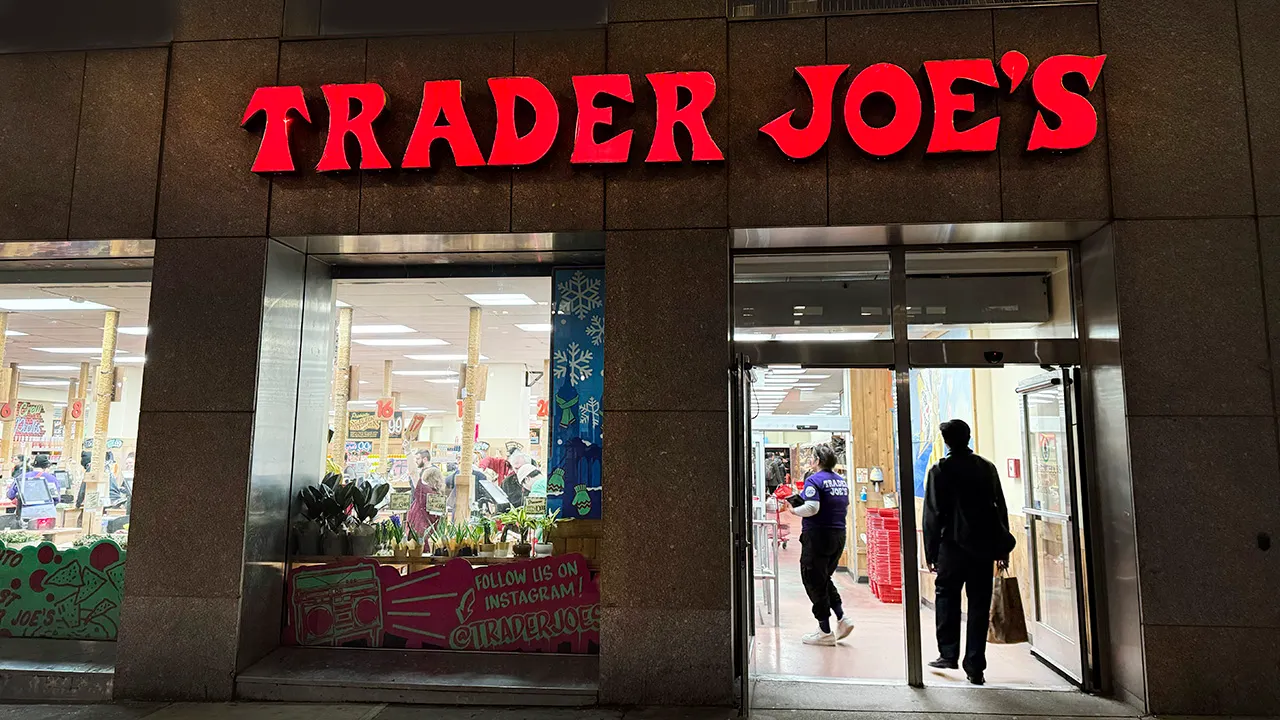
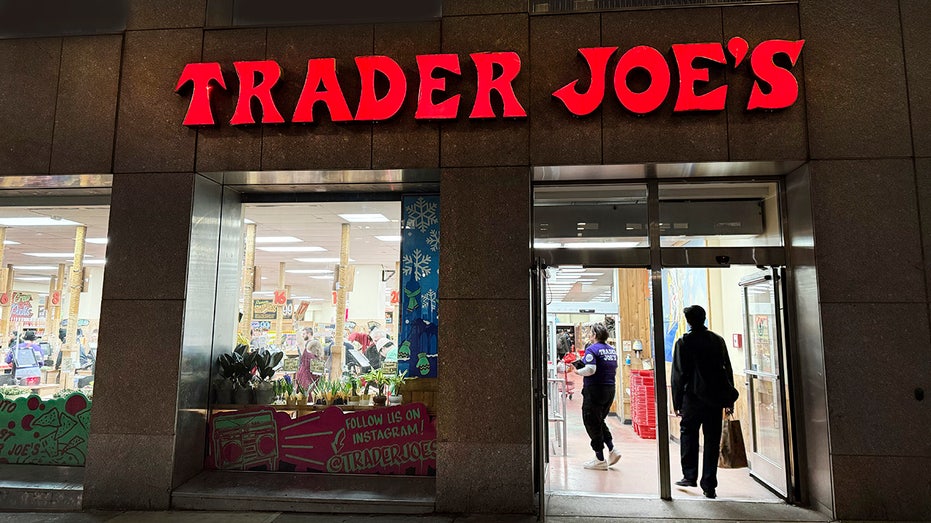
A nationwide recall has expanded to include close to 10 million pounds of frozen vegetable fried rice sold at Trader Joe’s stores in dozens of states, according to the U.S. Department of Agriculture (USDA) Food Safety and Inspection Service.
Ajinomoto Foods North America Inc. announced a recall of 9,885,240 pounds of Trader Joe’s Vegetable Fried Rice after small pieces of glass were found in the frozen meals.
Advertisement
The glass shards ranged from one to three cm long and two to four mm wide.
A nationwide recall has expanded to include close to 10 million pounds of frozen vegetable fried rice sold at Trader Joe’s stores. (Plexi Images/GHI/UCG/Universal Images Group via Getty Images) / Getty Images)
The recalled products were sold in stores across 43 states, with the seven unaffected states being Hawaii, Maine, New Mexico, South Dakota, Vermont, West Virginia and Iowa.
The affected items had best-buy dates ranging from Feb. 28, 2026, to Nov. 19, 2026.
Advertisement
The latest notice was an expansion of a recall initially issued last month and expanded earlier this month. Nearly 37 million pounds of ready-to-eat items were affected in the total recall effort, which impacted more than a dozen brands in addition to Trader Joe’s, such as Kroger and Tai Pei.
The recalled products were sold in stores across 43 states. (Scott Olson/Getty Images / Getty Images)
Impacted items include Trader Joe’s Chicken Shu Mai and Trader Joe’s Chicken Fried Rice with stir-fried rice, vegetables, seasoned dark chicken meat and eggs.
The USDA classified the alert as a Class II recall in its latest notice, which means “use of or exposure to a violative product may cause temporary or medically reversible adverse health consequences or where the probability of serious adverse health consequences is remote.”
The latest notice was an expansion of a recall initially issued last month and expanded earlier this month. (Tess Crowley/Chicago Tribune/Tribune News Service via Getty Images / Getty Images)
Customers are urged not to consume the recalled items. They should dispose of the product or return it to the place of purchase for a full refund.
No injuries have been reported thus far in connection with the recall, but the USDA said anyone concerned about potential injuries should contact a healthcare provider.
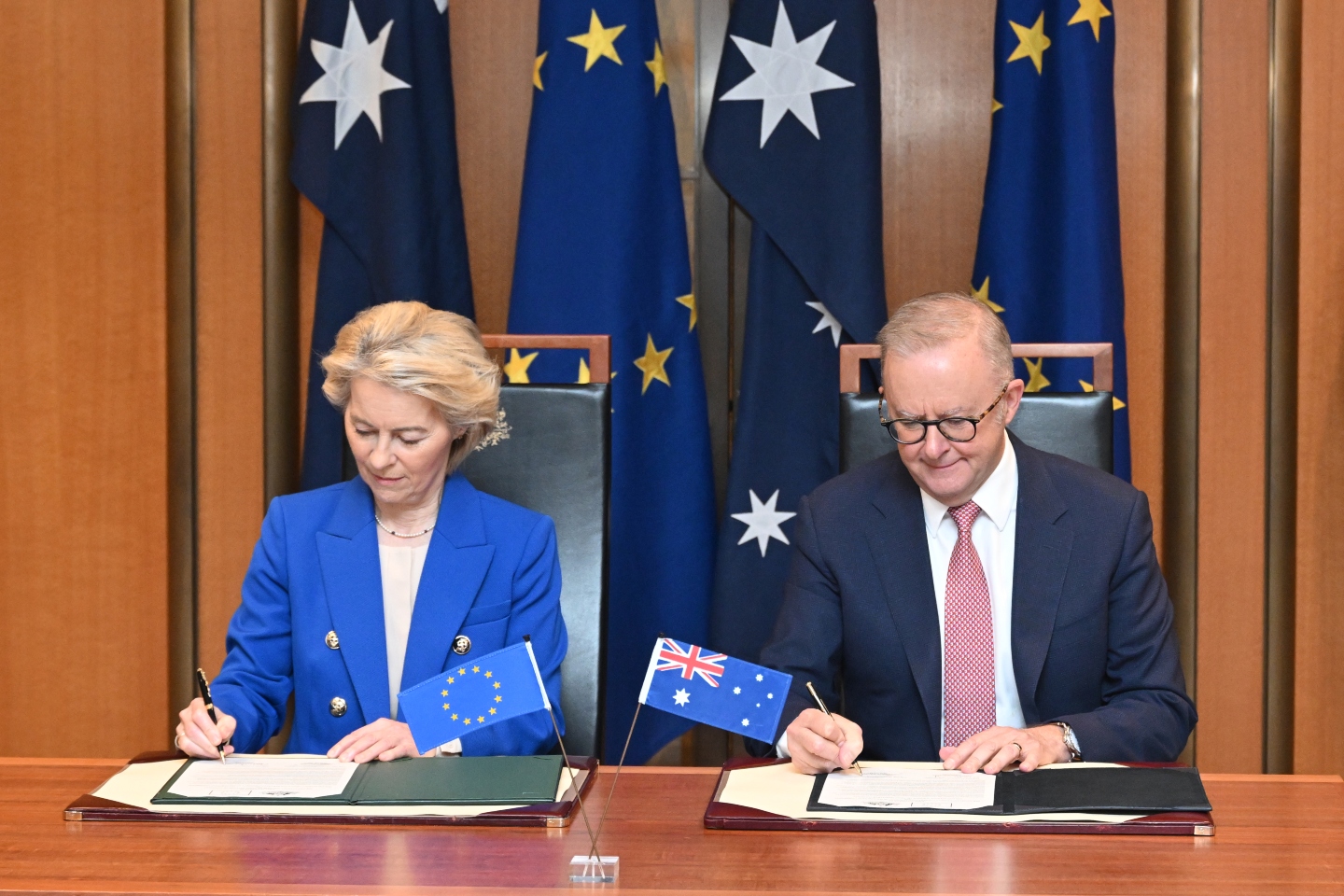
European-made wine, cars and fashion items will get cheaper for Australian shoppers under a long-awaited free-trade deal that will also allow local farmers to expand their meat exports.
Oil prices rose in early trade on Tuesday on supply fears, as Iran denied it had held talks with the United States to end the war in the Gulf, contradicting President Donald Trump, who said a deal could be reached soon.
Brent futures rose $1.06, or 1.1%, to $101 a barrel at 0001 GMT, while U.S. West Texas Intermediate (WTI) climbed $1.58, or 1.8%, to $89.71.
Crude futures dropped more than 10% on Monday, after Trump said he had ordered a five-day delay to attacks he had threatened on Iran’s power plants, adding the U.S. had held productive talks with unnamed Iranian officials that had produced “major points of agreement”.
“By shelving the plan to strike Iranian power plants for five days, the U.S. effectively sucked much of the ‘war premium’ from the oil price,” said Tim Waterer, chief market analyst at KCM Trade.
Advertisement
“Today’s moderate bounce is just the market finding its footing in the mud. Traders are aware that while the missiles are on hold, the Strait of Hormuz is still far from a clear waterway.”
Live Events
The war has all but halted shipments of about one-fifth of the world’s oil and liquefied natural gas through the Strait of Hormuz. However, two tankers bound for India sailed through the strait on Monday. Tehran rejected the claims of contact with Washington, dismissing them as an attempt to manipulate financial markets, while Iran’s Revolutionary Guards said they had launched new attacks on U.S. targets and denounced Trump’s comments as “worn-out psychological operations.” “Even with a possible decrease in tensions after (Monday’s) announcement from President Trump, we expect a price floor of $85-$90 and a natural drift back to the $110 range until the Strait of Hormuz is restored,” Macquarie said in a note.
It added that if the strait remains effectively shut until the end of April, Brent could still reach $150 per barrel.
Fighting has damaged energy infrastructure across the region. In the latest attacks, a gas company office and a pressure-reduction station were hit in Iran’s central city of Isfahan, while a projectile also struck a gas pipeline feeding a power station in Khorramshahr, the Iranian semi-official Fars news agency reported.
The United States has temporarily waived sanctions on Russian and Iranian oil already at sea to ease shortages. Industry sources said traders have offered Iranian crude to Indian refiners at a premium to ICE Brent following Washington’s move.
Advertisement
The International Energy Agency Executive Director Fatih Birol said on Monday it is consulting Asian and European governments on possible further releases of strategic reserves “if necessary”.
Oil executives and energy ministers at a conference in Houston warned of the longer-term impact of the U.S.-Israel war with Iran on the global economy, though U.S. Energy Secretary Chris Wright downplayed the crisis.
The dollar nursed steep losses against major currencies on Tuesday in a wild start to the week after U.S. President Donald Trump delayed the bombing of Iran’s power grid, a move that allayed fear of a prolonged war in the Middle East.
Trump wrote on his Truth Social platform that the U.S. and Iran had held “very good and productive” conversations about a “complete and total resolution of hostilities in the Middle East”. Iran denied it had engaged in any direct negotiations.
The contrasting comments left markets on edge after a risk-on rally immediately after Trump’s post in which he postponed the bombing for five days. Still, markets were mindful of the war all but halting shipments of about one-fifth of the world’s oil and liquefied natural gas through the Strait of Hormuz.
Sterling eased 0.5% to $1.33925 after jumping nearly 1% on Monday, while the euro was down 0.2% at $1.1593 after gaining 0.4% in the previous trading session.
Advertisement
The dollar index, which measures the U.S. currency against a basket of peers, rose nearly 0.2% to 99.35 after dipping to near a two-week low on Monday.
Live Events
“The news overnight is giving a breather to volatility at least, but it’s difficult to see that this is going to trigger a risk-on trend,” said Rodrigo Catril, a currency strategist at National Australia Bank. However, Trump’s policy track record was keeping markets wary, with traders uncertain whether this marked the start of genuine negotiations or simply a retreat from volatility-inducing threats, he said. The Australian dollar fell 0.2% to $0.6993 in early trade, pulling back from a six-week high. The New Zealand dollar was down 0.23% at $0.5845.
Oil prices edged higher after plunging more than 10% on Monday, with Brent crude futures retopping $100.94 a barrel as supply fear keeps sentiment cautious.
“The key question is whether participants see this as a genuine extension that brings a deal closer, or simply a delay that prolongs uncertainty,” said Chris Weston, head of research at Pepperstone.
“The U.S. dollar has seen selling on the back of the move lower in crude and the broader repositioning in risk. However, there is little conviction in the move, and conditions remain ripe for sharp reversals.”
Advertisement
The yen was steady at 158.61 a dollar after Japan’s core consumer inflation rate hit 1.6% in February. That was below the Bank of Japan’s 2% target for the first time in nearly four years, complicating the bank’s efforts to justify further interest rate hikes.

















































You must be logged in to post a comment Login