
Business
iPhone 17 Chip Rivals a Windows Gaming Laptop CPU and GPU, but the Price Tags Tell Different Stories

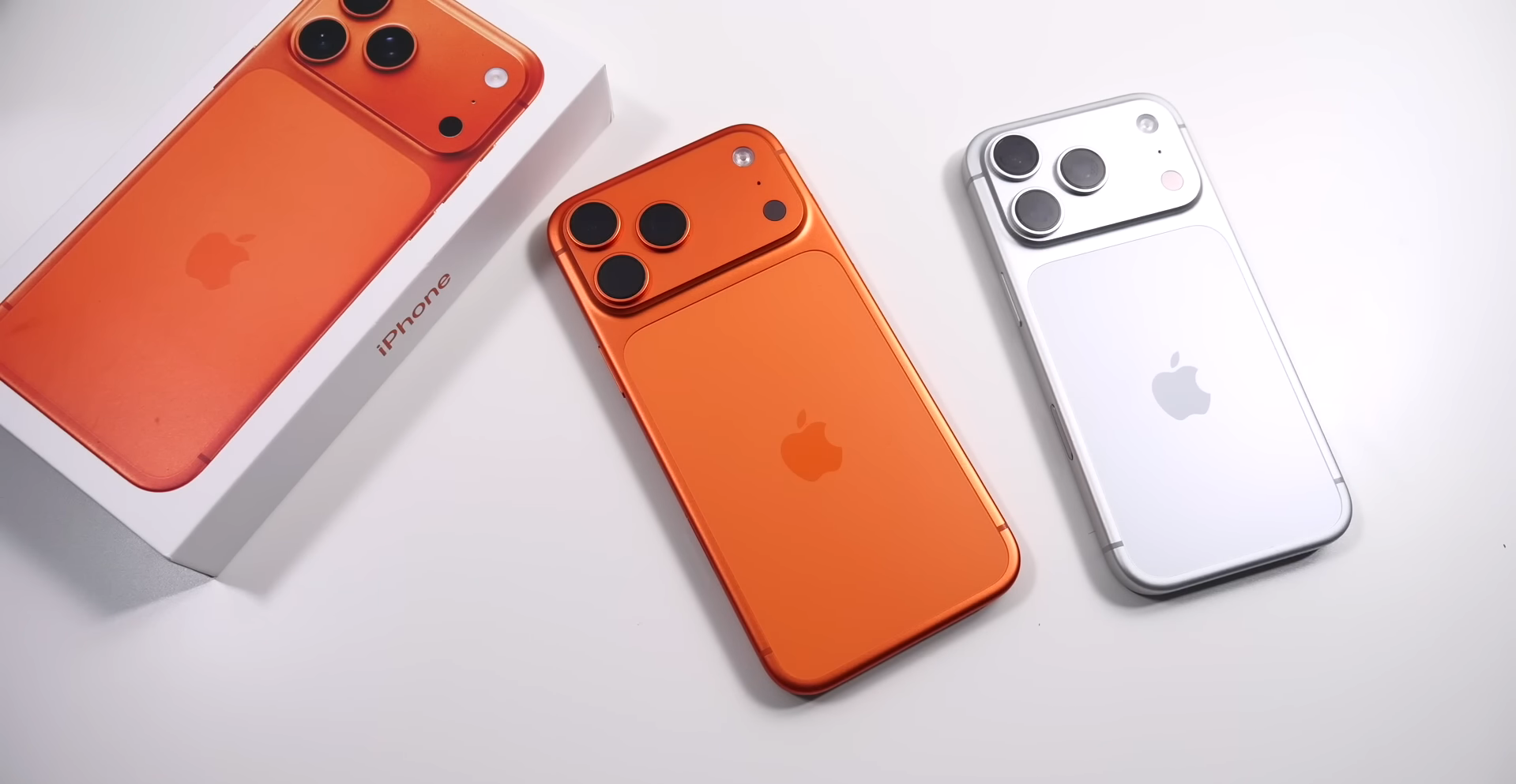
For years, comparing a phone chip to a laptop processor felt like an apples-to-oranges exercise. That gap has narrowed considerably with Apple’s latest generation of iPhones, and benchmark data on the standard iPhone 17 shows just how far the company’s custom silicon has come relative to hardware found in mainstream Windows laptops.
The iPhone 17, which Apple released in September alongside the iPhone Air and iPhone 17 Pro models, runs on the company’s A19 chip. According to benchmark listings compiled from user-submitted results on the Geekbench Browser, the standard iPhone 17 recorded a single-core CPU score of roughly 3,608 and a multi-core score of about 8,810 on the Geekbench 6 test. Its graphics performance, measured using Geekbench’s Metal test for Apple hardware, came in at roughly 37,014, which the review site GSMArena reported was a 33% improvement over the previous year’s iPhone 16.
Those single-core numbers are notable because they land in the same range as, or in some cases exceed, single-core scores from many current Windows laptop processors, including some higher-end chips. Independent testing from Tom’s Hardware found that the A19 Pro, the more powerful chip used in the iPhone 17 Pro and Pro Max, actually beat AMD’s desktop Ryzen 9 9950X processor in single-thread Geekbench 6 testing, while GSMArena separately reported the same chip outperforming Qualcomm’s Snapdragon 8 Elite. The standard A19 chip in the base iPhone 17 trails its Pro sibling but still performs competitively against many laptop CPUs in single-core tasks.
Multi-core performance tells a different story, and this is where laptops still hold a clear advantage in most cases. Intel’s Core Ultra 9 185H, a high-end mobile processor found in many premium Windows laptops, posts Geekbench 6 multi-core scores in roughly the 12,000-to-17,000 range depending on the specific test and cooling setup, according to benchmark data from Notebookcheck and CPU-Monkey, well above the iPhone 17’s multi-core score of 8,810. That gap reflects a fundamental design difference: laptop chips like the Core Ultra 9 185H pack 16 cores and 22 threads built for sustained, heavier workloads, while Apple’s A19 favors a smaller number of highly efficient cores optimized for a phone’s power and thermal limits.
On the graphics side, a like-for-like comparison is harder to draw because Apple’s Metal benchmark and the OpenCL or Vulkan tests typically used to measure Windows laptop GPUs are different testing frameworks. Still, independent GPU benchmark trackers, including data compiled by PassMark’s video card benchmark database, place the iPhone 17’s graphics performance in a similar general tier to entry-level discrete laptop GPUs such as Nvidia’s GeForce RTX 4050 Laptop GPU, a chip commonly found in budget-to-midrange gaming laptops. The iPhone Air and iPhone 17 Pro, which use variants of the more powerful A19 Pro chip, score meaningfully higher, with Metal scores as high as 45,657 for the Pro Max, putting their graphics performance closer to what a laptop equipped with a low-to-midrange discrete GPU could achieve in short, less demanding workloads.
Memory is another area where the comparison is straightforward. The base iPhone 17 ships with 8 gigabytes of LPDDR5X RAM, while the iPhone Air and iPhone 17 Pro models were bumped up to 12 gigabytes of faster LPDDR5X 8533 memory, according to specifications published by GSMArena. Mainstream Windows gaming laptops in the same performance tier as the iPhone 17 typically ship with 16 gigabytes of DDR5 memory as a baseline configuration, giving them roughly double the iPhone 17’s memory capacity, though phone and laptop memory architectures are not directly interchangeable in terms of how software uses them.
Translating those specifications into an actual laptop purchase, a machine with performance roughly comparable to the iPhone 17, pairing a mid-tier laptop CPU such as an AMD Ryzen 7 7735HS or an Intel Core i7 with an Nvidia GeForce RTX 4050 Laptop GPU and 16 gigabytes of DDR5 memory, generally sells in the 900-dollar-to-1,100-dollar range at major retailers including Newegg and Best Buy, based on current listings. Budget configurations pairing similar GPUs with lower-tier processors can be found for a few hundred dollars less, while laptops that step up to a Core Ultra 9 185H or comparable high-end mobile chip, which would exceed the iPhone 17’s multi-core performance by a wide margin, tend to start closer to 1,300 dollars to 1,500 dollars depending on the rest of the configuration.
The comparison ultimately highlights a broader trend in mobile computing: Apple’s custom silicon has closed much of the single-core performance gap with laptop-class chips, largely because so much everyday computing, opening apps, browsing the web, running lightly threaded software, depends more on single-core speed than on raw multi-core throughput. Laptops still maintain a substantial edge in sustained, heavily multi-threaded workloads such as video encoding or large-scale data processing, along with far more flexible memory and storage configurations, but the days of dismissing a smartphone chip as fundamentally weaker than a laptop’s processor are increasingly behind us.
For consumers, the practical takeaway is that an iPhone 17 can handle many computing tasks, from responsive app performance to casual gaming, at a level that rivals a mainstream Windows laptop costing several hundred dollars more once the surrounding hardware is factored in, even as that laptop retains a clear advantage for demanding, multi-threaded professional workloads.

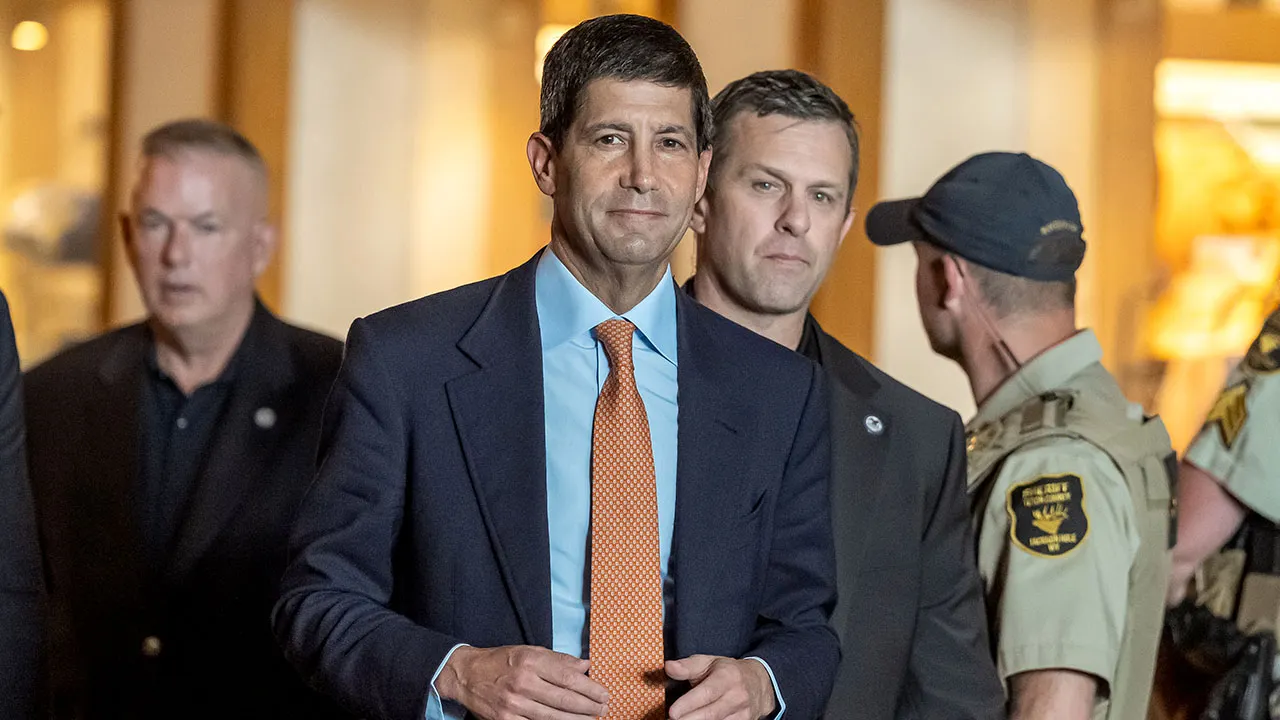
FOX Business White House correspondent Edward Lawrence reports on Federal Reserve Chairman Kevin Warsh’s speech at Jackson Hole, Wy., on ‘Varney & Co.’
Federal Reserve Chair Kevin Warsh on Friday delivered his first keynote at the annual monetary policy conference in Jackson Hole, Wyoming, against a backdrop of uncertainty over inflation, as well as how he will guide policymakers as they consider interest rate moves.
Warsh’s speech comes as the Federal Reserve has held interest rates steady at each of its five meetings so far this year amid persistent inflation, which moved further away from the central bank’s 2% target amid the Iran war.
The annual Jackson Hole conference, which features central bank leaders from around the world, is historically an opportunity for the Fed chair to reset expectations about monetary policy and give their perspective on how economic conditions are developing over the near- and long-term.
Warsh is opposed to giving so-called forward guidance about how policymakers will approach upcoming monetary policy moves, and has taken steps to remove such language from the Fed’s post-meeting statements. That has left some Fed watchers hoping for a clearer view into how Warsh evaluates incoming data and views the economy’s path ahead.
The Fed chair offered an overview of his speech – joking that it could be called an outline or trail map, but not forward guidance – and said he plans to discuss the practice of forward guidance and how markets and the central bank interact. He also said he would address the impact of artificial intelligence (AI) on the economy, as well as key principles for monetary policy and his current view of the economy.
FED CHAIR WARSH FACES JACKSON HOLE SPOTLIGHT WITH INFLATION, RATE PATH IN FOCUS
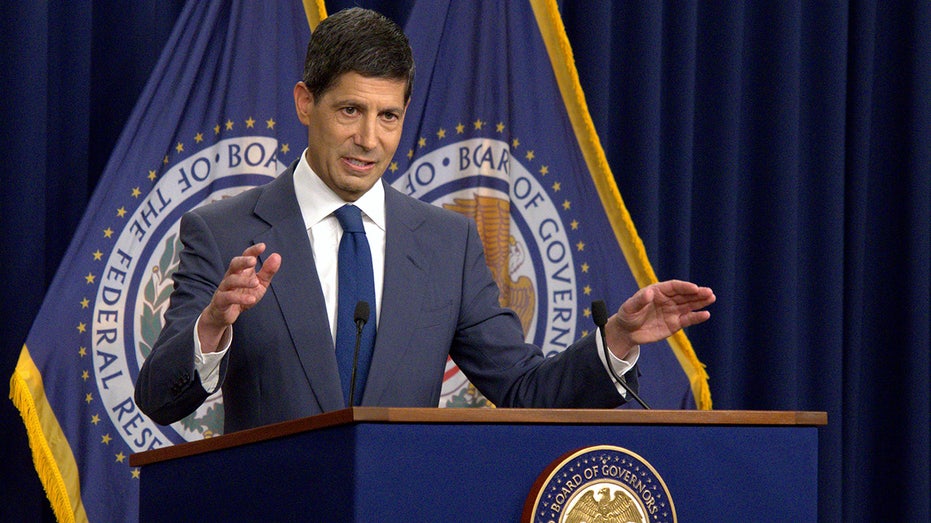
Fed Chair Kevin Warsh has expressed misgivings over the central bank’s use of forward guidance. (Li Yuanqing/Xinhua via Getty Images)
“With the unchanging picture of the Tetons as our backdrop, we are here to survey an economic landscape that is anything but static,” Warsh said, saying that the world is at a hinge point in history.
He said that progress in AI has been faster than anticipated and that the “potential for substantially higher growth is on the rise. Ever-expanding pools of capital pouring into AI-related infrastructure of all sorts. A kind of super Moore’s law seems to be playing out.”
Warsh noted the Fed created an AI task force that will track things like the impact of AI on productivity, jobs and employment, how the industry is developing and how returns are accruing across the labs, chipmakers, energy producers and cloud providers driving it.
FED DISSENTERS WARN INFLATION COULD BECOME ENTRENCHED WITHOUT MONETARY POLICY TIGHTENING NOW
On forward guidance, the Fed chair acknowledged his “long-time discomfort with early pronouncements of future policy decisions,” and offered his own view that “transparency and communications about future policy decisions is not an end unto itself.”
“Forward guidance as a regular practice was adopted by my colleagues and me during the global financial crisis. It was essential at the time, and we introduced it with much fanfare. But as with other legacies of crises past, I believe the practice has outstayed its welcome,” he explained.
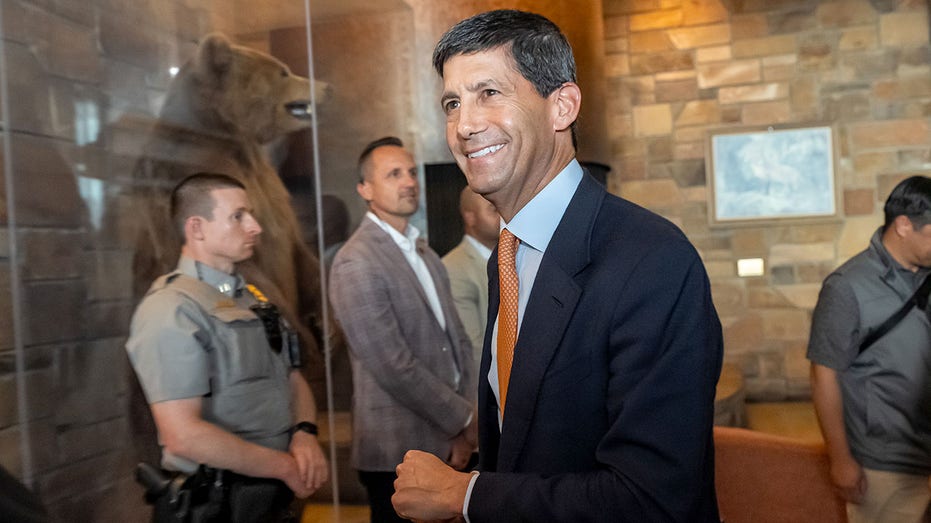
Fed Chair Kevin Warsh said the Fed should be “humble and never naive.” (David Paul Morris/Bloomberg via Getty Images)
Warsh said that in ordinary times, forward guidance should be “limited and circumscribed” because otherwise, it would risk “creating ambiguity in the name of clarity over sharing policy deliberations and committing to future decisions that can lead markets, businesses and households astray.”
“In my view, the Fed should be humble and never naive. The Fed plays an essential role in the economy and markets. Our tools are powerful. We determine the path of short-term interest rates, and market participants will always try to anticipate what we will do next. But we should not indulge a regime in which market participants are looking primarily to the Fed for their next trade,” Warsh explained.
“If the Fed gets inflation wrong and judges the economy wrong, who gets the worst of it? Not the financial high-fliers. Hardworking Americans are the ones left to deal with inflation that’s too high, or jobs that suddenly appear less secure,” he added.
FED’S FAVORED INFLATION GAUGE ROSE MORE THAN EXPECTED IN JULY
Warsh discussed his principles for monetary policy, including that the data the Fed relies on must be “relevant, contemporaneous, accurate and as actionable as possible.” He continued to say that the Fed’s actions are aimed at ensuring the aggregate demand side of the economy is broadly consistent with aggregate supply, though it’s an imprecise balance.
“There should be no misunderstanding. The Fed’s price stability objective of 2%, as measured by the PCE price index, is a firm, fixed target. Let me be equally clear about another aspect of this. Subjective price stability is not self-executing, nor is inflation necessarily mean reverting. It is the Fed’s job to deliver stable prices, no excuses,” Warsh said.
He added that the Fed also bears responsibility for maximum employment, the second component of the central bank’s dual mandate, and said that he doesn’t believe that the “Fed’s dual mandate works across purposes. After all, high inflation itself is very harmful to economic prosperity.”
Other principles Warsh discussed were that short-term interest rates are the predominant tool for achieving the dual mandate, while noting that “unconventional policies to spur economic activity may suit genuine crises of which we all have much experience, but they should otherwise be used sparingly, if at all.”
The central bank’s impact on the supply of money should also receive closer attention for their impact on financial conditions and prices. He also said that a “quieter Fed, a more purposeful Fed in its communications is better able to meet its objectives, and we can be held accountable for delivering on our remit, the only true test of our credibility.”
Warsh also offered an outlook for the economy, noting that the Federal Open Market Committee (FOMC) view of the economy in July was that “labor markets were stable, output solid, but inflation remained too high,” which led the Fed to hold rates steady and remain at the ready to act as circumstances require.
“For my part, as we sit here, I’m impressed by the overall performance of the economy, which appears to have strengthened,” Warsh said while noting that both Main Street and Wall Street have shown resiliency in the face of economic shocks.
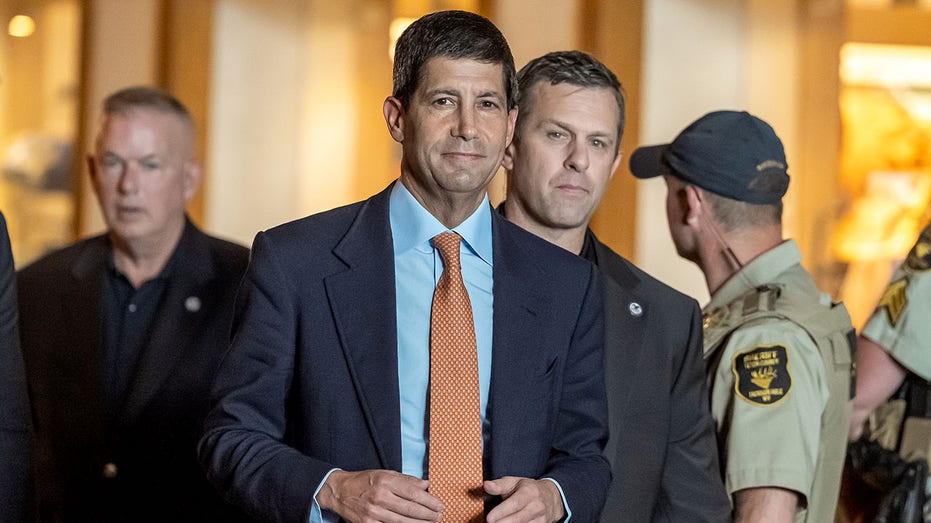
Fed Chair Kevin Warsh expressed concern about elevated inflation in his first keynote speech at the annual Jackson Hole conference. (David Paul Morris/Bloomberg via Getty Images)
FED CHAIR KEVIN WARSH SAYS CENTRAL BANK HAS ‘NO TOLERANCE’ FOR ELEVATED INFLATION
He said that firms in the S&P 500 Index have seen profits grow over 20% in the past year, with profit margins “quite elevated” relative to history, with low volatility in the market. Warsh noted strain in certain sectors, including housing and agriculture, but added he “would be hard-pressed to describe broad financial conditions as restrictive.”
“Labor markets are quite stable. The jobless rate at 4.1% remains low by historical standards and hasn’t changed much in a couple of years,” Warsh said. “In my view, the relatively low turnover in today’s labor market is partly a result of the significant matching between employers and employees that happened in the post-pandemic environment.”
“But when labor supply is barely growing, monthly job gains are naturally going to run low. There are always areas of concern in the labor market, for example, among recent college graduates… But as of now, I believe the labor markets are broadly consistent with full employment,” he said.
“On the price stability side of our mandate, the numbers are more concerning,” Warsh said, noting that PCE inflation is at 3.7% year over year and that “inflation is running above our 2% target, so the Fed’s predominant focus right now should be on prices.”
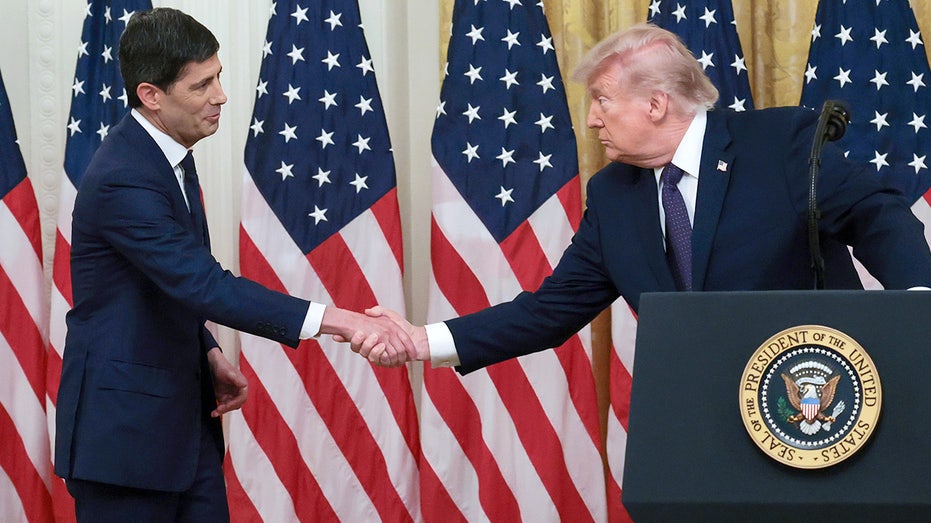
Warsh was confirmed by the Senate and sworn in as Fed chair in May 2026. (Anna Moneymaker/Getty Images)
While PCE and CPI inflation have “fallen significantly from their highs of a few years ago,” the progress in the last couple of years has been more modest and recent readings “do not tell me that underlying trends have meaningfully improved.”
Warsh said that the responsibility for “65 months of sustained, elevated inflation sits squarely with the central bank, and that’s where it belongs. So here is my standard: we must be confident that underlying inflation is moving to our objective clearly and at sufficient speed, otherwise we have work to do.”
GET FOX BUSINESS ON THE GO BY CLICKING HERE
The Fed chair concluded by saying that it’s a “tremendous honor to serve once again at the Federal Reserve,” and that he is “truly grateful for the encouragement, good counsel, and the warm reception I’ve received in my first 100 days from my colleagues.”
The Philippine central bank raised interest rates for the third straight meeting, taking preemptive action against rising inflation risks from a severe El Nino event and possible wage increases.
Bangko Sentral ng Pilipinas raised its benchmark overnight reverse repurchase rate to 5.00% from 4.75%, diverging from some regional peers including Bank Indonesia and Bank of Thailand, which left their rates unchanged.
Copyright ©2026 Dow Jones & Company, Inc. All Rights Reserved. 87990cbe856818d5eddac44c7b1cdeb8

Fastenal options activity surges on heavy put volume ahead of October expiry
Business
Cytokinetics, Incorporated (CYTK) Discusses Positive Phase III Results From ACACIA-HCM Trial of Aficamten in Nonobstructive HCM Transcript

Diane Weiser
Senior Vice President of Corporate Affairs
Hello, everyone. I’m Diane Weiser, Senior Vice President of Corporate Affairs. I’m pleased to welcome everyone to our investor event to discuss the primary results from ACACIA-HCM, the pivotal Phase III clinical trial of aficamten in nonobstructive HCM. Today’s event is being hosted in a hybrid fashion. I’d like to welcome those here in the room with us in Munich as well as those joining online.
I’m pleased to introduce from Cytokinetics, Dr. Fady Malik, Steve Heitner and Robert Blum. And I’m also thrilled to welcome 3 leading experts in HCM for our panel discussions today, Dr. Martin Maron, Dr. Ahmad Masri and Dr. Christina Paitazoglou. Today’s agenda will begin with — is it on the slide? Today’s — we’re going to pause for a minute. Turning to today’s agenda. Fady Malik will provide some brief opening remarks. Next, Dr. Masri and Maron will provide an encore presentation of the ACACIA-HCM results that were presented earlier today in the hotline session at the Congress.
Then Steve will facilitate a panel discussion and Q&A session. And finally, Robert Blum will close us out providing some remarks. For those online, today’s slides are available for download in the webcast. You can submit questions to the panel at any point

Oppenheimer raises Marvell stock price target on AI growth outlook

ONEOK: This 4.5%-Yielding AI Energy Play Is Still Undervalued

The U.S. dollar was steady in early trade as investors await the Kansas City Federal Reserve’s annual Jackson Hole meeting, starting Thursday.
Fed Chairman Kevin Warsh is due to speak Friday. Investors are waiting to see whether he provides a better understanding of what the central bank’s thinking on monetary policy is, although expectations are low in a new era where forward guidance has been dropped.
The DXY index, which measures the dollar’s value against a basket of currencies, is unchanged at 99.145.
Available for over a year
For years, China’s property boom helped drive the country’s extraordinary economic growth. At the centre of it was Evergrande, which grew from a regional developer into a sprawling corporate empire, and one of the world’s most indebted companies.
Then the debts caught up with it. Evergrande’s collapse exposed the vulnerabilities of China’s property model, helping push the wider housing market into crisis and weighing on the country’s economy.
Now its founder, Hui Ka-yan, has been sentenced to life in prison for crimes including bribery and illegal use of funds.
Will Bain and Rahul Tandon are joined by Jennifer Pak in Beijing to explore how Evergrande became so big, what went wrong, how its collapse exposed the problems in China’s property model, and what it means for the wider global economy.
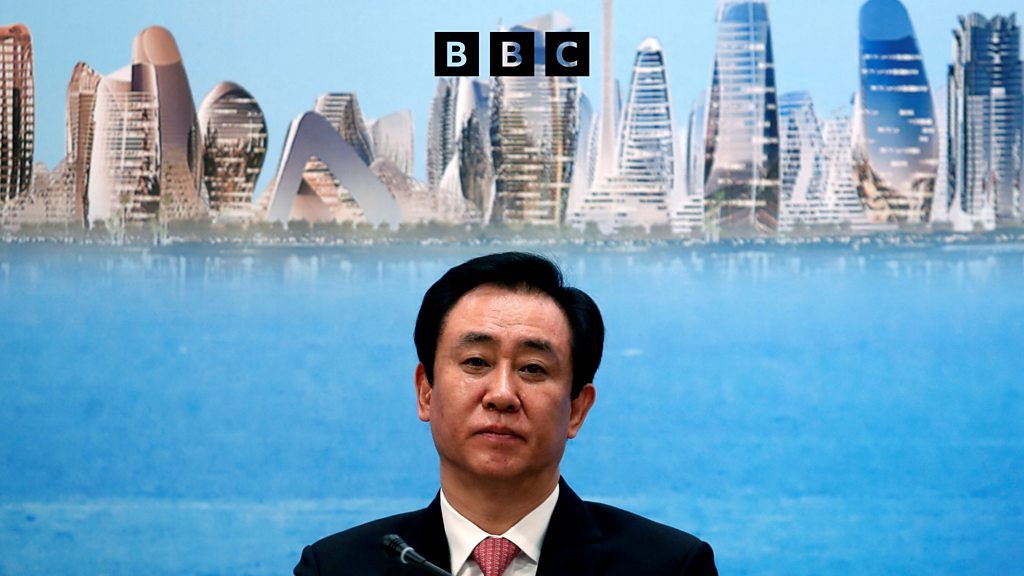
(Photo: China Evergrande Group then-Chairman, Hui Ka Yan, attends a news conference on the property developer’s annual results in Hong Kong, China 28 March, 2017. He has short black hair with a side parting and wears a white shirt with a red patterned tie and a black suit jacket. In the background is a city skyline of skyscrapers, reflected in blue water. Credit: Bobby Yip/Reuters)
You can email the team: businessdaily@bbc.co.uk
Presenter: Will Bain, Rahul Tandon and Jennifer Pak
Producer: David Cann

Yen Carry Traders Possibly Expect Aggressive Fed Rate Hikes

Sometimes small can be beautiful when it comes to equity investments. And shipping stock Seanergy Maritime (SHIP) is a niche transportation play that is offering an entry amid burgeoning profits. The Greek company leverages a modern fleet of Capesize vessels to provide dry bulk transportation services. Capesize ships are unique as they are the largest class of dry bulk cargo…
Copyright ©2026 Investor’s Business Daily, LLC. All rights reserved. 87990cbe856818d5eddac44c7b1cdeb8

Crystal Palace vs Manchester City – Premier League LIVE: Enzo Maresca’s men travel to Selhurst Park in search of back-to-back wins

Fed’s Warsh delivers first Jackson Hole keynote amid economic uncertainty

CLARITY Act is a national security bill, former US defense secretary says





-

 Crypto World3 days ago
SpaceX stock could rise 75% to $240, JPMorgan says
-

 Crypto World19 hours ago
Bitcoin’s 22% rally now needs real demand to outlast Treasury liquidity boost
-

 Business6 days ago
Musk’s Tesla, SpaceX Confirm $16.8 Billion ‘Terafab’ Chip Plant as World’s Largest Building in Texas
-

 Crypto World7 days ago
anatomy of crypto’s biggest liquidation event since 2021
-

 Crypto World4 days ago
A $30 Billion AI Fund Implodes, Now the SEC Is Investigating Wall Street’s Role
-

 Crypto World2 days ago
Warsh Jackson Hole keynote puts financial innovation first
-

 Politics6 days ago
6 months on, Irish renters crushed by effects of government housing bill
-

 Crypto World3 days ago
Did Trump Just Move SpaceX Stock With One Truth Social Post?
-

 Business18 hours ago
Salesforce Stock Soars 19% as Blowout Earnings and Agentforce AI Growth Silence Software Skeptics
-

 Business5 days ago
Mystery AI Model ‘Ox Alpha’ Draws Developers With Free Access as Chinese Lab Origins Remain Debated
-
 NewsBeat6 days ago
The ‘Lucky Dip Gang’ causing carnage for clicks: After five thugs were killed speeding in the wrong direction on a motorway, GUY ADAMS investigates a sick new trend… and why police aren’t even allowed to pursue them
-
 Crypto World7 days ago
Nvidia Stock Suffers Longest Losing Streak Since 2022: Will Q2 Earnings End It?
-

 Business2 days ago
Walmart takes aim at younger shoppers with new fashion brand
-

 Business4 days ago
Moderna CEO warns China is pouring state money into mRNA technology
-

 Business4 days ago
NVIDIA Stock Drops Nearly 2 Percent to $210 on Seventh Losing Day Ahead of Critical AI Earnings
-

 Business6 days ago
Will Tesla Stock Be Higher or Lower a Year From Now? Here’s What Wall Street Analysts Are Saying
-
 Crypto World5 days ago
$92 Billion Nvidia Earnings Could Make or Break the AI Trade
-

 Business3 days ago
Thailand’s Eastern Economic Corridor Capital City (EECiti): Key Developments and Investment Opportunities
-
 NewsBeat2 days ago
Lindsay Clancy jury braces for closing arguments as judge tells court: ‘You’ve heard all the evidence’ – Live updates
-
 Tech7 days ago
Unitree’s New Superman Robot Claims to Outjump and Outrun Every Human, Usain Bolt Included
You must be logged in to post a comment Login