

Connect with us
DAPA Banner

Business

Iran War Could Hit CO2 Supplies by Summer 2026

Published

on

Iran War Could Hit CO2 Supplies by Summer 2026

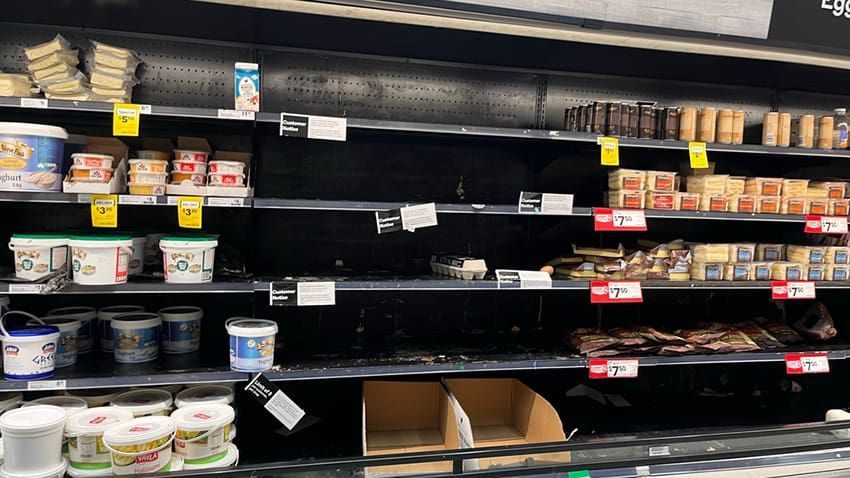
Britain’s supermarkets could be staring down the barrel of patchy shelves by midsummer, with ministers quietly war-gaming a scenario in which the continuing conflict with Iran chokes off carbon dioxide supplies to the country’s food and drink industry.

Whitehall officials have been rehearsing what they describe internally as a “reasonable worst-case scenario” should the strait of Hormuz remain closed into June, shipping routes stay jammed, and a mechanical hiccup at one of Britain’s critical CO2 plants compound the pressure. The exercise, codenamed Turnstone and convened under the Cobra emergency framework, has drawn in officials from Downing Street, the Treasury and the Ministry of Defence.

News of the drill, first surfaced by The Times, has prompted a rapid-fire reassurance campaign from ministers, who insist the planning is prudent rather than panicked. Business Secretary Peter Kyle told Times Radio on Thursday that the leak was “unhelpful” but argued the public “need to be reassured that we are doing this kind of planning”. CO2 supplies, he added, were “not a concern” for the UK economy.

For small and medium-sized food producers, brewers and hospitality operators, however, the contingency talk lands at an awkward moment. The summer trading window, already inflated by the World Cup kicking off on 11 June, is make-or-break territory for independent breweries and wholesalers. A squeeze on carbon dioxide would ripple rapidly through their supply chains, hitting everything from pint pulls to packaged meats.

Carbon dioxide, though a by-product of other industrial processes, is the quiet workhorse of British food and drink. The gas is used to stun pigs and poultry at abattoirs, to pack fresh meat and salad leaves in modified-atmosphere packaging that keeps bacteria at bay, and to put the fizz in beer and soft drinks. It also underpins refrigeration, MRI scanning, surgical procedures and the cooling of nuclear reactors.

Advertisement

The UK ranks among Europe’s heaviest consumers of the gas, a dependency that has already prompted pre-emptive action. In March, Mr Kyle earmarked £100m to restart the mothballed Ensus bioethanol plant on Teesside for a three-month run, specifically to hedge against wartime shortages. On Thursday he argued the Teesside decision showed “we are doing this kind of action behind the scenes to keep resilience in our economy”.

Britain’s largest grocer, for its part, appears sanguine. Tesco chief executive Ken Murphy said the government was “doing the right thing” in preparing for the worst, calling the analysis a reasonable one and welcoming the Ensus reopening. But he stressed Tesco had “seen nothing at this point” in its own supply chain and that none of its suppliers had flagged problems with CO2 availability.

Mr Murphy, whose business has absorbed six years of rolling disruption, Covid, Brexit, energy shocks, inflation, said Tesco was “constantly working on various scenarios internally” and confident it could head off issues before they reached the shop floor. The bigger near-term headache, he suggested, has actually been the punishing weather across southern Spain and north Africa, though shoppers would be hard-pressed to spot the fallout because the grocer had been able to “flex” its sourcing.

A government spokesperson underlined the caveat that “reasonable worst-case scenarios are a planning tool used by experts and are not a prediction of future events”, adding that ministers were “continuing to work closely with business groups to tackle the impacts of events in the Middle East”.

Advertisement

For SME owners watching the tea leaves, the message from Whitehall is calibrated: keep calm, carry on, but don’t mistake the silence on the shelves for complacency in the corridors of power. With Hormuz still contested and the diplomatic track with Tehran far from delivering a durable settlement, the summer trading season is shaping up as a stress test for a supply chain that, as 2021’s last major CO2 crunch demonstrated, can turn from background utility to front-page crisis within days.


Jamie Young

Jamie Young

Jamie is Senior Reporter at Business Matters, bringing over a decade of experience in UK SME business reporting.
Jamie holds a degree in Business Administration and regularly participates in industry conferences and workshops.

When not reporting on the latest business developments, Jamie is passionate about mentoring up-and-coming journalists and entrepreneurs to inspire the next generation of business leaders.

Advertisement
Continue Reading
Click to comment

You must be logged in to post a comment Login

Leave a Reply

Business

The Original Factory Shop head office and all stores closed after administration

Published

on

Business Live

Discount department store placed into administration alongside Claire’s Accessories earlier this year

The Original Factory Shop

A sign for the Original Factory Shop(Image: The Original Factory Shop)

The Original Factory Shop has shuttered all 137 of its outlets and its Bolton head office, after the retailer tumbled into administration amid mounting industry concerns over sluggish consumer confidence and elevated taxes.

Advertisement

The discount department store was placed into administration alongside Claire’s Accessories earlier this year, as private equity firm Modella Capital claimed government policy was forcing British businesses to “suffer”.

Modella Capital recently acquired WH Smith’s high street branches – since rebranded as TG Jones – though the sites it took on have reportedly been battling poor sales figures.

Administrators Interpath confirmed on Thursday that all Original Factory Shop locations are permanently closed.

The retailer had 1,180 staff on its books when it entered administration, with Interpath confirming that the vast majority of employees have been dismissed, while a small number were kept on to assist with winding down operations, as reported by City AM.

Advertisement

A spokesperson for Interpath said: “A phased closure of the store portfolio was implemented considering the financial position.

“The majority of employees have been made redundant, while a small number of staff have been retained to assist the joint administrators in their duties as they move towards formally winding up the business.

“A specialist team is in place to support impacted staff with making Redundancy Payments Service claims.”

Modella Capital has attributed the collapse of Original Factory Shop and Claire’s Accessories to sluggish consumer confidence and “adverse government fiscal policies”, as it moved to wind down both businesses.

Advertisement

The private equity firm has acquired a string of high street retailers in recent years, offloading several of them shortly after purchase. Both Claire’s and Original Factory Shop were placed into administration by Modella less than two years after buying the firms.

The equity firm is reportedly considering a sale of Wynsors World of Shoes, a northern footwear retailer it acquired just four months ago.

The investment company has also drafted in emergency advisors to lead a sweeping restructuring of TG Jones, following its £76m acquisition of the 480-store chain from WH Smith last year.

Modella’s agreement with WH Smith contains a clause effectively preventing the former from closing underperforming shops within 12 months of the takeover, according to The Telegraph.

Advertisement

The firm has reportedly conceded in private that sales have been hampered by the poor name recognition of the newly rebranded TG Jones, with outlets retaining the WH Smith fascia outperforming those that have undergone the rebrand.

Modella was established as Tailer Debtco in 2022 before being rebranded a year later, and is owned by Hay Wain Group, the family office founded by turnaround specialist Jamie Constable.

According to its most recent balance sheet, Modella held £12.8m in net assets in 2024. The Original Factory Shop, which was established in 1969 and moved its HQ from Burnley to Bolton last year, stocked a range of fashion, homeware, toys and personal care items.


Advertisement
Continue Reading

Business

8 stocks that may surge up to 30% amid hopes for peak summer power demand

Published

on

The Economic Times

As temperatures continue to rise, JM Financial has listed stocks under its coverage with an upside potential of up to 30%. Despite a relatively mild start to the summer, largely due to frequent rainfall from western disturbances, the recent shift in weather patterns has led to a steady rise in temperatures, boosting expectations of higher power demand.

Continue Reading

Business

50 Most Listened Songs on Spotify in 2026 So Far

Published

on

Spotify and the major music company Universal have inked a new deal

Here is a full list of the 50 most listened songs on Spotify in 2026 so far (as of mid-April 2026). This combines all-time most-streamed catalog giants with the strongest-performing 2025-2026 releases and current global chart momentum.

Spotify and the major music company Universal have inked a new deal
50 Most Listened Songs on Spotify in 2026 So Far
AFP

All-Time Most Streamed Songs (Lifetime Leaders Still Dominating Daily Plays)

  • Blinding Lights — The Weeknd
  • Shape of You — Ed Sheeran
  • Sweater Weather — The Neighbourhood
  • Starboy (feat. Daft Punk) — The Weeknd
  • As It Was — Harry Styles
  • Someone You Loved — Lewis Capaldi
  • Sunflower — Post Malone & Swae Lee
  • Die With A Smile — Lady Gaga & Bruno Mars
  • BIRDS OF A FEATHER — Billie Eilish
  • APT. — ROSÉ & Bruno Mars

Top New & Surging Songs of 2026 (Strongest 2026 Releases by Streams & Chart Momentum)

  • End of Beginning — Djo
  • The Fate of Ophelia — Taylor Swift
  • Golden — HUNTR/X
  • Man I Need — Olivia Dean
  • back to friends — sombr
  • WHERE IS MY HUSBAND! — (viral 2026 breakout)
  • So Easy (To Fall In Love) — Olivia Dean
  • Ordinary — Alex Warren
  • Eternity — Alex Warren & Gigi Perez
  • Homewrecker — sombr
  • I Just Might — Bruno Mars
  • Risk It All — Bruno Mars
  • Stateside (feat. Zara Larsson) — PinkPantheress
  • Babydoll — Dominic Fike
  • The Romantic — Bruno Mars
  • Fancy Some More? — (2026 hit)
  • The Life of a Showgirl — (viral entry)
  • Sports car — Tate McRae
  • Opalite — Miley Cyrus
  • Handlebars (feat. Dua Lipa) — (2026 collaboration)
  • SWIM — BTS
  • Beauty And A Beat (feat. Nicki Minaj) — Justin Bieber
  • American Girls — Harry Styles
  • Lush Life — (catalog resurgence)
  • Every Breath You Take — The Police (catalog surge)
  • Mystical Magical — Benson Boone
  • DAISIES — (2026 rising track)
  • Sapphire — (new 2026 entry)
  • Azizam — Ed Sheeran
  • Little Things — Ella Mai
  • YUKON — Justin Bieber
  • Take My Hand — Nola
  • The Dead Dance — Lady Gaga
  • Manchild — Sabrina Carpenter
  • Aperture — (2026 release)
  • CHANEL — (viral 2026 track)
  • Let Down — (March 2026 standout)
  • Gnarly — (March 2026 hit)
  • party addict — (viral short-form hit)
  • Nope your too late i already died — (meme-driven track)
  • The Boy Who Played the Harp — (storytelling viral song)
  • You’ll Be Alright, Kid (Chapter 1) — (2025-2026 crossover)
  • HIT ME HARD AND SOFT — Billie Eilish (ongoing catalog strength)
  • The Life of a Showgirl — (repeated strong performer)
  • Fancy Some More? — (recent daily chart riser)
  • Homewrecker — sombr (consistent 2026 playlist staple)
  • Eternity — Alex Warren & Gigi Perez (emotional ballad surge)
  • Ordinary — Alex Warren (steady climber)
  • back to friends — sombr (indie breakout)

These tracks reflect a mix of evergreen catalog giants that still rack up millions of daily streams and fresh 2026 hitsdriven by TikTok virality, playlist placement, and strong artist campaigns. Bruno Mars, Taylor Swift, Olivia Dean, Alex Warren, and sombr appear frequently across current “HITS 2026” and “Global Top 50 | 2026 Hits” playlists.

Catalog songs like “Blinding Lights” and “Shape of You” continue to lead all-time totals (over 5 billion and 4.8 billion streams respectively), while 2026-specific standouts such as “End of Beginning,” “The Fate of Ophelia,” and Bruno Mars’ new singles dominate early-year and daily charts.

Continue Reading

Business

10 marquee stocks BNP Paribas told investors to buy for up to 77% returns

Published

on

The Economic Times

10 marquee stocks BNP Paribas told investors to buy for up to 77% returns

Continue Reading

Business

Live Nation and Ticketmaster ruled an illegal monopoly as US jury sides with States

Published

on

Live Nation and Ticketmaster ruled an illegal monopoly as US jury sides with States

The world’s largest live entertainment company has been dealt a bruising blow after a Manhattan federal jury ruled that Live Nation and its Ticketmaster subsidiary operated an unlawful monopoly over major concert venues in the United States, a verdict that is likely to reverberate through the global ticketing industry and intensify scrutiny of the firm’s dominance in markets including the United Kingdom.

After four days of deliberation, jurors sided with more than 30 US states that had pressed ahead with the civil action, concluding that the concert colossus had smothered competition across the live events business. The jury calculated that Ticketmaster had overcharged buyers by $1.72 per ticket, with the presiding judge still to determine the final quantum of damages.

For an industry that has long drawn the ire of fans, independent promoters and smaller venue operators, the ruling lands as something of a vindication. Counsel for the states, Jeffrey Kessler, described Live Nation in closing submissions as a “monopolistic bully” that had systematically pushed up prices for consumers. He told the court that Ticketmaster controls 86 per cent of the concert market and 73 per cent of the wider live events market once sport is included, numbers that underscore just how comprehensively the business has come to dominate the sector since Ticketmaster and Live Nation merged in 2010.

Live Nation, which generates more than $22bn in annual revenues, was unrepentant. Its lawyer, David Marriott, argued in his summation that the company’s scale was a consequence of operational excellence rather than anti-competitive conduct, telling jurors that “success is not against the antitrust laws in the United States”. The company has confirmed it intends to appeal, stating that it remains confident the “ultimate outcome” will not materially depart from a parallel settlement already reached with the US Department of Justice.

That settlement, announced only days into the trial after the Trump administration took over the federal case, obliges Live Nation to create a $280m fund for participating states, caps service fees at certain amphitheatres and opens a limited pathway for rival platforms such as SeatGeek and AXS to compete at some venues. Crucially, however, it stops short of forcing a structural break-up of Live Nation and Ticketmaster, a remedy that many industry observers and smaller ticketing challengers had been hoping for.

Advertisement

A handful of states signed up to the settlement, but the majority pressed on to trial, arguing that Washington had extracted insufficient concessions from the concert giant. Their gamble has now paid off. The verdict revives debate over whether a clean separation of Ticketmaster from Live Nation’s promotions and venue-operating arms remains the only effective remedy for a market that independent promoters have long claimed is tilted decisively against them.

The trial itself provided a rare look behind the curtain of an opaque business. Chief executive Michael Rapino took the stand and was questioned on a catalogue of controversies, including the 2022 Taylor Swift ticketing fiasco that drew political fury on both sides of the Atlantic. Rapino attributed that episode to a cyberattack. Less easily explained were internal messages from Live Nation executive Benjamin Baker, which surfaced during the proceedings, describing some prices as “outrageous”, branding customers “so stupid” and boasting that the firm was “robbing them blind”. Baker testified that the remarks had been “very immature and unacceptable”.

Regulatory pressure on Ticketmaster is building on multiple fronts. Last May the Federal Trade Commission introduced rules requiring upfront disclosure of concert ticket fees. Ticketmaster responded by scrapping its end-of-transaction processing fee, only for a Guardian investigation to reveal that the company had simultaneously increased other charges to plug the revenue hole. In an email to the Findlay Toyota Center in Arizona, the firm reportedly stated that it “must adjust fees to offset the revenue loss”. Former regulators have suggested the practice may breach the FTC’s ban on misleading charges, while senators including Connecticut Democrat Richard Blumenthal have accused the company of running “bait-and-switch” tactics and manipulating the market.

The saga has deep roots. Grunge pioneers Pearl Jam famously lodged an antitrust complaint against Ticketmaster with the Department of Justice back in the 1990s, only for regulators to walk away. Three decades on, the mood music has shifted. For independent UK promoters, smaller venues and the growing cohort of challenger ticketing platforms eyeing cross-Atlantic expansion, the verdict in Manhattan is the clearest signal yet that the ground beneath the live entertainment industry’s dominant player is finally beginning to shift.

Advertisement

Amy Ingham

Amy is a newly qualified journalist specialising in business journalism at Business Matters with responsibility for news content for what is now the UK’s largest print and online source of current business news.

Advertisement
Continue Reading

Business

UK Video Games Industry Risks Talent Exodus Without Tax Reform

Published

on

UK Video Games Industry Risks Talent Exodus Without Tax Reform

Britain’s video games industry is at risk of haemorrhaging talent and intellectual property to more nimble overseas rivals unless Whitehall moves swiftly to sharpen its tax and investment incentives, a leading advisory firm has warned.

With France, Ireland and Australia aggressively courting studios through increasingly generous reliefs, the UK’s reputation as a global gaming powerhouse, home to franchises from Grand Theft Auto to Tomb Raider, could begin to slip, according to audit, tax and business advisory firm Blick Rothenberg.

Speaking during London Games Festival week, Mandy Girder, a partner at the firm, said the sector urgently needed the Government to “level up” its support if Britain was to keep its seat at the top table of global games development.

“Without decisive action from the Government, the UK risks losing both talent and intellectual property to other countries,” she said. “France, Australia and Ireland are offering increasingly generous and accessible incentive regimes designed to attract investment.”

The London Games Festival, now a fixture in the industry calendar, has put a spotlight on British creativity, but Girder cautioned that creativity alone would not keep the UK ahead of the pack.

Advertisement

“The festival highlights the UK’s undeniable creative strength, but creativity alone will not secure long-term global leadership,” she said. “The Government must step up tax relief and investment in the industry.”

While the UK’s Video Games Expenditure Credit and broader creative industry reliefs have underpinned growth in recent years, Girder warned that the regime was increasingly seen by studios as cumbersome when set beside rivals abroad.

“Headline rates are competitive, but the system is often viewed as more complex and, in some cases, less flexible or accessible than the incentive regimes in countries such as Ireland and Australia,” she said.

Recent tightening of eligibility rules is already beginning to bite. Under the revised framework, at least 10 per cent of development costs must now be incurred in the UK rather than across the wider European Economic Area, a change intended to bolster domestic employment but which has tripped up projects structured around continental teams.

Advertisement

“Whilst intended to encourage the use of UK-based talent, this has been restrictive on the number of successful claims for projects already under way and structured around European teams,” Girder said. “It has led to a decline in the availability of these tax credits.”

She is calling for a simpler, more generous regime, backed by targeted incentives explicitly designed to draw inward investment.

“Simplifying and enhancing the UK’s tax framework, alongside introducing targeted incentives to attract inward investment, would significantly strengthen the UK’s global positioning,” she said.

Access to finance is another persistent headache, particularly for studios trying to move beyond the start-up phase. While seed capital is relatively easy to come by, scale-up funding, the kind that allows mid-sized studios to expand internationally and retain their IP, remains elusive.

Advertisement

“Early-stage funding is relatively accessible, but mid-sized studios often face barriers when seeking the scale-up capital needed to expand internationally and retain valuable intellectual property,” Girder said. “This funding gap risks limiting the UK’s ability to fully capitalise on its creative strengths.”

The Government’s newly launched Creative Industries Sector Plan, which opens £28.5 million in funding for the next generation of games developers, is a step in the right direction, Girder conceded.

“The UK has long been recognised as a creative powerhouse, home to world-class studios and exceptional talent behind globally successful titles such as Grand Theft Auto and Tomb Raider,” she said. “The sector plan is a positive step forward.”

But she questioned whether the intervention goes far enough to tackle the structural weaknesses in the industry’s funding pipeline.

Advertisement

“The question remains whether this level of support is sufficient to address the structural funding challenges facing the sector,” she said. “A more comprehensive approach, combining competitive tax relief, grants and alternative financing options, will be essential to unlock sustained growth.”

Her message to ministers was blunt. “Now is the time for industry and Government to work together to simplify incentives, unlock scale-up funding, and ensure the UK remains a destination of choice for global games investment.

“The London Games Festival turns the spotlight on the UK’s role as a leading force in the global video games market, and on the steps the Government needs to take to secure its future competitiveness.”


Amy Ingham

Amy is a newly qualified journalist specialising in business journalism at Business Matters with responsibility for news content for what is now the UK’s largest print and online source of current business news.

Advertisement

Continue Reading

Business

Form 13F Friday Financial For: 16 April

Published

on


Form 13F Friday Financial For: 16 April

Continue Reading

Business

SLM Student Loan Trust 2005-7 issues preliminary remarketing memorandum

Published

on


SLM Student Loan Trust 2005-7 issues preliminary remarketing memorandum

Continue Reading

Business

DHL staff at Jaguar Land Rover vote to strike

Published

on

DHL staff at Jaguar Land Rover vote to strike

Up to 300 DHL logistics workers based at Jaguar Land Rover in Solihull vote to strike indefinitely.

Continue Reading

Business

Bangkok’s Songkran 2026 Attracts Nearly 5 Million Amid Safety and Waste Challenges

Published

on

Bangkok's Songkran 2026 Attracts Nearly 5 Million Amid Safety and Waste Challenges

Nearly 5 million people celebrated Songkran in Bangkok this year — a 93.4% increase from 2025 — with Siam Square, Iconsiam, and Silom Road being the top venues, while motorcycle accidents accounted for 85% of the 20 road fatalities.

Key Details

  • Attendance surged to 4,958,965 across 94 venues, up from 2,564,663 in 2025.
  • Siam Square led with 1.5 million visitors, followed by Iconsiam (1.47 million) and Silom Road (652,974).
  • 20 people died in 18 road accidents; 17 fatalities involved motorcyclists, 9 of whom weren’t wearing helmets.
  • Thung Khru and Prawet districts recorded the most deaths (3 and 2, respectively).
  • Waste generation hit 336 tonnes, up from 250.5 tonnes last year, with Khao San Road producing the most (102.46 tonnes).

Despite the festive atmosphere, the data underscores persistent road safety risks and environmental strain during Thailand’s largest annual celebration.

The 93.4% surge in Bangkok Songkran attendance this year — reaching nearly 5 million people — reflects broader national trends of increased domestic and international tourism, improved event coordination, and the festival’s growing global appeal as a cultural and economic driver.

Enhanced planning, clearer zoning, and stronger inter-agency cooperation in Bangkok also contributed to the record turnout. Additionally, flagship events like the Maha Songkran World Water Festival at Benjakitti Park drew over 108,000 visitors, including more than 52,000 foreign tourists, signaling strong international interest.

The Tourism Authority of Thailand (TAT) expects the Songkran 2026 festival to generate more than 30.35 billion baht in tourism revenue, marking a 6% increase from the previous year.

Advertisement

Governor Thapanee Kiatphaibool stated that this growth is driven by approximately 500,000 foreign visitors contributing 8.1 billion baht and 5.96 million domestic trips adding 22.25 billion baht. While the TAT remains confident in these figures, the University of the Thai Chamber of Commerce (UTCC) lowered its overall festival spending forecast to 120–125 billion baht due to rising diesel prices and economic caution. Despite these varied projections, major hotspots like Siam Square, Iconsiam, and Silom Road saw millions of participants, reflecting a vibrant atmosphere across the country.

What was the total waste collected during Bangkok’s Songkran 2026?

Bangkok’s Songkran 2026 celebrations resulted in a total of 336 tonnes of waste collected at major celebration sites between April 11 and 15. This figure marks a significant increase from the 250.5 tonnes recorded during the same period in 2025.

According to the Bangkok Metropolitan Administration (BMA), Khao San Road was the primary contributor to this total, producing 102.46 tonnes of waste. Other high-volume areas included Silom Road, which generated 86.17 tonnes, and ICONSIAM, which produced 58.7 tonnes. On the first day of major water-splashing activities alone, the city collected 86.32 tonnes, of which approximately 82% was general waste, while the remainder consisted of recyclable and food waste.

To address environmental concerns, the city implemented a recycling initiative for plastic water guns, encouraging revellers to donate unwanted items at nine locations, including Siam Square and CentralWorld. These collected weapons are intended to be processed into naphtha for the production of plastic pellets, which can then be molded into new products like chairs and containers.

Advertisement

Continue Reading

Trending

Copyright © 2025